Intention Principle and Practice Exploration: How to Improve User Experience and Transaction Efficiency?
TechFlow Selected TechFlow Selected
Intention Principle and Practice Exploration: How to Improve User Experience and Transaction Efficiency?
Intent represents an open problem space, and the future of intent-driven user experiences remains uncertain.
 Navigating Web3 tides with focused insights
Author: STANFORD BLOCKCHAIN CLUB, BRIDGET HARRIS
Translation: TechFlow
Note: This article is from the Stanford Blockchain Review. TechFlow is an official partner of the Stanford Blockchain Review and has been exclusively authorized to translate and republish this content.

Introduction
From account abstraction to proofs of storage, and from rollups to cross-chain bridges, "intentions" have emerged as a transformative force, promising to reshape user experience and transaction efficiency for the ever-growing world of decentralized applications in crypto. In this article, we will explore the concept of "intent," clarify how it addresses user experience challenges, delve into practical implementations of intent that are reshaping architectural designs across various verticals, and finally discuss its impact on the balance between centralization and decentralization.
The Principles of Intent
Unlike traditional transactions that involve users executing specific actions, intents focus on the user's broader goals within predefined parameters. Intents effectively delegate tasks to the system, eliminating the need for users to manually navigate across fragmented protocols. By avoiding micromanagement of every transaction detail, intents enable more expressive and efficient transactions while improving user experience. As Paradigm puts it, "By signing and sharing an intent, users effectively authorize recipients to choose the computational path on their behalf."
Users typically seek the best possible trade price and remain indifferent to the underlying platforms involved. This indifference has contributed to the success of platforms like 1inch—an early example of intent-driven operations. Intents can be fulfilled via multiple paths, offering greater flexibility and efficiency compared to the rigid execution paths of traditional transactions.
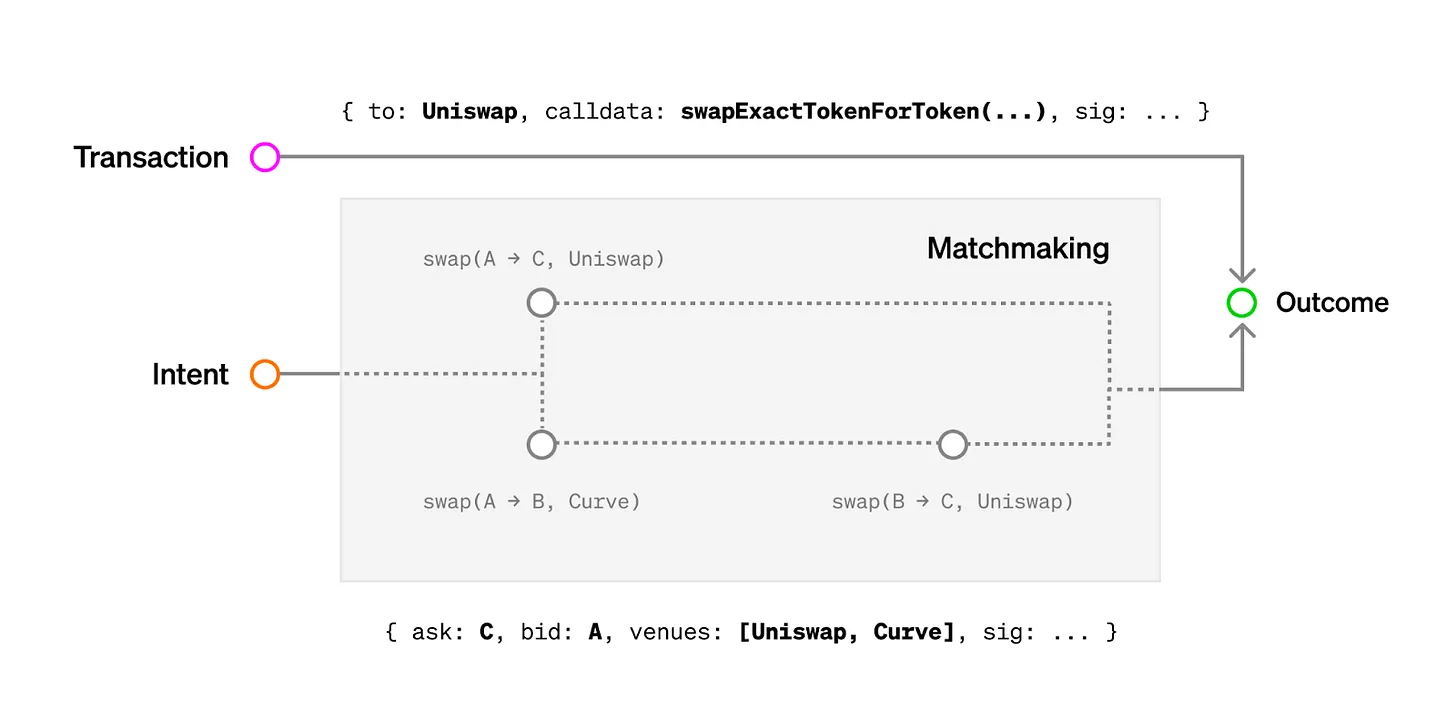
In certain intent infrastructure designs, users express their intent and broadcast it to nodes in a peer-to-peer network. Solvers—often also builders in fully intent-centric protocols—compete to execute these intents efficiently and generate valid transactions. A relayer then verifies their execution, followed by validation from the intent network’s validators. This decentralized process ensures that intents are satisfied in the most efficient manner possible.
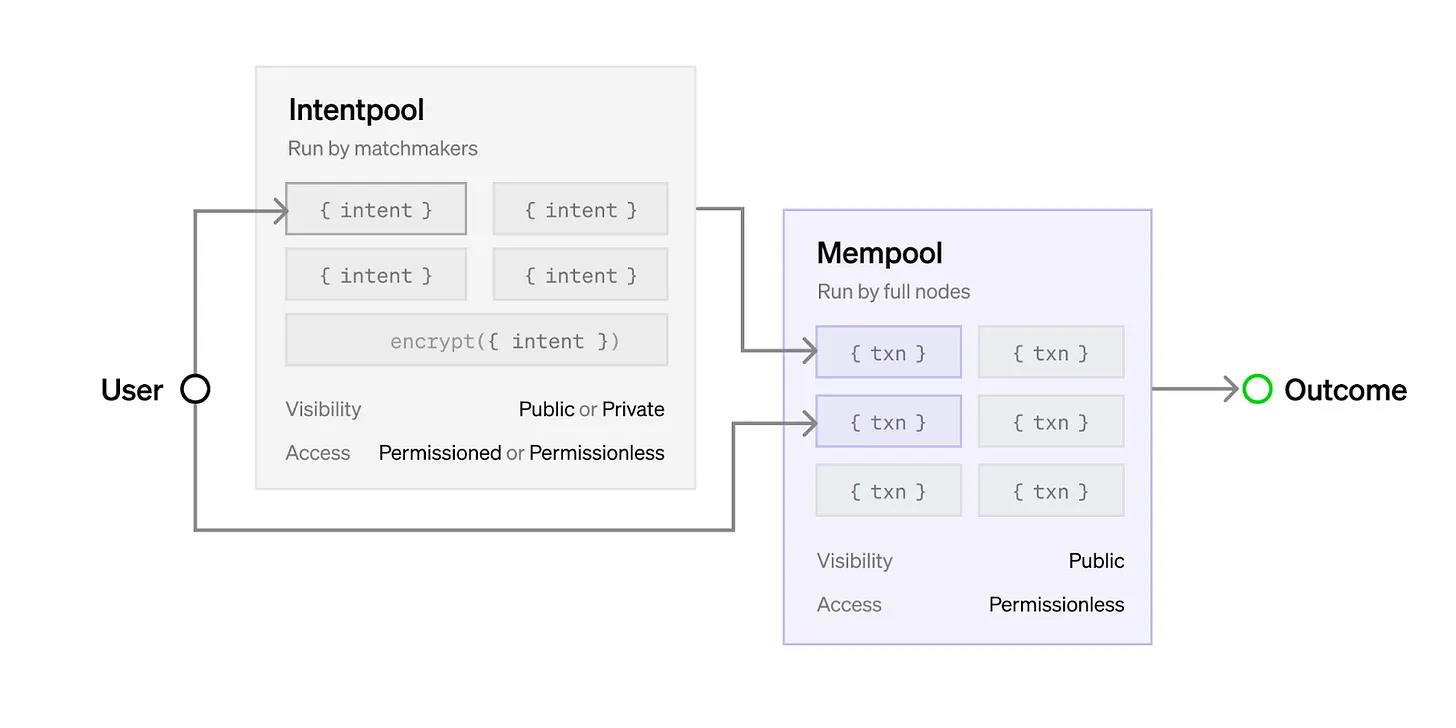
Intent represents an open problem space, and the future of intent-driven user experiences remains uncertain. However, the overarching goal is clear: to make crypto applications more user-friendly and computationally efficient. In a recent Bankless interview, Dan Robinson outlined an advanced user flow where users sign off-chain messages routed through a "MEV black box" into on-chain transactions. Intents simplify this process by specifying only the start and end points, thereby enhancing user experience.
Compared to Ethereum (ETH) transactions, intents offer users a more streamlined and user-friendly approach. They simplify the user experience without requiring complex details such as gas fees or slippage settings, and they are not limited to a single decentralized exchange or automated market maker (DEX/AMM). Users only need to define a starting and ending state, enabling a more efficient and intuitive interface.
Once a user expresses their intent, the system takes over the task of finding the optimal price. The user simply broadcasts their intent as a message rather than crafting a transaction themselves. Various solvers can then freely fulfill the intent, provided they can prove they’ve resolved it in the most competitive way—typically determined by factors such as highest satisfaction gradient. This approach ensures users receive the best possible “price” for their intended action. Essentially, intents provide end-users with a more attractive and flexible alternative to traditional on-chain transactions. They can be resolved in multiple ways, often leading to faster and more cost-effective processes with fewer manual steps.
An example of intent in practice can be seen in UniswapX. There, Dutch auctions are used to handle intents: prices start high and gradually decrease until someone finds it profitable to fill the order. As Dan Robinson noted, in competitive markets, this reduces slippage and provides a better foundation for auctioning order flows.
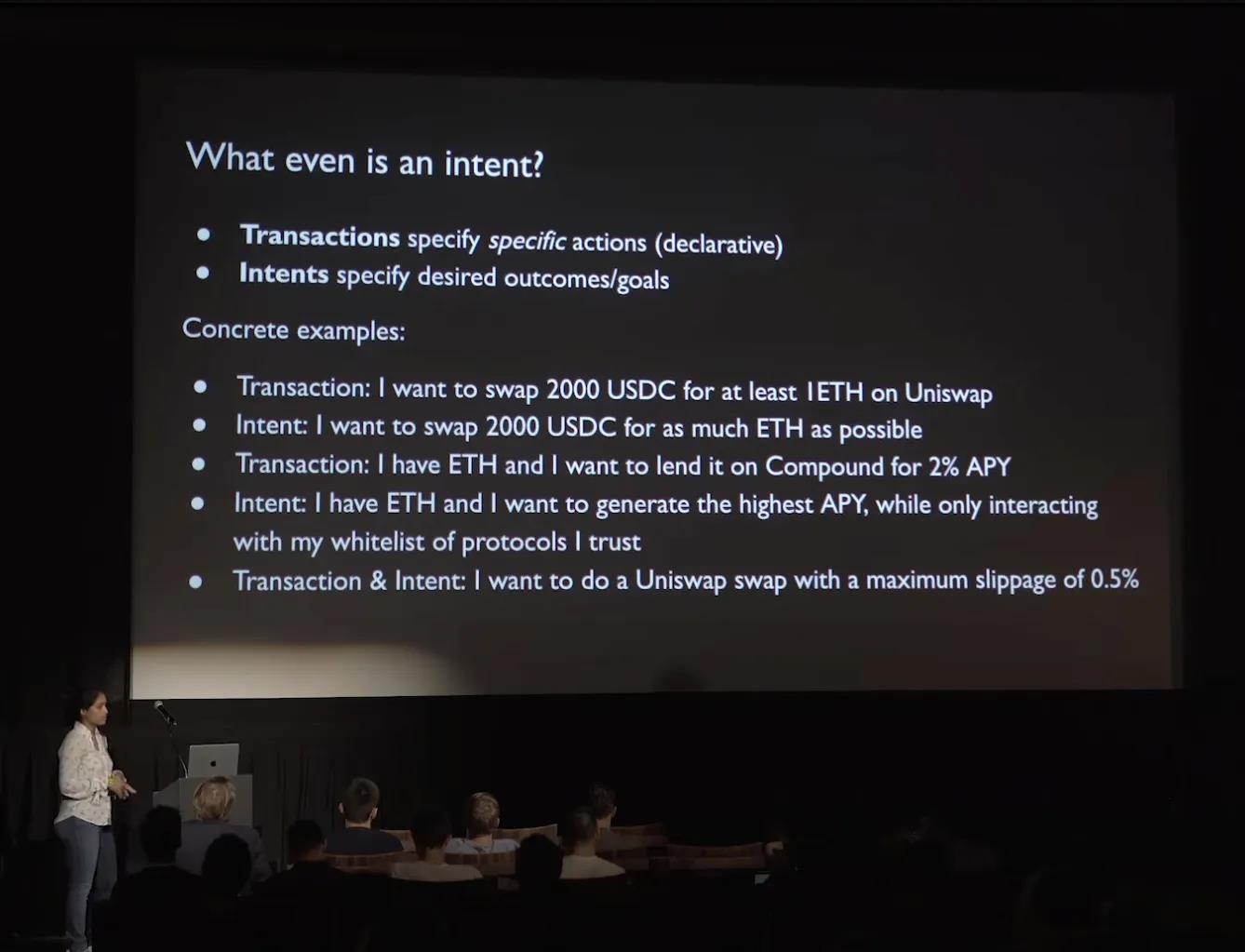
Succinct’s Uma Roy also offered compelling examples in her talk on intents, SUAVE, account abstraction (AA), and bridging, clearly distinguishing between traditional transactions (txs) and intents.
Intent in Practice
Intent holds significant potential across multiple domains, impacting several key areas:
-
Bridges and Rollups
In a recent Bankless episode, Dan Robinson explored how UniswapX could leverage intents for cross-chain functionality. For instance, a user might express an intent to swap USDC for ETH on Arbitrum instead of Ethereum. Proof of fulfilling this intent could be sent across chains via message-passing bridges. Additionally, Dan suggested market makers might offer quotes above standard market prices to attract capital to rollups, particularly when fulfilling intents such as rebalancing exits.
Unlike traditional bridge designs that require funds to be hosted atop rollups, UniswapX minimizes risk by only exposing "currently in-progress swaps" to potential attacks. This approach drastically reduces the vulnerable window during which funds are at risk, significantly enhancing security and user trust. By abstracting the manual bridging process, intents simplify asset management and greatly improve user experience. To fully realize the potential of intents, users should have access to cross-domain environments that leverage diverse liquidity pools and technical stacks for more efficient execution.
-
Zero-Knowledge (Storage) Proofs
With the emergence of L2 and L3 ecosystems, efficiently transferring blockchain state information across these layers has become increasingly critical. Zero-knowledge storage proofs offer a solution to this challenge. When a user specifies transferring assets to a rollup, a cross-chain event occurs, and the target chain’s state is verified using storage proofs. This mechanism ensures the intent has been correctly fulfilled and that the chain is in the expected state.
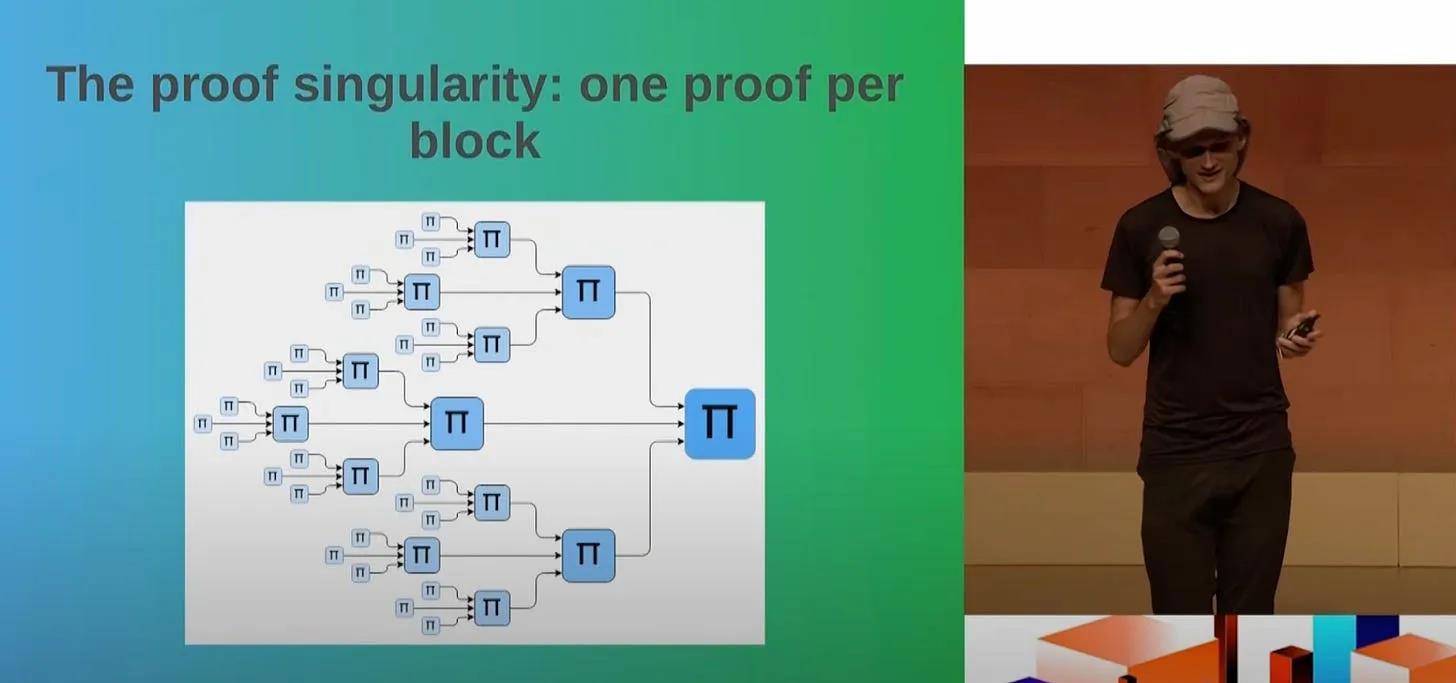
In the future, we may see fulfilled intents aggregated into verifiable storage proofs—or even recursive aggregations of storage proofs—to streamline the fulfillment of complex intents. Vitalik Buterin emphasized the importance of proving aggregation in L2 environments during discussions at EthCC Modular Summit. This approach helps reduce costs and optimize the proof generation process. Innovations like zkTree, introduced by the Polymer Labs team, have already opened doors to recursive proofs, which could play a pivotal role in realizing zkEVMs, zkRollups, zkBridges, and ZK storage proofs.
-
Account Abstraction
Account abstraction is another frequently discussed paradigm shift aimed at improving user experience (UX). It seeks to upgrade externally owned accounts (EOAs)—the current standard for transaction initiation—by enabling them to be managed via smart contract wallets, or even allowing transactions to be initiated directly within smart contracts. As intents mature, they may shift from being handled by decentralized applications (dApps) to being managed by users’ smart contract wallets, simplifying the user’s role. Stanley He proposed an intent → user action → bundler pipeline, where intents first flow through the wallet frontend.

While account abstraction undoubtedly improves UX, users still need to manually discover the most efficient platforms for tasks like swapping, bridging, or providing liquidity. Intents aim to eliminate this discovery layer, leaving users responsible only for specifying their initial and final states. Moreover, ERC-4337 introduces designs intended to preserve decentralization, such as a unified ERC-4337 mempool. This reduces vulnerability to censorship and attacks caused by fragmentation or smaller pools with differing bundling strategies. By adopting a single implementation standard per bundler to ensure compatibility, these risks can be minimized. Several notable projects—including Zerodev, Fun, Stackup, and Rhinestone—are actively contributing to this space.
However, it’s important to note that concerns about centralization around intents have emerged. Some, like David Ma of Alliance, argue that intents are difficult to decentralize and are increasingly constrained by centralized servers with restricted access. In the crypto space, balancing efficiency and decentralization remains a persistent challenge. While simplifying UX is appealing, certain aspects of intents rely on off-chain participants and infrastructure, resulting in significantly lower computational costs compared to regular transactions. Dependence on off-chain components could lead to increased centralization, raising concerns about solver concentration responsible for coordinating intent-based transaction volume.
Another intriguing area where intents are gaining attention is compliance. Users may soon be able to select the most “compliant” path for fulfilling their intent. While this offers regulatory advantages, it introduces trade-offs among cost, speed, and efficiency. Ultimately, it shifts part of the regulatory burden onto users and liquidity providers (LPs), who must make informed decisions about the most suitable path for achieving their goals.
Conclusion
Today, intent remains a highly promising concept in its early stages. Of course, in crypto, the future arrives quickly—and it will be exciting to see how new companies leverage this idea to create novel categories and user experiences, whether through new designs, implementations, or architectures. Nevertheless, the recent emergence and discussion around intents indicate a strong focus on improving overall user experience, especially for non-crypto-native users. These abstractions in transaction handling may prove to be key drivers of adoption and enhanced efficiency. Ultimately, the interplay between intents, account abstraction, storage proofs, and bridging is still being explored, and how these components work together will be crucial to the maturity of the crypto ecosystem.
Join TechFlow official community to stay tuned
Telegram:https://t.me/TechFlowDaily
X (Twitter):https://x.com/TechFlowPost
X (Twitter) EN:https://x.com/BlockFlow_News
 Stanford Blockchain Club