Crypto Market Outlook for September: After Hitting a New Low in Liquidity, What Are the Key Thematic Narratives and Airdrops to Watch?
TechFlow Selected TechFlow Selected
Crypto Market Outlook for September: After Hitting a New Low in Liquidity, What Are the Key Thematic Narratives and Airdrops to Watch?
A sound approach might be to establish a long-term investment strategy and stick to it, avoiding excessive trading that could undermine your position in this hostile environment.
 Navigating Web3 tides with focused insights
Written by: THOR HARTVIGSEN
Compiled by: TechFlow

Market Overview
DeFi liquidity is at its lowest level since February 2021. As widely known, the high-interest-rate environment has made chasing on-chain yields less attractive. Combined with falling cryptocurrency prices, this has led to new lows in total value locked (TVL).
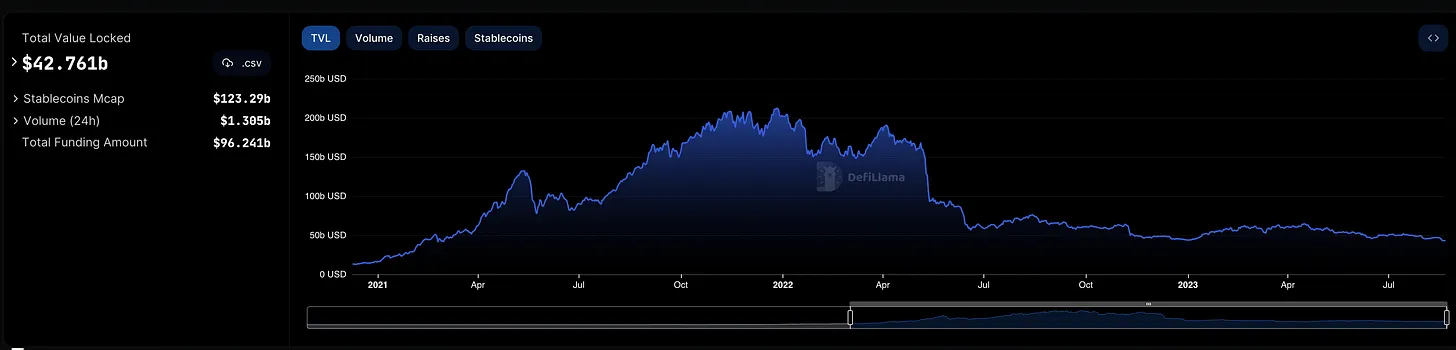
What does this mean? It means that profiting in the short term has become more difficult. For a project to take off, it needs to draw liquidity from elsewhere in DeFi. Unless you have a solid edge in this space or are spending over 16 hours per day glued to your screen, the best approach may be to develop a long-term investment strategy and stick to it. Avoid being shaken out by overtrading in this hostile environment.
Why Did Prices Crash?
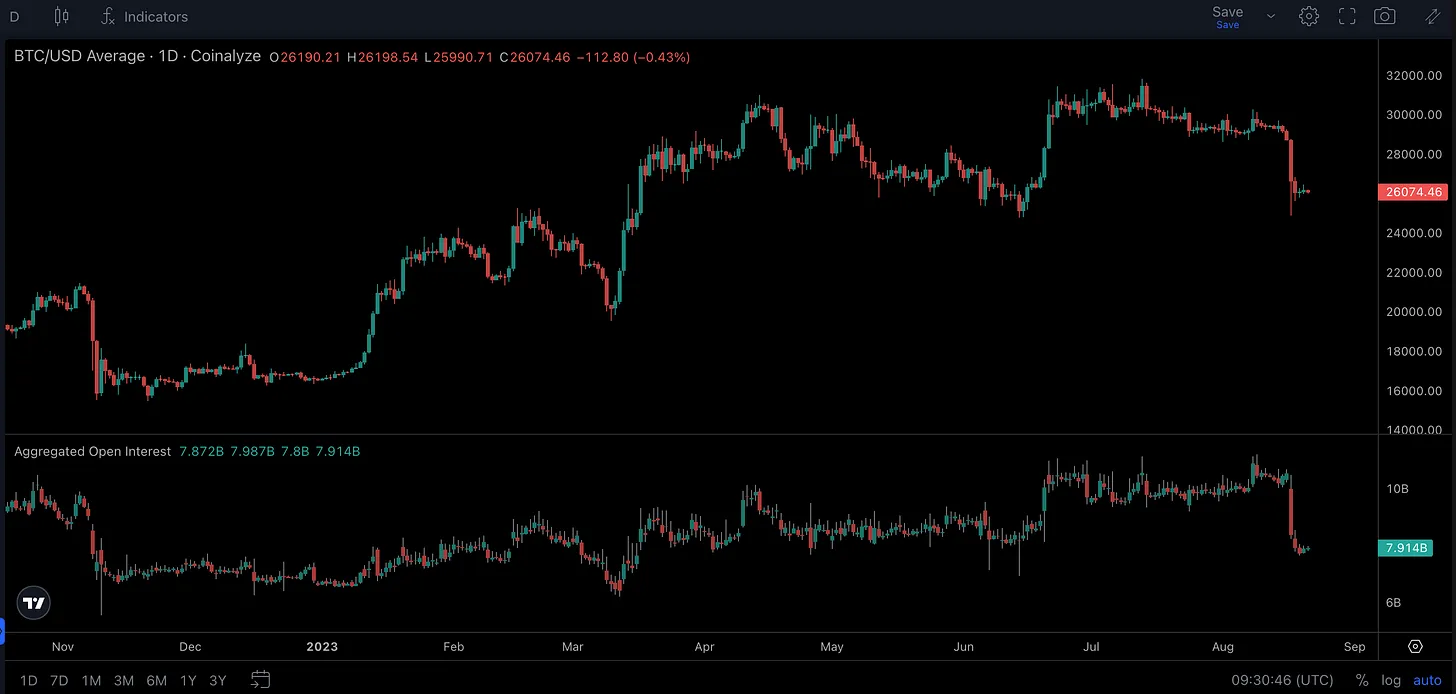
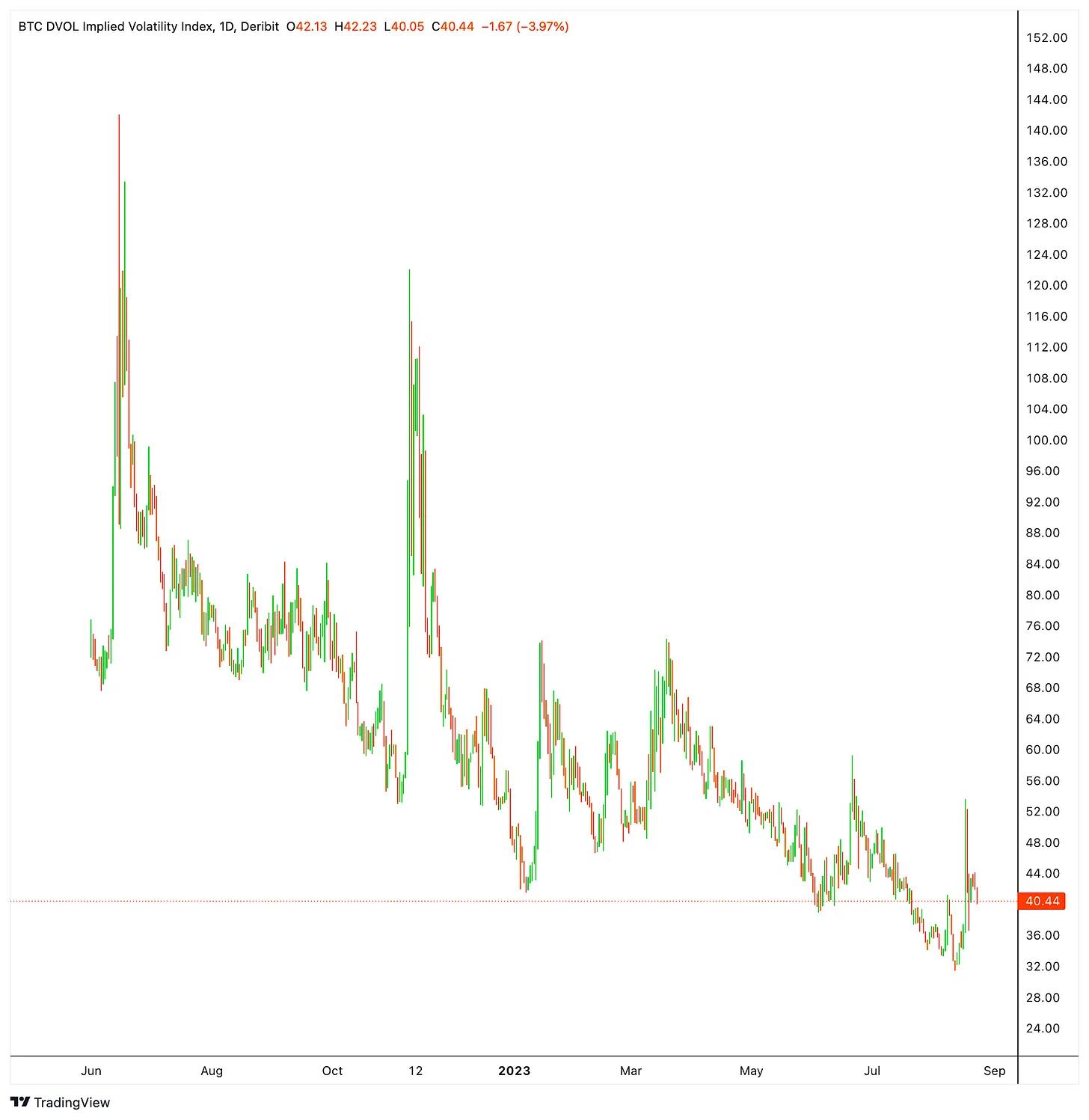
As shown in the chart below from Coinalyze, most futures open interest was liquidated on August 17, triggering massive long position liquidations. Cryptocurrency volatility had been very low over recent weeks, and when volatility returns, futures traders increase their positions to bet on market direction. When prices began to fall, large long positions were forcibly closed, which triggered further liquidations in a cascading effect. Therefore, it's hard to attribute the recent price action to any specific news. Additionally, significant selling emerged in the spot market, possibly indicating that larger players are offloading positions.
Top Performers Over the Past 14 Days
You wouldn't know about the price drop and market dullness just by browsing crypto Twitter (crypto X??). Coinbase’s newly launched rollup chain Base has recently attracted substantial users and liquidity due to the Friend.tech application.
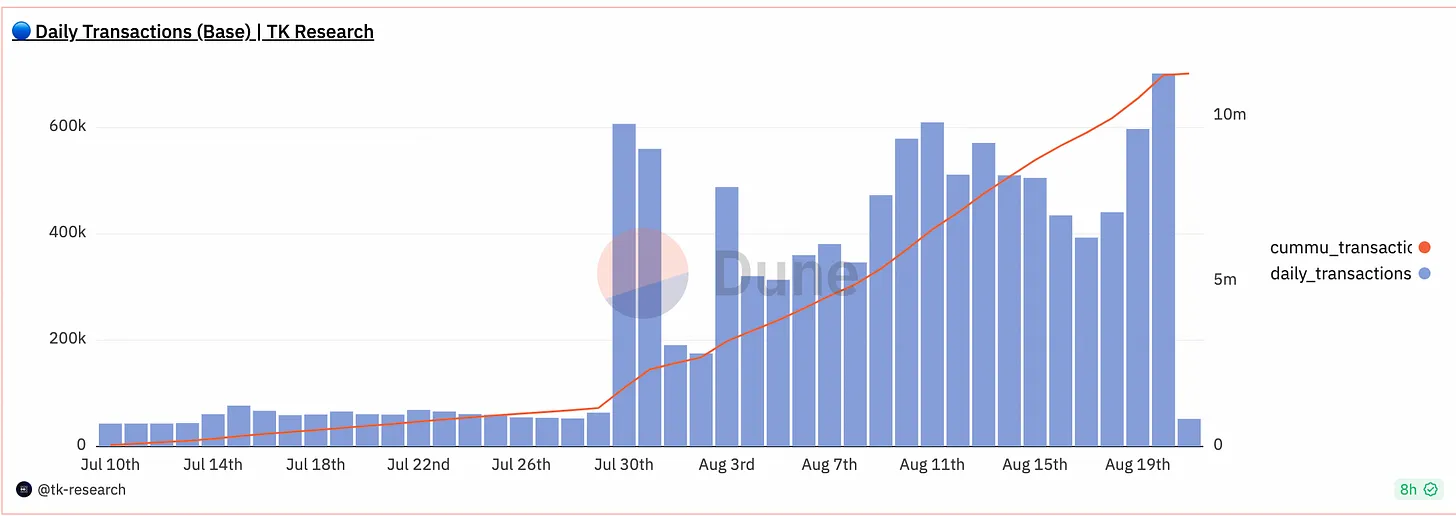
Some comparative statistics for Base/Arbitrum/Optimism:
Fees over 14 days:
-
$3.4 million — Base;
-
$2.6 million — Arbitrum;
-
$2.5 million — Optimism revenue.
Revenue over 14 days:
-
$2.3 million — Base;
-
$900,000 — Arbitrum;
-
$800,000 — Optimism.
Revenue is calculated as fees paid by users on the rollup minus the cost of posting those transactions (calldata) on Ethereum. The data shows that not only has Base generated higher fees recently, but also significantly higher profit margins.
Friend.tech
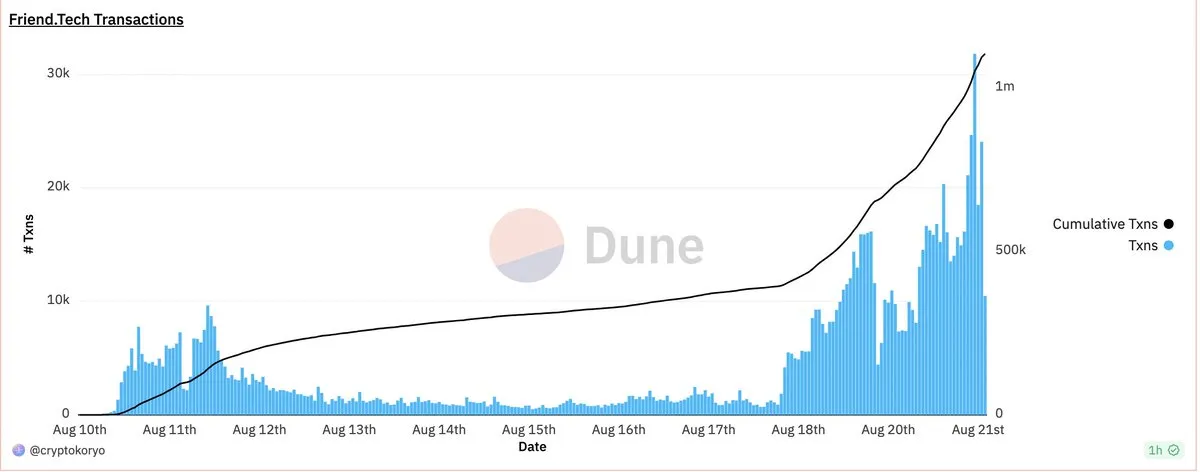
Friend.tech is a new social app on Base where you can buy and sell shares in registered Twitter profiles. It has seen explosive growth in user adoption and generated over $3 million in revenue over the past 7 days. All trades incur a high 10% fee, with 5% going to the platform and 5% to the shareholder of the profile being traded.
Friend.tech is the primary dapp driving user engagement on Base. As more protocols launch (such as Aave and Uniswap) and the ecosystem expands, Base could see continued real growth. Current 7-day annualized revenue stands at approximately $42 million, representing a meaningful portion of Coinbase’s annual income.
News and Catalysts
ETF Deadlines and Grayscale
An ongoing lawsuit exists between Grayscale and the U.S. Securities and Exchange Commission (SEC) regarding converting its existing GBTC trust into a spot Bitcoin exchange-traded fund (ETF). While many expected a decision this week, Grayscale might instead be asked to refile, potentially delaying resolution by up to 240 days. However, as seen below, Grayscale is expanding its ETF team. What does this mean? Likely, they're trying to signal strong commitment to the ETF conversion rather than having insider knowledge of the case outcome.

According to ETF experts, delay in ETF approval remains the most likely scenario.
Coinbase Acquires Stake in Circle
Coinbase recently added another potential cash cow to its portfolio by acquiring a stake in Circle. Terms of the acquisition are unclear, but it has been revealed that the "Centre Consortium," responsible for managing USDC, will be shut down. USDC will also launch on six additional blockchains this year. These are expected to include Polkadot, Near, Optimism, and Cosmos. Regarding revenue sharing, Coinbase and Circle will continue to split income based on the amount of USDC held on their respective platforms, while interest income generated from widespread USDC usage will be evenly distributed.
Frax Expands into RWA
Following its earlier delinking from USDC ($FRAX previously maintained a strong collateral relationship with USDC), the vision for FraxV3 has been taking shape. Founder Sam Kazemian calls FRAXV3 the "ultimate stablecoin." This involves partnering with Financial Reserves and Asset Exploration Inc Public Benefit Corporation (FinresPBC) to tokenize real-world assets (RWA) as collateral for $FRAX. Profits from these operations will be passed to token holders through so-called "Fraxbonds" (FXB). Fraxbonds allow people to purchase future $FRAX at a discount (e.g., buying $FRAX at $0.90 each two years from now).
Thorchain Lending Goes Live
Thorchain has just launched its lending product, allowing users to borrow against multiple assets using BTC and ETH as collateral. The collateral list will soon expand to include new assets such as BNB, BCH, LTC, ATOM, AVAX, and DOGE.
One core mechanism of this lending design is burning $RUNE when debt is issued (users borrow using collateral) and minting $RUNE upon repayment. This enables loans without liquidation risk even if the price of collateral like ETH or BTC drops, because the collateral is stored behind the scenes in RUNE form.
On-Chain Capital Flows
Offchain Labs Appears to Be Buying Back $ARB
1.72 million ARB tokens were purchased on Binance at $0.98 per token (totaling $1.7 million) and sent to an address labeled Offchain Labs (the company behind Arbitrum). This price is close to the lowest $ARB has traded since its listing earlier this year.
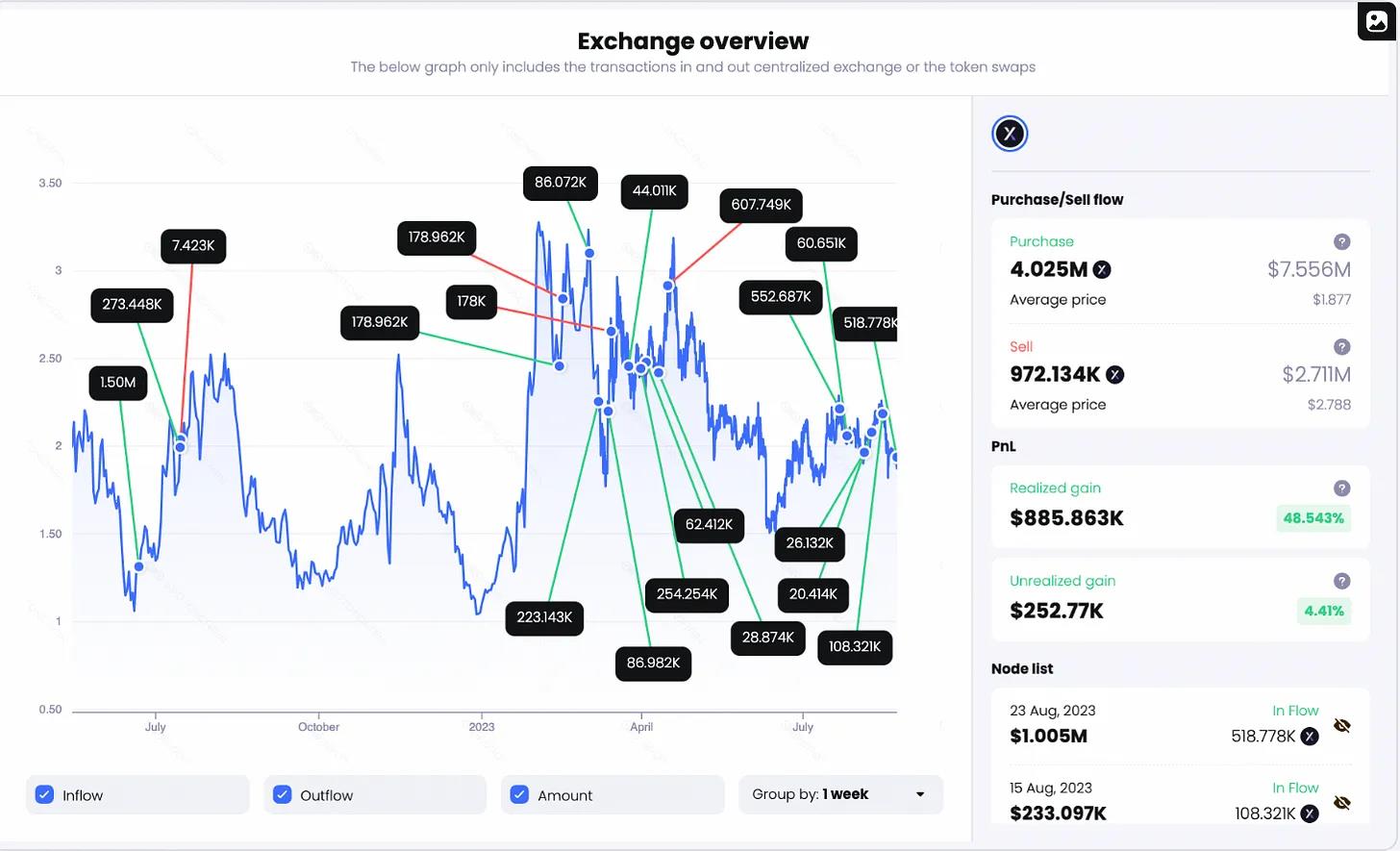
CMS Holdings Accumulates $DYDX
CMS is an early investor in dYdX and has actively traded the token over the past two years. They recently bought 519,000 $DYDX on Binance at $1.94 per token (worth $1 million). Their average purchase price on centralized exchanges (excluding private sales) is $1.88, with an average sell price of $2.78. CMS currently holds 3.05 million $DYDX (valued at $5.98 million).
DeFi Airdrops and Strategies
Friend.tech Airdrop
Friend.tech will reward platform users with 100 million points over the next six months. Below is a table estimating the value per point based on potential valuation and the percentage of tokens allocated to the airdrop.
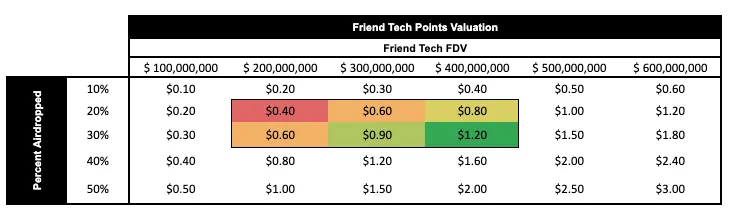
Points appear to be rewarded based on share trading volume, though referrals may also play a role. Still, top users seem to have already accumulated most of the distributed points.
Real-World Asset (RWA) Yield Farming
Maker’s Spark Protocol offers a 5% annual yield on the Dai Savings Rate (DSR). This yield comes from income generated by DAI backed by RWAs such as U.S. Treasuries. While this may not sound exciting if you’re a U.S. citizen with direct access to Treasuries, a current proposal on Aave suggests adding sDAI—the liquid token representing DSR deposits—as collateral in lending markets. As illustrated below, looping eight times (depositing sDAI on Aave, borrowing the native $GHO stablecoin, swapping it back to sDAI, and repeating) could result in an 11.29% annualized yield!
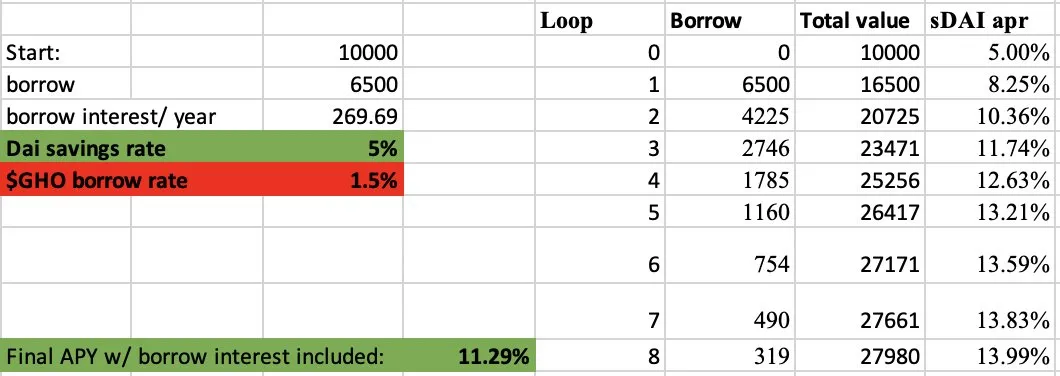
This strategy could go live in the coming weeks, and the yield estimate does not account for gas fees. Nevertheless, earning an 11% annualized return on DAI backed by sustainable yields from the U.S. government is highly compelling and could attract new and more sophisticated participants into the space over time.
Swell Airdrop
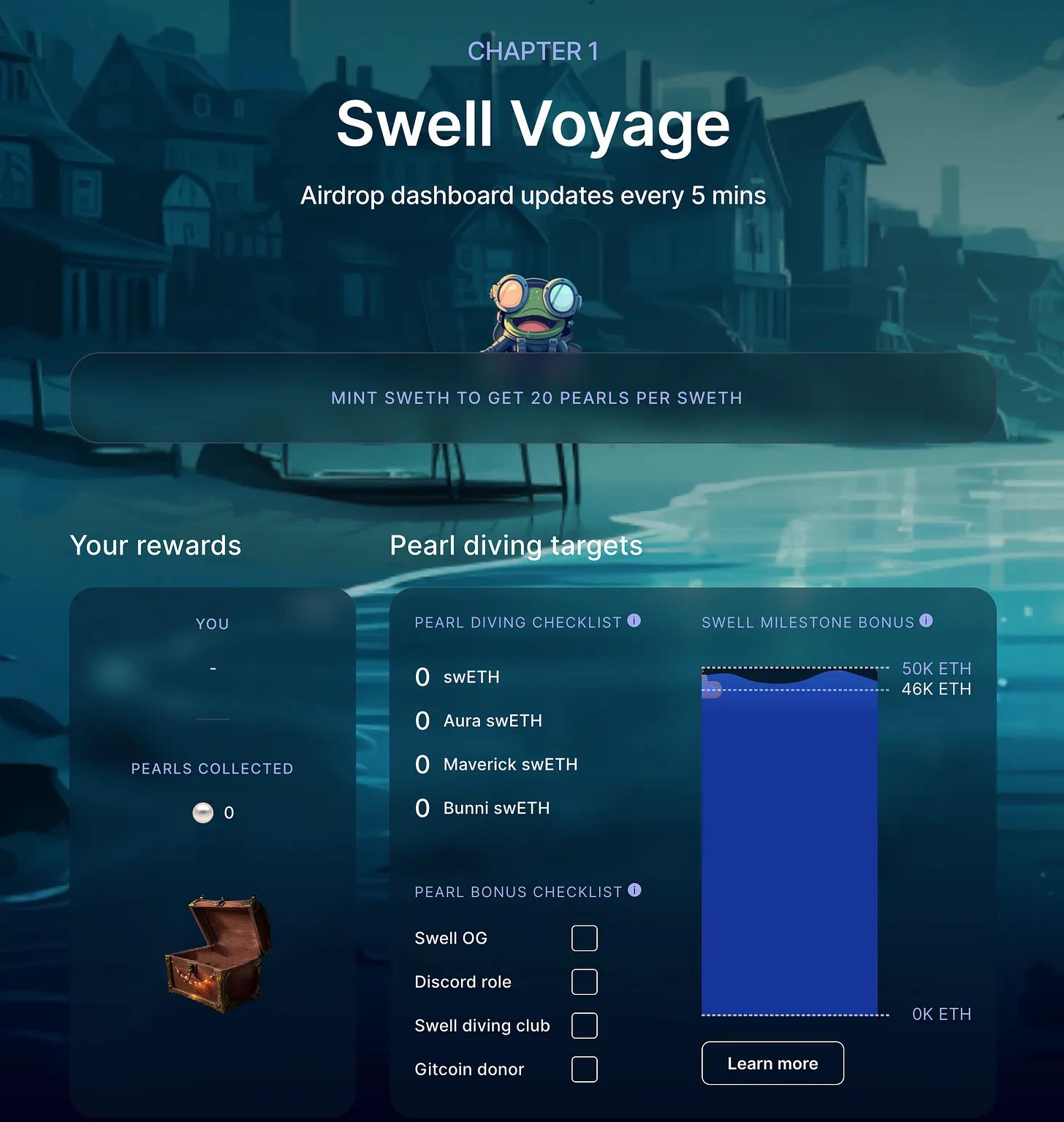
Swell is an Ethereum liquid staking protocol currently running an airdrop campaign. Staking ETH as swETH earns “Pearls” over time, which will later be converted into $SWELL tokens. Depositing your swETH into protocols like Pendle or Maverick can earn additional Pearls. Recent estimates suggest 1 Pearl is worth approximately $0.33.
Join TechFlow official community to stay tuned
Telegram:https://t.me/TechFlowDaily
X (Twitter):https://x.com/TechFlowPost
X (Twitter) EN:https://x.com/BlockFlow_News
 Thor Hartvigsen