The Future of Web3 Social (III): Solving Revenue Challenges with Tokens and Incentives to Create New Social Experiences
TechFlow Selected TechFlow Selected
The Future of Web3 Social (III): Solving Revenue Challenges with Tokens and Incentives to Create New Social Experiences
The long-term success of Web3 social must lie in creating a new form of social experience, rather than copying certain Web2 mechanisms and simply claiming it's special because it's "on-chain" and "tokenized."
 Navigating Web3 tides with focused insights
Author: PAUL VERADITTAKIT
Translation: TechFlow
This is the third article in Pantera partner PAUL’s series on decentralized social networks.
The series explores how current technologies and trends are addressing a range of challenges facing decentralized social networks, offering detailed explanations and insights into each issue.
Previous article (Part 1): The Future of Web3 Social (I): Building Social Graphs to Solve User Acquisition – TechFlow
Previous article (Part 2): The Future of Web3 Social (II): Biometrics and Social Attestation to Solve Identity Issues – TechFlow
In 2017, a group of researchers from the MIT Media Lab published an article in Wired claiming that decentralized social networks would “never succeed.” In their piece, they listed three insurmountable challenges:
(1) The problem of attracting (and retaining) users from scratch
(2) The challenge of handling personal user data
(3) The difficulty of monetizing through user-facing advertising
They argued that in all three cases, incumbent tech giants like Facebook, Twitter, and Google, due to their massive economies of scale, left no room for meaningful competition.
Fast forward to today, what was once deemed “impossible” now seems within reach. We appear to be at the dawn of a transformation in the concept of social media networks. In this three-part series (this being the third), we explore how new ideas in decentralized social (DeSo) are solving these “old” problems, specifically:
(1) Solving the cold-start problem using open social layers
(2) Addressing identity issues with proof-of-personhood and cryptographic techniques
(3) Tackling revenue generation through token economics and incentive mechanisms
In this article, the author focuses primarily on point (3), exploring methods and real-world examples of using token economic models and incentive systems to solve monetization challenges.
Creating a "Killer App"
The ultimate question for Web3 social as a vertical is whether it can produce a new “killer app”—something akin to TikTok or Instagram—that offers a truly novel social experience capable of attracting users at scale. Without such a “killer app,” much of the anticipated value behind infrastructure development (such as decentralized social graphs and proof-of-humanity protocols) risks being lost.
However, the problem with these “new social experiences” is that they are almost unpredictable. While people repeatedly chant the mantra of “build the killer app,” no one knows exactly what form it will take—after all, you’re essentially trying to predict shifts in human behavior. In this article, I won’t attempt the impossible by precisely forecasting what the next “killer app” in social will look like. Instead, I’ll explore two high-level strategies—enhancing existing social experiences with Web3 features, and building Web3-first social communities—and highlight some projects pursuing these innovative paths.
Enhancing Existing Social Experiences Through Tokenization
One of the most straightforward approaches to building a Web3 “killer app” is adding new functionality to already-popular social platforms. Most commonly, this involves layering “additional Web3 features” via tokenization—for example, X-to-Earn projects.
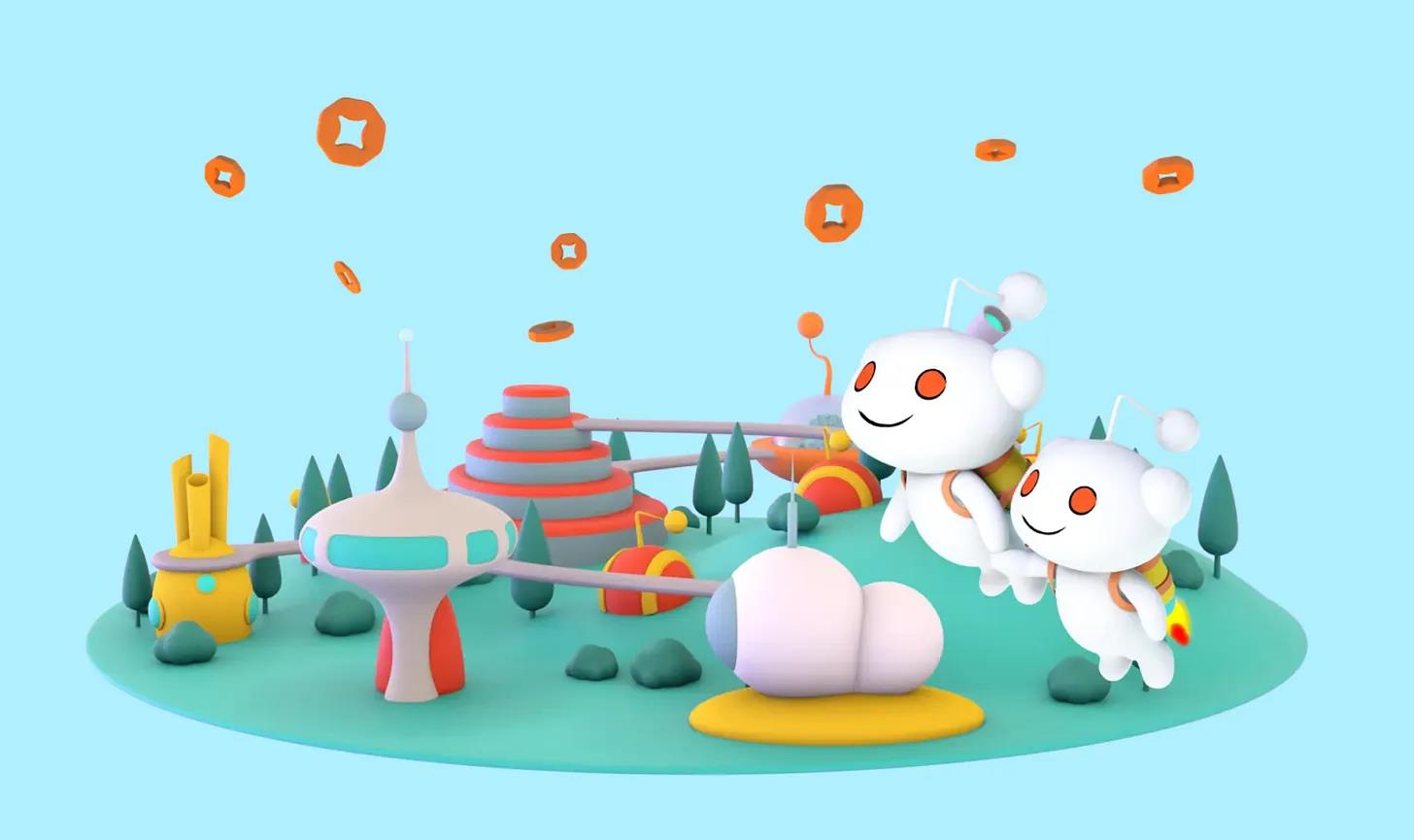
One of the most interesting projects along this path is Reddit’s Moons program, launched in May 2020, which rewards users on the r/CryptoCurrency subreddit for posting and curating content. Reddit Moons is an ERC-20 token issued on Arbitrum Nova, with distribution based on a user’s “karma” score—a metric derived from upvotes and downvotes received on Reddit. Moons allow holders to participate in community governance, influencing future token allocations and platform direction.
The overall tokenomics of Reddit Moons has also been well-received by the community. Monthly emissions decrease by 2.5%, leading to an annual inflation rate approaching 1%. Over time, the “karma-to-Moons ratio”—the number of Moons earned per unit of karma—is expected to steadily decline, making Moons increasingly scarce and potentially more valuable in the long term.
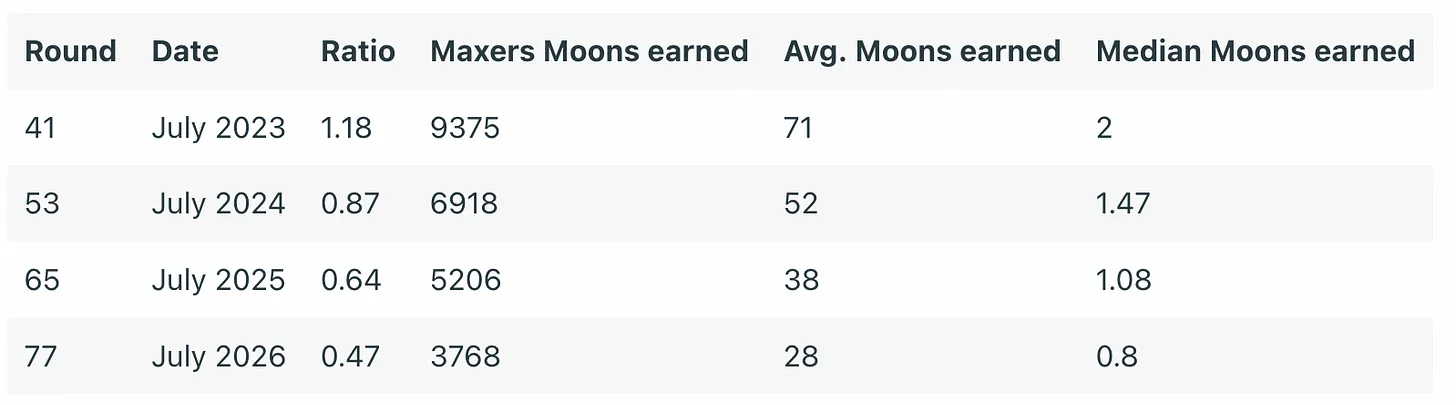
Reddit is a particularly fascinating case because it integrates Web3 functionality (in this case, Moon tokenization) into an already-existing “killer app.” Among mainstream social platforms, Reddit is arguably the most decentralized and community-driven, thanks to its unique “subreddit” structure, which grants significant autonomy and self-governance to individual communities rather than enforcing top-down content moderation. These design choices arguably make Reddit one of the most suitable platforms for experimenting with Web3 mechanisms. Indeed, Moons are just one example of Reddit’s broader Community Points initiative, which allows subreddits to launch their own ERC-20 tokens and provides a wallet called Reddit Vault—built on Ethereum—to store them. Beyond Moons, another notable example is the Brick token on r/FortniteBR.
As of August 2023, Reddit Moons have gained some traction after listing on major centralized exchanges like Kraken. However, while the initial price surge brought excitement, the long-term viability of simple “post-to-earn” models remains uncertain. Based on available data and prices as of August 12, the highest-earning Reddit “maxers” made approximately $4,200 in Moons, while median earnings were only about $0.90.
This is a sobering statistic that reveals a fundamental flaw in X-to-Earn models: you don’t actually earn much—or at least nowhere near the “life-changing money” sometimes advertised by such projects. Moreover, income tends to concentrate among a small number of users, meaning average participants may receive little financial benefit even if they actively engage in the “X” activity. Ultimately, users may become disillusioned by these meager payouts, and in cases like StepN, this disillusionment can lead directly to project collapse.
Therefore, overemphasizing “earning” in a simple “social-to-earn” project may be unsustainable in the long run. Instead, the focus should shift toward creating a genuinely novel social experience—one that users are willing to pay for, rather than being paid to participate. The recent buzz around friend.tech on the Base network highlights this idea. Friend.tech functions essentially as a “stock market for X (formerly Twitter) profiles,” allowing users to buy and sell shares tied to individual influencers on X. By owning a share in an influencer, users gain enhanced access privileges (such as private chats or exclusive benefits), and shares can be freely traded.
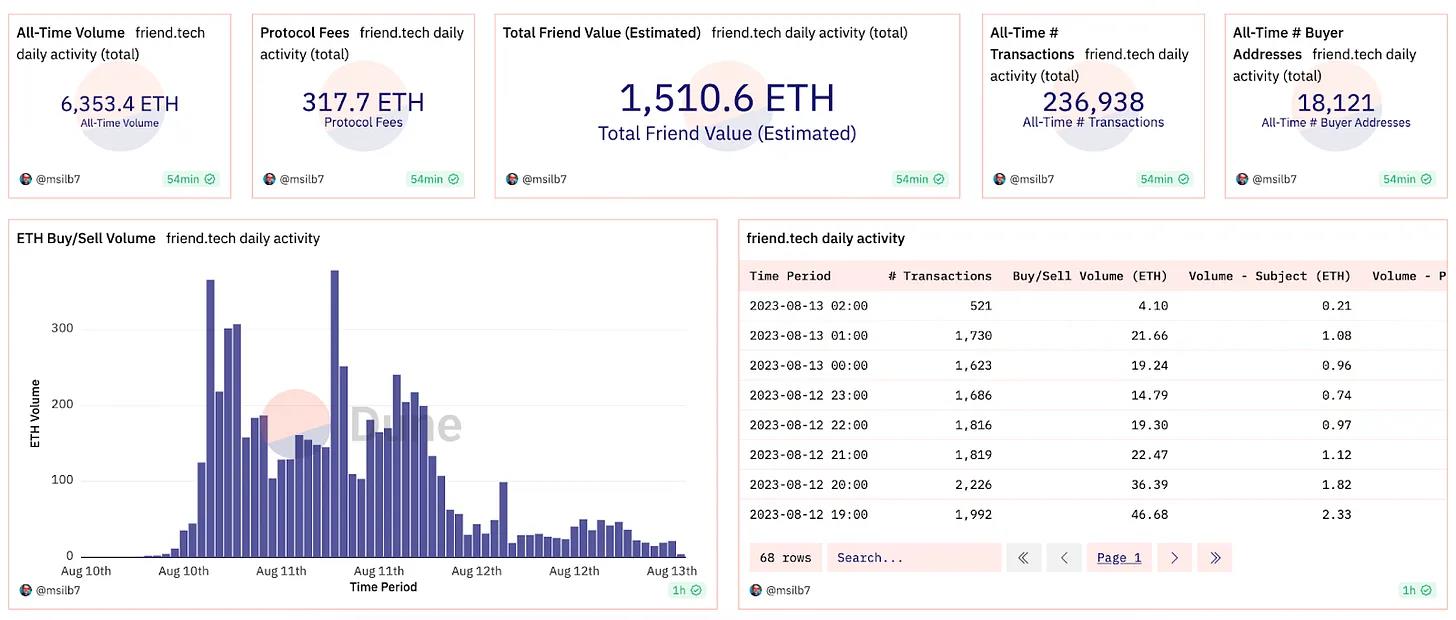
This novel social experience, combined with the ability to monetize one’s X following, generated over 6,000 ETH in trading volume (worth ~$11 million) and more than 230,000 transactions within days of its invite-only beta launch. However, questions remain about whether friend.tech can sustain this early momentum and truly pave the way for tokenized personal profiles, or whether it will devolve into another “rug pull.” CoinDesk notably pointed out the project’s lack of a formal privacy policy, unclear data collection practices, and absence of a roadmap or whitepaper. Additionally, it remains unclear how the platform or influencers will fulfill promised “access rights” to shareholders to create a sustainable new form of social interaction. Nevertheless, friend.tech stands as an impressive experiment in turning tokenization itself into a new kind of social experience.
Building Web3-First Social Communities
Rather than trying to graft Web3 features like tokenization onto existing Web2 platforms built around entirely different revenue models, another path to creating a “killer social app” in Web3 is to start from scratch—launching from within a distinct crypto-native community and culture.
Phaver is a prime example of a “Web3-first” social community. Built atop Lens’s social graph (and recently integrated with CyberConnect’s), Phaver captures attention from Web3-native audiences by integrating with other Web3 identity technologies such as NFT communities and soulbound tokens. It operates with a unique dual-token model and a novel scoring system based on “Cred” (credibility) and “Points,” enabling users to earn rewards and unlock privileges as they level up on the platform.
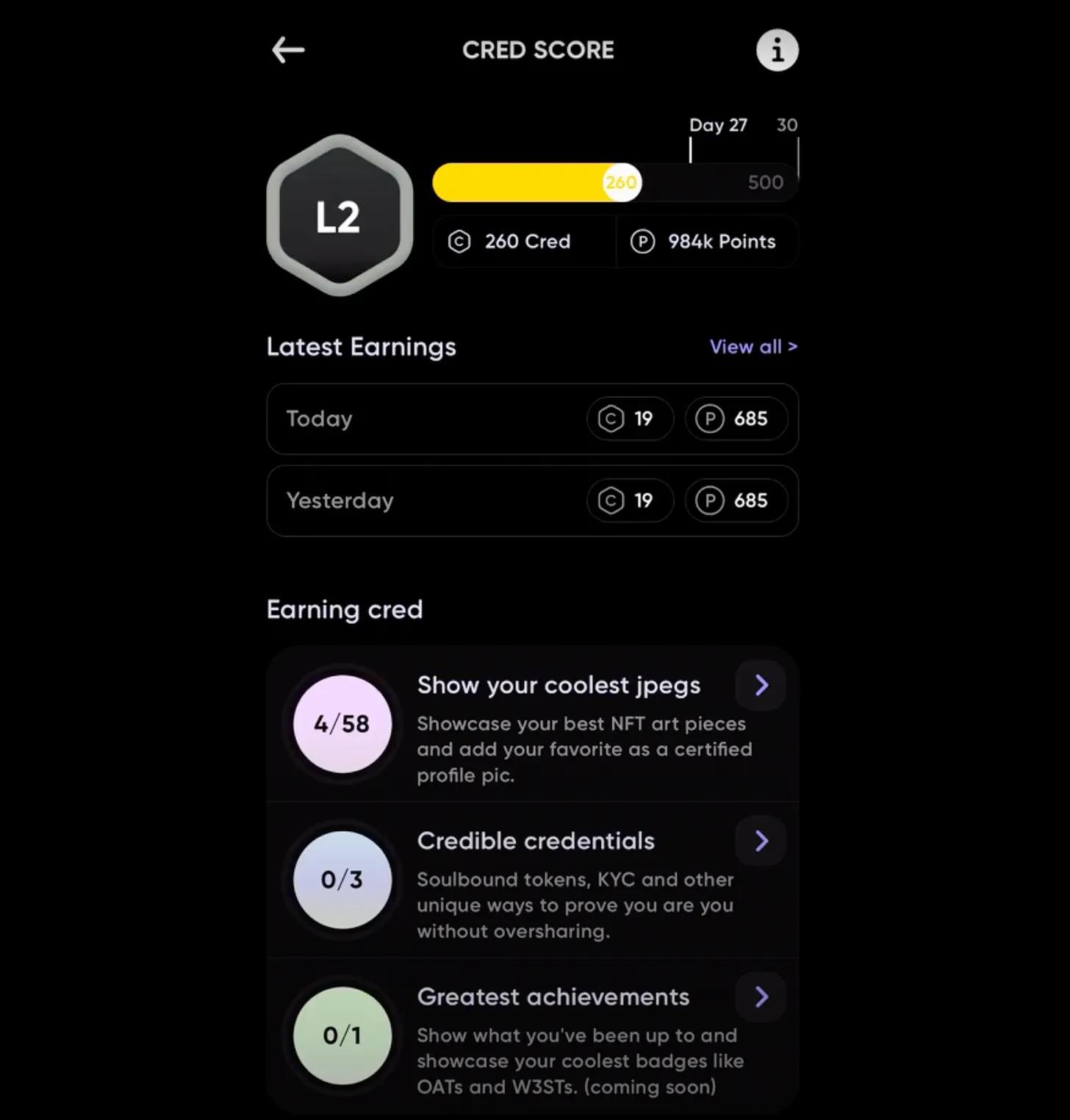
“Cred” represents a user’s reputation on the platform. Users increase their Cred by linking soulbound tokens or specific NFT collections (e.g., Cryptopunks, Bored Apes) to their accounts, as well as through daily engagement. “Points” are awarded based on the quality and engagement level of a user’s posts and can eventually be redeemed for Phaver tokens. Crucially, the higher a user’s Cred, the more Points they can earn per post.
Because users must link soulbound tokens and specific NFTs to build Cred, this creates a useful mechanism for distinguishing real users from bots. In effect, it acts like a form of “proof-of-social-stake.” Phaver suggests that projects could use its Cred system to prevent airdrop farming and ensure participants are human—not bots—without requiring retina scans or KYC.
As seen above, Phaver establishes a novel token economy designed to foster a Web3-first social community. But like many Web3-native social apps, Phaver faces the key challenge of scaling beyond the crypto-native audience—reaching users with no prior Web3 experience who may not know what a Bored Ape or soulbound token is—and giving them a clear reason to use the platform. Although Phaver claims to follow a “web2.5” model that allows registration without a Lens profile, its “unique experience” is deeply rooted in Web3 concepts, creating an educational barrier that could hinder widespread adoption.
Another noteworthy project inspired by Web3 subcultures is POAP, born from the crypto space’s unique “conference culture” and global event series like ETHGlobal. Essentially, a POAP is an NFT—or ERC-721 token—minted via the POAP smart contract to digitally represent attendance at an event or conference, immutably recorded on-chain. Since 2021, over 6 million POAPs have been issued, partnering with globally recognized brands such as Adidas, Vogue, GitHub, and the US Open. Yet perhaps the most intriguing aspect of POAP is its role as a social primitive—a tool for initiating connections and discovering others with shared interests and networks.
Moreover, events, conferences, and conventions are concepts that don’t require Web3-specific knowledge to understand—it’s easy to imagine anime expos, world fairs, or national art galleries adopting POAP-like mechanisms for various communities and subcultures. The core challenge, however, lies in maintaining the utility of POAPs over time—whether through loyalty rewards, trading opportunities, or exclusive event access—in order to bootstrap new social communities and create novel forms of digital social experiences.
Conclusion
So, how do we actually create that elusive “killer app”?
Ultimately, the long-term success of Web3 social must lie in creating a fundamentally new form of social experience—not simply copying certain Web2 mechanics and declaring them special just because they’re “on-chain” and “tokenized.” Instead, there needs to be a qualitative leap—a new experience rooted in Web3-inspired culture and values, whether that’s NFT communities, asset tokenization, or crypto-native event culture.
More importantly, while tokenization and other Web3 mechanisms open up exciting new design possibilities, for a “killer app” to scale beyond crypto-native users, it must offer an intuitive, easy-to-understand use case (like event attendance), rather than being overloaded with Web3 jargon and abstract concepts. In essence, Web3 social must adopt the distribution and abstraction techniques of traditional social platforms (like TikTok or Instagram) to go viral.
Since social media is ultimately a medium for expressing personality and personal preferences, any successful Web3 social platform must provide an open-ended design space—an ample “blank canvas”—allowing users to invent their own use cases. Often, the reason a social app goes viral has little to do with its original intent. For instance, TikTok as a company could never have predicted all the diverse fashion trends and challenges that would emerge on its platform. The strength of such platforms lies precisely in their ability to unleash open-ended creativity. Only when Web3 embraces this philosophy—moving beyond financialization and mere on-chain mimicry—can we begin to build a truly new “killer app” that redefines social networking in its entirety.
Join TechFlow official community to stay tuned
Telegram:https://t.me/TechFlowDaily
X (Twitter):https://x.com/TechFlowPost
X (Twitter) EN:https://x.com/BlockFlow_News
 Pantera Capital