Podcast Notes | Interview with Solana Foundation's Head of Strategy: SOL vs ETH, How Is Its Asset Value Demonstrated?
TechFlow Selected TechFlow Selected
Podcast Notes | Interview with Solana Foundation's Head of Strategy: SOL vs ETH, How Is Its Asset Value Demonstrated?
Solana's core idea—creating a global state machine as fast as traditional financial markets.
 Navigating Web3 tides with focused insights
Compilation & Translation: TechFlow
In a recent Bankless podcast, David and Austin Federa delved into the Solana network and its native asset SOL. They explored in depth the cultural and philosophical differences between Solana and Ethereum projects. From a community perspective, there are certain distinctions, but Austin offers a fresh perspective on the design philosophy behind the Solana network and the SOL asset.
Spend 5 minutes reading this podcast summary—saving you 60 minutes.
Below are the key points from the discussion, transcribed and compiled by TechFlow:
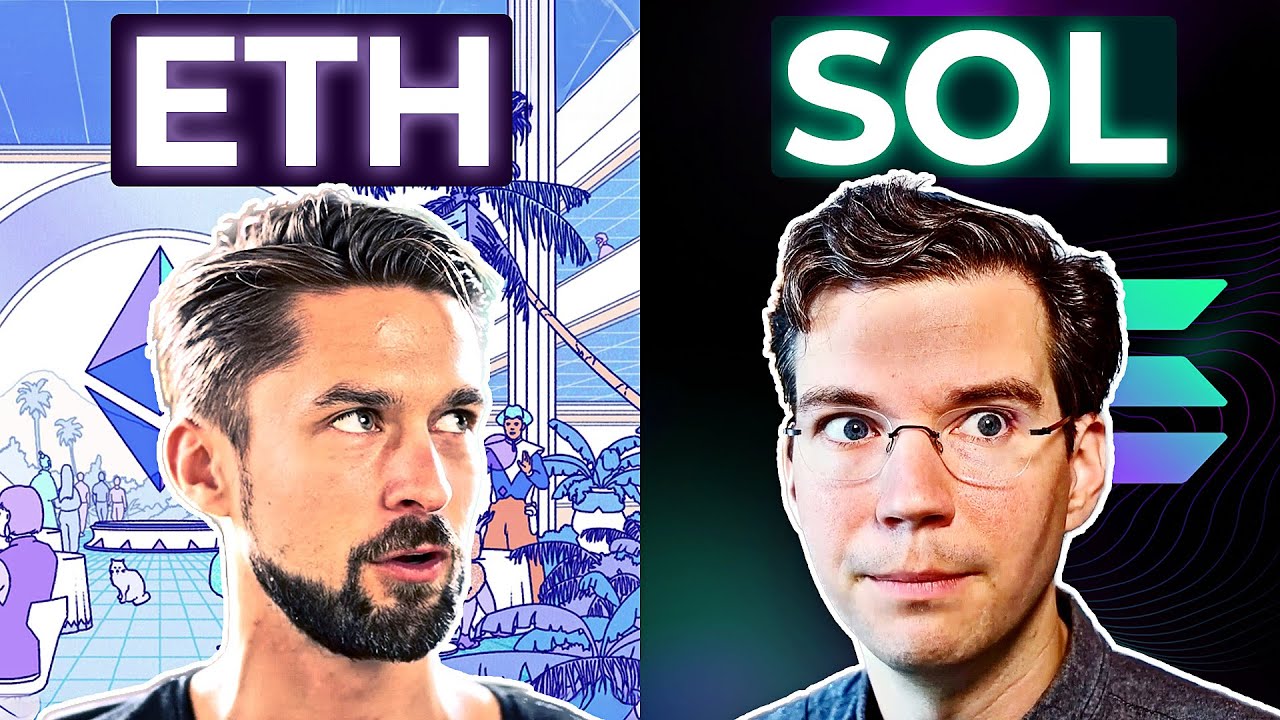
Host: David, Bankless
Guest: Austin Federa (@Austin_Federa), Head of Strategy at the Solana Foundation
Original Title: "Is SOL Money? with Austin Federa, Head of Strategy, Solana Foundation"
Video Credit: Bankless Podcast
Episode: Link
Release Date: August 10
Solana's Core Philosophy and Network Architecture
-
David noted that assets and culture are deeply intertwined in this space, and he asked what values SOL embodies.
-
Austin used urban planning as an analogy to explain network architecture. Just as New York and San Francisco differ functionally due to different city planning, so too do Bitcoin, Solana, and Ethereum support different types of activities.
-
David asked whether SOL is following a narrative trajectory similar to Ethereum. Austin began explaining Solana’s core vision: to build a global state machine as fast as traditional financial markets. He mentioned that Solana started with a very narrow focus—primarily finance—excluding NFTs, social tokens, and other Web3 sectors. This mirrors Ethereum’s early trajectory, which also began with a focused use case before expanding over time into broader applications.
-
Austin emphasized the need to keep the network as fast as possible and transaction costs as low as feasible. He compared Ethereum and Solana’s differing network architectures and economic models. Ethereum uses a multi-layered architecture allowing greater flexibility for scaling and optimization, while Solana relies on a single-layer design to achieve higher performance and lower fees.
-
On economics, both include transaction fees and inflationary rewards, but Solana’s inflation rate decreases annually, whereas Ethereum’s is fixed.
-
Austin added that Solana aims to compress everything into one stack rather than spreading it across multiple layers like Ethereum. He highlighted some of Solana’s technical features such as QUIC networking protocol, native fee markets, and stake-weighted QoS.
(TechFlow note: QUIC is a new transport-layer network protocol designed to replace TCP, offering lower latency and higher performance. In blockchain environments, low-latency and high-performance connections are crucial because they accelerate transaction and data transmission.)
(QoS, or Quality of Service, refers to strategies ensuring data transmission quality. Stake-weighted QoS likely means data transmission priority on the Solana network is determined by stake—participants with more stake may receive higher transmission priority.)
Solana’s Consensus Mechanism, Economic Model, and Technical Features
-
Austin stressed that Solana’s design philosophy centers around speed and performance, aiming to be the fastest blockchain through its unique consensus mechanism and technical innovations.
-
David brought up Ethereum 2.0 and its transition to proof-of-stake (PoS). Austin noted that although Solana and Ethereum differ technically, both aim to improve scalability and performance.
-
Austin described Solana’s PoS mechanism: validators must stake SOL tokens to participate in consensus, helping secure the network and promote honest behavior.
-
Regarding Solana’s economic model, Austin explained that SOL primarily serves as collateral to protect the network from attacks and to pay transaction fees—very similar to Ethereum’s model.
-
Austin believes the SOL economic model is viable if blockchain demand continues to grow. He praised Ethereum’s community for strong economic modeling—creating a system where deflationary effects occur even without increasing adoption.
-
Austin noted Solana’s goal is to keep base-layer transaction fees extremely low. Even when SOL reaches all-time highs, transaction costs remain minimal. He explained that Solana’s original economic model assumed a lower SOL price, and no one anticipated such rapid adoption by users and developers.
-
Austin pointed out differences between Ethereum and Solana in inflation and reward structures. He clarified that Solana’s inflation rewards contributors like validators and stakers.
-
Solana’s inflation starts at 7% and decreases by 1.5% each year until stabilizing at 1.5%. This declining model gradually reduces new token issuance, easing inflationary pressure. As long as blocks are produced, inflation rewards continue—similar to Ethereum, where validators earn rewards for their contributions.
-
Austin also highlighted Solana’s other strengths: high performance, low latency, and high throughput. These make Solana highly attractive, especially for applications requiring speed and low cost.
-
On application differences, Austin observed that apps serve different purposes—for example, Uniswap is designed for large trades, but high fees on Ethereum make trading costly.
-
Austin addressed liquidity fragmentation issues, noting that deploying apps like Uniswap across multiple chains splits liquidity.
-
He also discussed Solana’s liquid staking derivative (LSD) ecosystem, which allows users to stake tokens and receive a new token representing their stake. This enables participation in other DeFi apps instead of locking funds. He mentioned Lido, Marinade, and other liquid staking platforms built for Solana.
Comparison of MEV Strategies: Solana vs Ethereum
-
David asked about Solana’s approach to MEV (Maximal Extractable Value). Austin explained that Solana’s ultra-low fees allow MEV bots to pursue smaller profit opportunities that might not be economical on other blockchains.
-
Austin noted that MEV on Solana resembles high-frequency trading—opportunities are fleeting and frequent due to fast block times. On Ethereum, MEV is more like “fishing in a barrel,” implying larger but less frequent opportunities.
-
David stated Ethereum aims to eliminate MEV, meaning the community is working to reduce or remove validators’ ability to profit from their position. However, Austin expressed skepticism, suggesting this goal may face challenges as Ethereum becomes more mainstream.
-
Austin explained Solana’s stake-weighted QoS as part of its MEV mitigation strategy. This likely means data transmission priority on Solana is based on stake (e.g., amount of SOL held or staked).
-
He also mentioned Judo Soul, a staking pool token linked to the Judo MEV client. Users can buy Judo Soul to delegate their stake to specific validators. When those validators earn MEV profits, Judo Soul holders receive a share—enabling users to benefit from MEV without being validators themselves.
-
Austin expressed doubt that Ethereum could implement MEV burning effectively, as it would require external data inputs vulnerable to manipulation.
-
While the community might punish non-compliant actors, enforcing such a policy in practice could be difficult—it might violate Ethereum’s social contract and lead to division or controversy.
-
Austin concluded that while MEV burning sounds appealing in theory, it faces significant practical challenges and obstacles.
Join TechFlow official community to stay tuned
Telegram:https://t.me/TechFlowDaily
X (Twitter):https://x.com/TechFlowPost
X (Twitter) EN:https://x.com/BlockFlow_News
 深潮TechFlow