









Move Wars: What Independent Innovations Do Aptos and Sui Offer in Their Technical Approaches?
TechFlow Selected TechFlow Selected
Move Wars: What Independent Innovations Do Aptos and Sui Offer in Their Technical Approaches?
Aptos gained market share by entering the market relatively early and attracting significant attention, while Sui benefited from its innovative and security-focused approach.
 Navigating Web3 tides with focused insights
Author: PAUL VERADITTAKIT, Partner at Pantera Capital
Translation: TechFlow
Since Bitcoin's inception, we have witnessed the "L1 wars," driving the development of cutting-edge technologies to solve the blockchain trilemma. The demand for highly scalable solutions has persisted, as no single solution can meet industry needs while ensuring top-tier security. This led to the creation of Sui and Aptos, which leverage the architecture from Facebook’s abandoned Diem and Novi projects.
Aptos
Led by Mo Shaikh and Avery Ching—executives from Diem/Novi—Aptos Labs created the Aptos blockchain to revive Diem’s technology and compete with market leaders like Ethereum and Bitcoin. Aptos aims to deliver flexible, scalable, and secure infrastructure. It leverages Diem’s architecture along with advanced technologies to ensure high throughput, low latency, and verifiable state synchronization.
Sui
Developed by Mysten Labs and managed by former Facebook executives Evan Cheng and Sam Blackshear, Sui aims to overcome the limitations faced by current crypto networks in order to support mass adoption. Unlike Aptos, Sui is not a derivative of Diem but is built from scratch, fully leveraging inherent scalability and fast settlement capabilities. Sui is designed to provide high throughput, low latency, and cost-effective computing resources to support applications serving billions of users.
Move: A Scalable Language
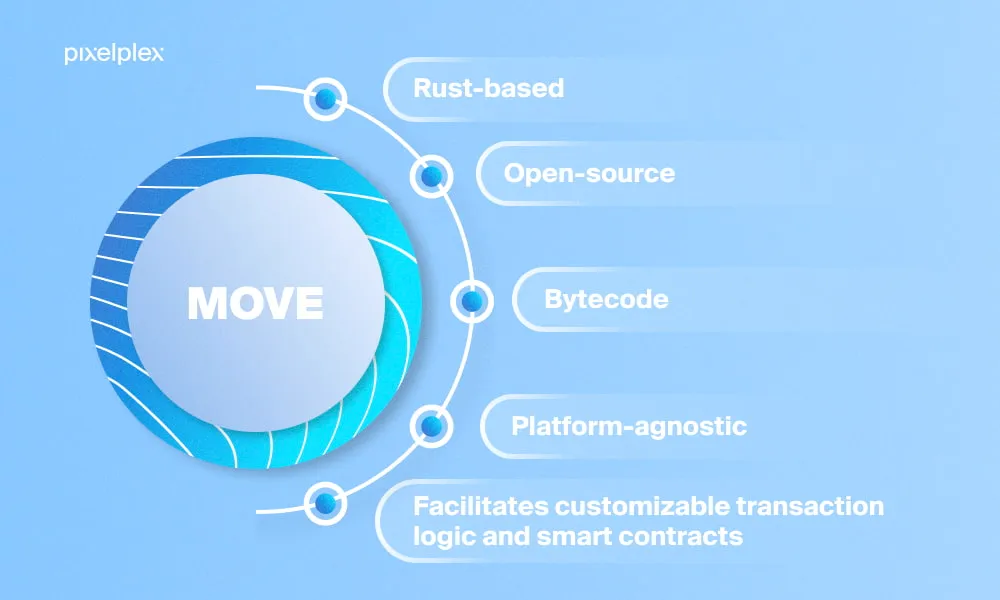
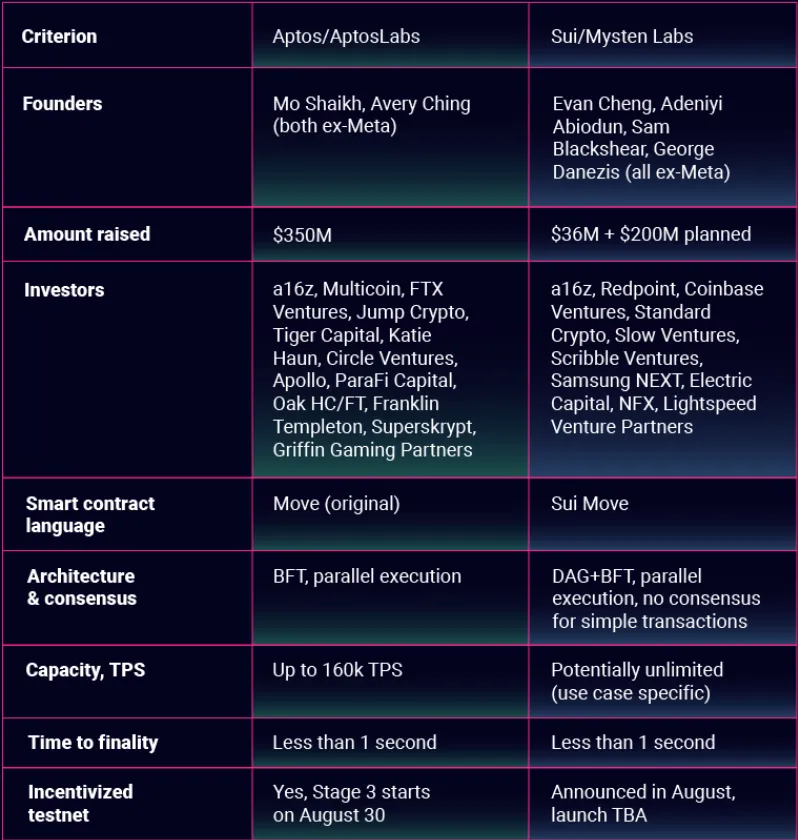
Both blockchains use Move, a Rust-based programming language enabling parallel processing. The Move ecosystem includes compilers, virtual machines, and other development tools. Aptos uses the core implementation of this language, while Sui has made minor modifications to better suit its architecture.
Background
Move is a bytecode language used to design custom transactions and smart contracts. What distinguishes Move from other languages like Solidity is its resource management capability and emphasis on scarcity and access control for digital assets. Scarcity limits the creation of assets to reduce double-spending risks, while access control governs ownership and asset access. Move’s resource management is based on linear logic—a mathematical concept treating assets as absolute resources that are permanently lost once consumed. This resource specificity enables secure transfers between program storage locations without implicit deletion or copying, hence the name “Move.”
Sui’s Move Modifications
While Aptos largely follows the Move implementation described in Diem’s whitepaper, Sui introduces an object-oriented storage system to track everything including addresses and transactions.
Sui categorizes attributes into objects defined as follows:
-
Shared Objects: Mutable, without a clear owner, and usable across multi-party transactions without authorization.
-
Owned Objects: Have a unique owner and can only be modified by that user.
-
Read-only Objects: No unique owner, immutable after publication, and available for all users in transactions.
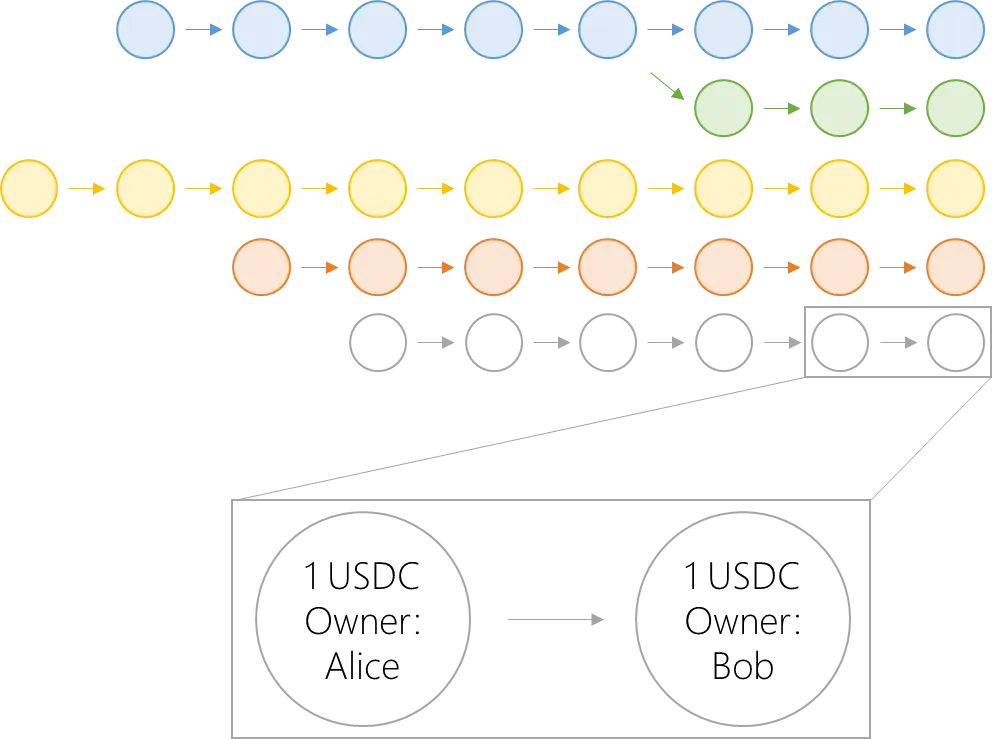
Categorizing these assets into distinct domains reduces processing and transaction times, enabling scalability for NFTs, gaming items, and more. This also forms Sui’s primary foundation in the NFT/gaming sector.
Sui/Aptos Consensus Mechanisms
Consensus is the process by which blockchain nodes (validators) agree on the validity of transactions and blocks. Both Aptos and Sui are built upon the widely accepted Byzantine Fault Tolerance (BFT) framework. The core principle of consensus is that the network remains functional even if up to one-third of validators become malicious or fail.
Byzantine Fault Tolerance (BFT)
The basic principles of Byzantine Fault Tolerance are as follows:
-
A network consists of validators who collectively hold N voting rights to approve new blocks.
-
N is typically set to 3F+1, allowing the system to tolerate F faulty validators. This means up to F validators may be malicious, slow, or disconnected.
-
In each round, a leader is selected randomly and transparently.
-
During each cycle, the leader proposes a new block, and the remaining validators vote on it.
-
As long as 2F+1 votes come from honest validators, agreement is reached.
Task Parallelization Techniques
Aptos’ Block-STM
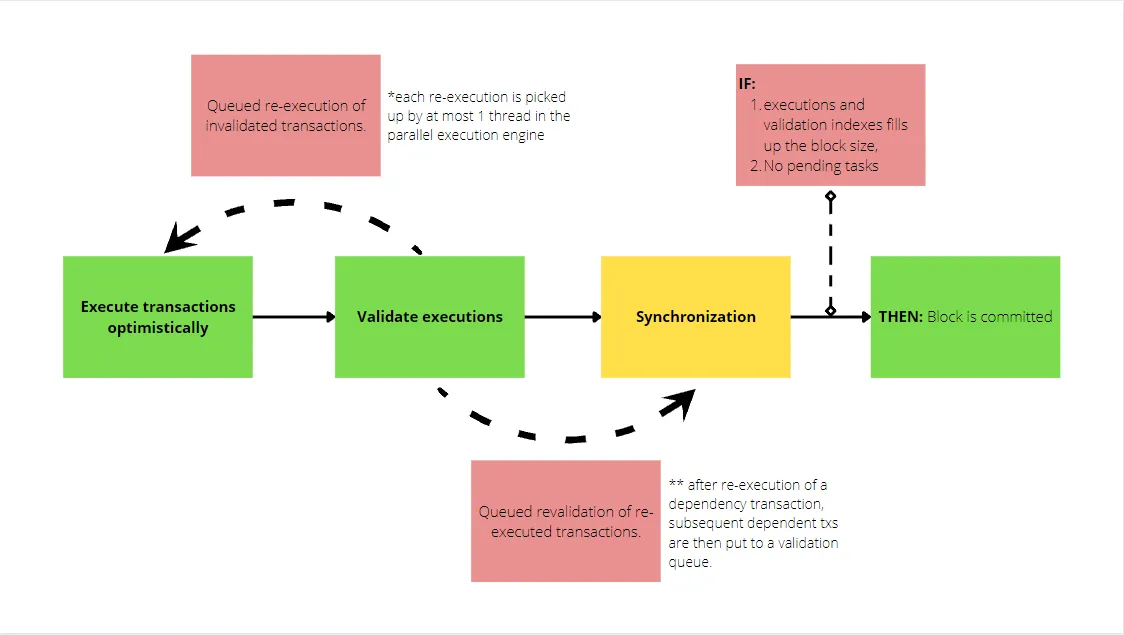
Aptos achieves parallelization via Block-STM—an enhanced version of the high-performance HotStuff algorithm inspired by Software Transactional Memory. Block-STM identifies relationships among transactions and enables their parallel execution. If a transaction fails validation due to dependencies, it can be re-executed; otherwise, it is discarded. Once conflicts are resolved using deferred commit methods, all transactions within a block are committed simultaneously to the blockchain. This approach saves time and resources, eliminating the need for sequential transaction processing.
Sui’s Narwhal and Tusk
For complex processes, Sui employs Narwhal and Tusk consensus mechanisms in its execution layer to achieve parallelization. Narwhal is a mempool module that ensures data submitted to consensus is available. Narwhal’s design uses a Directed Acyclic Graph (DAG), where many components are connected across the network rather than in chains (similar to distributed ledgers). It can also operate independently with other consensus engines—including HotStuff or Cosmos’ Ignite—without requiring Tusk.
-
A sender (similar to a leader node) broadcasts a transaction to all Sui validators.
-
The sender receives votes from Sui validators. Voting weight is proportionally allocated based on each validator’s stake in Sui under a delegated proof-of-stake setup.
-
Once the sender collects enough votes to satisfy Byzantine majority conditions, it creates a certificate. Validators must reach consensus via a Byzantine agreement protocol to order certificates sequentially.
-
After sequentially processing each certificate, the sender sends the final certificate back to validators to complete transaction finality.
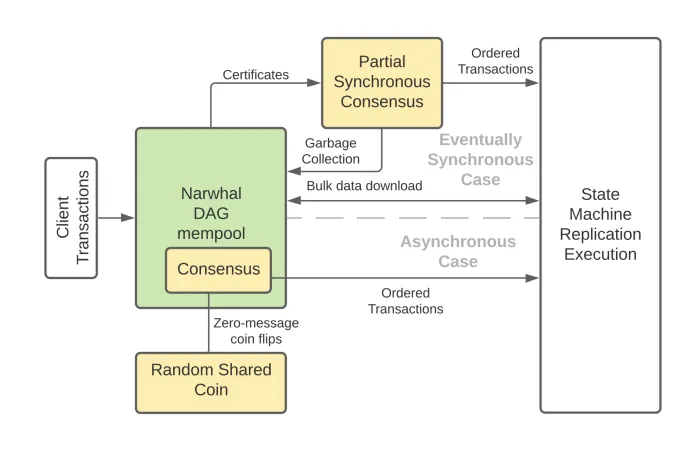
Sui transactions are connected in a network graph format rather than being stacked sequentially in a blockchain. This DAG-based data paradigm, combined with breaking transactions into smaller parts and leveraging their intrinsic properties, enhances scalability. Sui’s asynchronous architecture provides resilience against denial-of-service attacks, while the high-performance BFT consensus mechanism Tusk ensures transaction ordering. Together, Narwhal and Tusk enable each validator to process more transactions within a given timeframe.
Product Performance

Aptos: Processes 160,000 transactions per second;
Aptos boasts a throughput of 160,000 transactions per second (TPS). This achievement stems from four key technological advancements: parallel transaction execution, state synchronization, deferred commitment, and collaborative scheduling.
-
Parallel Transaction Execution – Concurrently processes transactions and re-executes dependent processes.
-
State Synchronization – Chain data can be synchronized and verified by reliable non-validators.
-
Collaborative Scheduling – Enables optimized resource allocation during scheduling to accelerate processing.
-
Deferred Commitment – Concept of batching transaction commits after completion of the Block-STM process.
Sui: Processes 120,000 TPS and “infinite” TPS.
An eight-core MacBook Pro can process over 120,000 transactions per second on the Sui blockchain.
This heavily depends on transaction type, as simple transactions require minimal consensus and allow horizontal scaling. Sui’s performance could be “infinite” at maximum scale. As network demand grows, Sui nodes can continue adding workers to handle additional transactions.
Use Cases
Both Aptos and Sui support a wide range of use cases across industries and applications.
Aptos’ versatile architecture makes it suitable for diverse application domains. Its primary goal is to decentralize the cloud infrastructure supporting Web 2.0 applications and promote widespread Web 3.0 adoption. With scalability, security, and low fees, the Aptos blockchain is ideal for finance, supply chain management, decentralized finance (DeFi), gaming, identity management, and more. The platform’s focus on solving real-world problems makes it an attractive choice for developers and enterprises seeking robust and scalable blockchain solutions.
As a permissionless Layer 1 blockchain, Sui offers instant settlement, high throughput, and low latency, making it suitable for various industries and use cases. Its emphasis on energy efficiency and decentralization makes Sui ideal for finance, Internet of Things (IoT), gaming, social media, content sharing, and other latency-sensitive fields. Sui’s commitment to supporting latency-sensitive decentralized applications positions it as a strong contender within the blockchain ecosystem.
Market Performance
Aptos has secured substantial funding from prominent venture capital firms, totaling approximately $400 million. Investors include Andreessen Horowitz, FTX Ventures, Jump Crypto, a16z, Tiger Global, and Multicoin Capital. This strong financial backing highlights investor confidence in the Aptos project and its growth potential. Participation from renowned firms not only provides capital but also opens doors to strategic collaborations and partnerships, further solidifying Aptos’ market position.
Sui has similarly received strong support from major investors such as Lightspeed Venture Partners, Andreessen Horowitz, and Redpoint. In its latest Series B round, Sui raised a remarkable $300 million, bringing its total funding to $336 million following a $36 million Series A round. The significant funding and a valuation exceeding $2 billion reflect strong market interest and confidence in the Sui project. Involvement from top-tier investors paves the way for strategic alliances and partnerships, contributing to Sui’s growth and ecosystem development.

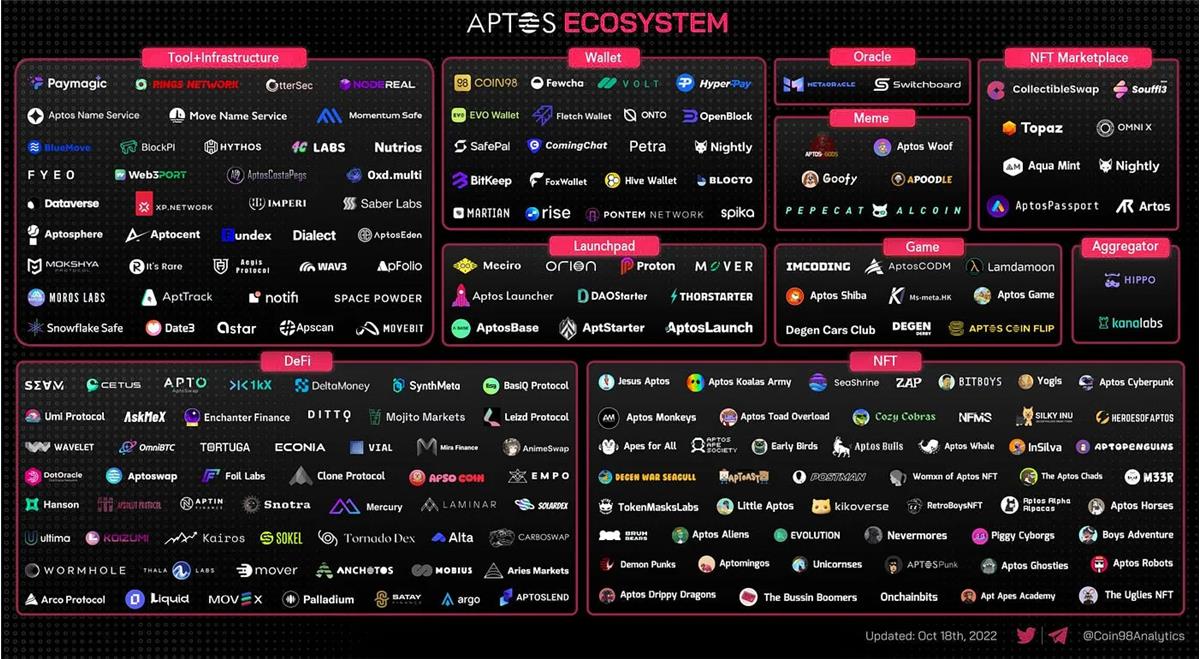
Moreover, both Aptos and Sui have cultivated vibrant and active communities of developers, enthusiasts, and users. These communities actively contribute to the ecosystem through application development, participation in discussions, and idea sharing. Both platforms foster innovation, collaboration, and adoption through community-driven approaches, building strong ecosystems around Aptos and Sui.
Final Thoughts
Although it remains unclear which solution will emerge as the dominant market leader, both Aptos and Sui have made significant strides in their development, greatly advancing the current state of blockchain design. Aptos gained market share through relatively early entry and substantial attention, while Sui benefits from its innovative and security-focused approach. One thing is certain: with their immense potential to enhance the scalability and security of crypto networks, Move-based technologies are poised to leave a lasting impact on the industry.
Join TechFlow official community to stay tuned
Telegram:https://t.me/TechFlowDaily
X (Twitter):https://x.com/TechFlowPost
X (Twitter) EN:https://x.com/BlockFlow_News
 Pantera Capital






