Building the Web3 Utopia: TRON and Justin Sun's Masterstroke in Japan
TechFlow Selected TechFlow Selected
Building the Web3 Utopia: TRON and Justin Sun's Masterstroke in Japan
Tron enters Japan, arriving late but advancing first in Web3.
 Navigating Web3 tides with focused insights
In the early days of the crypto industry, regions represented by Japan and Hong Kong SAR of China were major global forces in cryptocurrency.
From the earliest Bitcoin exchange Mt. Gox to Cardano, known as "Japan's Ethereum," Japan stood at the forefront of Web3 innovation. Alongside exchanges in Hong Kong and South Korea’s so-called "kimchi premium" phenomenon, they formed the earliest historical chapters of Asia's Web3 development.
Asia's contributions to Web3 go beyond this. Stablecoins like TRC20-USDT have established pricing benchmarks and market scale for the entire industry. TRON, which originated and grew in Asia, now aims to enter a new phase of Asian expansion—with Japan as its primary breakthrough market.
As Justin Sun, founder of TRON and member of Huobi Global Advisory Board, stated: “The main driver behind Web3 comes from the convergence of finance and blockchain technology, with stablecoins and RWA being two key areas.” TRON has extensive experience in both fields—issuing USDT and TUSD on one hand, and launching stUSDT, its latest RWA product, on the other.
Japan is also among the first to explore regulatory frameworks and emerging sectors such as the metaverse and NFTs. Unlike Dubai, Singapore, or Hong Kong, within large developed Asian economies, Japan stands out as one of the more Web3-friendly regions.
Japan hopes to surpass competitors and become the next leader in the Web3 wave.
Undeterred by bull or bear markets, Japan is fully committing itself. The Ministry of Economy, Trade and Industry (METI)-led “Start Next Innovator” program has already sent 1,000 entrepreneurs and students to regions like Silicon Valley over the past five years. This year, it will expand to include France and Singapore, broadening participants’ horizons and nurturing emerging industries—including Web3—as top priorities.
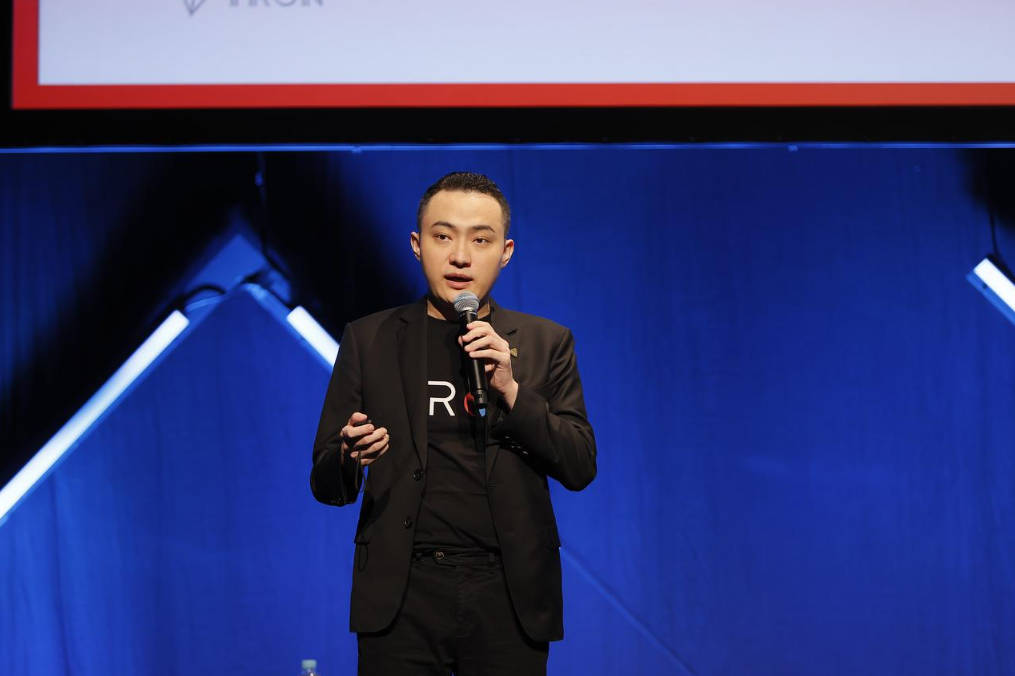
Opening its eyes to the world, Japan’s strategic moves in Web3 are drawing significant attention. At the upcoming WebX conference this month, important figures including Japanese Prime Minister Fumio Kishida and Justin Sun will gather to explore what could be Japan’s defining moment in Web3.
Japan + Web3: A New Era of "Shokusan Kogyo" (Industrial Promotion)
Unlike Western countries that often adopt laissez-faire policies followed by post-hoc regulation, Japan follows a government-led industrial model inherited since the Meiji Restoration—and this approach extends into the Web3 domain.
Unite Efforts, Align Vision and Action
In May 2022, Prime Minister Fumio Kishida announced plans to use blockchain technology along with NFTs and the metaverse to build a more innovative society, aiming for an “income doubling” initiative and realizing a virtuous cycle of “growth and distribution” under a new form of capitalism;
In June 2022, Japan’s parliament recognized stablecoins as a legal form of digital currency, becoming the first major economy to do so;
In July 2022, METI established a Web3 Policy Office under the Minister’s Secretariat to develop policy frameworks encouraging entrepreneurs to stay in Japan and improving the business environment for Web3;
In April 2023, Japan released its Web3 White Paper, proposing reforms across multiple areas including NFTs and DAOs, particularly around tax laws to reduce negative impacts on token issuance and holding;
Most significantly, during the "WebX" meeting on July 25, 2023, Prime Minister Fumio Kishida delivered a video address stating that Web3 can transform the current internet landscape and drive broad social change, positioning Japan to leverage Web3 as a crucial tool to solve existing societal challenges.
This support goes beyond personal enthusiasm from the prime minister. Government agencies and various sectors of society are increasingly recognizing the foundational transformative potential of Web3—just as Web2 revolutionized Web1, mobile internet surpassed the PC era, and smartphones replaced keypad phones, ultimately giving rise to global giants like TikTok.
It is fair to say that Japan now aims to bet big on Web3 to secure a leading position in the evolution of the global internet. Justin Sun, founder of TRON and member of Huobi Global Advisory Board—one of the event’s major sponsors—also noted: “At this stage, just like countless historical precedents, without a flexible regulatory framework, the innovative vision of Web3 cannot be truly realized.”
Policy First, Development Follows
Japanese government policy has closely accompanied Web3 development—from the early exchange era through NFTs and the metaverse—all eventually unified under the broader concept of Web3.
The 2017 Payment Services Act designated the Financial Services Agency (FSA) as the main regulator for cryptocurrencies, making Japan one of the first jurisdictions globally to distinguish between securities and crypto assets. It established consumer protection principles, required strict separation between exchange-operated funds and user funds, and enforced rigorous anti-money laundering compliance measures.
Later events are well known: after the FTX collapse, Binance and others launched proof-of-reserves competitions, while Wall Street-backed EDX emphasized third-party custodial models where exchanges never hold user funds.
This highlights Japan’s unique advantage in Web3 development: its regulatory system remains the only framework that effectively balances interests among individuals, government, and enterprises. After the FTX crash, subsidiaries worldwide faced crises—but FTX Japan was an exception. Due to Japan’s stringent regulations, FTX Japan’s customers did not suffer severe bank runs.
This test proved the effectiveness of Japan’s regulatory model. Now, having demonstrated resilience, Japan seeks to reclaim its lost three decades and catch up on the mobile internet revolution it missed.
In March 2022, Japan’s ruling Liberal Democratic Party released an “NFT White Paper (Policy Recommendations),” developed almost concurrently with NFT growth. Unusually fast by Japan’s bureaucratic standards—taking only about three months—it marked a rare speed in policy-making.
A year later, the “Web3 White Paper—Toward an Era Where Everyone Can Utilize Digital Assets” was published, addressing critical issues such as tax reform that matter most to investors and practitioners. Notably, it emphasizes alignment with international norms rather than isolationist policymaking.
Beyond Web3, AI represents another frontier.
After ChatGPT stunned the world, the Japanese government quickly invited OpenAI co-founder Sam Altman for a visit—an action starkly different from Japan’s traditional image of conservatism. For a country that only phased out floppy disks in the 21st century, such rapid adaptation is nothing short of miraculous.
This marks a determined effort to rejoin the global technological race.
Entering the Mainstream: TRON’s Strategy
Change and innovation constantly unfold in Web3. Emerging trends must be tracked promptly. Take RWA (Real World Assets), for example—a promising gateway for institutions, governments, and corporations to enter Web3 en masse—yet few platforms offer viable solutions today.
As mentioned earlier, Japan maintains a relatively favorable stance toward stablecoins. However, the global stablecoin landscape is already dominated, making entry via yen-backed stablecoins challenging. In contrast, RWA-based stablecoin strategies appear more acceptable to regulators while ensuring investor asset security.
TRON has long been building expertise in stablecoins and RWA products. Its re-staking product stUSDT, built on USDT, has already reached $416 million in total value locked. With over $40 billion in circulating USDT on TRON, there remains at least a hundredfold growth potential. Expanding aggressively into Japan now would inevitably boost market share.
A new era of transformation has begun, and Japan is re-engaging. The government will lead multi-pronged initiatives promoting comprehensive IT adoption—“DX (Digital Transformation)”—including expanding the use of Web3 services.
Key efforts focus on applications in stablecoins and RWA, aiming to increase nationwide Web3 adoption and spark a uniquely Japanese Web3 revolution to recover lost time.
Bright Future for Stablecoins
Currently, mainstream Japanese consumers remain largely unaware of or uninterested in Web3. Stronger public education is needed to convert supportive policies into actual market penetration.
-
Listing tokens on Japanese exchanges requires adherence to strict rules set by the Japan Virtual Currency Exchange Association (JVCEA), including the “Guidelines on New Coin Listings,” a process even more rigorous than traditional IPOs, typically taking anywhere from three months to two years;
-
Only about 5% of Japanese consumers have used native blockchain products like crypto wallets, and foreign companies face high barriers entering the Japanese market;
-
Traditional gaming giants like Nintendo show limited enthusiasm for NFTs, GameFi, or the metaverse, cautiously testing Web3-related business models using conventional approaches.
As previously noted, Japan has lifted restrictions on stablecoins. At this conference, TRON highlighted stablecoins as a core focus, emphasizing that TRON hosts the largest circulation of the world’s biggest stablecoin, USDT, accounting for 52% of the global supply—over $44 billion.
As Justin Sun points out, CBDCs may have the advantage of being issued by central banks with governmental backing, but they raise concerns about tracking user behavior and infringing privacy. Meanwhile, stablecoins have operated successfully for years, forming a real market worth approximately $150 billion.

In practice, stablecoins and CBDCs can coexist and complement each other—for instance, issuing 1:1 CBDC-backed stablecoins usable in cross-border settlements. Such transactions require only a smartphone and a blockchain address, bypassing complex traditional banking systems.
For example, TRON supports multiple stablecoins, including the rapidly growing True USD, whose market cap surged to $3 billion this year.
The digital yen is one of Japan’s key initiatives currently under consideration, with discussions focusing on issuance design—potentially leveraging existing public blockchains to connect to the global network.
RWA Fits Japan’s Market Better
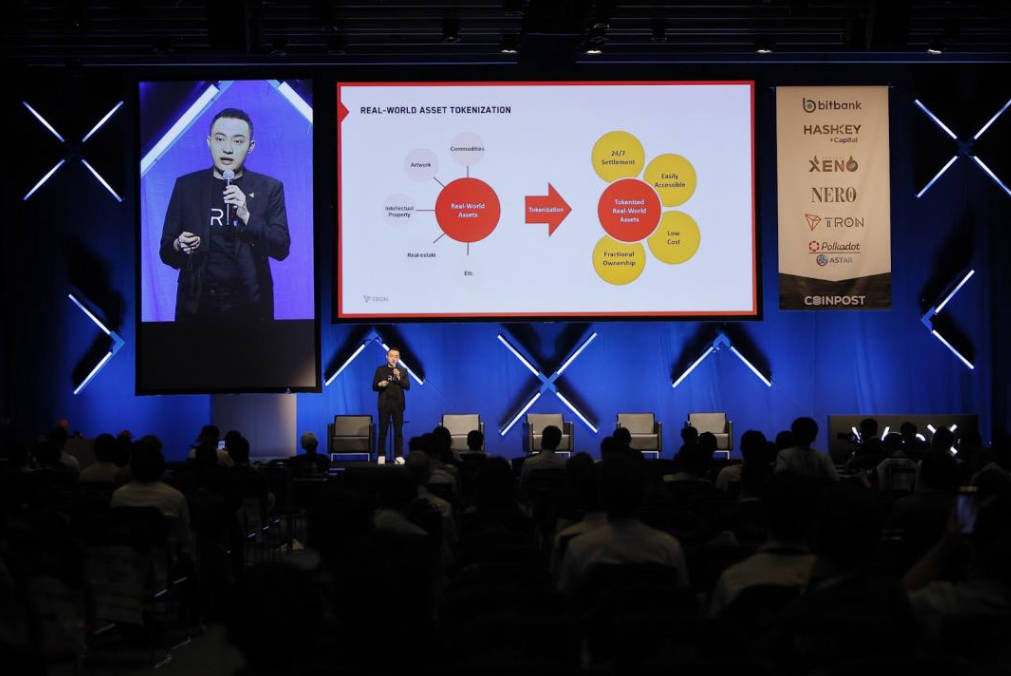
As RWA gains momentum, Justin Sun is introducing the concept to Japan. While Japanese corporations tend to be conservative overall, some are stepping forward. For example, NTT Docomo, Japan’s telecom giant, plans to invest up to 600 billion yen (approximately $4 billion) in Web3 technologies and startups to support domestic innovation.
Japan excels in regulation, a strength acknowledged globally. RWA aligns perfectly with this strength, as tokenizing real-world assets requires validation and certification from government bodies and third-party organizations. In theory, even stablecoin issuance qualifies as an RWA model.
Further, stUSDT supported by TRON is itself an RWA product, modeled after Lido’s re-staking mechanism, distributing yield to all holders. Here, TRON serves dual roles—as both issuer and infrastructure for stUSDT—offering valuable insights for Japan’s Web3 journey.
However, Japan currently considers launching stablecoins on Ethereum. Whether TRON will be accepted or integrated remains uncertain, as Japan’s traditionally cautious approach leaves open questions about how far it will open its doors.
Another stablecoin issuer, True, offers TCNH, an offshore Chinese yuan-pegged stablecoin. A similar model could work for yen-backed stablecoins, operating within full regulatory oversight. Assets ranging from real estate and commodities to art could be tokenized, unlocking liquidity through fractional ownership and enabling broader participation by individual investors—introducing entirely new investment avenues beyond simple token purchases.
Quoting Plato, “A city is made virtuous and good by being made a unity.” Unity is the noblest quality of any society, and the global nature of Web3 is precisely what humanity lacks today.
From East to West, division and conflict prevail—yet Japan, once isolated, is seizing this opportunity to reshape its own digital future.
For Japan, Web3 may prove to be a pivotal catalyst for economic revival—akin to the Industrial Revolution for Britain or the Information Revolution for the United States.
In fact, Japan’s innovations in Web3 extend further, including comprehensive emulation of Hong Kong’s talent policies, such as introducing a digital nomad visa based on models already operational in parts of Europe.
Secondly, Japan plans to significantly relax visa requirements for overseas entrepreneurs—not limited to founders and job seekers, but also venture capital firms and related organizations. Startup visas will support foreigners launching businesses in Japan within one year, greatly easing review conditions compared to the previous “Business & Management” visa.
Moreover, foreign entrepreneurs now face fewer hurdles opening bank accounts in Japan, reflecting a full commitment to creating convenient residency conditions. A more welcoming domestic environment could retain startups that previously left, cultivating a strong local market base with potential for global expansion.
For TRON, entering the Japanese market marks a major addition to its Asia-Pacific strategy. A developed economy of 100 million people could reshape the existing Web3 industry landscape, elevating Asian crypto power to rival that of Europe and America.
Still, caution is warranted. Japan’s overall Web3 ecosystem remains fragile. TRON’s ambitious goals won’t materialize overnight, and competition in RWA and stablecoin issuance will be intense.
Join TechFlow official community to stay tuned
Telegram:https://t.me/TechFlowDaily
X (Twitter):https://x.com/TechFlowPost
X (Twitter) EN:https://x.com/BlockFlow_News