The King of Death-Spiral Financing: Riding the Bitcoin Wave to the Top of Japan’s Capital Markets
TechFlow Selected TechFlow Selected
The King of Death-Spiral Financing: Riding the Bitcoin Wave to the Top of Japan’s Capital Markets
How Did Michael Lerch Become the Preferred Financing Partner for Struggling Small- and Mid-Cap Japanese Companies?
 Navigating Web3 tides with focused insights
By Alice French, Bloomberg
Translated by Saoirse, Foresight News
Within Tokyo’s tightly knit financial circles, few figures provoke as much controversy as Michael Lerch.
To some, he is a white knight—the enigmatic American investor who rescues struggling Japanese companies from the brink of bankruptcy. To others, he is a greedy hyena: a profit-driven hedge fund manager who preys on vulnerable, crisis-ridden enterprises.
Across Japan’s capital markets, Lerch has become synonymous with “death spiral” financing—a lucrative yet highly contentious funding model. His boutique investment fund, Evo, is Japan’s largest buyer of floating-strike equity warrants, a niche financing instrument primarily targeting small publicly listed companies facing cash-flow constraints. While these contracts can rapidly inject liquidity to sustain operations, they also trigger massive equity dilution—hence the pejorative moniker.
(Note: Floating-strike equity warrants—commonly dubbed “death spiral” financing instruments—feature exercise prices that dynamically decrease alongside the stock price, easily triggering a vicious cycle of continuous equity dilution and share-price decline. Their rampant misuse in Japan stems from limited financing channels for domestic small-cap, low-quality firms; exchange-imposed market-capitalization rules forcing distressed companies to seek lifelines; lax regulatory oversight; and dominance of financing supply by top-tier institutions—leaving companies no choice but to accept high-risk contracts to retain listing status.)
After graduating from Princeton University, Lerch arrived in Japan in the 1990s. For years thereafter, he operated largely out of the public eye, building his financial empire through arbitrage trading. That changed last year: Metaplanet, a previously lackluster hotel operator, suddenly surged into prominence after purchasing over $2 billion worth of Bitcoin—nearly all funded via warrant financing provided by Evo.
This aggressive Bitcoin accumulation propelled Metaplanet’s stock price to dizzying heights, attracting retail investors, major institutional players—and even members of the Trump family—demonstrating, in vivid fashion, the extraordinary profitability of Lerch’s business model.
According to data from Japan’s I-N Information Systems, Evo’s series of transactions with Metaplanet made 2025 the year with the highest-ever issuance volume of floating-strike warrants in Japan. Last year, Evo’s total value of such financial deals in Japan exceeded ¥1 trillion (approximately $6.3 billion), accounting for over 80% of the entire market.
Japan’s floating-strike warrant issuance hits record high
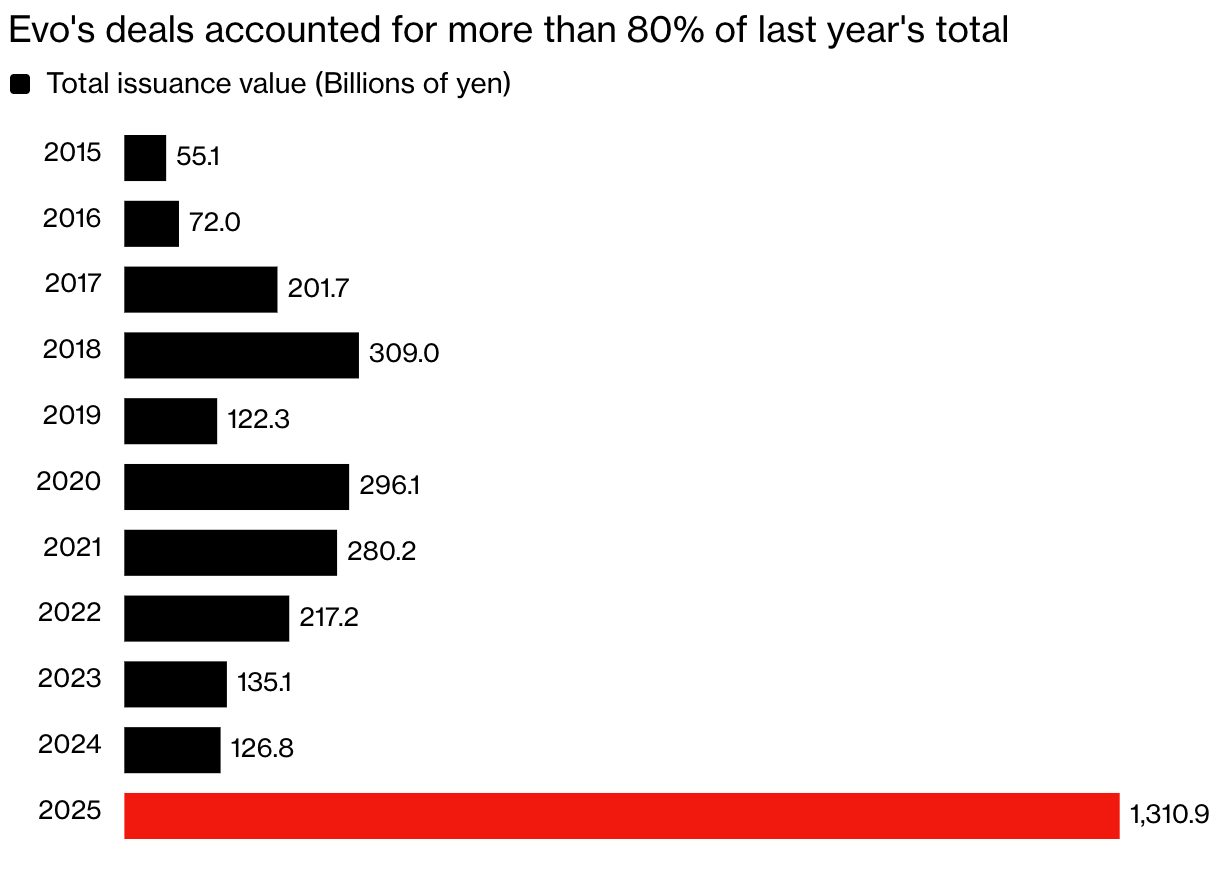
Evo accounted for over 80% of last year’s market volume
Note: Values include initial issue price and maximum fundraising amount
Source: I-N Information Systems, Bloomberg
The boom carried into 2026. According to its official website, Evo has signed equity financing agreements with at least 10 Japanese companies so far this year.
Soaring demand for Lerch’s financing services has also brought Japan’s rampant abuse of floating-strike warrants into sharp focus. This coincides with the Japanese government’s expansion of its tax-exempt investment program, drawing a record number of retail investors into the stock market—and amplifying associated risks. These warrants enable third parties to issue large volumes of new shares at steep discounts, continuously diluting minority shareholders’ stakes.
Sadakazu Osaki, Chief Researcher at Nomura Research Institute and a veteran expert on Japan’s equity capital markets, said: “These warrants represent the last resort for underperforming companies. Such spiral transactions cause equity dilution and suppress share prices. Once ordinary retail investors get caught up, they face enormous risk.”
Evo’s stellar performance last year thrust the long-reclusive Lerch into the spotlight. He has always operated discreetly, granting only one interview—to Bloomberg—in 2015. Last December, he reappeared in headlines when a London court ruled that his Nevada-based Evolution Capital Management must pay over $5 million in disputed bonus compensation to a disgruntled former trader.
This report draws on interviews with more than 20 former employees, clients, and industry insiders familiar with Lerch’s operations (most requested anonymity for privacy), supplemented by Japanese public company financial disclosures, London court litigation documents, and other judicial records. Collectively, these sources reveal how this previously obscure fund—leveraging highly advantageous partnership terms and an uncompromising, decisive approach—has become a go-to financing partner for Tokyo-based enterprises.
Lerch, now residing year-round at his lakeside estate in Lake Tahoe, Nevada, and his Evolution Financial Group have both declined to comment on this report. Evolution Capital’s London counsel in the court case also did not respond to interview requests.
Evo is Japan’s most popular warrant partner
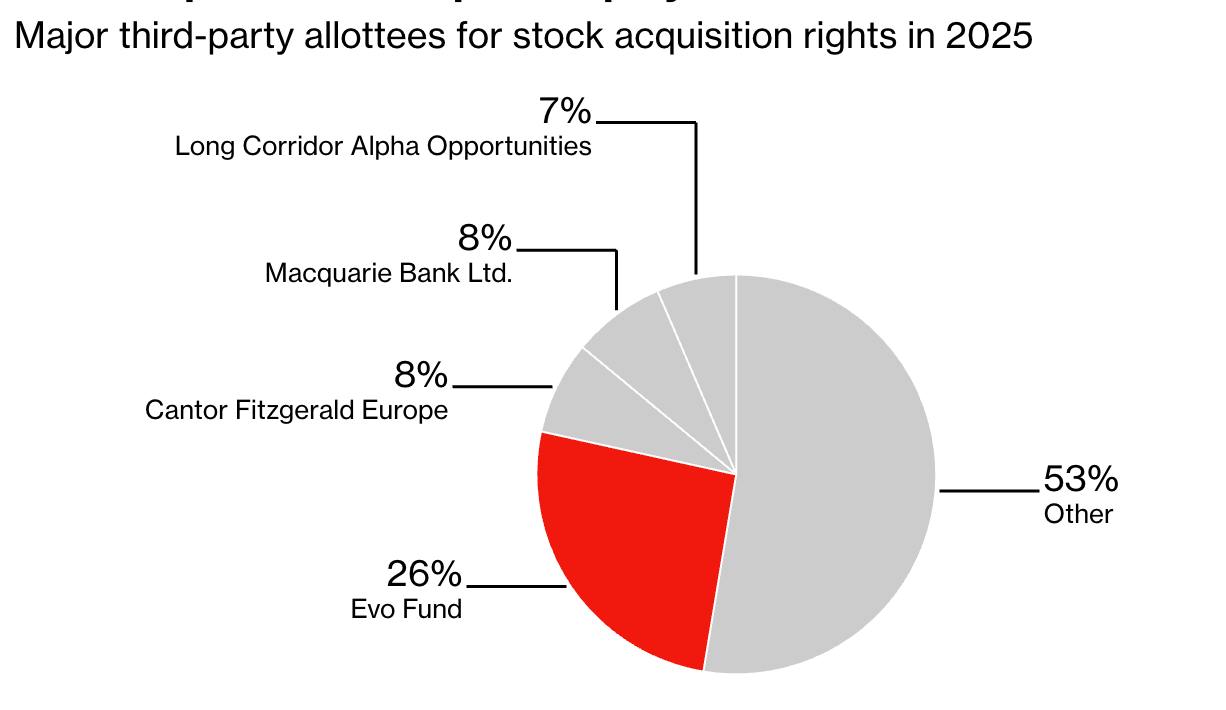
Primary third-party recipients of equity subscription rights in 2025
Note: Based on number of warrants issued; percentages may not sum to 100 due to rounding
Source: I-N Information Systems
Lerch launched his career in Japan in 1994. Later that year, he joined Barings Bank to trade options—only months before rogue trader Nick Leeson’s unauthorized activities precipitated the bank’s collapse.
From 1996 onward, Lerch worked at Merrill Lynch, Crédit Agricole Corporate and Investment Bank, and Lehman Brothers, honing his trading expertise before founding Evolution Financial Group in Tokyo in 2002. Evo was the group’s first fund, capitalized by Lerch himself and close friends and family.
Andrew Jackson, who came to Japan in 1997, served as a trader at Jefferies Tokyo in the mid-2000s, and is now Head of Japanese Equity Strategy at Ortus Advisors, recalled: “Back then, investment opportunities were everywhere in Japan—and Evo profited handsomely. Regulatory oversight was loose, and all industry networking happened over drinks in bars. Japan’s capital markets were truly a jungle.”
Jackson added that he conducted extensive business with Evolution Group during that period. The firm built its reputation among brokers by exploiting wide bid-ask spreads in the Japanese equity market to execute arbitrage trades.
Now around age 55, Lerch has expanded Evolution Group into a cross-regional family office, with operations in Los Angeles, Hong Kong, and a prominent North Shore base in Hawaii. Court documents from the London case disclose that the group employs approximately 55 people globally.
Those familiar with him say his exceptional relationship-building skills are central to his commercial expansion. To outsiders, Lerch appears intelligent and shrewd—but also slightly eccentric: In Japan’s conservative business culture, he favors brightly colored suits and thick-framed glasses, making him visually conspicuous. A 2023 YouTube video shows him striding through his office wearing a bright yellow sweater, matching glasses, and a heavy pendant necklace—promoting a U.S.-Japan youth leadership exchange program co-sponsored by the group.
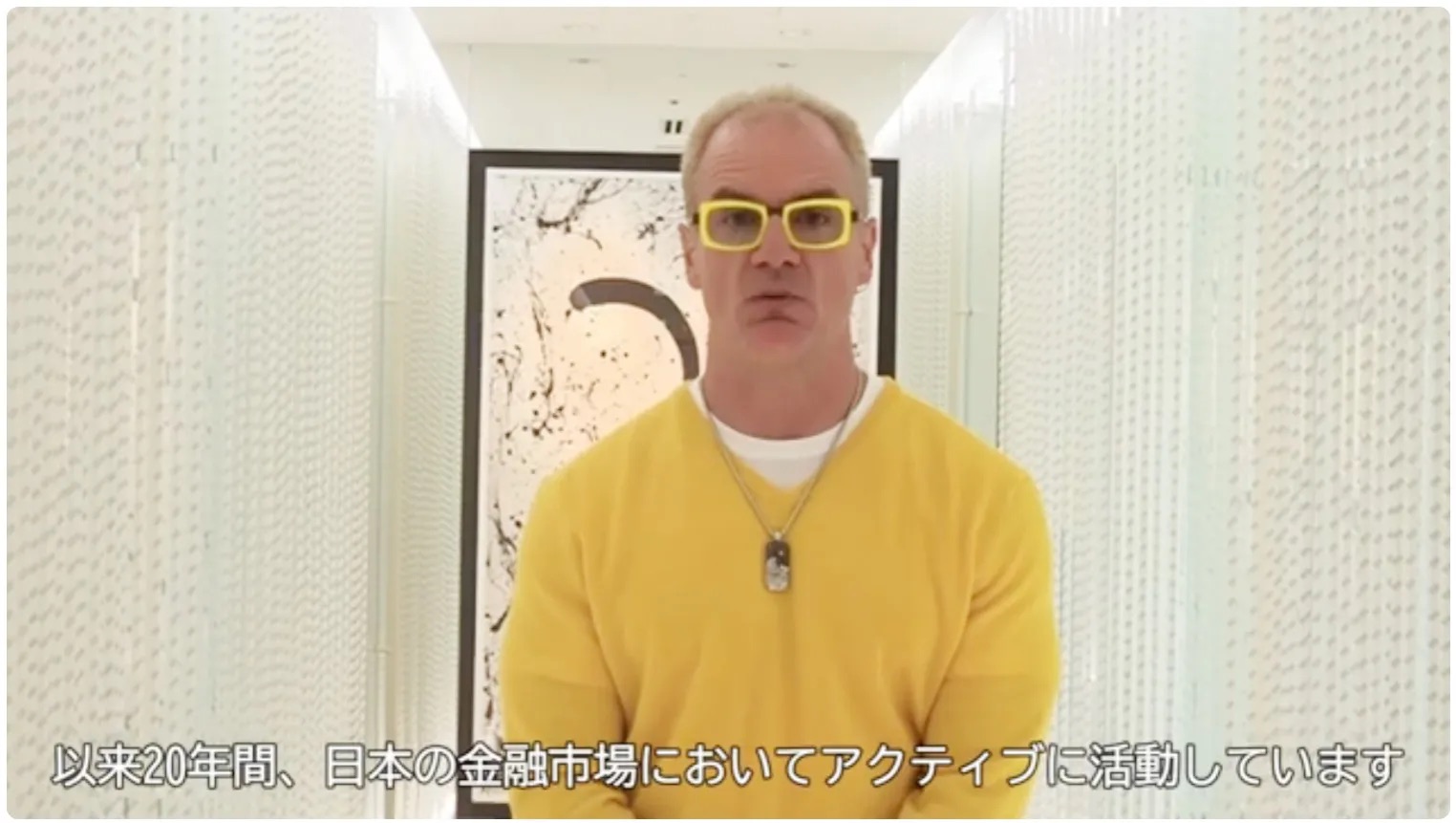
A screenshot of Michael Lerch from a 2023 YouTube video
Lerch played American football in college, and his Ivy League pedigree helped elevate his stature in Tokyo. During the group’s early days, he prioritized hiring Ivy League graduates and incorporated “tiger” motifs into numerous business names—paying homage to Princeton University’s mascot.
Over the years, Lerch has secured several high-profile deals through his network:
- In 2010, Evolution Capital Management acquired the now-defunct professional basketball team Tokyo Apache;
- The following year, Evolution Japan Securities purchased Goldman Sachs Japan’s electronic covered-warrant business, later selling it to Japan’s Caica Digital seven years later;
- In 2022, the group announced the sale of its proprietary electronic trading platform Tora (“tiger” in Japanese) to the London Stock Exchange Group for $325 million.
But Lerch’s path has not been smooth. According to court filings submitted by the plaintiff in the London bonus dispute, his multi-strategy hedge fund—launched in 2004—was forced to liquidate amid investor redemptions triggered by the 2008 global financial crisis. At its peak, the fund managed roughly $1 billion.
Evo’s financing business centers on floating-strike warrants, supplemented by convertible bonds and other instruments—all grounded in Lerch’s decades of arbitrage experience. Its Japanese-language website states its competitive advantage lies in tailoring solutions to client-specific needs and executing investment decisions swiftly and flexibly.
Floating-strike warrants have been a standard tool in Japan’s equity capital markets since the early 2000s, as the country emerged from the doldrums of its asset bubble collapse. These warrants grant holders the right to purchase company shares in the future, with exercise prices adjusted over time per contractual agreement—typically referencing the previous day’s closing share price.
They closely resemble direct at-market share issuances in U.S. markets, serving as a fast, low-cost financing channel for companies unable to secure bank loans or credit from major institutions.
When the exercise price falls below the market share price, warrant holders exercise their rights, convert into shares, and sell them for immediate arbitrage profit.
Nomura Research Institute’s (NRI) Osaki remarked: “Some see this model as fraught with danger—but Evo’s logic is simple: When no other institution will lend to a company, it becomes the sole lifeline.”
Nobuhiro Nagasawa, President of seafood restaurant group Sankou Foods, echoed this sentiment: “Without Evo, we might have already shut down.”

A seafood restaurant operated by Sankou Foods in Tokyo. Source: Sankou Foods
During the pandemic, Sankou Foods closed numerous outlets and plunged into financial distress, nearing delisting in early 2020. Around 2022, Evo representatives visited Sankou’s stall at Shizuoka Prefecture’s Numazu Fish Market—about 100 km south of Tokyo—to pitch financing services. Shortly afterward, Nagasawa met Lerch directly and entered into a financing partnership with Evo.
Speaking candidly over drinks at a Tokyo izakaya, Nagasawa admitted: “It’s undeniable that these warrants suppressed our share price and inflicted short-term losses on existing shareholders. But this capital saved our company—everything was worth it. I’m deeply grateful to Evo.”
Evo’s financing activity depressed Sankou Foods’ share price
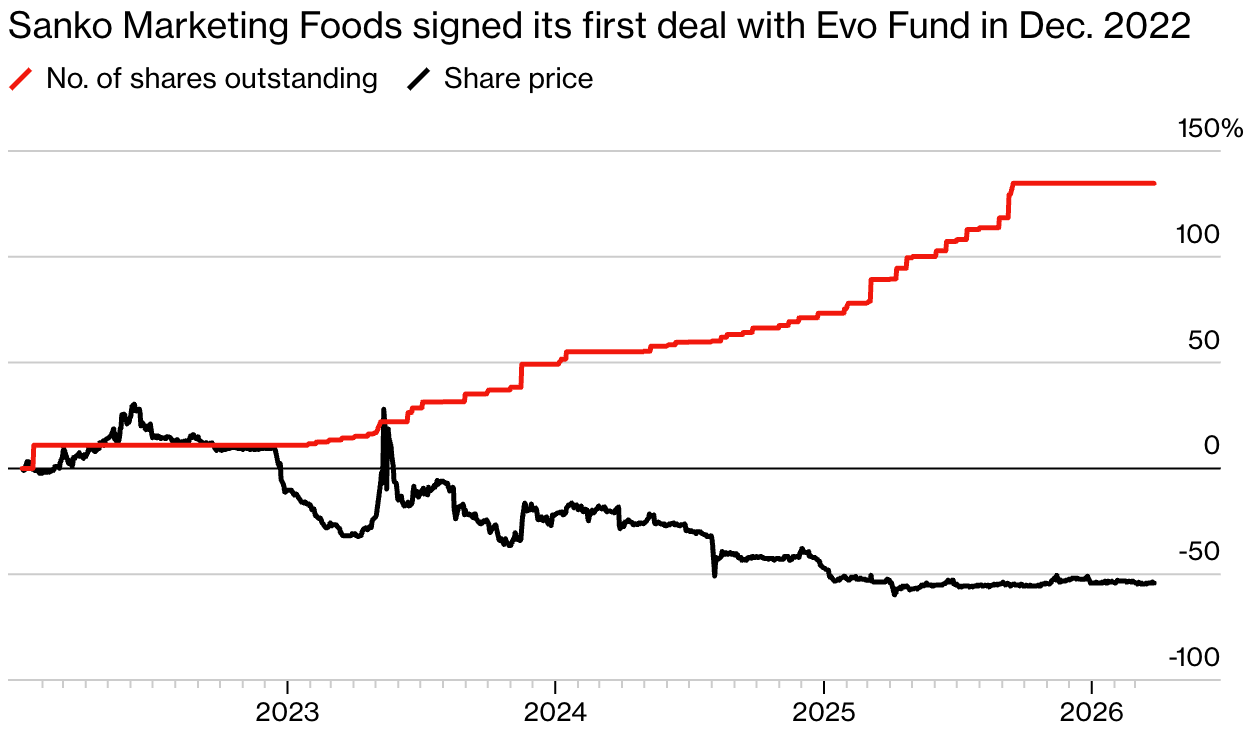
Sankou Foods signed its first deal with Evo Fund in December 2022
Note: Data normalized to percentage change as of January 4, 2022
Source: Bloomberg; Sankou Foods disclosures
In stark contrast stands Shin-Go Kameda, CEO of investment firm Man’ei Investment Co., Ltd., who said his firm’s reputation remains in recovery since its 2023 collaboration with Evo.
“That financing severely damaged our corporate image,” Kameda acknowledged. “We were in financial distress—not actively seeking Evo’s financing—but had no alternatives. We signed a fixed-strike warrant agreement without fully grasping the clause-related risks.”
Before partnering with Evo, the company’s share price was already trending downward. Evo’s repeated exercises at prices well below market levels further depressed the share price, provoking strong backlash from existing shareholders. “Evo’s contract design ensured they’d profit regardless of outcome.”
Evo’s website declares the fund offers flexible solutions and end-to-end support throughout the financing process—and maintains forward-looking, collaborative engagement with Japanese enterprises.
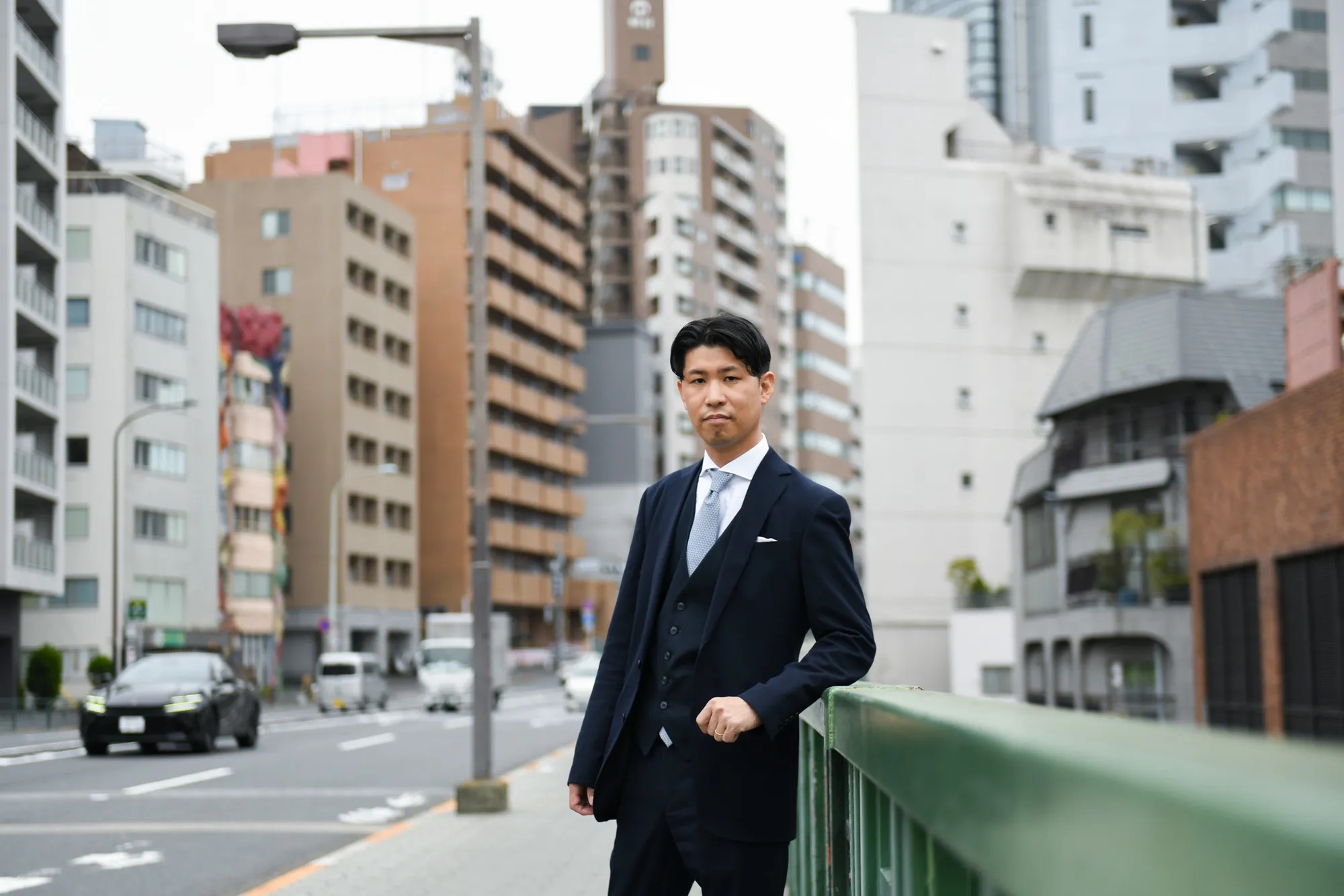
Shin-Go Kameda, CEO of investment firm Man’ei Investment Co., Ltd.
Simon Gerovich, CEO of Metaplanet, stated that Evo’s highly competitive terms make it Japan’s premier warrant-financing partner. After pandemic-related closures shuttered many of its hotels, Metaplanet struck a floating-strike warrant agreement with Evo in early 2025 to raise capital for massive Bitcoin purchases.
“No institution can match Evo’s terms,” Gerovich noted. “Other potential investors typically charge an 8–10% risk premium on the exercise price, whereas Evo promised zero discount fees upon exercise.”
Moreover, Evo executes exercises with exceptional speed, enabling Metaplanet to raise funds almost instantly. Evo also signed a stock-borrowing agreement with Gerovich’s investment company—the majority shareholder of Metaplanet—to hedge positions ahead of each transaction, accelerating the exercise process even further.
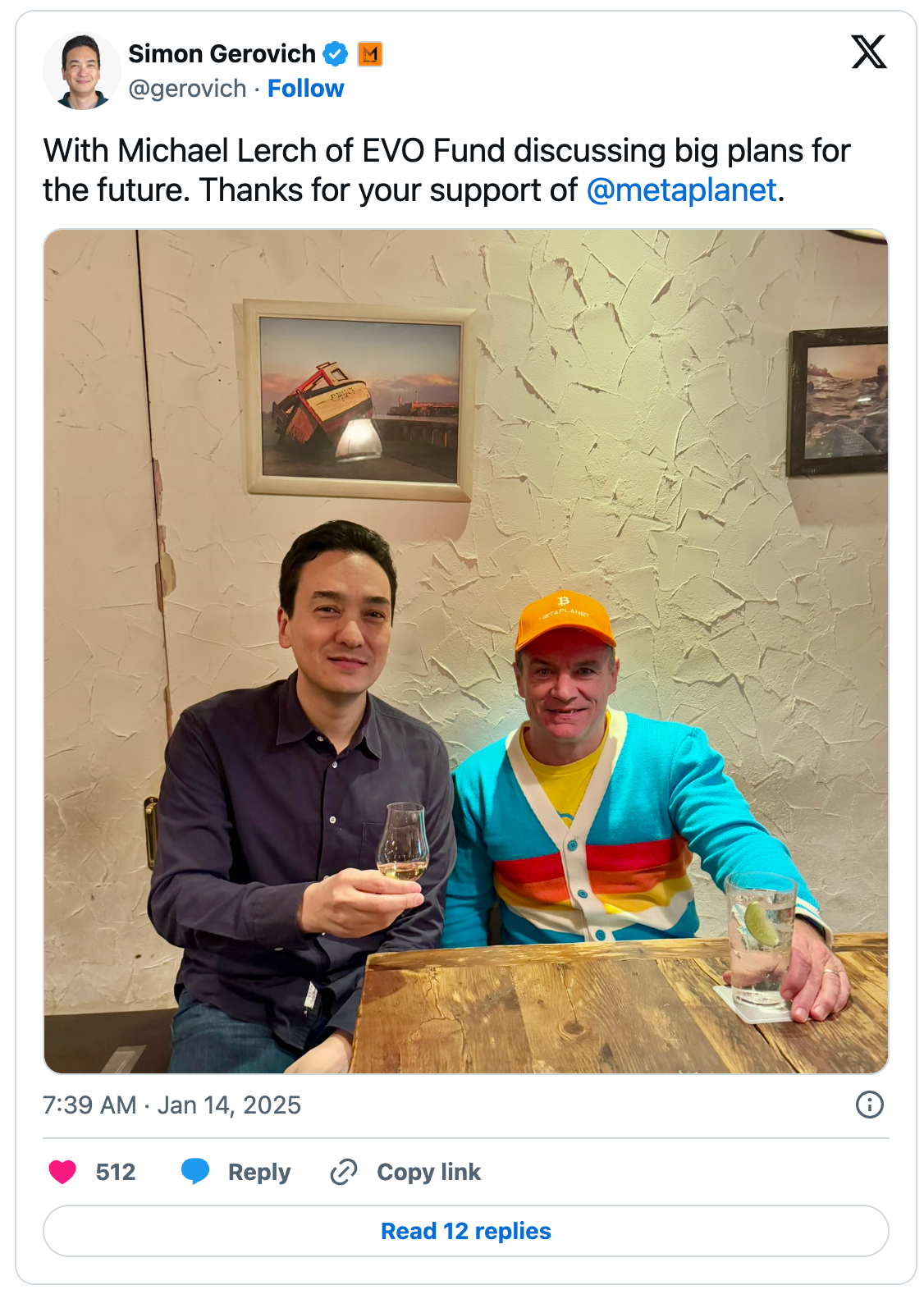
Last year, Gerovich publicly thanked Lerch for supporting Metaplanet on X (formerly Twitter).
An industry insider formerly employed by Evo revealed that the fund’s ability to offer generous terms stems from its mature warrant-arbitrage capabilities. Its traders operate with high risk tolerance, while Lerch himself frequently scouts and recruits talent at Tokyo’s social drinking events.
Evo’s large-scale exercise transactions with Metaplanet vividly illustrate the outsized profit potential of this model. According to Metaplanet’s regulatory filings and Bloomberg calculations: On June 24, 2025, Evo acquired 54 million Metaplanet shares at nearly a 10% discount to the closing price. Within just one week, the fund sold 16% of those shares, pocketing ¥2.2 billion in profit.
Gerovich stated: “Evo certainly earned handsomely—but it was a win-win.” Metaplanet raised over ¥290 billion via warrants in 2025 and currently holds more than 40,000 Bitcoins.
As Metaplanet continues raising capital to accumulate Bitcoin, Evo’s exercise transactions keep diluting existing shareholders’ equity—including a large number of retail investors holding shares through Japan’s tax-exempt investment accounts. Just the June 24 exercise alone expanded Metaplanet’s total share count by roughly 9%.
Gerovich explained: “Under this business model, all shareholders’ equity gets diluted—but they don’t mind, because this dilution is ‘benign’: the Bitcoin assets we hold keep appreciating.”
After surging over 2,000% earlier, Metaplanet’s share price has since plunged roughly 80% from its mid-June peak. Since October 2025, Metaplanet has sought alternative financing sources—and Evo has ceased exercising its warrants.
Even as Metaplanet’s share price crashes, Evo continues exercising MS (Moving-Strike) warrants
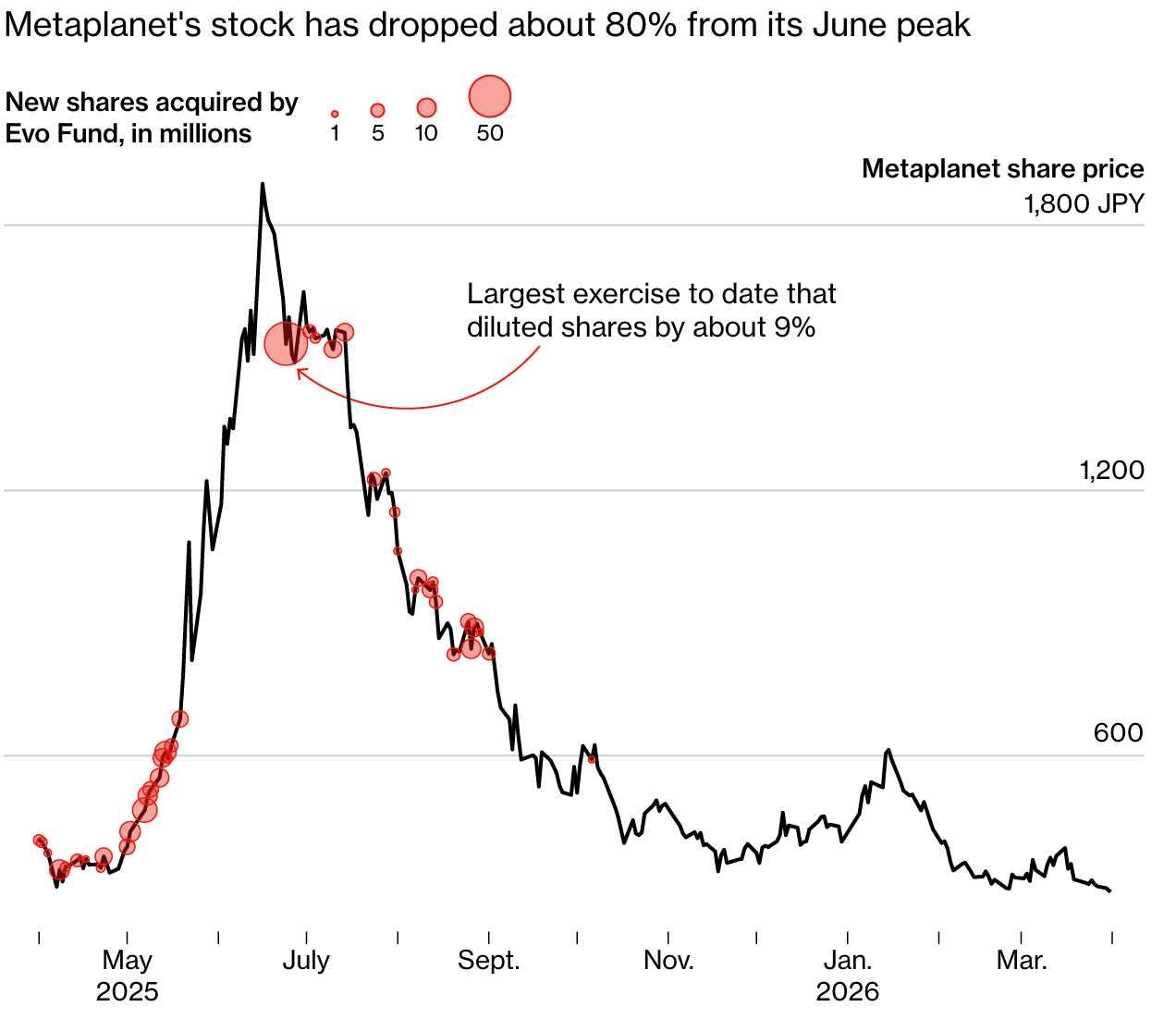
Metaplanet’s share price has fallen ~80% from its June peak
Source: Metaplanet filings; Bloomberg
Japan Exchange Group (JPX)—operator of the Tokyo Stock Exchange—declined to comment specifically on Evo’s business. It stated that floating-strike warrants issued to third parties constitute a conventional equity financing instrument for listed companies.
JPX acknowledged concerns that such instruments could harm shareholder interests through equity dilution and share-price declines—and noted it has introduced regulatory safeguards, including monthly exercise caps. Listed companies may also mitigate dilution impacts by setting minimum exercise prices or lock-up provisions on resale.
Yet Lerch is known for his uncompromising, hardline stance—and many Japanese companies hesitate to engage with him.
Alexey Shitov, a former Evolution Group executive in the 2010s who oversaw the acquisition of Goldman Sachs’ warrant business, said: “Evo has long been regarded as aggressive within the industry. Customers’ perceptions of us shifted noticeably after Evolution Group took over the business.”
Regulatory records show that in early 2016, Evo Investment Advisors—a Cayman Islands subsidiary of Evolution Group—was fined ¥9.2 million by Japan’s Financial Services Agency (FSA) for manipulating the share price of a Tokyo-listed company. The FSA’s Securities and Exchange Surveillance Commission declined further comment.
In 2024, Evolution Japan Securities sued robotics manufacturer Kuramoto Co. in Tokyo District Court, seeking ¥71 million in damages for breach of warrant contract—specifically, for issuing warrants to other third parties.
Kuramoto’s CEO Mamoru Komine stated: “Evo approached us proactively to discuss cooperation—but we ultimately rejected their warrant proposal. Even after the contract was terminated, they filed suit.” The case remains pending, and Kuramoto has recorded the litigation as an estimated loss in its February financial statements.
Multiple unnamed partners and former employees disclosed that Lerch becomes intensely assertive and volatile under pressure—exhibiting behaviors such as firing traders without warning and losing composure during business negotiations.
Last year’s London labor dispute also exposed his rigid, confrontational management style. The court ruled that Evolution Capital Management unjustifiably withheld bonus compensation from former employee Robert Gagliardi—who generated the vast majority of the firm’s revenue during his tenure. The firm had argued Gagliardi’s involvement in a U.S. market investigation harmed its reputation. Text-message evidence cited in court documents shows Lerch even verbally abused the employee.
Setting aside the controversies, Evo’s rise reflects a broader dilemma confronting Japan’s micro-cap listed companies: Over 60% of Japan’s listed firms are micro- or nano-cap stocks. With the Tokyo Stock Exchange tightening market-capitalization listing requirements, many urgently need capital infusions. Balancing rapid fundraising against retail shareholder protections has thus become an acute challenge.
Zhihua Yao, Associate Professor of Economics at Kyushu University’s Faculty of Economics, observed: “Floating-strike warrants are a lifeline for underperforming firms—otherwise, they struggle to attract investment. Market views on this instrument remain divided—but Evo’s high-profile collaboration with Metaplanet will inevitably boost overall demand for such financing contracts.”
For Man’ei Investment’s CEO Shin-Go Kameda, the risk of shareholder harm far outweighs any cooperative benefits—and he refuses to work with Evo again. In March, during the company’s latest round of warrant financing, he selected Hong Kong–based hedge fund Long Corridor Asset Management instead—and emphasized that the new agreement prioritizes protecting existing shareholders’ interests.
Kameda revealed that Evo still sends financing proposals—but he rejects them outright. “To different people, Lerch is either a savior—or a vulture feeding on carrion. These financing transactions are, by nature, a double-edged sword.”
(Reporting assistance: Jonathan Browning, Bailey Lipschultz, Finbarr Flynn, Wu Jin)
Join TechFlow official community to stay tuned
Telegram:https://t.me/TechFlowDaily
X (Twitter):https://x.com/TechFlowPost
X (Twitter) EN:https://x.com/BlockFlow_News
 @Bloomberg