









Behind the Meme Hype: A Brief Analysis of 5 Memecoin Ecosystem Tools Worth Watching
TechFlow Selected TechFlow Selected
Behind the Meme Hype: A Brief Analysis of 5 Memecoin Ecosystem Tools Worth Watching
When the on-chain Memecoin market is booming, the returns from these projects can far exceed those of many DeFi and even public chain projects.
 Navigating Web3 tides with focused insights
Producer: DODO Research
Editors: Yaoyao & Lisa
Author: dt
Memecoins have long been a major highlight in the blockchain world, attracting significant attention from traders. The dream of overnight wealth and short-term speculation drives many to continuously pour into this space.
In April this year, $PEPE emerged suddenly and rapidly achieved tens of thousands-fold growth within just 19 days before listing on Binance, becoming the fastest token in history to reach a market cap of $1 billion. The rise of $PEPE sparked another wave of the Memecoin season across the crypto world—dog tokens surged wildly on-chain, gas fees skyrocketed, and new coins multiplying by tens of times appeared daily. This trend lasted nearly two months until it began to cool down at the end of June.
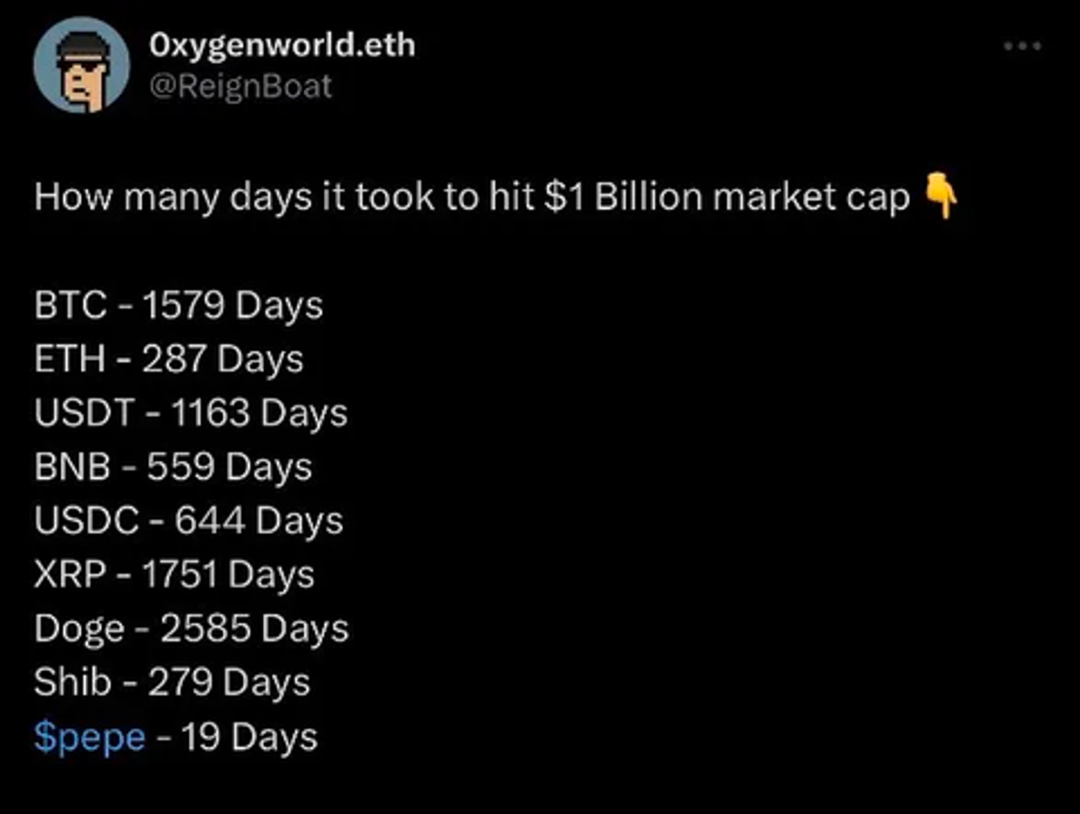
Factors such as meme-inspired naming or avatars, community culture, social media influence, celebrity endorsements, low market caps, and high volatility all make memecoins an attractive choice. However, these are accompanied by extremely high risks. High volatility means not only sharp rises but also frequent crashes—or even complete disappearance. Combined with celebrity pumps, whale manipulation, and information asymmetry, memecoins become easy to enter but difficult to master.
So for retail investors who don't want to directly invest in memecoins themselves, which projects are worth tracking? To date, the memecoin ecosystem has evolved beyond countless tokens to include numerous supporting services, forming a unique memecoin ecosystem. These projects typically aren’t backed by VCs and mostly originated from grassroots community initiatives. Despite unassuming beginnings, they’ve persisted to become stable, profitable businesses with loyal user bases.
Today, DODO Research introduces five key tools or platforms used by memecoin project teams or retail investors—and analyzes their revenue models.
1. Pinksale
Project Overview
Pinksale is a presale platform—commonly referred to as "pink sale" in dog-token communities. Its main feature is enabling anyone to launch a token and set up presale rules, providing essential technical support for memecoin projects. With Pinksale, project teams can focus solely on community building and marketing without needing any coding skills, allowing one-click token creation.
Additionally, Pinksale guarantees that liquidity will be deployed for projects conducting presales on its platform, eliminating the risk of developers running away with funds. This assurance makes many retail investors willing to participate only in presales launched via Pinksale.
Revenue Model & Analysis
Pinksale primarily earns through minting fees (0.01 ETH / 0.2 BNB) and taking 5% of the total funds raised during each presale in ETH/BNB.
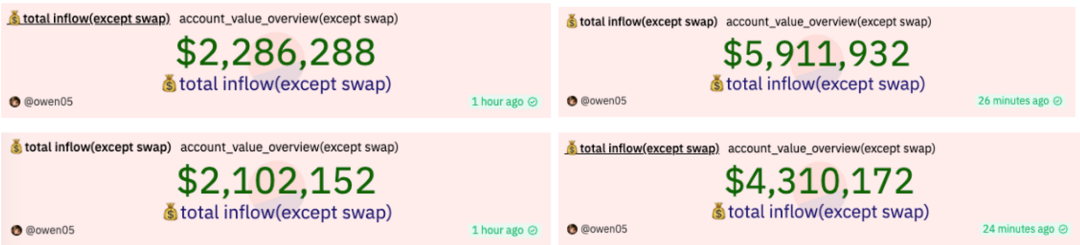
We analyzed its receiving address 0x4b04213c2774f77e60702880654206b116d00508. From January to June 2023, Pinksale earned nearly $8M USD (left chart: ETH; right: BSC). Of this, $6.4M came during the recent three-month memecoin frenzy. Clearly, Pinksale’s protocol income is heavily influenced by the overall memecoin market. Comparing ETH and BSC reveals that more memecoins launch presales on BSC than on Ethereum mainnet—likely because Ethereum-based memecoins often opt for fair launches or custom presale setups.
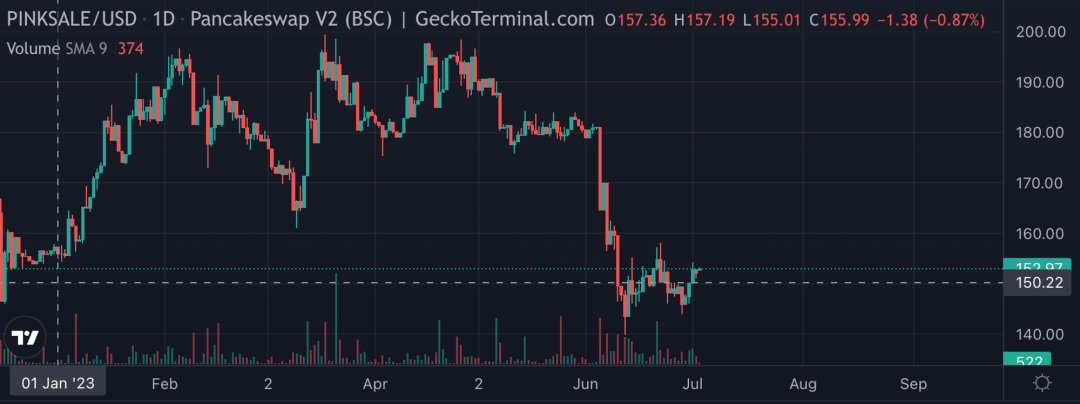
Pinksale also issued a governance token, $PINKSALE. Official documentation only mentions unlock schedules and states that 20% of quarterly profits will be used to buy back and burn tokens. However, there has been no public announcement regarding actual buybacks or burns. As a result, $PINKSALE appears to be a largely valueless governance token with no effective mechanism linking holders to protocol earnings. Despite substantial profits in the first half of 2023, this hasn’t translated into price appreciation for the token.
2. UNCX Network (formerly Unicrypt)
Project Overview
UNCX Network, formerly known as Unicrypt and commonly called "Green Horse" in Chinese circles, primarily offers liquidity locking services. Most memecoins deploy liquidity on AMM DEXs, where liquidity serves as the sole basis of a token’s value. Whether liquidity can be removed at any time is therefore a major concern for traders, making UNCX’s locking service almost essential for every memecoin.
When a project's liquidity isn’t locked, few are willing to take the risk of trading. As the earliest and most widely adopted liquidity locker, UNCX has naturally become a benchmark trusted by retail investors. Consequently, even though cheaper alternatives exist, project teams still prefer to pay for locking liquidity on UNCX.
Revenue Model & Analysis
UNCX Network mainly earns 0.08 ETH / 0.3 BNB per lock-up plus 1% of the locked liquidity amount.
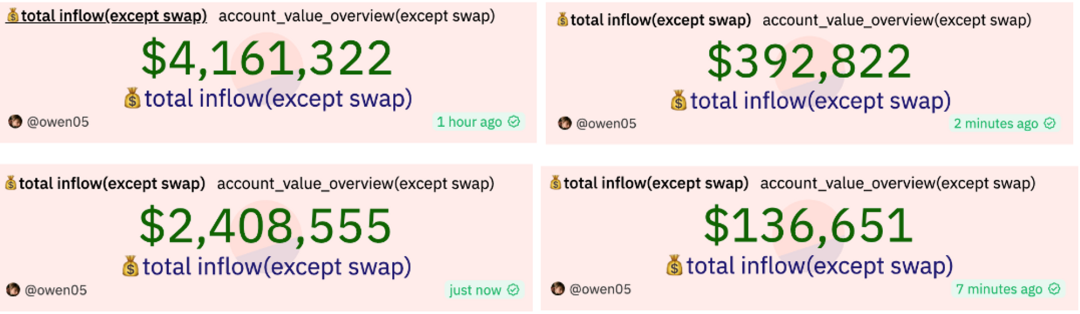
Analyzing its receiving address 0x997cc123cf292f46e55e6e63e806cd77714db70f shows that since the beginning of 2023, UNCX has earned over $4.5M USD (left: ETH; right: BSC). In the past quarter alone, driven by the memecoin boom, it earned $2.5M USD.
UNCX also launched a namesake governance token $UNCX and a reward token $UNCL. However, the tokenomics and value capture mechanisms are underdeveloped—limited to outdated staking mining and buyback-and-burn models. Notably, burn records ceased after April 2021. Profits do not effectively benefit token holders, so the $UNCX price has remained flat despite strong protocol earnings.

3. Dextools
Project Overview
Dextools is a K-line chart website and aggregated trading platform. Beyond chart viewing and trading functions, it provides detailed token information including project descriptions and social links. It also features trending tickers and banner ads. Memecoin teams can pay Dextools to update token data, appear on trending lists, or display advertisements—boosting visibility.
Despite numerous free alternatives, Dextools remains the leading and most established chart and trading aggregation site. For memecoin traders, paying for Dextools upgrades signals serious marketing efforts by a project team, prompting many to continue using paid services to attract users.
Revenue Model & Analysis
Dextools primarily earns from fees charged to projects for updating token information—1300 DEXT, 3 BNB, or 0.5 ETH. Unlike Pinksale and UNCX, Dextools’ native token $DEXT has stronger value capture. The platform dynamically adjusts pricing to ensure paying in $DEXT remains the cheapest option, and all $DEXT collected this way is periodically burned, creating permanent deflation.
Based on analysis of Dextools’ payment address 0x997cc123cf292f46e55e6e63e806cd77714db70f, it earned approximately $6M USD in the first half of 2023 (left: ETH; right: BSC), with nearly $4.7M generated since April’s $PEPE-fueled memecoin season.

Nearly one-third of revenue was paid in $DEXT. Thanks to its deflationary mechanism (averaging ~15k $DEXT burned daily), $DEXT surged up to 6x this year and maintains a 4x gain post-correction—making it one of 2023’s standout performing tokens.

4. Maestro
Project Overview
Maestro is a Telegram chatbot designed to enable retail users to quickly buy tokens and set various take-profit and stop-loss orders. Users deposit funds into a wallet provided by Maestro, then interact with the bot directly in Telegram to execute trades. Given the extreme volatility of dog tokens, trade speed significantly impacts profitability—being able to trade faster, or even snipe tokens immediately upon liquidity deployment, can yield substantial returns. Maestro is thus tailored for professional memecoin traders.
However, users must exercise caution when using such tools—avoid depositing large amounts due to potential private key exposure risks that could lead to losses.
Revenue Model & Analysis
Maestro earns a 1% fee on each user transaction. Once cumulative fees reach 0.01 ETH, they are automatically transferred from the user’s address to Maestro’s receiving address.
According to Defillama data, Maestro’s total revenue in 2023 approached $12M USD, with around $10M earned in the last three months alone during the memecoin surge—making it one of the most profitable projects this quarter.
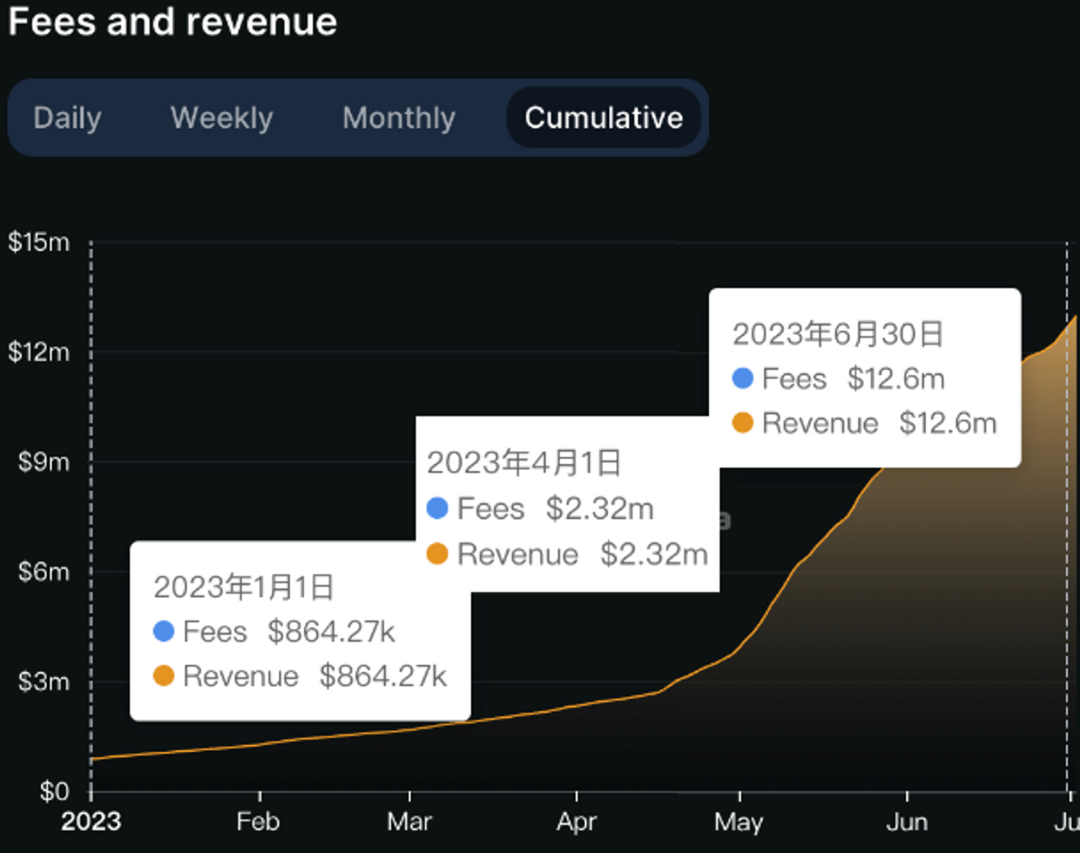
Even as memecoin activity cooled slightly this month, Maestro still ranked 11th on Defillama’s fees and revenue leaderboard—outperforming well-known DeFi protocols like MetaMask, Compound, and Curve, and even surpassing major layer-1 chains such as Arbitrum, Optimism, Avalanche, and Polygon.

5. Unibot
Project Overview
Unibot offers similar functionality to Maestro as a Telegram trading bot, with identical core features. The key difference is that while Maestro does not issue a token, Unibot has its own namesake token featuring a dividend mechanism—allowing retail holders to share in protocol earnings. Additionally, Unibot includes a referral program, giving it higher visibility across Twitter communities. According to the team roadmap, future updates will integrate GMX perpetual contracts and Dopex options directly into the Telegram bot.
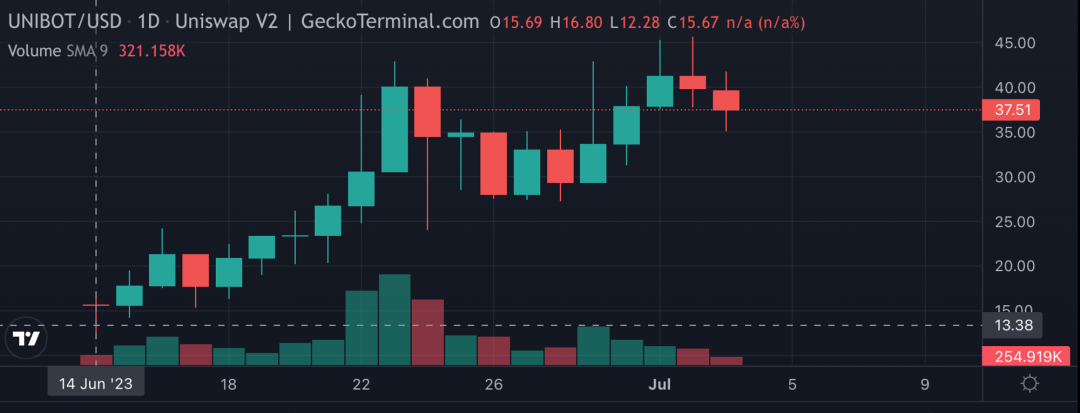
Compared to the four projects above, Unibot is relatively young—launched in May this year, with both product and token debuting simultaneously. Using a fair launch model, its token reached an all-time peak of 400x—an absolute standout “miracle coin” of the quarter.
Revenue Model & Analysis
Unibot shares Maestro’s 1% transaction fee model. However, thanks to its token design, $Unibot is a taxed token—imposing a 5% tax on every buy and sell transaction, which counts as additional protocol revenue. Since launch, total earnings have exceeded 1,630 ETH (~$3M USD), with 166 ETH (~$300K USD) coming from transaction fees.
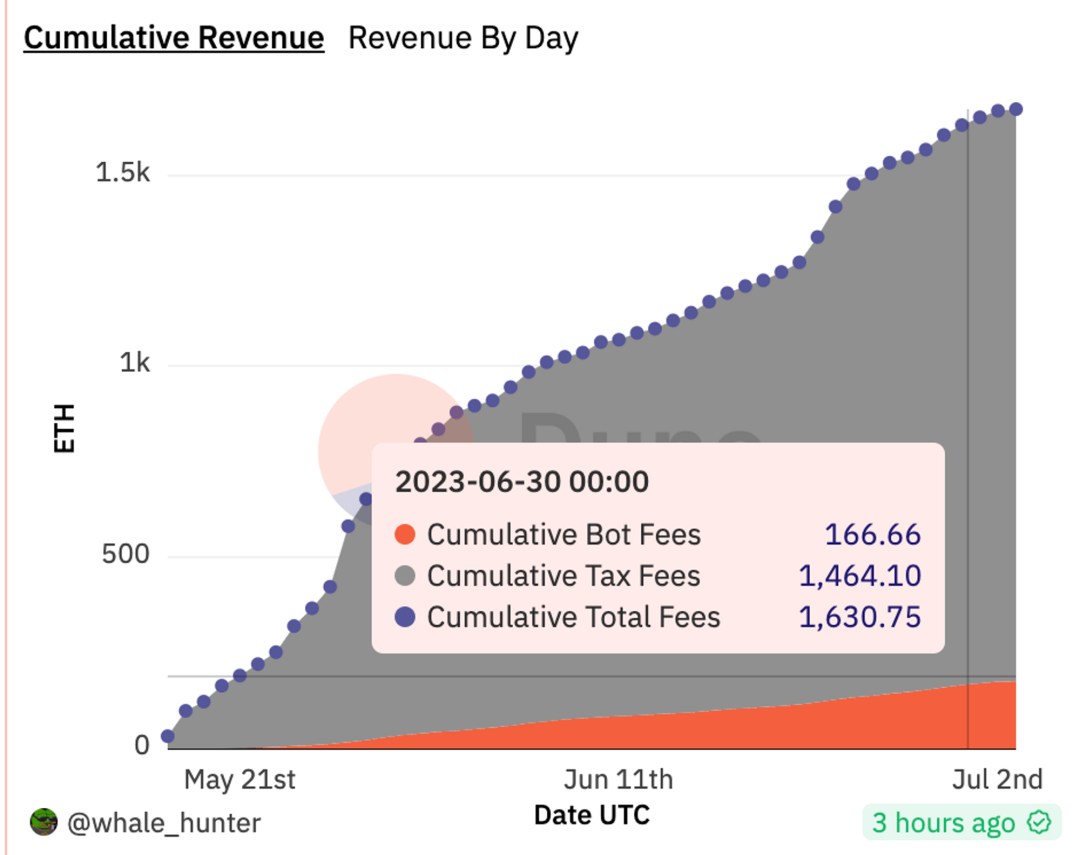
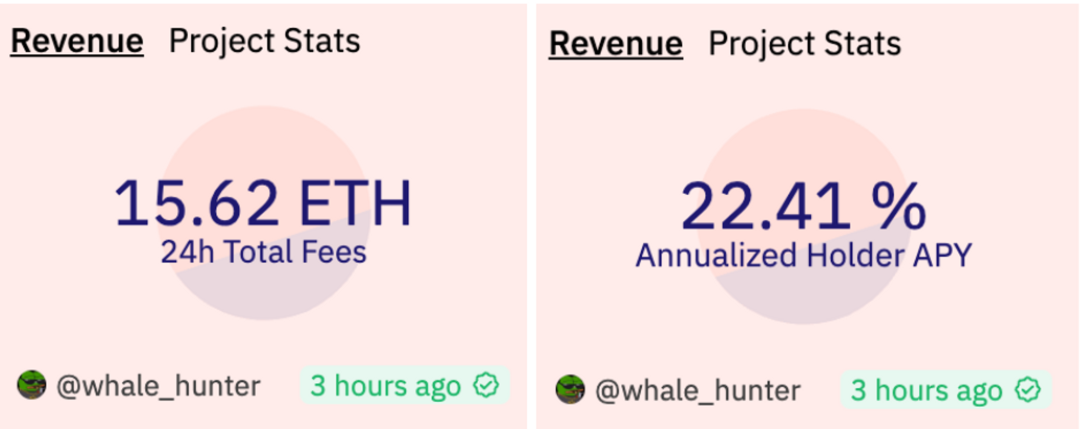
Starting June 14 (two weeks ago), 40% of protocol revenue began being distributed as dividends to token holders. To date, approximately 200 ETH (~$380K USD) has been distributed, contributing to a nearly 3x price increase in $Unibot.
Conclusion
The five projects introduced above may seem unremarkable—with no strong backing or groundbreaking innovation—yet their earnings are astonishing. When the on-chain memecoin market thrives, these projects can outearn many DeFi and even major blockchain protocols, showcasing exceptional profitability as a common trait.
However, it’s important to note that a great product doesn’t always make a good investment. The token performance of these projects illustrates this clearly: strong protocol earnings don’t help if there’s no solid token model to share profits with holders. Conversely, projects with well-designed revenue-sharing mechanisms stand a strong chance of being excellent investment opportunities despite humble appearances.
Join TechFlow official community to stay tuned
Telegram:https://t.me/TechFlowDaily
X (Twitter):https://x.com/TechFlowPost
X (Twitter) EN:https://x.com/BlockFlow_News
 Dr.DODO







