









In-depth Analysis of the NFT Market Landscape and the Development Status of Centralized Exchanges' NFT Businesses
TechFlow Selected TechFlow Selected
In-depth Analysis of the NFT Market Landscape and the Development Status of Centralized Exchanges' NFT Businesses
What is the current market landscape, what is the competitive格局 among market participants including centralized exchanges, and what are their future development bottlenecks and outlook?
 Navigating Web3 tides with focused insights
Authors: Tillock, Oscar, Kyle, Bing Ventures
The NFT sector has attracted significant attention from investors in recent years. In 2021, explosive user growth on OpenSea and a sharp surge in the total market capitalization of NFTs elevated the entire NFT ecosystem to new heights. Leading centralized exchanges (CEXs) such as Binance, Coinbase, OKX, and Kraken have all announced their entry into the NFT space. In the past, DeFi formed a complete ecosystem—including DEXs, lending, stablecoins, oracles, derivatives, and cross-chain bridges—in just one year, continuously consolidating momentum based on traffic. In 2022, NFT further accelerated its pace of ecological aggregation, maturing through multidimensional efforts ranging from policy reviews and zero-royalty reforms to brand collaborations and mergers. Today, the NFT ecosystem is largely established.
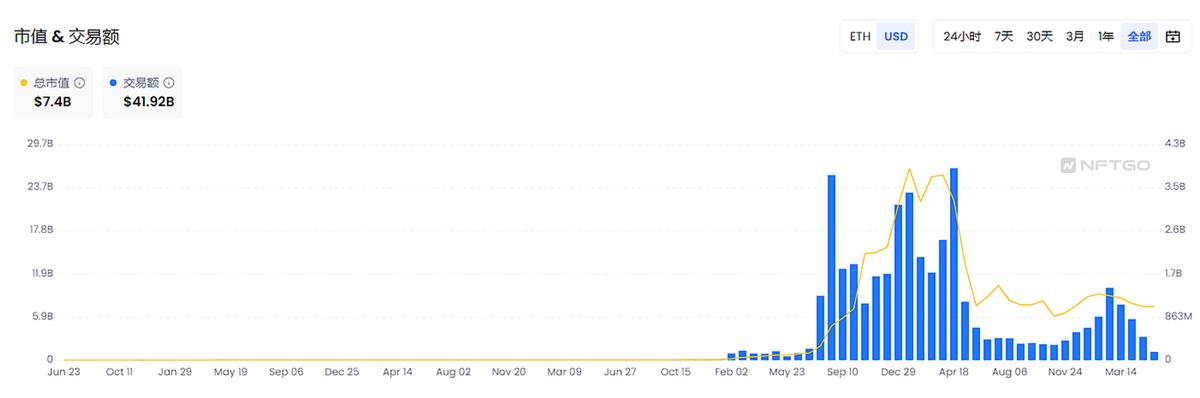
Against the bear market backdrop of 2022, key NFT metrics experienced significant volatility, with overall market data declining steadily. The total market cap dropped to just $7.4 billion, prompting speculation that NFTs were entering a period of decline. Currently, the NFT market has entered a phase of stabilization and transformation, requiring time and sustained development to deepen its foundations.
What is the current state of the market? What competitive dynamics exist among market participants, including centralized exchanges? And what are the future bottlenecks and outlooks for these players? This edition of Bing Ventures’ industry research provides an in-depth analysis of the NFT market and CEXs’ NFT businesses.
Industry Overview
Introduction to NFTs:
NFT stands for non-fungible token. Non-fungibility is a defining characteristic of NFTs. Unlike fungible tokens, NFTs are not interchangeable. They are data units stored on a blockchain representing unique digital assets such as artwork. Each NFT carries a unique identifier distinguishing it from others, serving as proof of authenticity and ownership in the digital realm.
Here are some well-known NFT collections:
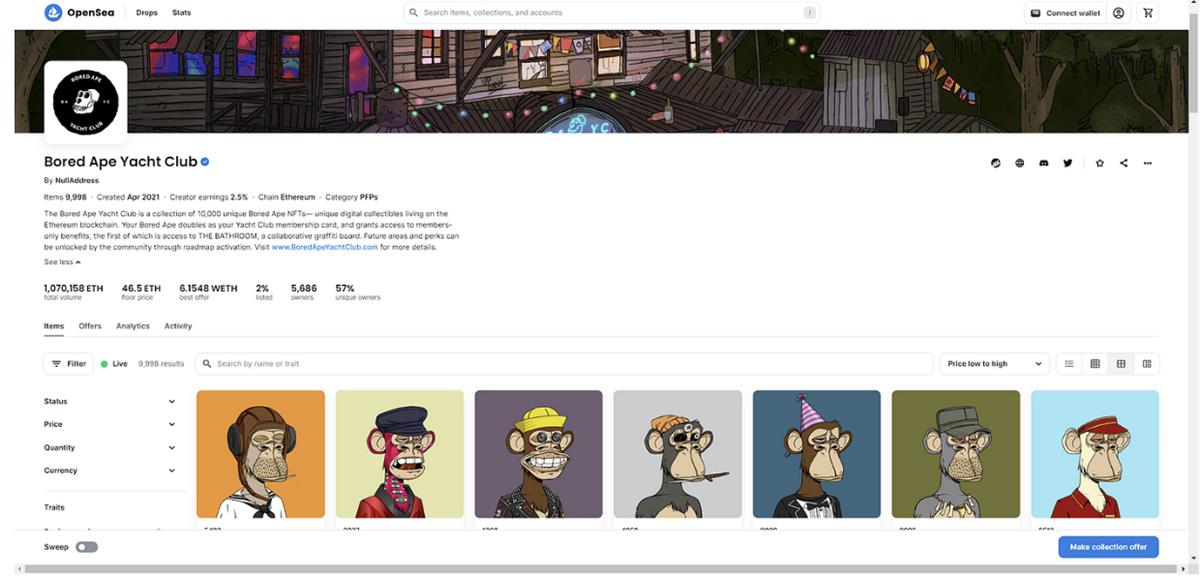
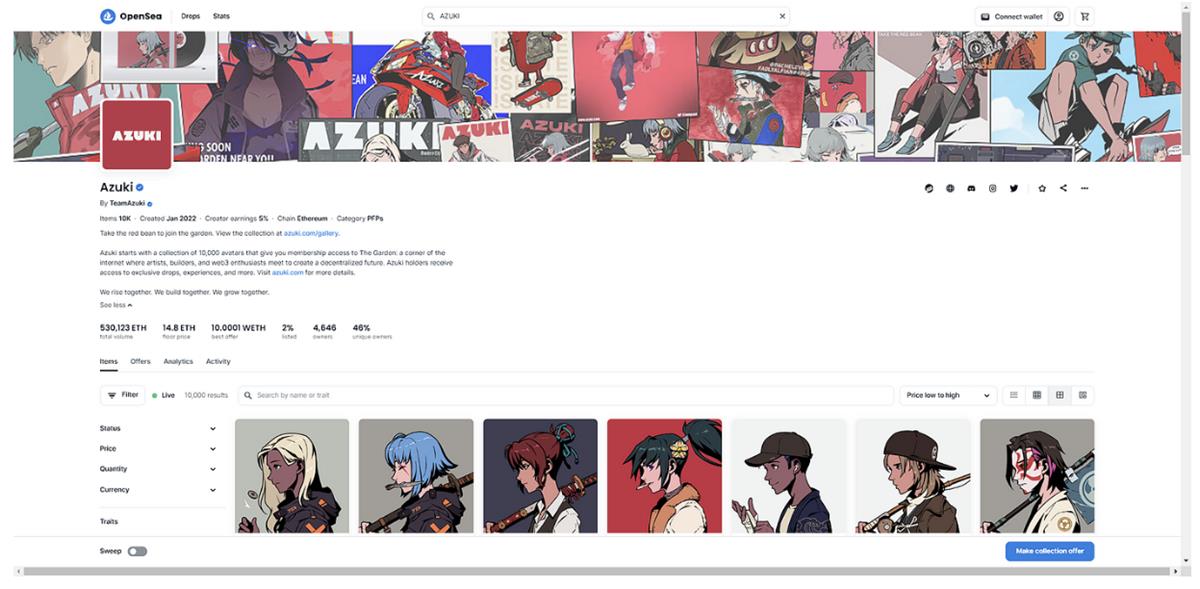
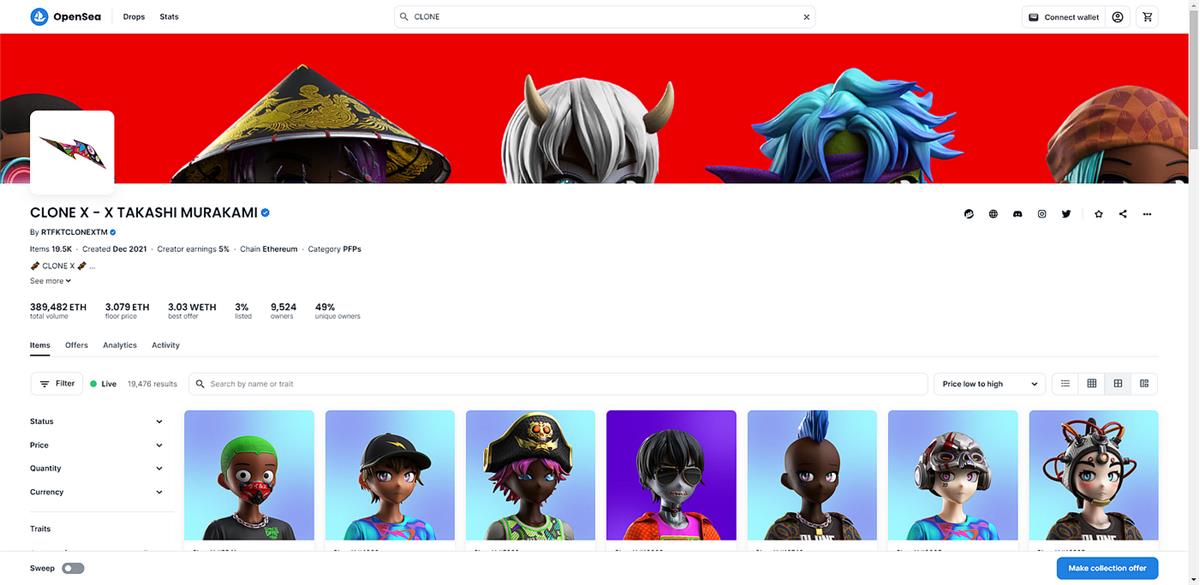
Overview of the NFT Market
An NFT marketplace enables buyers and sellers to transact on its platform. The current market offers diverse transaction models, including both centralized and decentralized marketplaces.
For example, OpenSea, the market leader, functions as a comprehensive NFT trading platform—akin to an “eBay” for NFTs—where users can buy and sell crypto art, gaming items, virtual real estate, domains, financial products, and more. It supports ERC721 and ERC1155 assets.
Market Environment and User Demand:
Currently, mainstream traded NFTs can be broadly categorized into blue-chip and non-blue-chip categories, and further divided into three main types: PFP (Profile Picture), functional, and special categories (some blue-chips may fall into functional or special categories).
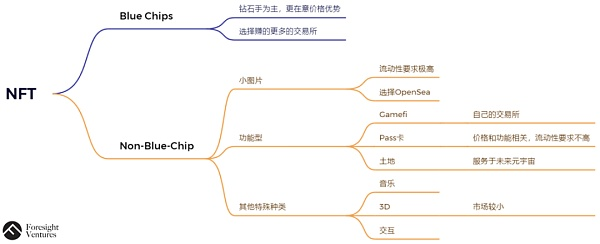
Segmentation of the NFT Sector:
By protocol functionality, NFT platforms can be classified into five major categories: trading, aggregation, lending, data tracking, and social:
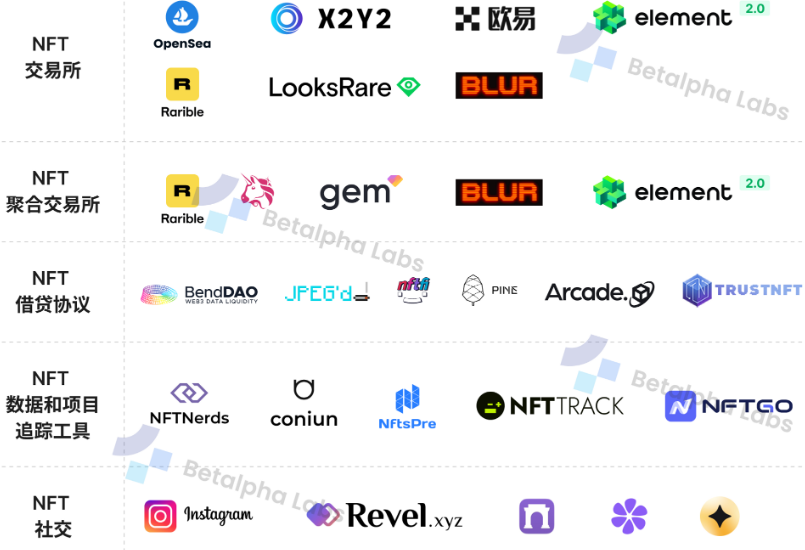
Current State of the NFT Market:
1. According to CoinMarketCap, the total trading volume across 14 NFT platforms surged from $85.7 million in 2020 to $19.6 billion in 2021—an increase of nearly 23,000%. 2021 was undoubtedly a year of unprecedented growth for the NFT space. These platforms gained immense popularity among NFT users, with rising trading volumes driving user numbers upward.
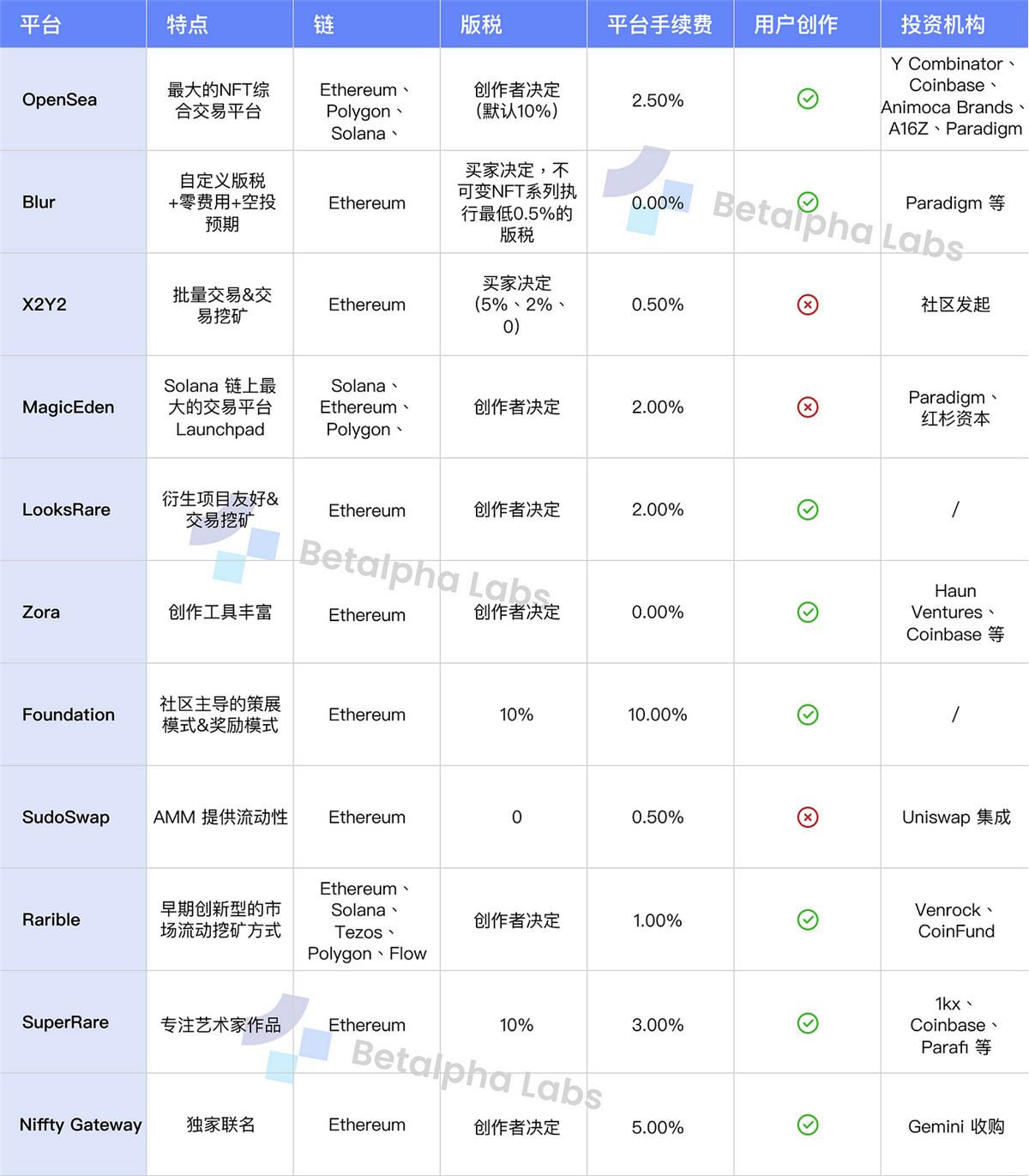
2. However, 2022 proved challenging for the NFT sector. From the collapse of Luna at the beginning of the year to FTX’s bankruptcy by year-end, the broader crypto ecosystem suffered severe setbacks. While NFTs maintained some热度 through new projects and experimentation, the overall bearish environment dragged the NFT market down. The total market cap fell from a peak of $21 billion in 2021 to around $7 billion today, with trading volumes shrinking dramatically.
Opportunities and Transformations in the NFT Exchange Landscape:
-
During the summer of 2021, the NFT market experienced rapid growth and widespread adoption. Trading volumes and NFT prices reached record highs. OpenSea expanded quickly during this boom, becoming one of the largest NFT trading platforms. Its trading volume and user base grew significantly during this period.
-
Total NFT trading volume in 2021 reached approximately $20 billion, a tenfold increase from 2020. Key NFT platforms included OpenSea, Nifty Gateway, Super Rare, and Foundation. During the "NFT Summer," projects like CryptoPunks, Bored Ape Yacht Club, and Art Blocks gained particular popularity.
-
Behind this intense hype, NFT marketplaces played a crucial role. OpenSea, founded in 2017, secured backing from prominent investors and achieved a $13 billion valuation in early 2022. This allowed it to build a substantial user base and collector audience before the NFT craze began, enabling it to rapidly attract more sellers and buyers. OpenSea offers the widest variety of NFTs—collectibles, PFPs, virtual real estate, gaming items, music, films, and more—catering to diverse user needs within a single platform.
-
Following OpenSea’s success, two new NFT marketplaces—LooksRare and X2Y2—launched, using airdrops to Opensea users to bootstrap initial traffic. They then introduced mining rewards to capture market share. Initially, they attracted many users, but as reward incentives diminished, genuine trading activity declined.
a) LooksRare launched in January 2022 with a simple plan: issue its native LOOKS token, allow staking for yield, and incentivize trading on its platform. X2Y2 adopted a similar model.
b) Overall, LooksRare and X2Y2 did not differentiate themselves functionally but targeted OpenSea’s lack of a platform token with more crypto-native strategies. However, as marginal rewards decreased, their business models became unsustainable—paving the way for Blur’s success.
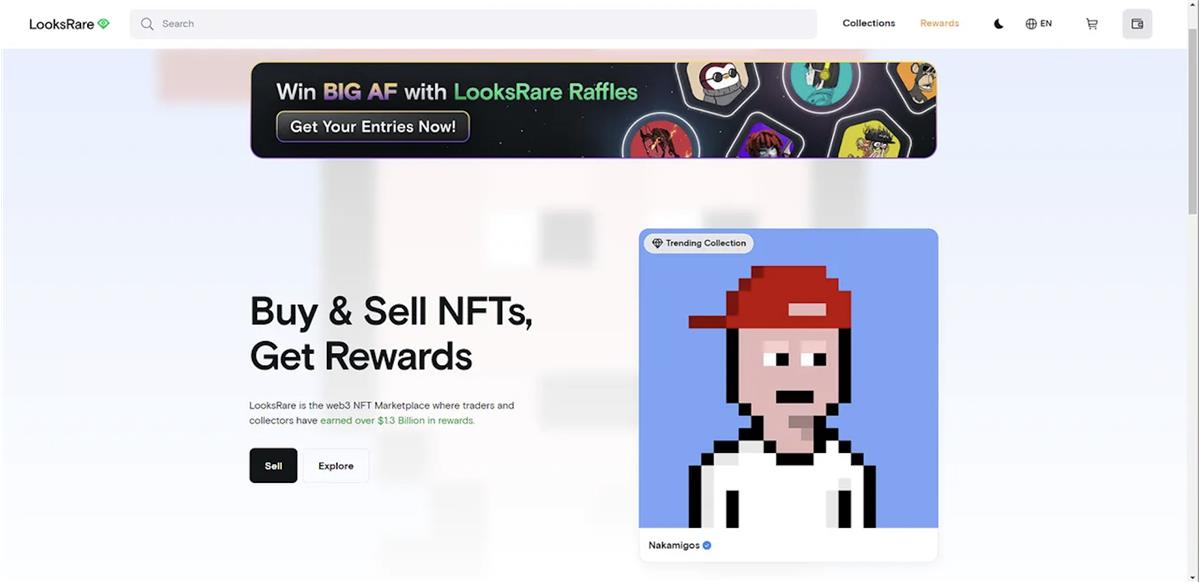
UI interface of LooksRare
1. As different types of NFT marketplaces competed for market share, NFT aggregators gained widespread user adoption. Similar to aggregators in the cryptocurrency space—such as 1inch, which pools liquidity across decentralized exchanges (DEXs) to offer users optimal swap rates—NFT aggregators streamline discovery and pricing.
a) Gem is a prime example of an NFT aggregator and was the largest before Blur launched. It aggregates listings from multiple major NFT marketplaces, enabling users to easily discover and purchase NFTs across platforms, often at lower costs via batch buying. This helps users find the best deals while driving traffic and revenue to Gem itself.
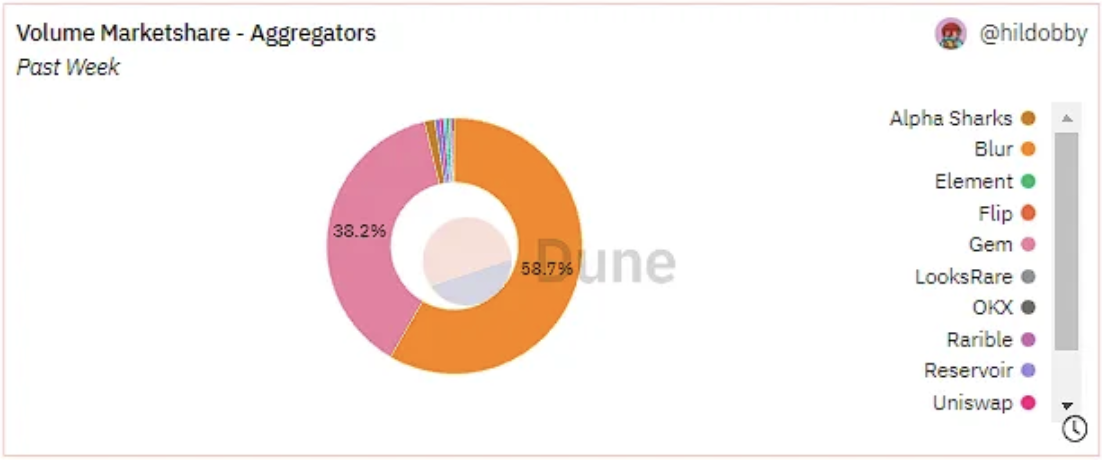
b) The chart below (data from Dune) shows market share among NFT aggregators, with Blur and Gem dominating—indicating most user transactions occur through these platforms.
1. Binance, as one of the earliest CEXs to launch an NFT platform, did not drastically alter the NFT landscape upon entry but ignited a wave of CEX interest in NFTs. On September 2, 2021, OKX’s NFT platform officially launched, followed shortly by announcements from Coinbase and FTX. From then on, the NFT market heated up rapidly. While decentralized on-chain NFT exchanges competed fiercely, top-tier centralized exchanges also sought to become dominant NFT trading venues.
2. Advantages of centralized NFT exchanges over decentralized ones:
a) Custody: Asset custody is a major advantage for centralized exchanges. For instance, Coinbase ensures users won’t lose access due to misplaced assets or forgotten passwords. Centralized exchanges help prevent common errors during crypto transfers, significantly lowering the barrier to entry for new NFT users.
b) Large user base: Major CEXs like Coinbase and Binance already possess massive user traffic. By directing this existing user base to their NFT platforms, they have the potential to convert even a small fraction into active NFT traders.
c) Lower operational complexity: Prioritizing user experience, centralized platforms simplify the NFT purchasing process compared to decentralized alternatives. For example, OKX offers a seamless end-to-end flow—from depositing funds to buying and selling NFTs—with a polished interface, which is especially valuable for first-time NFT users.
Competitor Comparison
Key centralized NFT exchanges currently include OKX, Binance, Coinbase, and Bybit. Below is a comparative analysis across user count, platform features, user education, and platform data.
Platform Overviews:
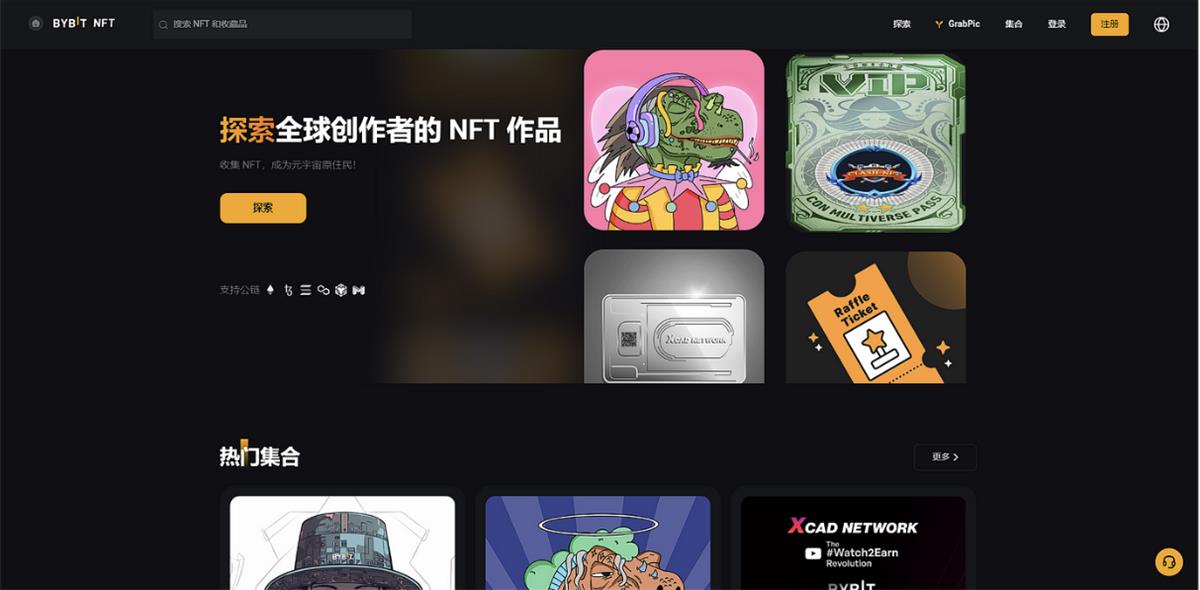
Bybit NFT Marketplace:
Launched on January 20, 2022, users can purchase desired NFTs on Bybit using ETH, USDT, BIT, and other tokens.
-
Simplified purchase and trading process: Users don’t need to create or import external crypto wallets; they can directly use assets from their Bybit Spot account to buy and trade NFTs.
-
Transparent ownership history and authenticity verification: Buyers can easily view an NFT’s ownership history and verify authenticity via a single click on the NFT profile page.
-
NFT resale and withdrawal features: NFT owners can resell to other Bybit users and will soon be able to withdraw NFTs to personal wallets.
-
Low transaction fees: Bybit charges zero fees to buyers and only 1% per transaction to sellers.
-
Secondary market royalty payments: The exchange pays 1% of each secondary sale back to the original creator as royalties.
-
Mystery box sales option: Sellers can list NFTs as mystery boxes containing random, rarity-varied items from a collection.
-
Self-minting and listing: While Bybit currently assists projects with minting, it will soon allow creators and rights holders to mint and list NFTs independently.
-
Supports NFT auctions: The marketplace supports auction-based NFT sales.
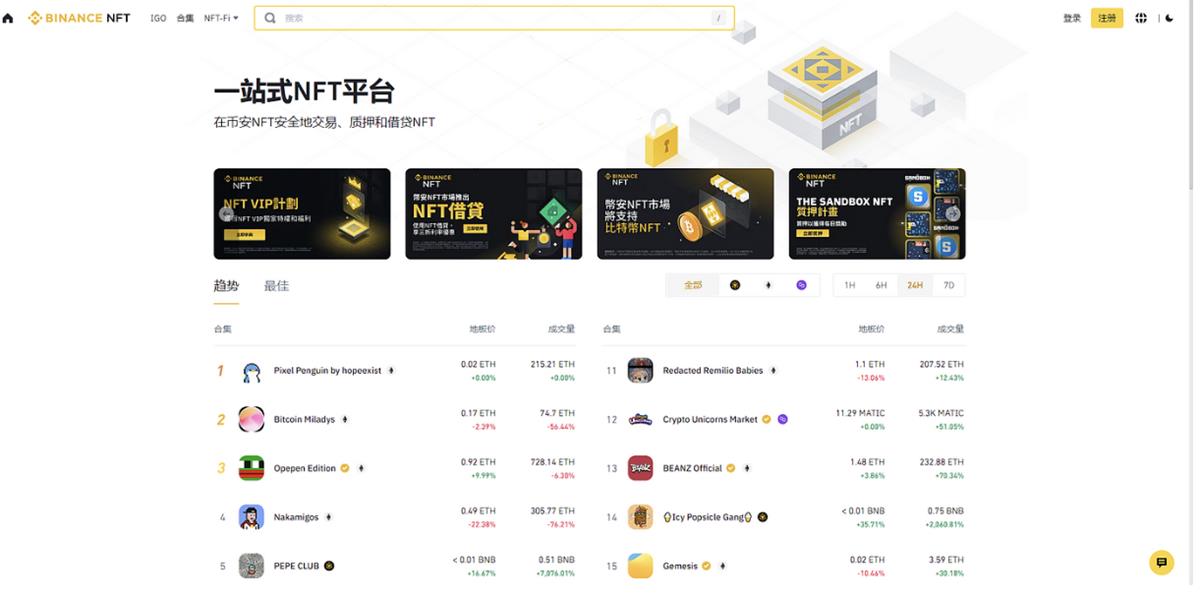
Binance NFT Marketplace:
Launched in the first half of 2021, it brings together artists, creators, and crypto enthusiasts on a single platform to create and trade NFTs.
-
High-liquidity centralized trading platform: Leveraging Binance’s blockchain infrastructure and community, the marketplace offers high liquidity.
-
Three product lines: — Marketplace: Offers core functions for minting, buying, and selling NFTs (minting not yet open to general users). — Events: For exhibitions and exclusive collectibles. — Mystery Boxes: Users randomly receive NFTs with varying rarity attributes.
-
Supports BEP-721 and BEP-1155 NFT standards: Enables creation of individual NFTs (BEP-721) and series (BEP-1155).
-
Strong creator support: Authorized creators can mint directly on the platform with technical assistance provided.
-
Integrated wallet functionality: Under "NFT Assets" > "Collections," users can view and manage their NFT holdings.
-
Transaction history tracking: The "History" tab includes bid orders, sales history, and purchase history for easy reference.
-
Convenient trading experience: Users can buy and sell Bitcoin NFTs (Ordinals) directly without a separate Bitcoin wallet.
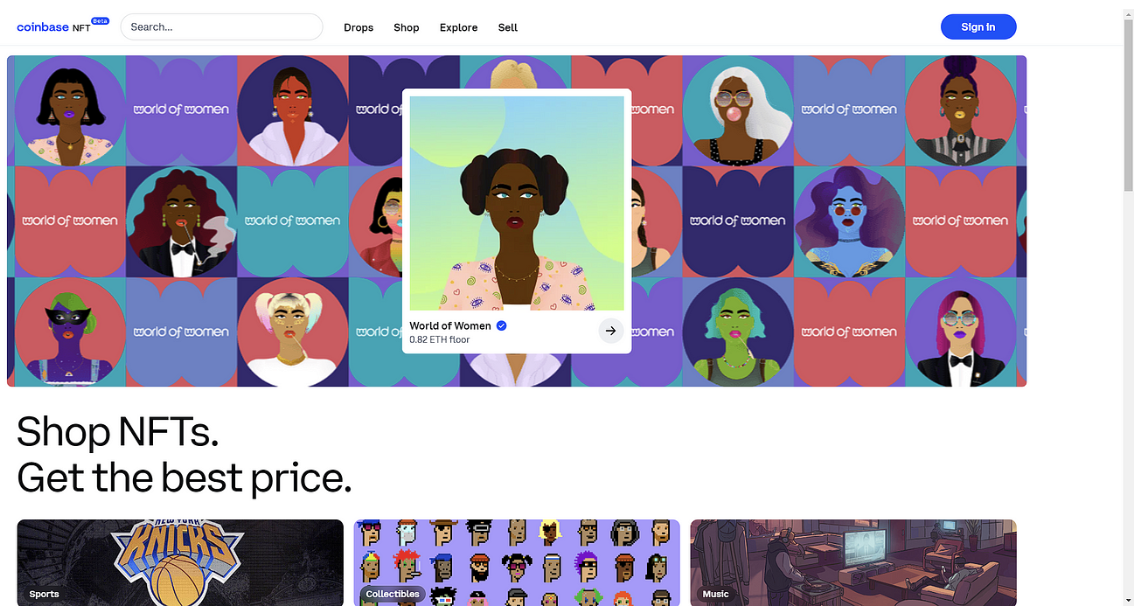
Coinbase NFT Marketplace:
Launched in late 2021, it distinguishes itself by aiming to become a “Web3 social marketplace.” The platform allows users to buy, sell, and interact with creators, collectors, and communities around their NFTs.
-
Profile pictures: Users can set custom profile images showcasing their creations.
-
Follow, like, and comment features: Users can follow others, like and comment on NFTs, and engage with community members.
-
Discovery feature: Users can easily browse and discover NFTs they enjoy.
-
Personalized recommendations: Based on user interactions, follows, and purchases, the platform recommends relevant NFTs.
-
Supports self-custodial wallets: Users can trade on Coinbase NFT using the Coinbase Wallet or any self-custodial wallet.
-
Future feature expansion: Coinbase NFT plans to add auctions, minting, token-gated communities, and options to buy NFTs via Coinbase account or credit card.
OKX NFT Marketplace:
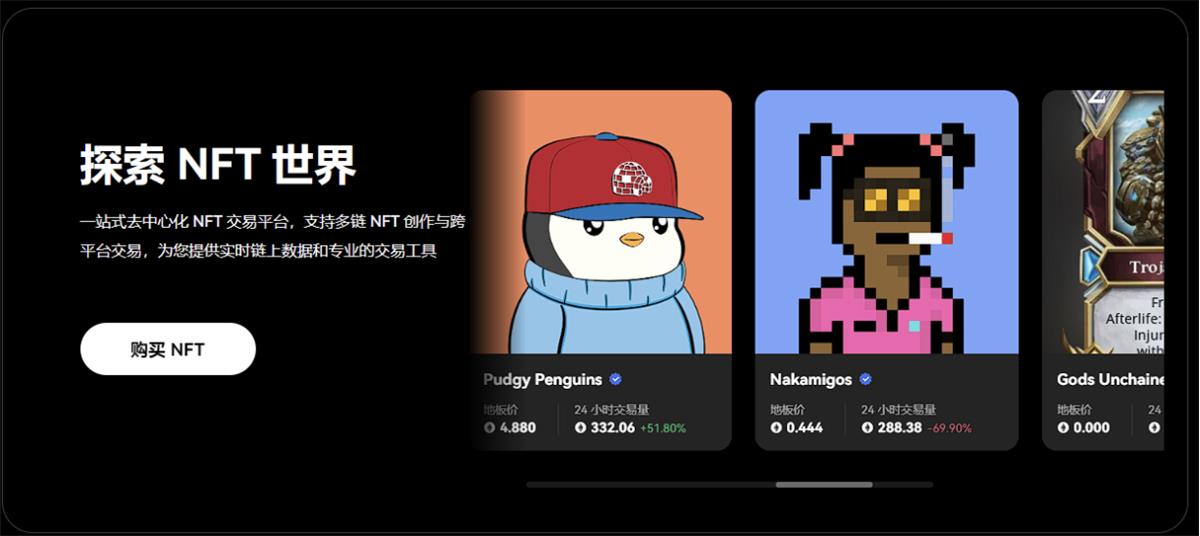
Launched in late 2021, it is an all-in-one decentralized NFT trading platform supporting multi-chain NFT creation and cross-platform trading, with real-time on-chain data.
-
Cross-market liquidity aggregation: Real-time order aggregation from major platforms like OpenSea, LooksRare, Magic Eden, and IMX Official, with one-click listing across multiple platforms to pool global trading liquidity.
-
Multi-chain support: Supports Ethereum, OKC, BSC, Polygon, and seven other major chains, enabling seamless NFT trading across blockchains. High security and zero trading fees. Features centralized characteristics.
-
Trending section: Displays platform events, top 24-hour collections, floor price trends, popular NFTs, and full category listings.
-
Market section: Allows users to sell, bid on, and buy NFTs from global creators.
-
Launchpad section: OKX’s exclusive primary issuance platform for creators to launch NFTs.
-
Data section: Provides real-time, comprehensive on-chain data to help users understand market trends.
-
Listing NFTs requires application and approval. Therefore, popular blue-chip projects like Azuki and BAYC cannot be purchased on Bybit. Only NFTs submitted by creators or authorized by the platform are available for trading.
Binance NFT Marketplace:
-
Supports NFT trading across multiple chains, with payment options including BNB, BUSD, ETH, and MATIC.
-
Unlike Bybit, Binance not only allows creators to launch and trade NFTs on its own platform but also integrates OpenSea’s data, enabling users to purchase NFTs listed on OpenSea directly through Binance—a secure way to acquire blue-chip NFTs—and later resell them on Binance’s marketplace.
-
Binance NFT Marketplace has also introduced an NFT lending section, enhancing its competitive edge from another angle.
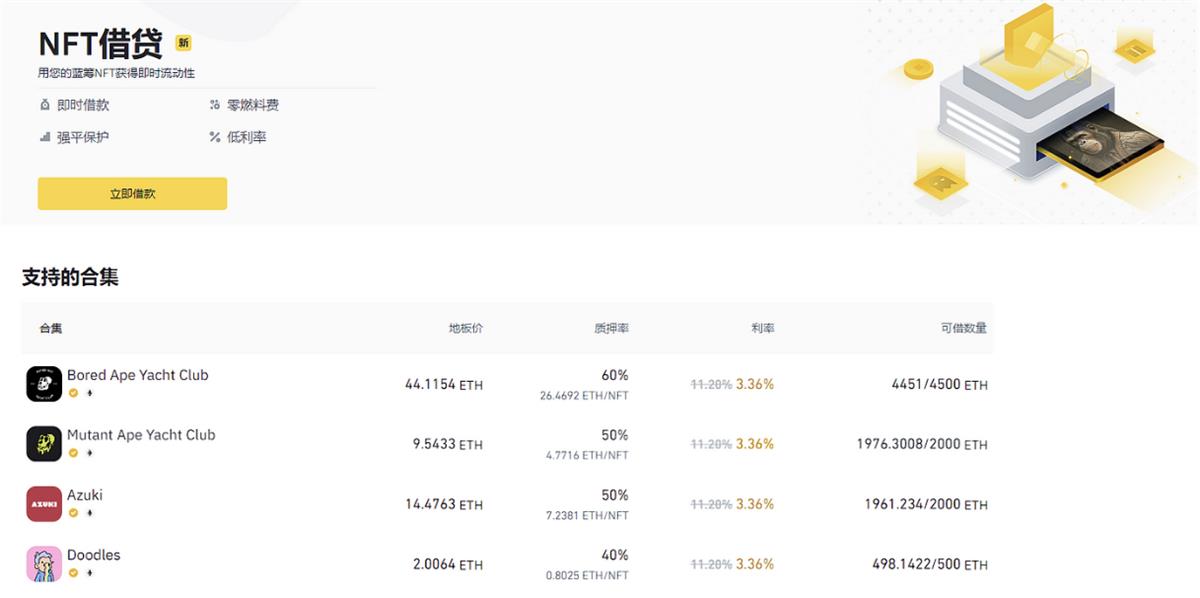
-
A notable feature of Binance NFT Marketplace is its dedicated BTC chain NFT trading market. Given the frequent high fees and network congestion on Bitcoin during peak times, this integration simplifies the NFT purchasing process and enhances market liquidity. After launch, it received positive feedback and contributed to a modest uptick in BTC-based NFT prices.
Coinbase NFT Marketplace:
-
Supports NFT asset trading on Ethereum and Polygon, with USD and ETH payment options.
-
Despite lacking standout features, Coinbase leverages its strong brand reputation to offer convenient access to mainstream NFTs. It stands out in being creator-friendly, allowing one-stop NFT series launches and community building.
-
In 2022, it emphasized a social focus, pioneering the concept of “NFT social,” though this theme has since faded.
OKX NFT Marketplace:
-
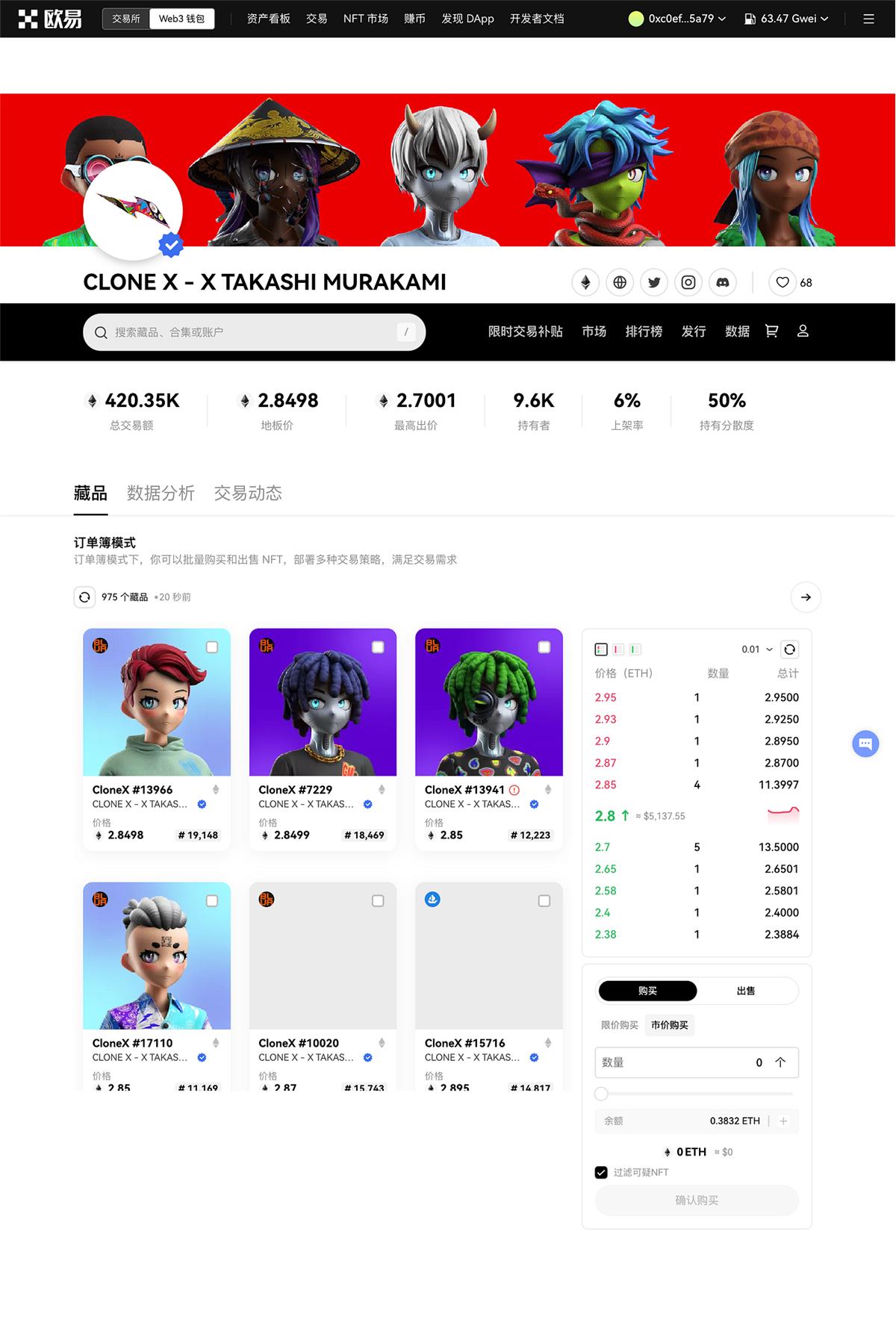
Its key differentiation lies in requiring users to access the “Web3 Wallet” entrance, import their private keys, and connect their on-chain wallets to directly engage with decentralized NFT markets. Unlike platforms merely integrating DEXs, the “Web3 Wallet” is fully user-owned, ensuring true ownership of acquired NFTs.
-
It aggregates real-time orders from major on-chain NFT platforms including OpenSea, Blur, LooksRare, Magic Eden, and IMX Official, supporting one-click listings across OKX, OpenSea, and LooksRare to consolidate global trading liquidity for easier transactions.
-
Users can trade NFTs across more than ten networks, including Ethereum, Solana, OKTC, Polygon, BNB Chain, Avalanche C, Immutable X, Aptos, Arbitrum One, Optimism, Klaytn, Arbitrum Nova, and zkSync Era.
-
In terms of user experience, OKX excels by offering order book purchasing on collection pages, assisting large traders in executing trades efficiently.
Platform Data
Coinbase
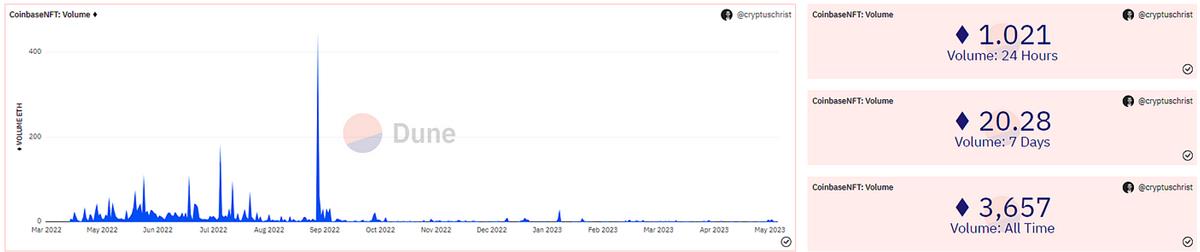
OKX
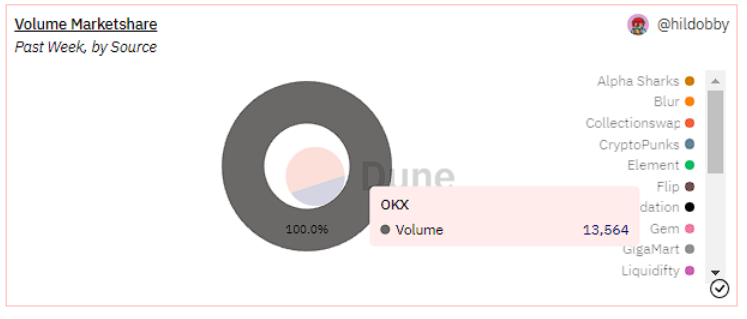
Challenges
Centralized competitors still face disadvantages compared to decentralized NFT markets:
-
Regulation: NFT markets involve digital assets, ownership transfers, and art trading, potentially subject to local laws and regulatory requirements. Centralized platforms must invest heavily to comply with regulations such as KYC and AML. For example, due to the U.S.’s strict financial oversight, Coinbase must obtain regulatory approval—any misstep risks legal disputes.
-
Asset breadth: Decentralized NFT markets offer immediate access to newly launched NFTs. In the fast-evolving NFT space—where trends shift weekly from Eastern-style PFPs to mecha-themed NFTs—permissionless listing is critical. On centralized exchanges, listing processes are cumbersome, making it difficult for users to access the latest NFTs.
-
Integration: One hallmark of Ethereum is the composability of smart contracts and software. Just as DeFi protocols like Aave and Compound integrate to generate yield, such interoperability drives liquidity. Due to their open nature, decentralized markets integrate more easily with other protocols than Coinbase, Bybit, or other centralized NFT platforms. Aggregators like Gem enhance value by combining platforms such as LooksRare and OpenSea to deliver optimal pricing and user experience.
-
It should be noted that these issues are not absolute—some centralized exchanges attempt partial solutions, while others continue to face these challenges.
Why centralized NFT markets haven’t seen significant success in data and market response? Several reasons may explain this:
-
Positioning: Due to the inherent transparency and public nature of NFTs, exchanges have limited control. This reduces data manipulation opportunities for CEXs, leading users to prefer decentralized platforms for greater autonomy in NFT trading.
-
User mismatch: Regular CEX users and active on-chain NFT marketplace users are largely distinct groups. Even overlapping users tend to stay on-chain due to better offerings there. The low barrier to entry—a key CEX advantage—holds little appeal for experienced NFT users.
-
Users can be divided into premium and non-premium segments, with premium users contributing tens or hundreds of times more trading volume. These high-value users are typically active on-chain.
-
Lack of differentiation: Many centralized NFT platforms lack innovation in features and user experience. They offer similar basic functionalities without compelling unique value propositions. In contrast, when OpenSea dominated, platforms like LooksRare, X2Y2, and Blur used tactics like “vampire attacks” and “airdrop farming” to gain traction from different angles.
-
Timing: Timing is crucial for new product launches. Most CEXs announced NFT marketplaces in late 2021 but didn’t go live until 2022—by which time the NFT market had cooled, resulting in weak trading volumes.
The NFT Market Remains in a Bear Phase
Since February, both NFT prices and trading volumes have declined in tandem, dropping from 36,000 ETH per day to just 3,800 ETH. Additionally, active addresses have plummeted by 90% since February, with transaction counts down about 80%.
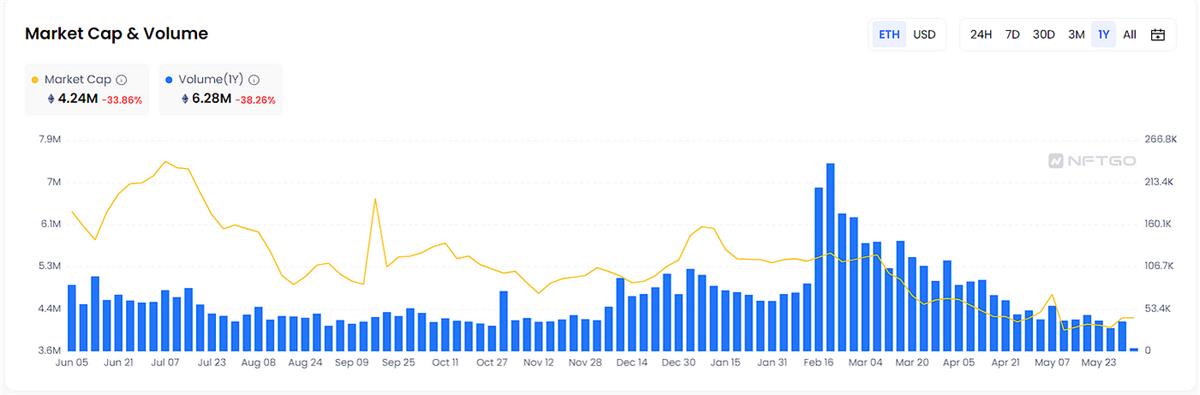
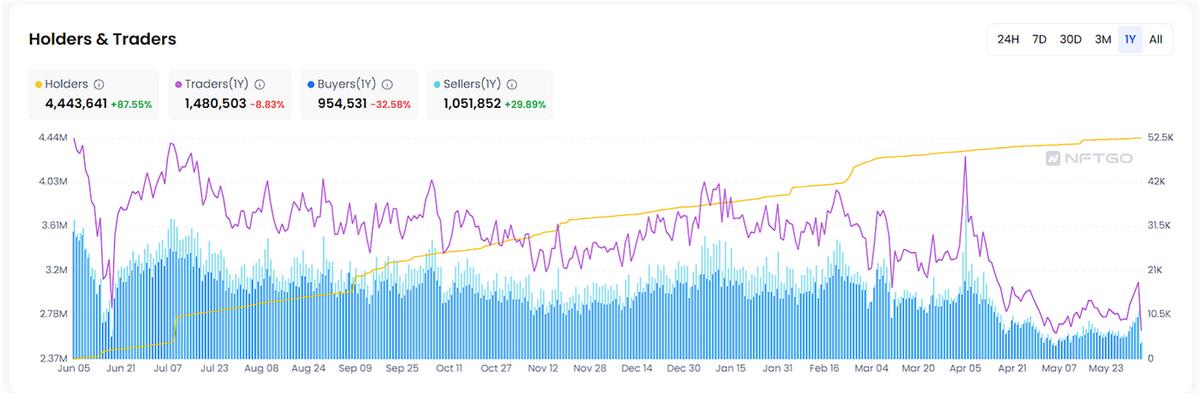
Since April last year, the ratio of new users has gradually declined. Similarly, funding rounds in the NFT space have sharply decreased. Recently, Gryfyn raised $7.5 million—the largest round in the recent NFT market—but this pales in comparison to last year’s frequent multimillion-dollar financings.
Outlook
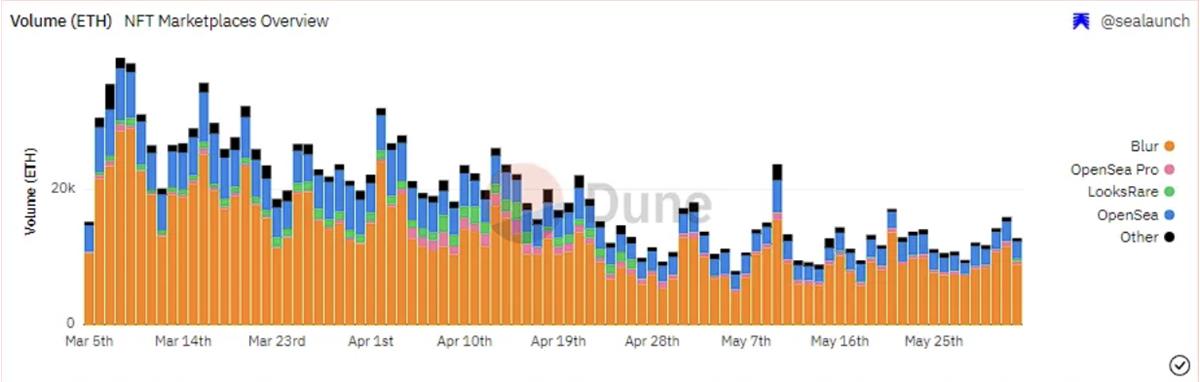
1. Looking at NFT market evolution, platforms like Blur are accelerating liquidity improvements in pursuit of market share. In the short term, this may lead to a correction of inflated NFT valuations toward more reasonable levels. For NFT holders, the darkest days may not yet be behind them. However, from a long-term perspective, healthy competition among NFT marketplaces benefits the ecosystem by enhancing liquidity and fostering sustainable development.
2. To advance further, CEX-operated NFT marketplaces should learn from successful on-chain models and adopt their best practices.
a) For example, Blur: Launched in late October 2022, it brands itself as the fastest NFT aggregator—consolidating collections from OpenSea, LooksRare, and X2Y2—with real-time price comparisons, portfolio management, bulk listing, and zero fees. It implemented an airdrop program distributing tokens based on trading frequency and volume, generating significant market buzz upon launch.
b) On the product side, Blur provides professional tools, superior UI/UX, and auxiliary features that optimize the trading experience.
-
A future trend in the NFT market is the emergence of vertical-specific platforms focused on niche asset types—such as gaming NFTs, sports NFTs, or music NFTs. By targeting specific niches, these platforms can offer tailored services and attract dedicated user bases.
-
Technologically, more efficient and robust NFT marketplaces are needed. Due to Ethereum’s network effects and established user base, most NFT activity remains on-chain. For centralized exchanges to capture significant market share, much more effort is required.
-
For NFT exchanges, people often envy the vast market potential and dream of capturing dominant market share. Countless projects rise up, peddling pseudo-demands and grand visions. If 2021 was the breakout year for NFTs, 2022 was the year of fierce competitive shifts. Only those who grasp core user needs can thrive amid a bear market.
Join TechFlow official community to stay tuned
Telegram:https://t.me/TechFlowDaily
X (Twitter):https://x.com/TechFlowPost
X (Twitter) EN:https://x.com/BlockFlow_News
 Bing Ventures






