A Deep Dive into the Current State of the TreasureDAO Ecosystem
TechFlow Selected TechFlow Selected
A Deep Dive into the Current State of the TreasureDAO Ecosystem
As a leading GameFi project, how has its ecosystem developed to date?
 Navigating Web3 tides with focused insights
Author: Jill, LD Capital
TreasureDAO is an NFT ecosystem built for games, metaverses, and other types of NFTs. It originated from Loot, an experimental NFT project launched in 2021, and its yield farming derivatives. Users can stake Loot and the AGLD token to earn Treasure's native token, MAGIC.
The protocol migrated from Ethereum to a Layer 2 network in October 2021 and officially launched Treasure DAO in November 2021. Built around empowering the MAGIC token, Treasure began positioning itself as a blockchain gaming platform and was once dubbed the "Nintendo of the crypto world." As a leading GameFi project, how has its ecosystem evolved since then?
1. Products
TreasureDAO currently offers three main products: 1) TroveMarket, providing NFT marketplace services for games and metaverse projects within the Treasure ecosystem; 2) BridgeWorld, a game launched by TreasureDAO centered on distributing the MAGIC token; 3) MagicSwap, a decentralized exchange (DEX) that provides liquidity for in-game assets across the Treasure ecosystem.
1. On-chain Active Users
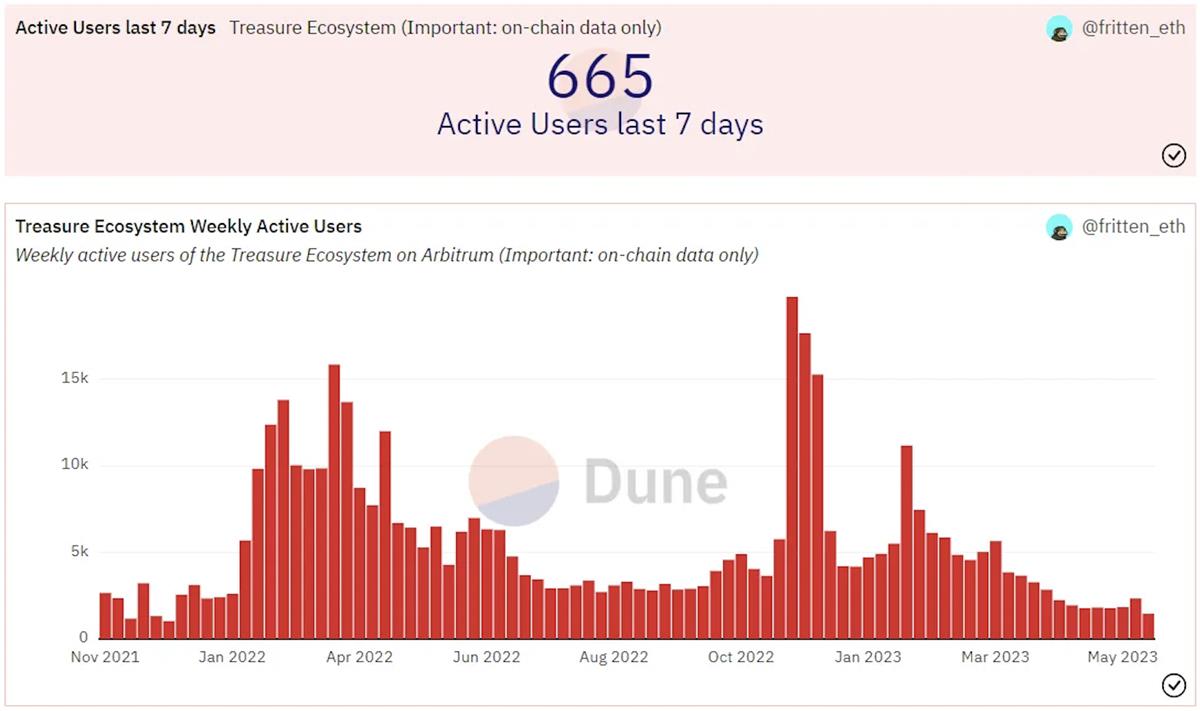
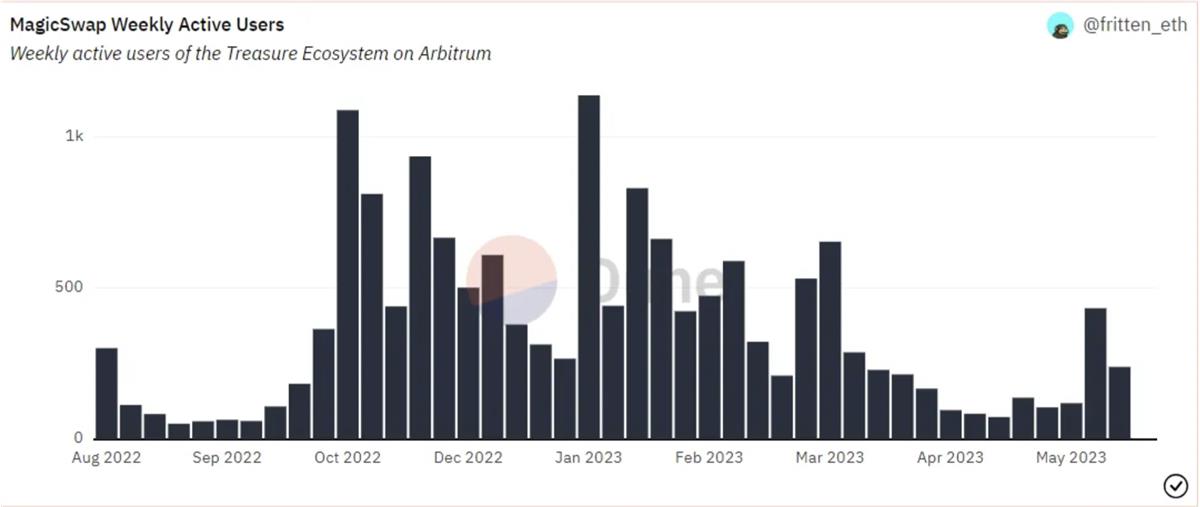
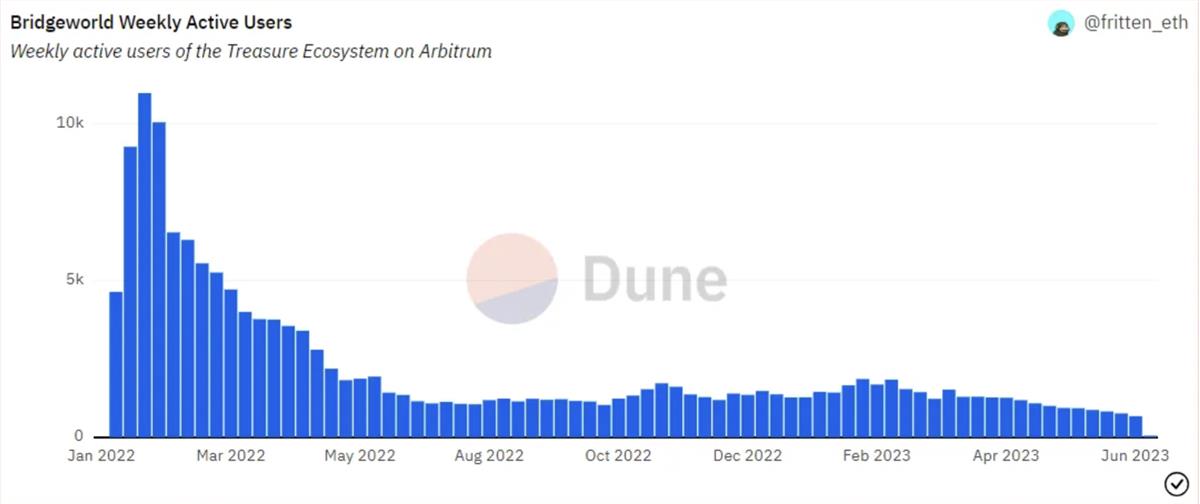
Currently, Treasure has approximately 700 weekly active users. Observing the trend in active user numbers:
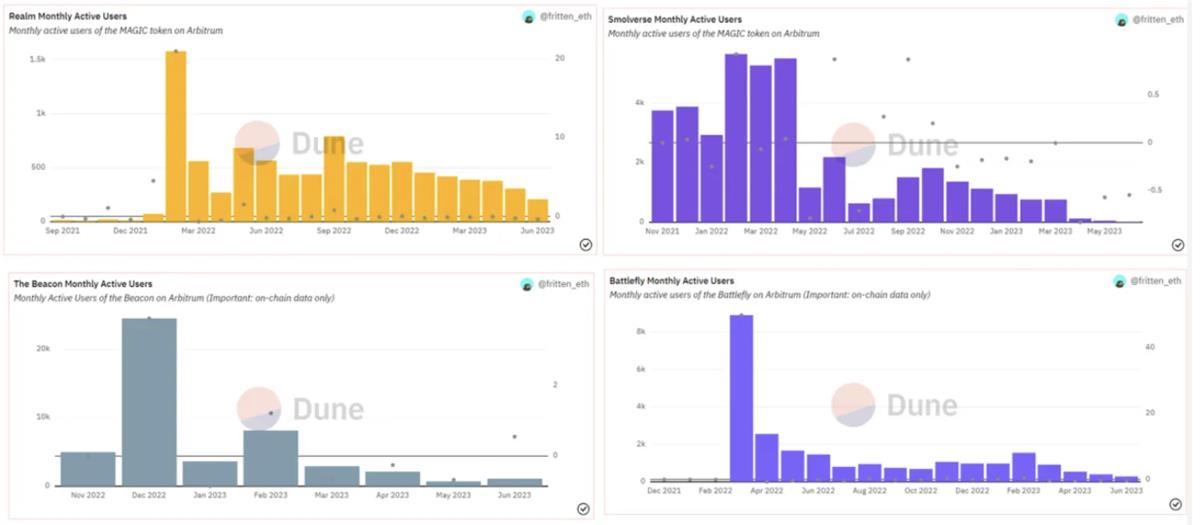
1) From January to June 2022, the release of new products such as BridgeWorld, the Smolverse gaming system, and the NFT trading platform helped Treasure’s ecosystem gradually gain momentum.
2) From November to December 2022, The Beacon, a pixel-style Free-to-Play action RPG, reignited excitement in the Treasure ecosystem. The gameplay is simple, involving level completion, quizzes, and buying/selling in-game items.
3) In January 2023, Treasure DAO launched a game creators program backed by Arbitrum. Additionally, expectations around the Arbitrum airdrop led to a minor surge in on-chain user activity.
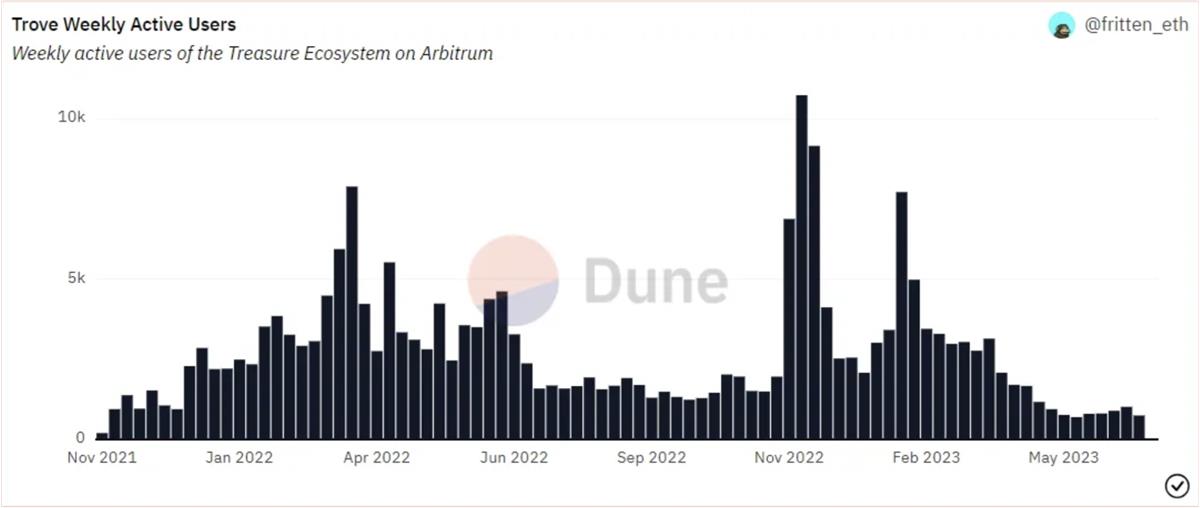
Overall, Treasure’s current ecosystem shows declining active users, consistent with broader trends in the GameFi sector. TroveMarket, serving as the primary NFT marketplace within Treasure, and the BridgeWorld gaming ecosystem are the core hubs of user activity, while MagicSwap sees relatively fewer active users.
2. NFT Trading Volume
Trove is the primary NFT trading venue, currently deployed on Arbitrum, Arbitrum Nova, and Ethereum. Launched in June 2022, it evolved from the Treasure Marketplace introduced by Treasure DAO in November 2021.
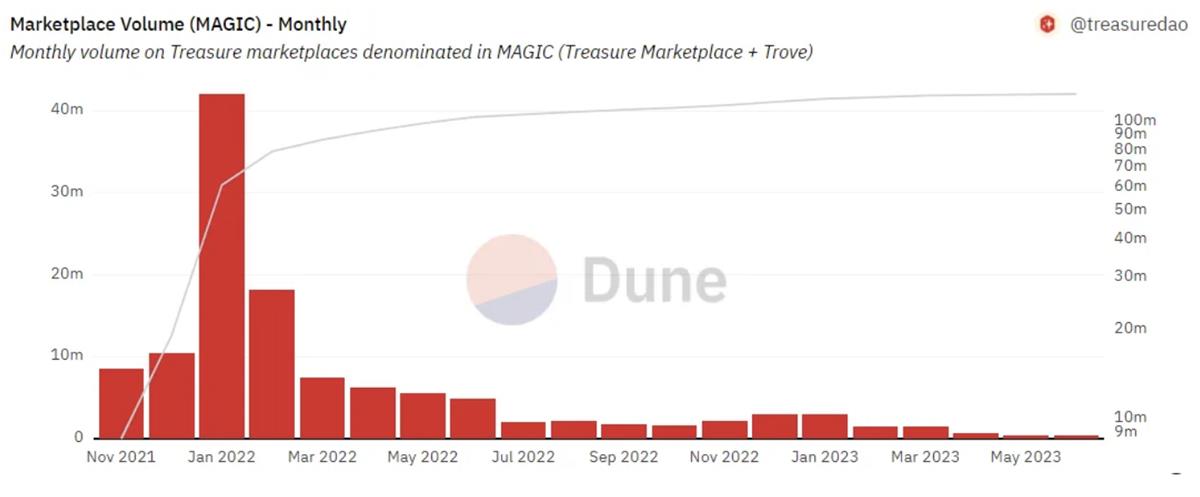
According to Dune Analytics, Trove’s current monthly NFT trading volume on Arbitrum is around 460,000 MAGIC (approximately $320,000). The peak volume reached 42 million MAGIC in January 2022. Since then, monthly NFT trading volume has continuously declined and now stands at about 1% of its peak.
On Ethereum, the current monthly NFT trading volume is less than 5.6 ETH, worth around $9,600, compared to a peak of 101.58 ETH (worth ~$170,000).
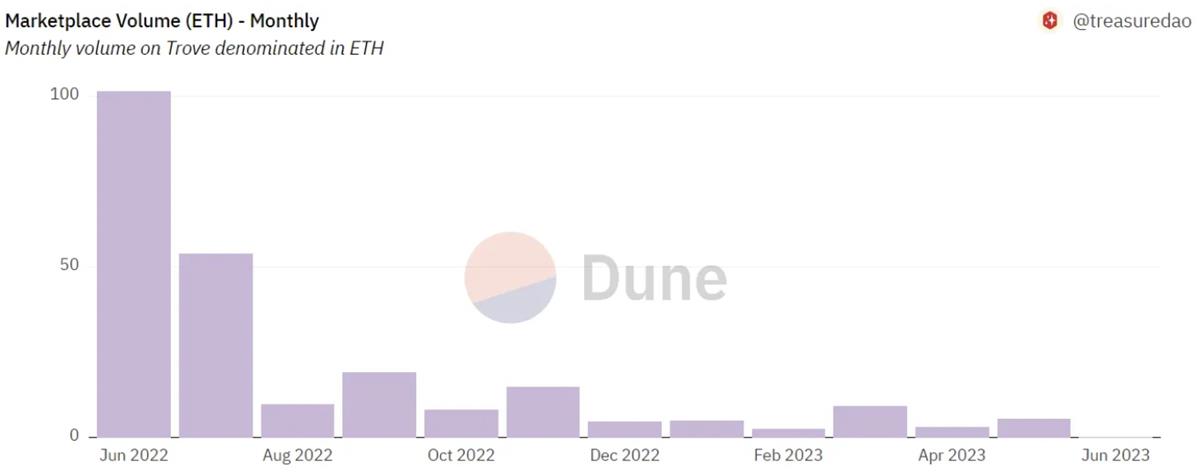
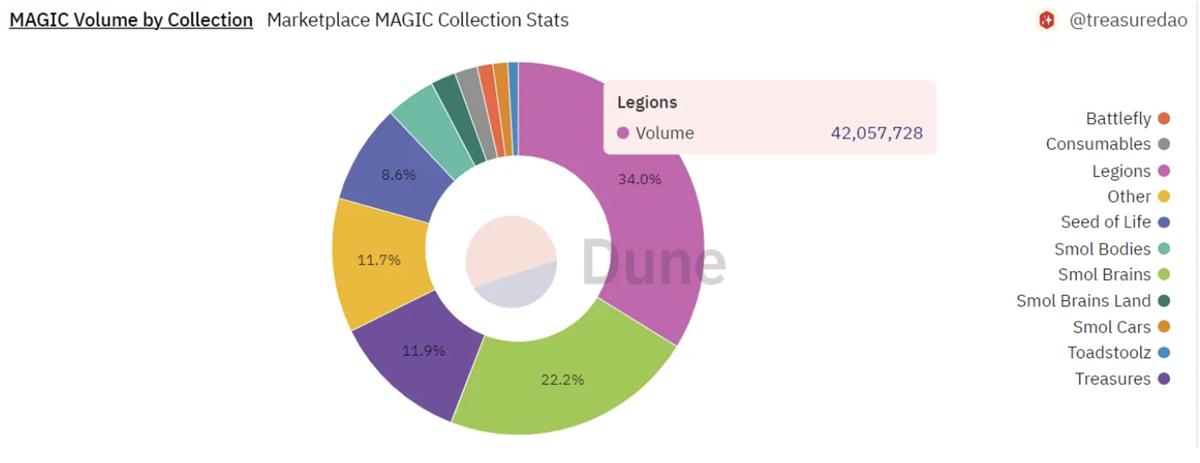
From the above data, it’s evident that Trove Market’s trading volume is now primarily concentrated on Arbitrum. The top collections by trading volume are Legions (34%), followed by Smol Brains (22.2%) and Treasures (11.9%).
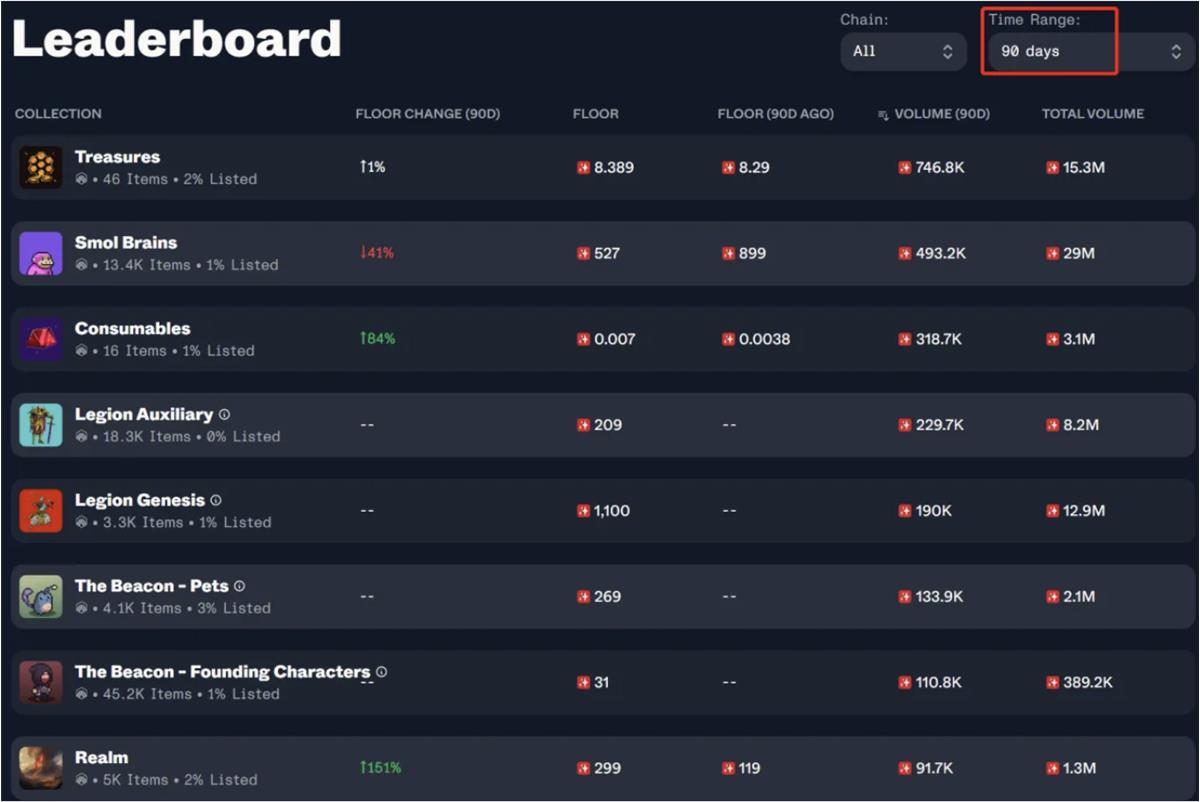
Over the past 90 days, the collection with the highest trading volume was Treasures, reaching 750,000 MAGIC, followed by Smol Brains at 490,000 MAGIC, and Consumables in third place with 320,000 MAGIC. The floor price of Consumables rose from 0.0038 MAGIC to 0.007 MAGIC over 90 days—an 84% increase.
2. Gaming Ecosystem Overview
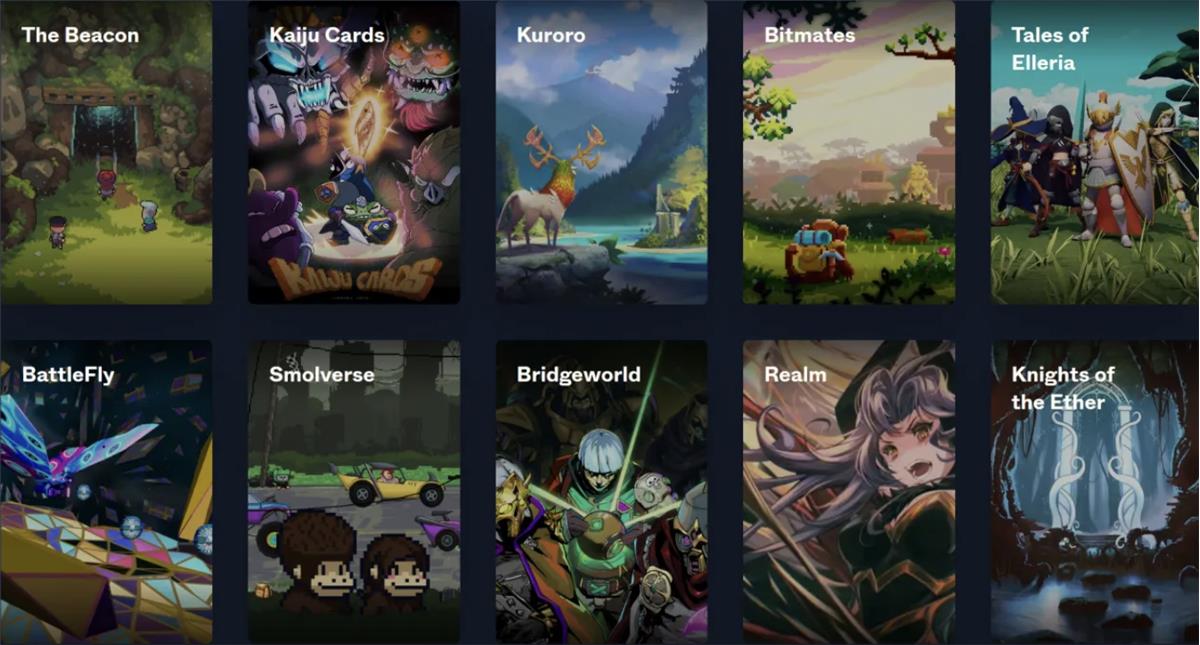
TreasureDAO has incubated over ten games so far, with the most notable being Bridgeworld, Realm, Smolverse, The Beacon, and BattleFly.
1. Bridgeworld
Bridgeworld is a strategic business, trade, and domination game upgraded from the original blockchain game Legions, and serves as the flagship title developed by the Treasure DAO team. Bridgeworld integrates multiple gameplay mechanics—players purchase legions to complete tasks, earning various NFT rewards. These NFTs can be sold for the native MAGIC token or combined into more complex NFTs for mining.
There are currently eight locations in Bridgeworld: Pilgrimage, Barracks, Ivory Tower, The Forge, Harvesters, Starlight Temple, Corruption, and Monolith. Each location features distinct gameplay:
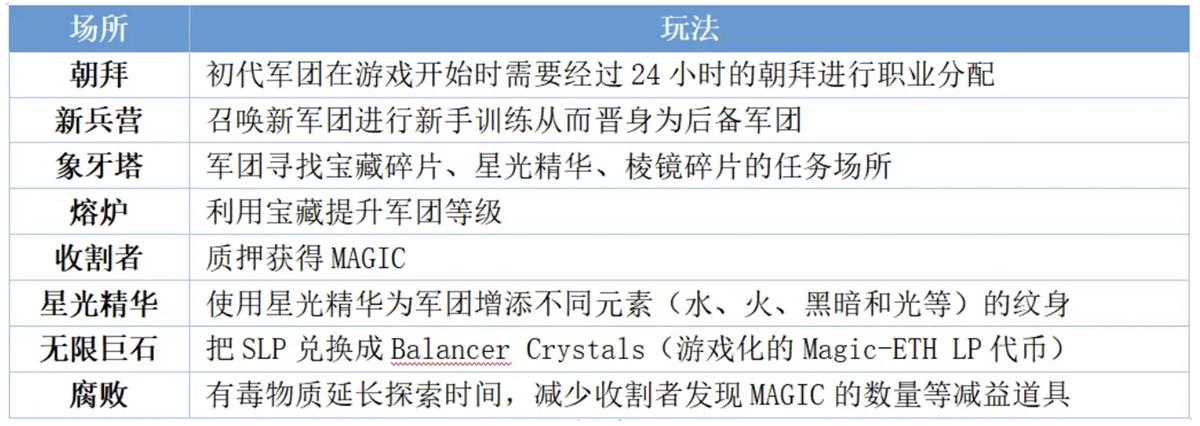
Over the past 90 days, the floor prices of in-game NFT items in Bridgeworld have seen significant increases. Notably, Treasures achieved a trading volume of 747,000 MAGIC. Floor prices for Genesis Legion NFTs and Auxiliary Legion NFTs are not currently tracked.
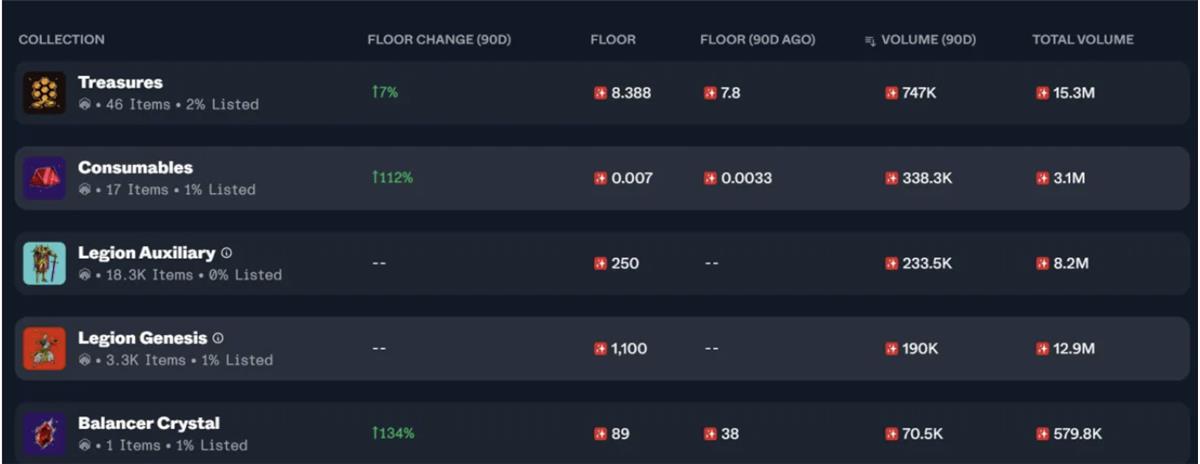
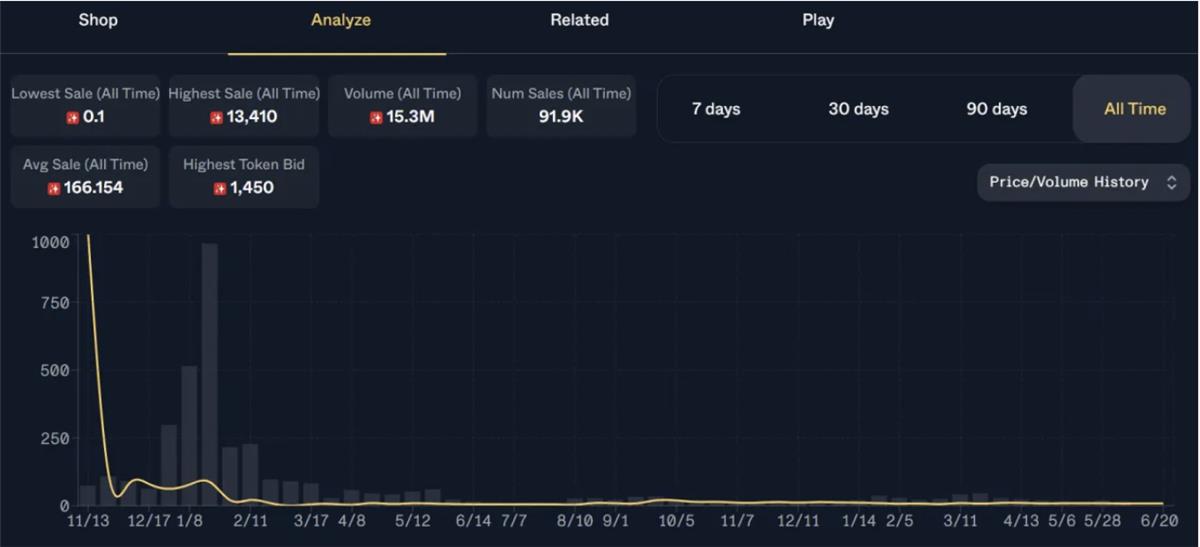
Historically, the floor price of Treasures has remained relatively stable around 8 MAGIC, with low trading volume.
2. Realm
Realm is a play-to-earn metaverse game where players explore and create virtual worlds and games. There are two main roles: Adventurer and Realmer. Realmers are holders of Realm NFTs who compete for top rankings on leaderboards to earn MAGIC rewards, produce NFTs, and sell items to other Realmers. Adventurers enter game domains to complete quests and engage in PvP battles, earning PARTICLE and ANIMA—both non-transferable, soul-bound tokens.
Recently, the floor prices of NFTs in this game have seen substantial growth. Notably, the Realm NFT floor price surged from 109 MAGIC to 299 MAGIC over the past 90 days, with trading volume reaching around 90,000 MAGIC.
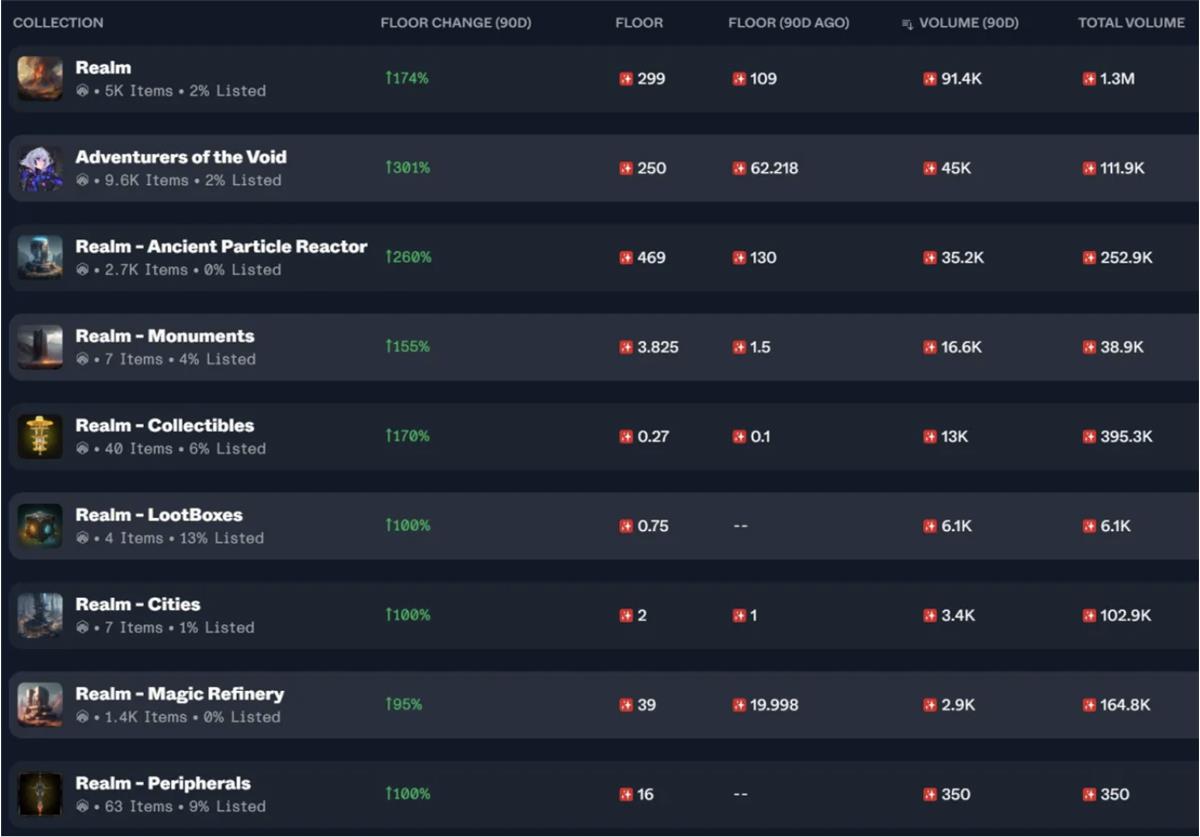
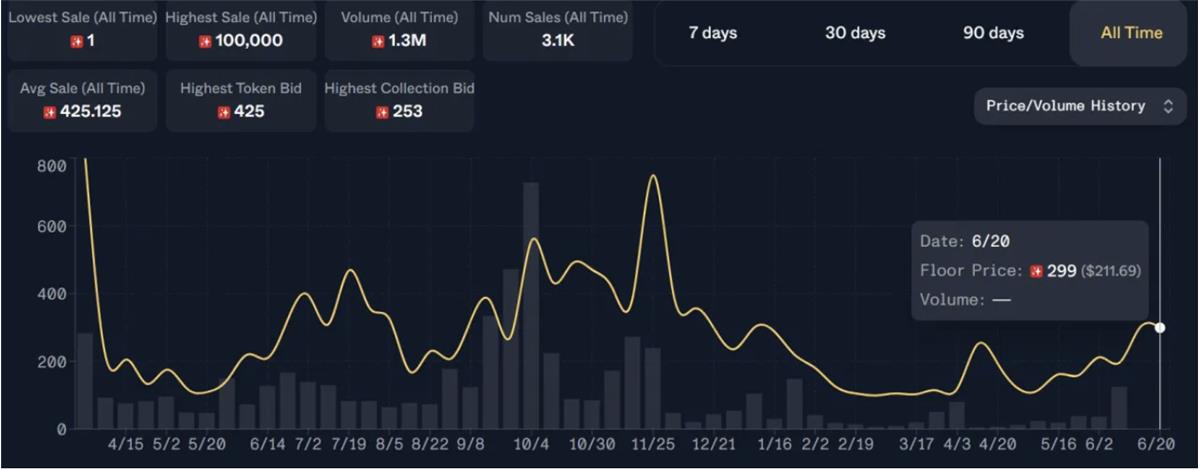
The total trading volume for Realm NFTs has reached 1.3 million MAGIC. Although there has been notable growth over the last 90 days, overall trends indicate it remains near historical lows with limited trading activity.
3. Smolverse
Smolverse is a native NFT project on TreasureDAO, launched with free minting in October 2021. The project consists of two core NFT series: Smol Bodies and Smol Brains, categorized by rarity into Moon Rock, Stardust, Comet Shard, Lunar Gold, and Alien Relic. Gameplay is currently simple—players own a Smol Brain, which they stake on the Smolverse website. The longer it is staked, the higher the Smol’s IQ becomes. IQ determines what activities a player can perform in the metaverse. Players can also mine Smol Treasure using their Smol Brain.
In August 2022, Smolverse announced a partnership with StriderDAO to build its flagship game, Smolville, which remains in concept phase. TreasureDAO has established a dedicated studio, Darkbright, to develop Smolville.
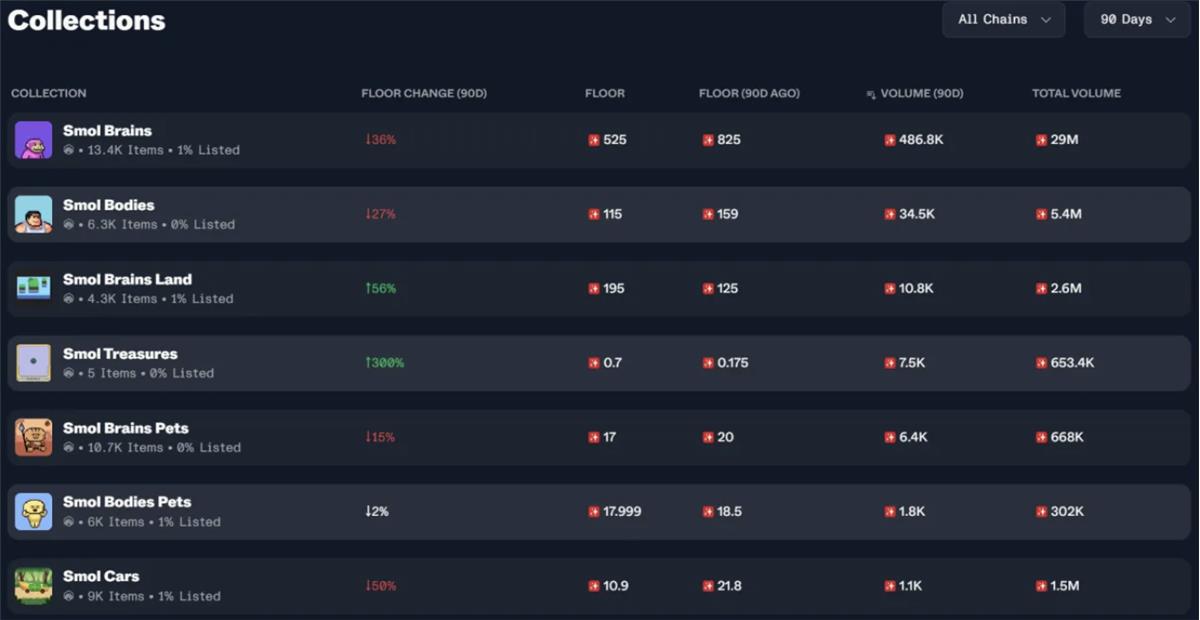
Over the past 90 days, the most traded NFT remains the core Smol Brains, though its floor price dropped from 825 MAGIC to 525 MAGIC. The floor price of Smol Treasure, however, has seen a significant rise.
4. The Beacon
The Beacon is a dungeon-adventure-based RPG that previously gained significant popularity. Gameplay includes solo runs, team adventures, and casual customization. It already supports single-player combat, multiplayer modes, and housing systems. Rewards include various NFT items such as skins and decorative accessories.
The Beacon is the first Diamond Partner (highest tier) in Treasure DAO’s GBP program. Recently, it launched the Harvester event. Phase one ran from June 5 to June 19, producing regular loot, limited-edition sets, and dropping Scale of Emerion, which will later contribute to the MAGIC distribution mechanism. After June 19, the Harvester program went fully live—players can claim Scale of Emerion, exchange them for Ancient Permits, interact with other event mechanics, and stake Ancient Permits to earn MAGIC rewards.
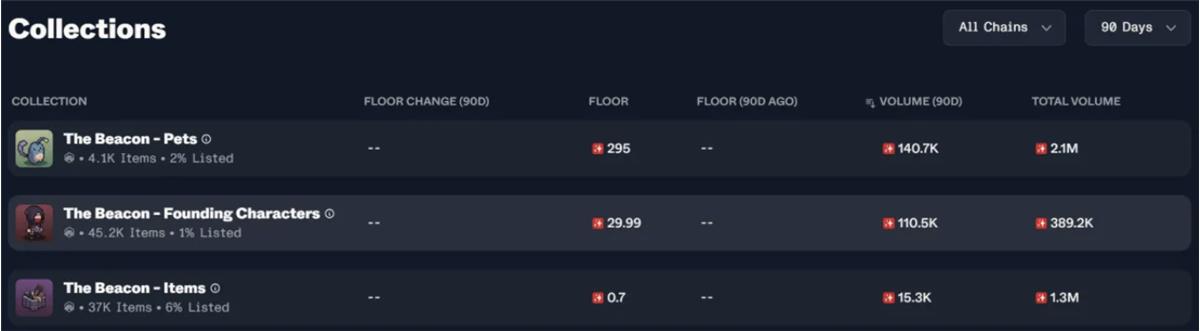
The launch of the Harvester event caused a slight uptick in character NFT prices, though this change has not yet reflected in Trove market data.
5. BattleFly
BattleFly is an experimental casual strategy PvP game developed by an anonymous team. Players compete against each other to win rewards. The game has two main areas: The Garden, where players obtain weapons and gear, and the Hyperdome arena for battles. During combat, both players must stake a certain amount of MAGIC (5–100), and the winner receives part of the loser’s staked MAGIC. The game officially entered public beta in March 2023.
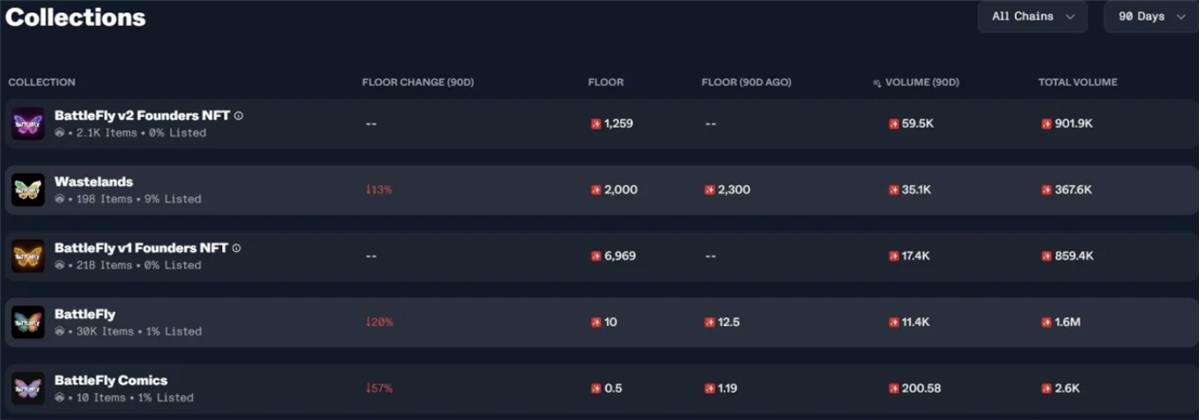
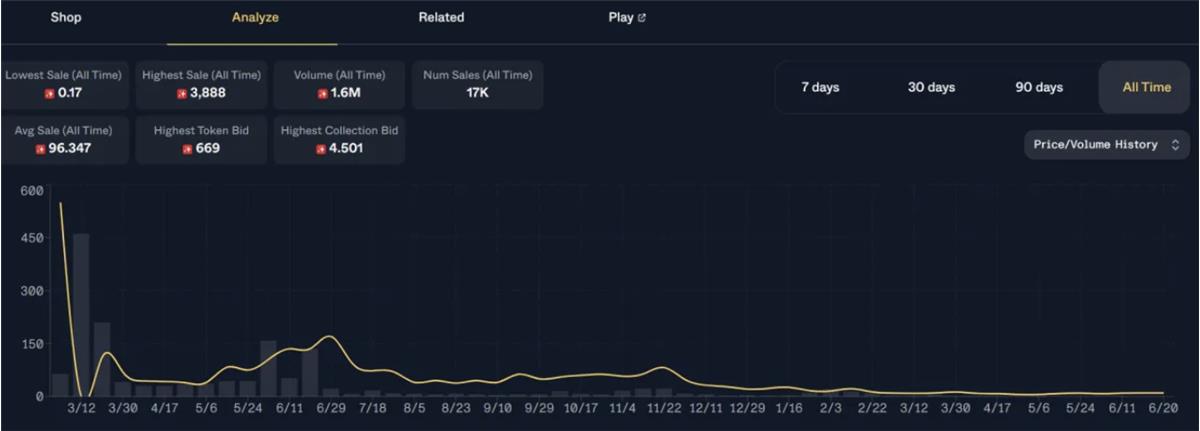
Currently, the most traded collection is the BattleFly combat NFT, with trading volume reaching 1.6 million MAGIC. However, historical data shows a sharp decline in trading volume, and the floor price has dropped by about 17x.
Among all gaming projects listed above, only The Beacon currently has over 1,000 monthly active users, closely tied to its recent Harvester campaign. The core game Bridgeworld has just over 800 monthly active users.
Looking at historical data across Treasure’s gaming projects, overall monthly active users are trending downward, NFT trading volumes have sharply declined, and user retention is weak. This suggests that TreasureDAO has yet to launch a highly engaging game, and new projects struggle to maintain momentum after initial hype.
3. Token Release
MAGIC is Treasure’s native token with a total supply of 350 million. Its uses include: 1) staking to earn MAGIC; 2) summoning legions and synthesizing NFTs in Bridgeworld; 3) serving as the settlement currency on TroveMarket; 4) functioning as in-game currency—for example, as staking collateral in BattleFly; 5) participating in governance, such as allocating treasury funds or managing ecosystem grants.
Below is the MAGIC token distribution:
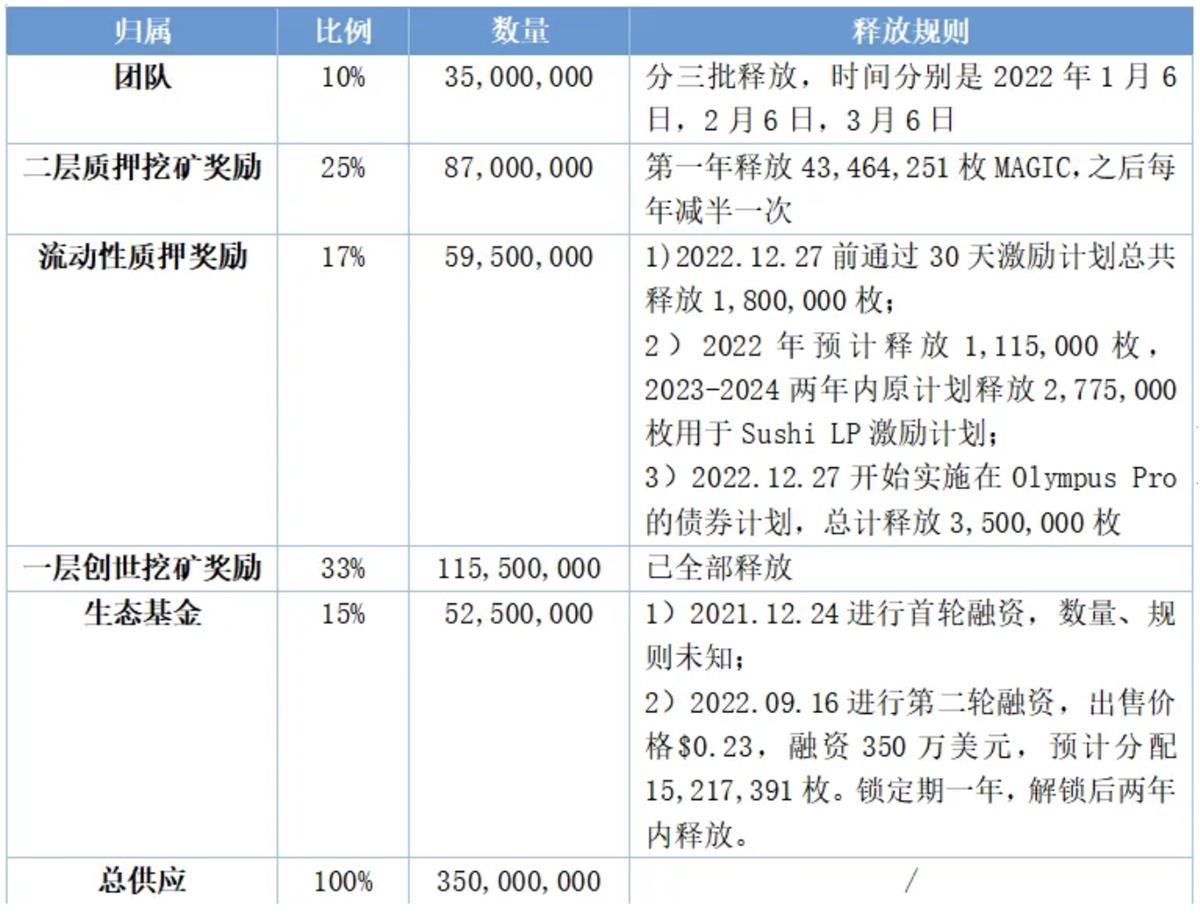
According to CoinGecko, the current total supply is 339,645,510, with 217,195,443 in circulation (~64%). Key disclosures include:
1) Team tokens and genesis mining rewards are fully unlocked.
2) Staking mining rewards underwent their first halving on September 1, 2022, reducing weekly issuance from ~778,000 to 417,000 MAGIC.
3) Tokens from the first funding round are not fully unlocked; second-round tokens have not started unlocking.
4) A two-year Sushi LP incentive program was voted in January 2023 to reduce rewards by 30%, changing the total from 2,775,000 to 1,942,500 MAGIC.
MAGIC采用了 an early high-circulation model with annual production halvings. According to the original emission curve, long-term inflation isn’t particularly severe. However, to better align token emissions with network growth and ensure sustainable development, TreasureDAO announced in January 2023 a phased decommissioning of the Atlas Mine liquidity mining program, allowing MAGIC staked in the mine to be withdrawn.
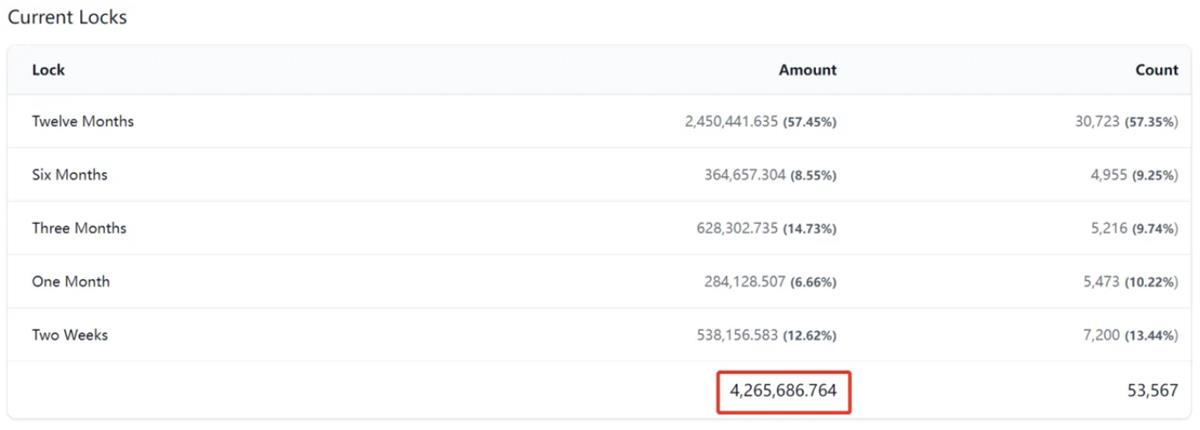
Inflation pressure for MAGIC was mainly concentrated between January and March 2023, as approximately 50 million MAGIC from the first cohort of 12-month stakers vested on January 26 and began a 45-day linear release. Currently, only 4.265 million tokens remain in the mine, meaning sell-side pressure from linearly released tokens is relatively low.
Going forward, MAGIC will no longer be released through staking but instead via gameified mechanisms like Harvesters.
4. Recent Activities
1. Oathkeeper’s Insignia Mint
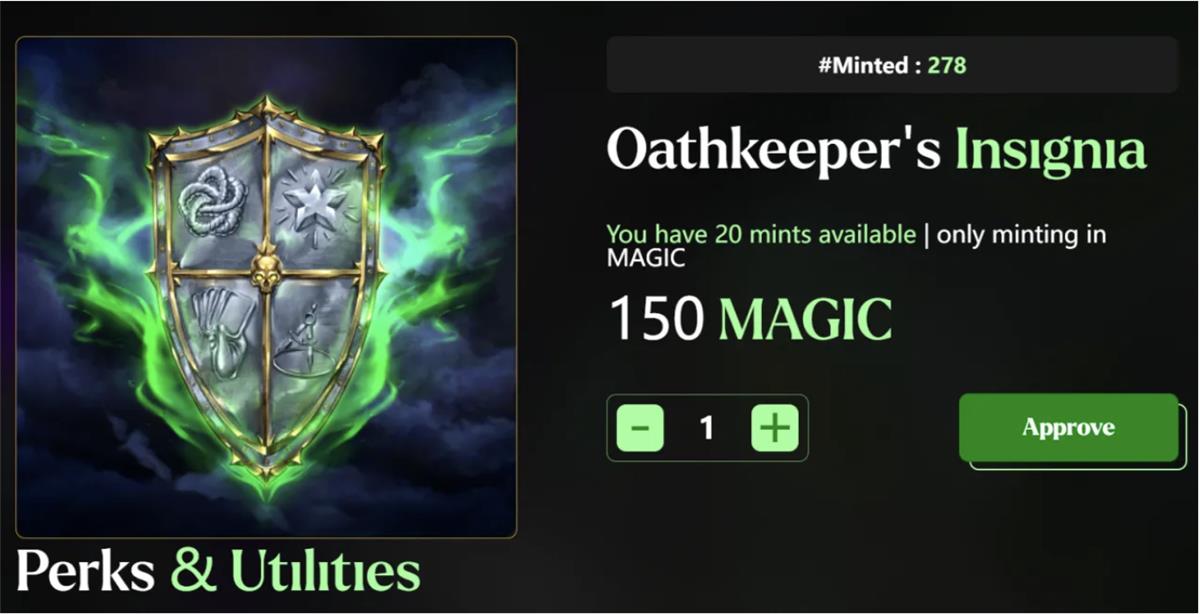
On June 13, Knights Of The Ether (KOTE), a fantasy card battle game, launched the Oathkeeper’s Insignia mint. A total of 1,500 insignias were issued, with 80 reserved for the team and 1,420 available for public sale at 150 MAGIC each.
Holding one insignia increases damage in the Blightfell game, grants one Bridgeworld Ancient Permit, and provides access to epic prizes and additional Ancient Permits during weekly challenges. The insignia is valid from June 21 to December 21.
Ancient Permits will play a role in the upcoming Thundermane Harvester event, where staking them earns MAGIC rewards.
However, community participation has been low—after seven days, only 278 insignias have been minted.
2. New Game Kaiju Cards Launching Soon
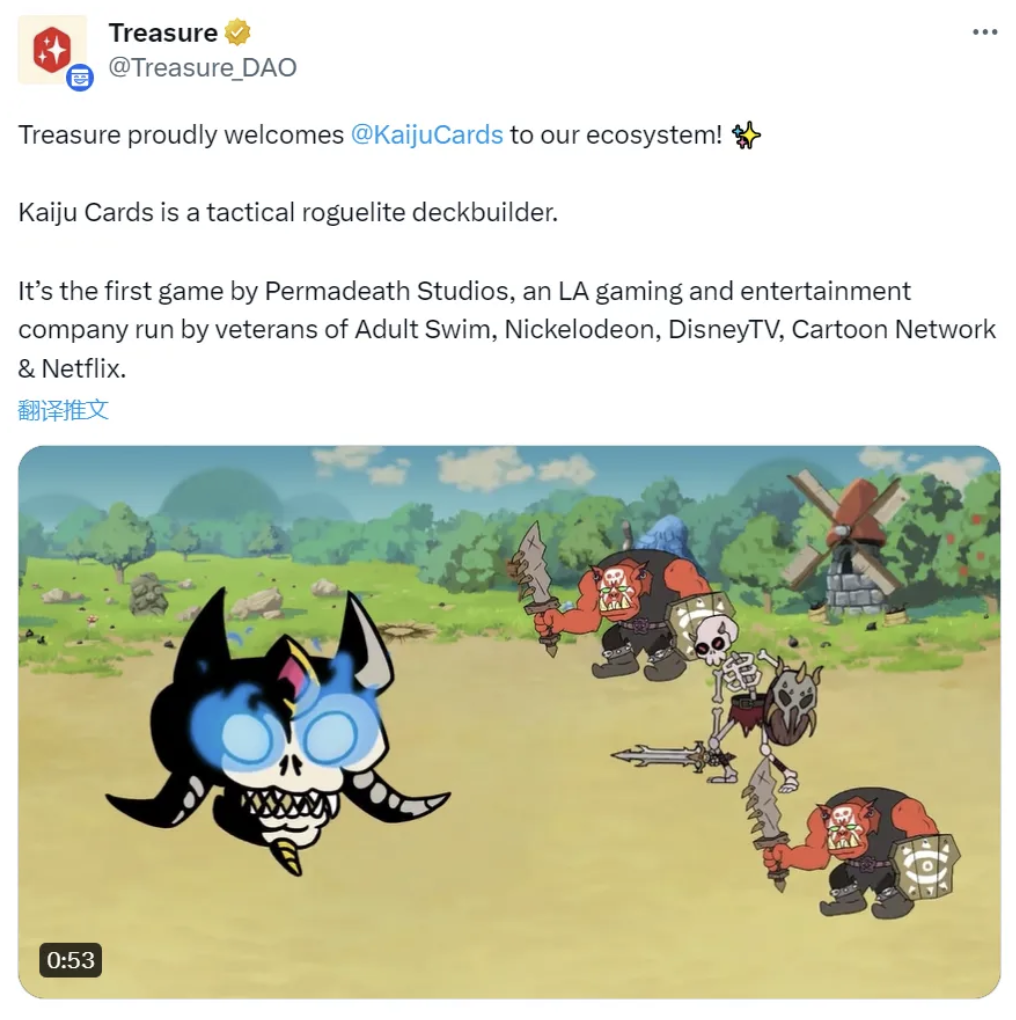
Turn-based card battle game Kaiju Cards is joining the Treasure ecosystem. Developed by Los Angeles-based game and entertainment studio Permadeath Studios, the team includes members from Adult Swim, Nickelodeon, DisneyTV, Cartoon Network, and Netflix.
A Pioneer Event will launch at the end of July. Pioneer Kaiju NFTs will feature three characters—Penguins, Warhogs, Frogs—and three classes—Knights, Wizards, Rogues. Each Kaiju will have unique origin accessories, attributes, and class roles.
3. Treasure Will Distribute部分 ARB to Contributing Game Developers
Arbitrum airdropped 8 million ARB to Treasure on April 25. On June 5, the Treasure community approved a proposal for Treasure DAO to “distribute部分 ARB to strengthen strategic partnerships with game studios.” Under this proposal, 2 million of the 8 million ARB received from the Arbitrum Foundation will be allocated to contributing developers within the ecosystem, including The Beacon, Realm, Tales of Elleria, Knights of the Ether, and The Lost Donkeys.
Conclusion
Currently, TreasureDAO—and the GameFi sector as a whole—remains stuck in the original “play-to-earn” model, lacking robust economic designs to extend game lifecycles. Coupled with generally low gameplay quality, this leads to poor user retention. Additionally, unfavorable market conditions have caused sharp declines in daily active users and trading volumes. Without incentive campaigns, most GameFi projects are effectively deserted.
Nevertheless, GameFi remains an essential, low-barrier, highly viral segment in the crypto space. The sector is still in its early exploratory phase. As a gaming platform, Treasure has the advantage of attracting external game studios, giving it greater potential compared to standalone blockchain games.
Join TechFlow official community to stay tuned
Telegram:https://t.me/TechFlowDaily
X (Twitter):https://x.com/TechFlowPost
X (Twitter) EN:https://x.com/BlockFlow_News
 Cycle Capital Research