








OKX Ventures: Rethinking Oracles, the Seen and the Unseen
TechFlow Selected TechFlow Selected
OKX Ventures: Rethinking Oracles, the Seen and the Unseen
This article separately explains the concept, classification, application scenarios, and investment opportunities of oracles.
 Navigating Web3 tides with focused insights
Introduction
With Vitalik recently mentioning the "ultimate oracle" problem in his article, “oracles” have re-entered the spotlight of the crypto community. Oracles already play an irreplaceable role across insurance, finance, random forecasting, IoT, and other sectors. The core view from OKX Ventures is that as long as off-chain data retains value, oracles—as middleware—will continue to play a critical role within the broader Web3 narrative. This can be broken down into several key aspects:
-
As the Web3 ecosystem continues to evolve, it’s foreseeable that the growing number of dApps and platforms will drive increasing demand for accessing external data sources and APIs via oracles. In the future, especially DeFi exchanges are likely to integrate more than one oracle (typically relying on one primary source with 1–2 others serving as cross-validation backups) to obtain off-chain metadata, thereby avoiding catastrophic losses caused by delays or attacks on a single oracle (similar to incidents seen in protocols like Venus).
-
From an investment standpoint, although traditional DeFi-focused oracles centered around price feeds currently see Chainlink maintaining a near-monopoly, there remains competitive room for a second player within the remaining ~10% of the market. Moreover, niche-focused oracles—such as those targeting L2s, credit, NFTs, and DID—have begun showing promising innovation and compelling narratives.
-
Drawing lessons from DEXes and L1s, and considering incremental market demand along with emerging use cases in L2/ZK and specialized domains, the oracle sector is unlikely to end up dominated by a single winner. Greater potential and market opportunities remain unexplored—for instance, off-chain computing, pricing non-standard on-chain assets such as NFTs, and deeper integration with AI/ML.
Below, we provide an in-depth analysis of the concept, classification, application scenarios, and investment opportunities related to oracles.
Background
According to Vitalik's recent article, he believes there will eventually emerge a trust mechanism that enables a far more effective oracle protocol. He outlined two potential solutions:
-
Price Oracles: One approach is a partially non-cryptoeconomic decentralized oracle, and another relies on validator voting.
-
The latter primarily uses emergency recovery mechanisms instead of relying on L1 consensus to restore functionality. For example, price predictors depend on the trust assumption that voters could potentially be bribed. Users could receive early warnings of attacks and exit any system dependent on the oracle. Such oracles may deliberately delay rewards over extended periods, so if the protocol fails, participants would not receive compensation.
-
The price oracle proposal builds upon earlier ideas like the Schellingcoin/point mechanism, envisioning a reverse prisoner’s dilemma-style game-theoretic model.
-
The core idea remains preserving chain simplicity, avoiding situations where a single oracle failure directly triggers a hard fork of the blockchain.
-
Truth Oracles: Designed to report more subjective facts beyond simple prices.
-
Similar to a decentralized court system built on a partially non-cryptoeconomic DAO.
-
The concept behind Rocket Pool Oracle DAO, where a group of nodes form a DAO, aligns well with Ethereum's vision for oracle development.
-
However, according to Vitalik’s perspective, he appears to favor the first solution—a validator voting scheme based on complex game theory.
Sector Data
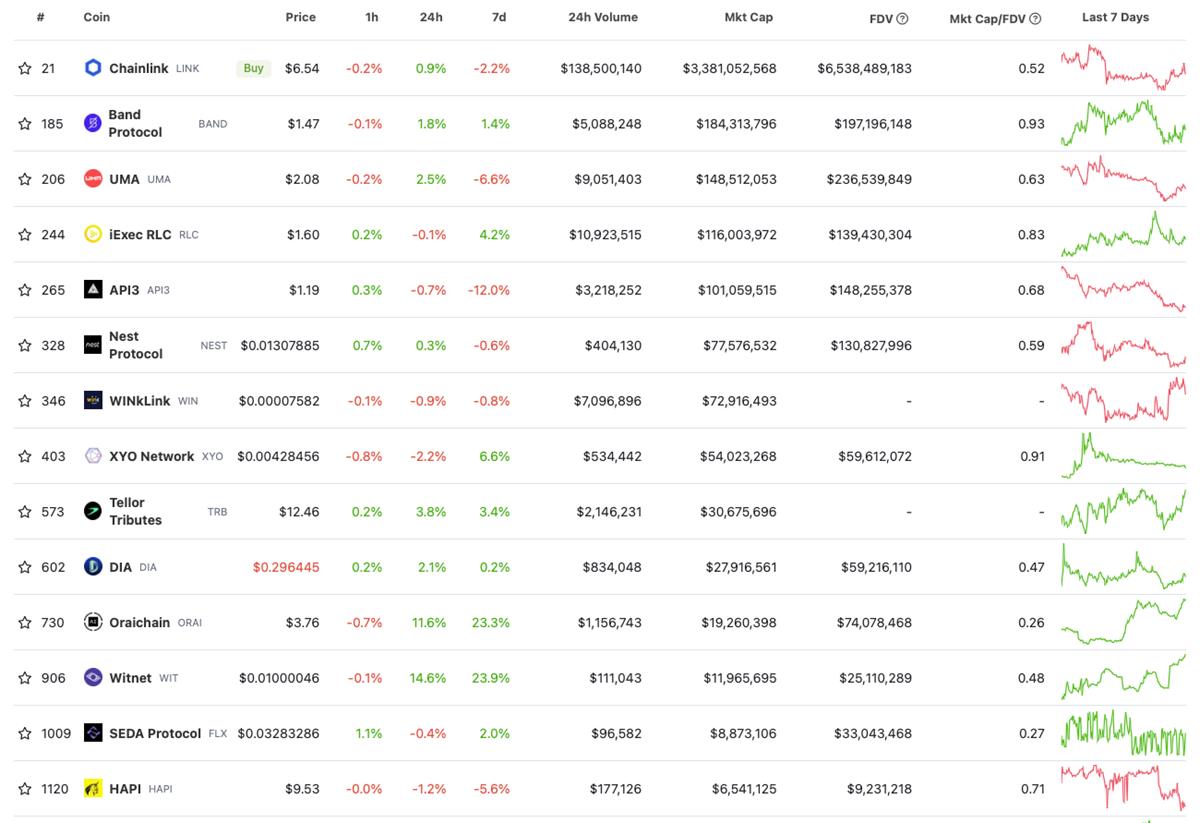
Looking at overall sector data, Chainlink still maintains a dominant leadership position. Despite being a core middleware component within the broader DeFi landscape, oracles have not received significant attention—partly because many protocol tokens lack real-world utility, and partly due to low awareness and limited learning incentives among average users.
-
That said, it's worth noting that lesser-known players such as Band and UMA have historically shown strong token performance.
-
Additionally, protocols like Gelato—which offer automation, cross-chain services, and off-chain computing—with solid fundamentals, stand to benefit significantly as teams gradually enhance token utility through added functionalities.
-
As the next cycle brings more developers and new dApps, demand for oracle access to data sources and APIs will not contract—it will grow. A vast untapped market expansion could propel this segment forward.
In summary, we believe oracles—particularly vertical oracles focused on niche markets—remain a compelling long-term investment theme.
Understanding Oracles
1.1 Concept
An oracle is generally regarded as a bridge connecting on-chain and off-chain data. Simply put, an oracle is a middleware that provides trustworthy off-chain data services to blockchain projects.
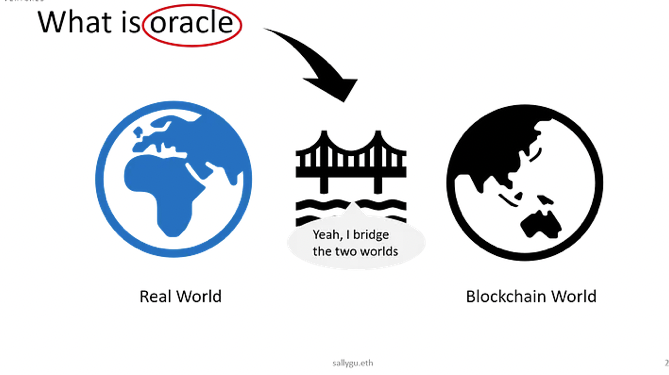
The main reason we need oracles is that the trust generated by current blockchains alone is insufficient to meet all requirements of upper-layer applications, necessitating additional trust injection via oracles:
-
Currently, the volume of off-chain versus on-chain data remains highly asymmetric. Compared to the rich variety and massive scale of real-world off-chain data, on-chain data is far too limited to support fully independent development without reliance on off-chain inputs. Most protocols today would struggle to survive without integrating oracles.
-
This is why many refer to oracles as “necessary evil”—an unavoidable compromise for blockchain. Only when on-chain data becomes richer and thicker than off-chain data will we no longer rely on oracles or similar relay agents. This fundamental motivation explains why many DEX and DeFi protocols are so committed to oracleless native on-chain designs.
Blockchains are closed systems incapable of direct internet connectivity. Smart contracts cannot natively retrieve deterministic real-world information such as stock prices, exchange rates, or election results. Furthermore, due to their consensus mechanisms, they require trusted third parties to verify external data. Thus, oracles function more like brokers facilitating trust between on-chain and off-chain worlds.
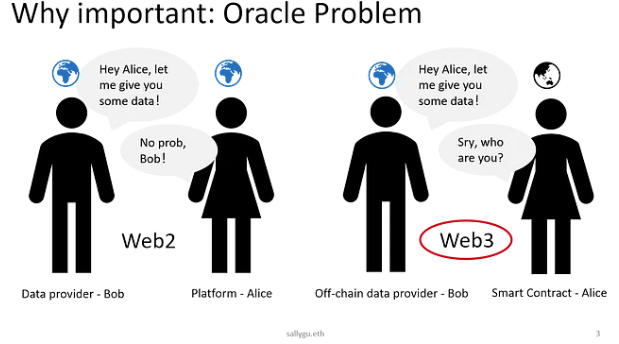
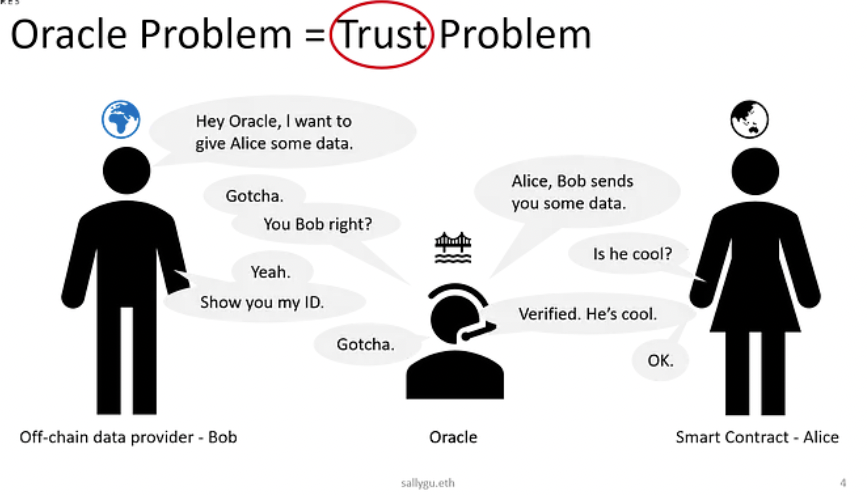
It’s important to highlight that the key issue oracles solve is not how to obtain information from the real world (in fact, anyone—you, me, or others—can upload off-chain data onto the chain), but rather how to help blockchains trust information coming from the real world (even if you or I upload data, no one will believe it unless properly verified—this also involves the problem of honest nodes).
Trust comes from communication, not just connection. Therefore, the intrinsic value of oracles lies in enabling communication between on-chain and off-chain environments—specifically, their ability to inject trust into real-world data through forwarding, validating, and filtering information. Hence, evaluating an oracle ultimately boils down to assessing how much it can be trusted.
1.2 Classification
By form, oracles can be categorized into software and hardware oracles:
-
Software Oracles: Provide API/SDK services to help protocols access and transmit data from third-party servers, such as commodity prices, weather indices, flight numbers, etc.
-
Hardware Oracles: Widely used in IoT applications, commonly including electronic sensors and data collectors.
By data source, oracles can be divided into centralized and decentralized types:
-
Centralized Oracles: Typically rely on a single trusted third party—such as government agencies, official institutions, or reputable companies—for data provision. Their advantage is isolating data from untrusted operating systems on local devices, preventing tampering and loss. However, they carry the risk of single point of failure.
-
Decentralized Oracles: Feature distributed consensus mechanisms—also known as consensus oracles—that pull data from multiple external sources, making them more reliable and trustless.
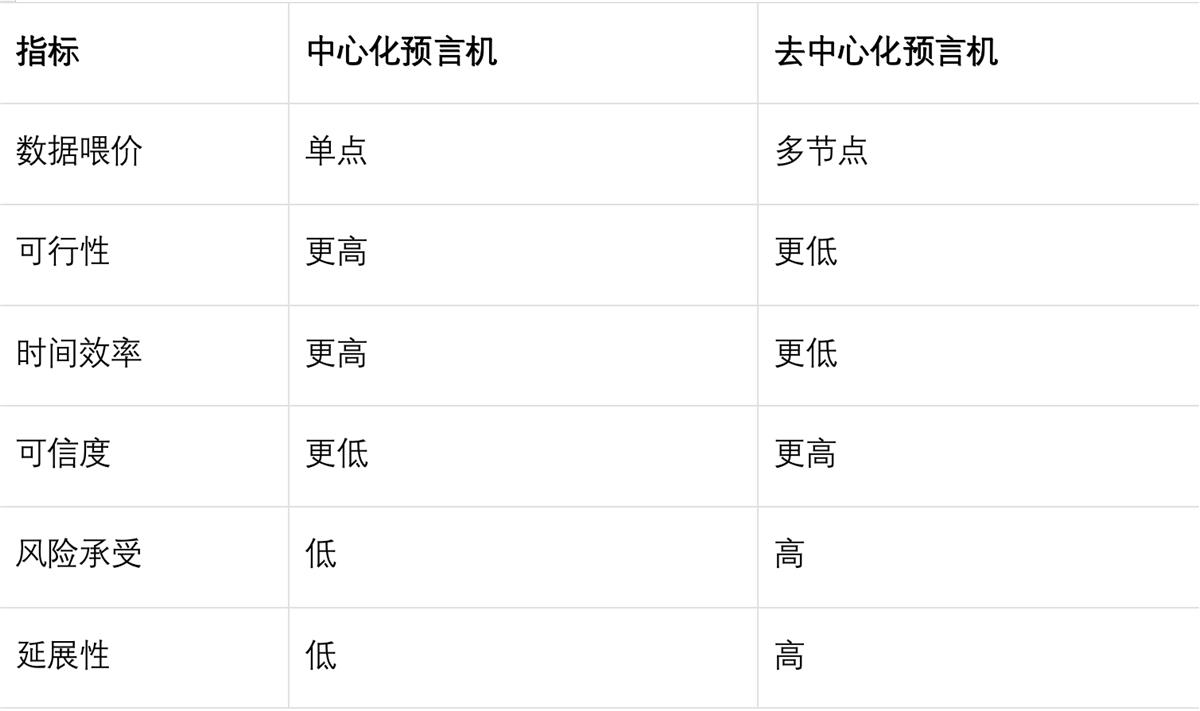
Centralized vs Decentralized
Centralized oracles offer advantages in efficiency and feasibility. Decentralized oracles, with dispersed nodes and cross-referencing processes, are more trustworthy and secure.
When efficiency isn't the primary goal, centralized solutions become less desirable. Clearly, information from a single node is likely biased or arbitrary—authority here stems from autocracy rather than credibility.
Due to concerns over trust and risk management, most DeFi applications prefer using third-party decentralized oracles like Chainlink rather than building simple centralized ones themselves or running nodes to move off-chain data on-chain (again, even if project teams upload data themselves, they won’t gain community trust).
1.3 Application Scenarios
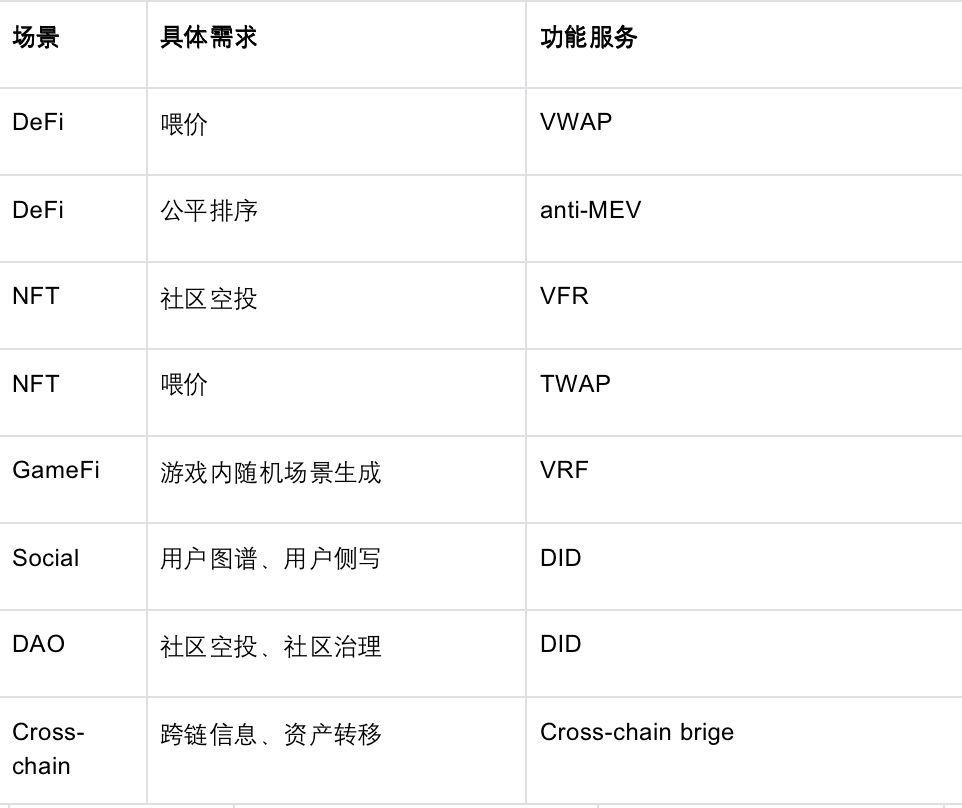
Chainlink's 2021 whitepaper introduced the concept of DON (Decentralized Oracle Network). A DON is a network maintained by a set of Chainlink nodes that enables trustless off-chain computation to deliver external data to blockchains. To realize this vision, Chainlink launched a suite of products and services including VRF, Keepers, CCIP, further expanding oracle applications across Web3. Below, we list use case examples across DeFi, NFTs, GameFi, Social, DAOs, and cross-chain contexts:
1.4 Sector Map
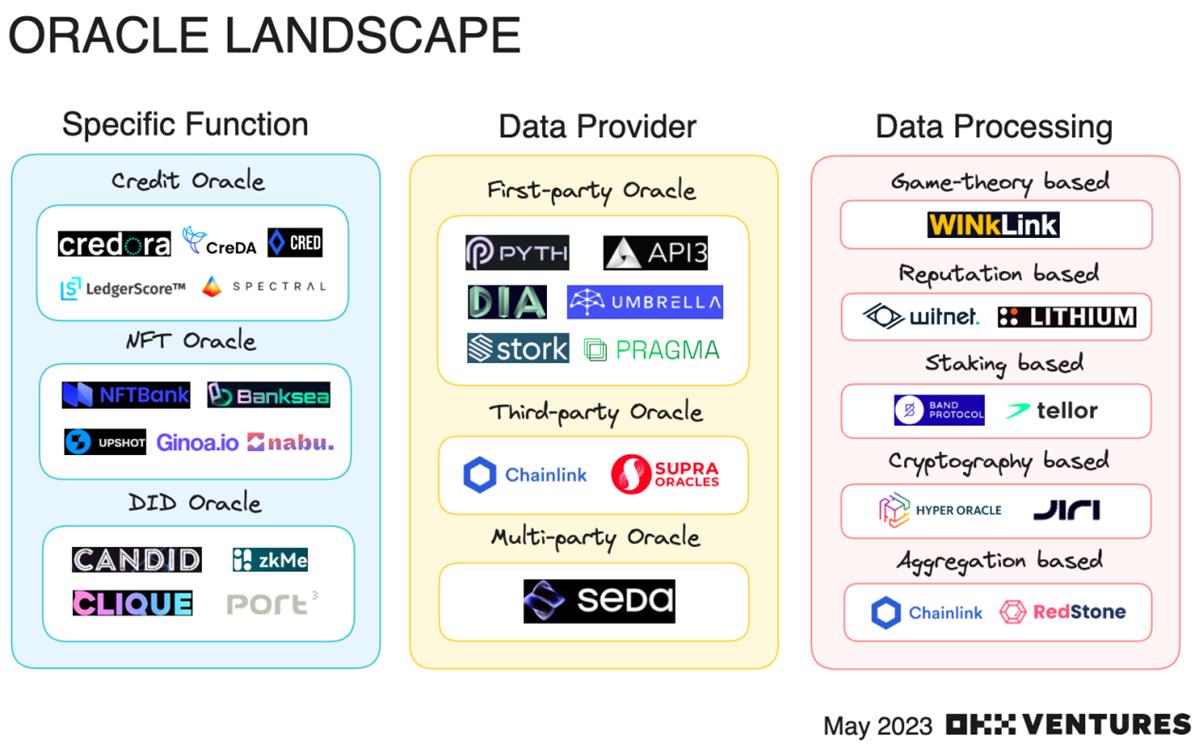
We propose categorizing oracles along three dimensions:
Specific function, data source, and data processing method.
-
By specific function, in addition to common DeFi oracles, we identify three major types: Credit Oracles, NFT Oracles, and Identity (DID) Oracles.
-
By data source, they fall into three categories: First-party oracles, third-party oracles, and multi-party oracles.
-
By data processing method, five types exist: Game-theory-based oracles, reputation-based oracles, staking-based oracles, cryptography-based oracles, and aggregation-based oracles.
Investment Outlook
2.1 Perspectives
A. In the traditional DeFi space focused on data feed oracles, it’s unlikely anyone will challenge Chainlink’s dominance (80–90% market share) in the short term. However, within the remaining ~10% market, there remains room for a second-place competitor:
One possibility is a project introducing novel consensus mechanisms—Vitalik proposed two models that may inspire practical implementations:
-
Game-theory-driven design combined with PoS/PoW
-
DAO council / decentralized court model
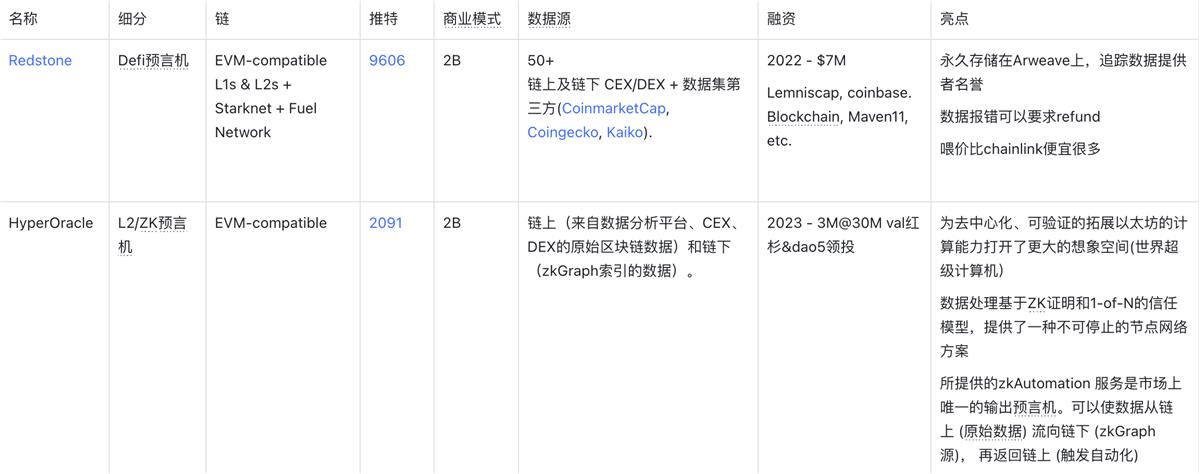
Another path involves substantial improvements in cost-effectiveness—offering cheaper price feeds or random number generation compared to Chainlink—as claimed by Redstone and Ontropy, which suggest their feeds could be 80–100x cheaper than traditional solutions. Generally, only when call costs are drastically reduced will DeFi or gaming projects consider switching from established providers like Chainlink.
B. Niche oracles in areas such as L2, credit, NFTs, and DID present tangible opportunities:
L2 Oracles mainly refer to native solutions for op/zk ecosystems, where low latency and security should be paramount; low cost is secondary.
-
Consider Chainlink’s ongoing expansion across non-EVM chains—if price feeds on a given chain are already monopolized by Chainlink, competition becomes significantly harder.
-
L2 oracles largely cater to high-frequency trading needs in derivatives exchanges (L2s support higher TPS, enabling on-chain decentralized derivative trading). Protocols like Pyth and Empiric offer finer-grained price feeds or more robust data integration (e.g., on-chain first-party data integration + validation, eliminating reliance on off-chain nodes).
-
If tokenomics are well-designed with enhanced utility (Chainlink was once criticized for lacking utility, but later innovations like LinkPool—a liquid staking and yield-bearing protocol—helped activate liquidity), oracle tokens can expect relatively stable valuations.
Credit oracles, aligned with theories of on-chain credit expansion, could explode in the next cycle.
-
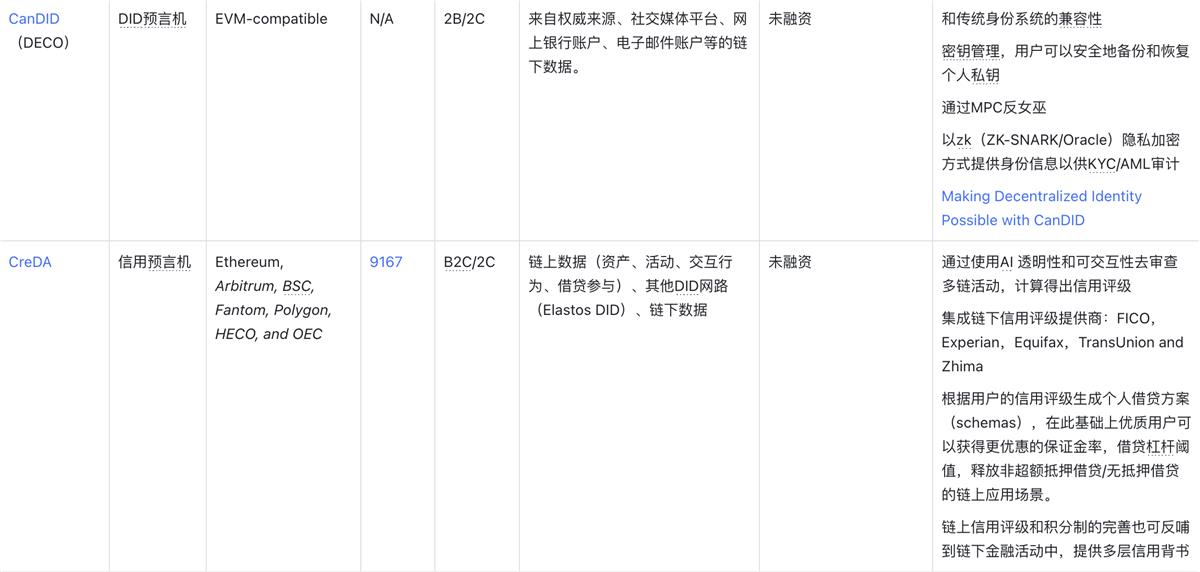
A mature on-chain credit rating system is foundational for building on-chain insurance and recovery mechanisms, playing a vital role in DeFi evolution. As shown in our sector map, notable credit oracle projects include: CreDA\Cred Protocol\LedgerScore\Spectral\Credora: Infrastructure for Institutional Credit, etc.
-
For this niche, focus should be on differences in on-chain data verification and integration (such as coverage breadth, data cleaning capability, and accuracy of credit scoring). Additionally, teams with strong financial engineering or actuarial expertise represent a valuable edge.
-
At the same time, we note that linking off-chain credit systems to blockchain is more complex than anticipated:
-
On one hand, individual projects struggle to interface directly with national social credit systems. A key question arises: Can off-chain economic behavior truly back on-chain creditworthiness? Partnerships with major credit bureaus—like Spectral Finance’s collaboration with U.S. rating agencies—may offer viable solutions.
-
On the other hand, integrating public off-chain credit data onto chains has relatively low barriers (traditional cloud teams could theoretically develop and deploy such features).
NFT Oracles follow two main approaches:
One is time-weighted average price (TWAP), though some use moving averages.
-
Volume-weighted average price (VWAP) remains unfeasible due to insufficient trading volume. Given NFTs’ illiquid and non-fungible nature, VWAP implementation seems unlikely in the near term.
-
Traditional DeFi oracles like Chainlink and DIA already offer NFT TWAP services, and many projects simply adopt Chainlink’s TWAP solution.
-
After discussions with technical teams, we believe most current NFT TWAP offerings remain in early stages, with integration methods offering optimization room—but overall, growth prospects appear limited.
The second approach uses AI/ML-powered off-chain computation for valuation, which we find more promising.
-
Future horizontal integration into a full-stack NFT analytics + purchasing + appraisal platform (serving as a traffic gateway and liquidity activation tool for NFT spot markets) presents a compelling opportunity.
-
However, these models are often black-box due to closed-source algorithms, making partnership trust difficult to establish (e.g., Upshot, Banksea—despite successful fundraising—struggle to generate revenue quickly or launch tokens, relying instead on ancillary businesses like wallet analytics and marketplace integration fees).
-
Open-source ML solutions like Nabu offer greater transparency, though long-term profitability remains uncertain. Nevertheless, if such protocols evolve into open-source ML model DAOs with token issuance, following commercialization models like Forta/Go+ in the security sector, they could unlock significant potential.
DID Identity Oracles aggregate users’ off-chain data for protocols requiring identity verification and social graph mapping—this niche holds high long-term value.
-
Chainlink’s CanDID (DECO) team leverages advanced multi-party computation and zero-knowledge proofs to build a decentralized on-chain identity infrastructure. Projects like legalDAO and Intuition pursue similar zkDID solutions via DAO-based identity verification committees.
-
However, most existing identity oracles are currently centralized with low barriers (though many plan to decentralize eventually, feasibility remains unproven).
-
Key evaluation criteria include the verification process (node quality, trustworthiness of validation) and storage architecture (what technology is used and how it’s implemented).
2.2 Case Studies
Based on the investment perspectives outlined above, we select one representative case per niche for brief analysis:

In conclusion, OKX Ventures believes that as blockchain technology advances, oracles will continue to play an indispensable role in the crypto space during the next cycle. Greater potential and market opportunities remain to be explored—such as off-chain computing, pricing of non-standard on-chain assets like NFTs, and deeper integration with AI/ML. We will continue to closely monitor innovative protocols and investment opportunities within the oracle sector.
*Note: Content provided by Sally Gu, Researcher at OKX Ventures. Not intended as investment advice. Please credit the source when quoting. For reprinting, contact the OKX Ventures team.
Join TechFlow official community to stay tuned
Telegram:https://t.me/TechFlowDaily
X (Twitter):https://x.com/TechFlowPost
X (Twitter) EN:https://x.com/BlockFlow_News
 OKX Ventures






