Which Web3 education projects are worth watching for addressing user conversion and industry development challenges?
TechFlow Selected TechFlow Selected
Which Web3 education projects are worth watching for addressing user conversion and industry development challenges?
Web3 education platforms can be roughly divided into three categories: general literacy, L2E (Learning to Earn) platforms, and course-based education.
 Navigating Web3 tides with focused insights
In the crypto world, exchanges have long shouldered most of the user education efforts: allocating a portion of transaction fees to educational initiatives, driving user acquisition and conversion while completing their ecosystem loops. However, every industry needs a mature onboarding and learning system—this is especially true for Web3, which remains in its early stages and involves asset security. While Web2 serves billions of users, Web3's user base is still relatively small, indicating vast growth potential. Yet the barriers and complexities for Web2 users entering Web3 remain significant, making Web3 education one of the key solutions.
Today, with continuous explosions in on-chain ecosystems, user learning demands are rapidly becoming more professional and systematic. Simple article-based科普 (popular science) content can no longer meet user needs. At the same time, the number of industry participants is growing explosively—including tech enthusiasts, project supporters, and professionals—fueling even greater demand for Web3 education.
As a result, an increasing number of Web3 education platforms have emerged in recent years, offering either structured technical courses, gamified learning systems, easier onboarding tools for new users, or talent pipelines for the Web3 industry. Many top-tier investment firms have now recognized the potential of the Web3 education sector and are increasing investments. Notably, announcements such as the May 18 partnership between Animoca Brands and Hooked Protocol reflect this trend, with major players like Binance, DCG, a16z, and Sequoia already actively building positions in this space.
In a previous article, veDAO Research introduced Open Campus, a Web3 education protocol under the Binance ecosystem. So what other projects in the Web3 education space are worth watching? This article categorizes and reviews key projects across three segments.
Categories of Web3 Education Projects
Currently, Web3 education platforms are broadly composed of centralized and decentralized models. Centralized platforms excel in operations, while decentralized ones stand out with incentive mechanisms. Overall, Web3 education platforms can be divided into three categories: general knowledge platforms, Learning-to-Earn (L2E) platforms, and structured course-based education platforms.
General Knowledge Platforms
Every user entering Web3 must first understand fundamental concepts and project overviews. This type of content is typically delivered through articles. Most of these platforms are launched by industry giants aiming to drive traffic, often with some transactional orientation. However, they consistently maintain high standards in terms of content richness and timeliness, playing a crucial role in helping users build foundational knowledge.
- Binance Academy

An open learning center under Binance, aiming to provide a one-stop resource hub for blockchain and cryptocurrency education, freely accessible to all. Users can follow structured curricula to learn about blockchain and cryptocurrencies at no cost. Binance Academy aims to democratize blockchain knowledge, enabling enthusiasts to independently study and access relevant information. It delivers educational content via articles and videos, addressing the issue of fragmented blockchain and crypto content online.
- CoinMarketCap Alexandria
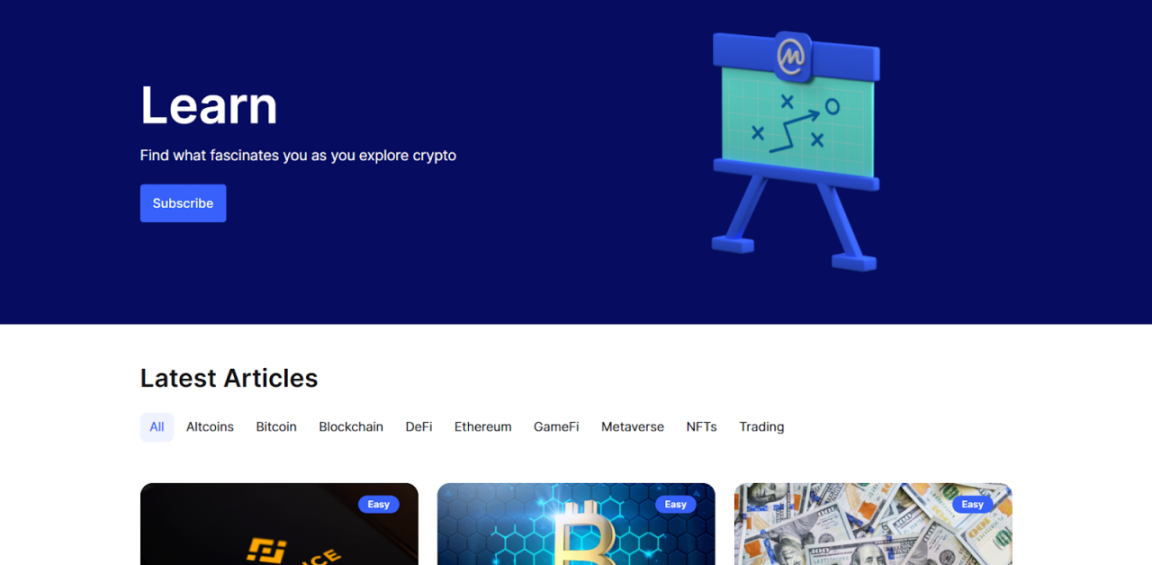
A cryptocurrency and blockchain education platform created by CoinMarketCap. Alexandria aims to aggregate all crypto-related information so that anyone, anywhere, can access knowledge on topics of interest. It functions as an online knowledge base containing articles written by CoinMarketCap’s research team, along with annotated definitions of crypto-related terminology.
- Bitwave

Bitwave is a provider of CPE (Continuing Professional Education) credits and news for professionals in crypto accounting and finance. It operates a Web3, DeFi, accounting, and finance newsletter service tailored for crypto accountants. Its mission is to connect thought leaders in finance and accounting with professionals working in or transitioning into the crypto space.
Overall, these platforms resemble traditional content publishing platforms. However, some have begun collaborating with projects to offer limited rewards—for example, Binance Academy allows new users to earn cryptocurrency by learning blockchain concepts through video courses and passing quizzes. When this model is further integrated with Web3’s economic frameworks, it evolves into today’s L2E platforms.
Learning-to-Earn (L2E) Platforms
Learning-to-Earn has become a popular model in the crypto space recently. These L2E platforms act as intermediaries between crypto projects and users: projects supply tokens and interaction requirements, L2E platforms create tutorials accordingly, and users complete learning tasks to earn cryptocurrencies or NFTs.
- Alchemy University
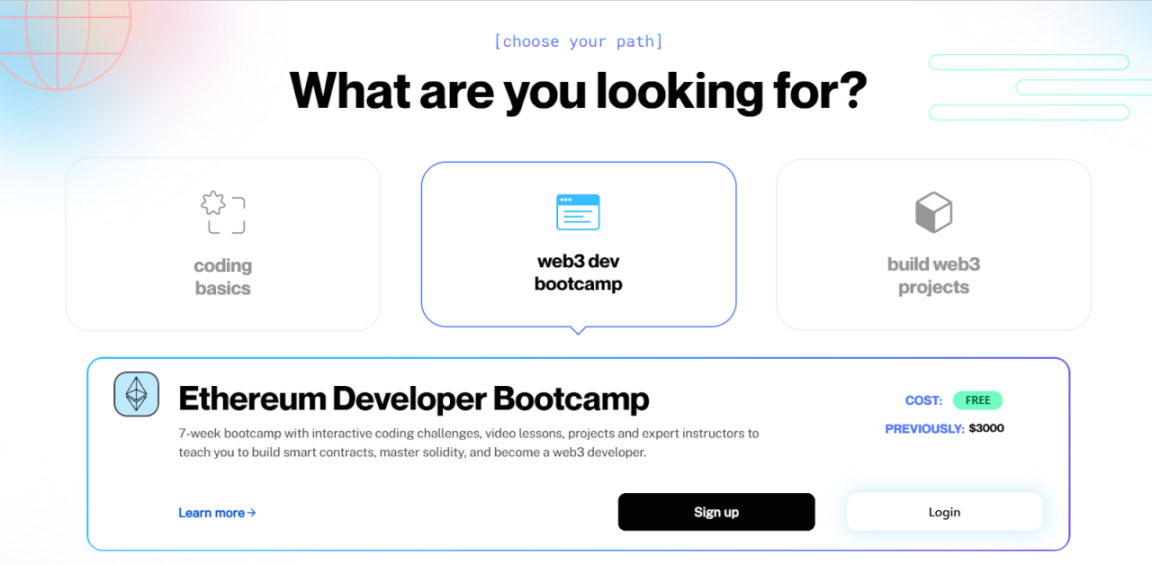
Alchemy University is a Web3 learning platform launched through a collaboration between blockchain development platform Alchemy and ChainShot, an education startup it acquired. The bootcamp covers cryptography, Solidity development, smart contract security, proxy contracts, delegate calls, and more. It functions both as a Web3 development course and as a full ecosystem for skill-building and networking.
- Learnoverse
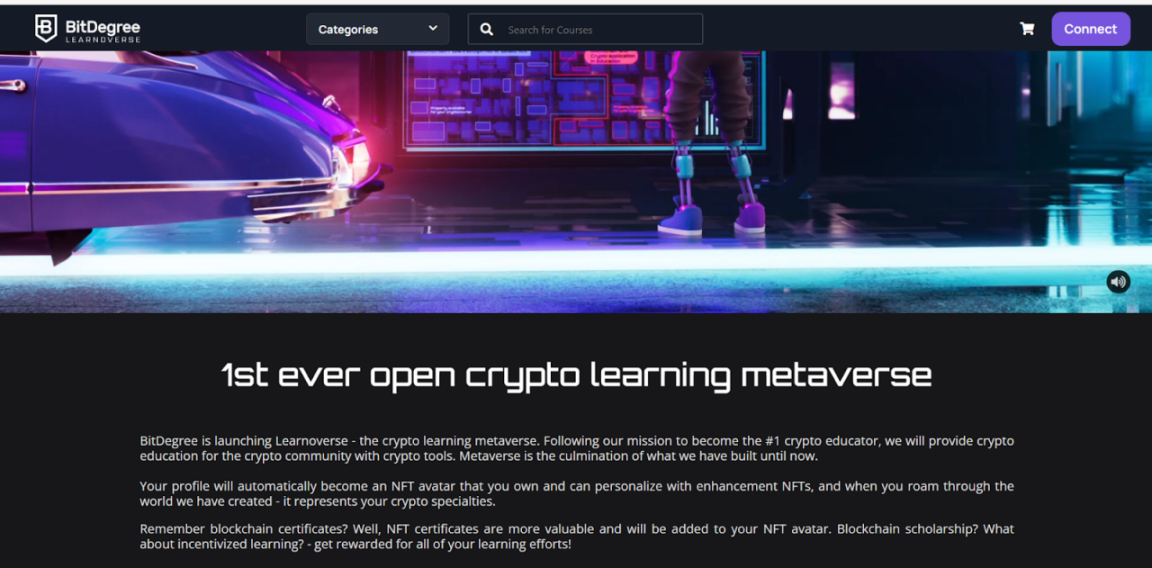
Learnoverse is an educational metaverse platform launched by BitDegree. It leverages blockchain to issue scholarships, store instructional videos, and issue verifiable certificates. Focused on crypto and blockchain education, Learnoverse aims to build a native crypto-learning metaverse using a Learn & Earn system, serving learners, instructors, crypto companies, and influencers.
- Hooked Protocol

Hooked is a Web3 education project that helps non-crypto users enter Web3 through immersive, gamified, and social learning experiences. It was Binance’s 29th Launchpad project. Hooked encourages broader user adoption of Web3 through education, offering gamified learning and incentive design to drive mass adoption. Hooked Academy provides intuitive video-based education, complemented by a social referral mechanism to grow its community.
- Questbook
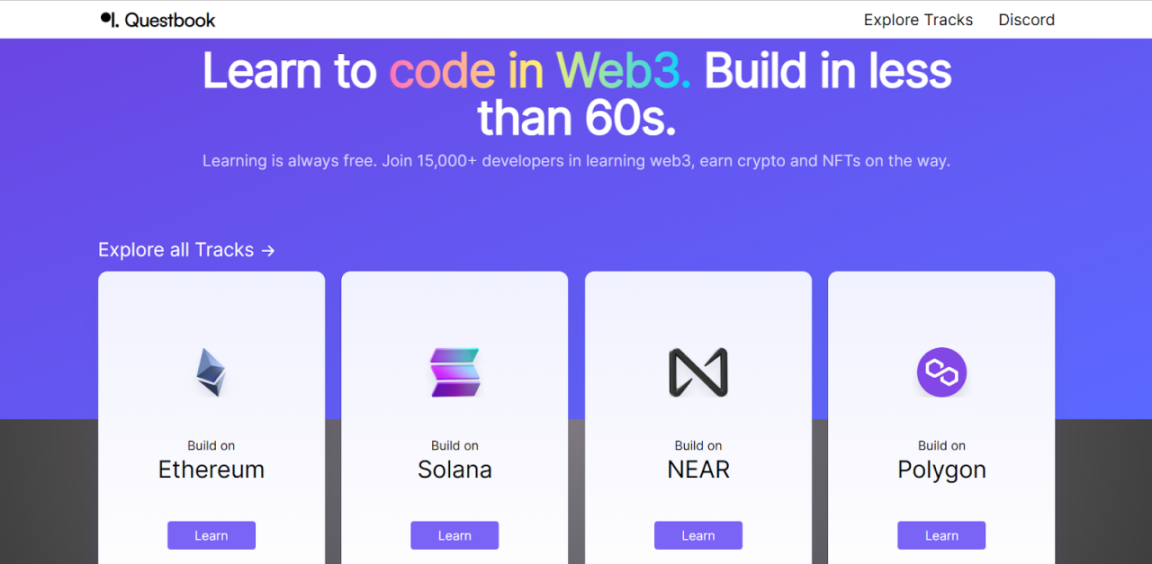
Questbook is a tool for donations and bounties for Web3 builders, which also launched a decentralized academy to help developers learn Web3 coding. It offers free coding lessons on Ethereum, Solana, NEAR, and Polygon, with NFT rewards granted upon task completion.
- Open Campus
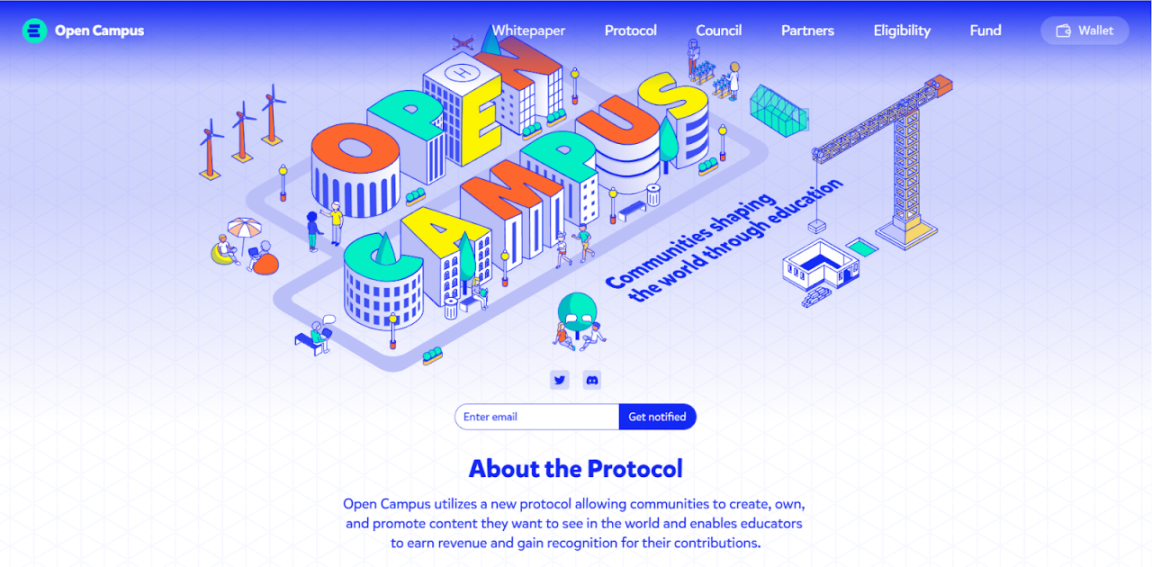
Open Campus is a platform combining educational content creation with blockchain technology. It enables educators to create and share innovative teaching materials, allowing students to select content based on their needs. Content is community-created, owned, and promoted globally. Educators earn income and recognition from learners and the platform for their contributions. For details, see related link.
Course-Based Education Platforms
In the past, most crypto professionals adapted to job requirements through self-study—a difficult and inefficient process. Developers usually exchanged technical knowledge in niche forums, while marketers and content creators were scattered across small communities. Later, some universities began offering public crypto courses—such as Princeton, MIT, and Stanford—which gained popularity due to their foresight and practical relevance, cultivating many student blockchain developer teams. Meanwhile, native Web3 course platforms have started to emerge, offering professional, systematic skill training to help users pursue employment opportunities within the industry.
- Blockchain at Berkeley
Blockchain at Berkeley is a student organization at the University of California, Berkeley, founded in October 2016 by the Berkeley Bitcoin Association. It launched the world’s first undergraduate-recognized blockchain course. Its curriculum includes blockchain fundamentals, blockchain development, blockchain technology, and Bitcoin & cryptocurrencies.
- DeSchool
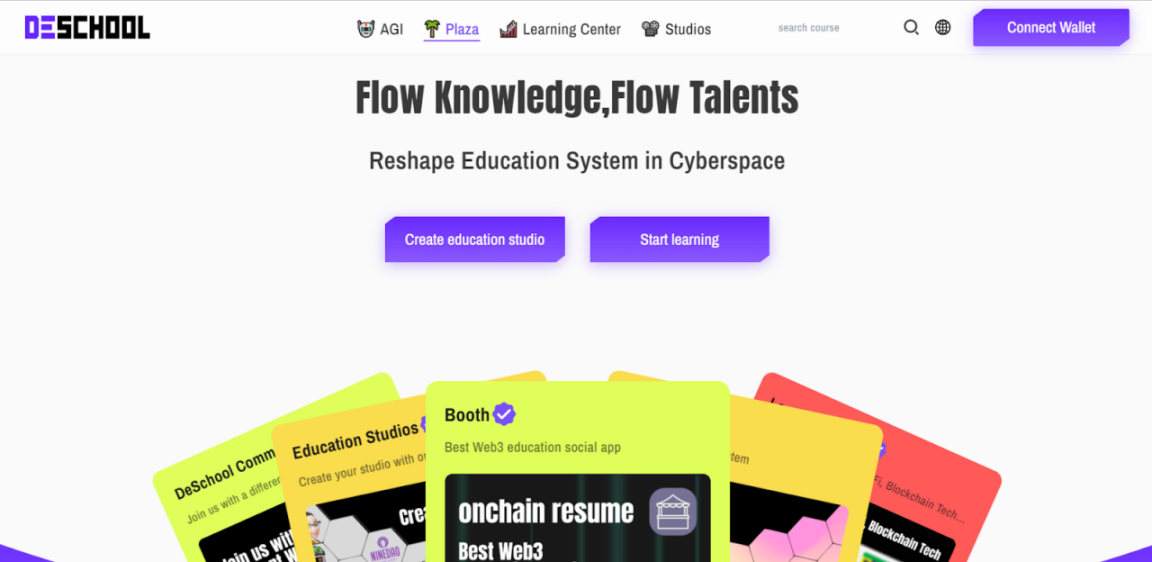
DeSchool is a Web3 online education infrastructure strategically incubated by SeeDAO. Instructors can use the platform to issue SBTs (Soulbound Tokens) as educational credentials to students who complete courses, and Web3 organizations can streamline their community education processes. In the future, DeSchool plans to launch on-chain education resumes and certification programs, aiming to become the Coursera + LinkedIn of the Web3 era.
- Blockchain Academy
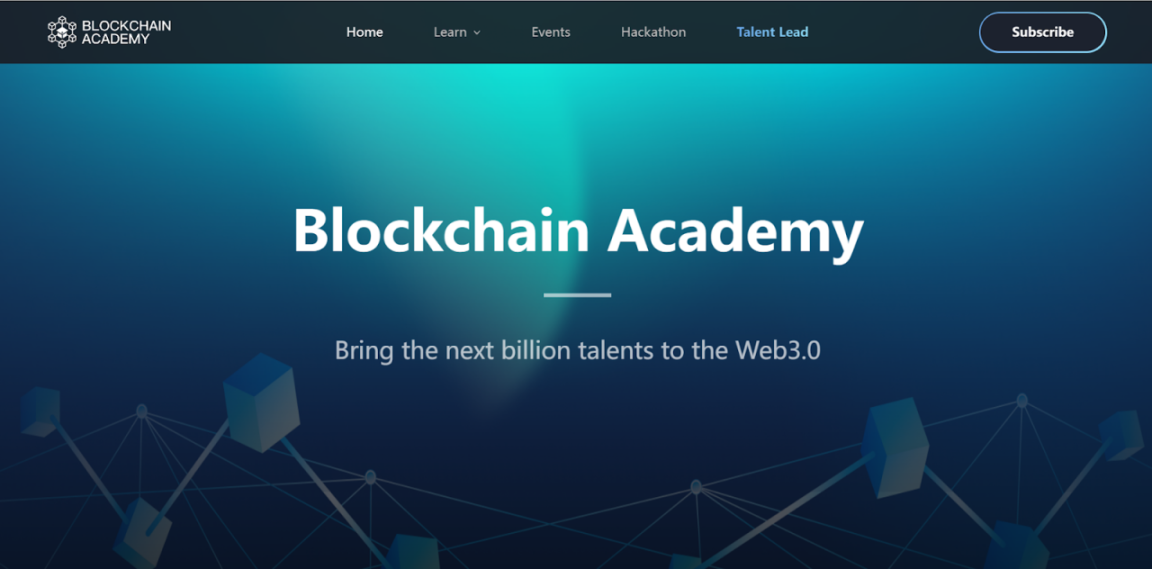
Blockchain Academy is a nonprofit Web3.0 education platform initiated by Talentree and supported by institutions including the Hong Kong University of Science and Technology’s Crypto-Fintech Lab. It aims to teach users Web3.0 knowledge and skills. The website features sections on learning, events, BuildCamp, and hackathons.
- Web3 University
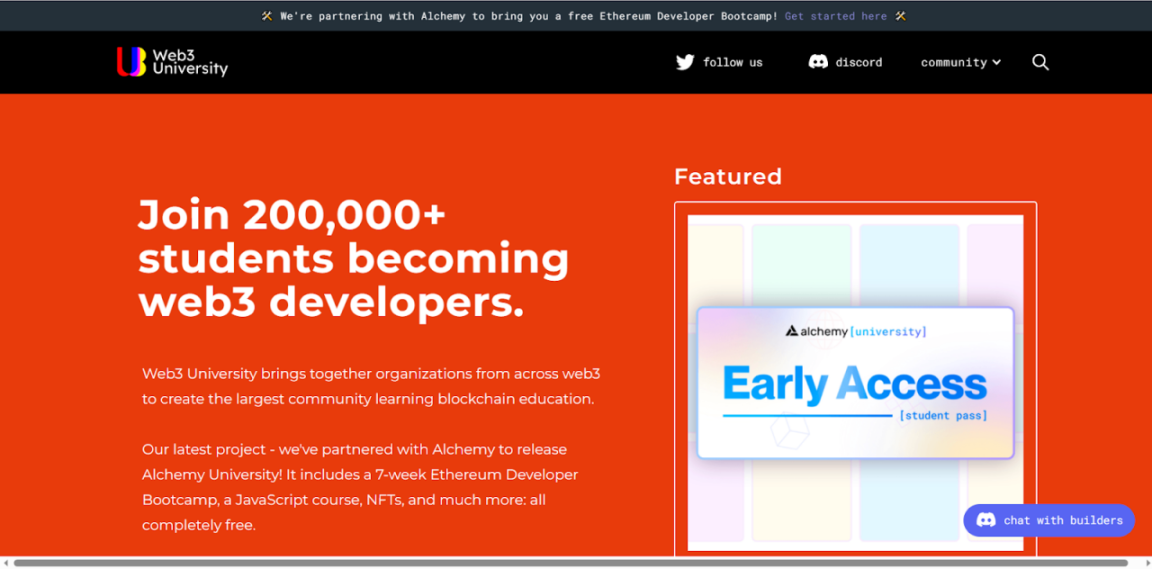
Launched at the end of 2021, Web3 University is a developer-focused Web3 education platform targeting those who want to learn how to write smart contracts, mint NFTs, and build scalable end-to-end dApps. Its partners include Alchemy, a16z, Pantera Capital, Arbitrum (Offchain Labs), Polygon, and OpenSea.
- Encode Club
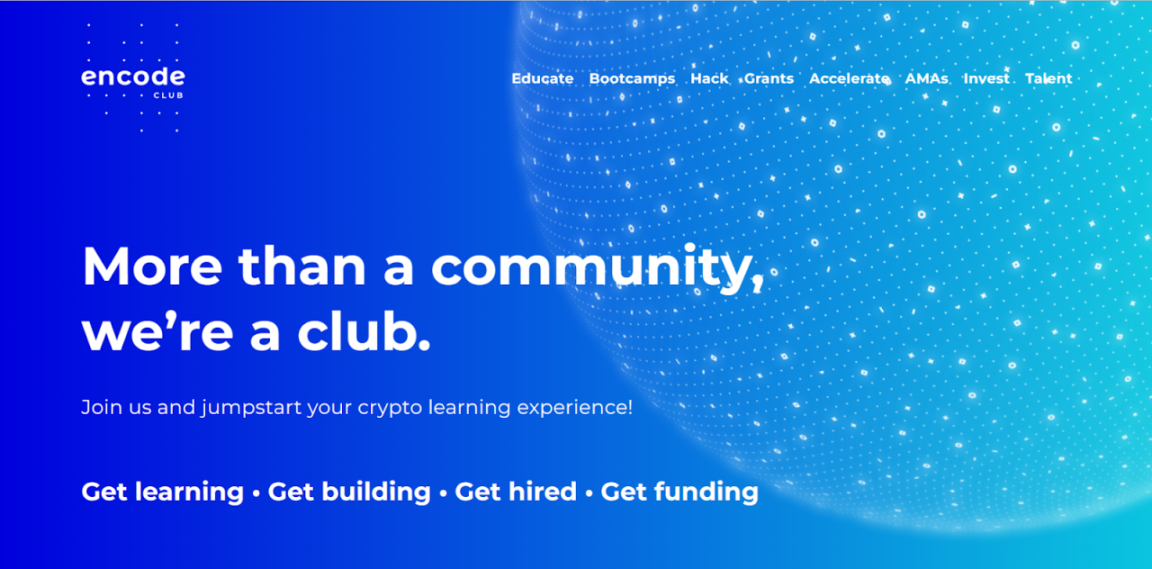
Encode Club is a global blockchain education platform and developer community dedicated to advancing blockchain learning and development worldwide. It offers abundant educational resources and supports startups through hackathons. In May 2022, Encode Club raised $5 million in a funding round led by Galaxy Digital and Lemniscap.
- LearnWeb3
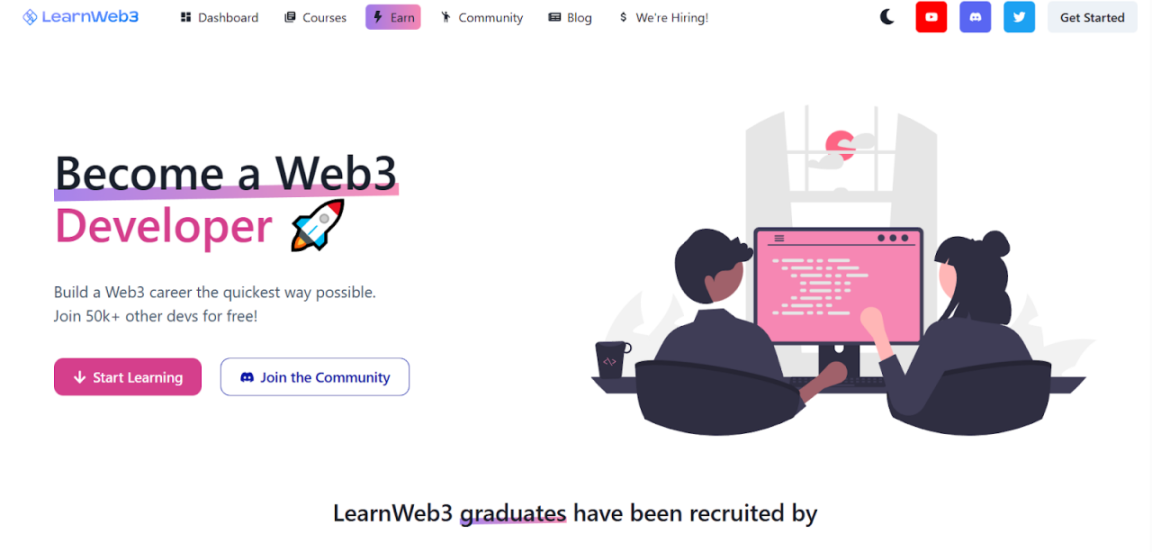
LearnWeb3 is a Web3 developer education platform primarily serving developers, offering a full curriculum from beginner knowledge to dApp development and security practices. It has developed specialized tracks for public chains such as Celo and Flow. The project secured a $1.25 million seed round in September last year from investors including IOSG Ventures and Balaji Srinivasan.
Conclusion
Although Web3 education platforms are gaining attention from crypto companies and investors, they still face challenges such as balancing learning models with incentive mechanisms, improving users’ industry understanding, and achieving positive ecosystem feedback loops. Nevertheless, with the expansion of the crypto market and increasingly refined user demands, there remain significant opportunities for Web3 education platforms, which will continue to play a vital role in spreading Web3 knowledge and attracting new users.
Overall, the L2E model may become the dominant framework for Web3 education platforms, creating win-win-win scenarios for projects, platforms, and users, while facilitating smoother transitions from Web2 to Web3. Course-based platforms, with their structured curricula, strongly appeal to users with clear learning goals and are likely to develop in a healthier, more sustainable manner. Fundamentally, Web3 education serves as a bridge connecting Web2 and Web3, channeling Web2 traffic into the Web3 ecosystem. The Web3 education sector is still in its early stages, with no clear leader yet emerged. Whether this sector can achieve large-scale mainstream breakthroughs remains an exciting prospect.
Join TechFlow official community to stay tuned
Telegram:https://t.me/TechFlowDaily
X (Twitter):https://x.com/TechFlowPost
X (Twitter) EN:https://x.com/BlockFlow_News
 @TrendX_official