Finding investment opportunities from Hong Kong's new crypto policies: 6 crypto projects worth watching
TechFlow Selected TechFlow Selected
Finding investment opportunities from Hong Kong's new crypto policies: 6 crypto projects worth watching
From an investment perspective, what opportunities does Hong Kong's new crypto regulation bring? This article recommends the following six crypto projects worth long-term investment.
 Navigating Web3 tides with focused insights
Hong Kong's new cryptocurrency regulations will officially take effect on June 1, implementing a new licensing regime for virtual asset service providers, advancing the legalization of crypto exchanges and providing clear regulatory guidance for virtual asset trading. Licenses for crypto exchanges are expected to be issued progressively, offshore crypto activities will accelerate, Web3 infrastructure will receive increasing support, and the Hong Kong sector will continue to heat up.
From an investment perspective, what opportunities do Hong Kong's new crypto regulations bring? veDAO has researched many innovative projects benefiting from the new rules and recommends the following six crypto projects for long-term investment.
1. NEO (NEO)
NEO is a smart contract platform founded in 2014, formerly known as Antshares. It is a Layer 1 blockchain often referred to as the "Chinese Ethereum." NEO aims to replace Ethereum as the most developer-friendly blockchain.
NEO is a smart contract platform established in China and supported by the Chinese government. The project treats smart contract technology as a national strategic priority and is China’s first domestically developed foundational blockchain protocol. NEO places strong emphasis on compliance and regulation, helping it gain trust and legitimacy within China’s highly regulated business environment.
Although NEO maintains a relatively low profile with limited marketing, it is a long-term oriented project. With the rollout of Hong Kong’s new crypto regulations, the market holds sustained optimism about the token’s price, suggesting significant upside potential in the future.
2. VeChain (VET)
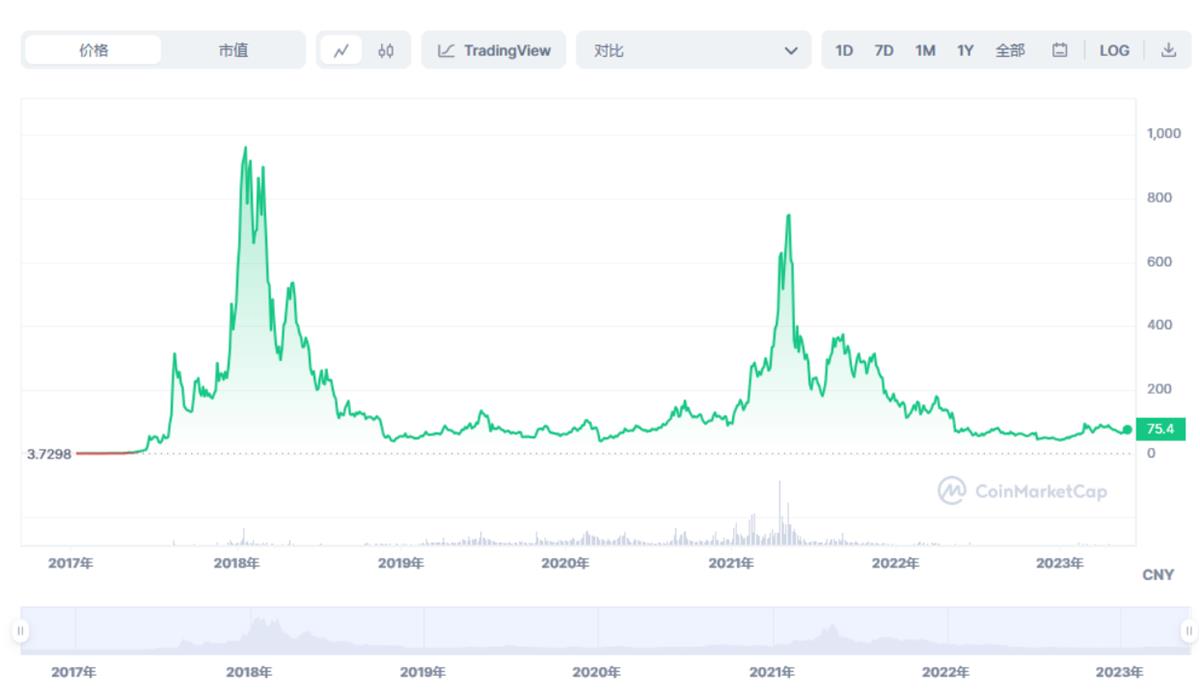
VeChain is a Layer 1 blockchain focused on supply chain optimization—an innovative blockchain designed to improve efficiency and transparency in supply chain operations. Founded in 2015 by Sunny Lu, former CIO of Louis Vuitton China, VeChain maintains close ties with China. It has established long-term partnerships with several major Chinese companies, including state-owned enterprise China Tobacco and Haier, one of China’s largest home appliance manufacturers. VeChain also actively collaborates with the Chinese government—for example, piloting a blockchain-based carbon credit trading platform with Guian New Area government in Guizhou province. VeChain has been recognized by China’s Cyberspace Administration as a “National High-Tech Enterprise,” enhancing its reputation and credibility in China.
VeChain provides solutions to real-world enterprise and supply chain challenges. While many projects position themselves as solution providers, they often address niche issues affecting few people. VeChain genuinely delivers essential solutions to problems impacting the broader public. The project’s original token code was VEX, which was changed to VET in August 2018. VET tokens are available on major centralized exchanges such as Crypto.com, Huobi, KuCoin, and Gate.io.

3. Conflux (CFX)
Launched in 2018, Conflux is a public, permissionless Layer 1 blockchain building a borderless ecosystem for global crypto projects, extending from China to North America, Russia, Latin America, Europe, Africa, and beyond. While Conflux currently hosts eight products—far fewer than the thousands of DApps in Ethereum’s ecosystem—it faces both pressure and opportunity. Its ecosystem includes a browser, asset management tools, cross-chain exchanges, DeFi lending, NFTs, insurance, and more. Conflux is integrated with Sushiswap, DODO, Pancakeswap, Binance, Gate.io, Chainlink, Waves, and features its own decentralized exchange, Moonswap.
Conflux claims to be China’s only compliant, public, and open blockchain. It actively partners with international brands and government bodies in China on blockchain and metaverse-related initiatives. The Shanghai government has designated Conflux as a “Key Innovative Blockchain Platform” and provided funding for its development. Conflux has also partnered with leading Chinese companies such as Baidu, the Shanghai Wine and Spirits Blockchain Alliance (which uses Conflux to verify the origin and authenticity of wines and liquors), McDonald's China, and Oreo.
Conflux’s token economy centers around the CFX token. CFX holders use it to pay transaction fees, earn rewards through staking and storage leasing, participate in governance, and reward miners securing the network. CFX is listed on major exchanges including Binance, OKX, and Gate.io.
On February 16 this year, Conflux announced a partnership with China Telecom to launch the Hong Kong Virtual Blockchain BSIM card. The BSIM card integrates Conflux’s proprietary cryptographic technology, featuring built-in Tree-Graph consensus, dPoS, PoW functions, and a wallet. With isolated partitions for public and private keys, the card enables secure signing and private key management even when inserted into a phone, potentially lowering the barrier to Web3 and Metaverse access on compatible devices.
Markets may anticipate Conflux benefiting from Hong Kong’s regulatory compliance and the widespread adoption of BSIM cards, driving a nearly 300% weekly surge in CFX and pushing the price above $0.3528 on May 21. As China gradually softens its stance toward the crypto industry, Conflux could emerge as the country’s sole compliant blockchain network.
4. Huobi (HT)
Huobi is a globally leading cryptocurrency exchange now operated by Tron founder Justin Sun. The company is relocating its headquarters from Malta to Hong Kong to expand its footprint, believing that China will maintain enthusiasm for digital assets. This move positions Huobi advantageously to become the first exchange officially licensed to operate in China, potentially capturing the largest market share among centralized exchanges in the country.
Huobi has built a strong reputation in China through innovative products and services. It was among the first exchanges to offer margin trading and has launched initiatives to onboard users into Web3, such as Huobi Wallet, which allows secure storage and management of digital assets. Additionally, Huobi has formed partnerships with major Chinese corporations including JD.com and CITIC Group, further solidifying its legitimacy in China.
On November 22, 2022, Huobi Global announced it would rebrand as Huobi, with its Chinese name officially becoming “Huo Bi.” On May 27, Huobi (formerly Huobi Global) officially entered the Hong Kong market with the launch of Huobi Hong Kong, ready to provide cryptocurrency trading services. Starting June 1, users can buy, sell, and hold multiple cryptocurrencies via Huobi Hong Kong, including Bitcoin (BTC), Ethereum (ETH), Tron (TRX), Dogecoin (DOGE), and Shiba Inu (SHIB), among other mainstream assets listed on independent indices.

5. Filecoin (FIL)
Filecoin aims to become a distributed network for storing humanity’s critical information, enabling users to store and retrieve data while collectively building a robust and active decentralized storage market. As the incentive layer of IPFS, Filecoin is a pioneer in promoting IPFS within the crypto space and has established itself as a leader in blockchain storage.
The Filecoin network consists of numerous storage providers and developers. Its innovative cryptographic proofs ensure data is stored securely and reliably over time, and the network already hosts vast amounts of data. Filecoin has strong ties to China: it has received substantial investments from Chinese firms including Sequoia China and Distributed Capital. Several Chinese blockchain startups have chosen to build on Filecoin, including IPFSMain, which offers decentralized data storage and transmission services tailored for the Chinese market.
Recently, Times Universal Group Holdings Limited, a Hong Kong-listed company, announced that its wholly owned subsidiary purchased 12,000 FIL tokens for a total of $639,942 (excluding fees), at an average price of $53.33 per token. Given Times Universal Group’s strong backing, Filecoin is poised for greater success in the future.
6. Alchemy Pay (ACH)
Alchemy Pay is the world’s most adaptable crypto payment infrastructure, providing decentralized payment and financial solutions to over a million merchants and users in the virtual currency ecosystem.
As a leading decentralized digital currency payment solution and technology provider in the Asia-Pacific region, Alchemy Pay developed Asia’s first hybrid payment solution combining cryptocurrencies and fiat currencies, offering fast, secure, and convenient aggregated payment technologies to over a million online and offline merchants. Alchemy Pay is currently working on launching its second-generation decentralized payment system (ADPS 2.0), integrating DeFi aggregation and the powerful Alchemy Trust system to bridge trusted authentication between centralized and decentralized systems. ACH is the native token of Alchemy Pay, used for ecosystem incentives, system access fees, and governance, with a total supply of 10 billion tokens—51% of which will be mined continuously through payment and financial activities after ADPS 2.0 launches.
In February, Alchemy Pay announced support for purchasing cryptocurrencies via Google Pay. It will also be among the first payment platforms to enter the Hong Kong market. From April 9 to May 9, Alchemy Pay ran a month-long public awareness campaign across Hong Kong International Airport, buses, and other landmark locations, with the slogan “I love Hong Kong, I love Bitcoin, I love ACH,” expressing gratitude for Hong Kong’s openness and inclusiveness toward the Web3 industry. ACH is expected to see further price appreciation following the full implementation of Hong Kong’s new regulations.
Conclusion
Hong Kong’s new regulations signal China’s gradual relaxation of control over the crypto industry. The narrative around Chinese cryptocurrencies has long attracted attention from KOLs in the crypto market and is gaining increasing recognition. These developments bring significant tailwinds, and the six China-related projects listed above have already seen notable growth in price and adoption.
China’s rising prominence in the cryptocurrency space is reflected in these six pioneering projects: NEO, VeChain, Conflux, Huobi, Filecoin, and Alchemy Pay. These innovations are pushing boundaries across various fields—including supply chain management, decentralized storage, smart contract platforms, and crypto payments. Backed by China’s evolving regulatory stance, strategic government support, and solid partnerships with renowned Chinese enterprises, these projects are well-positioned for growth.
As China’s cryptocurrency ecosystem continues to thrive, these six projects can leverage the country’s vast market potential and contribute to global cryptocurrency adoption—creating sustained bullish momentum for their respective tokens.
Join TechFlow official community to stay tuned
Telegram:https://t.me/TechFlowDaily
X (Twitter):https://x.com/TechFlowPost
X (Twitter) EN:https://x.com/BlockFlow_News
 @TrendX_official