








What Blockchain Challenges Can the zk-SNARK Technology Endorsed by Vitalik Address?
TechFlow Selected TechFlow Selected
What Blockchain Challenges Can the zk-SNARK Technology Endorsed by Vitalik Address?
What Exactly Is zk-SNARK That Vitalik Never Stops Promoting? What Blockchain Challenges Can zk-SNARK Technology Solve Today?
 Navigating Web3 tides with focused insights
Author: Haotian
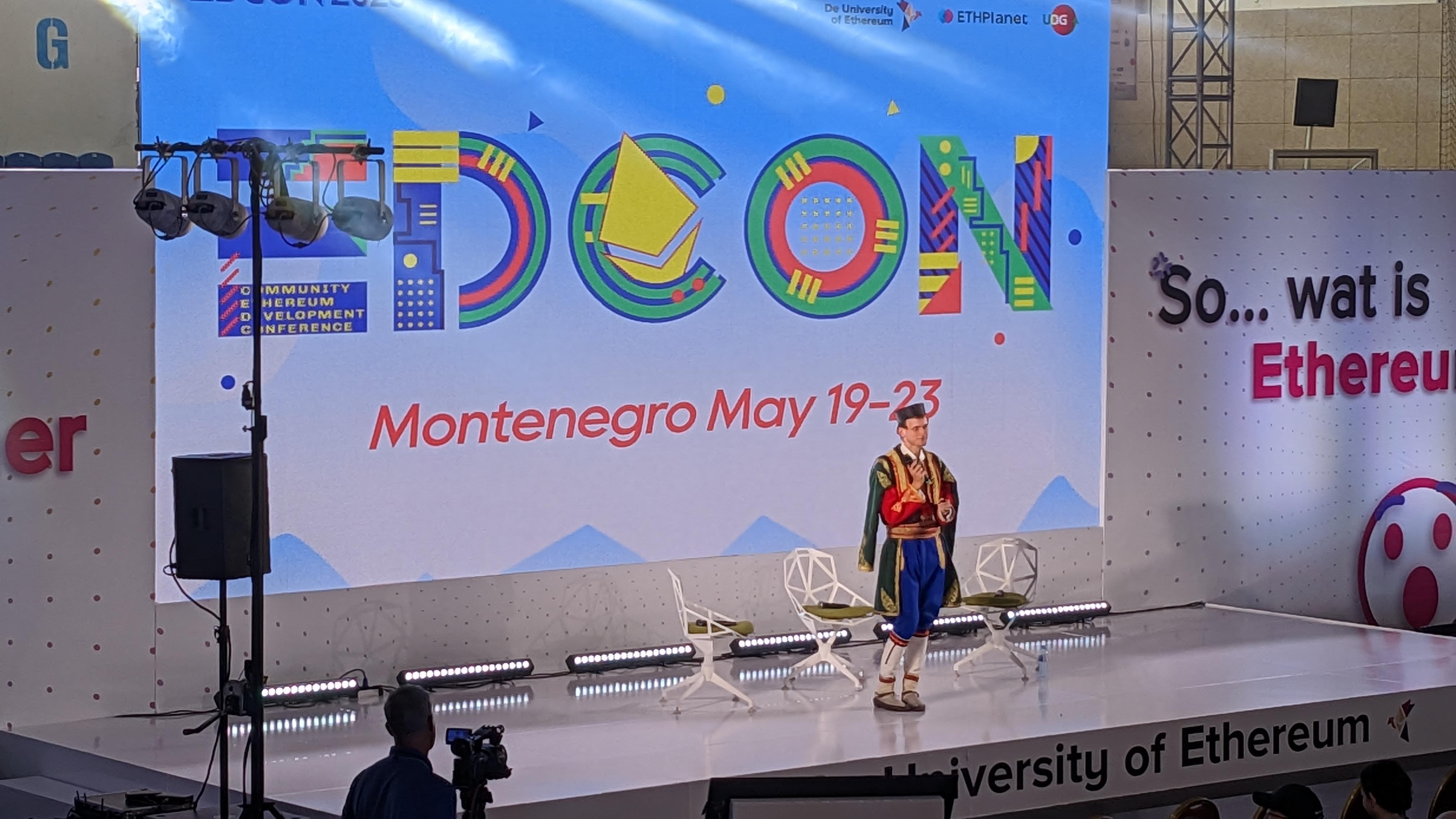
At the Montenegro EDCON conference, Vitalik Buterin systematically outlined technical challenges facing the Ethereum network in scalability, privacy, and security, ultimately concluding that zk-SNARKs will be as important over the next decade as blockchain itself. What exactly is this zk-SNARK technology that Vitalik so passionately advocates? And what pressing issues in today's blockchain landscape can zk-SNARK actually solve?
Let me begin with some initial thoughts to spark a broader discussion.
SNARK stands for "succinct non-interactive argument of knowledge," a proof system built on mathematical algorithms that enables verifiers to confirm the correctness of data without accessing the original data itself. Its implementation involves advanced techniques such as verifiable circuits, elliptic curve cryptography, hash functions, and encryption algorithms—details we won't delve into here.
Because SNARKs can compress raw data into an extremely small proof to verify input correctness, combined with the foundation of zero-knowledge (zk) technology, zk-SNARKs offer significant potential in improving blockchain scalability, privacy, and security. Especially after Ethereum adopted Merkleized Abstract Syntax Trees (MAST) in 2018, zk-SNARKs have become directly integrable into Ethereum’s architecture to address current network bottlenecks.
This explains why, despite Starknet-native zk-STARKs being capable of handling more complex computations (such as resistance to quantum computing attacks), zk-SNARKs are still regarded with greater expectations. In particular, several longstanding blockchain paradoxes can be effectively resolved when underpinned by zk-SNARKs—such as the issue of privacy enabling hacker money laundering, or the centralization risks inherent in social recovery mechanisms.
First, Scalability
Zk-rollup technology is far ahead of op-rollup and represents a definitive long-term solution for Ethereum Layer 2 scaling. Optimistic rollups (op-rollups) assume all transactions are valid by default and only initiate a seven-day fraud-proof challenge period after submission to the main chain. In contrast, zk-rollups use mathematical algorithms to quickly and securely guarantee the validity of every transaction before it is committed on-chain. (Reference link)
Here, zk-SNARK resolves a fundamental paradox in Ethereum’s scalability: the trade-off between scalability and decentralization. Although op-rollups are currently more mature in real-world applications, they still carry potential centralization risks in components like the sequencer and during the optimistic challenge-validation process. While we may remain “optimistic,” achieving truly decentralized rollups ultimately requires SNARKs.
Next, Privacy
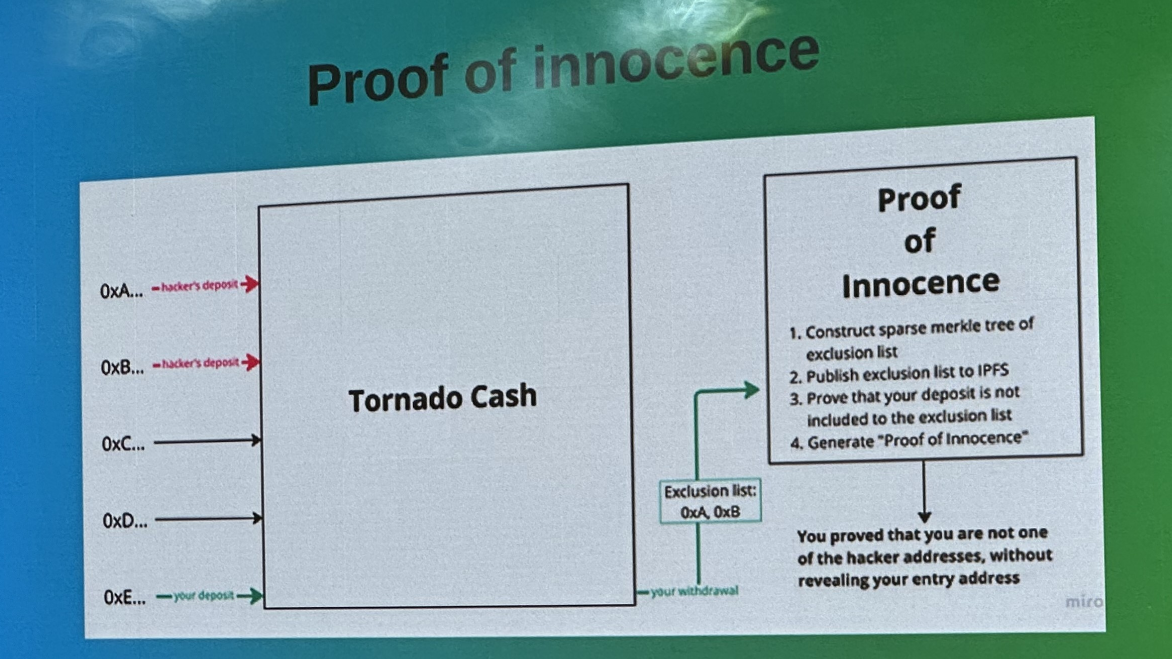
Within the current framework of blockchain technology, developing privacy features often leads to a logical paradox: does enhancing privacy inadvertently empower hackers? However, with zk-SNARKs, we can implement a Proof of Innocence (POI) scheme that allows users to enjoy private deposits and withdrawals while simultaneously preventing misuse by bad actors. Specifically, POI could be applied within protocols similar to Tornado Cash. This technique provides each user with a digital fingerprint derived from their blockchain state history and private key. When a hacker attempts to launder funds through Tornado’s mixing pool, if the withdrawal address they provide contradicts their deposit address (due to mismatched private keys), the transaction will be blocked and the funds returned to the original mixed address. Essentially, illicit assets can no longer evade tracking via coin mixing systems. Alternatively, as suggested in Vitalik’s talk, one could construct an exclusion list using a Merkle tree—effectively adding a blacklist mechanism to Tornado. Regular users whose deposit addresses are not on the list can generate innocence proofs and continue using Tornado normally; those on the list cannot. While blacklists are effective, they introduce centralization risks. Personally, I believe blocking transactions where deposit and withdrawal private keys don’t match is a more meaningful approach.
Finally, the Third-Party Anti-Censorship Paradox (Security)
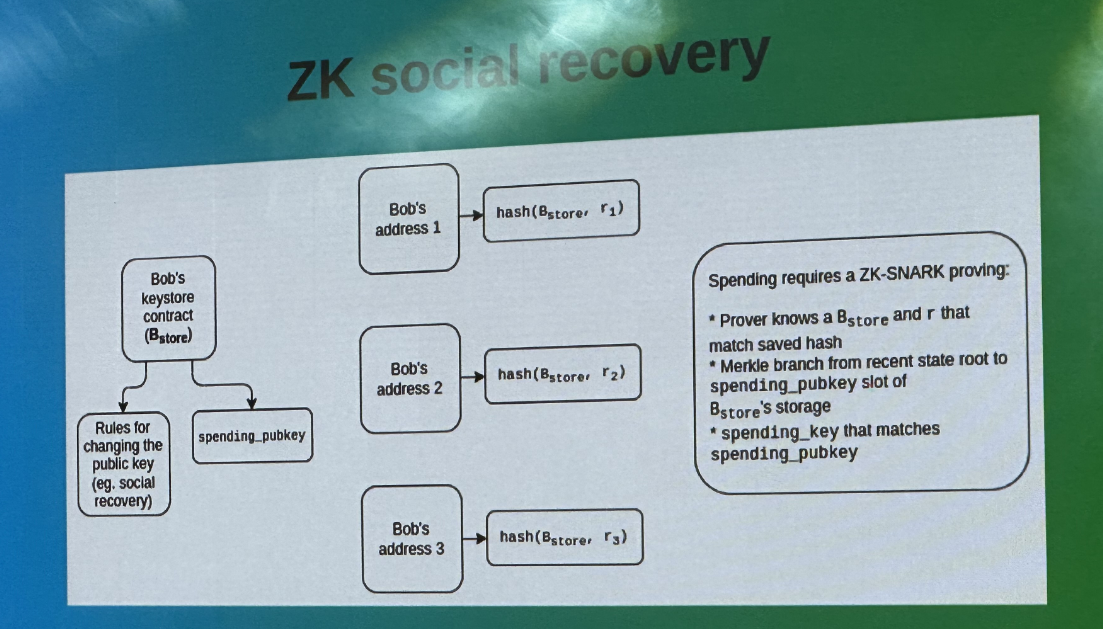
Social recovery is undoubtedly essential for mass adoption of blockchain technology. Yet, as seen recently with community backlash against Ledger’s rollout of this feature, recovery mechanisms cannot rely on centralized third parties. Here again, zk-SNARK technology offers a compelling solution.
In simple terms, when a user generates multiple shards of their private key, they can encrypt these shards and use a zk-SNARK proof system to generate verifiable proofs, which are then distributed to trusted institutions or friends. If the user loses access to their private key, they can request the shards from third parties and use zk-SNARKs to verify the authenticity of the provided proofs—enabling social recovery without ever exposing the actual private key shards.
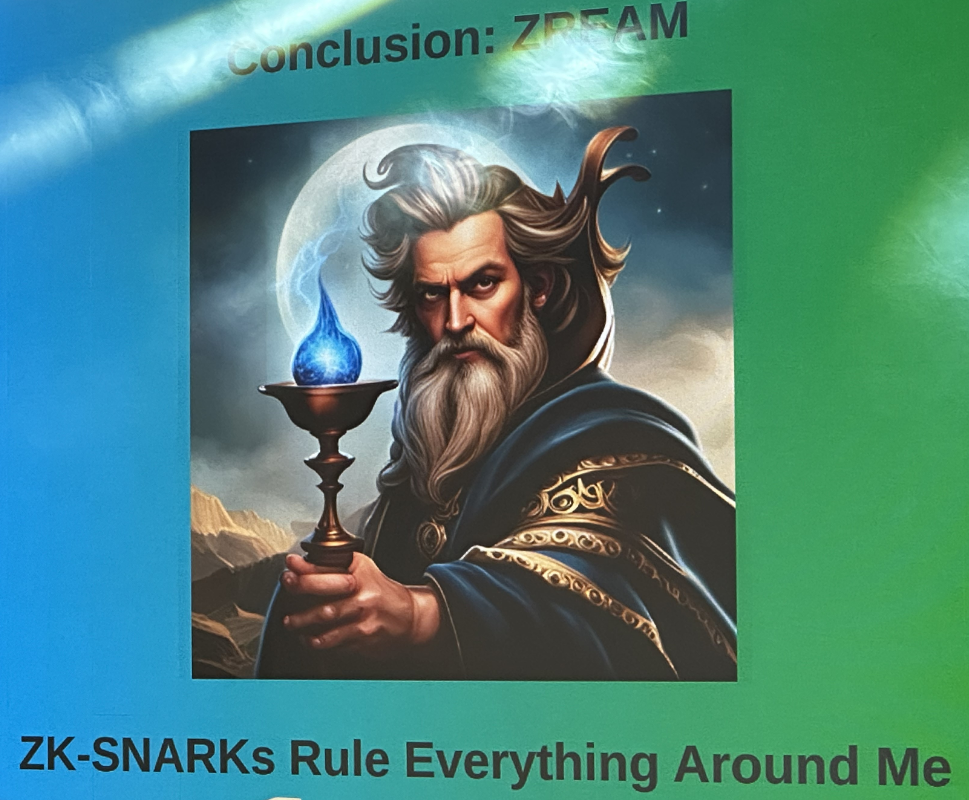
Once the above points are fully understood, the critical importance of zk-SNARK technology for blockchain systems becomes clear. It can resolve core paradoxes currently hindering Ethereum’s development—balancing scalability with decentralization, privacy with abuse prevention, and security with censorship resistance. That’s why Vitalik says zk-SNARKs will be as vital in ten years as blockchain is today. Perhaps Ethereum itself will eventually become "zk-SNARKified." Indeed, zk-SNARKs Rule Everything Around Me.
Join TechFlow official community to stay tuned
Telegram:https://t.me/TechFlowDaily
X (Twitter):https://x.com/TechFlowPost
X (Twitter) EN:https://x.com/BlockFlow_News
 Haotian | CryptoInsight







