Interpreting EIP-4626: A Universal Standard for Tokenized Vaults
TechFlow Selected TechFlow Selected
Interpreting EIP-4626: A Universal Standard for Tokenized Vaults
This article will provide a detailed explanation of the role of EIP-4626 and the benefits it brings.
 Navigating Web3 tides with focused insights
Author: Stader Ethereum
Compiled by: TechFlow
Tokenized vaults, as an emerging method of digital asset management, have already seen widespread adoption on Ethereum. However, the lack of a unified standard across different protocols has made integration between them challenging. Fortunately, EIP-4626 is here to change that. This article will detail the function of EIP-4626 and the benefits it brings.
Tokenized vaults on Ethereum are not actually anything new.
Protocols like Yearn allow you to deposit tokens into a vault. While these tokens are locked, you earn yield. Similar examples include Aave and Compound, which perform similar operations through their lending protocols.
What do all these protocols have in common?
When you deposit tokens, you receive a "vault token." As long as your tokens remain locked, these protocols accumulate additional "vault tokens." When you decide to withdraw, you simply exchange your "vault tokens" to retrieve your original tokens plus rewards.
So far, so good—right? However, there's a problem: there is no unified standard. This means integration between protocols is nearly impossible, forcing each protocol to build its own adapters.
This is where EIP-4626 comes in—it changes the game for tokenized vaults.
It sets a standard on Ethereum with the goal of enabling interoperability across different tokenized vaults. EIP-4626 is the universal adapter for tokenized vaults.
EIP-4626 defines a standard interface that every tokenized vault should follow.
First, every tokenized vault should by default be an ERC-20 token. Additionally, ERC-4626 adds a series of methods that can be called on this contract. For example:
"Total Assets": This shows the total amount of underlying tokens managed by the vault.
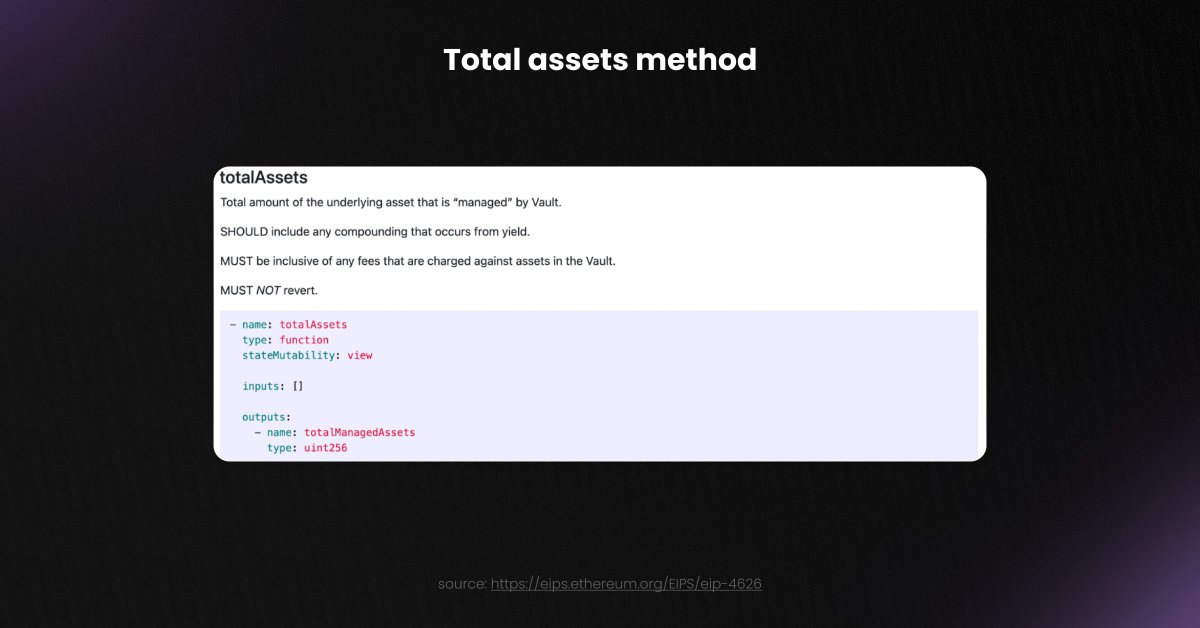
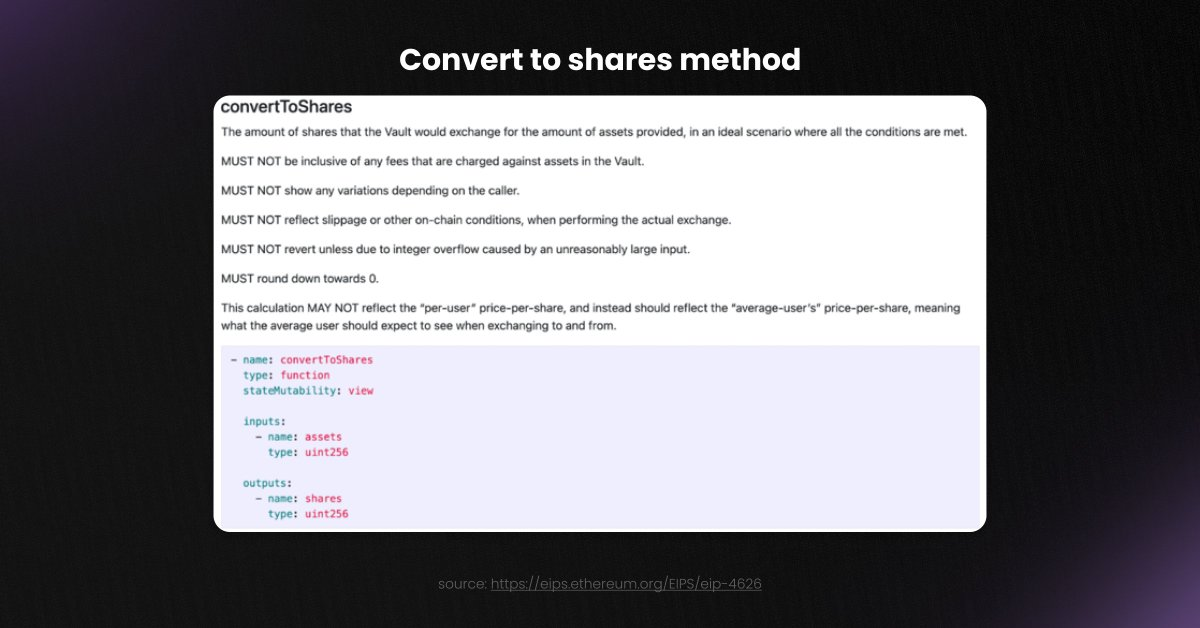
"Convert To Shares": This allows you to determine how many yield tokens you will receive when exchanging underlying tokens.
As more and more protocols begin adopting this standard, we can expect to see:
▻ Increased interoperability: because every protocol uses the same standard;
▻ Reduced development time: no need to write new adapters;
▻ Enhanced security: helps auditors know where to look for vulnerabilities.
In summary—EIP-4626 represents a significant advancement for the Ethereum community. It provides a standardized framework for tokenized vaults, making them more secure and significantly more interoperable.
Join TechFlow official community to stay tuned
Telegram:https://t.me/TechFlowDaily
X (Twitter):https://x.com/TechFlowPost
X (Twitter) EN:https://x.com/BlockFlow_News
 Stader Ethereum