








Exploring the characteristics and potential of different RWA projects: Which type is more worth betting on?
TechFlow Selected TechFlow Selected
Exploring the characteristics and potential of different RWA projects: Which type is more worth betting on?
This article will compare, analyze, and introduce five highly anticipated RWA projects from different dimensions.
 Navigating Web3 tides with focused insights
Author: ProjectW
Compiled by: TechFlow
RWA (Real World Asset) projects have recently drawn significant attention, as their products tokenize real-world assets and integrate them into the decentralized finance (DeFi) ecosystem. However, different RWA projects vary in features and potential, making effective identification and comparison a topic worth exploring.
In this article, the author compares and introduces five prominent RWA projects: $LEOX, $THEO, $LABS, $ELFI, and $FACTR, analyzing them across various dimensions.
What is Real-World Asset Tokenization?
It generally refers to the process of creating digital certificates for real-world assets, such as real estate, artwork, or company shares.
This is typically achieved by issuing tokens on a blockchain, enabling fractional ownership of RWAs through blockchain-based tokens.
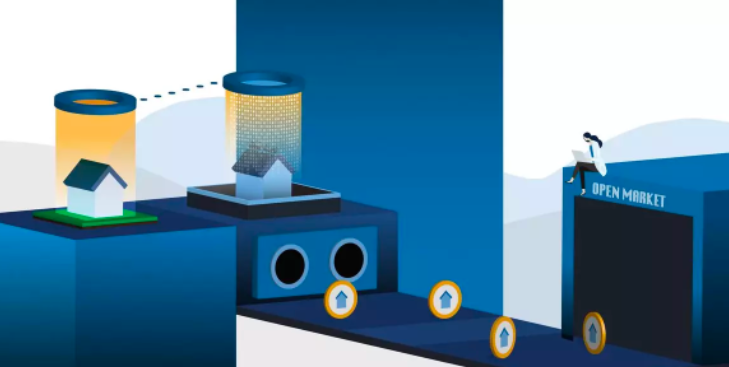
These tokens can be traded on exchanges, providing liquidity to otherwise illiquid real-world assets.
Smart contracts can facilitate ownership transfers and enable asset management on the blockchain.

When researching RWA projects, I consider the following aspects:
-
What services do these projects broadly offer?
-
What unique features do they have?
1. Galileo Protocol
Galileo Protocol is an open-source infrastructure for executing smart contracts.
It enables the creation of "pNFTs" representing physical goods that can be issued across multiple chains and interact with any blockchain.
Project link: https://twitter.com/galileoprotocol
Features of $LEOX
-
Generates NFTs that identify you as the asset owner.
-
After purchasing luxury goods, you receive an NFT confirming your ownership.
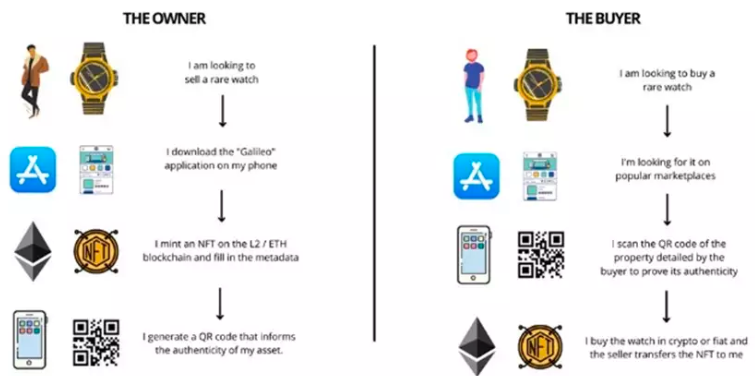
As an investor, you can buy shares of luxury items in the form of digital assets,and also gain ownership of digital assets.
Key Differentiators of $LEOX
-
No functional product yet (as of now);
-
Not limited to real estate;
-
Business case has significant potential to reach a broad audience;
-
Comparable to crowdfunding platforms, but with enhanced functionality.

2. Theopetra
Theopetra is an RWA project leveraging decentralized technology to address the global housing affordability crisis.
Project link: https://twitter.com/TheopetraLabs
Features of $LABS
-
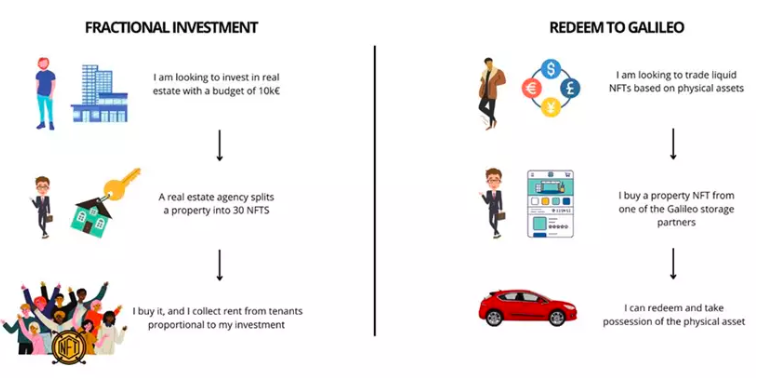
Fractional real estate investment;
-
Tokenizing property owners' real estate;
-
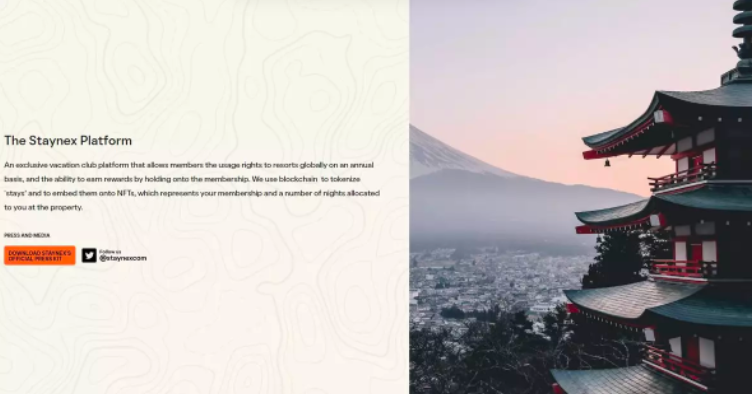
Through Staynex, users will soon be able to purchase usage rights to resorts worldwide.
Key Differentiators of $LABS
-
No operational product yet;
-
Enables fractional investment in real estate;
-
Partnership with Staynex expected to unlock more interesting use cases.
-
Partnership with Arsenal provides a certain level of security.
3. LABS Group
LABS Group is a decentralized platform allowing investors to own partial stakes in real estate assets.
This means investors can participate in real estate investments without having to purchase entire properties in the real world.

Project link: https://twitter.com/labsgroupio
Features of $THEO
-
Purchasing properties;
-
$THEO makes real estate accessible to everyone through its technology;
-
$THEO caps maximum rental growth at 1% (currently up over 30%);
-
Well-suited to help low-income individuals.

Key Differentiators of $THEO
-
Unique concept with potential to aid low-income populations;
-
$THEO already has its first resident.
-
$THEO offers strong utility, allowing membership access via staking $THEO.

4. ELYSIA
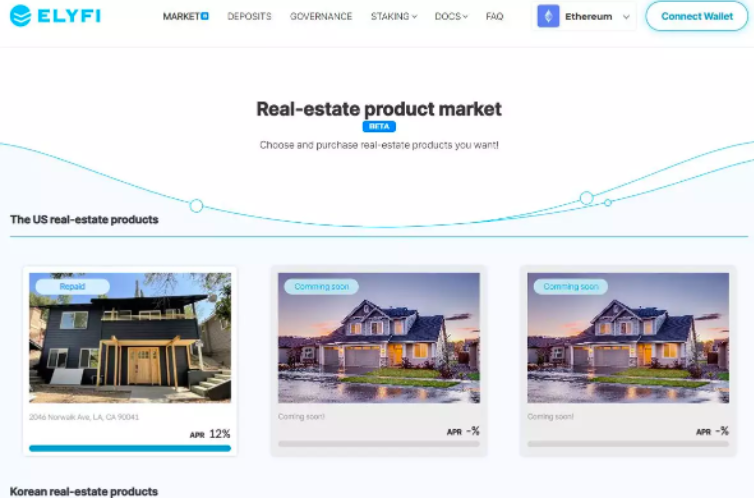
ELYSIA aims to bridge the gap between the real estate market and open financial markets, enabling physical assets to be brought on-chain and their value represented digitally.
Project link: https://twitter.com/ELYSIA_HQ
Features of $ELFI
-
Property owners can borrow far beyond their credit limits using $ELFI;
-
Users can use their cryptocurrencies as collateral to borrow other cryptocurrencies;
-
Additionally, investors can earn secure returns by providing liquidity.

Key Differentiators of $ELFI
-
Has a functional product;
-
Attractive to investors seeking average returns with emphasis on safety;
-
Highly appealing to real estate owners seeking large loans.
5. Defactor
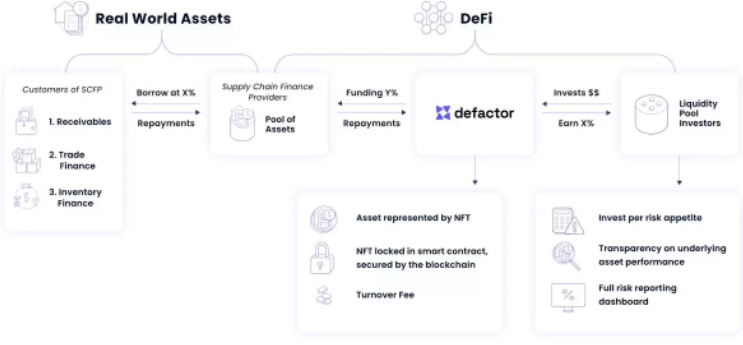
Defactor is a platform enabling traditional enterprises to access DeFi liquidity for financing real-world assets,focusing on improving current factoring (a financial service), trade finance, and inventory financing systems using blockchain technology.
Project link: https://twitter.com/defactor_
Features of $FACTR
-
Can act as a liquidity pool investor to earn relatively safe returns;
-
Can choose risk levels;
-
Can borrow as an asset owner, but must repay in installments.
Key Differentiators of $FACTR
-
Provides services similar to bank interactions for both investors and borrowers;
-
Appealing to investors seeking average returns with security;
-
Highly attractive to real asset owners seeking large loans.
Conclusion
Overall, it's important to determine the type of project you want to invest in, especially since not all RWA projects are the same.
Some projects’ claims about combining the real world with DeFi are overly superficial and meaningless; I focus instead on projects with unique technologies and innovative ideas.
I evaluate which projects have the greatest potential for future success. Having a functional product is a major plus for me. Therefore, don't blindly jump into every RWA project.
Join TechFlow official community to stay tuned
Telegram:https://t.me/TechFlowDaily
X (Twitter):https://x.com/TechFlowPost
X (Twitter) EN:https://x.com/BlockFlow_News
 ProjectW






