








What is the truth behind the multi-signature scam targeting Tron wallets, and how can users safeguard their assets?
TechFlow Selected TechFlow Selected
What is the truth behind the multi-signature scam targeting Tron wallets, and how can users safeguard their assets?
Multi-signature security first requires private key security.
 Navigating Web3 tides with focused insights
Recently, users from both the TRON and TokenPocket communities have reported that their wallets were mysteriously set to "multi-signature" mode, preventing normal sending and receiving of crypto assets. More seriously, funds in these wallets were stolen.
These users have fallen victim to a multi-signature scam targeting TronLink and TokenPocket wallets.
For newcomers entering the world of cryptocurrency, properly managing one's wallet remains an unavoidable challenge. The crypto world resembles a dark forest—fraud surrounding wallets is rampant, and users can lose their assets with just a single misstep.
So what exactly is this multi-signature mechanism, and why are some users falling for it? Is there a flaw in TRON’s security design, or is this a trap deliberately engineered by scammers? If you use either of these wallets, or wish to understand how TRON’s multi-signature system works to avoid scams, this article will help.
Why Are Wallets Being Set to Multi-Signature Mode?
Let’s first understand the TRON multi-signature mechanism.
Generally, every transaction in your wallet requires your own “signature” before execution—this could be entering a password you set or using biometric authentication like fingerprint on mobile. In this case, "you alone control the movement of funds in your account." With only your signature needed, you can freely transfer crypto assets within your account.
However, scenarios also exist where "multiple parties jointly manage fund movements," such as shared crypto assets among teams or companies, or when you create two wallets for safety—requiring both to approve a transaction before it proceeds. In such cases, an account can be managed by multiple private keys, and transactions initiated from the account must be signed by multiple private keys, enabling different parties (with varying weights) to co-manage crypto assets.
The TronLink and TokenPocket wallets on TRON allow users to enable multi-signature settings to meet various usage needs.
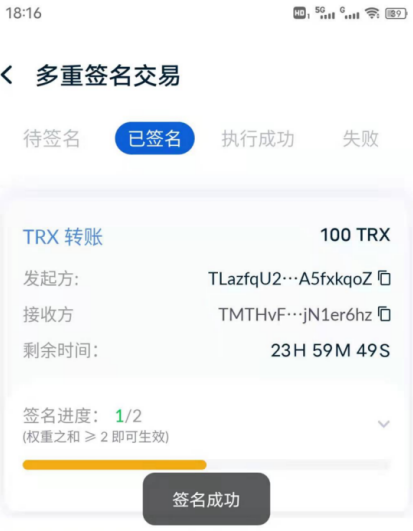
Image source: TRON wallet documentation
Now that we understand what multi-signature means, let’s examine possible reasons why users’ wallets are being set to multi-signature.
First: Users Accidentally Enable Multi-Signature Themselves
Some new users mistakenly enable multi-signature while exploring wallet features. When attempting asset transfers, because multi-signature is enabled, at least two wallet addresses must jointly sign and confirm the transaction. In this situation, having only one wallet prevents completing the full transaction, causing it to fail.
This results purely from user error, and the user’s assets remain safe. The solution is simple: either satisfy the multi-signature requirement during transactions or disable multi-signature and proceed with single-signature transactions.
Second: Private Key Leak Enables Unauthorized Multi-Signature Setup
The most common scenario involves users downloading fake wallets via phishing websites. Fake wallet software still generates private keys and recovery phrases.
But such fake wallets may steal your private key or recovery phrase, effectively transferring control of your wallet. At this point, attackers can use the multi-signature feature to pair their address with yours. When you attempt a solo transfer, it fails. Meanwhile, the attacker, possessing your private key and paired with their multi-signature account, can drain your funds.
Third: Scammers Deliberately Share Private Keys, Trapping Incoming Funds
Although old-school, this scam heavily targets beginners. Scammers directly provide you with their wallet’s private key, often showing substantial balances inside. They might claim they don’t know how to operate it, asking you to help send some TRX into the wallet and withdraw an equivalent amount of stablecoins.
Users may think they’re getting a free ride, importing the provided private key or recovery phrase, then depositing TRX into the wallet. At this moment, the multi-signature trap is triggered.
The scammer’s wallet was already configured as a multi-signature wallet. So even though you possess their private key, you cannot freely access its assets. Any funds you deposit become unrecoverable.
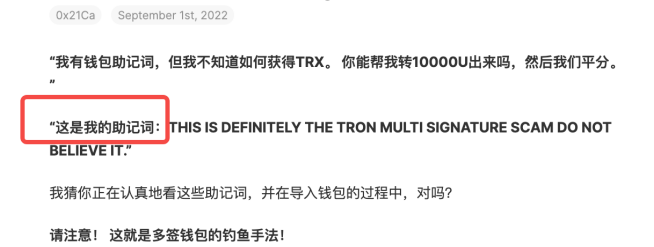
Image source: TP Wallet
Fourth: Clicking Phishing Links Leads to Unauthorized Permission Changes
This occurs when users click phishing links that alter wallet permissions. For example, scammers create fake websites offering discounted vouchers or cheap top-ups. When users follow the provided link to recharge, malicious code executes to elevate privileges. Once users confirm and enter their password to sign, their wallet address permissions are altered.
According to real cases provided by TokenPocket, after clicking a phishing link and initiating a transfer, the wallet clearly warns that the operation isn't a simple transfer but actually invokes the "upgrade account permissions" function. Once users confirm, they unknowingly grant scammers multi-signature authorization. After the wallet is maliciously set to multi-signature mode, subsequent transfers will fail—or worse, scammers may exploit expanded privileges to move funds.
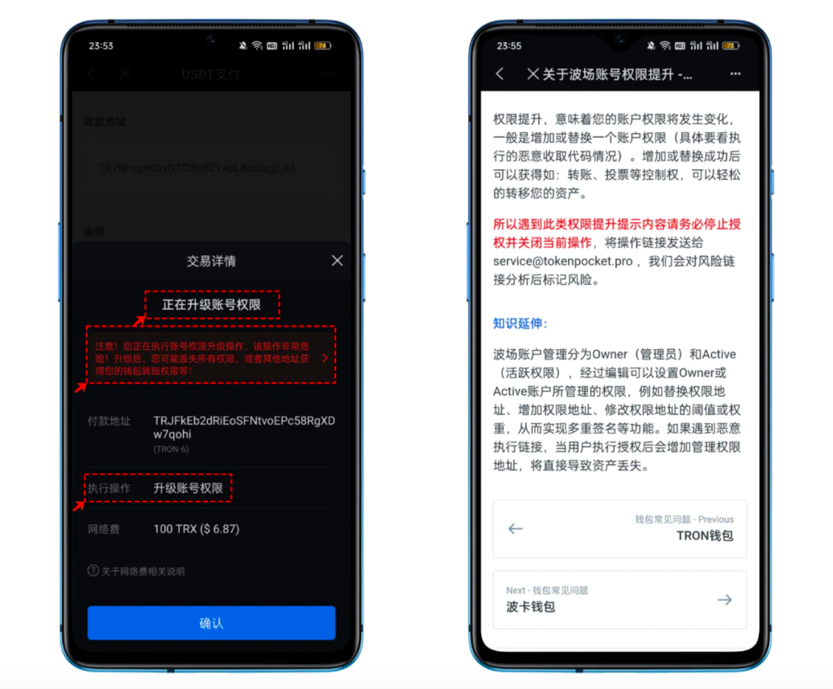
Image source: TP Wallet
Multi-Signature Security Starts with Private Key Security
From the four common scenarios above, it's clear that leaking private keys or trusting phishing links and third-party wallets are the direct causes of asset loss.
In these scams, the multi-signature mechanism is mostly exploited as a tool—a scapegoat used by fraudsters.
This clearly deviates from TRON’s original intent for multi-signature functionality.
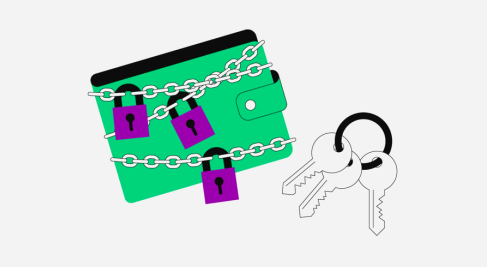
We can think of TRON’s multi-signature mechanism as a high-security lock requiring multiple keys to unlock. Only when all required locks are opened can assets be moved. But this enhanced security assumes one critical condition: users must safeguard their own original access rights. If all keys fall into one person’s hands, even the best lock becomes meaningless.
Looking at current wallet fraud issues alongside TRON’s multi-signature mechanism, we see that most incidents stem from unintentional mistakes. The multi-signature mechanism itself isn’t flawed—rather, the problem lies more in the environment: users and scammers possess unequal technical capabilities, and the industry lacks mature technological safeguards for early warning, detection, and countermeasures.
Still, under current circumstances, while TRON provides multi-signature functionality on the user side, could it go further on the development side—using technology to minimize the possibility of fraud?
Currently, the TRON multi-signature feature is only available through TronLink and TokenPocket wallets.
Given that multi-signature involves sensitive private key signing operations, TRON has disabled API endpoints related to private key signatures in its official API reference manual.
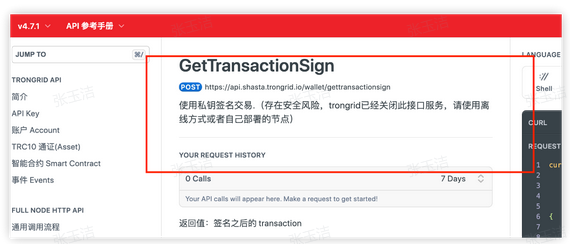
Additionally, wallets and related products can assess multi-signature functionality based on their specific needs and decide whether to display relevant warnings—and if so, how to present them. Therefore, displaying the TRON multi-signature option to users is not mandatory. Presenting this option does not come at the cost of security or reliability.
Ultimately, however, asset security depends most on strengthening users’ awareness. Reducing expectations of easy gains, increasing vigilance against traps, and staying alert to potential scams will collectively enhance security across the entire cryptocurrency ecosystem.
Join TechFlow official community to stay tuned
Telegram:https://t.me/TechFlowDaily
X (Twitter):https://x.com/TechFlowPost
X (Twitter) EN:https://x.com/BlockFlow_News


