The index wave is coming—here’s an analysis of 4 on-chain index protocols worth watching
TechFlow Selected TechFlow Selected
The index wave is coming—here’s an analysis of 4 on-chain index protocols worth watching
On-chain indices are still in their early stages, but as the market matures and cryptocurrencies achieve widespread adoption, they could represent the future of cryptocurrency investing.
 Navigating Web3 tides with focused insights
Written by: Ignas
Compiled by: TechFlow
Last week, the index protocol Alongside announced an $11 million seed funding round led by A16z and joined by Coinbase.
This is surprising because DeFi project funding typically ranges between $1 million and $4 million, and all DeFi index projects are generally under-capitalized (with valuations from $1 million to $15 million).
Few have heard of Alongside, which piqued my interest—venture capital firms must be forward-thinking since their shares will be locked up for several years.
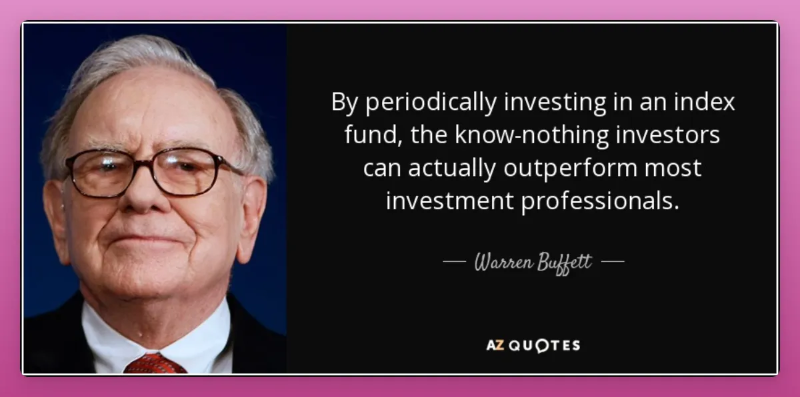
Warren Buffett once said that a novice investor can outperform most investment professionals by regularly investing in index funds. In traditional markets, stock indices track the performance of a basket of stocks, with the S&P 500 being the most well-known example.
However, it’s still early days for on-chain indices. Many crypto natives believe they can manage their positions better than centralized solutions, so the narrative hasn’t taken hold yet.
The numbers tell the story: stock indices account for about 18% of the TradFi stock market, while on-chain indices make up only 0.077% of the crypto market—or just 0.18% compared to DeFi's TVL.
Indices Outperform ETH and BTC
Investors need benchmarks to measure the performance of various tokens and projects. For some time, Ethereum (ETH) and Bitcoin (BTC) have served as market benchmarks.
Therefore, on-chain indices need to outperform them to justify their existence. However, DPI—the largest DeFi index developed by Index Coop—has consistently underperformed ETH.
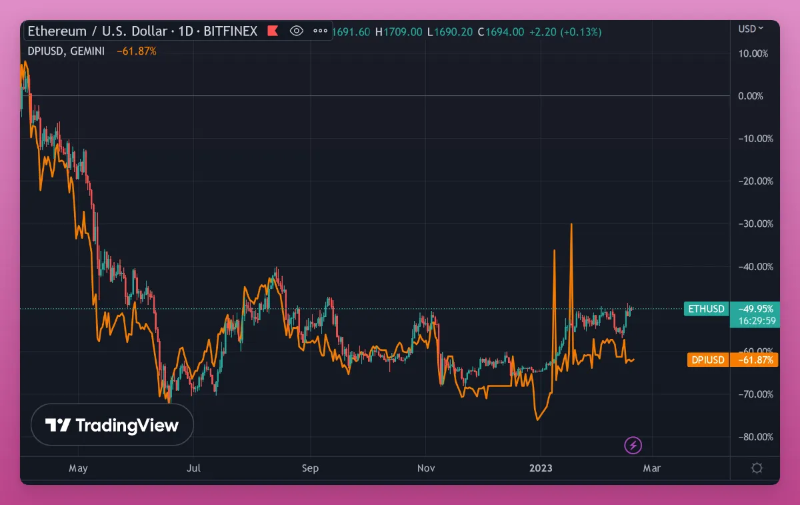
If you believe in the development of DeFi, holding ETH makes sense, as it is the foundation of the DeFi ecosystem, with blue-chip DeFi projects built on top of it.
The same applies to the NFT ecosystem, where ETH serves as a proxy token for NFT adoption growth. Moreover, ETH does not suffer from the inflation issues that plague many DeFi tokens and is widely regarded as the best collateral in crypto.
Nevertheless, certain individual DeFi tokens have significantly outperformed ETH, so a well-designed index must offer greater upside potential while minimizing risk.
For example, during the DeFi Summer, the DPI index was popular because new DeFi projects emerged daily, making it hard to keep up with developments across the sector. High gas fees also prevented smaller investors from diversifying across multiple DeFi tokens. However, the market correction in autumn 2021 led investors to view these indices as too risky, prompting widespread exits.
Index Finance Hack
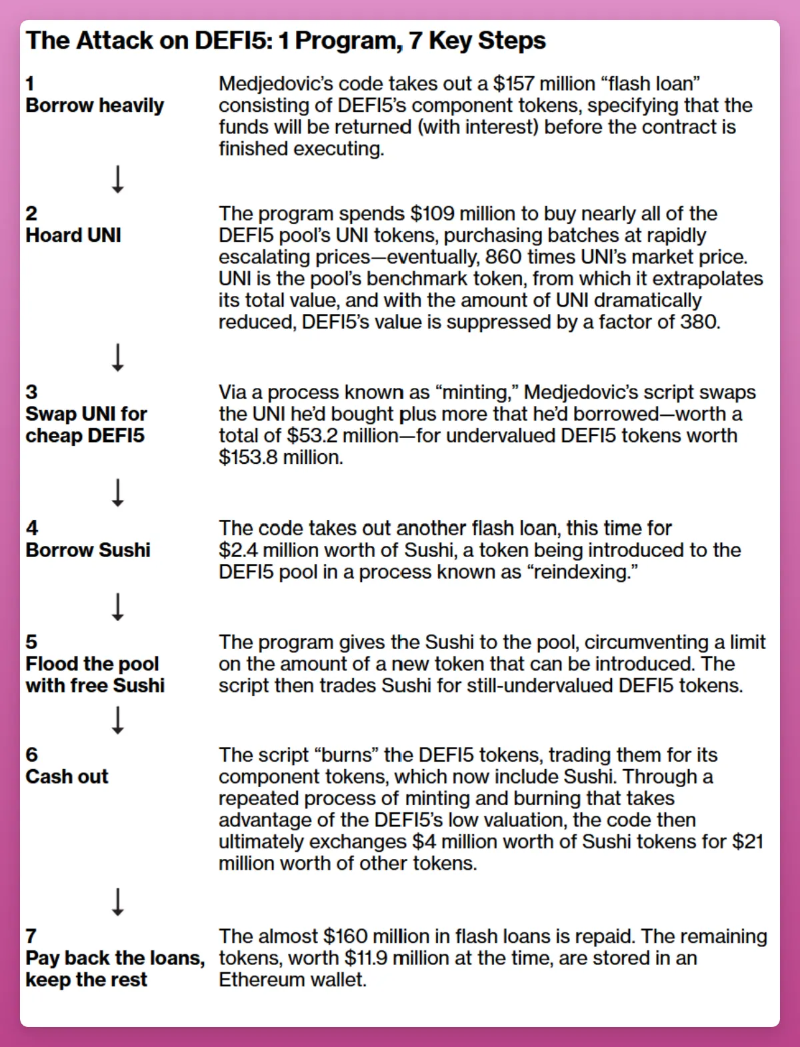
In October 2021, Indexed Finance’s DEFI5 index was exploited for $18 million. The attacker took advantage of how index pools rebalanced via flash loan trades.
This hack and its backstory are fascinating enough to warrant a movie. In fact, Bloomberg published a deep-dive article on it. The protagonist? A. Medjedovic, an 18-year-old mathematician who orchestrated the attack.
Thus, holding ETH or BTC remains relatively safer due to high correlation among cryptocurrencies.
The Index Wave is Coming
With mass adoption and increasing market maturity, crypto indices will gain more attention. Just before the last bull run, there was no DeFi, NFTs, or metaverse.
These new sectors are still young and correlated with BTC/ETH, but each has had its moment in the spotlight. As the industry expands and more sectors emerge, indices become increasingly meaningful.
The recent $11 million funding round led by A16z signals that this sector is beginning to grow.
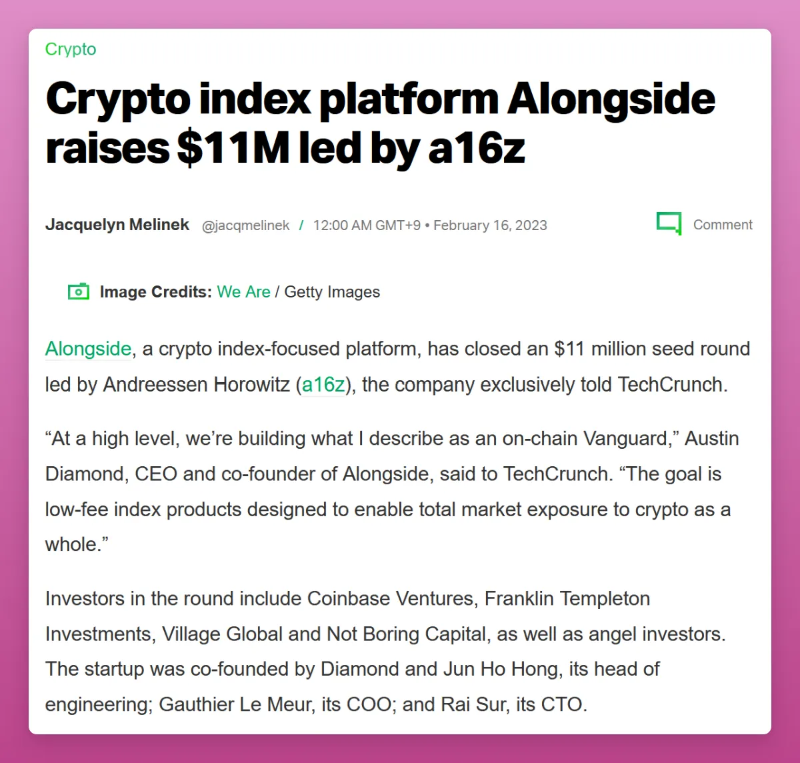
"Our goal is low-fee index products designed to give broad market access to cryptocurrency." – CEO of Alongside
Alongside Crypto Market Index ($AMKT) is a centralized solution comprising a basket of 25 market-cap-weighted assets, with custody provided by Coinbase.
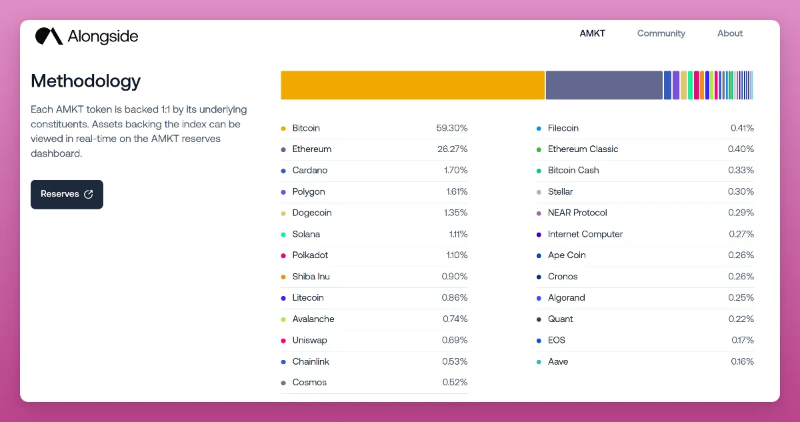
In traditional finance, indices serve as vehicles for large-scale capital allocation. They follow a set of rules known as a "methodology"—typically market-cap weighting—to add or remove assets based on their market value.
While the S&P 500 includes 500 companies, AMKT is limited to 25, as other assets either lack sufficient liquidity depth, have security concerns, or are under regulatory scrutiny—AMKT cannot include such assets due to compliance requirements.
AMKT uses a fixed token supply inflation rate to generate fees.
On-Chain Index Protocols
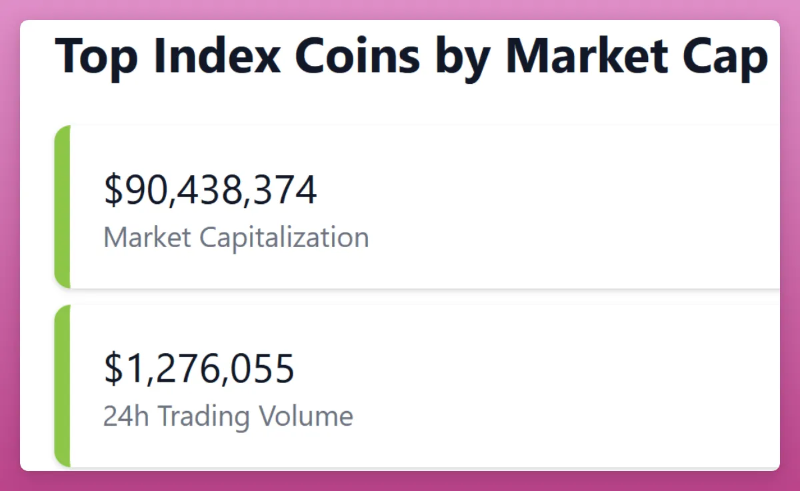
This sector is still small, with a total market cap of just $90.4 million.
Nonetheless, there are several key builders in the on-chain index space:
- Index Coop
- Phuture Finance
- Indexed Finance
- PieDAO.
Index Coop
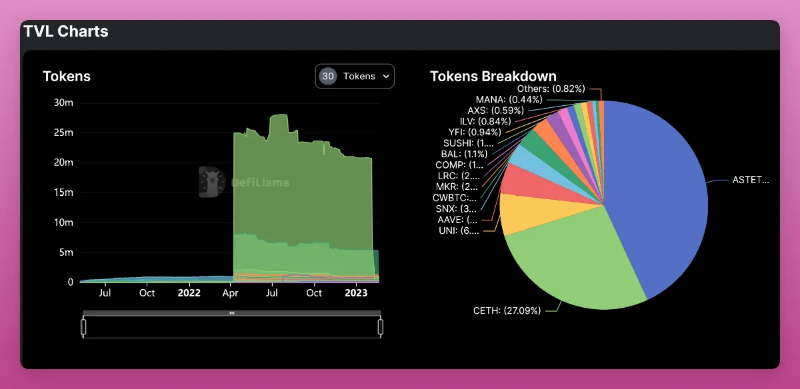
Index Coop is the largest index protocol by market cap, with $63 million in TVL.
They offer a range of products, including:
-
DeFi Pulse Index (DPI)
-
Metaverse Index (MVI)
-
Bankless BED Index (BED)—equal parts Bitcoin, Ethereum, and DPI.
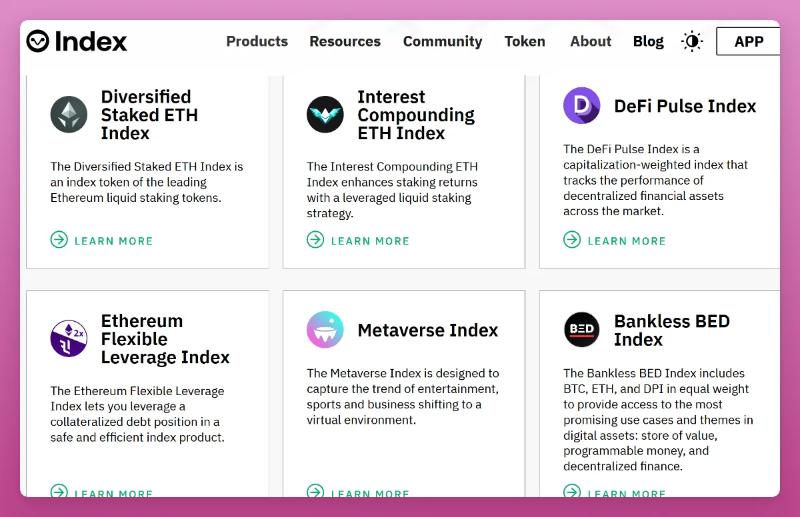
It appears they prioritize staking ETH services, with most of their TVL tied up in ETH liquid staking derivatives.
Phuture Finance
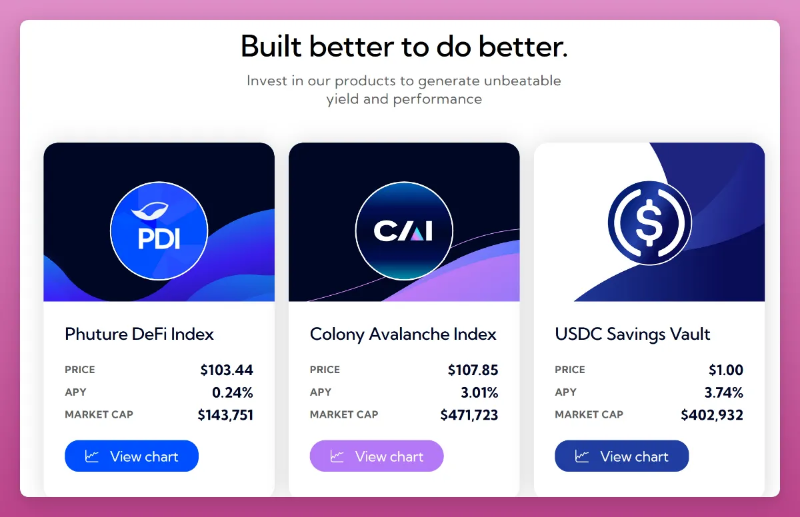
Unlike Alongside, Phuture Finance offers non-custodial, on-chain, yield-generating products.
Their product suite includes:
-
Phuture DeFi Index (PDI).
-
Colony Avalanche Index (CAI)—tracks the Avax ecosystem (JOE, sAVAX, AVAX, and QI).
-
USDC Savings Vault (USV)—generates yield through managed portfolios of 3–6 month bonds. USV is powered by Notional, a DeFi protocol for fixed-rate lending.
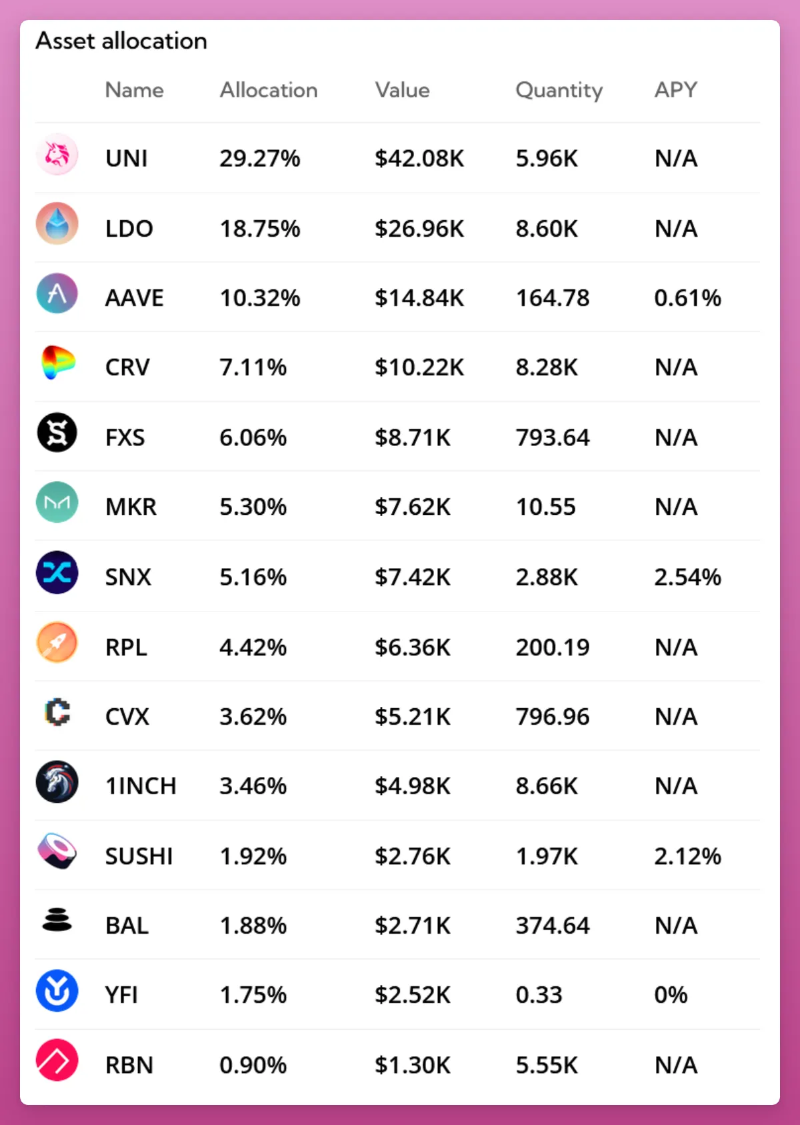
Phuture’s PDI has been integrated with Yearn, enabling certain assets like AAVE, SNX, and SUSHI to earn yield.
Indexed Finance
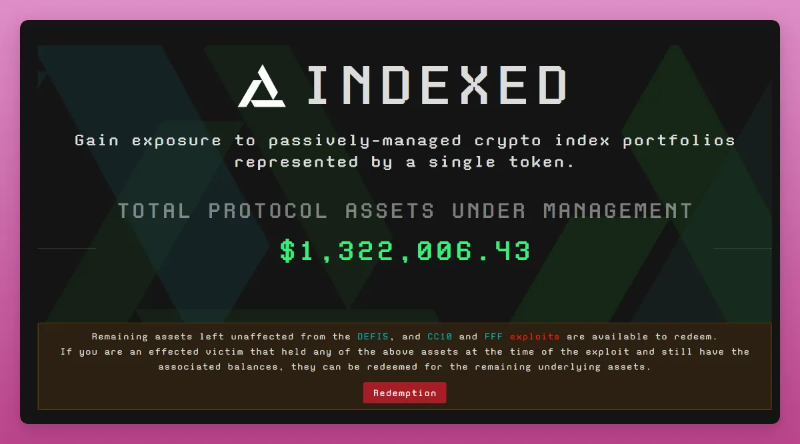
Indexed Finance has not recovered from the hack. Their last tweet was six months ago.
The governance token NDX has dropped 98.4%, with only $132,000 in market cap and negligible trading volume. Currently, funds left over from the hack remain available for withdrawal.
Surprisingly, $1.3 million still resides in their smart contracts.
PieDAO
PieDAO was an early adopter of indices and recently announced a shift from passive to active management—"holders govern DAO-owned funds to generate returns."

Token Performance
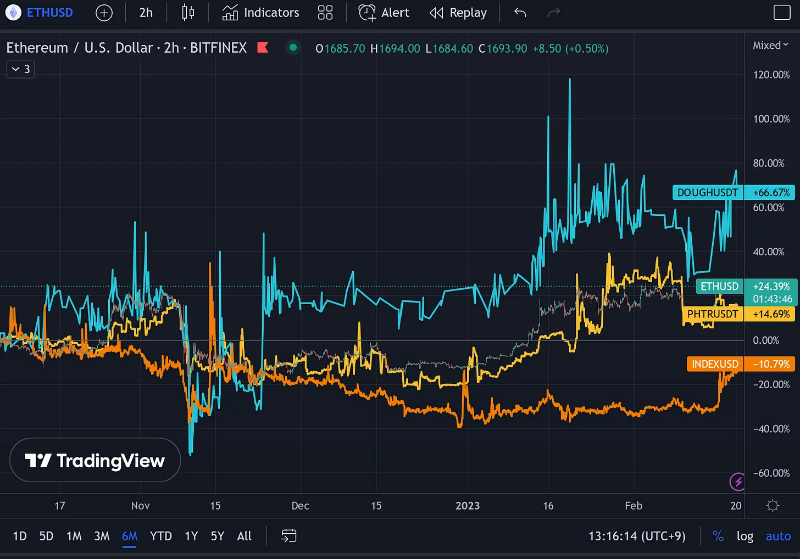
Except for DOUGH (PieDAO), none of the index governance tokens have outperformed ETH.
If you’ve held them previously, this is bad news—but also good news, as the index narrative has yet to arrive.
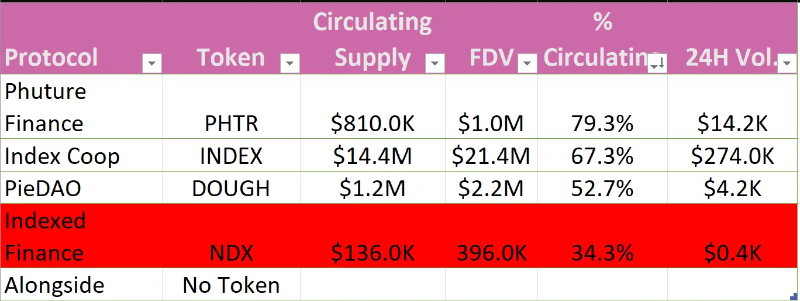
Their token market caps and trading volumes demonstrate how early we are in the on-chain index space. Except for Index Coop’s INDEX, they are all low-market-cap tokens with extremely low trading volume.
Brief Overview of Tokenomics and On-Chain Data
Alongside does not yet have a token, but perhaps holding the AMKT index could mean eligibility for a future airdrop?
Index Coop - INDEX
$INDEX has a maximum supply of 10,000,000, vested over three years. Of the total supply, 70% is reserved for the community, liquidity providers, and "Methodologists."
$INDEX is a governance token used to vote on protocol improvements, treasury expenditures, and governance proposals related to base tokens within $DPI and future index products.
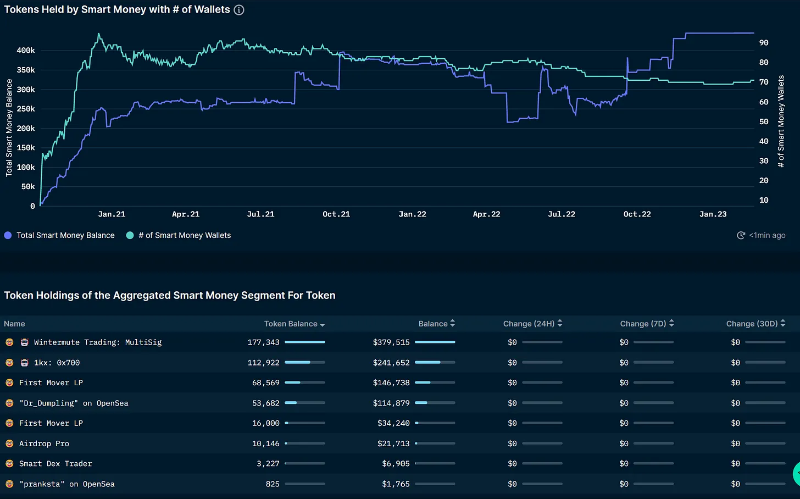
According to Nansen’s Smart Money data, there are currently no signs of on-chain accumulation. Wintermute is the market maker for INDEX but has chosen not to accumulate.
Phuture Finance
PHTR is Phuture’s token used for governance, rewarding users, incentivizing participation, and fundraising.
It has two primary functions:
-
Staking, earning interest represented by ePHTR;
-
Liquidity incentives—PHTR is distributed to users who provide liquidity to Phuture’s index funds.
The APY for ePHTR is 4.7%.
Again, no smart money inflows. 30-day trading volume data shows private investors unlocking and withdrawing from ePHTR, but these outflows are absorbed by retail investors active across other EVM chains.
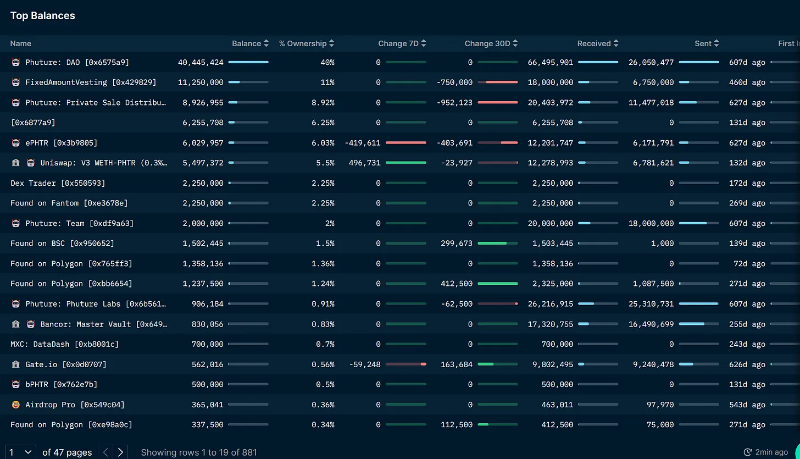
PieDAO - DOUGH
Users who stake DOUGH for at least six months receive veDOUGH, PieDAO’s new governance token, which allows them to propose and vote on governance proposals while being rewarded for their commitment and participation.
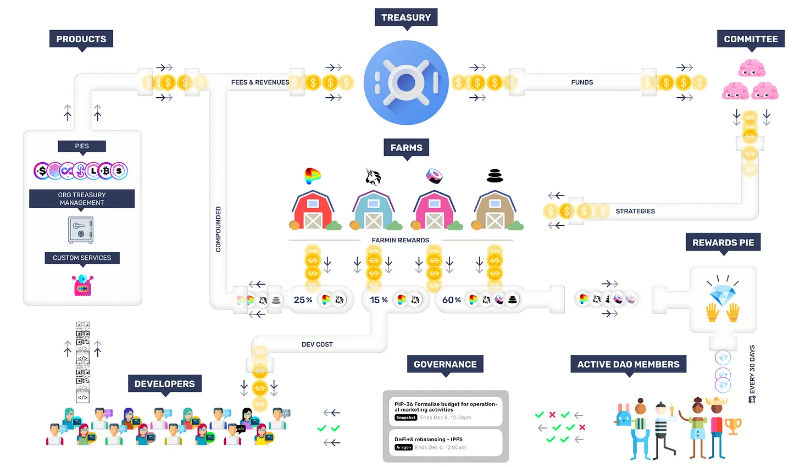
The goal is to generate and redistribute revenue.
PieDAO redistributes 60% of its revenue proportionally to active community members based on the amount of veDOUGH they hold.
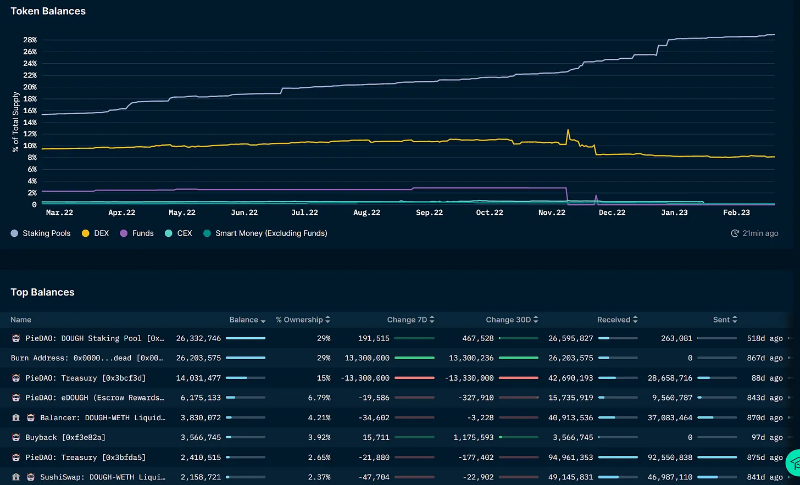
On-chain data shows limited interest from smart money. 29% of the supply is locked in staking addresses. 29% of the supply has been burned, and 4% used for buybacks.
Conclusion
One major drawback of on-chain indices is their ability to manage only a limited number of assets, restricting their potential. The S&P 500 includes 500 different assets, while current solutions support around only 30 tokens.
Nevertheless, diversified, sector-specific indices may represent the future of crypto investing, allowing investors access to emerging and rapidly growing crypto sectors they may not have time to follow closely.
Personally, indices like DeFi may not appeal to me, as I prefer picking tokens myself. However, I would be more inclined toward other indices, such as those focused on metaverse, AI, or NFTs.
For on-chain indices to outperform the market, they need to include newer, high-growth-potential assets that are uncorrelated with BTC or ETH. Doing so securely is no easy task.
Overall, on-chain indices are still in their early stages. But as markets mature and crypto achieves broader adoption, they may well become the future of crypto investing.
Join TechFlow official community to stay tuned
Telegram:https://t.me/TechFlowDaily
X (Twitter):https://x.com/TechFlowPost
X (Twitter) EN:https://x.com/BlockFlow_News
 Ignas | DeFi Research