








How to build products through attention economy in NFTs?
TechFlow Selected TechFlow Selected
How to build products through attention economy in NFTs?
The NFT field is rapidly evolving, with fragmentation as a byproduct.
 Navigating Web3 tides with focused insights
Written by: Alex Gedevani
Compiled by: TechFlow
The NFT space is evolving rapidly, with fragmentation as a side effect. This raises the question: how do products position themselves to meet user needs, and how do users allocate their time across these products?
The answer boils down to attention. How can we best map NFT users’ attention? Where is the most valuable commodity located?
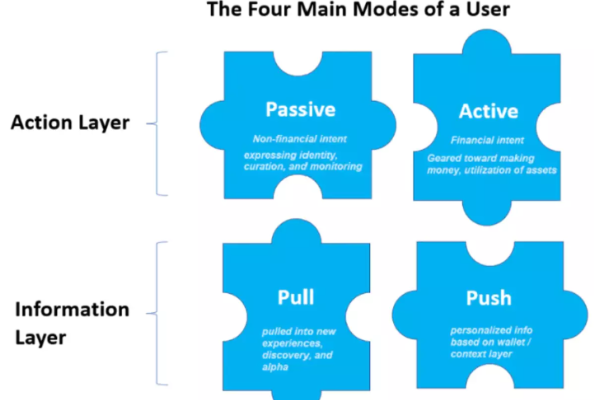
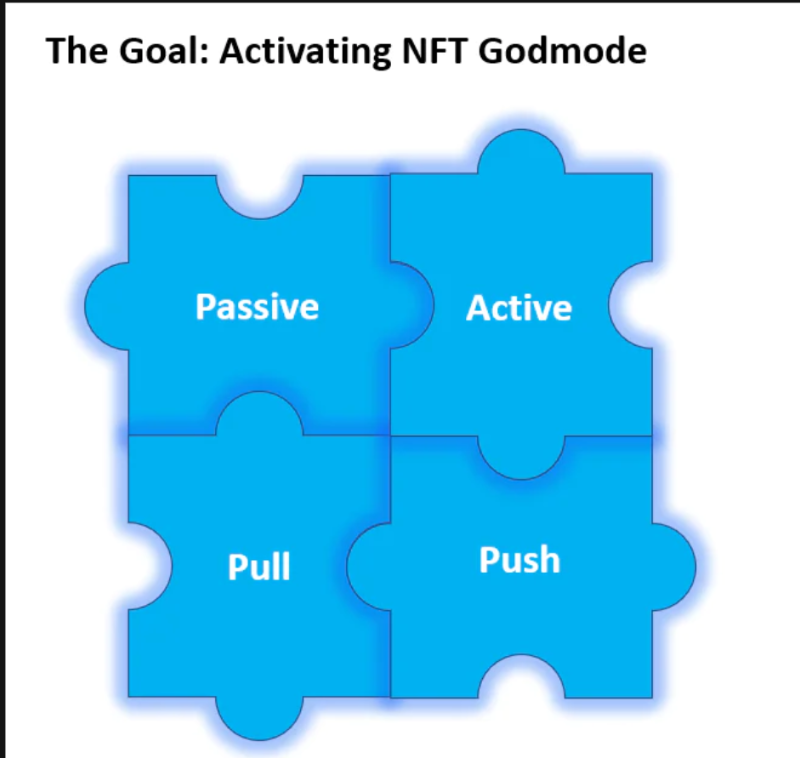
My mental model is simple. Think about every NFT-related product you’ve used in the past six months. Chances are, most of them fall into and serve at least one of the four attention quadrants shown in the graphic below.
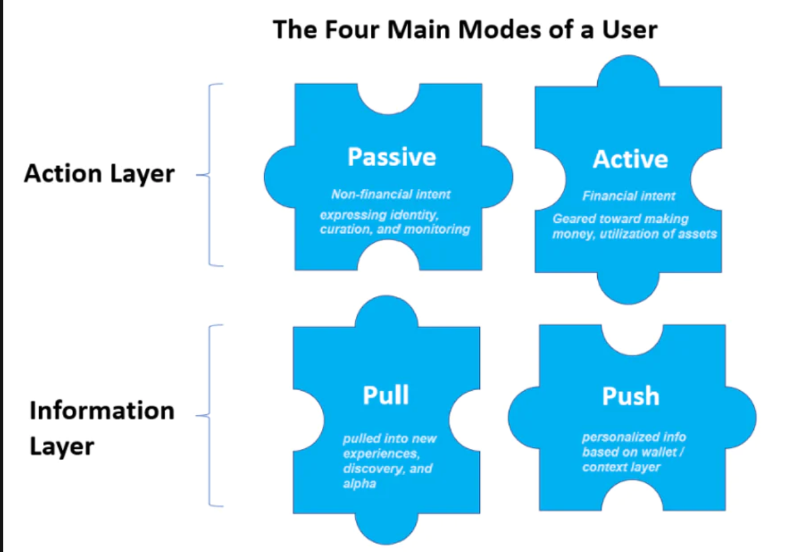
We all either: a) consume information (the Information Layer), or b) take action, whether for financial or non-financial purposes (the Action Layer).
Let’s call this “NFT Godmode” our North Star—the idea that products serving all four of these attention modes fully satisfy all user needs. But we’re not there yet.
How far are we from achieving NFT Godmode, and how are today’s products positioned within these attention blocks? Let’s dive deeper below.
Action Layer
Passive
Have you ever curated your NFTs on Gallery or OnCyber? Created user-generated content (UGC) based on your NFTs within communities like Storyverse? Products under the “Passive” quadrant typically provide users with things to do after the NFT collecting process, primarily non-speculative activities.
Active
“Active” revolves around financial intent. Most products in this attention mode focus on improving trading experiences or productively utilizing NFTs (e.g., NFTfi).
Where attention goes, liquidity flows. Speculation remains by far the dominant use case in crypto. It’s no surprise that this quadrant dominates in terms of attention, revenue generated, and number of teams. Look at OpenSea—its breakout success sparked fierce competition for a share of the NFT trading volume pie. Even during the bear market, OpenSea ranked second only to Ethereum itself in revenue over the past year, earning $391 million.
Information Layer
Push
“Push,” or the information layer, often functions after the action layer. Products built here tend to focus on two key pillars: saving users time and money.
You’ve already purchased an asset, but now you need some level of personalization around information related to your existing holdings. Otherwise, you’ll struggle through fragmented data. I’m not the only one who has trouble tracking information across Twitter, Discord, Telegram, and newsletters. People are forgetting mints, whitelists, proposals, and more.
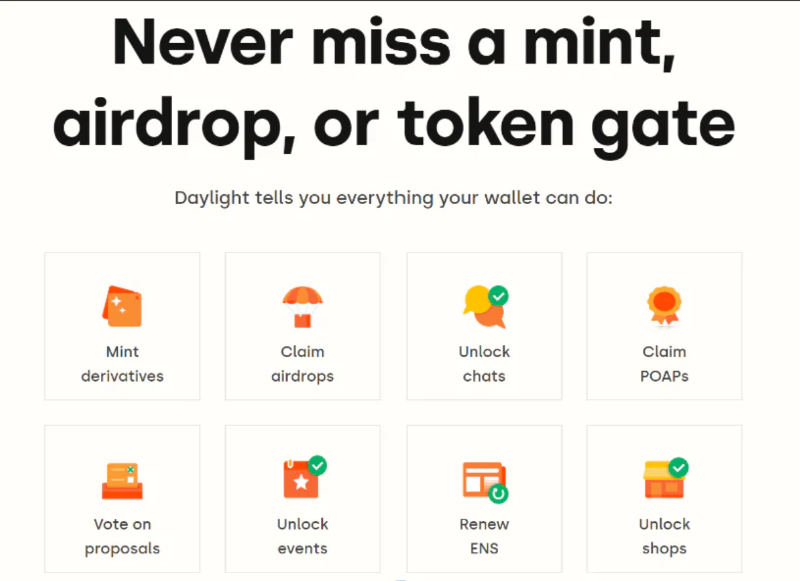
A great example of a product catering to personalization is Daylight. Think of Daylight as a personal assistant whose sole job is to tell you what pending actions you can take regarding your NFTs.
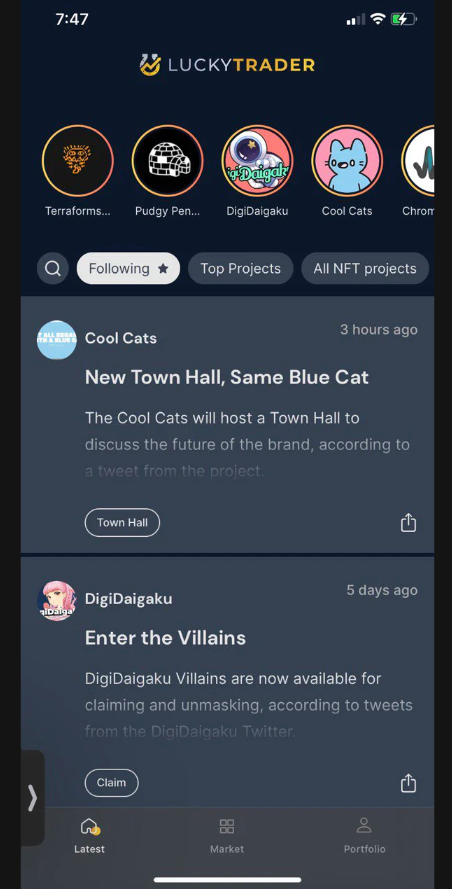
LuckyTrader can be set up to deliver personalized news and market insights related to the assets in your wallet. It serves as your source for staying informed.
Pull
Another major issue today is the lack of discoverability and curation in the space. Users frequently struggle with: a) finding new products to try, b) discovering what others are engaging with, and c) keeping up with trending topics.
Websites like DappRadar and Dapp List are attempting to solve application discovery. Products like Context and Soho focus on wallet tracking, which can surface new ideas.
Progress is being made in this quadrant, but perhaps Web3-native search platforms could push things further. In an ideal world, we’d see more projects like Ora Labs advancing natural language search over Web3 data, while also enabling application discovery based on that data (“Show me the top 5 blockchain games in sports used most on Ethereum over the past 7 days”).
Unlike “Push,” this layer isn’t about a news feed tailored to apps someone already uses, but rather leans toward guiding users toward the next set of products or trends they can pull into their attention. A comprehensive solution does not yet exist.
Join TechFlow official community to stay tuned
Telegram:https://t.me/TechFlowDaily
X (Twitter):https://x.com/TechFlowPost
X (Twitter) EN:https://x.com/BlockFlow_News






