








2023 NFT Industry Trend Predictions: The Rise of NFT-Fi and the Emergence of Vertical Markets
TechFlow Selected TechFlow Selected
2023 NFT Industry Trend Predictions: The Rise of NFT-Fi and the Emergence of Vertical Markets
At some point, we will迎来 the summer of NFT-Fi.
 Navigating Web3 tides with focused insights
Author: Teng
Compiled by: TechFlow
Prediction 1: We Will See a Cambrian Explosion of NFT-Fi
At some point, we will enter the summer of NFT-Fi.
Greater financialization will elevate the utility of NFTs to a new level. It brings in new participants (markets, lenders, etc.) into this space. This is necessary for NFTs to truly become a mature asset class.
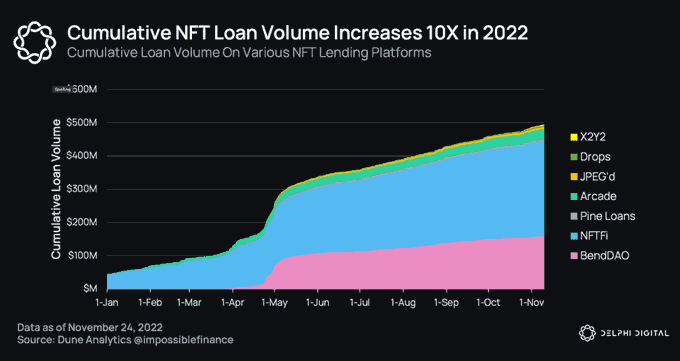
2022 laid the foundation for the takeoff of NFT-Fi. From January to November, cumulative lending volume using NFTs as collateral increased tenfold, exceeding $500 million.
NFTFi, BendDAO, and x2y2 are several major players today.
NFTs have gone through a full cycle without any leverage, which is an impressive feat. Leverage is "a drug from hell," something the NFT ecosystem has not yet truly experienced. When users can easily access leveraged tools, new sparks will fly between NFTs and users.
Here’s what I’m watching:
1) NFT Derivatives (Perpetual Contracts, Options)
Imagine holding a Bored Ape position directly without having to pay 80 ETH to buy the NFT. The ability to hedge NFT exposure will reduce risk for NFT assets and attract larger, more sophisticated participants. This will create a market with greater volatility, liquidity, and higher efficiency.
NFTperp and HookProtocol are on my watchlist.
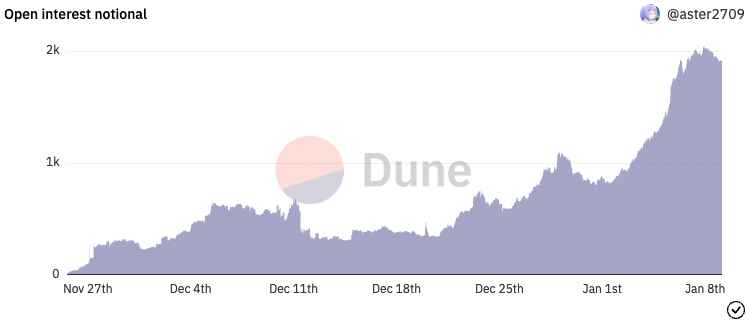
NFTperp's open interest has been steadily rising. NFTperp allows you to trade perpetual contracts on Punks, Azuki, BAYC, and others. Since launching its private beta a few weeks ago, it has already achieved $28 million in trading volume—clearly indicating strong user interest.
2) NFT AMMs Will Gain Attention
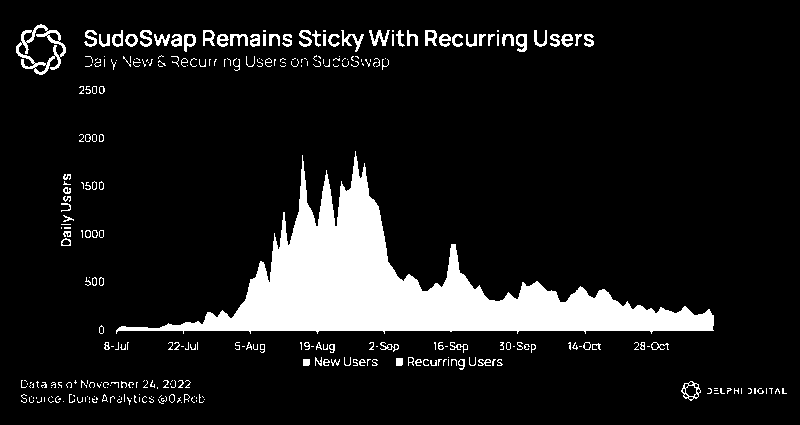
Sudoswap is essentially the Uniswap for NFTs, and its user retention has been consistently strong. As GameFi and other "fungible" NFTs rise over the coming years, I expect more trading volume to flow through AMMs.
There will be a significant battle for users among NFT AMMs. Several projects are already targeting this space, such as EZswap, CollectionWeb3, and others.
3) NFT Lending V2: More Efficient Capital Efficiency
Peer-to-peer protocols with novel, experimental designs are about to launch, such as Astaria.
Lending aggregators like Metastreet make it easier for lenders to participate while managing risk.
4) NFT Pricing Will Be Solved
We need a robust pricing feed that is difficult to manipulate and provides granular data beyond floor prices.
Protocols like Upshot use machine learning algorithms to deliver accurate, low-latency price feeds. They will see broader adoption.
Prediction 2: The Trend of NFT Vertical Markets Will Begin in 2023
NFT marketplaces are money-printing machines in the industry. They operate in a growth market that could scale into the multi-trillion-dollar range per day. Despite the bear market, OpenSea still generated over $500 million in revenue (and $1.8 billion in total fees) in 2022.
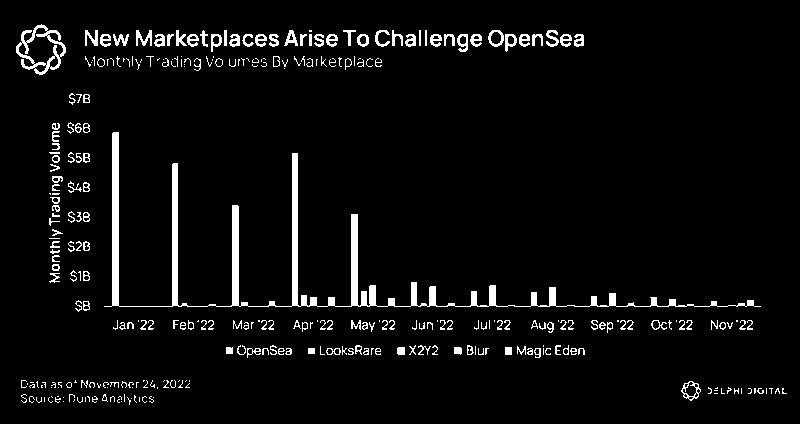
In January 2022, over 90% of NFT trading volume flowed through OpenSea.
Today, that dominance has significantly eroded, with several aggressive competitors emerging: LooksRare, x2y2, MagicEden, and Blur.
So what happens next?
If we study successful marketplace platforms (Craigslist, eBay, Amazon), we see a similar pattern—large incumbent companies are challenged by startups offering niche products favored by customers.
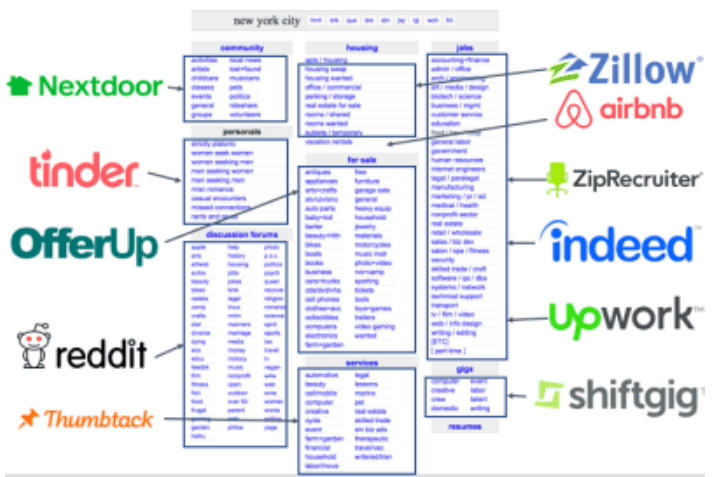
"The winning markets are those that figure out how to keep their buyers and sellers happy."
Fee competition among NFT marketplaces will continue, as it creates more happiness for both buyers and sellers. What comes next?
1) Vertical Markets Will Become More Prominent
Marketplace platforms focused on specific NFT verticals—such as PFPs, art, virtual land, music, and fashion—will gain traction.
The buyer journey for art collectors is vastly different from that of PFP traders.
Vertical markets can offer better user experiences and tailor their business models specifically to their niche.
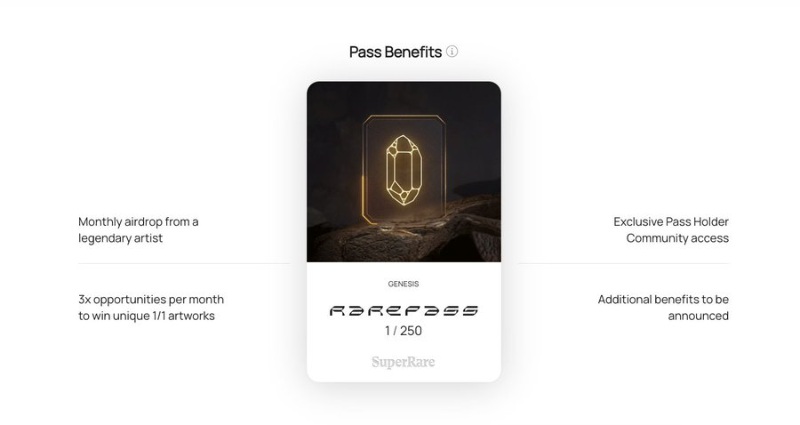
Today, vertical markets have small gross merchandise value (GMV). They are still optimizing customer satisfaction. At the right moment, they may reach a tipping point where their product becomes superior enough that the market begins to shift in their favor.
2) More NFT Teams Will Opt to Launch Project-Owned, White-Label Marketplaces Where They Can Set Fees and Royalties
NFT creators (artists, brands, talents, etc.) can capture more of the economic value they generate and share it with their supporter communities.
For example: Apecoin DAO partnered with SnagSolutions to launch a marketplace for the Bored Ape ecosystem, enabling $APE to be used in transactions and offering lower fees than OpenSea.
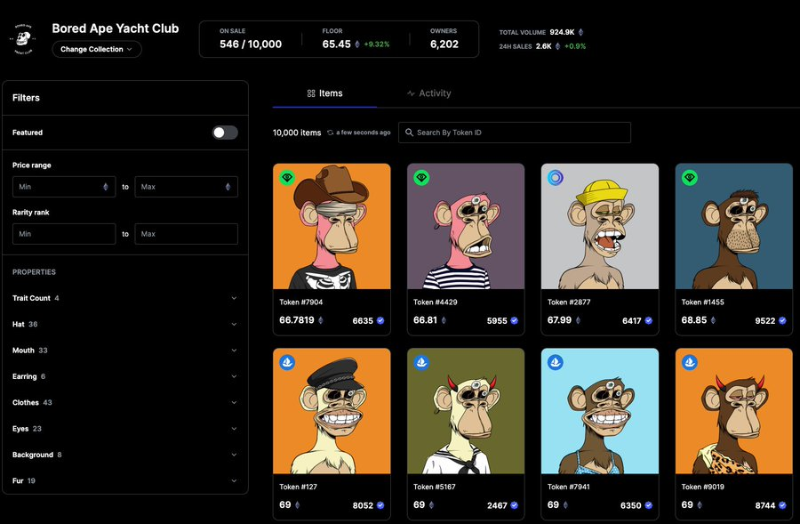
It leverages Reservoir, aggregates liquidity and order books across marketplaces, and offers API access. I believe Reservoir will become a very important infrastructure component for NFTs in the future.
3) Marketplace Aggregators Will Bring Order to a Chaotic Market
Aggregation in Web3 is extremely powerful and scalable. Composability and on-chain proof enabled by blockchains reduce the friction typically encountered by Web2 aggregators. Marketplace aggregators will match buyers and sellers for specific types of NFTs.
TL;DR: The trend toward vertical markets doesn’t mean Opensea is doomed to decline. It remains a solid (and likely profitable) business. But this trend does create room for more specialized marketplaces to thrive—and possibly even surpass Opensea.
Join TechFlow official community to stay tuned
Telegram:https://t.me/TechFlowDaily
X (Twitter):https://x.com/TechFlowPost
X (Twitter) EN:https://x.com/BlockFlow_News






