Year-End Review of Decentralized Exchanges: Data, Governance, Capital Efficiency, and Innovation
TechFlow Selected TechFlow Selected
Year-End Review of Decentralized Exchanges: Data, Governance, Capital Efficiency, and Innovation
Incentive mechanisms govern everything around us.
 Navigating Web3 tides with focused insights
Written by: Ignas
Compiled by: TechFlow
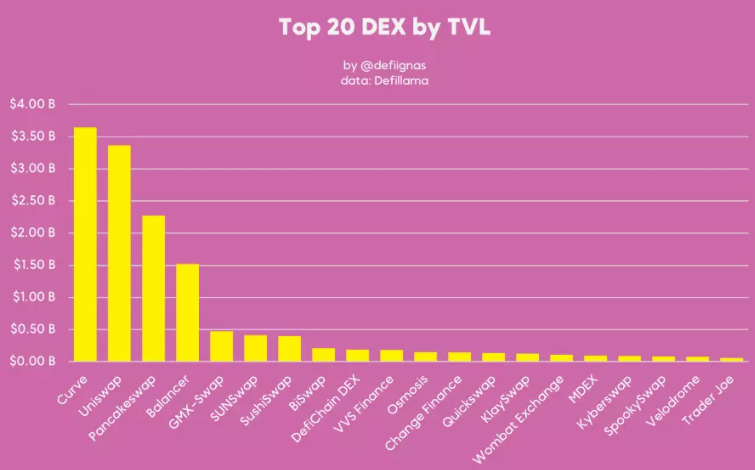
There are 200 DEXs listed on DeFi Llama—too many to cover all, so I’ll focus only on the “top 20.” However, the Top 20 list varies significantly depending on whether you sort by TVL or trading volume.
First, let’s look at the top 20 DEXs ranked by TVL.
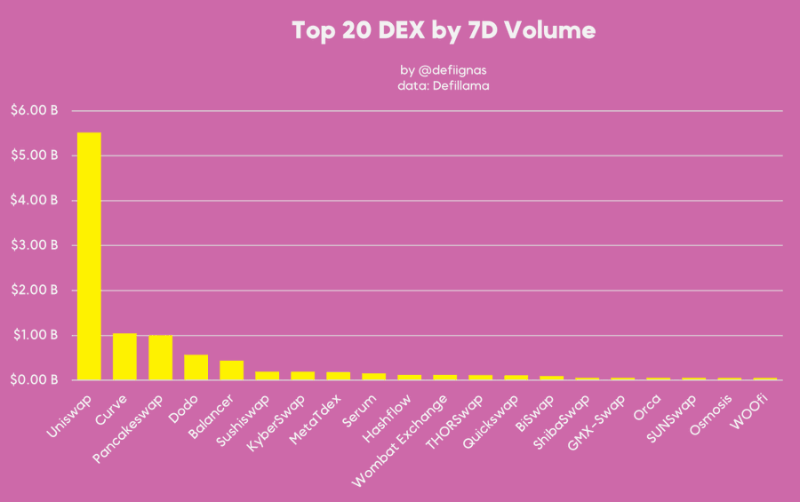
If we switch to a 7-day trading volume metric, the top 20 changes dramatically:
-
Uniswap becomes the undisputed number one DEX.
-
Dodo appears in fourth place.
-
MetaTdex, Hashflow, Serum, THORswap, ShibaSwap, Orca, and WOOfi enter the rankings.
When switching to web traffic data, the ranking shifts again—PancakeSwap becomes number one.
Therefore, instead of reviewing DEXs purely based on metrics, I will focus on innovation, unique features, and their impact on the space.
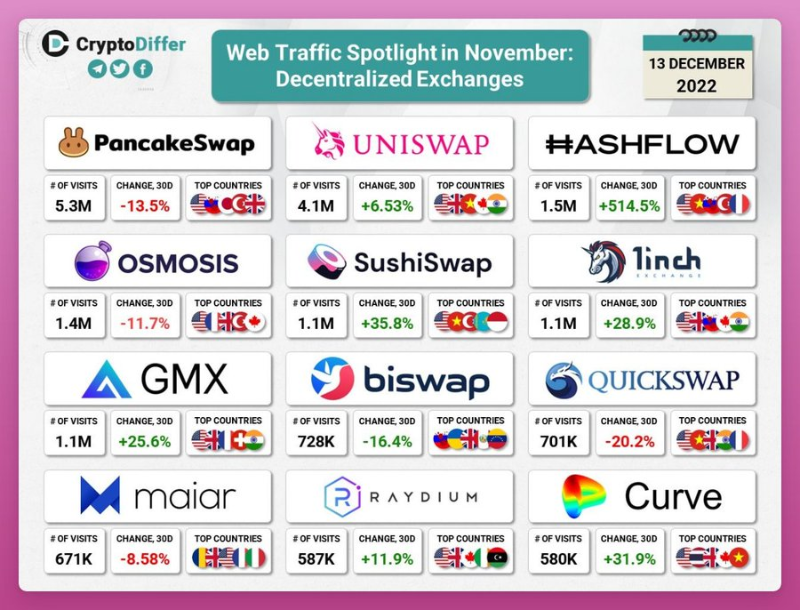
One thing that still surprises me: why is DODO ranked fourth by trading volume?
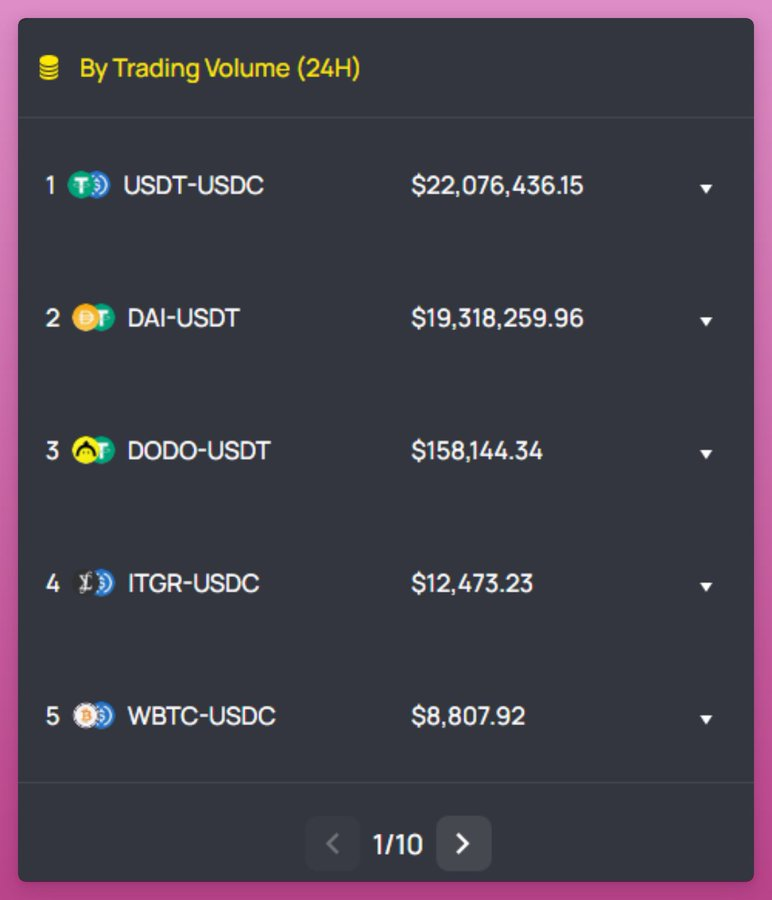
With a TVL of $46 million, it traded $568 million over the past 7 days—indicating strong capital efficiency.
However, most of its volume comes from just two stablecoin pairs:
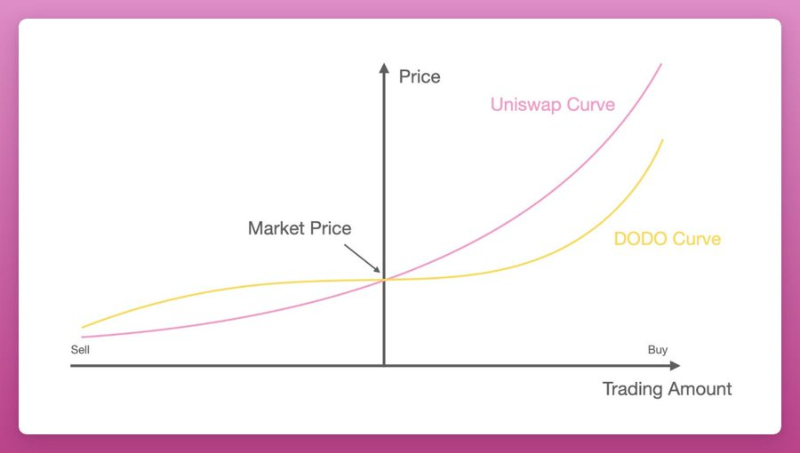
Dodo’s innovation lies in its Proactive Market Maker (PMM) algorithm.
PMM reduces slippage by concentrating more funds around the market price. Dodo also introduced single-token LPs to reduce impermanent loss.
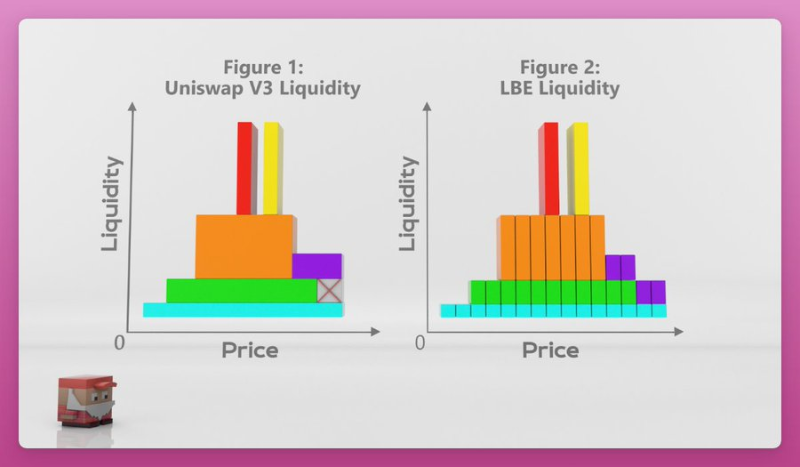
Capital efficiency remains the central focus of most innovations. Uniswap V3’s “concentrated liquidity” launched in 2021.
This year, Kyberswap launched Kyber Elastic with similar functionality.
Its key differences:
-
Anti JIT/Snipe protection.
-
LP fee reinvestment into LP pools.
Trader Joe’s solution is Liquidity Book (LB). LB concentrates liquidity into specific price ranges, while allowing LPs to deposit across multiple ranges.
The result: better pricing and lower slippage. However, Joe fails to make the top 20 by 7-day volume, likely because it's deployed solely on Avalanche.
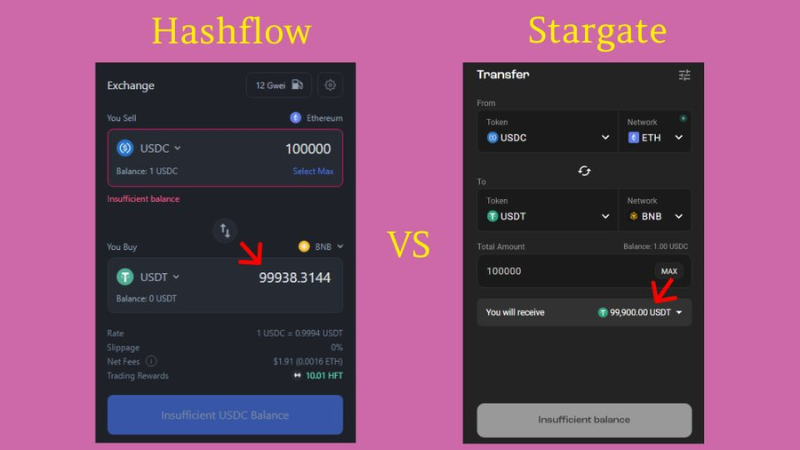
Hashflow achieves capital efficiency by connecting traders directly with professional market makers.
It uses maker quotes instead of AMMs, delivering a zero-slippage trading experience akin to centralized exchanges.
It also offers MEV protection and cross-chain swaps without bridges.
Surprisingly, BiSwap on BSC made it into the top 20.
As a PancakeSwap competitor, $BSW is a Uni V2 fork.
Its main selling point is incentives: 50% trading fee rebates, 0.2% swap fees, farms, referral programs, Launchpad, lottery, staking, trading competitions...

PancakeSwap hasn’t slowed down either:
-
Capped $CAKE supply at 750 million.
-
Adopted ve-tokenomics with vCAKE.
-
Launched perpetual contracts via partnership with ApolloX.
-
Expanded to Ethereum and Aptos.
Main goal: burn as much $CAKE as possible.
$CAKE isn't the only DEX adopting ve-tokenomics.
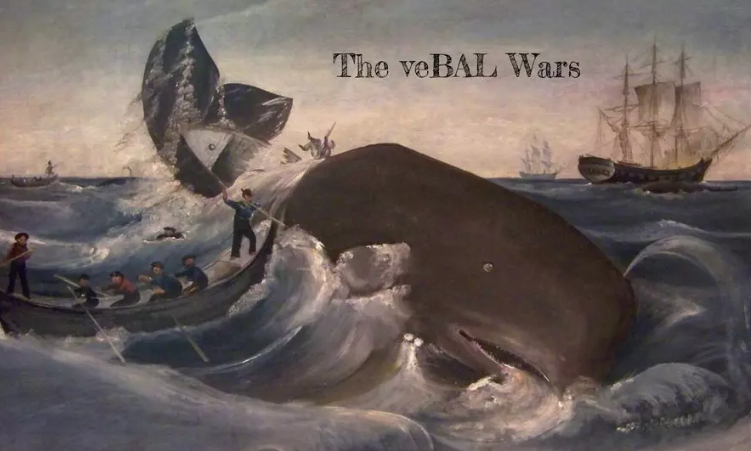
Balancer adopted veBAL, composed of 80% locked BAL and 20% ETH LP tokens, to align long-term incentives for token holders.
But there's a cost: whale-dominated governance channels BAL rewards into their own pools.
Velodrome takes ve-tokenomics to another level.
Velodrome is an improved version of Andre Cronje’s failed Solidly project.
By staking $VELO for 4 years, users receive veVELO—an ERC-721 governance NFT using the ve(3,3) rebase mechanism.
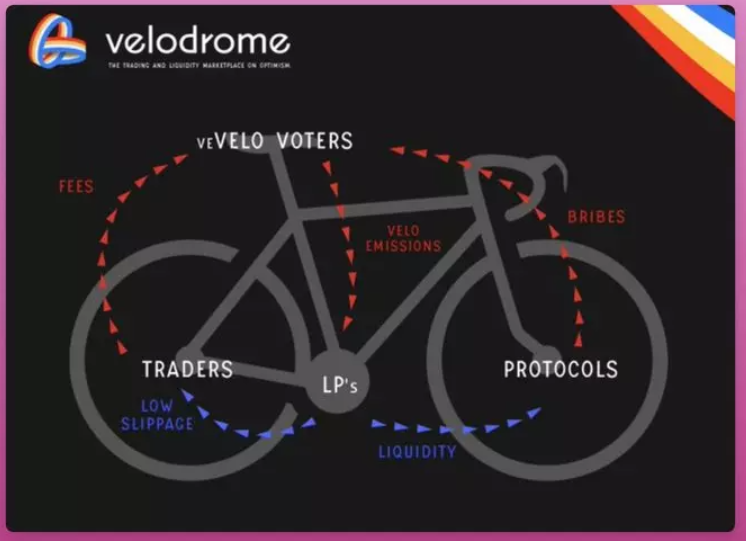
Holders of veVELO gain voting rights over emissions and receive "bribes."
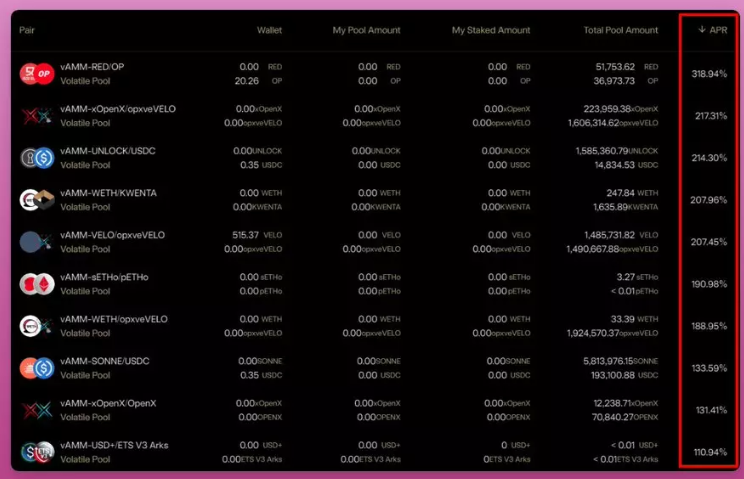
It has proven popular among projects on Optimism, who can obtain cheaper liquidity compared to launching their own liquidity mining campaigns.
For Sushiswap, this has been a rather quiet year.
Sushi no longer has a moat, so the DAO voted to redirect all Sushi fees directly to the treasury—at least temporarily—for a new tokenomics model rollout within a year.
Nonetheless, Sushi managed to maintain 7th place by TVL and 6th by trading volume.
Two stablecoin-focused DEXs are launching their own... stablecoins.
For Curve and Platypus Finance, liquidity is crucial. To attract it, they reward users with their native tokens.
But their own stablecoins should make liquidity acquisition cheaper and more "sticky."
Curve’s crvUSD centers on the Lending-Liquidating AMM Algorithm (LLAMMA)—an AMM designed for continuous liquidation or de-liquidation, aiming to reduce bad debt risk.
Beyond stablecoins, Platypus innovates in NFTs.
Platypus’ vePTP system requires staking $PTP to earn higher yields on stablecoin deposits. However, Platypus Hero NFTs can accelerate vePTP generation and allow partial retention of vePTP upon unstaking.
Stablecoin swapping is coming to Cosmos.
Osmosis, the hub for trading and yield staking on Cosmos, is preparing to launch stablecoin swaps.
It builds upon an upgraded and modified version of A.Cronje’s Solidly curve formula.
Finally, Uniswap.
Uni V3 launched in April 2021. Since then, it has:
-
Introduced NFT trading;
-
Improved UI and analytics;
-
Deployed across more chains;
-
Added fiat-to-crypto purchasing options.
In four months, Uni V3’s anti-fork license will expire. What happens next?
Summary:
-
DEX developers are focused on capital efficiency—reducing slippage, impermanent loss, and fees;
-
Solutions revolve around concentrated liquidity or market-maker models;
-
Expansion to additional chains and integration with NFTs;
-
Launch of native stablecoins;
-
Incentive mechanisms dominate everything.
Join TechFlow official community to stay tuned
Telegram:https://t.me/TechFlowDaily
X (Twitter):https://x.com/TechFlowPost
X (Twitter) EN:https://x.com/BlockFlow_News
 Ignas | DeFi Research