Understanding the Pluggable Layer ANTIC: Bringing Co-Ownership to Web2 with Cryptographic Technology
TechFlow Selected TechFlow Selected
Understanding the Pluggable Layer ANTIC: Bringing Co-Ownership to Web2 with Cryptographic Technology
Antic is creating a new economic entity: the "group customer."
 Navigating Web3 tides with focused insights
Author: Paul Veradittakit, Partner at Pantera Capital
Translation: TechFlow
Antic is a pluggable layer that enables groups to co-purchase products and experiences seamlessly and in a user-native way.
The company revealed its team's real identities at the end of September and raised $7 million in seed funding from Pantera, Seven Seven Six, Sheva Capital, Sound Ventures, Shrug, Rainfall, Dapper Labs, and many angel investors.
Why Co-Ownership?
Antic is creating a new economic entity: the "group customer." Co-ownership is not yet mainstream, but emerging ownership designs combined with increasing emphasis on community are accelerating its adoption.
When discussing co-ownership, Web3 assets highlight its importance—but non-crypto companies can also benefit significantly from these structures. By integrating a "co-purchase" option into platforms, it can unlock substantial revenue potential and significantly lower the barrier to asset ownership and experiences (Editor’s note: more people can participate through group buying).
Moreover, shared ownership models create communities around jointly owned objects or experiences, as everyone has a personal stake.
We’ve already seen Fractional (now Tessera) succeed in enabling shared ownership of individual NFTs, but there are numerous untapped markets in both Web2 and Web3 that could benefit from offering users the option to co-purchase rather than buy individually.
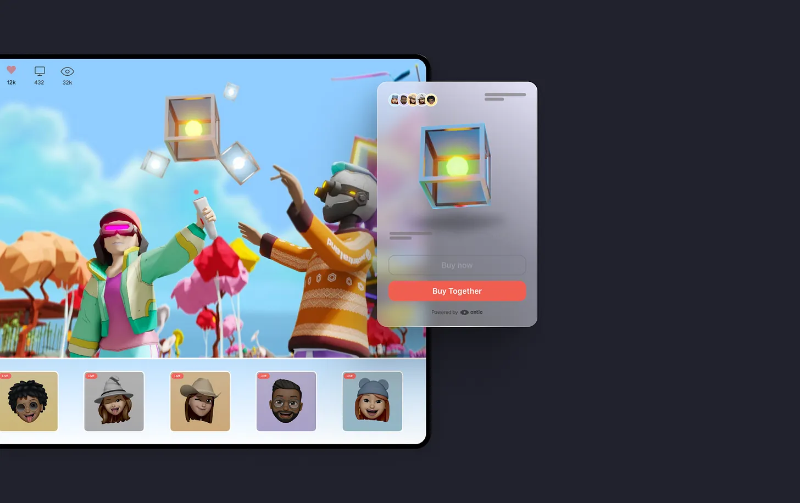
Since its launch at the end of September, Antic has drawn interest from companies in Web3, gaming, NFTs, and entertainment.
Many brands are eager to integrate Antic’s “buy together” feature because it allows websites to attract more customers, generate more revenue, and unlock a unique social experience.
Antic’s co-ownership falls into three core categories:
-
Shared ownership of digital assets (for both crypto and non-crypto users)
-
Shared ownership of intellectual property (IP)
-
Crowdfunding and other pooled/facilitated funding mechanisms
Antic’s primary focus is creating a B2B2C checkout mechanism for customers that simplifies purchasing any kind of asset. They will abstract away many blockchain-native interfaces and center the user experience on seamless checkout.
Antic’s infrastructure can be integrated into nearly any platform selling assets to enable shared ownership. Blockchain technology supports programmable coordination—something traditional tech stacks cannot achieve—and Antic leverages this to reduce friction in co-purchasing.
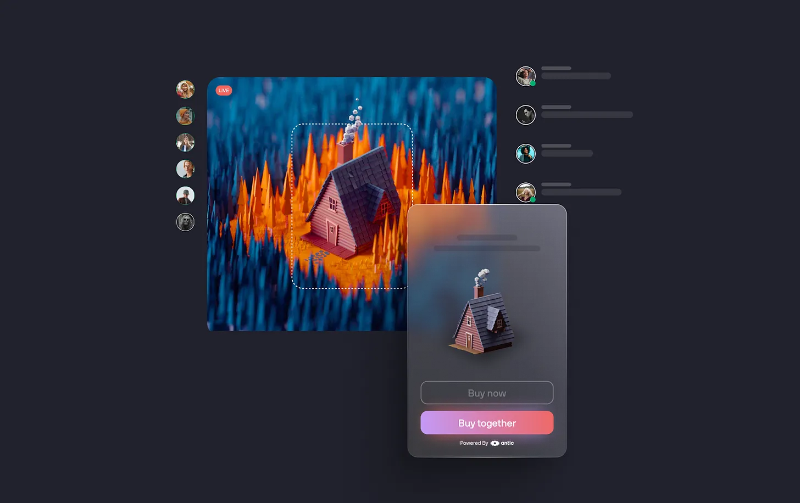
Antic’s Architecture
Antic operates under the assumption that users prefer purchasing with individuals they already have pre-existing trust relationships with, rather than the trustless models common in many decentralized protocols today. By leveraging existing relationships, Antic can deliver value to broader markets and subsequently help businesses expand their user base.
Antic’s infrastructure is built on Ethereum and Polygon (EVM-compatible) and can plug into many different types of on-chain and off-chain applications.
-
For Web2 giants like Netflix, Antic can offer embedded co-ownership mechanisms on their platforms as a subscription payment option for users.
-
For Web3-native platforms such as NFT marketplaces, users can be given the option to include others when purchasing an asset.
There are also many exciting applications in gaming: Web3 games can now add in-game group purchases on their platforms. Gaming is already an incredibly community-driven industry, and adding co-ownership will further unlock the value of existing platforms.
Platforms involving intellectual property also benefit from shared ownership models: by fairly distributing credit and allowing audiences to co-own IP, value creation and reach expand dramatically. Users can even invest in financial assets with varying ownership stakes across different contributors.
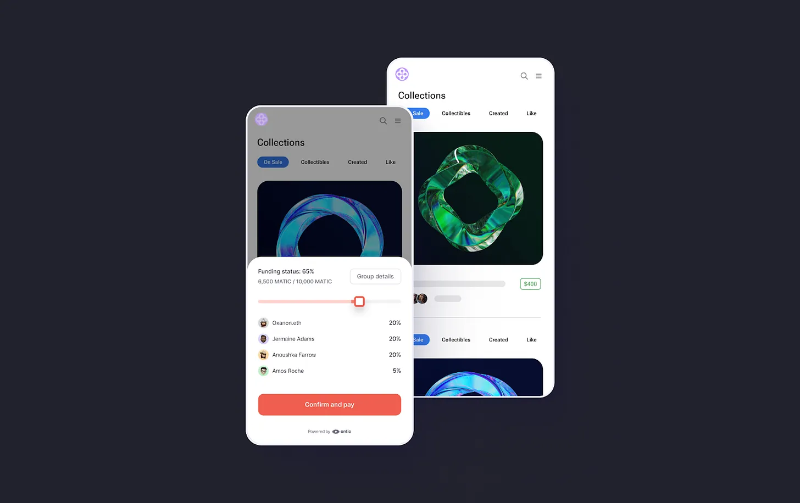
Forbes points out that current experiments with co-ownership mechanisms are primarily concentrated in the cryptocurrency space (shared virtual property ownership, fractional NFTs, DAOs, etc.).
However, many non-crypto consumer-facing products and experiences lack formal co-purchase options, yet users still find disorganized ways to "share" (e.g., someone logging into a friend’s Netflix account every time they want to stream, or collectively buying baseball cards).
Thus, using Antic differs from fully on-chain mechanisms such as joining a treasury DAO.
With treasury DAOs, users typically must deposit funds first before deciding which assets to purchase.
In many other protocols, shared ownership involves additional tokenization to distribute assets among users.
Antic’s core protocol uses multi-signature wallets for predetermined purposes, enabling a pre-defined group of users to seamlessly participate in a purchase.
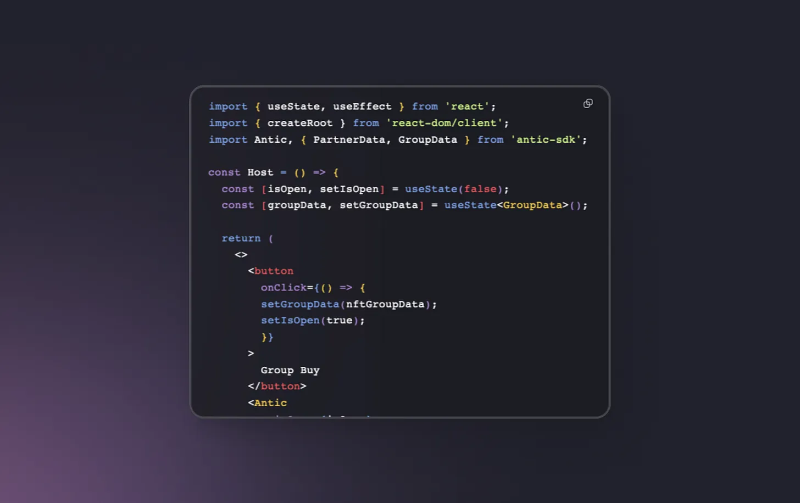
Companies can then easily integrate Antic’s API into their platforms to support co-ownership. Another benefit of co-ownership is that for on-chain purchases, gas fees are reduced as they are split among participants.
Antic recently completed a smart contract audit conducted by Quantstamp.
Antic’s Team
Tal Dadia is Antic’s founder and CEO, bringing extensive experience as former Vice President of Blockchain Product and Engineering at JP Morgan.
Prior to that, he was a blockchain research engineer at COTI and held various roles in business development and backend engineering. He also comes from an academic research background in decentralized governance and cryptographic identity.
Joining Tal is Adi Elimelech, Vice President of R&D, who brings over 14 years of startup experience focused on driving product-led growth at Antic.
The team has now grown to 14 members and is expanding rapidly, especially in engineering and product.
Antic’s Future
Antic plans to extend its EVM-based infrastructure to Solana and Flow next.
Antic is also onboarding an increasing number of companies into its closed beta and is currently in partnership discussions with firms in entertainment, art, gaming, collectibles, and payments to bring its technology to broader markets.
By abstracting away the blockchain layer and enabling users to co-own almost anything, Antic will make co-purchasing mainstream and establish more coordinated and flexible buying options as standard across Web2 and Web3 platforms.
Join TechFlow official community to stay tuned
Telegram:https://t.me/TechFlowDaily
X (Twitter):https://x.com/TechFlowPost
X (Twitter) EN:https://x.com/BlockFlow_News
 Pantera Capital