








Reflection: Opportunities and Challenges in NFT Game Design
TechFlow Selected TechFlow Selected
Reflection: Opportunities and Challenges in NFT Game Design
NFT games can take various forms.
 Navigating Web3 tides with focused insights
Written by: William M. Peaster, Bankless
Translated by: TechFlow
NFT games can take many forms. They can be simple on-chain strategy games, or they could be advanced, massive multiplayer online games (MMOs) using NFT assets to track player ownership beyond centralized servers.
So far, we’ve seen many simple on-chain strategy experiments. I recently played one called Battle Royale Onchain—it was very simple, yet also quite fun!
But full-scale NFT MMOs? We haven’t seen those yet.
Honestly, there are indeed many such projects currently in development, and I’m curious about a few of them.
On the other hand, this also shows that the entire field of NFT gaming is still laying its foundations—which isn’t surprising, because game design is extremely difficult.
Main Challenges of NFT Games
From combat animations to level design, to in-game economic loops, traditional games already involve countless moving parts that designers must integrate—despite their inherent complexity. Adding NFTs into this intricate equation only amplifies the project’s complexity and the challenges it faces.
If not handled properly, NFTs can even become game killers. In a July 2022 article titled “The Path Forward for Web3 Gaming,” 0xKepler pointed out how games that tokenize most in-game assets face two ultimate challenges: economic leakage and excessive speculation.
Regarding economic leakage, if everything is tokenized, profit-making becomes the primary goal for players, potentially leading to mass sell-offs with no buyers left—eventually collapsing the game’s economy. As 0xKepler wrote:
“Due to lack of demand for currency and assets, no one sees value beyond monetary gain. Prices fall, translating into reduced player income. The game becomes boring—existing players leave, and new ones are unlikely to join. P2E games often rely too heavily on player growth; as tokens drain out, the economy rapidly spirals downward.”
As for over-speculation, 0xKepler used Diablo III’s auction house system to illustrate how making everything easily tradable can drive away genuine players and kill in-game economies:
“Easily tradable assets remove the sense of achievement some players seek. Thus, games with internal markets attract fewer of these types of players and instead draw in those primarily seeking monetary rewards. Over time, speculators inflate prices, making necessary assets unaffordable for non-speculators. Eventually, only speculators remain.”
How to Build Better NFT Games?
When it comes to defining what makes a good NFT game, we must return to the fundamentals of gaming.
To do so, we must understand why people play games—and I believe a tweet from Sal.xyz captures it perfectly: to test our skills, to have unique experiences, and to connect with others.
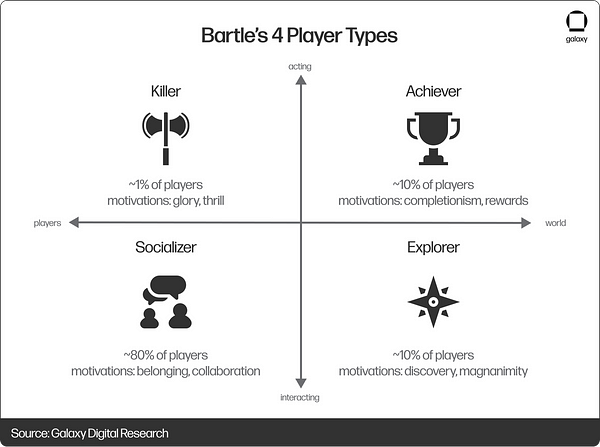
Based on these principles, there are ways to build NFT games more intelligently—optimizing for core gameplay while mitigating economic leakage and over-speculation.
0xKepler proposed the following solutions:
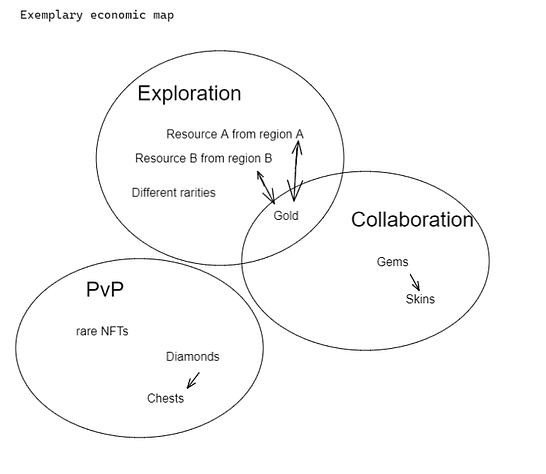
- 1. Reduce Tokenization—Limit the number of tradable assets (instead of making everything tradeable), and impose transaction taxes to curb speculation and help players build a sustainable economy.
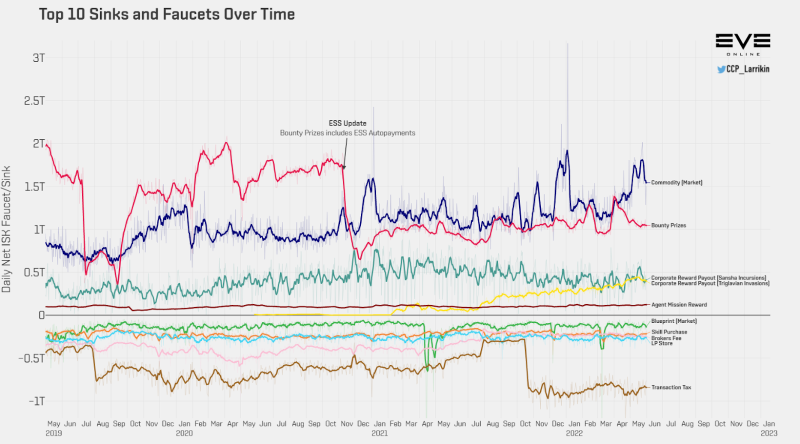
- 2. Isolate Systems—Some items can be tradable, while others cannot.
-
3. NFTs > Fungible Tokens (FTs)—By focusing on NFT rewards rather than FT rewards, games can emphasize fun and in-game empowerment over financialization.
-
4. Land Value Tax—Incentivize builders who contribute to a sustainable economy, preventing NFT land from becoming overly valuable and a target for excessive speculation.
Why Are NFT Games Appealing?
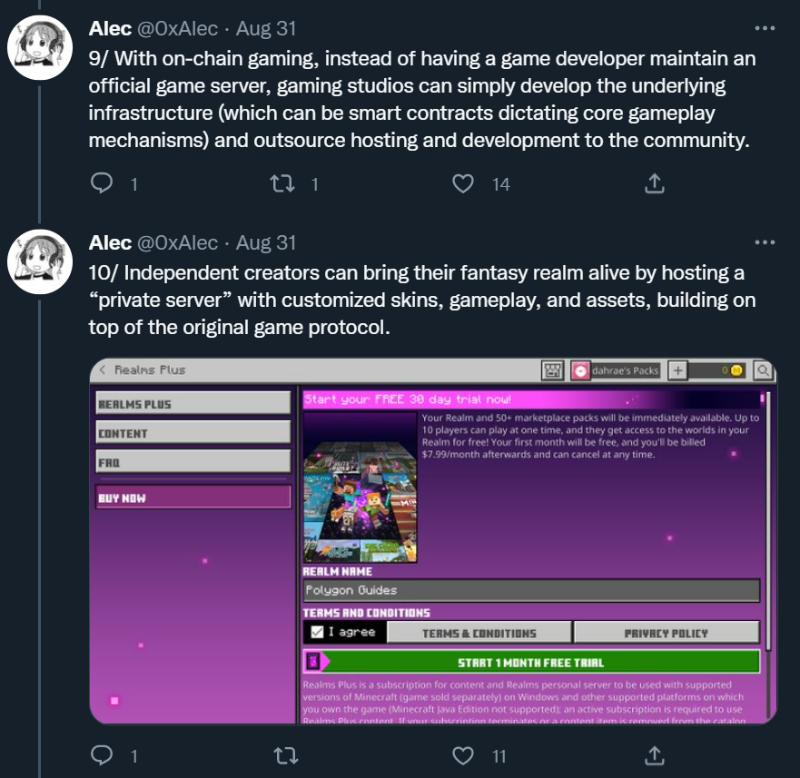
When implemented well, NFTs can enable novel gaming experiences. For example, openness brings customizability and community empowerment. Imagine your team building the core of an on-chain game as a hyperstructure, permanently allowing free use and extension. This could unleash modding communities in unprecedented ways.
Beyond literal openness, native Web3 gaming projects also have a window of opportunity to lead compared to major game publishers. We should leverage this period of hesitation among big studios to set the tone for what successful NFT games should look like.
Finally, one of the coolest aspects of game NFTs is that they can serve as credentials—displaying a player's achievements across different games on their profile. Currently, in mainstream gaming, your data is siloed within each individual game. The interoperability brought by NFTs opens up far more possibilities.
One to Watch…
To my knowledge, an upcoming NFT game that has done extensive work addressing the issues I’ve described above is Civitas.
Launching next year, Civitas is a strategic MMO built on Ethereum + L2, featuring gameplay familiar to anyone who’s played the Civilization series. Its key difference? Each city is cooperatively owned and organized by players via subDAOs.
From free-to-play nomad modes to transaction taxes on CITI token trades for resource exchanges, I believe Civitas incorporates various elements designed to prevent over-speculation while fostering a vibrant in-game economy.
Still, only time will tell.
Looking Ahead for NFT Games
What’s next for NFT games?
One visible future is a flourishing of game development activity on Layer 2 (L2) scaling solutions. With fast speeds and ultra-low fees, these L2s represent the next on-chain frontier for better Web3 gaming.
Lastly, the current NFT gaming ecosystem is highly fragmented—with numerous distinct projects being built in isolation across dozens of blockchains, without “communicating” with each other.
Long-term, we’ll need more interoperability solutions to bridge this gap.
Join TechFlow official community to stay tuned
Telegram:https://t.me/TechFlowDaily
X (Twitter):https://x.com/TechFlowPost
X (Twitter) EN:https://x.com/BlockFlow_News






