One Article to Understand the NFT Marketplace Blur and Its Two Airdrop Rounds
TechFlow Selected TechFlow Selected
One Article to Understand the NFT Marketplace Blur and Its Two Airdrop Rounds
In the short term, Blur may have little hope of catching up with Opensea, but if the goal is to surpass GEM, it's quite promising.
 Navigating Web3 tides with focused insights
Article by: Geyexiaozhou, DeFi Dao
Airdrop is back! Today, Blur, the NFT marketplace backed by Paradigm, announced a two-round airdrop program targeting NFT participants. In the first round, users who traded NFTs on platforms such as OpenSea, LooksRare, and X2Y2 during the past six months will have the chance to receive a Care Package containing $BLUR tokens.
In this article, we’ll take a brief look at the Blur NFT platform and its two-phase airdrop plan.
First, it’s important to understand that Blur is a new NFT marketplace combined with an NFT aggregator. Think of it as a younger version of OpenSea + GEM, aiming to disrupt the NFT trading market by offering better features and faster transaction speeds.
To date, Blur has raised $14 million in funding from investors including Paradigm, 6529, Cozomo Medici, dhof, Bharat Krymo, Zeneca, OSF, MoonOverlord, icebergy, Deeze, Andy8052, and Keyboard Monkey.
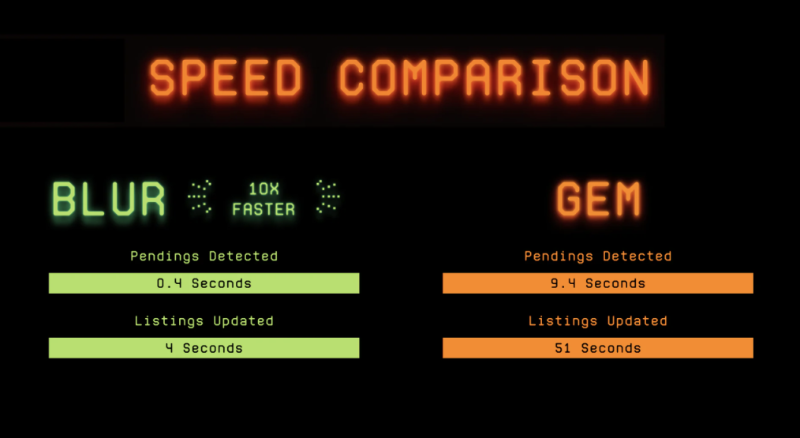
Over the past few months, Blur's marketplace has been in private beta (note: private beta participants receive additional token airdrops). Despite this, Blur’s aggregator has already ranked second in trading volume, trailing only GEM.
Surprisingly, the publicly launched Blur marketplace does not charge marketplace fees like OpenSea and other platforms. Instead, they’ve adopted a zero-marketplace-fee model. In short, Blur’s NFT marketplace, aggregator, and advanced trading tools are available for everyone to use at zero cost (excluding gas fees). Of course, this may just be a short-term strategy to attract users.
Using Airdrops to Encourage Royalty Respect
Previously, Sudoswap’s zero-royalty approach sparked major controversy in the NFT market. In response, Blur aims to use its airdrop incentives to encourage traders to respect royalties. As explained in their blog post:
"Traders want to maximize profits, collectors want to support creators, and creators want more royalty income.
Today, royalties cannot be enforced on-chain, and traders already have many zero-royalty options. For example, they can list NFTs without royalties on Sudoswap and pay a 0.5% trading fee, while GEM also aggregates Sudoswap, directing significant traffic to their zero-royalty listings.
Even though royalties cannot be enforced on-chain, we can create an incentive structure to increase royalty revenue across the ecosystem. Blur defaults to the highest royalty rates found on OpenSea, LooksRare, and X2Y2. Of course, traders can customize royalty rates when listing NFTs on the Blur marketplace.
Traders can list NFTs on Blur and set royalties equal to Sudo’s platform fee (0.5%). By doing so, they earn the same NFT profit while receiving more $BLUR airdrop rewards.
Note: Traders who set royalties above 0.5% will receive even greater airdrop rewards."
As of now, the specific royalty incentive formula hasn’t been disclosed, but this is clearly not good news for zero-royalty NFT trading platforms like Sudoswap.
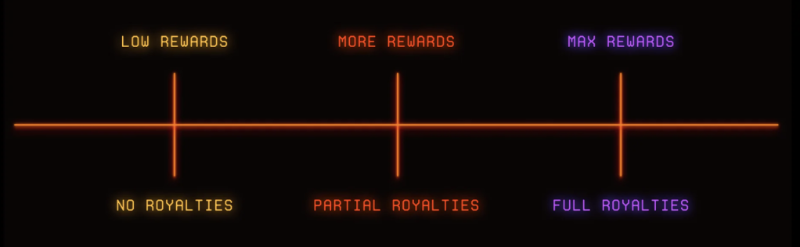
Note: This plan isn’t set in stone. Blur will monitor its initial solution and work closely with traders, collectors, and creators to explore alternatives. Once the $BLUR token launches in January next year, these solutions can be voted on for implementation.
About the First Round Airdrop
Now let’s talk about the much-anticipated airdrop.
The first step of the airdrop program is distributing Care Packages to those who continued trading NFTs over the past six months (during the NFT bear market).
After visiting https://blur.io/airdrop, you need to connect your wallet and perform a gasless signature—nothing to worry about; it's safe.
Once you click “airdrop” to enter the claim page, you'll see how many airdrop packages you're eligible for (based on NFT trading volume). To claim them, you must list an NFT on the Blur platform within 14 days.
This step is critical because you’ll encounter a setApprovalForAll request, similar to what happens on OpenSea. However, since Blur is a new NFT platform, we recommend listing a low-value NFT in the short term.
After completing this task, you can open your airdrop package. There are three rarity tiers: Uncommon (most common), Rare (moderate), and Legendary (rarest).
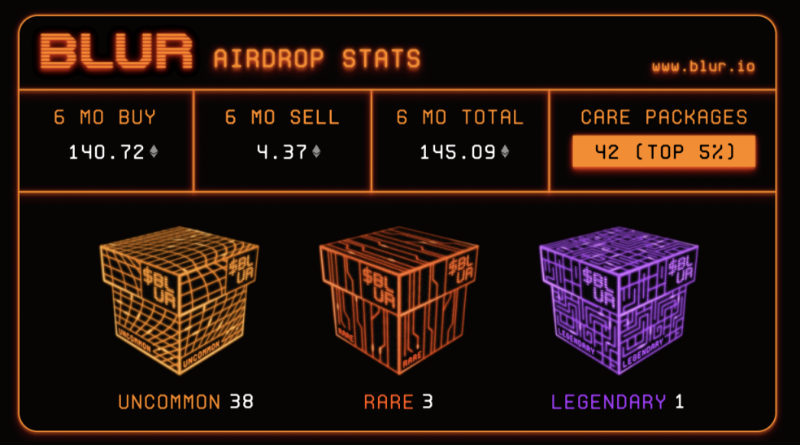
According to market observations, each address can receive up to 299 airdrop packages in the first phase, with the probability of obtaining a Legendary pack being less than 2%.
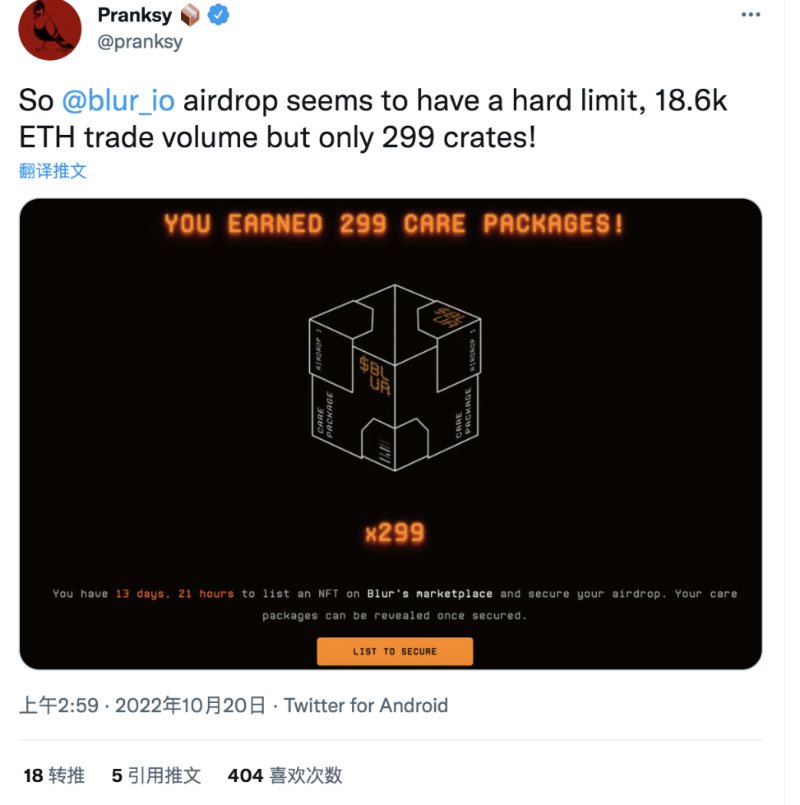
About the Second Round Airdrop
Next, let’s discuss the crucial second round of airdrops. In November, Blur will distribute airdrop packages to all users who actively list and trade on its platform.
According to the team, the second-round airdrop will be significantly larger than the first, meaning qualified traders will receive far more airdrop packages.
This airdrop mechanism ensures that active Blur users will receive the most tokens and gain the greatest governance rights over the protocol.
So, what are the rules for the second airdrop?
To prevent excessive participation from airdrop farmers, Blur hasn't disclosed a specific formula, but here are some tips to maximize your rewards:
-
The more NFTs you list, the more you get;
-
Listing blue-chip NFTs helps (but consider contract security);
-
Listing actively traded NFTs helps;
-
Using all of Blur’s listing tools increases rewards;
-
Anti-Sybil measures are in place, so repeatedly listing NFTs at unrealistic prices or illiquid NFTs won’t help.
(Pro tip: Perform at least three floor sweeps on Blur before the second airdrop.)
Additionally, the second airdrop introduces a "loyalty" concept that affects your luck when opening airdrop packs:
-
<50% loyalty – Low luck
-
50–90% loyalty – Medium luck
-
90–97% loyalty – Good luck
-
97%+ loyalty – Very lucky
Loyalty is influenced by the price difference between your NFT listings on Blur versus other platforms. If your listing price on other platforms is lower than on Blur, your score decreases.
Some Initial Thoughts on the Blur Platform
Based on limited testing, my personal impression is that Blur is indeed faster than other platforms and offers some unique features, but it still has certain issues. For example, floor prices for some NFT collections are incorrectly displayed. Moreover, Blur currently only supports ERC-721 standard NFTs; many NFTs using the ERC-1155 standard cannot be displayed on Blur.
Overall, Blur does have its advantages and is better suited for professional traders. According to official statements, the majority of project tokens will be distributed to community participants, and existing issues can be resolved through future development.
In the short term, Blur may not catch up to OpenSea, but surpassing GEM seems very achievable.
Join TechFlow official community to stay tuned
Telegram:https://t.me/TechFlowDaily
X (Twitter):https://x.com/TechFlowPost
X (Twitter) EN:https://x.com/BlockFlow_News