








"Game of Great Endeavors": Moving Beyond Multiple Choice — On the Web2.5 Gaming Transition Layer
TechFlow Selected TechFlow Selected
"Game of Great Endeavors": Moving Beyond Multiple Choice — On the Web2.5 Gaming Transition Layer
If it's difficult for blockchain games to achieve instant success, how can we find the optimal solution during the transition period?
 Navigating Web3 tides with focused insights
Dawn of Mainstream Breakthrough
Today, blockchain’s journey beyond niche circles has passed through the 2017 ICO boom, the 2020 DeFi summer, and most recently, the 2021 NFT wave. Yet, the current Web3 landscape remains highly niche. Most projects center on speculative wealth accumulation, lacking applications that solve real industry problems, generate genuine value, or create new economic growth engines. Amid this bear market, as various players focus on development or scout for promising projects, two questions inevitably arise: What will be the next breakout sector? And can it deliver true application value?
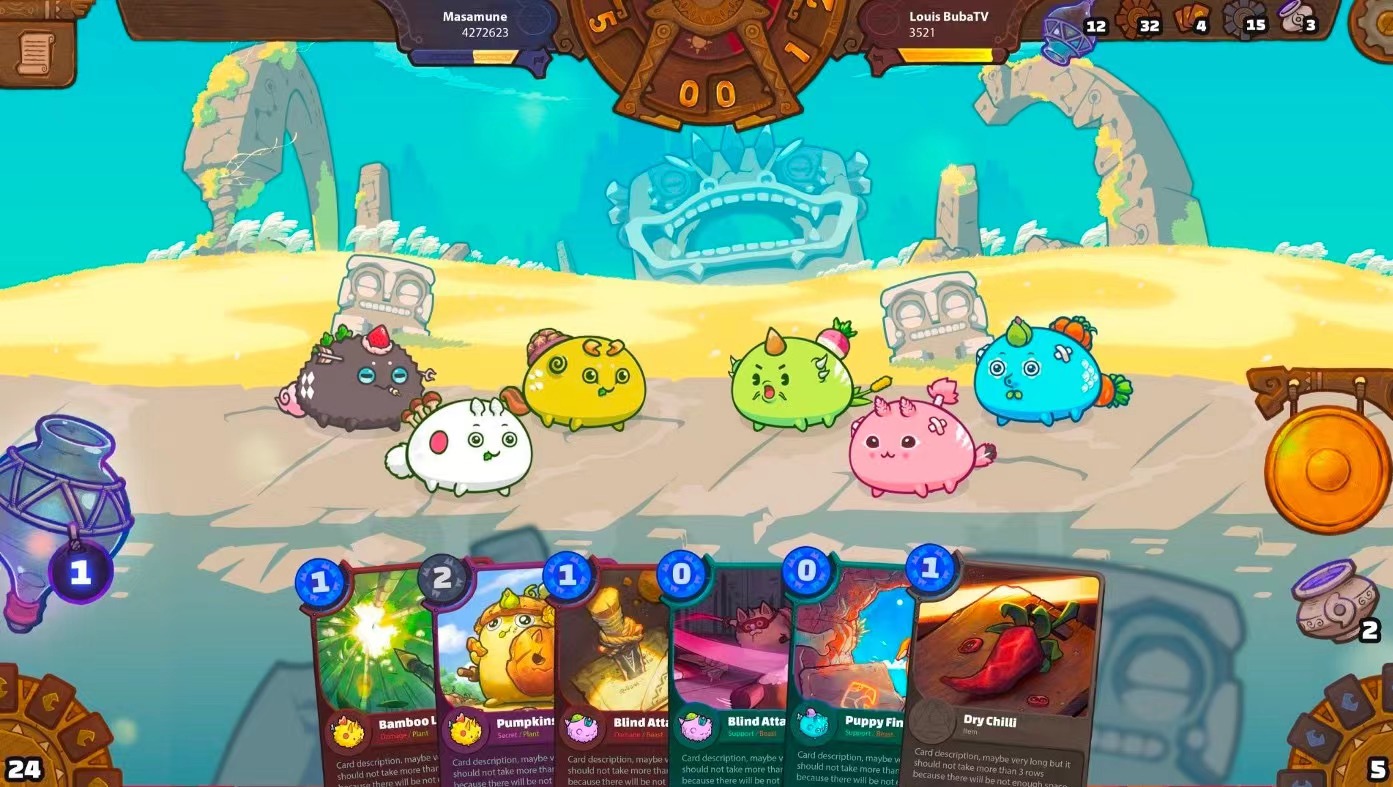
With infrastructure like Ethereum Layer2, sidechains, and cross-chain solutions maturing, and games like Axie Infinity gaining explosive popularity in Southeast Asia—particularly the Philippines—and Stepn (with over 60,000 daily active users) trending heavily on social media, the public sees a glimmer of hope for mainstream breakthroughs in blockchain gaming, where people playfully engage with "token" economics. However, even today, blockchain gaming still seems stuck just short of breaking through. Despite apparent technological support and token-powered gameplay mechanics, what exactly is still missing?
Axie Infinity
The Final Push
There are many opinions on how to make that final push:
The “Quality Camp” insists that game quality must improve—aiming for AAA standards—arguing that fun gameplay is king.
The “Infrastructure Camp” believes we should wait until Layer2 and cross-chain technologies mature, until the ecosystem consolidates and leaders emerge—only then will killer apps naturally follow.
The “Model Camp” advocates reforming blockchain game economic models, rejecting Ponzi-like mechanisms, hoping instead for robust and sustainable tokenomics to make a splash...
I agree with all these points, yet none seem immediately actionable. Aiming for AAA-quality games feels overly idealistic; waiting for infrastructure maturity takes too long; and stable token economies may not be the core issue. So, what aspect can we focus on now and improve quickly?
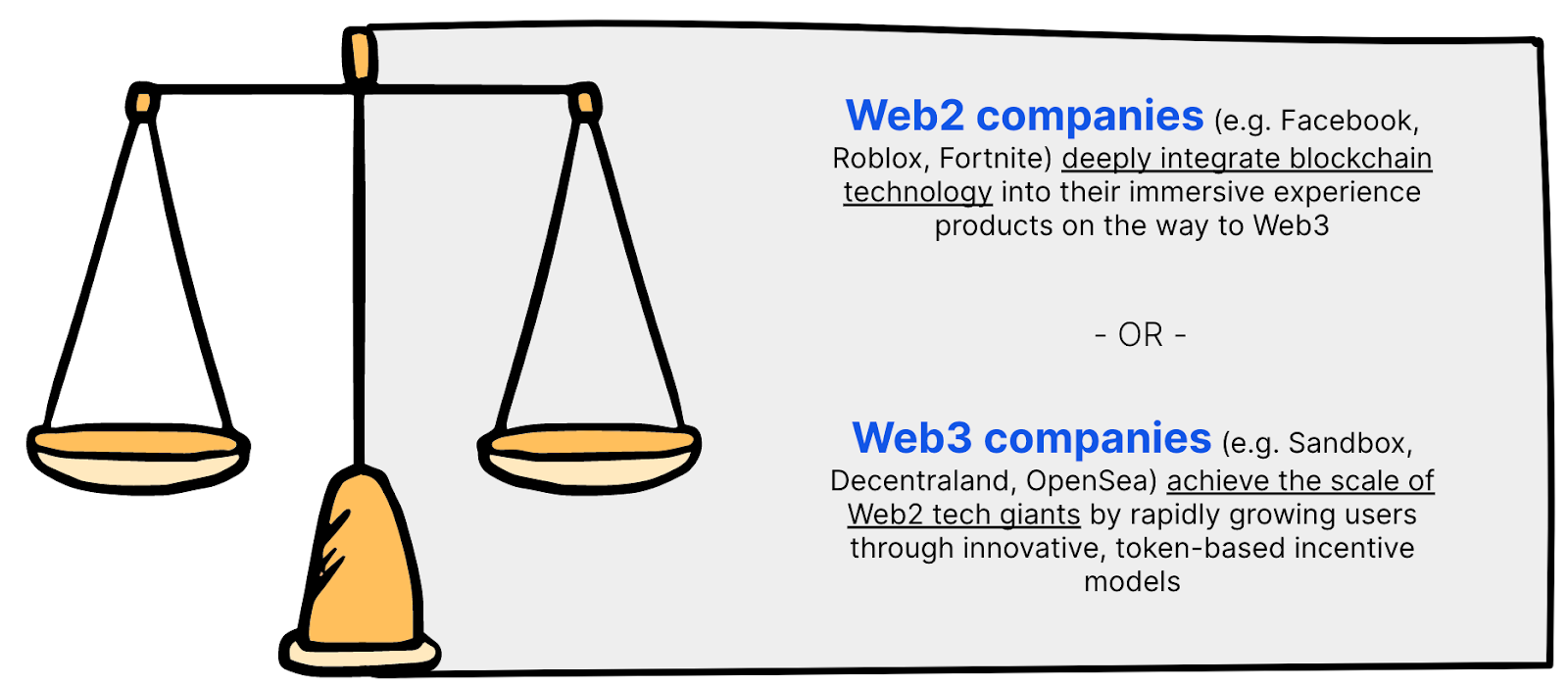
Shifting perspective might broaden our view—and conveniently encompass all previous angles. I’ve consolidated them into one concept: the “Web2.5 Gaming Transition Layer.” In short, it means lowering barriers to bring Web2 gamers into Web3, using GameFi incentives and NFT assets as key attractions to draw in more users. Since widespread improvements in game quality and full maturation of public chain infrastructure will take time—and aren’t yet sufficient to attract significant capital or convince traditional game studios to migrate—we should instead leverage rapid user growth and strong momentum early on to break out first, pull others into the space, and spark broader Web3 adoption. In fact, the third breakout phase (NFTs) followed precisely this model—first gathering people via “low-barrier participation + strong incentive-driven sharing,” then attracting major players and amplifying mainstream reach.
This is the significance of the “Web2.5 Gaming Transition Layer” for blockchain gaming. Now, let's dive deeper into what an ideal architecture for such a transition layer might look like. Here are several directions for discussion.
web2.0-vs-web3
1. Platform
First, entering this new domain of blockchain gaming can feel overwhelming for traditional gamers. Accustomed to Steam or app store-style guidance, there is real demand for landing pages and navigational interfaces tailored to Web3 games. Such platforms could aggregate or curate blockchain games, display ratings and reviews, allowing users to easily discover games matching their preferences.
Moreover, these platforms could later incorporate decentralized community co-creation mechanisms—letting players recommend favorite, high-quality, or innovative games for listing, accompanied by personal game reviews, subject to community voting. Successful referrals would earn revenue shares from the game’s future earnings.
2. Tools
Knowing which games to play and which suit your taste isn't enough—you also need a smooth way to start playing. But currently, entry and exit barriers for blockchain games are high: setting up wallet extensions, holding tokens or NFTs—the prerequisites are numerous and complex. Let's analyze each pain point:
First, buying tokens or NFTs requires registering a wallet and depositing funds. An ideal, low-barrier Web2.5 wallet should eliminate complicated seed phrase setups and KYC verification steps;
Second, after purchasing on exchanges or marketplaces, users must transfer assets to their wallets for verification;
Third, users typically need extra tokens in their wallets to cover gas fees. This entire process is cumbersome and drains motivation from new users. For the second and third issues, enabling direct credit card purchases of NFTs and in-game tokens would dramatically lower entry barriers. Services like MoonPay already offer convenient channels for buying NFTs on OpenSea.
Likewise, emerging tools like Halliday represent Web2.5-style solutions, allowing users to enter games via credit-based NFT purchases, play-to-earn, and repay through in-game profits.
3. Game Architecture
Game development is inherently complex, involving massive engineering challenges. Deploying all game logic and digital assets fully on-chain leads to technical and economic drawbacks: slowness, high costs, and vulnerability to cheating.
High Latency —— If every player action triggers a smart contract transaction that must be read and registered on-chain, such heavy on-chain activity risks network congestion, resulting in high latency during gameplay.
High Costs —— In fully on-chain games, every state change must be recorded on the blockchain. Any user action requires signing a transaction, leading to excessive computational costs—prohibitively expensive for fast-paced games.
Data Exposure —— Competitive games rely on imperfect or hidden information. But blockchains are open—anyone can access on-chain data. In fully on-chain games, player transactions and state changes are publicly readable, making it possible for others to monitor actions, anticipate moves, adjust strategies accordingly, cheat, and even manipulate in-game processes or financial flows.
Therefore, Web2.5 games are better suited to hybrid architectures: running core game logic on off-chain private servers, while deploying only select components—such as critical contracts or stack elements—on-chain.
4. Game Design
Web3-native mechanics tightly integrated with tokens often feel alienating to Web2 players, sometimes triggering strong resistance. For example, when Discord surveyed users about “wallet linking” or “NFT integration,” most responded negatively. Therefore, designing inclusive and gentle gameplay mechanics requires careful thought.
First, free vs. paid access.
Most Web2 games are free-to-play, with optional in-app purchases that don’t hinder overall gameplay flow or completeness. In contrast, many Web3 games impose token entry barriers or require token ownership to unlock key features—limiting new player onboarding and degrading user experience.
An ideal Web2.5 transitional game should accommodate both free and GameFi modes—allowing full gameplay without payment, while offering premium or derivative modules for those who wish to spend or earn.
Second, on-chain status of in-game assets and data.
Given immature infrastructure, not all data needs to be on-chain. Chasing ideological purity at the expense of functionality and practicality is penny-wise and pound-foolish. For instance, large volumes of low-value assets—like frequently minted, utility-free virtual land—don’t need to be turned into NFTs.
For the purpose of mainstream outreach, tangible practicality matters more. Take NFTs: during early breakout phases, very few stored metadata on IPFS—most images were hosted on centralized servers. Strictly speaking, such NFTs weren’t fully owned by users. Yet, this didn’t slow down the NFT craze. Why? Because newcomers cared more about innovative tech narratives and cultural utility than demanding perfection from a nascent technology.
Third, lifespan of in-game assets.
In traditional games, items are centrally controlled—subject to instant listing, delisting, removal, or gifting. Many Web3 games grant permanent ownership, which fully protects user rights but risks whale hoarding and lack of deflationary mechanisms harming in-game economies. For Web2.5 games, implementing consumable NFTs with limited lifespans or seasonal resets—coded into contracts—is a more balanced and sustainable compromise.
Fourth, community engagement.
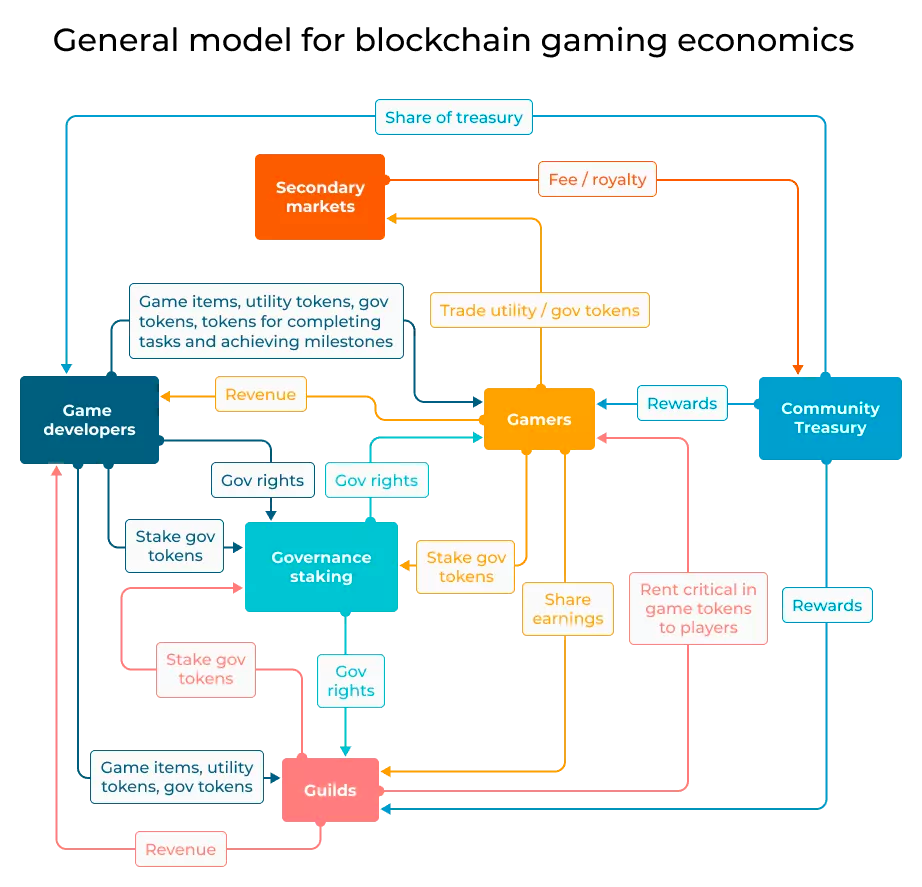
In traditional game communities, users can mostly only submit suggestions, with little deep involvement. Web3 blockchain games naturally lean toward DAO structures, employing purer, more direct governance models based on token holdings. However, pure token-weighted democracy has downsides: whales can dominate votes, and overly broad open agendas risk disruptive decisions if community votes go awry...
Thus, Web2.5 transitional games shouldn’t rush radical decentralization—gradual progression toward autonomy is preferable.
Initially, project teams may retain centralized control over economic models, but open discussions on gameplay upgrades or map adjustments, delegating limited decision-making power—granting token holders modest governance rights—to foster a sense of ownership and community culture.
Additionally, while proposals remain open to all community members, voting systems could adopt representative models—allowing delegation to working groups or trusted, capable individuals most likely to make sound decisions, who remain accountable to the broader DAO voting body.
5. Token Economics
Token economics is central to Web3 gaming—and extremely complex to design. For Web2.5 games, the primary consideration is broad appeal, especially among external Web2 gamers who prioritize gameplay depth and functionality. Money should serve only as an incentive, not the main driver. Thus, when designing tokenomics, we must clarify priorities: separate marketplace dynamics from core gameplay loops, placing systemic sustainability and healthy development first. Avoid hyper-deflationary token models designed solely for rapid price surges and short-term attention. Meanwhile, play-to-earn mechanics must be dynamically adjusted based on market and game conditions to ensure long-term economic stability both inside and outside the game.
6. Ideological Enlightenment
Ideas are the most fundamental force in uniting people. Therefore, spreading awareness about blockchain gaming, GameFi, and Web3 data ownership to the broader Web2 audience is profoundly important.
“True digital ownership means the items you own in a game are actually yours. You can sell them, trade them, do anything you want with them. Developers can use this technology to monetize secondary markets and fully enable cross-game item usage.”
— Sławomir Bubel, CEO, Hoard
Ideological dissemination can take many forms: structured courses, high-quality research articles on blockchain gaming, player forums, or streaming platforms. Notable examples include CGU abroad, offering educational programs and certification systems that guide players systematically into the space. In the Chinese-speaking world, WGGDAO stands out with original content, building a warm, opinionated community for player co-creation and sharing. Mymetadata provides rich, timely updates, helping players quickly capture industry trends.
Conclusion
Finally, carried away by inspiration, I close with a short poem:
A crack of dawn appears, the final kick awaits the leap. Where should we exert force? Points one to seven all build momentum. Yet waiting for one perfect move to trigger total transformation only drains energy.
Perhaps the middle path endures across ages, harmonizing all corners within a circle. Better to ask no direction—just “step forward first,” then speak of the rest.
References:
Ten Questions and Answers: Dilemmas and Outlook for Blockchain Games
The Future of (Crypto) Gaming - Delphi Digital
Sports and Crypto: Welcome to Web2.5
Building on-chain fully is hard; what about web2.5?
Reposts welcome. Original work, please credit "W Labs"
W Labs Website: http://www.wlabsdao.com/
W Labs Discord: https://discord.gg/wggdao
W Labs Twitter: https://twitter.com/GuaTianGuaTian
W Labs Long-form Research on Mirror: https://mirror.xyz/iamwgg.eth
W Labs Medium: https://guatianwgg.medium.com/
Join TechFlow official community to stay tuned
Telegram:https://t.me/TechFlowDaily
X (Twitter):https://x.com/TechFlowPost
X (Twitter) EN:https://x.com/BlockFlow_News
 瓜田实验室W Labs






