








Why do we believe Web3 applications running at Web2 speeds will emerge on Sui?
TechFlow Selected TechFlow Selected
Why do we believe Web3 applications running at Web2 speeds will emerge on Sui?
How the single-writer principle works, what it enables, and most importantly, why Sui has the opportunity to build the fastest applications in Web3?
 Navigating Web3 tides with focused insights
Author: Trace
Compiled by: TechFlow

While many people are bullish on Sui, they may not be aware of one of its most important features at the protocol level: single-writer applications.
In this article, we analyze how single-writer applications work, what they can achieve, and most importantly, why Sui has the potential to build the fastest applications in Web3.
How does Sui process transactions?
Sui employs a dual consensus model—dependent transactions are sequenced and processed sequentially, while independent transactions are executed in parallel.
Dependent transactions leverage the novel Narwhal and Bullshark protocols. Narwhal is a mempool protocol, while Bullshark is a consensus protocol that integrates efficiently with Narwhal to reach consensus.
The dependent transaction model only requires execution in order relative to other related transactions. Sui batches these transactions and executes each batch in parallel.
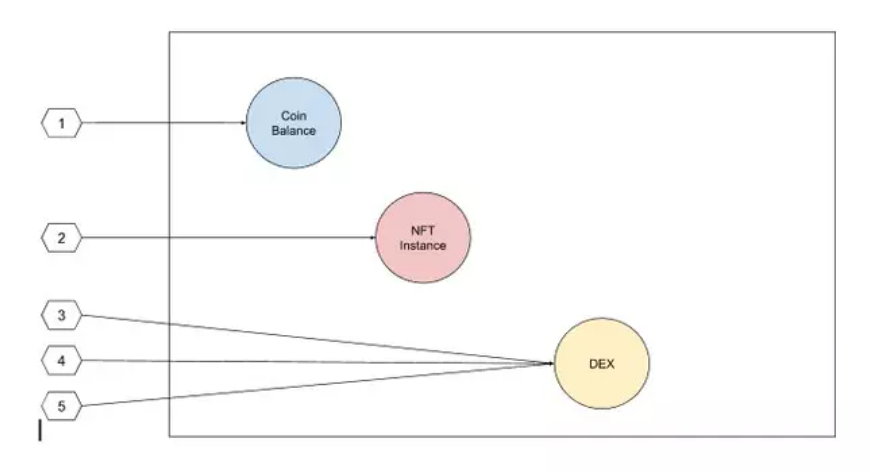
Sui initially planned to use Narwhal and Tusk, but recently replaced Tusk with Bullshark.
Tusk and Bullshark are similar consensus protocols, but Bullshark trades slightly lower throughput for faster speed.
Narwhal + Bullshark is extremely fast (approximately 2 seconds).
However, Sui’s true speed shines when transactions are fully independent. For such transactions, Sui does not use Narwhal + Bullshark; instead, it uses a different approach called Byzantine Consistent Broadcast (BCB).
In this path, the network can commit transactions without global consensus, enabling near-instantaneous processing.
Note that this does not compromise security or validity guarantees.
Sui's transaction model has two paths:
- Narwhal + Bullshark for causally dependent transactions (around 2-second latency)
- BCB for independent transactions (near-instant).
When are transactions on Sui considered independent?
In Sui, the fundamental unit of storage is the object, not the account.
Objects can represent NFTs, DeFi protocols, games, or anything else you want to build. Each object has an "owner" attribute specifying who can interact with it. There are four types of ownership:
1) Owned by an address (this is what it means to "own" something on Sui, e.g., tokens).
2) Owned by another object (e.g., one NFT being part of another NFT).
3) Immutable (no one can modify it, but anyone can interact with it).
4) Shared (anyone can read or write to the object, e.g., AMMs).
How do these ownership types integrate with Sui’s dual consensus model?
Transactions involving shared objects must be ordered—since users can alter the objects they interact with, transaction ordering matters.
However, if an object is owned by a specific address, only that address can use it in a transaction. If the owner interacts with their own object, the transaction is entirely independent of others and can therefore use BCB.
Any Sui application or object with only one owner can execute interaction transactions almost instantly.
This means Sui supports Web3 applications capable of running at Web2 speeds. Mysten Labs refers to these as "single-writer applications."
Of course, not every Web3 application can be written as a single-writer application.
In fact, most popular applications like DEXs and money markets require multiple writers, so interactions with these protocols may take several seconds to process.
However, Sui enables a wide range of single-writer applications that will deliver an unparalleled Web3 experience.
Here are some of the most exciting potential single-writer applications:
Sui Pay:
Asset transfers require only one owner, making them eligible for BCB.
Developers can build fast payment platforms using Sui while keeping assets within a composable Web3 ecosystem.
Public Bulletin Board:
Users can post data, files, or text on-chain and read each other's messages. Note that Sui’s storage model eliminates state bloat issues. Users pay for storage and can delete data anytime to receive a refund.
Messaging Services:
Messages and replies can be programmed in Sui Move as single-writer NFTs, enabling BCB usage. Applications and users can exchange information at extremely high speeds.
Social Networks:
Similar to messaging services, all social networking features—such as posts—can be designed as single-writer NFTs.
Non-interactive Games:
Crypto games that don’t involve shared objects—like many single-player games—can function as single-writer applications. Performance has long been a key bottleneck for Web3 gaming, and Sui’s architecture helps unlock its full potential.
Oracle Feeds:
The faster oracle data updates, the more vibrant DeFi markets become. Oracle data feeds can be fully implemented as single-writer applications, opening new opportunities for lending markets, prediction markets, and other applications benefiting from high-frequency data streams.
Support for ultra-fast single-writer applications is one of Sui’s most powerful features. I’m excited to see what kinds of applications will emerge on Sui in the future.
Join TechFlow official community to stay tuned
Telegram:https://t.me/TechFlowDaily
X (Twitter):https://x.com/TechFlowPost
X (Twitter) EN:https://x.com/BlockFlow_News






