7 sectors, 71 projects: Exploring the Web3 social ecosystem of Gitcoin GR15
TechFlow Selected TechFlow Selected
7 sectors, 71 projects: Exploring the Web3 social ecosystem of Gitcoin GR15
Recommendations for Gitcoin's current round projects and GR14 featured projects.
 Navigating Web3 tides with focused insights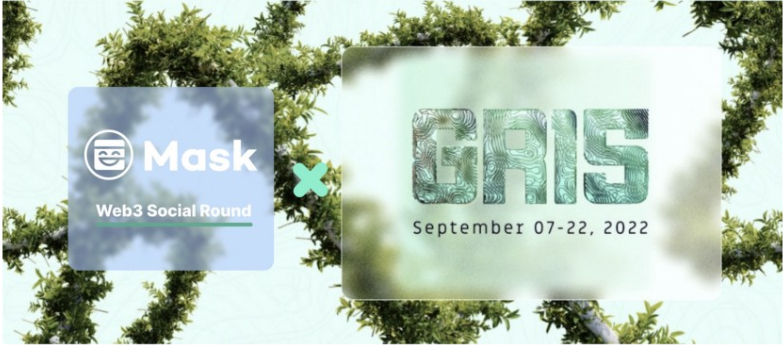
Open-source software and community funding platform Gitcoin has launched its 15th round of grants, running from September 7 to 22. Users can support outstanding open-source software teams through this platform.
GR15 Web3 Social Exclusive Twitter Space will be held on Wednesday, September 21 at 9:00 PM Beijing time (9:00 AM ET). Project teams and interested parties are welcome to participate.
Mask Network is delighted to continue its exclusive sponsorship of Gitcoin's Web3 social ecosystem grant program, providing a $50,000 prize pool.
We received over 400 applications, and after multiple rounds of review, 157 projects were selected for the GR15 social ecosystem round (including 60 projects carried over from GR14).
Mask Network is also pleased to observe that while approximately 50% of projects in GR14 came from our recommendations, around 20% of this round's projects originated from our referrals, with the remainder coming from organic traffic—demonstrating the thriving growth of the Web3 social landscape.
Funding open-source projects promotes the development of the entire blockchain ecosystem. Gitcoin uses quadratic voting to crowdfund projects, addressing inefficiencies in public goods funding within the Ethereum ecosystem and encouraging participation from minority voters.
In each Gitcoin grant round, in addition to direct donations received by projects, Gitcoin also uses these contributions as reference data to coordinate fund allocation from the Ethereum Foundation, increasing investment opportunities for high-quality projects.
Through its first 14 grant rounds, Gitcoin has provided $67.13 millionin funding to thousands of open-source projects—not only supporting builders and creators in the Web3 ecosystem but also using quadratic funding mechanisms to support causes such as climate action, Ukraine relief, and crypto advocacy.
Below are our recommendations for projects in this round and select GR14 projects, categorized into seven major groups:
1. Social Messaging (7 new + 3 previous)
2. Social Networks (11 new + 4 previous)
3. Social Identity (14 new + 1 previous)
4.Personal Reputation Data Analytics & Applications (9 new + 3 previous)
5. Creator Economy (7 new + 1 previous)
6. Decentralized Autonomous Organizations (5 new + 2 previous)
7. Metaverse/Gaming Identity (4 new)
1. Social Messaging
1.1 Web3MQ
Link: https://gitcoin.co/grants/7429/web3mq-web3-messaging-protocol
Introduction:
Web3MQ is a Web3-native messaging protocol and communication network. The ability to exchange messages between users, addresses, and machines is so fundamental and important that it should ultimately be owned and driven by developers and users alike. This is why we built Web3MQ—to enable everyone to host nodes and advance the Web3MQ network just like they do with Ethereum.
Use cases for Web3MQ include: 1) Direct messages between users; 2) Web3 email and notifications: enabling programs to push asynchronous alerts to users/wallets; 3) Community interactions: building communities among your users. Web3MQ is one of the few Web3 messaging protocols that supports group chats from the start.
Features:
1) Interoperability: Reconnects isolated social platforms via a unified inbox, allowing messages to freely flow across endpoints. You only need the recipient’s address or compatible DID.
2) Scalability: Web3MQ is faster and more scalable than any other Web3 messaging network, with performance approaching Web2 levels.
3) Composable design: Developers can achieve higher privacy protection and customization to meet specific needs.
4) Native multi-chain: Fundamentally compatible with any blockchain. With minimal extensions, enables message delivery between addresses on any two chains.
5) Ownership: Web3MQ is a network of nodes where no single party can tamper with or dictate how you build on Web3MQ. Ultimately, Web3MQ will be community-driven, maintained, and upgraded.
Rationale:
Web3MQ is a Web3-native messaging protocol and communication network featuring Web2-level message transmission performance, developer-friendly composable design, native multi-chain support, strong interoperability, and user ownership of their data.
1.2 SwapChat
Link: https://gitcoin.co/grants/6408/swapchat
Introduction:
SwapChat is a Web3-native cross-platform chat application that allows users to send messages to addresses across platforms such as OpenSea and Twitter. SwapChat integrates with Next.ID to link wallet addresses with social profiles. It also incorporates trading tools and protocols like SudoSwap, making transactions on SwapChat safer than those conducted via Discord and Telegram. All users are verified via Twitter and wallet-based, allowing them to chat with any other SwapChat wallet user. Even if a platform lacks chat functionality, SwapChat enables communication—for example, when viewing an NFT on OpenSea, users can instantly connect with the owner, make offers, and trade. Messages are transmitted in a decentralized and encrypted manner.
Rationale:
SwapChat fills the gap of lacking communication tools between buyers and sellers on OpenSea while ensuring security, potentially becoming the "Alibaba Wangwang" of OpenSea. By offering SDKs and integrating numerous plugins, wallets, and applications, it has the potential to grow into a cross-platform communication protocol-level product. Its underlying Web3MQ protocol could become the next-generation SMTP/POP3 of Web3.
1.3 PipeMail
Link:https://gitcoin.co/grants/4896/pipemail-a-blockchain-based-mail-system
Introduction:
PipeMail is a blockchain-based email dApp—not merely adding a Web3 layer atop traditional email, but reimagining email software with Web3 principles: 1) Email bodies and attachments are encrypted using the recipient's public key; 2) Metadata is uploaded to the blockchain, permanently stored and verifiable, drastically reducing spam; 3) Encrypted content and attachments are stored via distributed storage (IPFS); 4) Only sender and recipient can access email content, delivering "absolute privacy" to users.
Rationale:
A Web3 email service where content and attachments are encrypted using public keys.
1.4 Beetroot
Link:https://gitcoin.co/grants/6347/beetroot-messaging-for-nft-traders
Introduction:
Beetroot is a wallet-to-wallet messaging platform. Users authenticate using cryptographic signatures and send messages to other crypto addresses. They can opt to receive email notifications upon receiving messages and verify each other's assets. Beetroot focuses on enhancing chat interactivity to improve user experience, enabling NFT transactions directly within the chat interface.
Rationale:
A wallet-to-wallet IM tool enabling NFT transactions within chat.
1.5 beoble
Link: https://gitcoin.co/grants/7368/beoble-pluggable-modular-web3-social-layer
Introduction:
Beoble is a Web3 social component with APIs and SDKs—a true user-owned window into on-chain interactions and a genuinely user-controlled Web3 product. Through Beoble, Web3 services can integrate social profiles, messaging, and content feeds with feedback functionality into their platforms within five minutes. Beoble aims to empower and support the entire Web3 ecosystem. Core features include:
1) Modular social profile
2) Modular direct wallet-to-wallet messaging
3) Modular content publishing (e.g., BitMEX trollbox-inspired feed improvements for native dApps)
Review: A Web3 communication protocol integrating profiles, wallet-to-wallet messaging, and feeds
Rationale:
Beoble's modular design makes integration into third-party apps easier and flexibly helps projects add social features.
1.6 RootMeta
Link: https://gitcoin.co/grants/7066/rootmeta-infrastructure-of-web-30-multichain-socia
Introduction:
RootMeta is a decentralized social gateway built on Web3, aiming to construct Web3 social infrastructure. Features include instant messaging, content display, and on-chain asset visibility. Every user can build or discover communities on the platform, with RootMeta algorithmically organizing communities to help users easily find interest-aligned groups.
RootMeta's community interactions form a perfect DAO space—each organization can create and manage its own community. RootMeta's social tokens will be awarded to all Web3 contributors and community builders.
Review: A decentralized Web3 social portal featuring instant messaging, content sharing, and on-chain asset display.
1.7 nfty chat
Link: https://gitcoin.co/grants/7105/nfty-chat
Introduction:
Nftychat.xyz is a Web3 communication platform developed to replace Discord, featuring direct messaging, community creation, and discovery. Users can chat directly with friends or create private/token-gated communities. In NftyChat, personal identity is tied to wallets—no account passwords needed—and usage is free.
Compared to Discord, NFTY offers greater security and reliability as a Web3 platform. When users log in via ENS linked to their Ethereum identity and keys, no one can impersonate them, enhancing user security.
Rationale:
Nftychat.xyz is a Web3 communication platform designed to replace Discord, free to use with wallet-only authentication—no account passwords required.
1.8 Mail3
link:https://gitcoin.co/grants/6492/mail3-a-web3-native-communication-platform
Introduction:
Mail3 is a privacy-preserving, data-secure, self-sovereign communication protocol native to cryptography, capturing users' on-chain social relationships to forge unique Web3 identities. Mail3 aims to become Web3 communication infrastructure and a value-capture platform for on-chain relationships, reputation, and other valuable information. Built on decentralized architecture, Mail3 enables permissionless private connections between people without fear of surveillance or censorship, offering decentralized permanent storage for users' data and social relationships. As users accumulate on-chain data through Web3 applications, Mail3 helps them filter and identify valuable information, creating a Web3 email protocol focused on communication without spam overload.
Rationale:
A privacy-protecting, data-secure communication protocol capable of eliminating spam emails.
1.9 Ourlog
link:https://gitcoin.co/grants/7384/ourlog-multiplayer-thinking-for-working-groups
Introduction:
Ourlog is a decentralized collaboration tool for communities to collectively record research, thoughts, and insights for publication. From scientific research and government to social groups and Web3 builders, Ourlog serves as a public, networked utility for any team to consolidate and publish collective wisdom. It's like a Web3 version of Discord plus WordPress.
Rationale:
Communication infrastructure on Ethereum, with plans to develop public, networked communication utilities.
1.10 MetaMail
link:https://gitcoin.co/grants/6087/metamail
Introduction:
A Web3 email provider allowing users to use wallets/ENS as email addresses (e.g., [email protected]), signing/encrypting for security. Currently compatible with other email providers like Gmail, and all operations are free.
Rationale:
One of the representative encrypted email services—being able to use ENS directly is excellent. The overall user experience is smooth, and it integrates social graphs from KNN3/Next.ID/CyberConnect.
2. Social Network
2.1 TeaParty
Link:https://gitcoin.co/grants/7159/teaparty-2
Introduction:
A Web3 social growth tool based on Promote2Earn, currently compatible with Lens Protocol social relationships and Twitter content. Projects/individuals post tasks by rewarding TEA Tokens, and users earn rewards by completing specified actions (retweets, likes).
Rationale:
A 2Earn version of Project Galaxy, TeaParty enables viral rewards for specific posts on Twitter/Lens—effectively aggregating all advertising posts onto one platform with token incentives. It effectively resists Sybil attacks, though targeting precision may be low. A demo is already available with relatively smooth usability.
2.2 Lenstube
Link:https://gitcoin.co/grants/6972/lenstube
Introduction:
Lenstube is an open-source Web3 video-sharing social platform built on the Lens Protocol and Polygon mainnet. Lenstube solves Web2-era issues of creator privacy censorship and unannounced or unjustified content takedowns, protecting creators' rights through permanent on-chain storage of metadata and Arweave. Creators upload content to Arweave and monetize with low gas fees, while viewers can tip and coin favorite content via subscriptions. Creators' data is permanently stored on Polygon, retaining perpetual rights to monetize content through NFT modules and tipping.
Rationale:
Similar to a Web3 YouTube, the product has high completeness and has accumulated substantial video content. Leveraging Lens provides significant user-side traffic, making it one of the more mature projects in the video-centric creator economy. However, unlike Web2 platforms with passive ad revenue, Lenstube relies on creators managing their own NFTs, which might reduce early creator motivation.
2.3 Pink Paper
Link: https://gitcoin.co/grants/7161/pink-paper-decentralized-publishing-platform
Introduction:
Pink Paper is a decentralized, permissionless global platform for individuals and communities to publish ideas and share information. Users can post blogs and showcase content globally. Additionally, people can fundraise for transformative technologies they've developed. Pink Paper provides a decentralized, censorship-resistant platform where everyone can express diverse viewpoints. Finally, Pink Paper aims to offer a free-speech-supporting, non-censorship, decentralized publishing platform.
Rationale:
Pink Paper provides a decentralized, censorship-free platform where everyone can express diverse viewpoints.
2.4 Troop Finance
Link:https://gitcoin.co/grants/6816/troop-invest-better-together
Introduction:
Troop Finance is a social investing platform built on the Lens Protocol. Currently, over 70% of crypto investors rely on social media platforms like Telegram or Discord, friend chat groups, and influencer collaborations for investment strategies. Troop identifies and capitalizes on three opportunities: community leaders and active members should be rewarded for their contributions; scammers should be automatically excluded via on-chain reputation systems; retail investors can follow investments instead of relinquishing fund management. Troop Finance facilitates collaborative portfolios to help communities invest better together. The protocol allows anyone to join and contribute to investment management.
Rationale: A social investing platform on Lens Protocol where contributors earn badges as honors and rewards. These badges enhance reputation and help prevent fraud.
2.5 ECHO - decentralized comment widget based on Arweave
link:https://gitcoin.co/grants/7554/echo-long-live-our-opinion
Introduction:
Echo is a widget-based product on Arweave. Users can collect comments, likes, and tips.
Echo can be embedded into any website, similar to Mirror. Designed to solve specific tasks: every comment is signed and uploaded by users, and wallets with data cannot be deleted or modified.
Rationale:
Echo is a widget-based product on Arweave. Users can collect comments, likes, and tips.
2.6 Atlantis Climate Network
link:https://gitcoin.co/grants/6389/atlantis-peoples-protocol-to-mitigate-climate-cha
Introduction:
Atlantis is a climate impact network connecting communities and companies, dedicated to mitigating climate change through digital infrastructure and improved coordination and incentive mechanisms.
Atlantis successfully raised $125,000 and completed prototype development, divided into citizen-facing and enterprise-facing applications.
Atlantis incentivizes enterprises to mine climate action bounties on the platform. In exchange, enterprises receive "Impact Credits (ICs)" tokens. ICs rank enterprises and individuals on a global sustainability leaderboard—the higher the ranking, the greater their climate impact.
Atlantis is a socially-oriented climate system enabling users to build personal climate impact profiles, establish leaderboards within communities and among friends, and support squad creation to help users collaborate with friends on bounty missions.
Rationale:
Motivating users and friends to participate in climate action through social engagement, earning on-chain reputation and rewards, simultaneously accelerating ESG and Web3 adoption.
2.7 Punstar
Link: https://gitcoin.co/grants/7403/punstar-2
Introduction:
PunStar expresses various social relationships and interactions in the Web3 world by establishing a next-generation NFT architecture based on resource orientation, then assetizing everything to validate each participant's social capability value.
PunStar represents the initial form of this social network. Initially built on Flow, it will later expand to Aptos and Sui. We leverage resource mechanisms to embed innovative attributes into NFTs and assetize them. These innovations include dynamic social relationships among participants formed through resource interactions.
PunStar chose funny stories as the entry point for the social network because humor is easily widely shared. Participants in PunStar, called "Punsters" (an NFT), can share their jokes as "Duanji" (an NFT). Others can follow interesting Punsters and upvote them, increasing the Punster's funniness index.
Everyone can express preferences toward "Duanji," stimulating social relationship formation among participants and estimating each Punster's funniness index. Once reaching a certain funniness threshold, Punsters can promote content (like ads) based on relationships built within PunStar.
Rationale:
PunStar uses a lightweight approach to acquire users and encourage interaction, potentially becoming a new traffic entry point for Web3 social.
2.8 Otomee
Link:https://gitcoin.co/grants/7505/otomee-the-metaverse-hub
Introduction:
Otomee aims to become a censorship-resistant metaverse hub, serving as a home for communities. Creating and exchanging value incurs no fees. Otomee strives to become the place where communities have everything needed to thrive. Through a built-in, open marketplace, communities can trade NFTs and decide whether to pay royalties or conduct completely free trades.
Otomee introduces a new user-centric model—individuals can curate NFT lists from different communities and showcase them on their profile page under the Curation tab. All sales generated through a user's curation page give them a percentage of the sale price they define, creating new markets and opportunities for individuals to leverage the metaverse economy.
Rationale:
An open marketplace built into individual profile pages.
2.9 Lenster
Link:https://gitcoin.co/grants/5007/lenster
Introduction:
Lenster is a decentralized, permissionless social media app built on the Lens Protocol. Hosted on the Polygon network, users can interact seamlessly with the dApp for free, and administrators cannot remove any content from the app.
Users need not provide any personal information beyond a username (optional submission) and wallet address. Lenster collects no sensitive information. Neither Lenster nor Lens teams have authority to moderate user posts. All user actions in Lenster require signatures.
Rationale:
The flagship application in the Lens ecosystem, pursuing a Web3 Twitter direction. Beyond basic social networking functions like posting and commenting, it enables community building, crowdfunding, and DAO formation. The test version offers a relatively smooth experience, and with Lens social graph advantages, it holds an edge over similar projects.
2.10 MetaJam
Link:https://gitcoin.co/grants/6002/metajam-link-your-pals-to-buidl-your-web3
Introduction:
MetaJam is building a Web3 BUIDL network where users can discover Web3 products/apps and contribute to Web3 projects through BUIDL Proof (a decentralized Web3 BUIDL reputation protocol). Users can build Web3 resumes, verify skills, and build track records, earning reputation points and token rewards by contributing to Web3 projects. Meanwhile, project teams can showcase their projects and communities, recruit talent via on-chain resumes, and raise funds.
Rationale:
MetaJam resembles a Web3 Product Hunt, helping potential Web3 contributors find suitable projects to build reputation.
2.11 Blocktracker
Link: https://gitcoin.co/grants/6448/blocktracker
Introduction:
Built by former TikTok engineers, Blocktracker leverages AI to extract data from blockchains and match wallet addresses with Twitter accounts. Users can see Web3 information from people they follow, such as latest NFT trades and lifetime yields.
Rationale:
An extremely practical Twitter enhancement plugin that directly displays users' latest NFT transaction activity and overall yield on Twitter—a powerful tool for identifying top performers and recognizing KOLs.
2.12 Bfrenz
Link: https://gitcoin.co/grants/7395/bfrenz-your-crypto-social-media
Introduction:
Bfrenz focuses on becoming the best crypto-native social media. Bnews, their first product, delivers personalized crypto news feeds based on users' personal wallets and social behavior. Current features include: 1) NFT Holder Tracker: Follow NFT trades of holders with similar portfolios; 2) Crypto Tracker: Stay updated daily on cryptocurrency market developments; 3) Personalized Crypto News Aggregator: Bnews gathers news from comprehensive sources, but each user receives a unique feed tailored to their interests, consolidating relevant content and saving time searching across various news platforms; 4) Social Features: Users can use ENS and NFTs as usernames and avatars to create unique profiles on Bnews, engaging daily with likes, comments, shares, and reactions on news feeds.
Rationale:
Bfrenz focuses on becoming the best crypto-native social media, consolidating user-interest content through crypto news aggregation and encouraging social engagement around content.
2.13 Feed.xyz
link:https://gitcoin.co/grants/6946/feedxyza-metaverse-of-public-knowledge-in-the-fut
Introduction:
Feed.xyz is the metaverse of future public knowledge, aiming to become a primary gateway from Web3 to Web3, efficiently delivering targeted content to audiences. Feed.xyz's vision is to infinitely expand SocialFi interoperability. Addressing users' daily needs for Web3 content interoperability, we will deeply integrate Mirror and other content creation platforms, practically creating the first write-to-earn and share-to-earn economic models, enabling content creators to maximize influence while content consumers earn rewards for spreading valuable ideas and content. Simultaneously, content on Feed.xyz can seamlessly sync to Mirror, providing creators a friendlier environment.
Rationale:
Feed.xyz creates a write-to-earn venue for content creators, providing components for SocialFi's future development, with seamless syncing to Mirror.
2.14 CrossSync
link:https://gitcoin.co/grants/6465/crosssync
Introduction:
CrossSync is a social-focused Web3 Dapp running on Crossbell. CrossSync enables users to own their social feeds through a Chromium extension, synchronizing all tweets to the Crossbell chain.
Rationale:
A project from the RSS3 team—they built their own chain and enabled one-click Twitter-to-chain synchronization via CrossSync.
2.15 ClubS
link:https://gitcoin.co/grants/7367/clubs-socialfi-20
Introduction:
ClubS combines SocialFi, creators, and IP elements, attempting to build a social function protocol to protect IPs already possessing fan bases. Using NFT concepts and social applications, it helps IP owners co-create revenue with communities.
Rationale:
A mobile-first group social platform allowing Web2 or Web3 login methods, enabling users to post or create token-gated groups. The product offers a relatively smooth experience, though creator economy features remain limited—worth watching whether it can attract larger-scale IPs in the future.
3. Social Profile & DID
3.1 Re-Public
Link:https://gitcoin.co/grants/4922/re-public-collect-and-control-all-your-personal-da
Introduction:
Join TechFlow official community to stay tuned Telegram:https://t.me/TechFlowDaily X (Twitter):https://x.com/TechFlowPost X (Twitter) EN:https://x.com/BlockFlow_News