








Sudoswap Deep Dive: Uniswap for the NFT Market, Token to Be Announced Publicly
TechFlow Selected TechFlow Selected
Sudoswap Deep Dive: Uniswap for the NFT Market, Token to Be Announced Publicly
If there's anything you need to do tomorrow, it's best to start now.
 Navigating Web3 tides with focused insights
If there's something you need to do tomorrow, it's best to start right now.
—Franklin
YouTube video of this issue:
https://www.youtube.com/watch?v=p94RiR2kfjo
Bilibili video of this issue:
What new possibilities lie ahead?
After the frenzy last year, the NFT market has gradually entered a calm phase. While promising projects occasionally emerge, the overall market environment is no longer what it once was. The most direct indicator from data is this: NFT ownership continues to grow, yet trading volume keeps declining. According to NFTgo’s market analysis, current NFT trading volume is less than half of what it was in January last year.
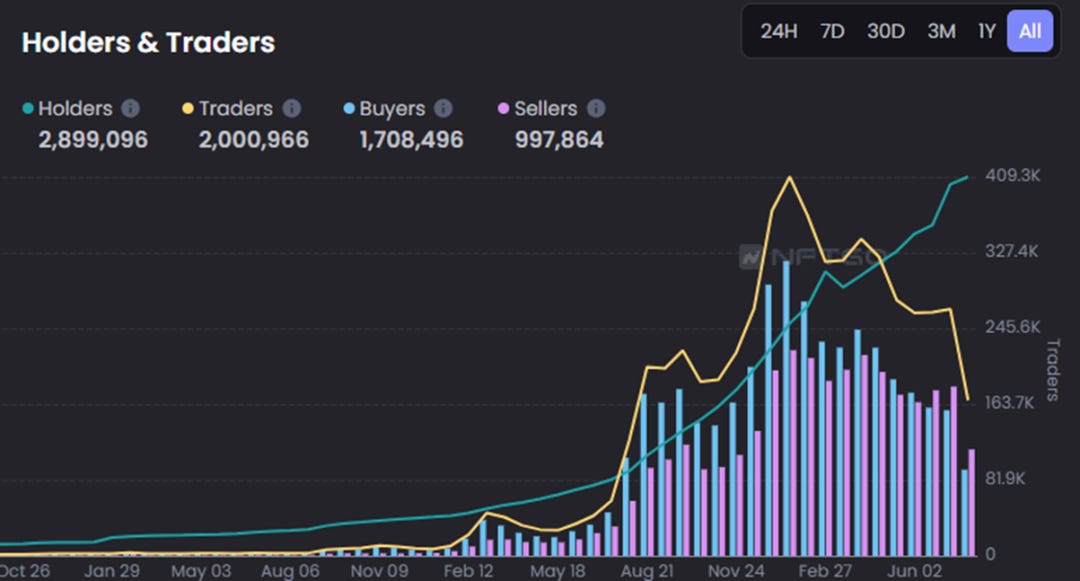
On one hand, many NFTs inherently lack value and, after the hype fades, become illiquid assets stuck in people’s wallets. From a more fundamental perspective of transaction mechanisms, the NFT market faces a major challenge:
Lack of liquidity.
NFTs are priced individually and uniquely, which makes quick matching difficult on platforms like OpenSea due to gaps between asking and bidding prices. If you want to sell an NFT quickly, insufficient market depth may force you to accept significant price slippage (similar to slippage in DeFi).
If you choose to hold your NFT instead of selling it, unlike in DeFi, you gain little in return: in DeFi, idle assets can be pooled into LP pools or staked to earn yield through liquidity mining. Some protocols have started exploring NFT lending (NFT-Fi) to address liquidity issues, but such solutions still assume the NFT won't be traded.
So, is there a way to improve liquidity specifically for NFT trading itself?
The market has already begun answering that question. Recently popular sudoswap offers a solution by leveraging automated market-making (AMM), similar to Uniswap, to create a decentralized NFT marketplace that addresses liquidity shortages in NFT trading.
Token: SUDO (not yet launched)

What Is Sudoswap
Uniswap for the NFT Market
Few may have noticed the naming clue behind sudoswap:
The term "sudo" originates from Linux system command codes, used to grant superuser privileges—allowing execution of commands beyond regular user permissions.
In an NFT market plagued by poor liquidity, ordinary users often struggle to complete transactions due to shallow markets and wide spreads. By analogy with code, users similarly need a “sudo -swap” command to smoothly execute NFT trades.
This may explain the meaning behind sudoswap. As early as April this year, sudoswap launched an over-the-counter (OTC) NFT trading platform.
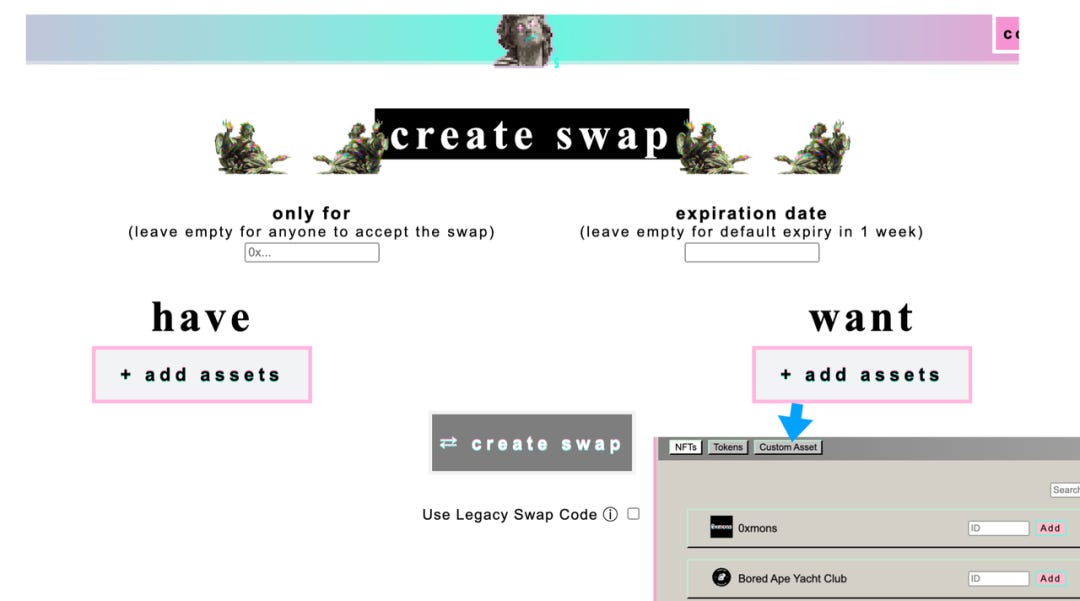
You can still access this OTC platform via sudoswap’s official website. Its functionality is simple: if you own an NFT and wish to exchange it for a specific token, you can initiate a request on the platform, setting the duration of the offer and who can purchase your NFT.
The platform supports combined transactions using ERC20, ERC721, and ERC1155 standard tokens, without charging trading fees or royalties. Its peer-to-peer structure, flexible token options, and low transaction costs differentiate it from centralized platforms like OpenSea, forming a small yet elegant OTC NFT marketplace.
In July, sudoswap advanced further by introducing an AMM mechanism, evolving into the sudoswap we see today. More通俗ly speaking, sudoswap operates very similarly to Uniswap V3: users can specify price ranges and step sizes to provide liquidity (market making) for specific NFTs. When an NFT trade occurs, liquidity providers receive corresponding tokens, while NFT prices automatically adjust based on supply and demand dynamics.

To better understand how it works, let’s walk through actual operations on sudoswap.
Buying NFTs
Purchasing NFTs on sudoswap isn’t much different from other platforms like OpenSea. Taking Azuki as an example below, once you enter the collection page, all listed NFTs appear with their Floor Price (lowest ask) and Best Offer (highest bid).
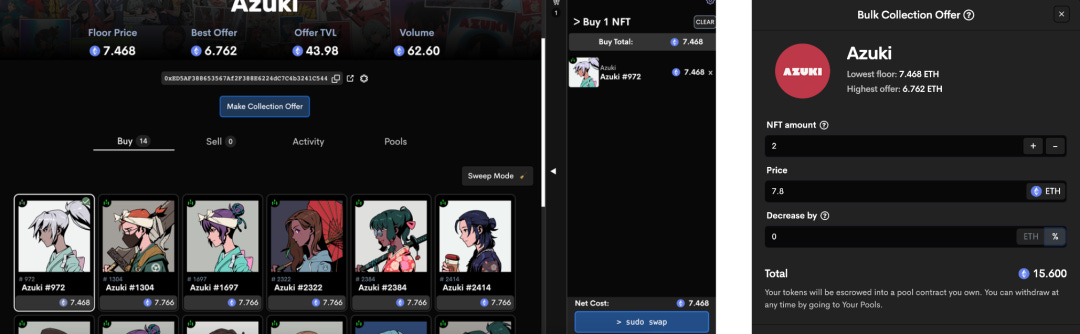
You can add any number of NFTs directly to your cart and buy them instantly at the floor price (left image). Although the user experience feels familiar, behind the scenes, these purchases actually come from the Azuki liquidity pool, with prices determined by a mathematical pricing curve (explained in detail later). Alternatively, if you think the price is too high, you can make your own offer (make offer, right image), specifying your desired amount, quantity, and even a decreasing unit price when buying multiple items, waiting until a suitable seller accepts your bid.
Selling NFTs
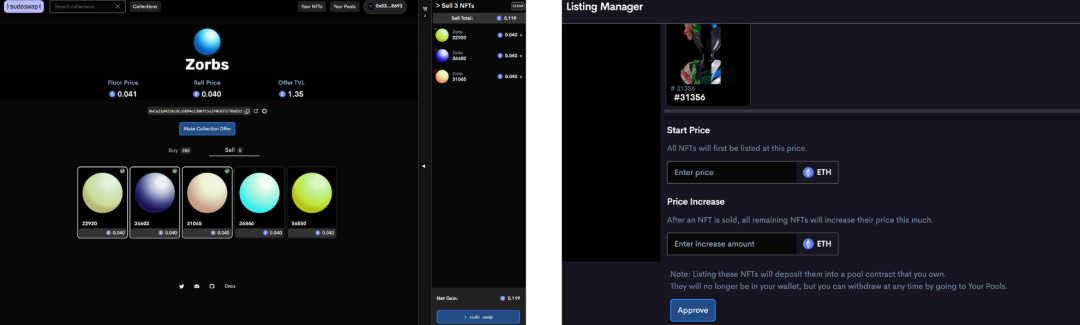
Selling on sudoswap follows a similar pattern, offering two methods: quick sell (Sell) and listing (List). A quick sell means you can sell your held NFT (e.g., Zorb in the left image) directly into an ETH liquidity pool at a price derived from a bonding curve, enabling fast settlement.
If the current price doesn’t meet your expectations, you can list your NFT (right image), setting your preferred price and incremental pricing rules for bulk sales, waiting for a buyer to match your terms.
Providing Liquidity Pools for NFTs
During the buying and selling process mentioned above, references to "buying/selling into a liquidity pool" reveal sudoswap’s core mechanism: using AMM (Automated Market Making) to provide liquidity.
On OpenSea, all NFT trades occur via order books—buyers and sellers post orders, and OpenSea maintains and matches them. On sudoswap, things work differently, much like DeFi compared to CeFi:
-
You can contribute NFTs to form an NFT liquidity pool. When buyers purchase from the pool, you receive ETH (currently sudoswap only supports ETH). This means you’re acting as a single-sided market maker on the sell side;
-
You can deposit ETH to create an ETH liquidity pool. When sellers liquidate NFTs into the pool, you receive the NFTs—acting as a single-sided market maker on the buy side;
-
You can also provide both NFTs and ETH to create a two-sided pool, earning trading fees from both sides.
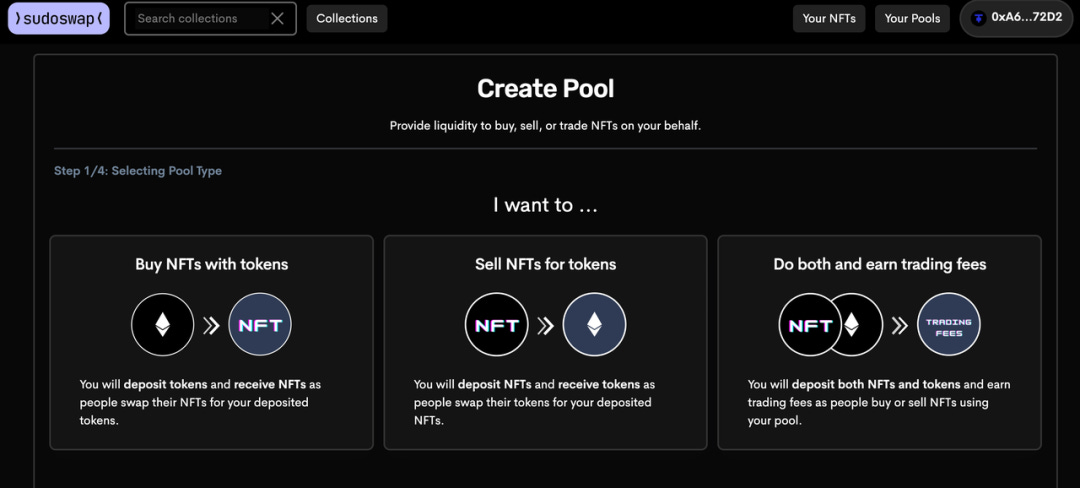
This approach resembles LP pools in DeFi: users supply assets, and each liquidity pool is managed by smart contracts controlling deposits and withdrawals. However, key differences exist: you can set custom price ranges for providing liquidity, similar to personalized positions in Uniswap V3. Additionally, unlike DeFi, you don’t receive LP tokens when creating a new pool. Each sudoswap liquidity pool has its own unique contract, eliminating the need for additional LP tokens to track asset ownership.
Moreover, for determining NFT prices, sudoswap uses a Bonding Curve mechanism to algorithmically generate fair prices, primarily divided into three types of curves, detailed in the figure below.
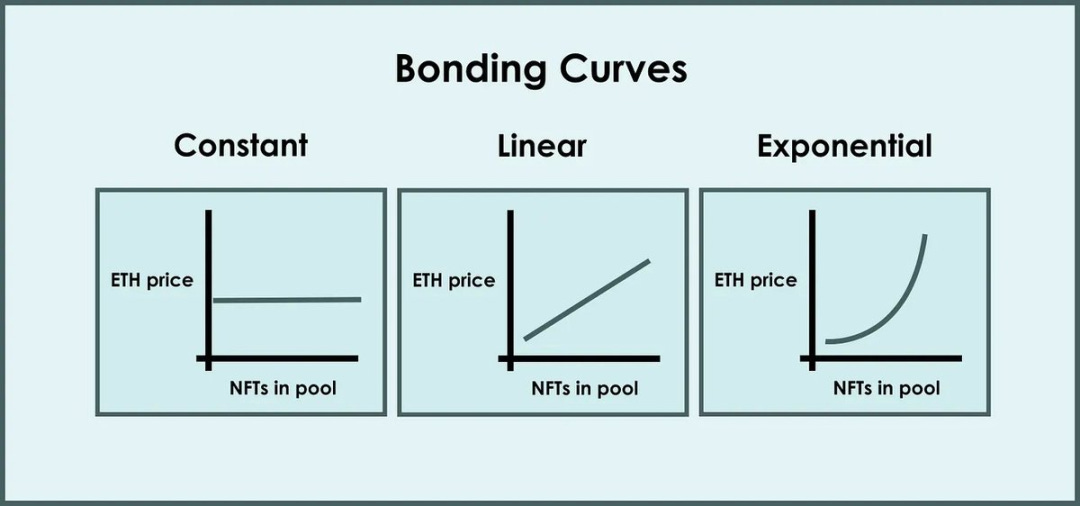
Given that NFT pricing is influenced by time, counterparty, order book depth, and other factors, the Bonding Curve integrates these variables into a decentralized on-chain algorithm that coordinates buyers and sellers.
The most visible effect of this algorithm is how changes in NFT quantity affect price (in ETH): fewer NFTs available leads to higher prices, and vice versa.
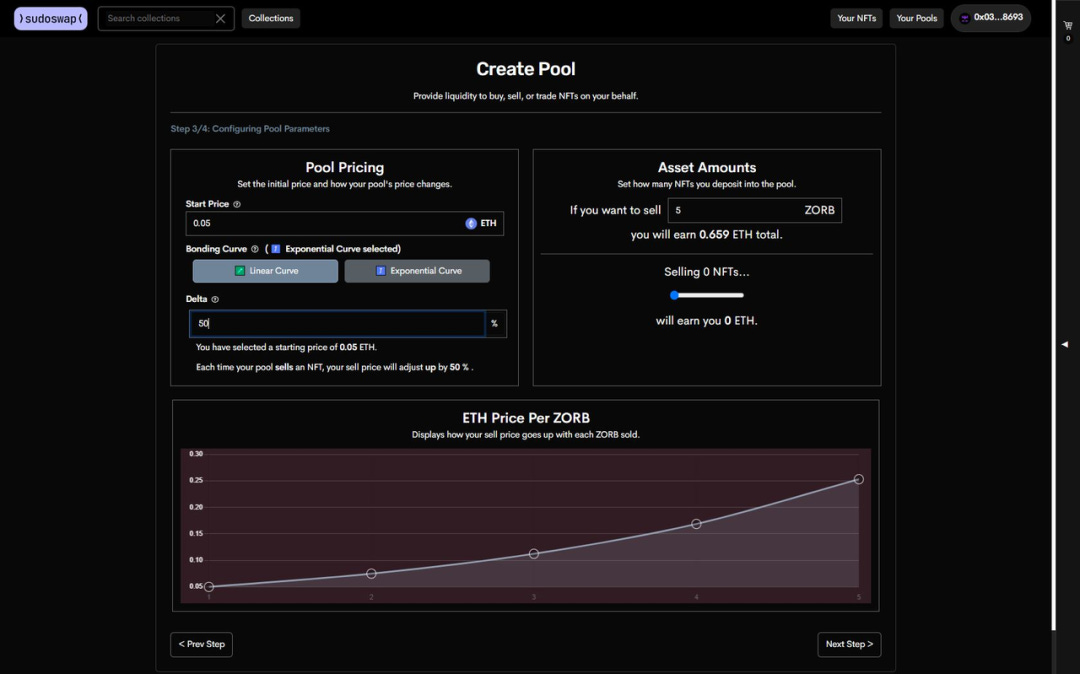
For example, suppose you own 5 NFTs and create a sell-side pool. You can set the initial sale price at 0.05 ETH. As sales occur and inventory drops—for instance, down to 4 NFTs—the next NFT’s price increases based on supply and demand.
This price increase is governed by the Bonding Curve. You can choose linear growth (e.g., +0.05 per sale, customizable) or percentage-based growth (e.g., +50% per sale).
Depositing NFT assets + setting sale price/rules creates an NFT sell pool. You can similarly create a buy pool with ETH or provide liquidity on both sides—a full exploration of which goes beyond scope here.
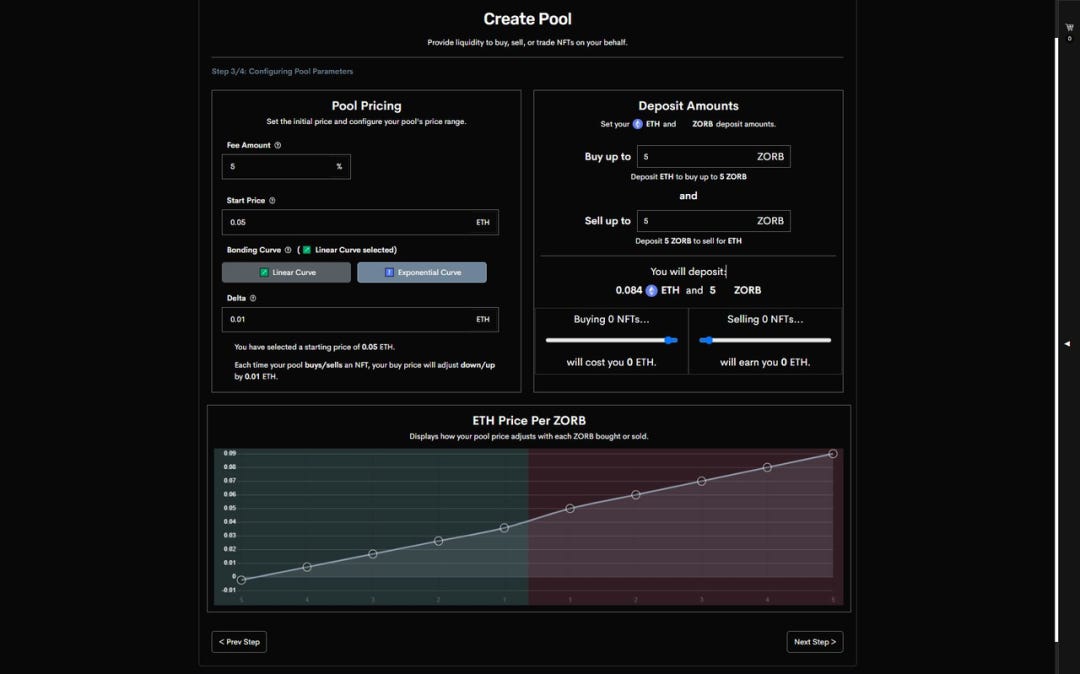
Overall, through AMM mechanisms and Bonding Curve price adjustments, sudoswap forms a decentralized NFT trading platform. Compared to OpenSea, it charges lower trading fees (0.5% vs. 2.5%) and does not collect royalties (vs. OpenSea’s 7.5%), significantly reducing transaction costs. Moreover, its fully on-chain, smart contract–driven design feels more crypto-native.
As a new platform, whether these advantages translate into real-world performance requires data validation.
Sudoswap Data Performance
Sudoswap’s current data situation can be summarized in one phrase: small absolute numbers, but rapid growth.
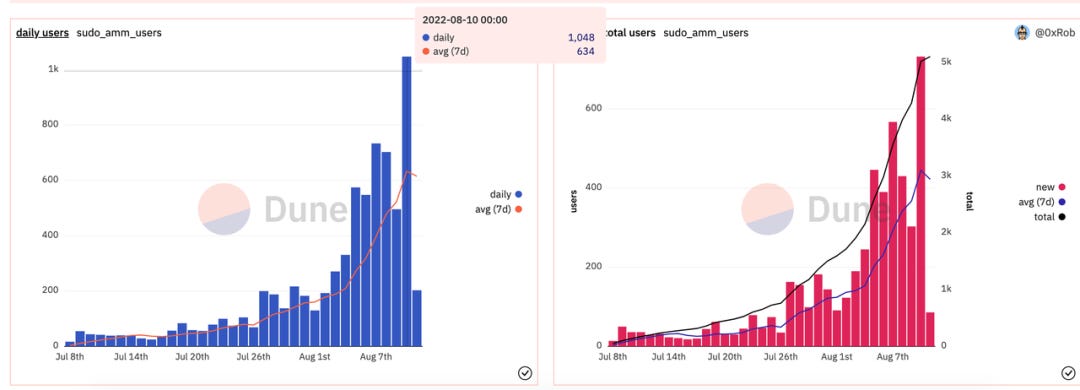
According to Dune analytics provided by the team, total users stand at around 5k, with peak daily active users around 1k. However, an undeniable trend is rapid user growth. Just one month ago, daily users were around 40—now they’ve increased by 25x.
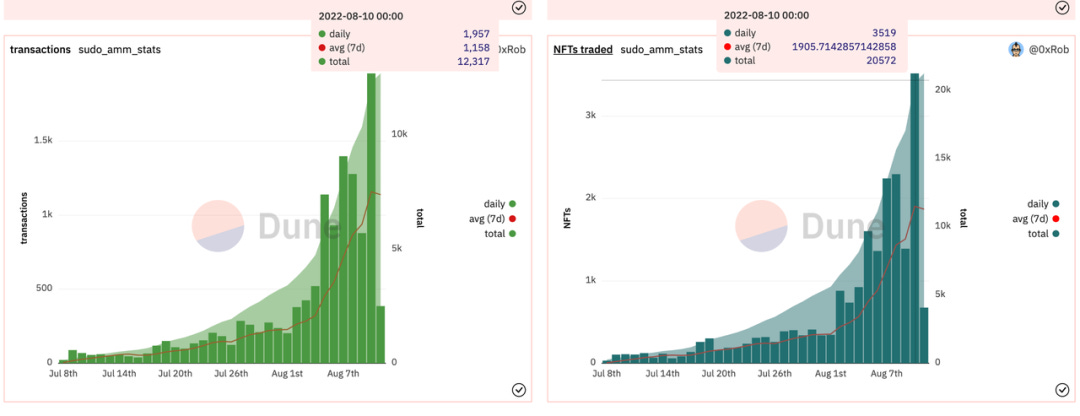
Transaction frequency has grown alongside user numbers. Daily trades now hover around 2K, involving roughly 3,500 NFTs—compared to under 100 trades a month ago, this growth is equally impressive.
From public information, we find no evidence of trading incentives like "trade-to-mine" or marketing campaigns. Excluding potential wash trading, the organic growth in user acquisition and activity suggests that sudoswap’s AMM design and low fees are addressing real market pain points: high NFT trading fees and poor liquidity. The market has suffered long enough.
By contrast, OpenSea sees tens of thousands of daily active users. While sudoswap’s scale pales in comparison today, over time—with marketing expansion and anticipation of the SUDO token launch—its user and engagement metrics are likely to keep growing.
Team and Economic Model
Founder Hints at SUDO Token and Airdrop Expectations
Sudoswap was built by an anonymous development team of three members, all identifiable on Twitter. Their profiles indicate prior experience developing other NFT and DeFi protocols.
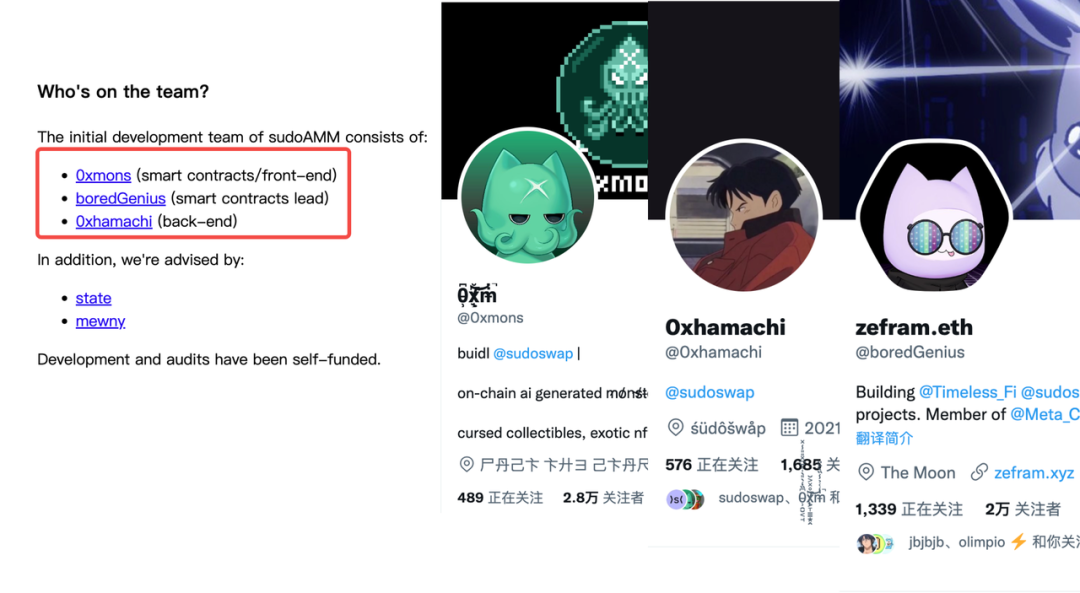
The lead founder, 0xmons, previously launched a namesake NFT project, whose floor price on OpenSea now stands at a high of 20 ETH. Crypto analyst @OlimpioCrypto dug deeper, finding that the project’s XMON token has surged sixfold in the past month alone.
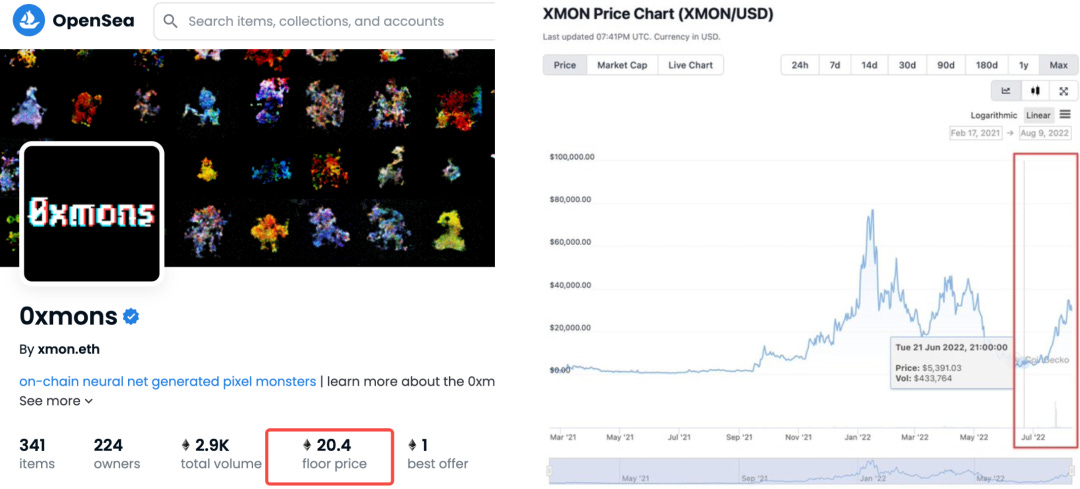
This rise in XMON appears linked to expectations around a future SUDO token airdrop.
According to sudoswap’s official blog, SUDO will serve as the protocol’s governance token, designed with non-transferability and voting rights. Crucially, details about SUDO distribution will later be shared with XMON holders. This serves as a clear hint—though given rising XMON and related NFT prices, the cost of farming a potential airdrop has already increased.
Nonetheless, it’s certain that sudoswap will eventually launch a token.

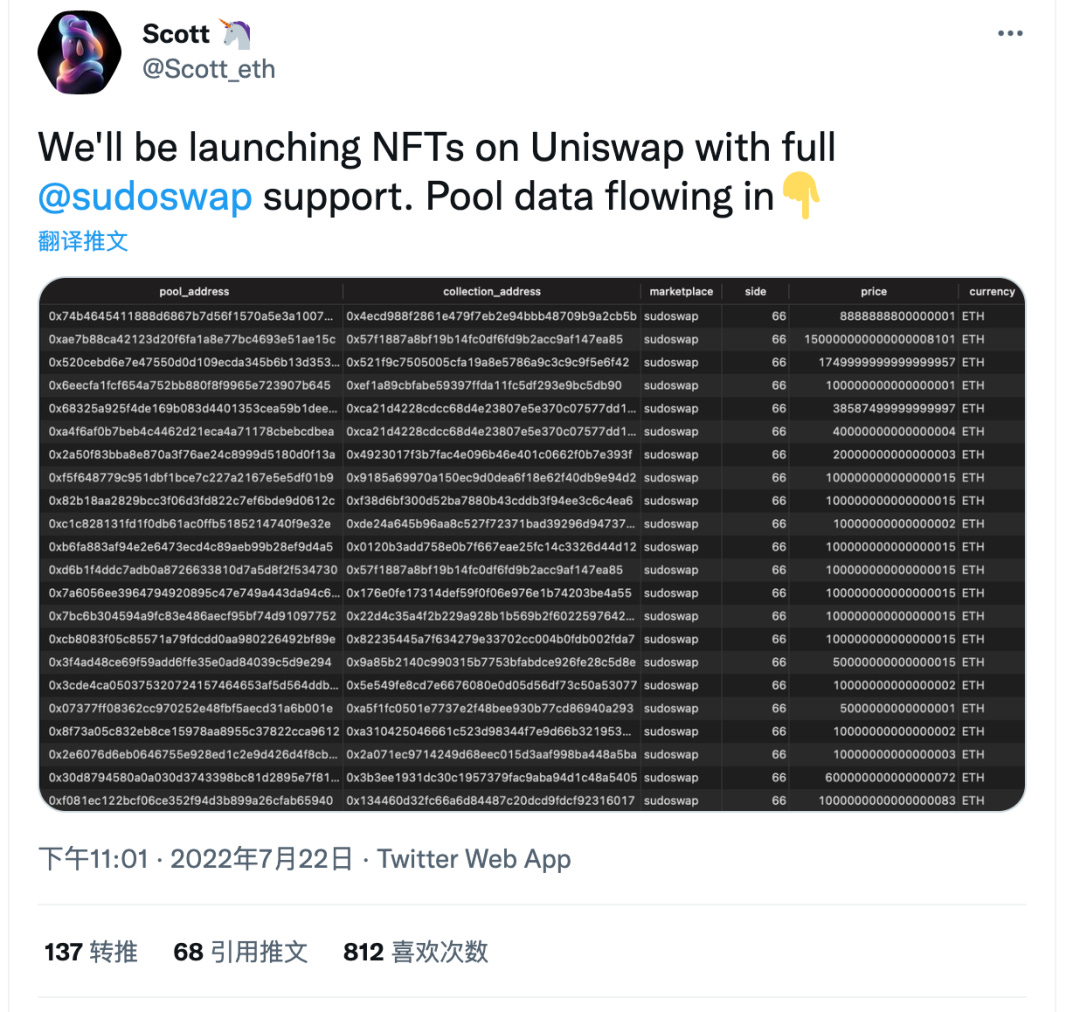
An even clearer bullish signal came on July 23, when Scott, Uniswap’s NFT product lead, publicly announced on Twitter that Uniswap would integrate sudoswap for NFT trading. Given their shared AMM mechanics and vision for decentralized liquidity pools, collaboration between Uniswap and sudoswap makes perfect sense—and boosts sudoswap’s growth potential.
The Future of Sudoswap
Integration with Gaming NFTs May Be the Best Path Forward
To address NFT liquidity challenges, sudoswap offers a remedy via AMM and Bonding Curves. This solution is practical and holds promise in combining two established elements (DeFi + NFT) into a fresh narrative: unlocking liquidity. Yet some fundamental issues remain hard to cure:
Certain NFTs inherently lack liquidity—or perhaps shouldn’t even need it.
For ERC721-based profile pictures and digital artworks, each is unique and distinct. As cultural and collectible assets, these NFTs naturally exhibit subjective valuation, low liquidity, and strong collectibility, leading to high transaction friction and infrequent transfers. Analogous to antiques or paintings in the real world, high liquidity could contradict their intrinsic value.
An imperfect analogy: what would it look like if Picasso paintings were traded as casually as groceries?
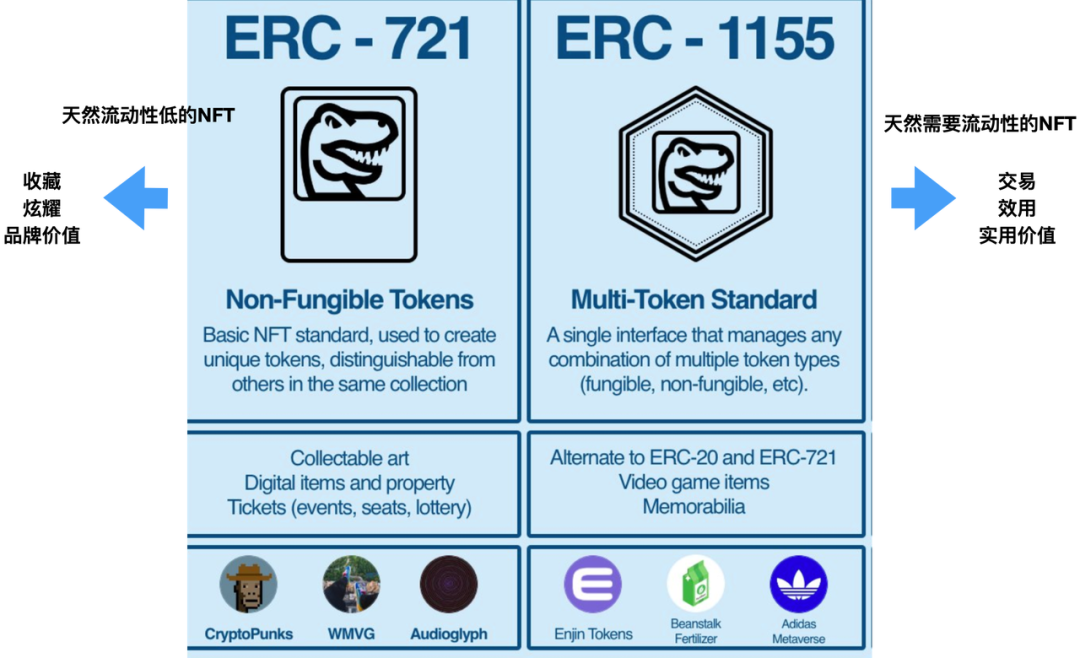
Conversely, sudoswap’s liquidity-enhancing design fits perfectly with another category of NFTs based on ERC1155: in-game items.
These NFTs are characterized by category uniqueness but intra-category fungibility. Copper ore and wood are different NFT types, but if crafting a sword requires 10 copper ores and 5 woods, a natural trading need emerges: since each ore/wood is identical, players require large volumes, high frequency, and fast transactions to fulfill in-game utility. Here, sudoswap’s liquidity provisioning excels—sellers create copper ore pools, buyers use game tokens to fund pools, enabling rapid AMM + Bonding Curve–based trades.
Going further, if Uniswap integrates sudoswap, could every blockchain game’s item marketplace embed sudoswap? Imagine a gaming scenario where players trade seamlessly within the game interface, without needing OpenSea—this would greatly enhance gameplay. In turn, it would also expand sudoswap’s ecosystem.
But this vision depends on broader adoption of blockchain games. Only with more sustainable, engaging, and healthy Web3 games will consistent demand for in-game item trading emerge. Until then, the narrative of improved NFT liquidity may not reach its full potential.
Overall, sudoswap’s low fees, decentralized NFT trading model, and functional completeness give it notable appeal. With solid product maturity and growing user traction, it qualifies as a promising alpha project worth watching. However, because mainstream NFTs fundamentally resist liquidity, sudoswap currently struggles to differentiate scarcity across individual NFTs and cannot solve the problem of fragmented LP pools (everyone thinks their Bored Ape is rare and creates a separate pool).
Yet in the Web3 world, it’s always build first, refine later. By the time everything aligns and becomes obvious, opportunities will have vanished. The market constantly seeks new narratives, and getting ahead of them is key to increasing your odds of success.
Join TechFlow official community to stay tuned
Telegram:https://t.me/TechFlowDaily
X (Twitter):https://x.com/TechFlowPost
X (Twitter) EN:https://x.com/BlockFlow_News






