








Cobo Ventures: A Deep Dive into SocialFi – Exploring the Future of SocialFi from Today's Market Perspective
TechFlow Selected TechFlow Selected
Cobo Ventures: A Deep Dive into SocialFi – Exploring the Future of SocialFi from Today's Market Perspective
Hope to build mutual connections in this world in a genuine and positive way.
 Navigating Web3 tides with focused insights
This article is contributed by the Cobo Ventures team, including Alex Zuo, Ellaine Xu, Yiliu Lin, Hettie Jiang, Walon Lin, Caroline Li, and Yuwei Hou.
Cobo Ventures is Cobo's industry research and strategic investment division, focusing on infrastructure, public chains, cross-chain, scaling, and other foundational sectors within Web3.0, while also maintaining close attention and active investment in application-level areas such as DeFi, NFTs, DAOs, and Social. We aim to empower through deep research-driven investment, incubation, and post-investment support, integrating upstream and downstream resources to build optimal strategic synergy ecosystems, continuously contributing new vitality to the industry.
Please choose your preferred reading format. PDF download links (Baidu Drive / official website):
Preface
1. Why Should We Focus on the Social Sector?
2. Summary of Web 2.0 Social Product Development
3. What Is SocialFi in the Web 3.0 Era?
4. Core Differences Between Web 3.0 SocialFi and Web 2.0 Social
5. Three Foundational Layers for Building Web 3.0 SocialFi
Main Body
6. The Web 3.0 Ecosystem Built on Foundational Infrastructure
Outlook and Conclusion:
7. Current Limitations of SocialFi Development
8. Characteristics of Successful SocialFi Products
9. Outlook: The Future of SocialFi
10. Conclusion
References
Preface
1. Why Should We Focus on the Social Sector
Social platforms control vast amounts of user traffic, profiles, and behavioral data, representing significant commercial value
1.1 Market Size:
According to the 2022 We Are Social report, as of April 2022, there were 5.32 billion mobile users globally, 5 billion internet users, and 4.65 billion active social media users. Active social media users account for 58.7% of the global population, with an annual growth rate of 7.5%, surpassing the 4.1% growth rate of internet users and the 1.7% growth rate of mobile users. GWI’s latest study shows that global internet users now spend an average of 6 hours and 53 minutes online daily. Social interaction is a fundamental need for nearly every user, whether in the Web 2.0 or Web 3.0 era.
1.2 Current Pain Points:
In the Web 2.0 era, tech giants control all user data generated on social platforms and trap users in information silos via algorithmic recommendations. The advertising-based business model floods platforms with viral, sensationalist content, suppressing deeper, more meaningful content creation. Moreover, the revenue derived from using user data and creators’ content is not fairly distributed back to users and creators.
2. Summary of Web 2.0 Social Product Development
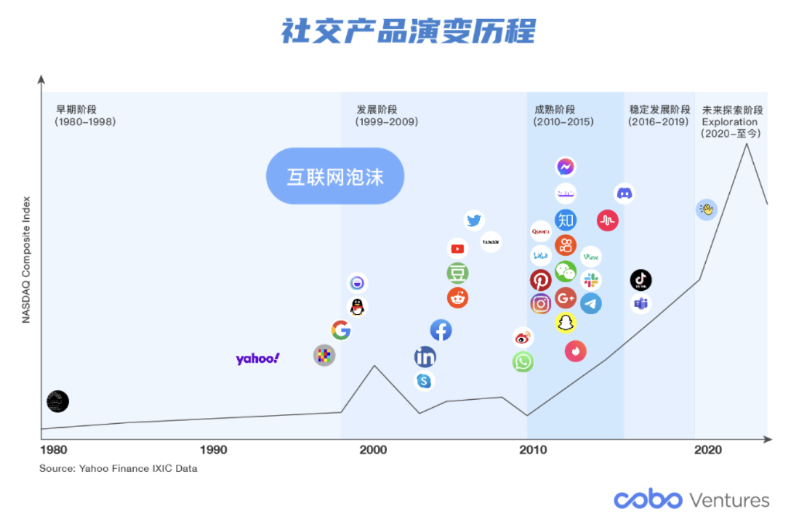
2.1 The evolution of traditional social products can be roughly divided into the following stages:
1) Early Stage (1980–1998): During the desktop computer era, services like BBS forums, portals (Yahoo!), and search engines (Google) emerged, enabling user interaction and information access. Users interacted anonymously under pseudonyms in chat rooms, discussion boards, or specific sections.
2) Growth Stage (1999–2009): In the PC era, personalized websites such as blogs and personal homepages became popular. Users could share personal details, life updates, and other information, connecting with others in a "friend-of-friend" manner, expanding their social circles. Dating sites rapidly gained mainstream traction, bringing real-world identities and relationships into cyberspace. Facebook, founded in 2004, became the world’s most popular social network starting in 2006, establishing social networks as the dominant internet ecosystem.
3) Maturity Stage (2010–2015): With the advent of 3G smartphones, social networking became essential. A flood of social apps emerged, increasingly emphasizing interactivity. Features improved, niche segments matured, and integration with real-life activities deepened.
4) Stable Growth Stage (2016–2019): In the 4G era, social entertainment and commerce grew stronger. People became both consumers and producers of content—“everyone is media.” While market dominance solidified around leading players in each segment, faster internet enabled explosive growth in video-based fields such as live streaming, mobile gaming, and short videos.
5) Future Exploration Stage (2020–Present): In the 5G era, next-generation social tools are still being explored. 5G’s high speed, large capacity, and low latency, combined with IoT, blockchain, and AI technologies, will enable true interconnectedness, placing humans in intelligent, interactive networks that fundamentally change how we communicate. Faster speeds mean exponential growth in shared content. Immersive VR/AR experiences may replace text and images as the primary carriers of social information.
Summary: The evolution of social networks has been driven primarily by upgrades in network hardware and mobile communication technology—from desktops to PCs to smartphones, from 3G to 4G to 5G. Functionality has evolved from basic instant messaging and diverse socializing toward greater personalization, content creation, and monetization, with social platforms taking on increasing commercial roles.
2.2 Web 2.0 Social Products Exhibit the Following Characteristics:
1. Evolution of Communication Methods: Text chatting → photo sharing → voice calls → video socializing (short videos and live streaming).
2. Expansion of Social Scope: One-to-one (messaging) → one-to-many (forums, blogs) → many-to-many (communities, groups).
3. Strong Dominance of Leading Platforms: Major incumbents occupy most of the market, making it difficult for newcomers to gain share.
4. Text-Based Interaction Remains Mainstream, Video Emerges as New Trend: 5G enables stable, high-quality video transmission, enhancing mobile social experience and unlocking new features.
5. Richer and More Novel Use Cases Reshape User Behavior: From friend-based and stranger-based socializing to entertainment and commercial use (e.g., influencer livestream shopping), social platforms increasingly serve as monetization channels.
6. Increasing Specialization of Social Products: Includes instant messaging, video social, photo sharing, personal profiles, Q&A, audio social, dating, forums, live streaming, music social, and microblogging.
7. Greater Emphasis on Community Building: As younger users join, platforms focus on building interest-based communities, leveraging UGC culture to boost loyalty and evolving into many-to-many social clubs.
3. What Is SocialFi in the Web 3.0 Era?
Data is one of the most critical means of production in human society today and in the foreseeable future—and the lever that drives productivity. The biggest difference between Web 3.0 and Web 2.0 lies in Web 3.0’s redefinition of ownership (and derivative rights) over this key resource—data—changing how it flows and who controls it. Through “decentralization,” Web 3.0 returns these means of production to their actual creators, thereby transforming societal production relations.
In Web 3.0 social platforms, individuals gain full control over their social data—a decentralized approach. SocialFi products are built atop Web 3.0 infrastructure, merging user demand for “decentralized social” and “decentralized finance” (i.e., DeFi) into a unified product category. By combining decentralized social and financial systems, they break platform monopolies, eliminate single points of failure, and create entirely new business models and product categories in the wave of the global digital economy.
4. Core Differences Between Web 3.0 SocialFi and Web 2.0 Social
Beyond fulfilling all traditional Web 2.0 social functions, Web 3.0 SocialFi delivers additional capabilities:
4.1 From the Perspective of Social Needs:
The core is returning ownership of digital assets to individuals from centralized platforms. In Web 2.0 social media, users generate content, operators set rules, and data resides on centralized servers, offering no guarantee of privacy.
Using Web 3.0’s decentralized computing, storage, and privacy protection technologies enables:
Platform interoperability, eliminating data migration needs (silos → openness)
On-chain storage provides richer user-accessible information (closed → shared)
Encryption enhances privacy security (leakage/loss/tampering → security)
This enriches user identity attributes, increases the value of personal influence across platforms, and makes individual social impact more prominent than platform power. It encourages personal interests and unleashes participants’ creative potential. Additionally, DAOs can automate identity verification, opening up applications in DeFi such as decentralized credit lending.
4.2 From the Perspective of Financial Needs:
The core is enabling everyone to quickly and easily monetize their social capital through decentralized financial products, accelerating the circulation of personal social influence value. In Web 2.0, platforms capture most revenue via recommendation algorithms and targeted ads, leaving content creators with only a small portion—or none at all.
Finance manifests as rewarding users’ social activities (e.g., creating, commenting, liking) in the following ways:
Basic: Receive Web 3.0 assets (ERC20, 721, 1155, etc.) as “proof of work”
Intermediate: Gain privileges in the Web 3.0 world, such as governance voting rights and whitelist eligibility
Advanced: Help users grow into Web 3.0 KOLs, potentially transitioning into real-world influencers, building personal brands (clothing, music, merchandise), earning fan-based income (books, speeches, appearances)
5. Three Foundational Layers for Building Web 3.0 SocialFi
5.1 Decentralized Computing:
Traditional centralized data processing frameworks are vulnerable to single points of failure, security risks, and privacy breaches. Blockchain is considered a new decentralized computing framework without central entities—all nodes are equal participants maintaining transaction consistency through consensus mechanisms, effectively allowing infinite computational nodes to join. Within Web 3.0 SocialFi, dedicated L1 blockchains like Deso serve as foundational infrastructure, alongside specialized parallel chains such as Subsocial (Layer 1 in the Kusama ecosystem). Compared to general-purpose blockchains, these can better handle the storage and indexing demands of large-scale social applications.
5.2 Decentralized Storage:
Due to high on-chain storage costs, Web 3.0 SocialFi typically uses off-chain decentralized storage. Distributed storage spreads user data across decentralized servers, preventing any single entity from controlling it. This protects data integrity, prevents large-scale loss, and significantly reduces hosting costs compared to centralized platforms. Nodes can also earn additional income via economic incentives; common solutions include IPFS, Swarm, and Arweave:
● IPFS is a distributed peer-to-peer hypermedia protocol, whose incentive layer is Filecoin. Filecoin enables nodes worldwide to store and retrieve data.
● Swarm is a similar decentralized storage network. Unlike Filecoin, Swarm’s incentive system is built-in, executed via smart contracts on the Ethereum blockchain for data storage and retrieval.
● Arweave takes a different path: It promises permanent storage—pay once, access forever.
5.3 Decentralized Privacy Protection:
We can leverage zero-knowledge proofs, such as zk-SNARKs, which allow proving the validity of on-chain transactions without revealing details (sender, receiver, amount), ensuring secure and private transfers between two anonymous users while keeping identities and transaction values confidential.
Examples:
● NYM Protocol Mixnet: Data in NYM uses the Sphinx format—an encrypted packet format that hides the origin and standardizes structure, size, and input/output order, making data untraceable and resistant to attacks.
● DID (Decentralized Identifier): Allows users to control their data, protect privacy, and ensure freedom via open, censorship-resistant networks. Users own their personal data and can carry it across decentralized applications.
6. The Web 3.0 Ecosystem Built on Foundational Infrastructure
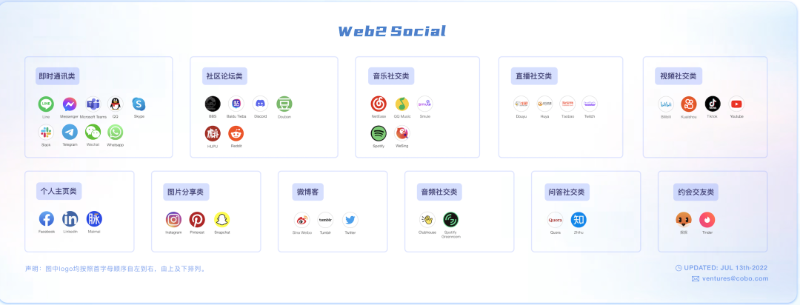
Note: As a fair third-party research institution, project examples below are listed alphabetically within each category.
6.1 Middleware
At the bridge layer, many hybrid Web 2.0/Web 3.0 products have emerged, satisfying user habits from Web 2.0 while serving as gateways into the Web 3.0 world.
Chainfeeds
Source: https://www.chainfeeds.xyz/
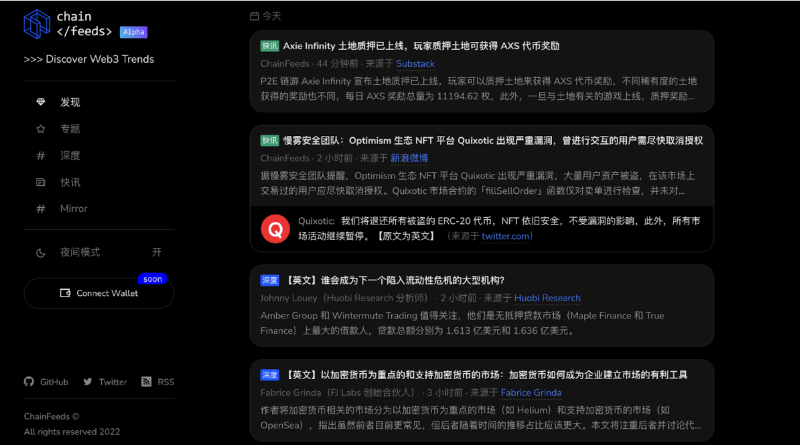
● Overview: RSS aggregator, an open-source, cross-platform RSS reader, currently not yet on-chain.
● Value Proposition: Helps users quickly discover Web 3.0 trends by aggregating specialized information, solving the RSS feed initialization problem.
● Product Features:
1. Web version launched; content divided into modules like Discovery, Topics, Deep Dive, and Breaking News to meet varied information needs.
2. Mobile users can download an ".opml" file and import it into the RSS reader NetNewsWire, which includes over 500 feeds. NetNewsWire is currently available only on iOS.
● User Profile: Web 3.0 researchers, professionals, communities, KOLs, etc.
● Team Background: Founded by Pan Zhixiong, former Director of Research at ChainNews
● Token: None yet
● Highlights: Strong information aggregation capability, influential in Chinese-speaking communities, practical content organization.
● Limitations:
1. No search function on web; users cannot actively search content. Non-iOS users cannot use mobile version.
2. No support for personalized saving or organizing content.
Mask Network
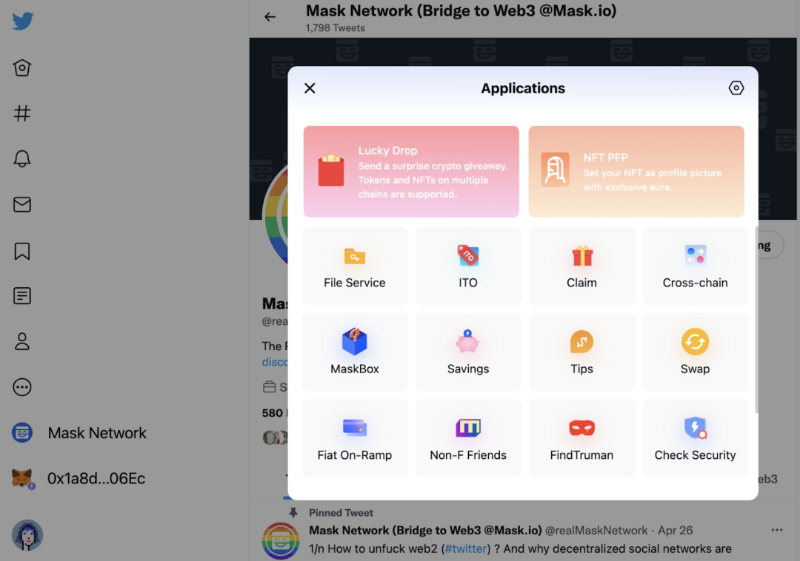
● Overview: Mask Network is a gateway helping users transition from Web 2.0 to Web 3.0, primarily encrypting messages across platforms and expanding into privacy-focused socializing, borderless payments, decentralized file storage/sharing, DeFi, and DAO governance.
● Value Proposition: To provide decentralized tools for the existing centralized internet, bridging the real world and crypto world, enabling data freedom and privacy so every user can control their own data.
● Product Features: Enables Twitter and Facebook users to encrypt messages, send/receive cryptocurrency red packets, launch ITOs, upload/store files decentralizedly.
○ Twitter Red Packets: A collaboration with MakerDAO, allows users to send/receive crypto red packets on Twitter without complex seed phrases. Became one of MakerDAO’s largest traffic sources outside DeFi, attracting attention and participation from Vitalik Buterin.
○ Gitcoin Donations: Allows users to donate directly to Gitcoin projects without leaving Twitter.
○ File Upload/Download: Collaboration with Arweave enables direct decentralized file uploads/stores on Twitter/Facebook.
● Team Background: Founder Suji Yan
● Token Economics: Governance token $MASK grants voting rights in MaskDAO. Distribution: 23% team, 28.45% investors, 39.55% foundation, 7% public sale, 1% liquidity pool, 1% airdrop.
● Highlights:
1. Leverages massive Web 2.0 user bases to bootstrap a large Web 3.0 social ecosystem.
2. As a Web 2.0-to-Web 3.0 middleware, lowers entry barriers, allowing early adoption and brand recognition before broader infrastructure improvements.
3. Similar to mini-programs in WeChat, supports integration of diverse Web 3.0 apps.
● Limitations: Heavily dependent on major Web 2.0 platforms; limited value capture for governance token.
6.2 Public Chain Layer
DeSo
Source: https://www.deso.org/
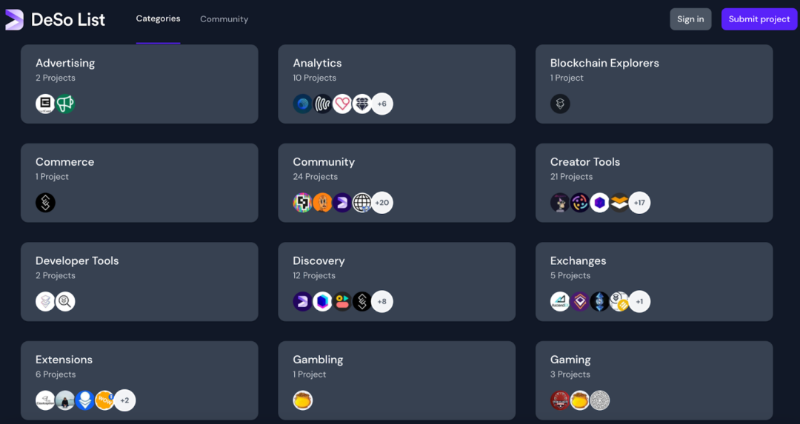
● Overview: DeSo is an L1 blockchain specifically designed for social protocols. Currently hosts over 150 projects, including social apps, creator tools, and analytics platforms.
● Value Proposition: Designed to handle broad social activities beyond simple fund transfers, supporting large-scale social functionality. Any content provider can run a node on-chain, with all user data stored on-chain. Third-party developers can build custom UIs and content distribution layers atop this data.
● Advantages over other public chains:
-
Supports native blockchain social features
-
Over 100,000 nodes joined; average cost per post is $0.000017
-
Stores extensive on-chain data, including profiles, posts, comments, and end-to-end encrypted DMs
● Product Features:
-
Social Tokens: Every user on Deso automatically receives a “creator coin” upon profile creation. Price rises with purchases, falls with sales. Buying someone else’s “creator coin” grants benefits such as exclusive content, membership perks, event access, or investment opportunities.
-
Social NFTs: Users can display purchased NFTs on their profile and interact via comments, likes, and sending “diamonds.”
-
Social Tipping: The “diamond” feature acts as tips, allowing users to reward posts.

Source: Deso Docs
● Team Background: Founded by the creator of Basis, an algorithmic stablecoin protocol
● Token Economics: Single-token model $DESO
-
Distribution: 10.8 million total supply; 2 million to dev team, ~8.5 million released via bonding curve, remainder for mining incentives. $DESO is primarily used to buy “creator coins.”
-
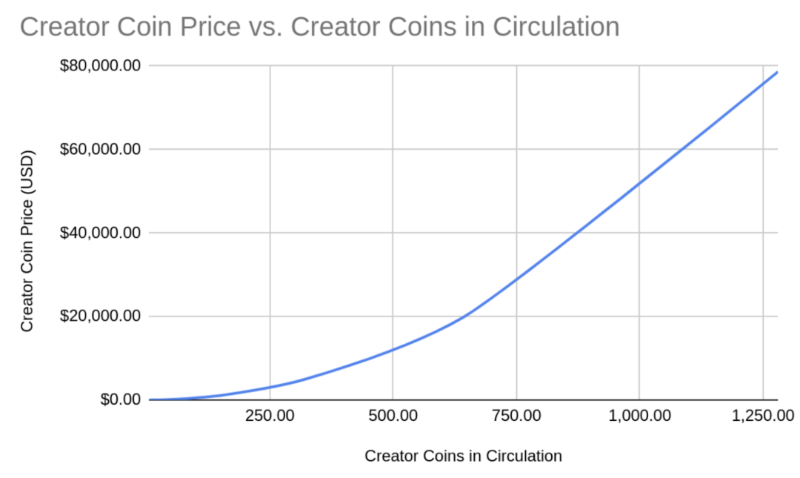
Supply Curve: Each creator’s token supply is capped within a range. As circulating supply increases, price increases (and vice versa), allowing creator influence to be directly reflected in token price.
Source: Deso Docs (https://docs.deso.org/about-deso-chain/readme#the-importance-of-storing-everything-on-chain)
-
Creators can set a reward percentage (e.g., 10%). When a fan buys 1 creator coin, 0.1 goes to the creator, 0.9 to the buyer. This incentivizes creators to promote their tokens.
-
Creators can mint content as NFTs, with part of proceeds going to the corresponding creator coin treasury. Fans can showcase NFTs on their profile for social bragging rights.
-
Creator tokens and NFTs can unlock additional benefits like exclusive content or event access.
● Highlights::
1. DeSo’s main advantage is being an L1 chain purpose-built for SocialFi, capable of running natively without a VM.
2. Open on-chain data enables other developers to build new social apps, fostering shared data and strong ecosystem growth.
● Limitations:
1. Despite performance gains, blockchain still lags behind traditional social platforms in speed.
2. Transitioning from hybrid PoW to full PoS; node anti-abuse mechanisms remain unclear.
6.3 Protocol Layer
BBS Network
Source: https://www.bbsnetwork.io/
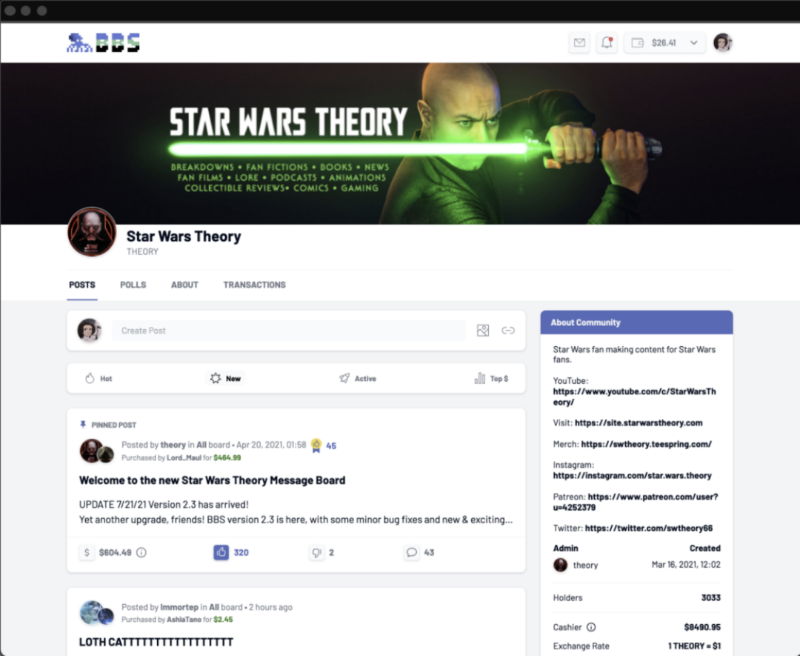
● Overview: A Web 3.0 BBS forum built on EOS. Users can define topics, freely create posts, initiate or join discussions, exchange ideas, and create content. All data is stored on-chain, with every post minted as an NFT that can be auctioned.
● Value Proposition: Build a free-speech, censorship-resistant, user-owned, and revenue-sharing BBS forum, returning content ownership to creators via NFTs.
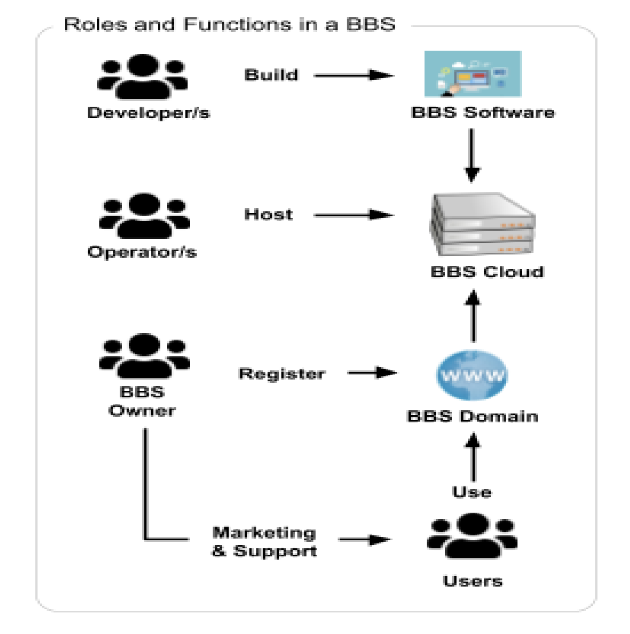
● Ecosystem Roles: Includes developers, operators, forum owners, and users. Developers build frontends based on underlying data, operators provide storage, forum owners create forums, users create and interact with content.
Source: Whitepaper (https://www.bbsnetwork.io/_files/ugd/a5afc9_5e3a4b4acd0f403b887cf54eec8cb2db.pdf)
● Team Background: Founder Eyal Hertzog was former product architect at Bancor Protocol; Guy Ben-Artzi is also a co-founder of Bancor Protocol.
● Token Economics: Dual-token model with governance token $BBS and community stablecoin $CT
1. $BBS is used for community proposals and governance:
-
50% allocated to engagement mining (effectively ad revenue paid to BBS participants), 20% for liquidity incentives, 10% to early investors, 10% reserved for team, 10% for long-term development.
-
Advertisers can buy $BBS to reward ecosystem contributors.
-
Holders can stake $BBS long-term to increase voting power.
2. $CT is a USD-pegged stablecoin
-
Each forum has its own CT token, usable for governance (admins can temporarily freeze member CT).
-
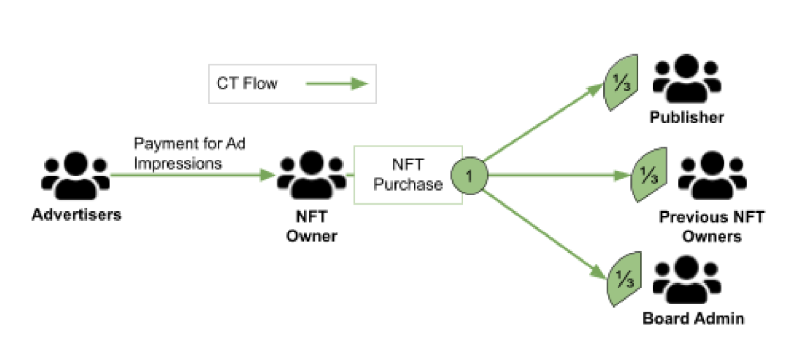
$CT is purchased with $BBS; the spent $BBS goes into the forum treasury. Posts (NFTs) must be bought with $CT.
-
$CT can only be converted back to $BBS by selling NFTs. $1 CT can be redeemed for $1 BBS.
Source: Whitepaper (https://www.bbsnetwork.io/_files/ugd/a5afc9_5e3a4b4acd0f403b887cf54eec8cb2db.pdf)
-
NFTs in BBS Network automatically enter the market. Initial sale price is $0.30, increasing by 30% with each subsequent sale. Of this 30% premium, 1/3 goes to the creator, 1/3 to the previous owner as secondary market profit, and 1/3 to the forum admin. Transparent data allows rational investors to assess NFT ad value and avoid speculation and unequal rewards.
● Highlights:
1. Introduces external positive value (advertisers) via NFT trading, generating community revenue and fairly distributing it to creators, enabling content monetization.
2. Engagement Mining incentivizes the entire BSS ecosystem, attempting to solve low-traffic issues collectively.
● Limitations: Ad monetization allows advertisers to directly purchase top banner space, degrading user experience.
CyberConnect
Source: https://cyberconnect.me/
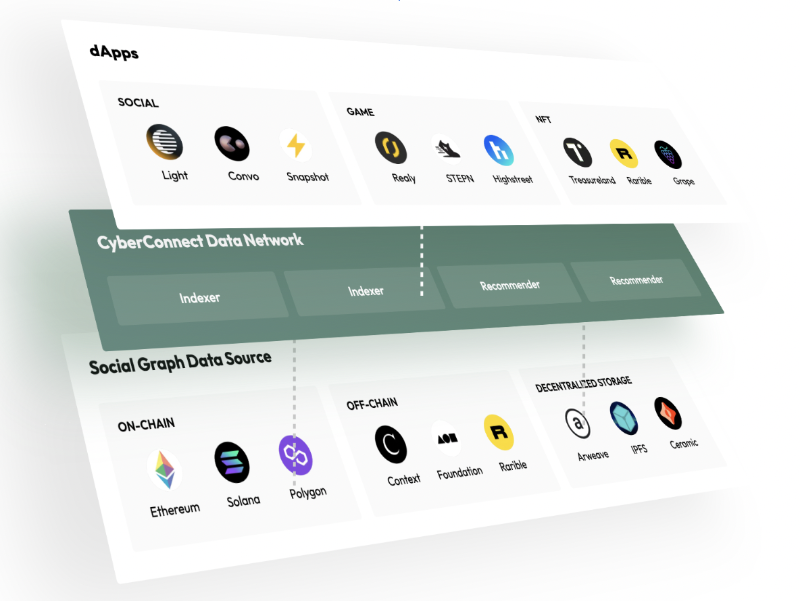
● Overview: CyberConnect is a decentralized social graph protocol enabling developers to easily build DApps on major public chains using this protocol, freeing users from centralized operator-controlled databases. Users can seamlessly migrate portable data across multiple DApps.
● Value Proposition:
-
Composability: Standardized API interfaces allow any developer to integrate CyberConnect’s social graph data.
-
User Sovereignty: All social graph data is publicly accessible, but users retain ownership and management rights.
-
Multi-chain Support: Not limited to a single chain; currently supports Ethereum and Solana.
-
Token Incentives: Uses decentralized DAO governance to reward participants with tokens.
● Product Features
-
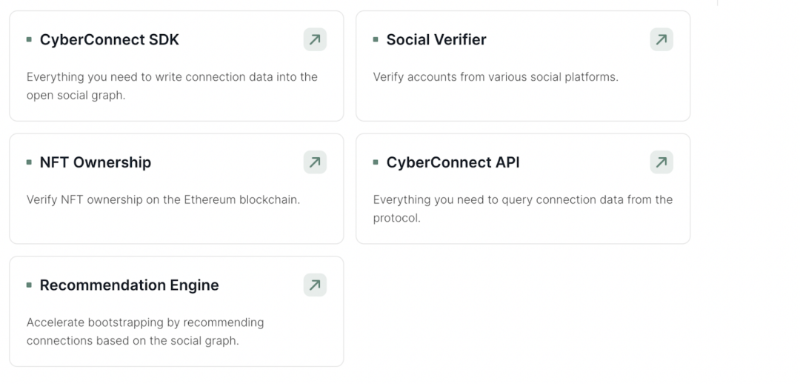
Protocol-side Features:
Source: https://docs.cyberconnect.me/
-
Composable Architecture: DApps can integrate CyberConnect with just two lines of code, focusing on building their social layer instead of reinventing the wheel.
-
Consistent Data Standards: Data interoperability is central to user-centric Web 3.0 apps. CyberConnect developed standards to ensure portability and composability of user social data.
-
Multi-chain Development: CyberConnect enables scalable app development across multi-chain ecosystems, enhancing portability and scalability of Web 3.0 social experiences.
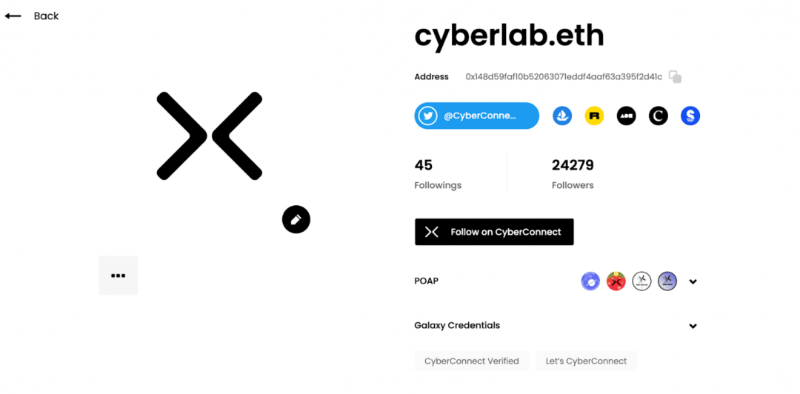
CyberConnect Frontend App Features (same name as protocol):
Source: https://app.cyberconnect.me/address/cyberlab.eth
Profile Display:
-
User-set NFT Avatar
-
Connected wallet addresses, linked Web 2.0 apps and Web 3.0 DApps
-
Follow count, POAPs, and Galaxy Credentials
-
Comment and Mirror Blog features not yet open
Join TechFlow official community to stay tuned Telegram:https://t.me/TechFlowDaily X (Twitter):https://x.com/TechFlowPost X (Twitter) EN:https://x.com/BlockFlow_News
 Cobo
Cobo






