








What practical use cases has NFT actually created?
TechFlow Selected TechFlow Selected
What practical use cases has NFT actually created?
Innovations in NFTs and an assessment of the challenges they will face.
 Navigating Web3 tides with focused insights
Written by: Azf.eth
Compiled by: TechFlow intern
What real-world value cases do NFTs have today? Are there any applications that genuinely impact the physical world? Last week, I asked around about what people are building in this space and how their projects aim to deliver true utility and innovation.
So in this article, I’ll present the innovations I’ve seen, along with an assessment of the challenges they face.
1. Location-Based IRL Experiences
NFTs can act as discount vouchers or access passes for real-life (IRL) experiences. By leveraging founder networks, NFT holders may also gain entry to exclusive events and locations. Examples (NFA):
● @OctoHedz — 50% off water park tickets + holder-only area
● @mdan6425 — Built a members-only club for 500 people; VIP access to MSG/MetLife/etc.
● @racs_o — Created a PASS + Airbnb-style property for Caribbean events
2. Rewarding Loyal Users with NFTs
NFTs function like lifetime premium memberships, offering discounts on specific services or physical goods. Examples (NFA):
● @wellcomebrand — Web3-native wellness brand providing samples and early access to new products for holders
● @JibarosNFT — 20% off medicinal cannabis purchases for holders
● @houseoffitteds_ — Free tattoos, haircuts, and exclusive merchandise
3. Redeeming Digital/Physical Goods
NFTs can be redeemed for physical items or automatically entered into raffles for special prizes, helping increase tradability of physical goods. Examples (NFA):
● @hspepperparty — NFT metadata customizes your personal hot sauce blend
● @VisibyVincent — Handcrafted furniture line based on MAYC
● @TLDR_LockerRoom — Raffles for football matches, World Cup tickets, memorabilia
4. IP Certificates
Many either create NFTs to serve as intellectual property (IP) for films or are developing film projects based on NFTs. The role of NFTs as IP will likely become one of the main reasons people buy them long-term. Examples (NFA):
● @LittleSinz — NFT-based live-action film/TV series
● @hiddenonesNFT — First cinematic universe where holders own full brand IP rights and co-create official films
● @NonFungibleFilm — Entertainment studio bridging Web3 and mainstream media
5. Web3 Platforms
Builders are creating platforms and tools that expand the NFT ecosystem. By partnering with existing brands and enterprises, these projects add NFT/Web3 abstraction layers that bring value to both businesses and customers. Examples (NFA):
● @FLOLiO_ — Largest, most accurate NFT portfolio tracking website
● @jeremyknowsVF — Messaging and real-time alerts built for token holders
● @smeistyco — Community platform offering business services for NFT collectors and owners
● @ConfettiFinance — Lending using NFTs as collateral
● @RooTroopNFT — First on-chain job marketplace
● @wenmint_nft — Launchpad platform for founders launching NFTs
● @alphafivenft — Multi-chain analytics tool
6. Niche Communities
NFTs help bring like-minded individuals together, with funds raised from mints used to attract more members. Examples (NFA):
● @FitFriends_NFT — Web3 community focused on mental and physical well-being
● @safaryclub — Community of Web3 leaders sharing tactical insights
● @bapesclan — Community investing in and growing other NFT projects
7. AI + NFTs
We've already seen this in many art projects, but now teams want to fully leverage AI to make NFTs smarter. Specifically, bots trained via ML and large datasets perform specific tasks, with NFTs serving as pre-configured agents. Examples (NFA):
● @BrightNFT_AI — Creating AI-driven interactive NFTs
● @altstatemachine — Create, train, and own the world’s first non-fungible intelligent NFT avatars
● @real_alethea — Decentralized protocol enabling creation of interactive/smart NFTs (iNFTs)
Alright, now you’ve seen various forms of NFT utility with concrete examples. What challenges do they face? Why will most fail? Let’s dive deeper.
1. Small Target Audience
Over 1.5 million wallets have made at least one transaction on OpenSea. Accounting for active traders and multi-wallet users, the actual number of NFT users is likely between 100,000 and 200,000.
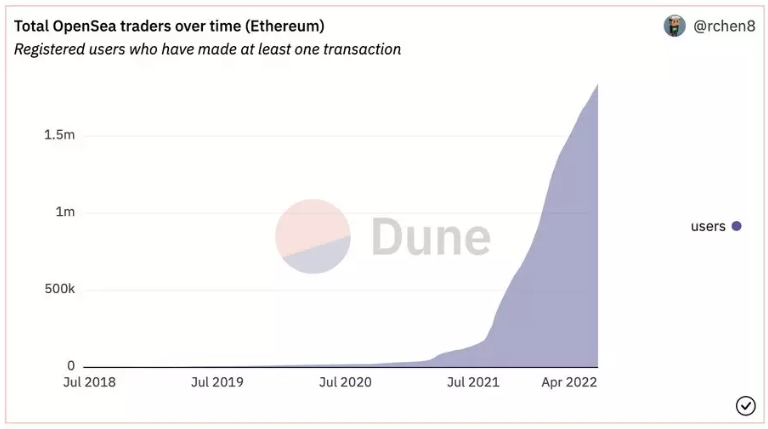
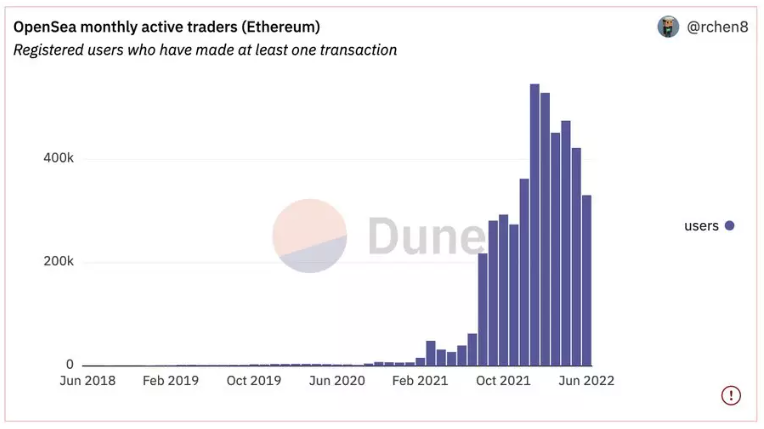
This means it's the maximum potential user base for your product. And since most are purely speculative, your pool of genuinely engaged users becomes even smaller.
2. NFTs Are Not Necessary
Membership represented by NFTs could just as easily be handled via email + credit card, plus a “I was an early adopter” certificate. Film funding could come from seed rounds. NFTs aren’t essential—they’re often just alternatives. For traditional investors, equity > NFTs. From a collectibles standpoint, NFTs need stronger branding, otherwise they remain speculative assets.
3. Technology > Use Case
Rather than identifying gaps in existing products, we're overly focused on adding "decentralization" to current offerings—similar to the AI/ML hype cycles years ago.
I love the novel experiences enabled by technologies like NFTs. But the only products/services that win long-term are those solving problems more seamlessly than their Web2 counterparts. Today, most NFTs rely primarily on novelty.
4. Unclear Return on Investment (ROI)
When I purchase any product or service, I expect a return equal to or greater than what I paid—that's basic capitalism. This applies to NFTs in two ways:
1) Is the physical product or IRL experience high quality?
If it’s a brand-new project, how do I know you’ll actually deliver an amazing new product/service? Simply slapping “NFT” onto an existing category doesn’t make it good.
2) Assuming “XX-to-Earn”—will I get my money back?
As an NFT buyer (excluding secondary sales), I must assume heavy usage. For example: a lifetime Netflix pass—when will I break even? Will I really watch that much TV?
Without a proven product and requiring upfront financial commitment, it's hard to justify buying the NFT over waiting for better consumer alternatives. You could resell it, but if the project fails, no one will want to buy it.
6. NFTs Are Still Too Early
This is the final—and most important—point. Not enough people understand NFTs. User experience remains poor. Few utilities exist that would convince average consumers to buy NFTs.
On the latest BanklessHQ podcast, Mark mentioned that during the early internet era, nobody wanted to build streaming—it was too cumbersome. People only started adopting it when they wanted to listen to their favorite sports team on the go.
There’s still no killer use case compelling enough to bring ordinary people onto blockchains—something uniquely impossible on Web2. When that day comes, everyone will flood into crypto—not for speculation, but for real utility.
Summary
Right now, it’s crucial to experiment early with real NFT use cases. Despite the hype/speculation, many utility-focused NFTs continue selling—even in bear markets. Key question for NFT buyers: If collectible value and speculative value were zero, and only utility remained, would I still buy this NFT?
I hope every project succeeds. This is simply the state of NFTs as of June 2022. I still believe in Web3 builders, and I believe NFTs will eventually go mainstream.
Join TechFlow official community to stay tuned
Telegram:https://t.me/TechFlowDaily
X (Twitter):https://x.com/TechFlowPost
X (Twitter) EN:https://x.com/BlockFlow_News






