








《Gamefi链游经济模型的未来之路》Fourth Part: Why Does Everyone Love the Metaverse?
TechFlow Selected TechFlow Selected
《Gamefi链游经济模型的未来之路》Fourth Part: Why Does Everyone Love the Metaverse?
The metaverse economy is vast and complex, akin to Lego.
 Navigating Web3 tides with focused insights
Author: Guatian from W Labs
(6) Interconnected Metaverse Scenarios
In the previous article, we discussed how nesting game projects within each other can extend a game's lifecycle—currently the most cost-effective economic model adjustment strategy. In Guatian’s view, this “nesting” approach still belongs to the realm of "technique" (shu). Is there a better solution that could rise to the level of "principle" (dao)? We suggest exploring metaverse scenarios combined with NFT-centered models.
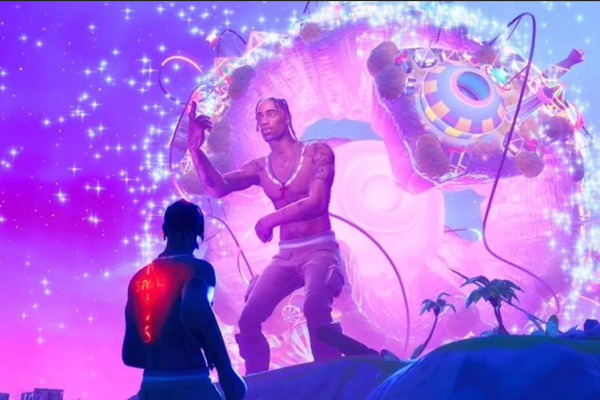
Ever since Facebook rebranded itself as Meta in 2021, the concept of the metaverse has captured widespread attention, making people feel that the world depicted in *Ready Player One* is just around the corner—a future where real and virtual worlds merge. Guatian isn’t a metaverse expert, so we won’t dive deep into philosophical discussions here. But from the perspective of GameFi economic models, metaverse scenarios are clearly a more optimized choice than internal project nesting: they extend the nesting mechanism beyond individual projects, creating alliances and interconnections between different projects, forming a new symbiotic network. As a result, the lifespan of any single project can be prolonged through support from others.
You may have seen this scene in movies: amidst a snowstorm, a caravan advances along a narrow mountain path clinging to a cliffside. To prevent anyone from accidentally slipping off, everyone is tied together with ropes. Even if one person falls, the strength of the other ten or so can stop the fall.
The same logic applies in the metaverse. Let’s follow our usual practice and look at some examples. Gala, which has been hot all year, claims it wants to become the Steam of blockchain gaming. Its confidence comes from two aspects: first, the Gala token gains utility across all games on the platform—for example, purchasing NFTs; second, all games’ NFTs are interoperable across the platform (though I remain skeptical about actual implementation—how would external games not developed by Gala accept its NFTs?).
From this, we can deduce two points: as long as new games keep joining the Gala platform, the Gala token will continue to gain utility; and as long as the Gala platform exists, NFTs from individual games retain permanent value within the ecosystem. Even if a specific game shuts down and its tokens lose value, the NFTs persist on the platform—their worth determined by community consensus.
Gala’s design is idealistic. While the real-world performance of the GALA coin hasn't been as strong as many hoped, it’s still alive—at least unlike many single-project games from the same period that have already vanished. Currently, Town Star and Spider Tank on Gala offer moderate-to-high playability, though development progress is slow. Perhaps the founding team already made a fortune during the GameFi boom of 2021—why work so hard now? That’s just human nature. Another example: the ever-recurring StepN. During its turbulent times recently, it launched an activity similar to private servers, essentially saying: developers running StepN clones or those wanting to build projects around StepN,
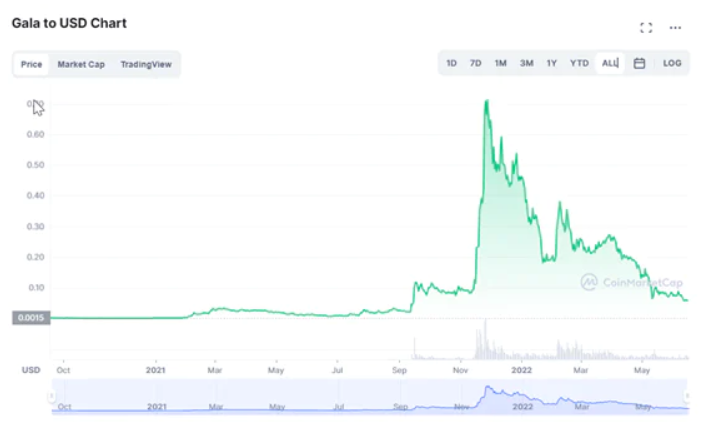
you’re welcome to join StepN, share our 700,000 daily active users—but your project must use our GMT token, help absorb GMT’s selling pressure, let’s go full metaverse together, and each get what we need.
Another case: Axie recently announced plans to bring twelve new games onto its platform, including Axie itself—jokingly dubbed "Vietnamese Thirteen Spices, Lobster Chain Gang." With thirteen interconnected games, they seem capable of supporting each other. Still, Guatian remains skeptical about the "Thirteen Spices"—if you end up with terrible partners, it could backfire (imagine Germany and Italy in WWII...).
(7) Classification of Metaverse Games & NFT-Centric Economic Models
Alright, readers likely now understand the benefits of metaverse scenarios for GameFi economics. But how do we implement them? As of now, no fully successful metaverse GameFi economic model exists in the market. At Guatian Lab, we’re developing several approaches—one particularly well-received direction being: shifting from a "tokenomics-driven" model to an "NFT-driven" model, because NFTs inherently possess strong asset stickiness, low liquidity, and high programmability.
Let’s start with classification. Broadly speaking, NFTs in metaverse projects fall into three categories:
● PFP-type: Representing community consensus and avatar identity. In many projects, players use these PFPs as passcards to enter the metaverse product—though this creates certain issues we’ll discuss later;
● Land-type: Representing a player’s main base in-game. These easily foster consensus among players that “this NFT holds the highest in-game value,” much like how urban middle-class wealth concentrates in real estate;
● Item-type: Analogous to 'clothing, food, transportation'—consumables that wealthy players buy immediately, while others save up until they can afford them.
Currently, the most eye-catching NFTs in the market are PFP-type—BAYC, Azuki, etc.—because metaverse gaming hasn't taken off yet, so communities rely on profile pictures to expand social attributes. You’ve got a monkey, I’ve got a bean—pleased to meet you, fellow elite. Maslow’s first psychological need—"recognition"—is instantly fulfilled. However, in terms of creative potential within metaverse environments, land-type NFTs far surpass PFPs. They allow infinite customization: design, zoning, advertising, architecture, functionality—and countless gameplay variations. Therefore, Guatian’s metaverse economic model primarily revolves around land-based NFTs.
Now, breaking down land NFTs further, developers offering virtual land sales can be divided into three types:
Type 1: Masters of Timing ("Heaven’s Timing")
Examples include Decentraland and The Sandbox—early entrants backed by powerful investors (Grayscale and Animoca respectively), who cashed out heavily during the 2021 bull run. For instance, Sandbox went wild selling plots of land.
Those mastering "heaven’s timing" are like gods drawing arbitrary circles in untouched wilderness and declaring, “This will rise—buy it!” Followers rush in accordingly. An imperfect analogy: Shenzhen at the beginning of China’s reform era—special policies came first, then Deng Xiaoping’s southern tour ignited explosive growth. A former fishing village became a major metropolis, with land values soaring from zero to astronomical heights. But here’s the question: after 2022, do the big players behind Decentraland and Sandbox still wield such divine influence?
Type 2: Masters of Location ("Earth’s Advantage")
In the real estate world, the key is always “location, location, location”—Li Ka-shing’s famous quote. And location is defined by landmarks: Beijing’s CBD, Shanghai’s Oriental Pearl Tower, New York’s Central Park. Land adjacent to such landmarks commands the highest prices.
What serves as landmarks in the metaverse? Playable, engaging projects that attract crowds and deliver fun experiences. If a metaverse contains one or two such standout projects, it gains “earth’s advantage.” Players feel confident buying virtual land there, knowing it’s relatively more valuable compared to other metaverses.
Blockchain games are the most likely candidates to achieve this “earth’s advantage” because, compared to other metaverse applications like galleries, hospitals, schools, or marketplaces, games naturally inherit massive Web2 user traffic. Web3 adds decentralized ownership of assets. As long as the game is enjoyable and easy to access, transitioning Web2 players becomes inevitable. Guatian predicts the first truly successful metaverse project will center around a massively popular game.
There are no official success stories yet for “earth’s advantage”-type metaverse projects, but Ultiverse on BNB Chain is worth watching. Hopefully, their first game, Endless Loop, will become the flagship title driving the entire Ultiverse ecosystem forward.
Type 3: Masters of Community ("Human Harmony")
The case is clear: Yuga Labs building the Otherside metaverse. Leveraging its top-tier NFT status, Yuga entered the metaverse race—minting tokens, selling land, and actively developing the Otherside game. It enjoys built-in player traffic, akin to having the “Wenzhou real estate investor group” in the physical world. This type of project has both users and capital—currently holding the strongest edge among the three categories of land-sale-focused initiatives.

In summary, "human harmony" projects are most likely to succeed short-term—people are crypto’s primary productive force; "earth’s advantage" projects depend on game quality, where fun titles can draw crowds; "heaven’s timing" projects face uncertain futures unless continuously propped up by influential backers.
Returning to metaverse economic design: as mentioned earlier, Guatian believes such models should revolve around land NFTs—not only due to their high customizability but also because using PFP NFTs as entry passes creates a dilemma. If centralizing the model around PFPs causes their prices to skyrocket, it blocks new players from joining. Fewer players mean the metaverse eventually dies out. That’s why I suspect that even if Yuga Labs builds a full metaverse, they won’t use their ape family NFTs as mandatory entry tickets—the audience pool would simply be too small.
Guatian’s envisioned Module A of a metaverse economic model looks like this:
● Low entry barrier—even no need to purchase a PFP-style avatar as a passcard. Simply register an account and start playing. Everyone starts equal and free;
● After entering, players earn wealth within the metaverse (exchangeable for tokens) via trading, gaming, gambling, showcasing, etc. Upon reaching certain capability thresholds, the system automatically distributes tiered PFP NFTs—social classes begin to form;
● Latecomers must have opportunities to catch up—class mobility shouldn’t freeze. Continuous upward mobility for underprivileged players is a critical prerequisite for self-evolution of the metaverse.
Some players might ask: “I have rich backers—I’m wealthy. Can’t I dominate right from the start?” Don’t worry—there’s also Module B. That’s where land NFTs come in. Wealthy players can bid on these NFTs—let free-market forces decide. The model should channel token flows toward land NFTs, locking highly liquid tokens into these assets, turning land NFTs into value sinks. Could some land NFTs become overvalued? Of course—but Manhattan land costs vastly more than Alaskan tundra. Let the invisible hand of the market balance things out.
Finally, Module C involves item-type NFTs—encouraging consumption and spending tokens! Want to dress your PFP NFT in a bikini? Buy it! Want to speed up access to other metaverse zones? Get a Lambo! Want VIP front-row access to Texas Hold’em cash tables without waiting? Grab a diamond membership card!
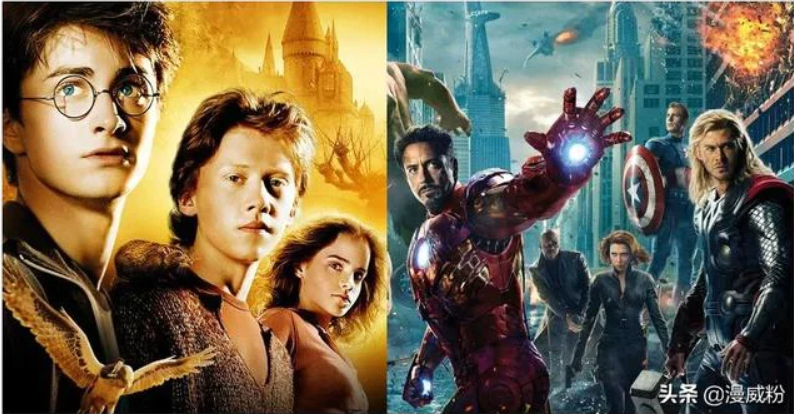
Imagine entering a metaverse: you start naked in an MMORPG, slaying monsters. As you level up, you receive a PFP NFT. Then, hand-in-hand with a new friend, you visit a 4D cinema, solve three puzzles from the movie, and earn token rewards. Next, you head to the casino and rake in winnings with sharp poker skills. You bid on a promising plot of land NFT at auction, launch a restaurant and auto repair shop in a life-simulation game, and gradually become an elite figure in that realm. One day, fate smiles—you’re handed a red pill and a blue pill by Trinity from *The Matrix*. Without thinking, you swallow both, transform into a Super Saiyan, and find Iron Man standing beside you, inviting you to fight Thanos—with the Seven Calabash Brothers joining too. Midway through a time-space wormhole, coordinates glitch—you crash-land at Hogwarts, bumping into your childhood crush, Hermione...
As you keep playing, highly liquid tokens either sink into asset-backed NFTs or get spent on consumable NFTs that enhance gameplay—thus correcting Ponzi dynamics. Project teams can establish a DAO treasury acting like a central bank (similar to the Federal Reserve), adjusting monetary relationships within the metaverse: Keynesian during recovery phases, Hayekian during stable prosperity.
To sum up, interconnected metaverse scenarios may provide deeper immersion than nested gameplay mechanics within a single game, moving further away from Ponzi schemes. An NFT-centric economic model should replace today’s token-centric models—it’s better suited for metaverse environments. Implementation must allow fair access for ordinary players (making high-value PFP NFTs unsuitable as entry passes), while delivering personalized experiences for players of varying levels and wealth—ensuring freedom and inclusivity.
The metaverse economy is vast and complex—more like LEGO bricks snapping together. We hope fellow thinkers will join us in exploring these ideas. Next time, we’ll discuss the fourth evolution path of GameFi economic models: special economic game theory designs.
To be continued.
Note: This article is also part of Guatian’s research submission to SeeDao Research Guild titled *The Future and Development of GameFi Economic Models*. Welcome SeeDao members to join the discussion!
Previous articles:
1. *The Future of GameFi Game Economic Models* – Part One: The Death Spiral of GameFi 1.0
https://mirror.xyz/iamwgg.eth/RbP7QUZY7T4wu81qW6n_8rXbO9wuf50ngr8GRaQDv-Q
2. *The Future of GameFi Game Economic Models* – Part Two: Fun Is Kinghttps://mirror.xyz/iamwgg.eth/-EcYH0rzxMn8VrsmGxxMztUup5hVfah7jLDfEaK54Eg
3. *The Future of GameFi Game Economic Models* – Part Three: The Application of Nesting
https://mirror.xyz/iamwgg.eth/n_H7Hk8_nZvqf4syUHoEs4TPPa0Kh_p-8glR9C8Sw2I
Join TechFlow official community to stay tuned
Telegram:https://t.me/TechFlowDaily
X (Twitter):https://x.com/TechFlowPost
X (Twitter) EN:https://x.com/BlockFlow_News
 瓜田实验室W Labs






