








How to use NFTs to build a stronger community on the new social collaboration layer?
TechFlow Selected TechFlow Selected
How to use NFTs to build a stronger community on the new social collaboration layer?
The same forces are pushing NFTs and Bitcoin into the mainstream—the engaged communities and the driving power of reflexivity.
 Navigating Web3 tides with focused insights
01 Crypto as a Mechanism for Community Building

The hidden truth about crypto is that its most powerful weapon isn't decentralization, but its ability to build tightly connected communities from scratch—bottom-up. Here, the term "community" doesn’t mean simply creating a group on a messaging app; in fact, a community doesn’t even need to take the form of a group. The core of a community should be a shared recognition among people of certain values, utilities, or objects—and the fastest way to generate this “consensus” is by making them skin in the game.
Skin in the game means having real stakes, actual financial investment, and real pain if things fail—only then will people truly care and participate. Put plainly, crypto’s powerful community-building capability stems from price. Take Bitcoin as an example: it's the most extreme case of a "community-driven" project. Satoshi merely provided the initial prototype and enlightenment, then disappeared entirely. Yet Bitcoin survived as an ownerless system thanks to continuous advocacy and dedication from its community. These individuals not only believe in Bitcoin’s values, but crucially, they have skin in the game—they’ve invested real money. I’m not suggesting they advocate solely out of fear of losing money. On the contrary, I believe money doesn’t corrupt sincere belief—it strengthens it. Financial commitment and genuine faith reinforce each other.
Many may share this experience: if you hold a bias against something, try buying a small amount—you’ll find your prejudice mysteriously vanishes. Money is like a drug for the human brain, subtly changing your perspective. You’ll realize your judgment wasn’t objective—it was just because you had no stake before.
02 NFTs as a Complement to Crypto Community Building
Now let’s turn to our current star: NFTs. I believe the force driving NFTs into the mainstream is the same one that propelled Bitcoin—the power of stakeholders and reflexive dynamics. The first point we've already discussed: owning an NFT gives you skin in the game, motivating you to contribute. The second point: the fundamental value of an NFT lies in people’s desire to own it. Price genuinely influences perception—when a picture is cheap, you wouldn’t bother saving it; once it becomes unaffordable, it suddenly looks more appealing. The higher the price, the more people want it; the more people want it, the higher the price goes. Recently, so-called “blue-chip” projects—from Azuki to Moonbirds—have clearly recognized this: setting a high initial price can actually be an advantage.
Compared to their fungible predecessors, NFTs further enrich the toolkit for community building. What makes NFTs particularly interesting is their introduction of emotional and cultural dimensions. Humans are emotional beings—images evoke feelings far more effectively than numbers, and are easier to understand. People easily fall in love with cool-looking monkeys, but rarely with cold digits or abstract ideals, which helps NFTs break through into broader audiences. Moreover, from a liquidity standpoint, NFTs are easy to enter but hard to exit due to their non-fungibility. For these reasons, NFTs offer lower cognitive barriers and higher user stickiness, resulting in more resilient communities.
Applying the same lens to DeFi: DeFi attracts profit-maximizing participants. DeFi users make rational, profit-driven decisions. Ultimately, DeFi is a tool—and tools rarely inspire believers, meaning little room for faith-based premiums. While during DeFi Summer, YFI briefly developed a cult-like atmosphere, this “religion” was largely centered around Andre Cronje (AC). Once AC stepped back, the magic faded, and YFI reverted to being just another yield aggregation tool. In my view, for DeFi to regain momentum in valuation, it cannot rely solely on expectations—it must seriously address value capture. A product without value capture, even with market demand, isn’t worth investing in. But that’s a separate topic beyond the scope of this article. Meanwhile, NFT users—even though many are still flippers—seek not only profit but also identity, belonging, and social capital. This introduces a stronger consumption component, enabling us to build a more robust economy on top.
03 NFTs as a Social Collaboration Layer
In my opinion, DeFi’s essence isn’t finance per se—it demonstrates a new model of social collaboration using finance as a testing ground: open-source, permissionless reuse of existing protocols to build new applications and organizations, bottom-up construction of a vast ecosystem.
DeFi revealed the potential of this bottom-up, permissionless, composable approach to collaboration. I believe NFTs are an even better foundational layer for such models. The interconnected system we build from the ground up is essentially a new economy. DeFi resembles a PVP zero-sum battlefield, while an NFT-based economy consists of more consumption—and is thus more stable.
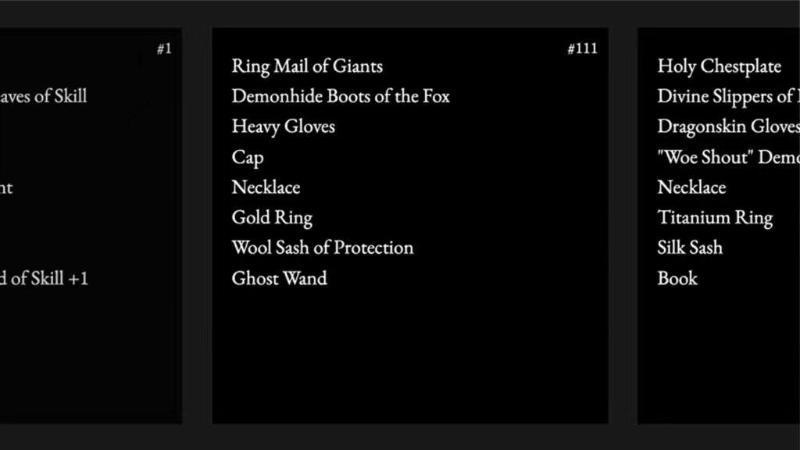
Loot was a remarkably pure attempt in this direction—an intriguing experiment in composability-driven fun. Even today, I still consider it the most fascinating idea in the NFT space. Loot had flaws, but its greater significance lies in showing us a new possibility.
Developers can freely build using Loot’s base components, and their creations can become new building blocks. Loot essentially provides a shared foundation for collaboration—a kind of social collaboration protocol. From here, we can build new PFPs, new gameplay mechanics, even currencies and endogenous financial systems based on NFTs, ultimately constructing a digital nation built on shared imagination.
I don’t know whether Loot itself will reach such heights—it was inherently an incomplete, experimental work. But again, its true value lies in demonstrating this possibility, setting a coordinate. Somewhere down this path, a successor will eventually reach the finish line.
04 Methodologies for Building the NFT Collaboration Layer
Community Equals Everything
Belonging and attention are the oil of the new era. I’ve spent considerable space discussing the importance of “community.” Crypto has always been a fringe revolution—community is what drives it from obscurity to mainstream, whether Bitcoin or PFPs. Creating a solid core is a prerequisite for growth.
Contrary to popular belief, Loot is actually a cautionary tale of failed community building. Premature hype damaged its long-term development. A healthy community should grow organically with early believers who genuinely support the vision. Only after reaching a critical threshold should it enter the hype phase, attracting speculators—then early supporters are rewarded financially for their foresight and loyalty, reinforcing both faith and wealth. These core supporters become the project’s faithful backbone—believers who also have the resources to support it. They are key to success. But Loot attracted too many speculators too early, exhausting its appreciation potential. Speculators came and went quickly, offering little real support.
Rewarding core supporters is crucial. Ape did this well—for example, through airdrops. Though now commonplace, this was a smart move. You can’t grow participation at the expense of existing community members (e.g., via direct token inflation). The demonstration effect of wealth creation is what draws new players. If you harm existing holders and destroy this effect, you lose both old and new participants. By launching secondary series and airdropping them to holders of the core collection, you reward loyal users, strengthen consensus, attract new participants, and maintain clear hierarchy—so secondary lines don’t overshadow the main one.
Build Community First, Then Build Gameplay—Bottom-Up
Currently, two broad development paths are observable. One is traditional, top-down product development—used by Axie and most GameFi projects. The other, shown by Loot, Ape, TreasureDAO, and other NFT collections aiming for ecosystems, is bottom-up.
Bottom-up worldbuilding isn’t unique to crypto. Dungeons & Dragons (D&D) is a clear example—its enduring influence is inseparable from its decentralized, bottom-up development model. In fact, Loot is broadly a derivative of D&D. D&D is a tabletop role-playing game composed of setting and rules, within which players engage in imaginative roleplay—essentially “make-believe.”
D&D’s rules and universe are infinitely expandable, attracting countless third-party creators who have produced outstanding spin-offs across board games, novels, and video games. Works like *World of Greyhawk*, *Dragonlance*, *Dark Sun*, and *Forgotten Realms* emerged from it. *Forgotten Realms* itself inspired famous fantasy literature such as *The Dark Elf Trilogy* and *Icewind Dale Trilogy*.
Countless derivatives based on D&D have profoundly influenced later video games and fantasy literature, especially RPGs. D&D essentially defined the RPG genre—from worldbuilding to gameplay mechanics. Games like *Baldur’s Gate* and *World of Warcraft* are nearly electronic replicas of D&D. RPGs might have existed without D&D, but they would have looked completely different.
The most fascinating aspect is that D&D’s development model was bottom-up. Its massive cross-category expansion was driven by talented third-party creators. Its lasting impact is inseparable from decentralized development—had it relied solely on original authors, it’s hard to imagine such flourishing growth.
Back to crypto: again, take Ape as an example. Ape’s blueprint was built brick by brick—starting with PFPs to form community and culture, then tokenizing the PFP and community, and finally using PFP, community, and native tokens as foundational elements to build social features and gameplay.
Ape succeeded, but didn’t fully unlock the true advantage of bottom-up development. The real benefit lies in creating an open system where third-party developers can freely reuse existing components like LEGO bricks to build new products—becoming a foundational layer for collaboration. This enables decentralized worldbuilding, which is where web3 truly shines—not just companies building products.
Maintain Composability
As discussed earlier, composability is what makes DeFi possible—it’s the foundation of this new collaborative model. We should strive to preserve composability, carefully balancing it with user experience when necessary. It may not need to reach DeFi-level openness—we’ll need to explore this in practice.
“Composability” sounds abstract, but it’s not mysterious: it means open data and code, allowing other developers to freely reuse components without reinventing the wheel. This drastically reduces development friction—a level of freedom no traditional SDK can match. It’s what allows NFT collections to become the basis for protocol-level innovation.
Find Balance Along the Decentralization Spectrum
One lesson from Loot is that complete hands-off governance is impractical. “Entertainment” requires sustained content creation—new content must keep emerging. Unlike BTC or DeFi protocols, which can run indefinitely once functional, this isn’t feasible early on. Especially in the early stages, the project team must proactively develop content, incentivize, and guide developers. Relying solely on volunteer passion rarely gets past the initial bootstrapping phase.
We need to find balance along the decentralization spectrum—perhaps adopting gradual decentralization models seen in leading DeFi projects, where the founding team leads initially. This is also what DAOs are actively exploring. To become a foundational layer, decentralization must remain the ultimate goal—otherwise, we revert to the web2 dynamic of big corporations and dependent small developers, rendering web3 meaningless—a mere slogan.
05 Other Tokenization Matters
A standalone NFT collection has no real need to issue a token beyond short-term speculation and fundraising. Introducing new token holders creates conflict with existing NFT holders, dilutes community consensus, and sows instability. The clash between Loot and AGLD holders already demonstrated this. However, to build a complex system, tokenization is inevitable.
Tokens allow structured release schedules and treasury management, serving as incentives for developers. They act as glue within the ecosystem—developers integrate the ecosystem token in exchange for incentives or support, binding applications and games together into a cohesive whole.
Build Your Own NFT Marketplace
Directing key NFTs to a self-built marketplace enables pricing in your native token. This captures transaction fees and monetizes the ecosystem’s native token. For example, TreasureDAO chose Arbitrum—a chain previously lacking dominant NFT markets. By building their own NFT marketplace priced in native tokens, they’ve become Arbitrum’s largest NFT trading platform.
Players’ Emotional Investment Is Key to Retention and Vitality
Another reason for bottom-up construction is enabling users to participate in worldbuilding. Compared to financial loss, players are far less willing to abandon something they’ve emotionally invested in. For example, Forgotten Runes Wizards offers holders a Book of Lore, where they can write lore for their wizards and display it on the official site.
06 Conclusion
There’s much more to discuss—such as underlying scalability. The above model is absolutely unsustainable on Layer 1; choosing scaling solutions or whether to launch a dedicated chain are important questions. Also, an NFT collaboration layer doesn’t necessarily need to build games—we could even start by building a financial system on NFTs... Due to length constraints, I’ll stop here.
Join TechFlow official community to stay tuned
Telegram:https://t.me/TechFlowDaily
X (Twitter):https://x.com/TechFlowPost
X (Twitter) EN:https://x.com/BlockFlow_News






