








Where Are the Investment Opportunities as Ethereum Approaches "The Merge"?
TechFlow Selected TechFlow Selected
Where Are the Investment Opportunities as Ethereum Approaches "The Merge"?
"The Merge," Ethereum's transition from Proof of Work (PoW) to Proof of Stake (PoS), is approaching and is set to officially launch in the second quarter of 2022.
 Navigating Web3 tides with focused insights
Written by: Cryptopragmatist
Compiled by: TechFlow intern
The "Merge" — Ethereum's transition from Proof-of-Work (PoW) to Proof-of-Stake (PoS) — is coming soon, officially launching in Q2 2022.
While other protocols and products in crypto can rapidly iterate and roll out many exciting new features, Ethereum has remained steadfast and deliberate in its slow march toward a sustainable and scalable blockchain architecture. But this shift from PoW to PoS isn't just for show — it introduces a host of new bullish dynamics that offer deeper understanding and investment opportunities.
-
Predictable block times
-
Enhanced network security
-
Supply/demand dynamics
-
Energy efficiency
Moreover, once the Merge completes, Ethereum will become deflationary — meaning each ETH token will be more valuable as a result of fewer tokens in circulation. Overall, it is widely seen as a strong positive catalyst for ETH.
But beyond simply accumulating ETH, what opportunities exist for retail investors?
Today, we’ll dive into that question and provide you with all the information you need about this revolutionary upgrade to the so-called "World Computer." We’ll also explore why the Merge makes us more bullish on Ethereum than ever before.
Note: This report assumes readers have a solid understanding of PoW and PoS.
Merge Basics: The Beacon Chain
The Ethereum Merge is a hard fork that transitions consensus for all blocks from the current PoW chain to the already-running PoS layer known as the “Beacon Chain.” Launched at the end of 2020, the Beacon Chain has been running parallel to the Ethereum mainnet with around 320,000 validator nodes and over 10 million staked ETH (this number can be tracked here).
But why is this change necessary? Switching to PoS consensus via the Beacon Chain represents a step toward Ethereum’s long-term vision, focusing on:
-
Security: Requires at least 16,384 validator nodes and eventually enables operation using consumer-grade hardware like a PC.
-
Sustainability: PoS consumes approximately 99% less energy than PoW consensus.
-
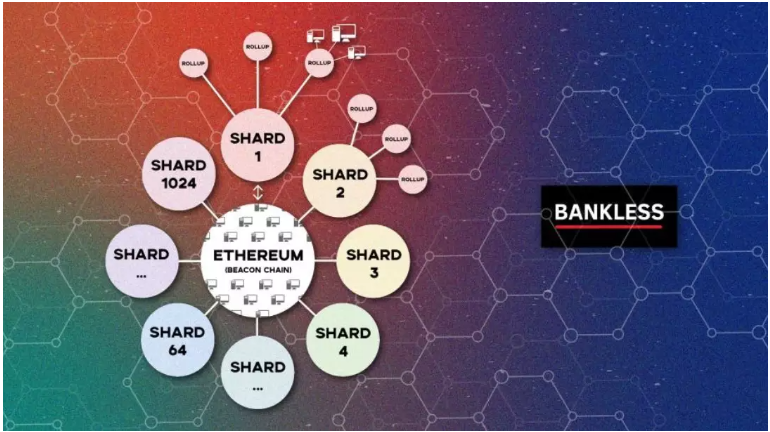
Scalability: Future plans include 64 “shard” chains, with current scaling solutions enabling up to 100,000 transactions per second on Layer 1.

Understanding Staking
The fundamental shift of the Merge is moving the blockchain from Proof-of-Work (powered by miners) to Proof-of-Stake, where validators who hold ETH run the chain. In exchange for maintaining the network, they earn a yield proportional to their staked Ethereum. Just as miners were paid in ETH, validators will now also be rewarded in ETH.
To become a validator on the Beacon Chain, users must deposit at least 32 ETH (worth about $90,000) via the Launchpad, effectively excluding most retail users. Another barrier is liquidity: staked ETH cannot be withdrawn or sold before the Merge.
These barriers have created space for services like Lido and Rocket Pool, allowing users to earn yield on their ETH. These protocols work quite simply:
-
Deposit ETH
-
The protocol stakes your ETH with a validator
-
You receive a liquid (tradable) wrapper token representing ownership of that staked ETH
-
Your staked ETH earns yield
-
You can use this liquid wrapper across various DeFi protocols in the Ethereum ecosystem to boost returns.
How Investors Can Benefit From the Merge
Rocket Pool
Rocket Pool is currently our favorite ETH staking option because it caters well to both small retail participants and those who want to run their own node.
-
For investors: You can gain exposure to Rocket Pool by staking ETH through the platform or buying Rocket Pool ETH (rETH) on the open market. Since rETH accrues yield from staking, the rETH-to-ETH exchange rate continuously increases, making rETH increasingly valuable relative to ETH. Accumulated staking rewards are not distributed until rETH is redeemed, offering tax advantages for long-term holders and a simple way to compound rewards.
-
For validators: Running a node via Rocket Pool is unique and easier than becoming a solo staker through the Launchpad. Anyone can set up a node by depositing 16 ETH plus another 16 ETH in pooled stake (from non-operator depositors), creating a new validator called a Minipool. The minipool is operated by Rocket Pool smart contracts, making it fully decentralized.
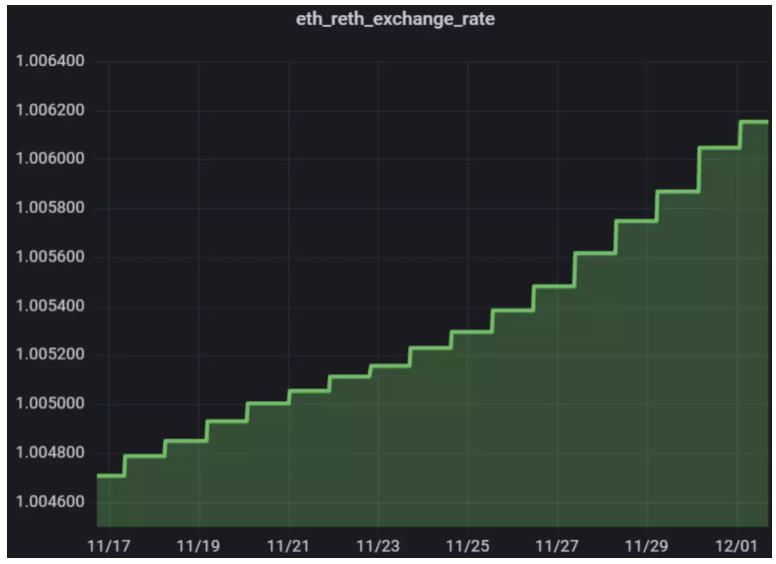
Reasons we like Rocket Pool:
-
Rocket Pool has 973 node operators (highly decentralized)
-
rETH stakers are protected if a node operator fails or behaves maliciously
Rocketscan is a dashboard to explore distributions of validators, node operators, minipools, rETH-to-ETH ratio, and more.
Runner-Up: Lido
Lido, on the other hand, is a straightforward liquid staking protocol that deposits ETH into stETH, offering similar functionality to rETH. Compared to Rocket Pool, one potential advantage Lido holds is scale — it currently has 2.7 million staked ETH versus Rocket Pool’s 150,000.
Additionally, more DeFi applications integrate stETH, opening greater possibilities for yield enhancement — though we believe this edge will diminish over time as more apps adopt various liquid ETH wrappers.
Lido works similarly, although rewards do not accumulate directly within the token like Rocket Pool ETH. Instead, stETH acts as an effective receipt for ETH post-Merge. How stETH works:
-
Deposit ETH into Lido
-
Receive stETH
-
Lido stakes your ETH on your behalf
-
Keep your stETH in the protocol to earn interest, paid out in additional stETH tokens
-
You can also wrap your stETH to function similarly to rETH.
Long-Term Stackoooor
In a world full of altcoins and endless ways to lose money (half-joking), the mundane path of buying ETH every two weeks might seem tedious and unsexy. But Ethereum is positioning itself as the most efficient and secure blockchain solution across all use cases. Therefore, at Crypto Pragmatist, we aim to accumulate as much ETH as possible in preparation. Earning yield on assets is merely a bonus. Yes, DeFi offers higher upside potential, but if you're looking for a (relatively) safe bet, ETH is the choice.
This simple strategy is sometimes overlooked, but setting up recurring purchases on an exchange that allows direct withdrawals to Layer 2 solutions (Arbitrum being our favorite) is the most cost-effective way to steadily grow your ETH holdings in a decentralized manner.
Once on Arbitrum, any DEX (like Uniswap) has sufficient liquidity to swap into rETH, achieving the same fee-compounding effect as staking directly on Rocket Pool. It’s a straightforward method to HODL while earning yield simultaneously.
Frequently Asked Questions
How Will Ethereum Become Deflationary?
The EIP-1559 upgrade, also known as the London upgrade, began burning a portion of transaction fees previously paid to miners. This creates mild deflationary pressure on ETH.
Now, with the transition from PoW to PoS, rewards issued to validators will decrease by roughly 90%. The amount of ETH burned may frequently exceed new issuance, reducing total supply. Since the network requires far less energy, it needs fewer incentives to maintain security.
However, remember that network activity will ultimately determine supply and gas prices.
Do I Need to Stake My Ethereum?
Staking is not required. However, leveraging liquid staking wrappers — especially as more yield opportunities emerge — is a great way to support Ethereum’s security, help create a more decentralized and energy-efficient network, and earn passive income.
How Does Validation Work?
Staking is performed by validators, who act as referees in the Ethereum ecosystem, monitoring transactions and blocks posted to the network. When everything looks valid, they perform computations and attestations to confirm the proposal. Occasionally, validators are randomly selected to propose their own blocks (which has significant implications for network security). In the case of malicious behavior, a validator’s stake can be slashed.
What Are Shards?
Eventually, the implementation of shard chains will further expand Ethereum’s usability and efficiency. They may seem like a technical headache, but if you’re eager to dive deeper, Ethereum.org offers extensive resources on how they work. The basic idea? Sharding splits the Ethereum database to improve efficiency and speed.
Unfortunately, sharding won’t arrive until 2023 at the earliest — and even that may be optimistic. Still, the upgrade will eventually come, bringing a host of benefits.
Theoretically, sharding alone won’t significantly reduce current mainnet transaction fees. The real benefits come when shard chains are combined with Layer 2 solutions or rollups.
Ethereum’s endgame is the combination of Layer 2 solutions and sharding. Computation happens on rollups, while the “final state” (transaction database) is stored on shard chains. All gas-intensive transaction data is processed on cheaper Layer 2 protocols.
Validators will only need to store and process data on their assigned shard, rather than the entire network — enabling users to run nodes on hardware as simple as a MacBook.
Conclusion
After cooling down from the 2021 hype cycle, we’ve spent time reflecting on crypto’s long-term trajectory. While the broader blockchain and cryptocurrency space continues to see exciting innovation, Ethereum has solidified its position as the king of smart contracts.
The upgrades we’ve discussed reveal its potential to attract more users while preserving the most critical aspect of any blockchain: decentralization. Positioning yourself in Ethereum — accumulating and staking ETH ahead of the Merge — remains a reliable way to benefit.
Join TechFlow official community to stay tuned
Telegram:https://t.me/TechFlowDaily
X (Twitter):https://x.com/TechFlowPost
X (Twitter) EN:https://x.com/BlockFlow_News
 @cryptoprag






