








Cobo NFT Community Growth Story: Inspired and "Challenged", Open-Sourcing the NFT Collaboration Scoring System
TechFlow Selected TechFlow Selected
Cobo NFT Community Growth Story: Inspired and "Challenged", Open-Sourcing the NFT Collaboration Scoring System
What kind of NFT project is worth collaborating with? How to objectively evaluate the quality of an NFT project?
 Navigating Web3 tides with focused insights
Remember last year's Cobo 4th anniversary NFT?
The NFT animated video that once went viral on Twitter:
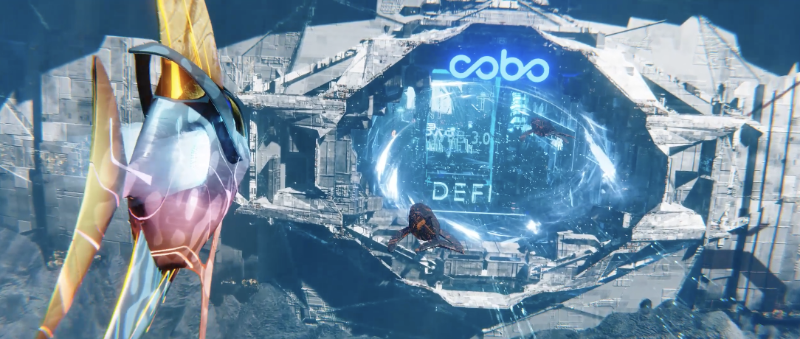
To most people, this might have seemed like a simple NFT drop—a gift to major holders and industry KOLs for the anniversary. They would get to keep a "video" NFT in their wallet as a keepsake.
But it turned out to be more than that. The story that followed: As one of the wealthiest communities in the industry, the Cobo 4th NFT Holder community gained access to numerous NFT project collaborations. Simply put, holding the Cobo 4th NFT granted direct whitelist access to high-quality NFT projects—Cold Bunny, for example, delivered up to 200x returns...
Yet, unexpected challenges soon arose. One partner project hit a crisis overnight, and community support staff worked from 3 a.m. to 7 a.m., individually notifying members about potential minting risks.
At that moment, a new question emerged for the Cobo 4th NFT Holder community: Which NFT projects are truly worth collaborating with? How can we objectively evaluate the quality of an NFT project?
This was not just a challenge facing the Cobo 4th NFT Holder community—it was an industry-wide problem. To this day, there’s still no perfect solution.
Relying on others is unreliable. For the long-term development of both our community and the broader industry, the Cobo 4th NFT Holder community, together with Cobo Labs (Cobo’s ecosystem investment and research arm), has drafted an NFT evaluation framework—and open-sourced it. Anyone can contribute to or refine this standard, making NFT value assessment no longer arbitrary. This framework primarily serves as a collaboration benchmark for the Cobo 4th Holder community, setting partnership thresholds rather than offering investment advice.

From issuing an NFT, to forming a holder community, empowering NFTs into long-term value assets, and now releasing an NFT evaluation framework—within just months, we’ve witnessed the birth, growth, and evolution of an NFT community, built not only for itself but for the entire industry.
Out of curiosity, we interviewed Serena, founder of the Cobo 4th NFT Holder community, documenting the story of an NFT community’s journey.
TechFlow: It’s great to witness the formation of the Cobo 4th NFT Holder community. Could you briefly introduce it?
Serena: When Cobo first started this initiative, we thought NFT community management would be relatively simple. We saw the NFT as a symbolic token of community consensus—mainly an identity marker. We focused on two types of profiles: core internal customers, and long-term trusted friends and partners.
Two words capture it perfectly: Holder & Builder.
Due to our product nature, Cobo has accumulated many institutional clients and high-net-worth accredited investors across Asia-Pacific. These are people who’ve stayed with us through multiple market cycles. They’ve long moved beyond chasing short-term profits, instead embracing long-term value holding. A Holder means two things: First, they care deeply about long-term innovation and growth in the NFT space, exhibiting diamond-hand mentality. Second, across Bitcoin and crypto overall, they are committed long-term value holders.
Builders are our partners and friends who actively contribute to the industry. They come from diverse backgrounds—white-hat security experts, DeFi founders, Layer-1 developers, investors, educators—and share one trait: consistently creating value.
So, on the occasion of Cobo’s 4th anniversary, we wanted to use NFTs to create a shared symbol of value recognition within the community.
Additionally, the pandemic has shifted market and public psychology—reduced material desires, increased pursuit of values and consciousness.
Within Crypto, everyone naturally engages in gifting and relationship-building. Every holiday brings a wave of gift box images on social media. But global operations and the pandemic have made physical distribution slow and complex, while privacy concerns have grown stronger. NFTs prove they can replace these traditional connection methods, offering a fresh experience.
This also explains why the Cobo 4th anniversary NFT has extremely low liquidity and consistently strong value—not because anyone is artificially propping up the price, but due to strong consensus among Holders. They’re unwilling to sell—because they’re not holding to make money. Their reason for holding is Builder consensus—it’s an honor.
Earlier, when discussing the NFT supply, there was significant internal debate at Cobo. Was 1,000 too few? In the end, we stuck with ‘rarity equals value’—fewer allocations reflect greater recognition and appreciation for our holders.
TechFlow: We know the Cobo 4th NFT Holder community functions somewhat as a benefits group, partnering with other NFT projects. Which projects have you collaborated with so far, and what were your selection criteria?
Serena: So far, we’ve officially partnered with only two projects. One is Cold Bunny, which surged up to 200x, leaving a lasting impression. The other is 3D SHIBABEAST, a well-crafted French project, though they encountered common marketing pitfalls during launch, which was quite telling.
Our first collaboration was carefully chosen—Cold Bunny. Cobo recognized two key traits: First, the founder is firmly committed to Web3. Second, Cold Bunny isn’t entering Web3 impulsively or treating NFTs as mere consumer products. Throughout our collaboration, they continuously evolved their understanding and proactively engaged with us to explore future possibilities in NFTs.
Cold Bunny going fully doxxed deeply resonated with me. Very few IPs dare to do that—most leave themselves an escape route, often using proxies.
But that’s a major mistake, revealing two things:
First, the person doesn’t understand NFTs. Second, they aren’t planning for long-term commitment, nor do they grasp that NFTs represent property rights of an IP.
Precisely because of this misunderstanding, such projects hand over critical IP rights to third-party operators.
Cold Bunny peaked at 200x returns, attracting massive FOMO-driven participation and flooding the market with immature “unfinished NFT” projects aiming to cash in on the hype—accelerating the bear market. In hindsight, only mature IPs with systematic operations and sustained dedication delivered outsized returns. The market is highly responsive.
The second project was fascinating. Cobo had been observing international markets and noticed a French team’s project called 3D SHIBABEAST—we nicknamed it 3D Dog. It was well-made and aligned with next-gen NFT narratives.
But the rollout took an unexpected turn.
Initially, the team planned to mint only 999 NFTs. But the day before launch, they suddenly increased supply to 2,000 and raised the mint price to 0.1 ETH—completely disrupting our evaluation logic. Yet Cobo had already promoted it publicly and couldn’t back out without losing credibility, leaving us in a passive position.
After launch, a bug in the minting conditions allowed non-whitelisted users to mint 10 3D Dogs each. At that point, things spiraled—value was diluted, and prices risked collapsing.
3D SHIBABEAST is a global project with time zone differences, but due to our influence, many of our users waited until 3 a.m. to mint. Our team immediately received alerts about contract risks and detected bots dumping the project’s price. We contacted the team across time zones and worked from 3 a.m. to 7 a.m., urgently notifying all participants about the contract issue and coordinating with the project team.
By 6 a.m., the project team responded, confirming they were killing bots and buying up tokens to stabilize the price. By 7 a.m. Singapore time, the price returned to its initial mint level.
TechFlow: Recently, you open-sourced an NFT scoring mechanism. What inspired this move, and what was the motivation?
Serena: The 3D SHIBABEAST incident left our entire team exhausted on launch day. After this intense battle, we conducted a deep post-mortem and paused several upcoming collaborations, including Little Ghost.
How could we prevent similar incidents? That’s when we decided to develop our own NFT project evaluation standard.
Our community participates in projects based on trust in us. Therefore, we must pre-evaluate partnerships—we have a responsibility to help participants clearly understand what they’re getting into. This weighs heavily on us.
From February to March, over one month, we upgraded ourselves and combined investment principles to establish our community’s NFT collaboration criteria, aiming to filter for projects aligned with our long-term value vision.
Today’s NFT market feels eerily familiar—this NFT boom mirrors the 2018 ICO frenzy.
We’ve been analyzing the similarities and differences. The similarity lies in token financial logic—tokens involve economic model design—but NFTs express value differently, leading to divergent expectations. Each project has unique aesthetics and narratives, but these are minor factors in investment decisions. New investors, lacking understanding of tokenomics, often fall prey to FOMO.
Many NFT buyers use two different logics: aesthetic/consumption logic when buying, but complain about being “scammed by investment logic” when losing money. But there’s no objective benchmark here.
NFT issuance has extremely low barriers. No institution currently advocates for a universal value assessment standard—because no responsible body exists. In the 2018 ICO market, centralized exchanges played a partial vetting role. But Opensea operates like Taobao—anyone can list, no gatekeeping, because setting barriers would limit its revenue.
True industry maturity comes when everyone understands whether they’re consuming or investing—and accepts the corresponding outcomes.
For the Cobo community, open-sourcing this standard serves two purposes: accountability to our members, and industry responsibility. As a foundational infrastructure player, Cobo wants to lead by example and steer the industry positively.
TechFlow: With countless NFT communities emerging and whitelist access becoming increasingly competitive, what is Cobo NFT community’s core competitive advantage? Why would top-tier projects want to partner with you?
Serena: Our community’s membership, assets, awareness, and influence define the scarcity of the Cobo NFT Holder community. We naturally gather top-tier investors and influential voices. Every collaboration benefits from amplified exposure through Cobo and Shenyu’s networks, reaching quality audiences. With premium users and strong engagement, we enable precise targeting of Web3-native investors. For projects, this means decentralized public scrutiny—their background and details will be aggregated and discussed openly on Twitter.
Cobo 4th NFT Holders are financially free by general standards—like someone wealthy casually buying Hermès, equivalent to an ordinary person spending a few dollars. They naturally embody Holder characteristics. For NFT projects, it’s a win-win. Our community demands higher expectations—we prioritize long-term value. Projects also hope some buyers will “lock up” their NFTs, and our community perfectly fits that need.
Operationally, we go deep—all notifications are one-on-one, ensuring timely delivery while protecting privacy and guaranteeing message reach. We haven’t seen any other community deliver service as intensively as Cobo.
Due to member profiles and privacy needs, organizing events or collaborations is costly for us—so we must value our time and energy, staying accountable to ourselves and our community.
In summary, our user profile perfectly matches projects’ long-term growth needs. Plus, we are a community with strong industry responsibility and a focus on sustainable value.
TechFlow: Looking ahead, what kind of projects do you prefer to collaborate with, and what are your future plans?
Serena: To partner with Cobo, a project must meet two criteria:
First, innovation. Second, long-termism. Projects willing to educate users and genuinely bring Web2 traffic into Web3 deserve promotion, recognition, and visibility.
Let me emphasize the importance of real innovation!
Web3 enables greater innovation potential. Combined with Web2-level production quality, product excellence, and Web3-aligned management, these factors together can drive societal evolution. This is the state of coexistence and integration we aim for. We believe Web3 inherently encourages innovation—structural, conceptual, or expressive innovations in NFTs should be recognized, even if the project doesn’t achieve financial success. If we showcase new possibilities, that’s cognitive progress.
Our definition of return isn’t purely financial—it includes cognitive and educational impact, such as spreading awareness of NFTs.
We don’t chase unsustainable, sky-high financial returns—they’re unhealthy and fleeting.
Interview Notes
Interacting with the Cobo community and its team, the impression matches exactly how Serena described its members: simple and pure Holders & Builders. This culture may stem from Shenyu’s influence. This interview also answered a personal question—why Shenyu’s WeChat name has a version number like 2.1.0. A Cobo insider explained that Cobo highly values cognitive iteration—this is like a software “upgrade.” The 4th anniversary NFT was both a commemoration and a “reward” for growth. Here’s to five, six… ten-year anniversary NFTs—one step at a time, progressing every year. As long as we keep learning and growing, the future will always shine brightly.
Wishing the Cobo NFT community continued prosperity!
Join TechFlow official community to stay tuned
Telegram:https://t.me/TechFlowDaily
X (Twitter):https://x.com/TechFlowPost
X (Twitter) EN:https://x.com/BlockFlow_News






