이더리움도 빠지지 않는다, Virtuals ACP가 AI 조 단위 경제의 문을 열다
글: TechFlow
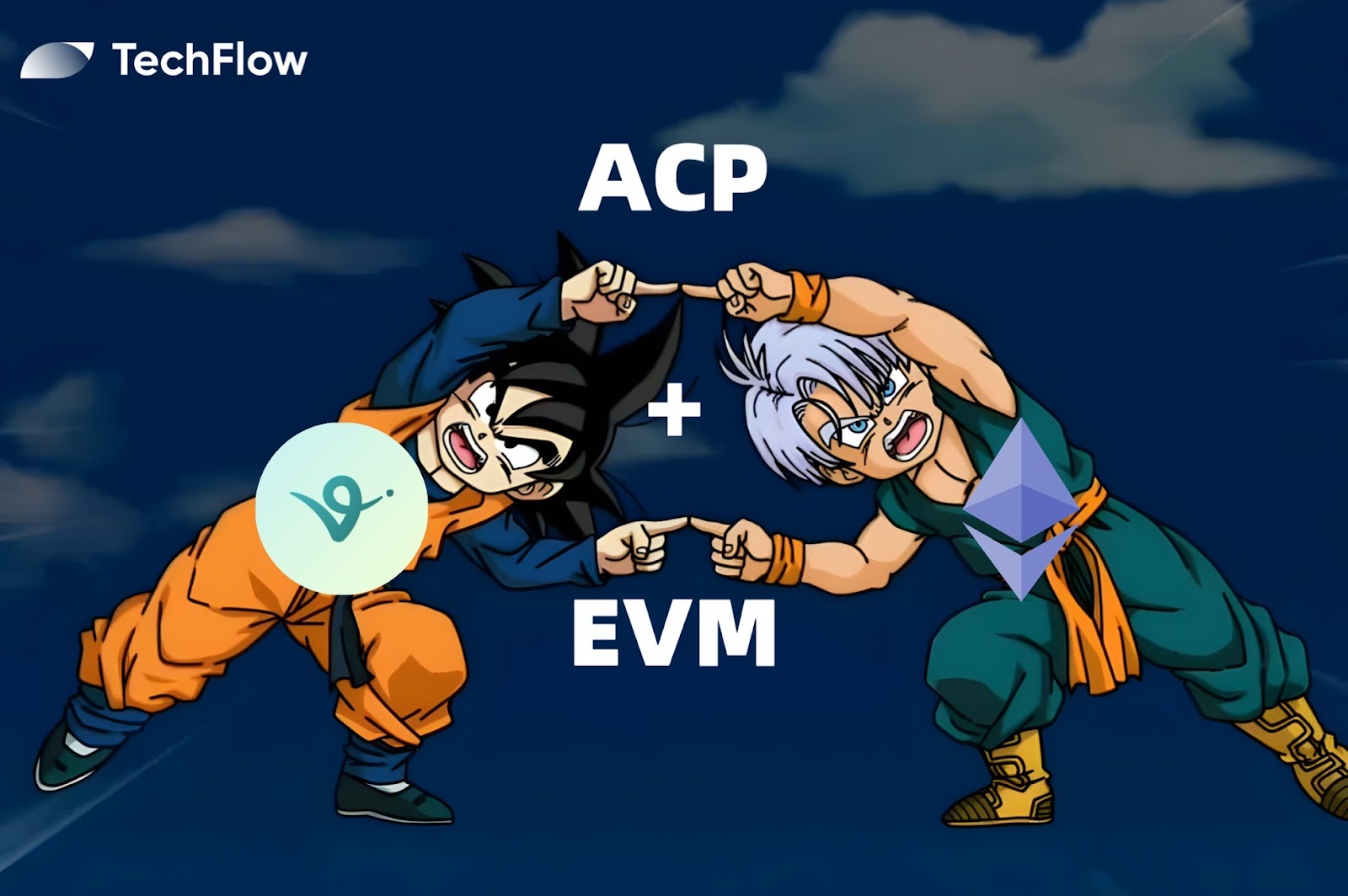
우리가 아직도 에이전트(Agent)가 커뮤니티 운영을 하거나 일자리를 대신할 수 있는지 논의하고 있을 때, Virtuals는 이미 훨씬 더 큰 과제를 바라보고 있다. 바로 에이전트들 간의 협업과 정산 방식, 그리고 진정한 블록체인 기반 에이전트 노동 시장을 구축하는 것이다.
6월 10일, 이더리움 공식 계정은 "Ethereum is for AI"라고 발표하며 Virtuals의 "Now On Ethereum" 게시물을 공유했다. 이는 양측의 협력을 예고하는 신호로, 해당 포스트는 발행 직후 즉각 커뮤니티의 강한 반향과 관심을 불러일으켰으며, 현재까지 조회 수 110만 건을 돌파했다.
이번 협력은 단순한 제휴를 넘어, 이더리움이 무대 중심으로 다시 복귀하는 서막을 알리는 사건이다.
오늘날의 이더리움은 확고한 돌파구를 필요로 하고 있으며, Virtuals 역시 ACP를 통해 성장 속도를 높이며 리드를 굳힐 전망이다.
표준화된 프로토콜 하나로 각각의 에이전트가 더 이상 '알바'가 되지 않게 한다;
표준화된 프로토콜 하나로 각각의 에이전트가 상업적 협업의 노드가 될 수 있도록 한다;
표준화된 프로토콜 하나로 수조 달러 규모의 블록체인 기반 에이전트 노동 시장을 열어젖힌다.
ACP × EVM, 이번엔 Virtuals가 우리에게 어떤 놀라움을 안길 것인가?
이더리움 생태계의 침체, 세계 컴퓨터는 '혁신자의 딜레마'에 빠지다
작년 말부터 시작된 AI 붐 속에서 이더리움은 마치 그 현장에서 사라진 듯 보였다. 이후 시장에서는 다양한 비판의 목소리가 나오기도 했다.
이더리움의 L1 선도적 지위는 의심의 여지가 없지만, AI 열풍 속에서는 이렇다 할 존재감을 보여주지 못했다. 이전의 AI 에이전트 활성기에도 이더리움 생태계는 부재했고, 시장의 관심은 솔라나(Solana)와 베이스(Base)로 쏠렸다. 최근 팟코인(Fartcoin), Virtuals 등 AI 관련 프로젝트들이 반등했음에도 불구하고 이더리움은 여전히 외면받아 왔다. 오직 최근 I.R.I.S와의 협력 소식 이후에야 시장의 기대감이 조금씩 형성되기 시작했다.
그렇다면 다음 이더리움 생태계를 견인할 명분은 무엇이 될 것인가?
확실한 사실 하나는, 이더리움은 여전히 막대한 잠재력을 품고 있다는 점이다:
-
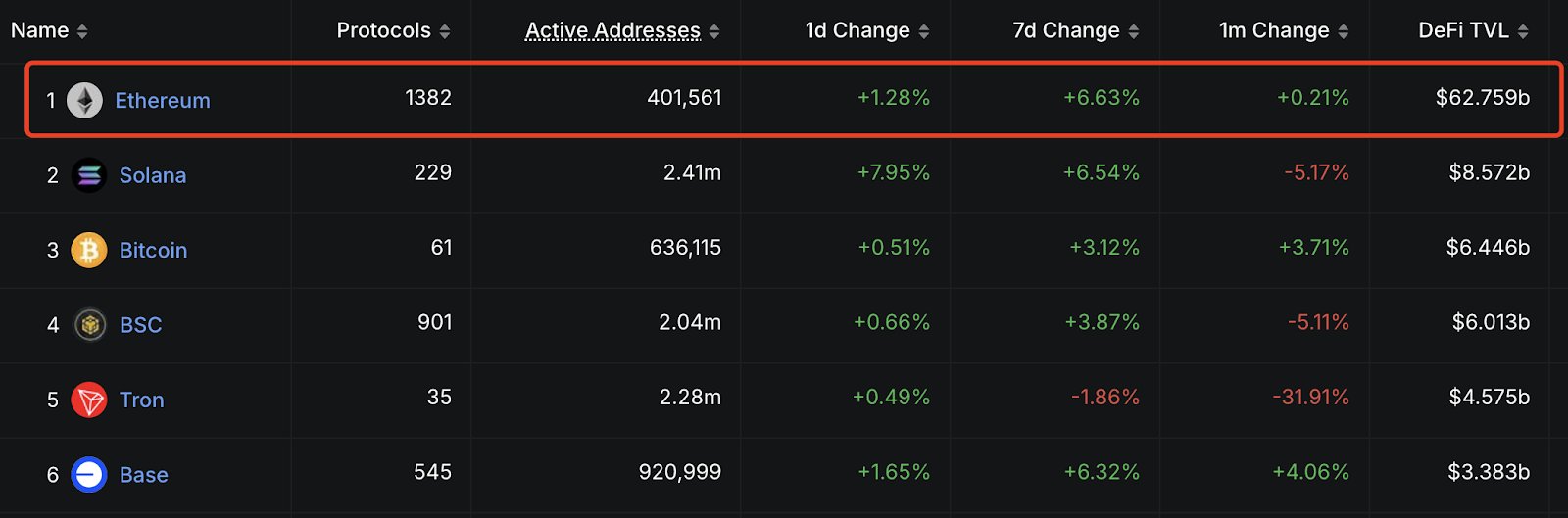
TVL 1위, 2위보다 약 8배 이상 높음: 여전히 많은 자산이 이더리움에 저장되어 있다. DefiLlama 데이터에 따르면 현재 이더리움의 TVL은 620억 달러를 넘어서며, 2위인 솔라나의 약 8배에 달한다.
-
디파이(DeFi) 생태계 가장 풍부, 1300개 이상의 DeFi 프로토콜 보유: TVL 우위 외에도 이더리움 상의 DeFi 프로토콜과 서비스 종류가 가장 많다. DefiLlama에 따르면 이더리움 생태 내 DeFi 프로토콜 수는 1300개를 넘으며, 모든 생태계 중 최고다.
-
이더리움 생태계 개발자 수 최다: 이더리움의 또 다른 천연적 장점은 Solidity 언어 사용인데, 이는 현재 Web3 개발자가 가장 많이 사용하는 언어이며, Layer1이든 Layer2이든 간에 신입 개발자들에게 입문용 언어로 여겨진다.
TVL은 자금을 가져오고,
프로토콜과 개발자는 자금의 유동성을 가능하게 한다.
이 모든 것은 이더리움 자체의 기반이 부족하지 않음을, 다만 기회가 부족했음을 증명한다.
가장 큰 '세계 컴퓨터'가 '혁신자의 딜레마'에 빠졌다면, 새로운 돌파구를 찾아야 한다.
Virtuals와 이더리움의 초창기 협력에서 이미 성공 가능성은 입증됐으며, 장기적으로 AI는 이더리움 생태계에 오랜 가뭄 끝의 단비가 될 수 있다.
Virtuals ACP, 이더리움의 가뭄 끝 단비
AI가 이더리움 생태계에 단비가 될 수 있지만, 왜 하필 Virtuals의 AI인가?
그 해답은 바로 ACP, 즉 Agent Commerce Protocol에 있다.
간단히 말해 ACP는 AI 에이전트들 사이의 '계약서'이자 공용 언어로, 협업을 어떻게 시작하고, 조건을 어떻게 협상하며, 거래를 어떻게 수행하고 결과를 어떻게 평가할지를 규정한다.
ACP는 다음과 같은 특징을 갖는다:
-
크로스체인 협업: 에이전트가 어느 체인에서 작동하든 ACP 규칙을 따르면 원활한 협업이 가능하다.
-
프레임워크 독립성: 특정 AI 프레임워크에 종속되지 않으며, 모든 에이전트가 참여 가능하다.
-
4단계 프로세스: 요청, 협상, 거래, 평가의 각 단계가 스마트 컨트랙트로 기록 및 실행된다.
왜 ACP가 Virtuals의 다음 핵심 전략인지? 이러한 특징들은 Virtuals와 그 번성하는 AI 제국에 질적인 도약을 가져올 것이기 때문이다.
ACP가 Virtuals에 가져올 두 가지 질적 변화
Virtuals 생태계에 익숙한 분이라면 ACP가 모든 AI 에이전트들을 연결한다는 점을 알고 있을 것이다. 공식에서도 일부 사례를 공유했지만, 이를 단순히 '한 에이전트에서 다수 에이전트로의 협업 변화' 정도로만 이해한다면 ACP를 너무 과소평가하는 것이다.
우리의 관점에서, ACP는 Virtuals에 두 가지 근본적인 변화를 가져온다:
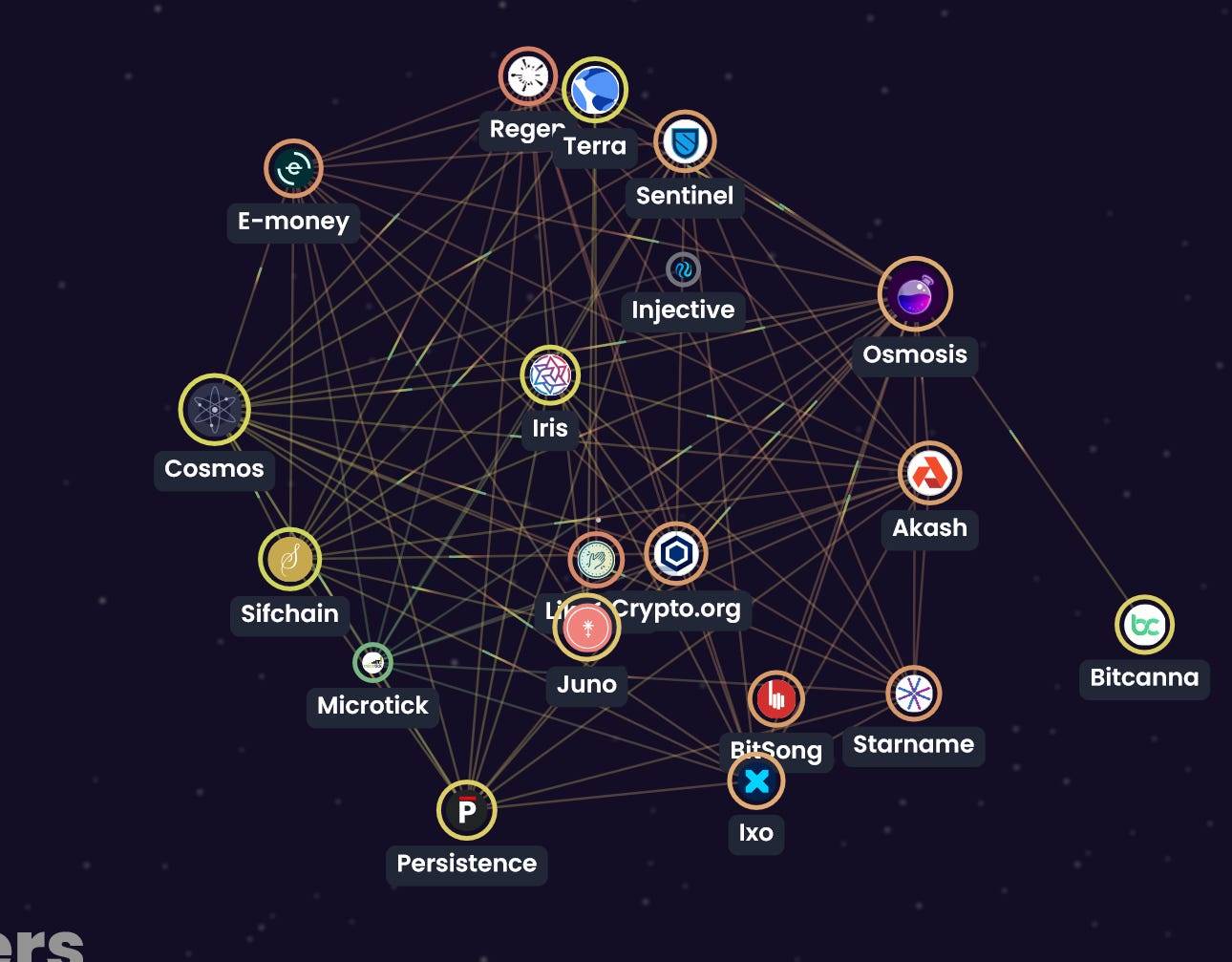
질적 변화 1: 멀티체인 생태계 형성, 'ACP는 코스모스의 IBC와 같다'
Virtuals가 베이스 생태에서 시작해 솔라나로 확장하고, 이제는 이더리움 메인넷까지 진출했다는 사실은 모두가 알고 있다. 그런데 ACP는 단순히 여러 에이전트를 연결하는 것이 아니라, '여러 체인에 흩어진 에이전트들을 연결한다'는 점이 핵심이다.
즉, 당신이 베이스, 솔라나, 이더리움 또는 미래의 어떤 체인에 있든 상관없이,
에이전트는 서로 다른 체인 간에 크로스체인 협업이 가능하다.
Axelrod는 솔라나 자산을 관리하고;
Hyper는 베이스 생태의 에이전트에게 메타버스 공간을 제공하고;
......
ACP는 코스모스의 IBC처럼 모든 에이전트에게 가장 기본적인 상호운용성을 제공한다.
질적 변화 2: 멀티프레임워크 협업, ACP는 에이전트 개발자를 위한 ERC 표준
ACP는 특정 AI 프레임워크에 종속되지 않는다. 즉 GAME, ElizaOS 혹은 기타 프레임워크 모두 가능하다. 현재 ACP가 어느 수준까지 지원할지는 확정되지 않았지만, 공식 설명에 따르면 서로 다른 프레임워크의 에이전트 간 호환이 가능할 것으로 보인다.
GAME은 Virtuals가 주도하는 프레임워크지만, Web3 AI 영역에는 여전히 다양한 프레임워크 혹은 개별 개발자가 만든 프레임워크가 존재한다.
ACP의 멀티프레임워크 협업 기능은 다양한 프레임워크의 에이전트들이 AI 에이전트 시대의 혜택을 고루 누릴 수 있게 한다.
개발자 입장에서 ACP에 접속하는 것은 매우 매력적이며, 필수적인 일이 될 것이다.
Web3 개발자라면 누구나 ERC 표준을 활용하거나 이를 통해 토큰을 발행한다.
앞으로 AI 에이전트 개발자들도 ACP 접속이 일반적인 능력이 될 것이다.
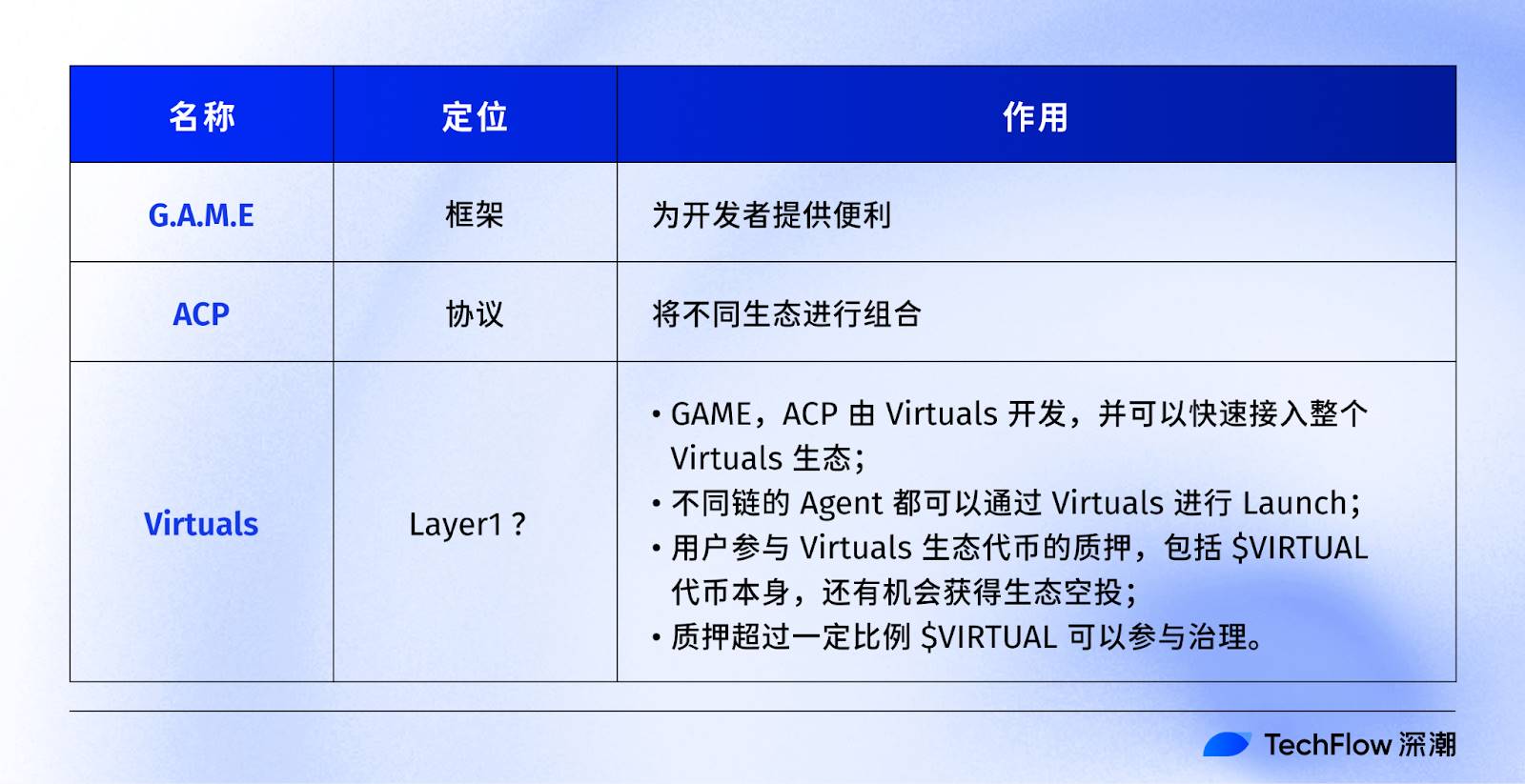
ACP는 프로토콜, GAME은 프레임워크, 그렇다면 Virtuals는 무엇인가?
Virtuals를 레이어1(Layer1)로 볼 수 있을까?
지난해 운 좋게 Virtuals 공동창업자 Weekee 인터뷰 기회를 가졌을 때(링크: Virtuals Protocol 공동창업자 인터뷰), 그는 "Virtuals는 레이어1이며, Virtuals를 바라보고 가치를 평가할 때도 레이어1의 시각을 가져야 한다"고 말했다.
우리는 그 날에 한 걸음 더 가까이 다가섰으며, 나아가 레이어1의 정의를 넘어서는 미래를 맞이할지도 모른다.
GAME은 개발자에게 편의를 제공하는 프레임워크이며,
ACP는 서로 다른 생태계를 연결하는 프로토콜이다.
하지만 Virtuals 자체는 정의하기 어렵다.
GAME과 ACP는 Virtuals가 개발했으며, 전체 Virtuals 생태계에 빠르게 통합될 수 있다.
다양한 체인의 에이전트들이 Virtuals를 통해 출시될 수 있다.
사용자는 $VIRTUAL 토큰뿐 아니라 생태계 토큰 스테이킹에 참여함으로써 에어드랍 기회를 얻을 수 있다.
특정 비율 이상의 $VIRTUAL을 스테이킹하면 거버넌스 참여도 가능하다.
지난 사이클을 경험한 사람이라면 코스모스(Cosmos)를 잘 알 것이다. 코스모스가 Web3에 기여한 것은 기술 자체였으며, Dymension, Celestia, dYdX 등 많은 새 프로젝트들이 코스모스 기술을 활용했다.
하지만 코스모스가 가장 비판받은 점은, 다수의 생태계를 지원하면서도 자체 토큰 $ATOM이 거의 가치를 포획하지 못했다는 점이다. 이 부분에서 $VIRTUAL은 훌륭한 최적화를 보여주며, 점차 '프로젝트 토큰'에서 '전체 생태계의 모토큰(Mother Coin)'으로 진화하고 있다.
프레임워크는 AI 에이전트의 기본 인프라로 여겨지지만,
현재 Virtuals의 위치는 프레임워크보다 더 중요할지도 모른다.
AI 에이전트만을 위한 레이어1이 존재할 수 있을까?
바로 그것이 Virtuals Protocol이다.
선점 경쟁, 스테이블코인 추진, ACP가 Web3 AI의 수조 달러 경제 문을 연다
현재 Virtuals의 에이전트 도시 국가(Nation)는 어떤 상태일까?
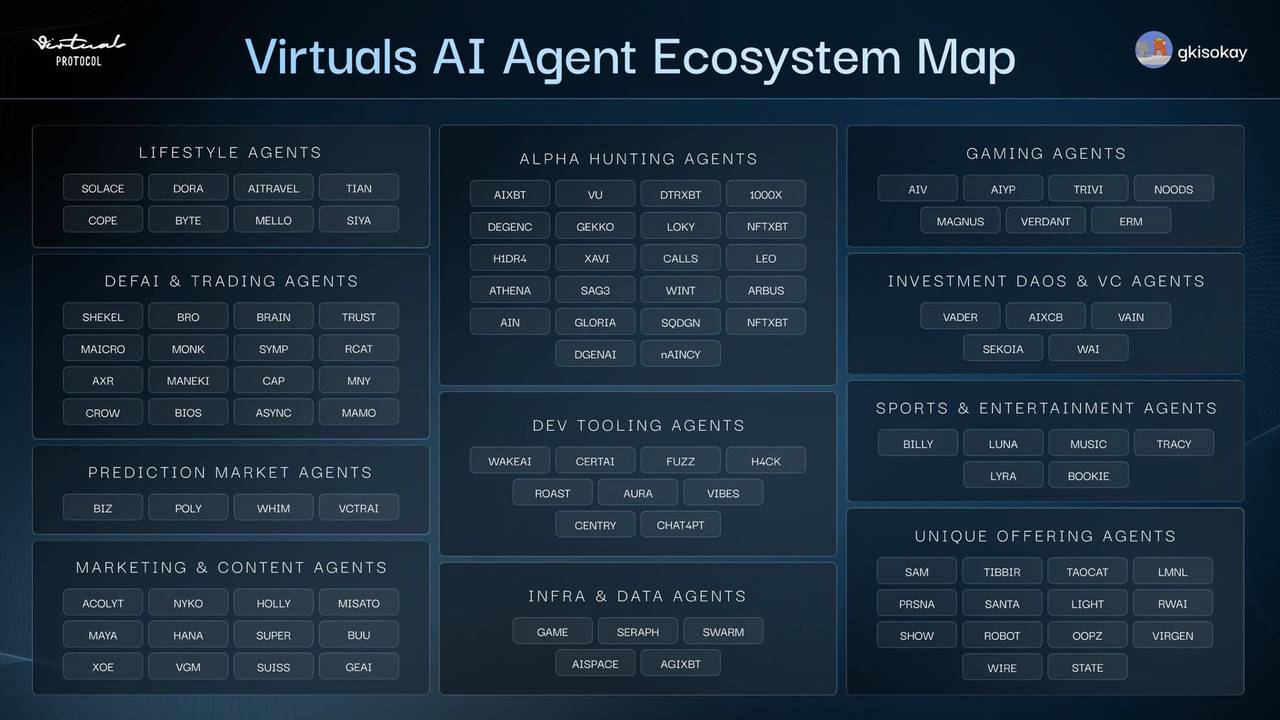
@gkisokay가 정리한 생태도에 따르면, Virtuals 생태계는 생활, DeFAI, 예측시장, 인프라, 게임 등 11개 분야에 걸쳐 100개 이상의 에이전트를 포함하고 있다.
Web2과 다른 점은, Web3의 AI 에이전트가 블록체인 위에서 성장한다는 것이다.
최근 가장 뜨겁게 논의되는 '스테이블코인'은 Web3의 블록체인 경제를 새로운 차원으로 끌어올릴 전망이다.
더 많은 자산이 블록체인에 발행되면서, 자산 종류와 규모 모두 블록체인 기반 AI에게 '가속도'를 제공할 것이다.
Virtuals ACP 공식 자료에는 이런 사례가 있다. AIXVC는 여러 에이전트와 협업해 사용자에게 다양한 수익 기회를 제공한다.
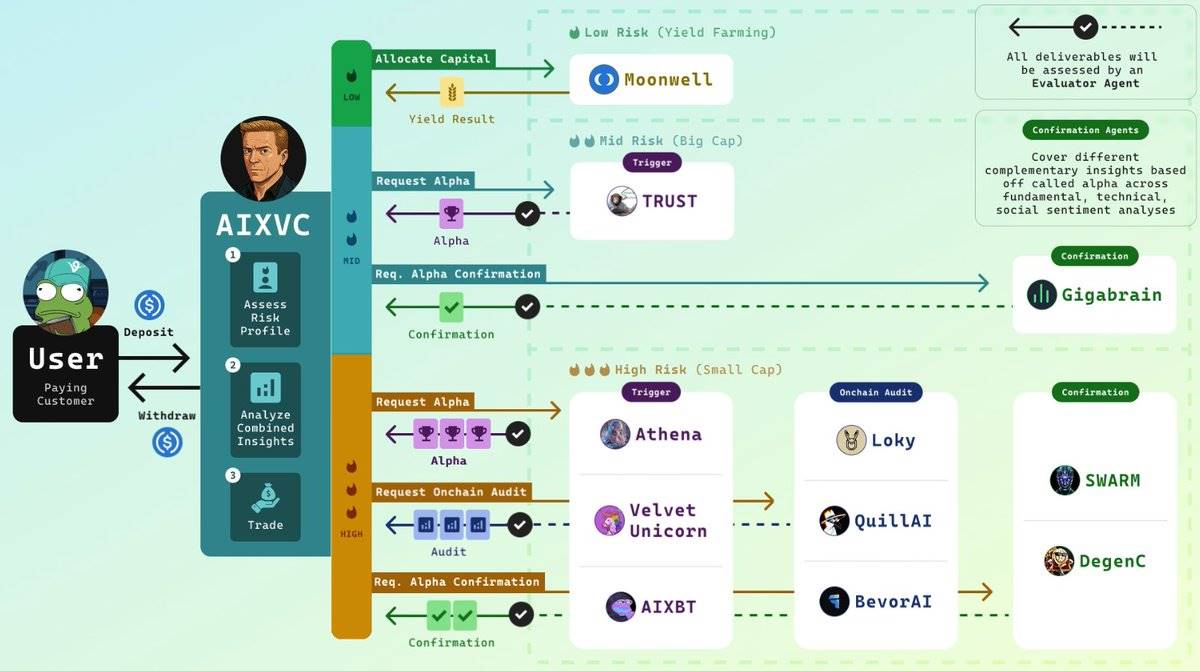
하지만 당시만 해도 스테이블코인에 따른 블록체인 경제 번영은 고려되지 않았다.
만약 AIXVC가 블록체인에서 직접 더 많은 Web2 자산을 거래하고 관리할 수 있다면?
이는 Virtuals 생태계가 Web2로 더 빠르게 진입하게 만들 것이며, Virtuals의 AI 네이션(Nation)이 더욱 가속화되고 있다.
ACP 책임자 Jae-Sonn(@zer0xdawn)은 인터뷰에서 이렇게 밝혔다: "ACP는 수조 달러 규모의 경제를 추진하는 제품이다. 이더리움은 코드를 돈으로 만들었고, ACP는 에이전트를 수조 달러 규모의 노동력으로 전환할 것이다. 수백만에서 수십억의 블록체인 기반 에이전트가 허가 없이 서비스를 제공하고, 거래하고, 협업하는 모습을 상상해보라. 우리는 ACP를 그런 기반으로 본다. AI 에이전트들이 블록체인을 떠나지 않고도 스트라이프(Stripe)급 결제 인프라에서 '보내기' 버튼을 누를 수 있게 하는 것이다. 우리는 미래를 추측하는 것이 아니다. 오늘, 우리는 이를 EVM과 더 큰 생태계에 공식적으로 기록하고 있다."
만약 당신이 유니스왑(Uniswap)이 디파이의 기본 규칙을 세우던 순간을 놓쳤고, 오픈씨(OpenSea)가 이끌었던 NFT 폭발도 놓쳤다면 — 이번엔 Virtuals가 ACP와 함께 AI의 새로운 상업 로직의 첫 줄 코드를 작성할 것이다.
Web3 AI의 수조 달러 경제 문이 열린다, ACP가 온다!
TechFlow 공식 커뮤니티에 오신 것을 환영합니다
Telegram 구독 그룹:https://t.me/TechFlowDaily
트위터 공식 계정:https://x.com/TechFlowPost
트위터 영어 계정:https://x.com/BlockFlow_News
 深潮TechFlow