








Officially saying goodbye to Huobi, please withdraw your funds as soon as possible!
TechFlow Selected TechFlow Selected
Officially saying goodbye to Huobi, please withdraw your funds as soon as possible!
As a user, the only thing to do right now is to properly manage assets in advance, avoiding last-minute operations before the withdrawal deadline, which could lead to insufficient liquidity and unnecessary losses.
 Navigating Web3 tides with focused insights
This is the most surreal notification we've ever received—Huobi urging everyone to withdraw their funds as delisting approaches.
Recently, many readers have reported receiving emails and messages through various channels from Huobi instructing users to withdraw assets. Upon logging in, a pop-up appears reminding users of the delisting, which they are forced to view for five seconds.
Clearly, Huobi is resolute in its decision to delist mainland Chinese users—this time, it's truly goodbye…
On September 24 this year, ten government agencies—including the People’s Bank of China, Cyberspace Administration of China, Supreme People’s Procuratorate, Ministry of Industry and Information Technology, Ministry of Public Security, State Administration for Market Regulation, China Banking and Insurance Regulatory Commission, China Securities Regulatory Commission, and the State Administration of Foreign Exchange—jointly issued a notice titled “Further Prevention and Handling of Risks Related to Virtual Currency Trading and Speculation.” The notice reiterates that virtual currency-related business activities constitute illegal financial operations. It explicitly states that overseas virtual currency exchanges providing services to residents within China also fall under this category of illegality. Compared to the multi-departmental announcement in September 2017, this latest notice completely eliminates gray areas in exchange operations, strictly prohibiting services to Chinese residents.
Following this, multiple exchanges successively announced shutdowns or restrictions on services to users in China. According to media reports, at least 18 exchanges have publicly declared their exit from the Chinese market or complete closure. Exchanges including Huobi Global, MEXC, KuCoin, and Bitget have all announced plans to complete user delisting by December 31.
And so, December has arrived.
Recently, I saw a reader lamenting on social media how just yesterday it seemed like “HBO” still referred to the triumvirate of Huobi, Binance, and OKEx—not something else entirely.
For most Chinese participants in the crypto market, there exists a personal "Huobi memory." Many made their first digital asset purchase on Huobi; some used investment returns from Huobi to buy their first car or home… As one person wrote on social media: “Even though I often complain about Huobi and HT, when the time came for delisting, I kept procrastinating. In terms of product and user experience, Huobi remains among the top-tier exchanges.”
Two personal thoughts:
1/ Most importantly, Huobi is genuinely conducting this delisting—even blocking pathways such as BVI institutional verification—demonstrating Leo Li’s full commitment to compliance. Moreover, like Zeng Guofan (a renowned historical figure), Leo Li hails from Hunan province and values achieving merit, virtue, and legacy with integrity and honor, returning home with dignity. He seeks not only wealth but also societal respect and recognition. Completing this delisting allows him to shed past burdens.
2/ Will Huobi immediately fall behind and become a third- or fourth-tier exchange without mainland users? On this question, I consulted several overseas project teams, whose response was: “Huobi is still big.” Therefore, many needn’t worry too much about Huobi’s future. Judging from recent listing trends, Huobi appears poised to adopt a more open approach toward becoming a “value asset discovery platform.” Frankly speaking, Huobi’s listed assets over the past few months performed rather poorly—many can guess why. Now that conflicted stakeholders have exited, Huobi’s future listings should significantly improve in quality, signaling its determination for a second entrepreneurial journey.
Whether filled with regret or sorrow, the moment has come to truly say goodbye. We wish Huobi continued success overseas—may the spark grow into an unstoppable flame.
The world is vast—until we meet again in the江湖(jianghu).
Now, let’s get to the main topic.
Different exchanges are adopting varying measures and degrees of delisting Chinese users, with Huobi being the first to clearly outline a specific delisting process.
Currently, the countdown is underway. According to official announcements, Huobi will disable deposit functions for mainland Chinese users on December 14, prohibit spot trading for these users on December 15, remove OTC CNY trading pairs on December 31, and has already suspended airdrop services to Chinese users as of October 30 (except for select projects). Across all Huobi platforms, Chinese users are repeatedly shown delisting reminders.
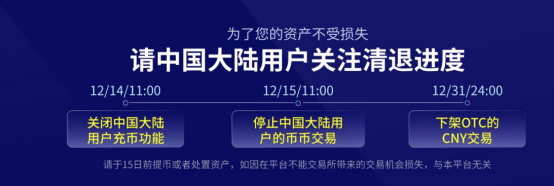
Today is already December 3. If you still have crypto assets on Huobi that haven't been safely transferred, please read this article carefully—don’t cling to false hopes.
The hard truth is that judging from the密集 (dense) wave of announcements and the cancellation of domestic legal entities across major exchanges, these platforms are determined to exit the Chinese market in accordance with regulatory policies and are actively progressing through the process.
Therefore, as users, the only thing to do now is proactively manage your assets properly to avoid last-minute actions before the deadline, which could lead to insufficient liquidity and unnecessary losses.
Why act early?
Those with investment experience know that under conditions where deposits are closing and trading is halting, Huobi faces dual challenges from market dynamics and changing internal liquidity, increasing both trading difficulty and market risk.
Considering this, Huobi consistently emphasizes that mainland Chinese users should complete withdrawals and asset transfers as soon as possible—do not wait until the final day of delisting or trading suspension, to avoid unforeseen complications.
Markets are unstable—beware of 'single-player coin' scenarios
In recent days, due to factors such as pandemic fluctuations and increased uncertainty in global markets, cryptocurrency prices have dropped sharply. However, some low-market-cap, low-volume crypto assets have shown polarization—one group of small-cap altcoins exhibiting surprising resilience while others plunged deeper, falling over 60%.
Industry insiders believe this extreme volatility in small-cap altcoins results from intense battles between bulls and bears. Assets with low market caps, low trading volumes, and poor market depth can be easily manipulated at low cost, turning obscure tokens into what’s known as “single-player coins.”
For investors, when digital assets on an exchange have low circulating supply, speculative price surges are essentially akin to futures trading—buying and selling mere digits. During periods of heightened market volatility, investors must remain vigilant against “single-player coin” phenomena.
A vivid example occurred in August this year, when a token called “Ray” entered single-player mode after a certain exchange suddenly halted deposits and withdrawals, resulting in price differences exceeding 20% across different platforms.
Differences in price for such single-player coins, withdrawal speeds between exchanges, and overall price volatility are all critical factors investors must consider.
The worst-case scenario for investors is holding a single-player coin that crashes dramatically or even goes to zero—a common occurrence in crypto history, posing risks every investor should carefully evaluate. Thus, during this turbulent delisting period, if you hold such tokens, sell or transfer them accordingly.
Exchanges like Huobi repeatedly emphasize deadlines hoping users take action early to responsibly manage their assets. TechFlow also reminds all users: please handle your assets promptly to prevent avoidable losses.
Below is a secure withdrawal guide—please review carefully.
How to securely withdraw funds from Huobi Global?
TechFlow has compiled Huobi’s withdrawal tutorial for user reference—act quickly to arrange your withdrawal.
Web Version:
1. Log in to the Huobi Global official website https://www.huobi.com/zh-cn/ (backup domain: https://m.huobi.mk/zh-cn/), click 【Assets】 in the upper right corner, then select 【Spot Account (Deposit & Withdrawal)】 from the dropdown menu.

2. On the Spot Account page, click the 【Withdraw】 button in the upper right corner.
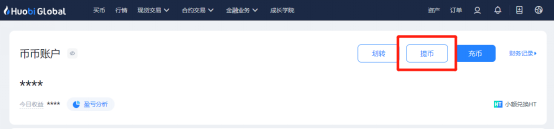
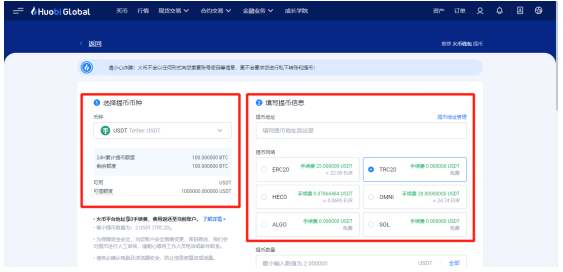
3. On the withdrawal page, first select the 【Withdrawal Currency】. Your available balance and withdrawable amount will be displayed below. Next, enter the 【Withdrawal Address】 and choose the 【Withdrawal Network】 (Note: Always perform withdrawals in a secure computer and browser environment, and ensure your withdrawal address is accurate).
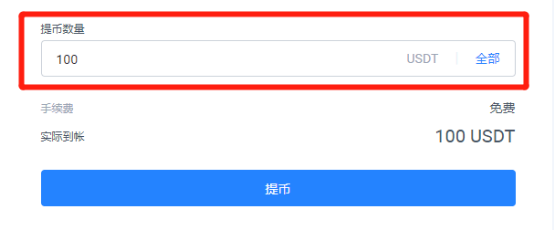
4. Enter the withdrawal amount, click 【Withdraw】 to confirm the details, complete the security verification, and then patiently wait for your funds to arrive.
App Version:
1. Log in to the 【HuobiPro】 app, tap 【Assets】 in the lower-right corner of the homepage, then click the 【Withdraw】 button at the top of the page.
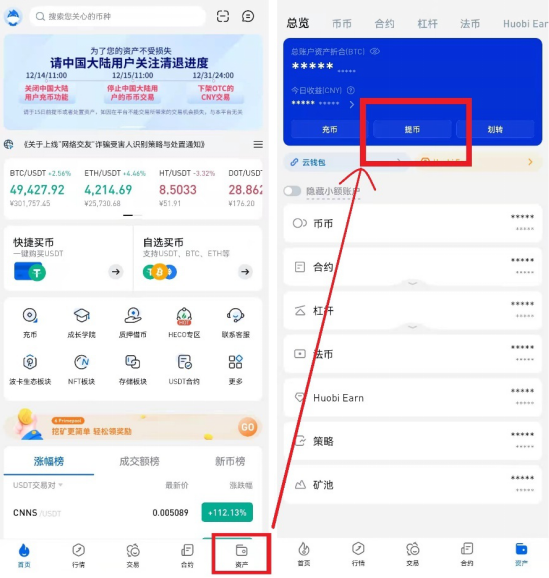
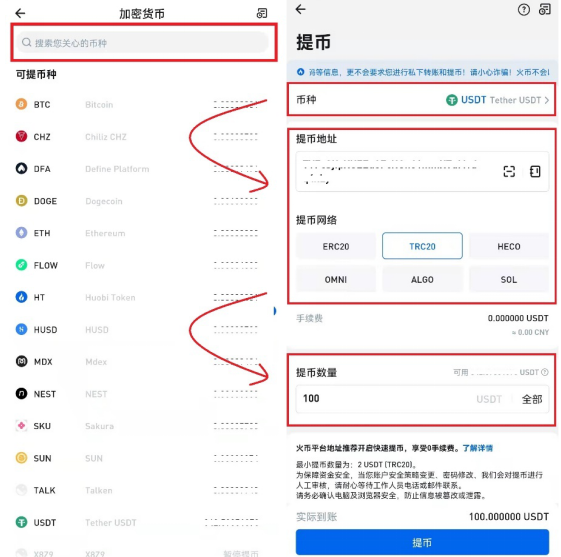
2. On the cryptocurrency page, you’ll see all withdrawable currencies in your account below. You can also search for a specific currency at the top of the page. After confirming the currency, tap it to go to the withdrawal page.
3. On the withdrawal page, select the 【Currency】, enter the 【Withdrawal Address】 (Note: Ensure accuracy), choose the 【Withdrawal Network】, input the 【Withdrawal Amount】, then click 【Withdraw】 to confirm the information and complete the 【Security Verification】. Wait patiently for your funds to arrive.
Join TechFlow official community to stay tuned
Telegram:https://t.me/TechFlowDaily
X (Twitter):https://x.com/TechFlowPost
X (Twitter) EN:https://x.com/BlockFlow_News






