Interview with Ethereum Core Developer Tim Beiko: What Are the Latest Developments in Ethereum? What Will Ethereum Look Like One Year From Now?
TechFlow Selected TechFlow Selected
Interview with Ethereum Core Developer Tim Beiko: What Are the Latest Developments in Ethereum? What Will Ethereum Look Like One Year From Now?
Ethereum's base layer is known as L1 (Layer 1). The current Ethereum L1 is slow and expensive, but highly secure. To address this issue, the Ethereum community has developed so-called L2 (Layer 2) protocols.
 Navigating Web3 tides with focused insights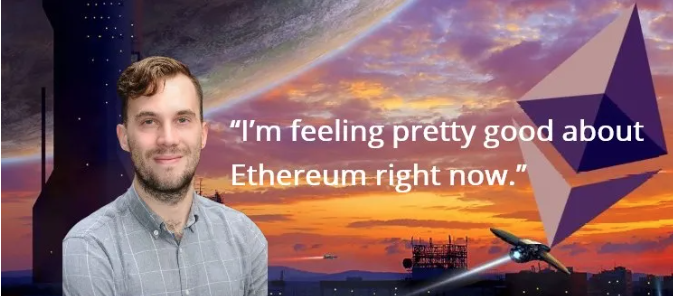
Written by Matthew Leising, co-founder of DeCential
Editor: Nanfeng
Tim Beiko has always been a builder—whether it was starting a T-shirt business in high school or organizing fellow Ethereum core developers through Ethereum's largest overhaul since its 2015 launch: the transition to proof-of-stake (PoS). Tim earned a business degree at a university in Quebec, Canada. After his T-shirt venture failed, he ran a house painting company until being introduced to Bitcoin. He witnessed the explosion of The DAO incident in 2016, just as he was getting into Ethereum. However, during the 2017 initial coin offering (ICO) boom, he noticed people genuinely wanted to use Ethereum—even though it wasn’t user-friendly and transaction costs could spike—and decided to help make Ethereum’s underlying infrastructure as robust as possible.
In this interview, Beiko discusses the latest progress on plans to move the current (PoW) version of Ethereum to a new version (PoS)—a process known as “the Merge.” Ethereum’s current version is called ETH 1.0 and is secured by a proof-of-work (PoW) consensus mechanism, the same mechanism used by the Bitcoin blockchain. The new version of Ethereum, known as ETH 2.0, will switch to a proof-of-stake (PoS) system that relies on users (validators) staking ETH to secure and manage the blockchain. Ethereum’s base layer is known as L1 (Layer 1). The current Ethereum L1 is slow and expensive but very secure. To address this, the Ethereum community has developed so-called L2 (Layer 2) protocols, which are faster and cheaper than L1 while maintaining the same security as Ethereum L1.
This article is an edited transcript of a recent interview between DeCential co-founder Matthew Leising and Tim Beiko. Below is the full conversation:
Matt Leising: First, I think many people want to know the latest on what you're working on, since you’re coordinating developers across the Ethereum community focused on ETH 2.0. That in itself is a massive undertaking. Can you share the latest updates?
Tim Beiko: Sure. In early October this year, we finalized the specifications for Ethereum’s transition to PoS. So we brought together everyone from the ETH 1.0 and ETH 2.0 teams and spent a week building a prototype of the transition. We started from PoW and successfully transitioned to PoS. This gave us great confidence that the overall specification is feasible and the general approach makes sense. Of course, we discovered various edge cases during testing and made fine-tuning adjustments to prepare for production.
What we’re doing in November is trying to set up short-term testnets. We use them to verify everything works, then tear them down. Before the holiday season, we hope to have a longer-running testnet available so application tools, infrastructure, and other components can integrate and test against it.
Parallel to this, we’ve begun reaching out to the broader Ethereum community to explain what the shift to PoS means for them, helping people understand the implications and how applications might need to adapt—ensuring no one is caught off guard when the code is ready.
Matt Leising: Got it. The ongoing transition from ETH 1.0 to ETH 2.0 is known as "the Merge." Do you know when the Merge will happen?
Tim Beiko: Definitely next year. If we have a testnet by the end of this year, there may still be minor tweaks we want to make. I expect we’ll finalize the code around February next year.
If we finalize the code in February, you can expect the Merge to happen a few months later—possibly April or May. It’s hard to give an exact date now because if we discover a major bug or something requiring three weeks to fix, that would obviously push things back by three weeks.
Matt Leising: To me, the Merge seems like the biggest change Ethereum has seen since its 2015 launch. Do you agree?
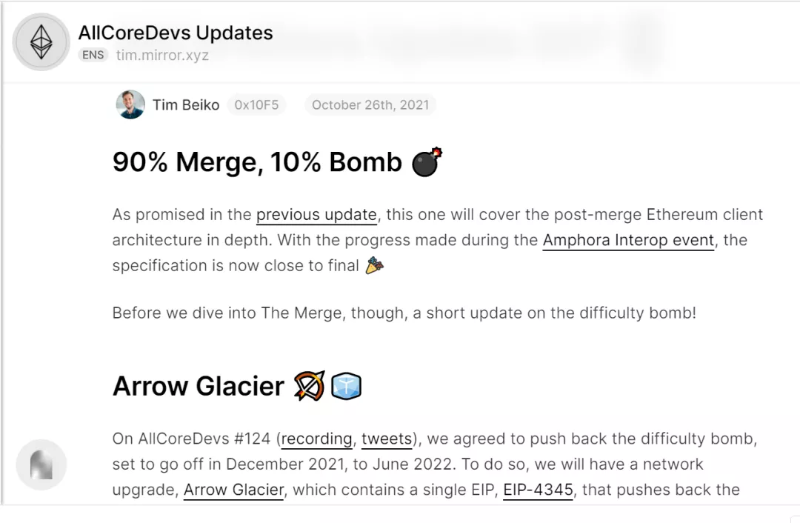
Tim Beiko: Yes, absolutely. You can follow Ethereum core developers’ work via this link:
 Matt Leising: Right now, the ETH 1.0 chain runs every minute of every day, and you’re trying to switch it over to another chain.
Tim Beiko: I think it’s fascinating. The Ethereum network isn’t just running in real time—it holds hundreds of billions, possibly trillions of dollars in value when including all tokens built on Ethereum. Plus, it has a massive validator set. The number of validators is one or two orders of magnitude larger than other PoS systems. Because the PoS beacon chain is already live and we want as many people as possible involved, coordination becomes more complex. With more participants to coordinate, naturally, things move slower.
Matt Leising: Stepping back, how did you become the person responsible for coordinating this massive transformation of Ethereum? You grew up in Canada—can you tell us about your upbringing and what life was like for you as a child?
Tim Beiko: Sure. I grew up in Canada—I’m from Montreal—but I recently moved to the U.S. West Coast. I’ve always been drawn to doing new things. I started a T-shirt business as a teenager, then ran a house painting company for several years. Eventually, I realized physical service businesses don’t scale well. You might personally manage 10 to 20 painters, but hiring a manager doesn’t dramatically increase scale. At some point, that pushed me toward technology.
Punk Rock T-Shirt Guy
Matt Leising: What kind of T-shirts were you selling? What designs did they have?
Tim Beiko: I was a huge punk rock fan, so it was a T-shirt brand—we’d sponsor bands and stuff like that.
Matt Leising: Can you name a few of those bands?
Tim Beiko: They were all small local bands. I don’t think any of them exist today.
Matt Leising: So you weren't selling Iron Maiden T-shirts?
Tim Beiko: No, unfortunately not at that scale.
Matt Leising: What did your parents do while you were growing up?
Tim Beiko: My mom is a doctor—a general practitioner. My dad used to work at a fiber optics sales company, but he didn’t enjoy it. He always liked building houses, so he quit and now builds homes.
Matt Leising: So you realized inventory-based businesses don’t scale well. Indeed, it’s tough. Did you also enjoy computers or video games as a kid?
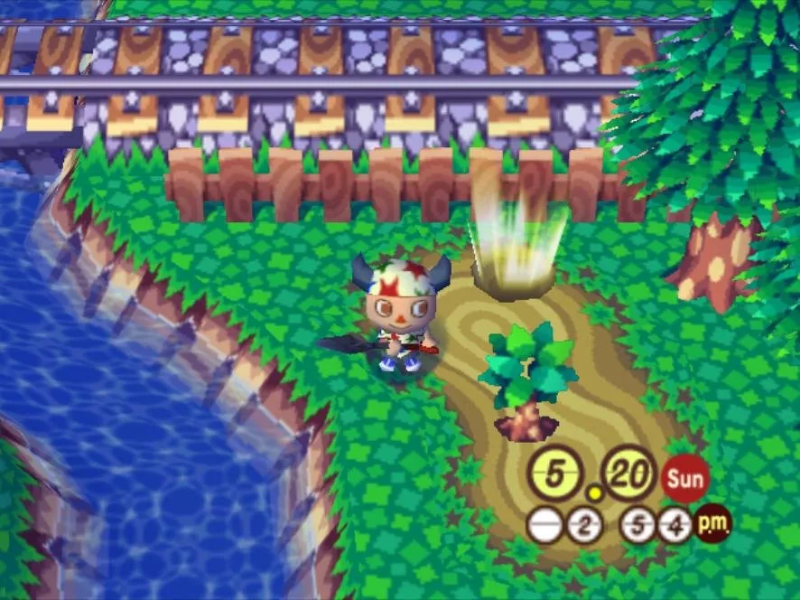
Tim Beiko: I loved online games. I was ranked in the top 100 in a game called AdventureQuest or BattleOn. I was also highly ranked in Neopets. As a kid, I’d wake up at 5 a.m. to play computer games. I even figured out ways to hack them. I remember when Animal Crossing launched on GameCube—you could change the console’s date to speed things up. So I’d plant crops, shut down the game, go into settings, advance the date by a week, then harvest my crops.
Matt Leising: That’s interesting. Were you engaged in school? Were you a good student?
Tim Beiko: I was okay. I scraped by. Nothing particularly grabbed my attention. I enjoyed running businesses and working on projects.
Matt Leising: How old were you when you started the T-shirt business?
Tim Beiko: Around 15 or 16.
Matt Leising: A few years later, you moved into house painting?
Tim Beiko: Yes, I was 17. I remember 18 is the legal age in Quebec, and under 18, many things are complicated.
Matt Leising: Did you plan to go to university, or what was your intention?
Tim Beiko: Yes, Quebec is unusual—high school is one year shorter than in most of Canada or the U.S., and university is also one year shorter. There’s a two-year pre-university program called CEGEP, which is great if you want to become a nurse or pursue vocational training. But for university-bound students, it’s a strange hybrid—feels like college, but technically still high school, and less rigorous. During a massive student strike in Quebec, our school was closed for 6 to 9 months. I essentially dropped out of in-person school and finished online. It worked well—requirements weren’t too high, and doing coursework online was much better.
Matt Leising: Did you receive secondary education in computer science?
Tim Beiko: I didn’t study computer science initially. I only picked it up much later. I completed those two years, then went to business school at university. A friend and I decided to start a tech company. I taught myself programming; she taught herself design. We worked on it for about a year. The company failed, but I learned enough coding to realize how little I actually knew. After it shut down, I decided to go back and study computer science instead of business.
From Iraqi Dinar to Bitcoin
Matt Leising: Had you encountered cryptocurrency before, or did you learn about it through this journey?
Tim Beiko: The person who introduced me to cryptocurrency was actually a painter who worked for me. It was his summer job, and he was always into odd schemes. After the U.S. invaded Iraq (in 2003), the Iraqi currency faced sanctions. So he bought large amounts of Iraqi Dinars on eBay and hid them under his mattress, hoping they’d appreciate once the U.S. left Iraq. He had these weird ideas, and another one—back then equally strange—was Bitcoin.
So he was the one who told me about Bitcoin. When he mentioned it, I bought one Bitcoin—around 2014, worth about $1,000. I just bought it and forgot about it.
I stayed in touch with him for two years. He’d bring up crypto, but I wouldn’t think much of it during our conversations. He mentioned Ethereum early on—I’m not sure if it was before or after launch.
I wasn’t paying much attention to Ethereum back then. It felt too complex. Then I heard about it again during The DAO phase, when it was fundraising, before the hack. I bought ETH before the attack because I wanted to contribute to The DAO.
For a long time after The DAO attack, it felt like the project had failed. My ETH was worth so little, it wasn’t even worth selling. So I didn’t.
Matt Leising: So you weren’t a “diamond hand”—just thought it was too much hassle.
Tim Beiko: Exactly. I still loosely followed Ethereum, but not closely, until late 2017, when I started seeing Ethereum-based projects. I remember Golem and Melonport, among others. Now there were actual projects using Ethereum, so I started following it more closely again.

Matt Leising: Prices clearly hit new highs too, right?
Tim Beiko: That was before. I bought around $20, and in March 2017 it rose back to around $20—I remember thinking, finally, I’m not at a loss.
At the time, I was studying CS, focusing on AI, and still thought AI was a safer career path than crypto. Back then, people still thought Ethereum might just disappear. It wasn’t guaranteed to last.
Matt Leising: I completely agree. And it hit a peak of $1,400 in 2018, followed by a massive crash. For a long time afterward, it dropped to around $100.
Tim Beiko: Actually, that’s when I got more involved. In summer 2017, there were tons of ICOs. I thought, even if most fail and many are scams, this shows huge demand for Ethereum. Right?
Using Ethereum back then was a terrible experience. During ICOs, the transaction pool would clog for days. Gas prices spiked, and people complained fees were too high and unpredictable. That’s when I realized I really wanted to work on the Ethereum protocol itself.
Matt Leising: So you wanted to work on Ethereum’s system to ensure its infrastructure was solid.
Tim Beiko: Exactly. Then I realized I wasn’t technically skilled enough to write code. At best, I was a junior programmer. So over the next year, I focused on learning and contributing more.
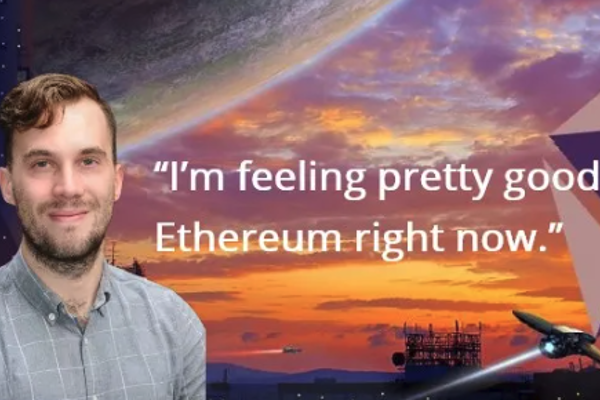
“I feel really good about Ethereum now”
Tim Beiko: Eventually, ConsenSys was looking for a product manager for their protocol team. That felt like a perfect fit. I enjoy being a product manager on deeply technical projects, but I don’t want to be an engineer or researcher myself.
Matt Leising: Given your trajectory—from 2018–2019 at ConsenSys to now—how would you compare Ethereum’s technological evolution and innovation over the past few years versus today?
Tim Beiko: I’ll start with the protocol layer, then touch on applications. On the protocol side, the 2017 hype caught everyone off guard. In 2018 and 2019, we spent a lot of time fixing things, improving reliability, making clients run more smoothly. Not until late 2019 and 2020 did we start exploring major new features.
Especially on ETH 1.0, there was a mindset of, “Oh, ETH 2.0 will solve all our problems, we don’t need to do radical things now.” I remember discussing this at Devcon (in Prague, November 2018). We realized even if ETH 2.0 delivered everything, it would still take years, so we probably needed to make significant improvements to keep Ethereum sustainable.
Many of the things we planned back then are still ongoing today. EIP-1559 was one we completed. Another big one is statelessness—because Ethereum’s state grows infinitely, making it harder for nodes to run. Third is handling historical data. The fact that Ethereum nodes must store all data forever puts enormous strain on the network. Since that data never changes, there are better ways to handle it.
Matt Leising: What’s your biggest concern about Ethereum right now?
Tim Beiko: I feel really good about Ethereum now. Again, this is from a protocol-layer perspective. Our big challenge is transitioning to PoS. I’m confident about that. On managing state growth, I think we’re on the right track. It won’t happen tomorrow, but many smart people are working on it.
If anything needs acceleration, it’s better tooling and migration support for L2s. I acknowledge Ethereum network fees are high, but for someone like me, that’s not part of my direct work—it’s a network supply-and-demand issue, not a protocol flaw. But I really want to ensure we do everything possible to push as much activity as we can onto L2s and make the L2 user experience smooth.
Matt Leising: Have you heard of ConstitutionDAO recently?

Tim Beiko: Yes, I’ve heard of it.
Matt Leising: I considered joining. I planned to send them $20 worth of ETH, but gas fees were $85. I gave up.
Tim Beiko: Yeah, I actually made several transfers where the gas cost more than the amount I was sending. It’s definitely bad.
Matt Leising: Aren’t you concerned about that? Do you think L2s and ETH 2.0 will greatly alleviate this?
Tim Beiko: Yes. L2s are already live. Last weekend, I used Optimism and Arbitrum—transfers cost just a few dollars on both. Importantly, on the Ethereum protocol side, we’re continuing work on sharding. I’m not worried about the technical feasibility. I care more about deployment, adoption, and ensuring people use appropriate layers. For example, anyone can freely use Ethereum L1, but we should be clear: unless you’re transferring $100,000 or more, you should use an L2. We should make it easy for apps to deploy across all L2s and ensure L2s are first-class citizens.
Matt Leising: Awesome. How do you expect Ethereum to look a year from now?
Tim Beiko: I’d be thrilled if we’ve transitioned to PoS by then. If L2 transaction volume exceeds Ethereum L1—ideally by 10x or even 100x—not necessarily in value transferred, but in usage, because I think L1 will likely remain the main place for large-value transfers. If by the end of 2022, most transaction activity happens on L2s and we’ve completed the shift to PoS, I couldn’t be happier.
Matt Leising: Great, Tim. Thanks so much for taking the time to share your background with us.
Tim Beiko: Thank you for having me.
Join TechFlow official community to stay tuned
Telegram:https://t.me/TechFlowDaily
X (Twitter):https://x.com/TechFlowPost
X (Twitter) EN:https://x.com/BlockFlow_News