The Economist: Bitcoin is a very small nightclub — new thinking on investing in "digital gold"
TechFlow Selected TechFlow Selected
The Economist: Bitcoin is a very small nightclub — new thinking on investing in "digital gold"
If you like using gold to hedge against inflation or other risks, you might really want to consider shifting part of your allocation to bitcoin.
 Navigating Web3 tides with focused insights
Amid market volatility triggered by the U.S. election and positive news about a COVID-19 vaccine, Bitcoin—the largest cryptocurrency by market value—has continued its upward climb, hitting a nearly three-year high this morning, just shy of $17,000. While debates over investing in Bitcoin remain deeply divided, its originality and scarcity still merit attention. Senior figures in banking have noted that the trajectory of this "digital gold" resembles that of gold in the 1970s, predicting it could surpass $20,000 before year-end. Like gold, Bitcoin has no intrinsic value. But because gold has long historical roots, people are accustomed to treating it as an asset, whereas Bitcoin is only recently entering the mainstream. If you like using gold to hedge against inflation or other risks, perhaps it's worth considering shifting part of that allocation to Bitcoin.
Blitz Coin
Reassessing Bitcoin’s Investment Case
For much of 1979 and 1980, the Blitz nightclub at Covent Garden’s Blitz pub hosted a legendary Tuesday night gathering in London. The city was then bleak and rundown, and the bar itself was grimy and chaotic. What made it extraordinary were its flamboyant regulars on Tuesday nights—the so-called “Blitz Kids.” A teenage Boy George worked at the cloakroom. Entry was strictly controlled. Steve Strange, who ran the door on Tuesdays, insisted that to get in, you had to look “like a walking work of art.” Mick Jagger was once turned away.
It all seemed superficial and fleeting. Heavy makeup, extravagant outfits, open disdain for anyone lacking artistic flair—it looked like a game. Yet, as Dylan Jones points out in his new book *Sweet Dreams: The Story of the New Romantics*, these art-school kids and rebels went on to shape popular culture. This brings us to another gathering place for eccentrics, dreamers, and dropouts: Bitcoin. To most people, Bitcoin is at best a fad, at worst a scam. Yet it refuses to vanish. Since March, its dollar price has risen about 150%.
It’s hard to have a rational conversation about Bitcoin. Show interest, and skeptics will scoff while your inbox fills with get-rich-quick schemes from enthusiasts. Still, a nagging thought lingers: what if these young crypto fanatics, like the once-mocked Blitz Kids, are onto something? After all, despite its notoriety, Bitcoin possesses originality and scarcity.
Start with originality. Even those who despise Bitcoin must concede that its technology is remarkably clever. At its core, it’s a method of recording who spent how much money. Instead of relying on a central exchange to keep ledgers and verify transactions, it uses an electronic ledger distributed across the entire Bitcoin network. This decentralization means altering the ledger would require controlling most of the computers in the network—an essential source of Bitcoin’s credibility.
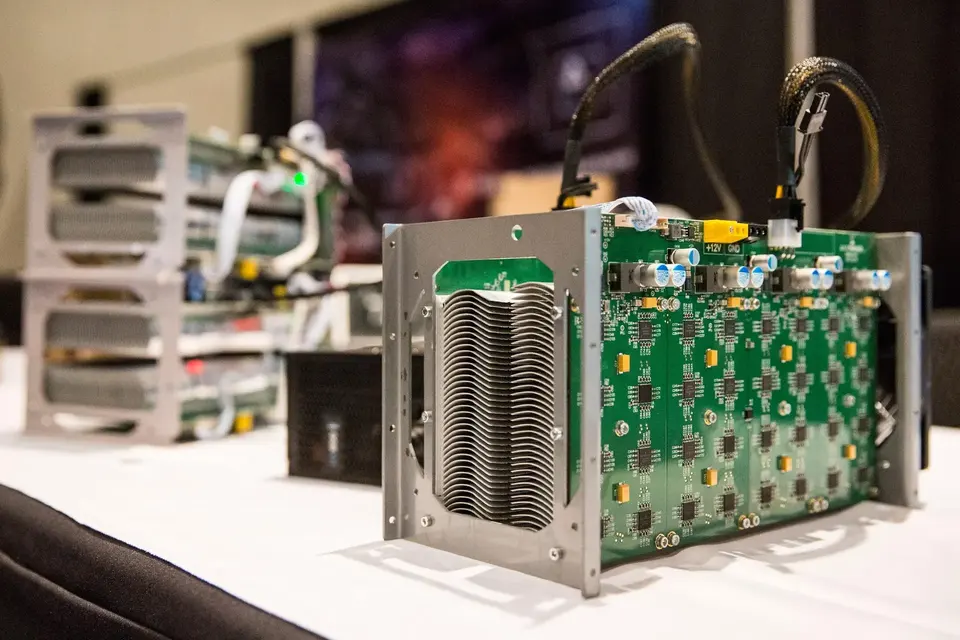
Much of Bitcoin’s appeal lies in the fact that it isn’t controlled by any official entity—be it government, bank, or tech company. (This is also why many dislike it.) The system is self-regulating and self-limiting. To “mine” Bitcoin, computers must solve a time-consuming mathematical problem: finding a large encrypted number generated by the system’s code. Over time, the remaining numbers become increasingly difficult to find. Eventually, Bitcoin mining will run dry. The supply rules of Bitcoin are as restrictive as the entry rules of the Blitz. Only 21 million Bitcoins will ever exist.
Tech-savvy millennials love all this. Older “tech-fearful” types recoil. That’s fine. Dylan Grice of boutique alternative investment manager Calderwood Capital recently wrote to clients: “Most people still hate Bitcoin. That’s not a bad thing.” His point: it’s hard to make big money buying assets everyone already loves. Also, like the Blitz nightclub, infamy and transgression are part of its allure. Older guests might complain about bland music or dirty surroundings. It doesn’t matter. The club served as a meeting point for kindred spirits—a benefit often underestimated. Nobel-winning economist and game theorist Thomas Schelling observed that even without formal agreement, people naturally converge on focal points. His insight applies to asset markets too. As long as enough people default to believing that gold—or Bitcoin—has value, then it does.
So what is it actually worth? Honestly: “Who knows?” Bitcoin has no intrinsic value. Like gold, it generates no future dividends, making traditional valuation impossible. But because gold has deep historical roots, people are used to treating it as an asset. Bitcoin is new, but its usage is expanding. So if you believe in its future, perhaps you should own some, says Grice. If you use gold to hedge against inflation, economic revival, or other disasters, you might genuinely consider shifting part of that gold allocation to Bitcoin. It offers advantages over the precious metal—easier storage and transfer, for example. In some places, you can even spend it.
Bitcoin is a very small nightclub. By comparison, gold looks like Wembley Stadium. The total market value of all Bitcoins is just 1% to 2% of the value of all gold ever mined. Scarcity is a shared trait among many things perceived as valuable. Steve Strange, who died in 2015, understood this well. He once said, “My smartest move was turning away Mick Jagger.”
Join TechFlow official community to stay tuned
Telegram:https://t.me/TechFlowDaily
X (Twitter):https://x.com/TechFlowPost
X (Twitter) EN:https://x.com/BlockFlow_News