CZ's Bangkok Weekend: Admitting Mistakes, Sounding the Alarm, Discussing the Bottom, and a Drama
Written by: Xiao Bing
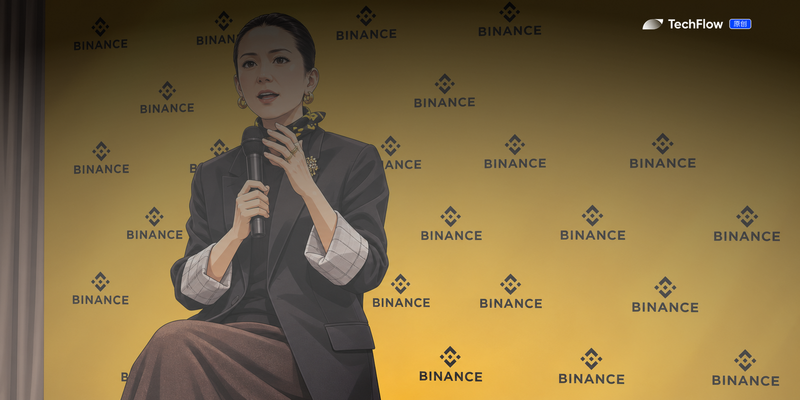
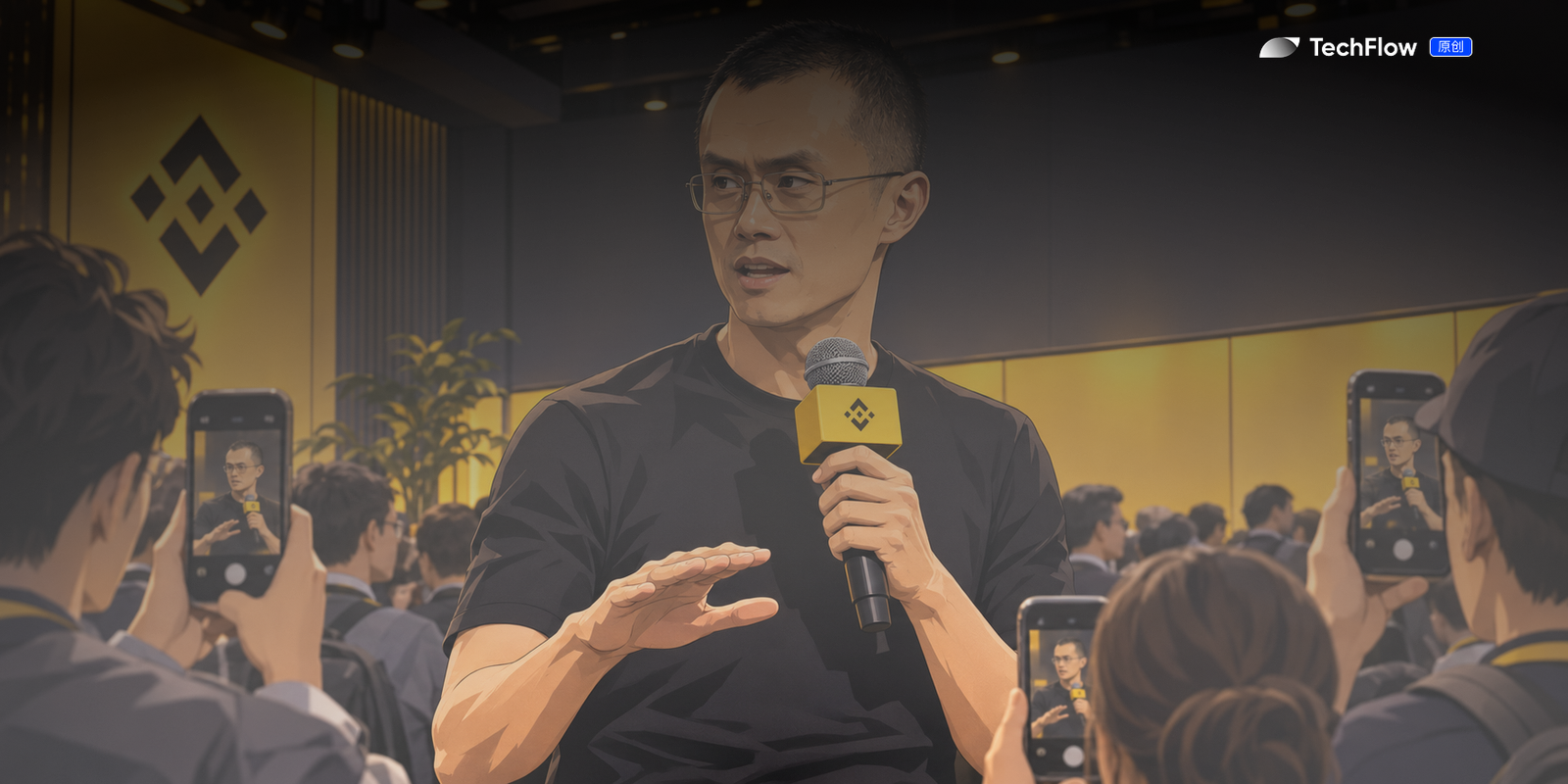
In Bangkok, the simplest way to tell if CZ has arrived is to see where the crowds are heading.
If you see a crowd surging toward someone, there's a high probability it's CZ.
People putting down drinks stop drinking, those chatting pause mid-conversation, and smartphones are raised overhead one by one. Within seconds, a circle forms; those on the outside stand on their tiptoes, while those inside jostle to get closer. In the center, CZ remains calm and unhurried, cooperatively posing for photos one after another.
Just a month after the approximately $6.3 billion hack, the market is freezing cold. Around the BBW conference dates, CZ made at least four public appearances. As crowds pressed close to him, what he repeatedly emphasized was a call for everyone to first pause and check their computers.
A Bit Complacent
In the main stage conversation, almost the entire discussion revolved around the hack.
CZ did not defend Binance. “In my view, the Binance team and ecosystem have become a bit complacent.” After years without major incidents, everyone got too comfortable, and security protocols were not continuously upgraded; senior management was busy handling other matters, paying insufficient attention to security. “Many things are important, but security is always the most important.” In his view, this incident could have been completely avoided.
The attack path he recounted was more patient and methodical than outsiders imagined.
Hackers contacted over a thousand employees under the guise of interviews through legitimate recruitment consultants. They started with non-technical roles, luring victims into downloading trojans disguised as “Zoom upgrades”. Then, they moved laterally across the internal network to target security engineers, IT operations staff, and production deployment personnel. Once they obtained the source code, hackers used AI for analysis. “What used to take an ordinary person six months to analyze can now be done in a single day with AI”.
Since the hot wallets could not be directly breached, they exploited vulnerabilities in Ethereum’s EIP-7702 signature mechanism instead.
Beyond acknowledging fault, he also praised Binance’s crisis management: users were fully informed, VIPs and partners experienced no widespread panic, and losses were covered by the exchange. “This continues the philosophy I held when I was founder—we must protect our users.” Relayed from the event, he mentioned that Binance deployed roughly half of its SAFU fund and contract insurance fund respectively, emphasizing that from a risk control perspective, platforms must retain resources sufficient to cover even the most extreme scenarios.
Let Binance Be the Warning Signal
More significant than the post-mortem analysis were the conclusions he drew from it.
The first conclusion is that “trading secrecy for security” no longer works. Hackers are using various AI tools to scan your source code, completely indifferent to your privacy. Offensive and defensive capabilities have never been symmetrical; defense requires finding and fixing every flaw, while offense only needs to find one.
The second conclusion is that the industry must band together.
He has already discussed forming an industry security alliance with peers, centered on three key actions: immediate response, sharing best practices, and cross-checking each other’s systems.
“I don’t care about the name; what matters is that there are several things we should do together.” Regarding the asset recovery efforts, Circle, Tether, along with the U.S. Secret Service and the FBI, all participated in freezing funds. In his view, this is an opportunity for the industry to collaborate closely with global law enforcement. Who should lead? He’d prefer others to take the helm, “but if it absolutely has to be me, I will push for it”.
The moderator compared the situation to aviation industry accident reviews. CZ’s response was pragmatic: public sharing is so others don’t have to learn lessons at their own expense, and he hopes Binance can also learn from others’ mistakes. Then came the most vivid remark of the session: “Let Binance be the warning signal. Don’t let this happen to you.”
His requirements were equally specific. Over the coming months, professionals should devote at least 30% to 50% of their time to security. “Unfortunately, most people remain quite complacent until they personally suffer the consequences.” He predicted the industry still faces a 6-to-12-month high-risk period, with 5 to 10 reported attacks daily, and unreported ones likely even higher.
During the community AMA, he also offered several highly practical tips:
Patch software vulnerabilities immediately; using monitoring tools to block your computer’s outbound connections could cut off over 70% to 80% of trojan communications; and run your own code through AI scanners. Any technical team larger than ten members will almost certainly uncover leaked API keys, including those from production environments, buried in their source code.
On the day of the conference, he also posted on X, instructing multiple apps within the Binance and BNB ecosystems to display upgrade warnings to users on older versions of iOS, and urged other crypto applications to follow suit.
This entire series of actions transformed Binance from “the biggest victim” into “the loudest alarm bell.” After AI drove down attack costs cliff-like, no single institution can afford to guard its own gates alone.
When Fear Nears Its Peak
Another unavoidable topic at this conference was price.
CZ’s answer carried the calmness of someone who has weathered multiple market cycles. He contrasted it with Bitcoin’s previous lows: around $150 in 2015, roughly $3,100 in 2018, and approximately $16,000 in 2022. While many consider $60,000 bleak today, historically speaking, it is far from extreme. During Demo Night, his stance was even more direct: $60,000 is already a decent price, though $120,000 would be better.
“Markets only bottom out when fear is at its peak, and I feel we are quite close.” He declined to offer any price predictions. His logic runs counterintuitively: with massive hot money flowing into AI, “this is actually the best time to invest in crypto”.
He does not believe AI will displace blockchain. Having matured during the rise of three pivotal technologies—the internet, blockchain, and AI—he sees them as complementary rather than replacements. “AI cannot replace money either; AI will actually require vastly more money and transactions.” Humans need currency, and AI agents will too; technology related to money will not vanish. Citing SpaceX and Starlink as examples, he noted that even in a mature industry, new players will continue to emerge.
AI, New L1s, and Homework for Founders
As the head of YZi Labs, CZ’s investment focus remains unchanged: crypto, AI, and biotech.
Crypto leans early-stage, focusing on incubation and hackathons; AI targets mid-to-late stages with larger ticket sizes, as the industry is “highly concentrated and heavily centralized”, leaving only a handful of players capable of securing tens of thousands to hundreds of thousands of chips to compete at the frontier. He himself is a heavy user of next-generation models, particularly favoring open-source models for security scanning because their fewer guardrails allow deeper code penetration.
Another major announcement is that BNB Chain will launch a new L1 chain, but without issuing a new token; it will continue using the existing token to serve high-throughput, micro-payments, and AI agent trading—use cases current chains cannot adequately support. He believes there may be fewer than fifty truly useful major L1s. While there might be another wave of L1 booms, hot money is currently focused on AI. Blockchain must deliver genuinely superior underlying infrastructure to attract top-tier capital. He also forecasts that prediction markets “will be huge”, though the timeline remains uncertain.
His advice to entrepreneurs was notably humble. Only one company he built to maturity is still operating. AI has made coding easier, but understanding users, handling integrations, navigating cross-border payments, regulation, and licensing remain difficult. To judge whether a product has value, simply ask three questions: Did it save people time? Did it save people money? Did it make people happy?
When discussing policymakers, he remained pragmatic: politicians are too busy, dedicating only five minutes to each topic, so one cannot expect them to fully grasp the technology. The only solution is continuous engagement—holding meetings, building think tanks, and writing accessible materials. “There are no shortcuts; you have to do the homework yourself.”
Supporting Founders, Not Government Intervention
An unexpected topic on the main stage was Jensen Huang.
CZ stated he “has always backed founders” and believed stepping aside for Huang was a mistake. Without him, NVIDIA might coast forward for a while due to inertia, but the risk of failure would be high. Meanwhile, NVIDIA’s near-monopoly status in chip design greatly benefits both the United States and the world. “Often, a company rises and falls with its founder.” He added a caveat: a founder’s goal should be ensuring the company can continue operating smoothly after they leave.
Principled in his opposition to government intervention in business, he argued that external forces meddling in the market effectively prop up less competitive players, stripping the market of its ability to select the best companies and eliminate the worst.
This statement carries special resonance given CZ’s own background. He himself is a founder who stepped away from the company, which is now managed by co-CEOs. Saying “companies often share life and death with their founders” alongside “ensuring the company survives and thrives after the founder departs” encapsulates Binance’s real-world trajectory over recent years.
A TV Series and Public Perception
The main stage conversation opened with a discussion of Netflix’s newly released FTX-themed series, The Altruists. In the show, CZ is portrayed as the villain.
“I am deeply dissatisfied with how they portrayed me, so we’ll see what our lawyers can do.” He mentioned having only seen clips on X, and expressed confusion as to why he was cast as the villain while SBF was painted as the hero, calling it “basically defamation” for him.
He estimated he had only crossed paths with SBF about five times, describing him “mostly as a competitor”. Asked what actions he could take against a “fictional drama based on true events”, he admitted uncertainty, noting he is still weighing advice.
He also offered a judgment explicitly labeled as “speculation”: this series might be shaping public opinion to pave the way for SBF’s future pardon, “maybe in two years, maybe six, maybe ten—I don’t know”.
What truly concerned him, however, was the broader public. “Crypto natives already know the truth, so whatever I say on Twitter doesn’t matter much to them. But they are targeting outsiders, and unfortunately, we lack that kind of reach.”
Within the crypto world, CZ is a name that draws crowds; outside of it, he is defined by streaming services and Hollywood.
Returning to the circle of people gathered at the beginning.
Those pressing close to CZ sought either a photo or a quick question like “can I buy now?” His answers over these past days ran precisely counter to this enthusiasm: prioritize security first, as the next six months to a year will see people getting hacked daily; the market is nearing peak fear, but he refuses to predict where the bottom lies.
The most memorable image of this weekend in Bangkok is likely this scene: the industry’s master of generating hype stands right at its epicenter, repeatedly urging everyone to stay calm.
Join TechFlow official community to stay tuned
Telegram:https://t.me/TechFlowDaily
X (Twitter):https://x.com/TechFlowPost
X (Twitter) EN:https://x.com/BlockFlow_News
 深潮TechFlow