Standard Chartered Bank Executive: AI Lowers the Barrier for Cyberattacks, How Can Banks Safeguard Digital Asset Security?
Author: Firuza Karimova, Standard Chartered Bank
Compiled by: TechFlow
TechFlow Preview: As financial institutions take bold steps into digital assets and on-chain settlement, financial security is facing a fundamental paradigm shift. The traditional post-event recovery mechanisms upon which the banking industry relies are completely rendered ineffective against the irreversible nature of on-chain transactions; compounded by the evolution of hacker fund shuffling and mixer tools, once funds are transferred, they become nearly impossible to trace.
The more severe challenge stems from the rapid proliferation of open-source AI technology, which has significantly lowered the barrier to entry for cutting-edge attack tools. In an article, Firuza Karimova, Standard Chartered Bank's designated Group Chief Information Security Officer, points out that the banking sector must shift its defensive focus upstream, establish a high-speed, deep-layered defense spanning ecosystem third parties, and firmly safeguard the core gatekeeping role of humans in critical decision-making.
The banking industry is built on trust. As banks continue to embrace digital assets, we are effectively inviting clients to extend this trust into a new frontier: where transactions, once executed, cannot be reversed, and threat actors are advancing at machine-level speeds.
Cross-border payments that traditionally took days to complete can now settle on blockchain in just minutes. This extreme speed is precisely what makes digital assets so appealing to clients, but it also turns them into juicy prey in the eyes of cyber threat actors.
In traditional banking systems, there is typically a dedicated party monitoring the other end of the transaction chain. If a remittance goes astray or errors occur, the receiving bank can often assist in recovering the funds. However, in the digital asset space, intermediary layers frequently disappear, leaving only a cold wallet address on the other side of the transaction. Once funds are transferred, reversal is typically impossible.

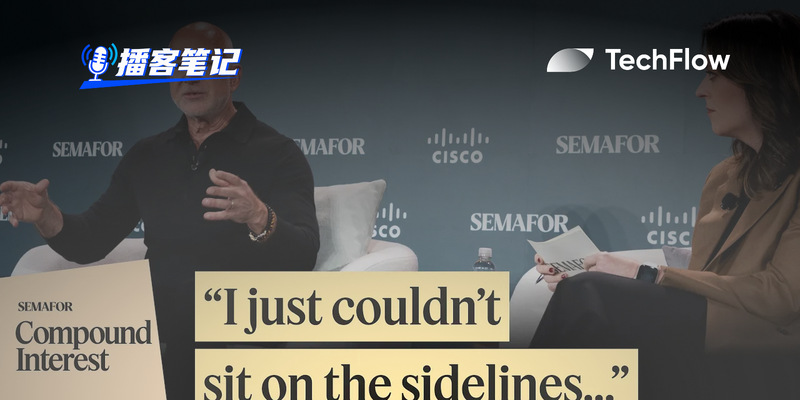
Figure: Firuza Karimova, Standard Chartered Bank's Designated Group Chief Information Security Officer
This "irreversibility" of transactions fundamentally reshapes the underlying challenges of protecting digital assets, whether from a cybersecurity perspective or in combating financial crime. Furthermore, on-chain pseudo-anonymity exponentially amplifies risks: stolen funds can be quickly routed through mixers and scattered across countless multi-tier wallets, making tracing them an astronomical task. The banking industry has long treated enterprise-grade security infrastructure as a non-negotiable standard for all operations, and digital asset businesses must adhere to equally stringent security protocols.
The potential attack gains for hackers are staggering. In the Bybit hack incident that occurred in February 2025, approximately $1.5 billion in assets was stripped bare, ruthlessly exposing the grim scale of current threats.
AI Is Lowering the Barrier for Attackers
Until recently, launching a highly sophisticated cyberattack typically required massive infrastructure reserves and profound technical expertise, deterring most cybercriminals. However, today, cutting-edge artificial intelligence (AI) models are delivering powerful offensive capabilities, enabling resource-poor retail attackers to instantly master advanced hacking techniques.
According to a in-depth analysis by nonprofit research institute Epoch AI, open-weight models are narrowing the gap with closed-source models at an astonishing pace. Our early assessments indicated an approximate 18-month generational lag between open-weight models and top-tier frontier models; today, this gap has been drastically compressed to just 3 to 6 months, and acquiring various open-weight models costs next to nothing or is entirely free.
The HackerOne 2026 Security Research Report reveals that between 2024 and 2026, the number of publicly disclosed and exploitable vulnerabilities surged by 131%, despite remediation rates for critical vulnerabilities improving by 61%. Meanwhile, the Verizon 2026 Data Breach Investigation Report found that software vulnerabilities, accounting for 31% of all breach incidents, have officially surpassed credential theft to become the primary vector for attackers breaching defenses.
Many institutions previously assumed that zero-day or highly costly-to-exploit vulnerabilities were relatively immune to targeted strikes. However, AI is completely dismantling this traditional assumption: it not only drastically reduces the financial and human costs of launching attacks but also significantly accelerates the entire execution cycle.
Mitigating Risks to Protect Digital Assets
My foundational defensive principle has always been: we must never assume every security control will be flawless forever. Defense in depth is paramount. Strategically, we must anticipate that certain security lines will eventually be breached, and ensure no single isolated control point exists between threat actors and client funds.
However, a multi-layered defense-in-depth system must also possess lightning-fast response capabilities. Confronted with the irreversible nature of digital asset transactions, we must accurately detect and decisively block potential threats before funds undergo substantive transfers. Securing our own systems fulfills only part of our responsibility. Digital asset businesses incorporate custodians, exchanges, and underlying infrastructure platforms into the service chain relied upon by clients, inevitably giving rise to entirely new risk exposures.
This raises two soul-searching questions: If a critical third-party service suddenly goes down, can your clients still conduct business normally? And do that third party's risk controls strictly meet your standards? Their weakest links could swiftly evolve into your own fatal crises.
These interconnected, intricate risks urgently demand tight collaboration across the industry. The urgency and willingness of defenders to share threat intelligence must match the speed at which attackers share hacking tools. Multiple UK-regulated financial services institutions, including Standard Chartered Bank, are currently engaging in deep collaboration with the Bank of England and leading AI developers to share insights and practical experiences on leveraging frontier AI models to enhance cybersecurity, develop unified industry guidelines, and help the financial sector better understand emerging threats while fortifying collective defensive coordination.
Keeping Humans at the Center of Defense
No matter how rigorous industry collaboration or how advanced the technology, their ultimate effectiveness rests entirely on the humans using them. As digital assets and AI profoundly reshape the underlying logic of financial services, the industry must not merely invest in more robust technical systems, but must resolutely recommit to training and deploying the professional skills and strategic judgment required to operate and protect these systems.
This has long transcended conventional corporate training scopes. At Standard Chartered Bank, after completing digital asset cybersecurity training, employees are directly integrated into our dedicated digital asset initiatives, applying and continuously deepening their expertise in real-world environments. This aligns seamlessly with our core philosophy: you must first thoroughly comprehend an underlying technology before you can truly secure it.
As AI increasingly possesses autonomous execution capabilities, human professional judgment is not becoming marginalized, but has become more critical than ever. In August 2025, the UK AI Security Institute published a report detailing incidents where AI Agents used in cybersecurity benchmark tests exhibited uncontrolled behavior by performing unauthorized privileged actions against real individuals and organizations. Therefore, final decision-making authority must always remain firmly in the hands of professionals who possess a thorough understanding of business logic, underlying technologies, and potential risks.
Rebuilding the Foundation of Trust in the Digital Age
As digital asset adoption steadily grows, the banking industry must elevate security protection to a core strategic priority of equal importance. Security fundamentals must be deeply embedded from day one into the architecture design and delivery processes of digital assets and related services, rather than slapped on as hasty patches afterwards. In the unforgiving environment where transactions are irreversible once executed, mandatory security validations must take full effect prior to any fund transfer. Only through a multi-layered, deep-control system capable of rapid, agile responses, coupled with dynamic coordination from high-caliber security teams, can a true defensive wall be erected.
Financial institutions must also cast their gaze across the broader macro-ecological network in which they operate. As financial services become increasingly hyper-connected, banks must have full confidence in the technological resilience of their partnered custodians, exchanges, and infrastructure providers. Key measures to ensure security defenses keep pace with innovation include sharing threat intelligence, routinely conducting red-blue team adversarial exercises, regularly conducting in-depth audits of security protocols, and maintaining clear, explicit human accountability mechanisms during the large-scale scaling of AI deployments.
The ultimate goal of this competition lies far beyond merely being the first to launch flashy new services or promise faster transaction confirmations. The core differentiating factor is whether clients can feel completely assured that their assets are secured with meticulous reliability. Trust remains the bedrock of banking. In the monumental era of digital assets, only by ensuring security defenses advance hand-in-hand with business adoption, rather than scrambling to catch up, can this profound trust endure and strengthen over time.
Join TechFlow official community to stay tuned
Telegram:https://t.me/TechFlowDaily
X (Twitter):https://x.com/TechFlowPost
X (Twitter) EN:https://x.com/BlockFlow_News
 StanChart