
Why has DeFi insurance consistently struggled to gain traction, with less than 2% of the $68 billion in assets covered?
Author: Sachin (@SachinHMx)
Compiled by: TechFlow
TechFlow Summary: Today, as financial primitives like trading, lending, and cross-chain bridges have evolved into complex derivatives, insurance—the so-called "fourth pillar"—has suffered years of contraction. With AI tools drastically reducing the cost and effort to discover smart contract vulnerabilities and launch attacks, cumulative DeFi hack losses continue to hit new highs, yet less than 2% of on-chain assets are covered by insurance.
The core bottleneck lies in the "self-referential risk" of traditional underwriting models: using highly volatile on-chain assets like ETH as collateral to insure those same assets causes both collateral value and underwriting capacity to collapse simultaneously during crises. Next-generation protocols are now attempting to introduce external non-correlated asset collateral or insurance scoring mechanisms to break this vicious cycle.
Key Takeaways (TL;DR)
AI-Accelerated Attack Threats: DeFi hack losses reached $9 billion in 2026. AI tools have significantly boosted the efficiency of vulnerability discovery and exploit development, reducing costs by up to 100 times.
Severely Lagging Coverage Rates: The total TVL across DeFi is currently around $68 billion, but less than 2% is insured. The entire insurance sector's TVL has plummeted from a 2021 peak of $1.85 billion to just $132 million today.
Clear Coverage Boundaries: DeFi insurance specifically covers predefined risk events (such as smart contract exploits, oracle failures, stablecoin de-pegs, and slashing penalties) and does not cover normal market price fluctuations or standard trading losses.
Highly Oligopolistic Leaders: Nexus Mutual and Firelight account for nearly 90% of the sector's insurance TVL. Nexus Mutual alone has paid out over $24.7 million in claims since its launch in 2019.
Five Core Obstacles to Scaling: Low capital efficiency, lack of dynamic risk pricing, insufficient hedging against highly correlated risks, difficult claim assessment, and security vulnerabilities within the insurance infrastructure itself remain severe barriers limiting sector expansion.
The DeFi ecosystem holds $68 billion in locked assets, yet funds protected by insurance protocols account for less than 2%.
Since 2021, DeFi has evolved from basic spot trading and lending liquidity pools to fixed-rate credit, tranching, and diversified structured yield products. However, insurance protocols have followed a completely divergent path: the sector's combined TVL has crashed dramatically from its 2021 peak of $1.85 billion to merely $132 million today.
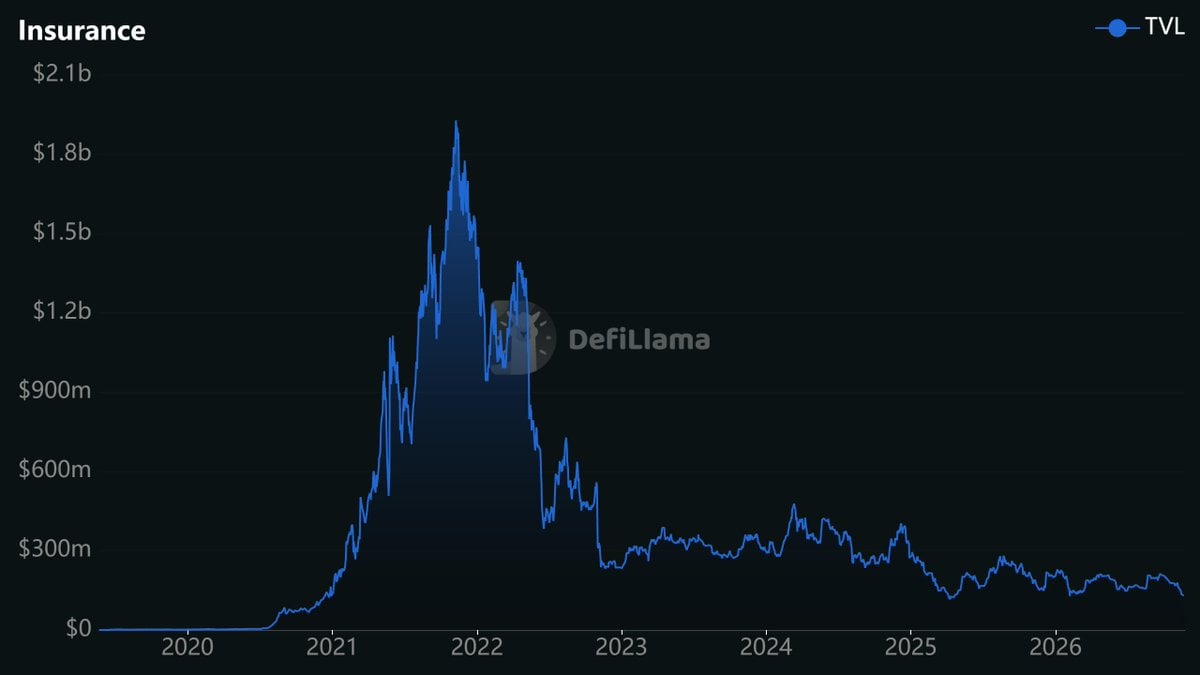
Chart: Drastic decline in DeFi insurance TVL since its 2021 peak
Insurance: The Missing Fourth Pillar of DeFi Finance
To date, DeFi has established three core underlying financial primitives:
1. Automated Market Makers (AMMs): enabling permissionless decentralized spot trading;
2. Lending Markets: providing on-chain credit expansion, leverage, and yield generation foundations;
3. Cross-Chain Bridges: connecting asset transfer channels across multi-chain ecosystems.
These three work in tandem, creating liquidity while also generating and dispersing complex financial risks. Yet, the fourth key primitive remains severely absent: a mechanism that can scientifically price extreme downside scenarios and smoothly transfer risk—namely, "insurance."
Code audits and real-time on-chain monitoring can only identify potential security threats beforehand, but cannot absorb financial losses after a hack succeeds. Only insurance can provide users with institutionalized financial safety nets through clearly defined coverage limits and payout conditions.
As AI exponentially increases the speed of smart contract vulnerability scanning and attack script writing while cutting costs to one percent of what they once were, why has DeFi insurance expansion stalled? Is it due to flawed protocol design, a severe shortage of upstream/downstream supporting infrastructure, or simply insufficient genuine hedging demand from institutional and retail investors?
Before exploring why DeFi insurance struggles to scale, we must first clarify: which real-world risk scenarios existing on-chain insurance products actually cover.
What Risks Does DeFi Insurance Actually Cover?
Depositing assets into DeFi protocols faces far more than simple market volatility. Smart contract exploit attacks, oracle feed failures, on-chain governance attacks, liquidation mechanism failures, stablecoin or wrapped asset de-pegs, Ethereum slashing penalties, and custody malfunctions can all directly lead to total asset loss.
For example: a hacker exploits a contract vulnerability to drain $10,000 deposited in a lending protocol. Even if the investor made zero trading errors, their position vanishes instantly.
DeFi insurance precisely targets these "predefined specific loss events" rather than covering ordinary secondary market drawdowns or poor trading outcomes.
According to the on-chain risk mapping project (onchainriskmap.com), current DeFi risks are primarily categorized into six major groups:
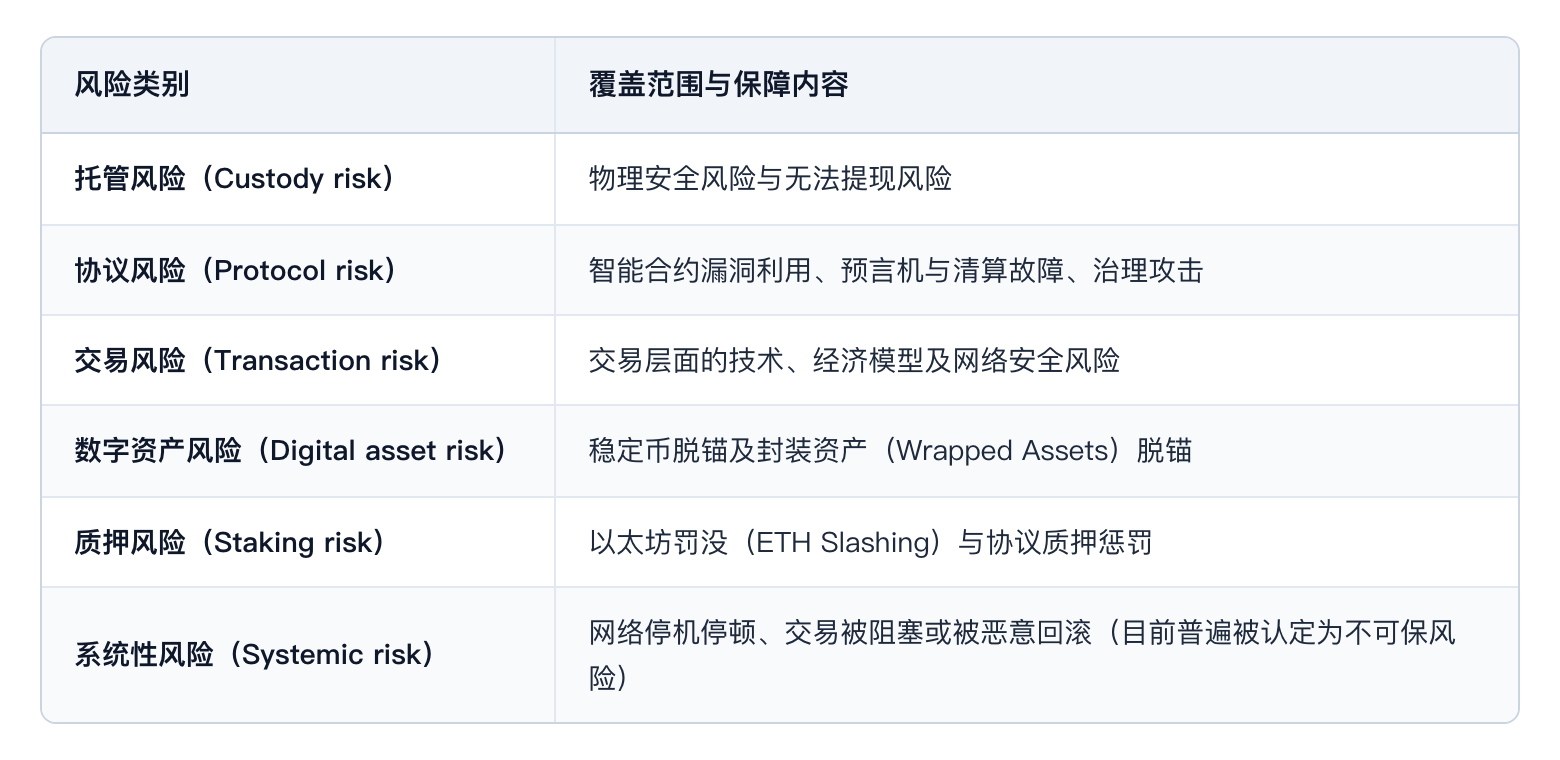
Chart: Six Core Categories of DeFi Risks (Source: onchainriskmap.com)
It should be specifically noted that the sixth category, "systemic risk," involves catastrophic consequences such as entire public chain paralysis, and is broadly classified in the industry today as an uninsurable absolute tail risk.
How Do Existing DeFi Insurance Mechanisms Work? A Case Study of Nexus Mutual
As the most representative veteran leader in the sector, Nexus Mutual provides a classic case study for observing the underlying operations of current DeFi insurance.
Operating on Ethereum as a "Discretionary Mutual," its core logic relies on mutual members pooling capital collectively to underwrite specified protocol risks.
Its complete business loop consists of four core stages:
Step 1, Capital Provision: Holders of the governance token $NXM stake or delegate their tokens into dedicated underwriting pools;
Step 2, Risk Filtering: Pool managers evaluate and select protocols and risk types eligible for coverage, setting corresponding premium rates;
Step 3, Policy Purchase: Retail users pay premiums to obtain time-bound coverage against predefined loss events;
Step 4, Claim Adjudication: Once a covered event occurs, submitted claims are verified and adjudicated on-chain by a claims committee. If approved, the mutual will draw from its public treasury to execute payouts, destroying the corresponding staked $NXM tokens in the underwriting pool to finalize capital settlement.
Premium prices fluctuate dynamically based on supply and demand, with coverage periods flexibly configured between 28 and 365 days.
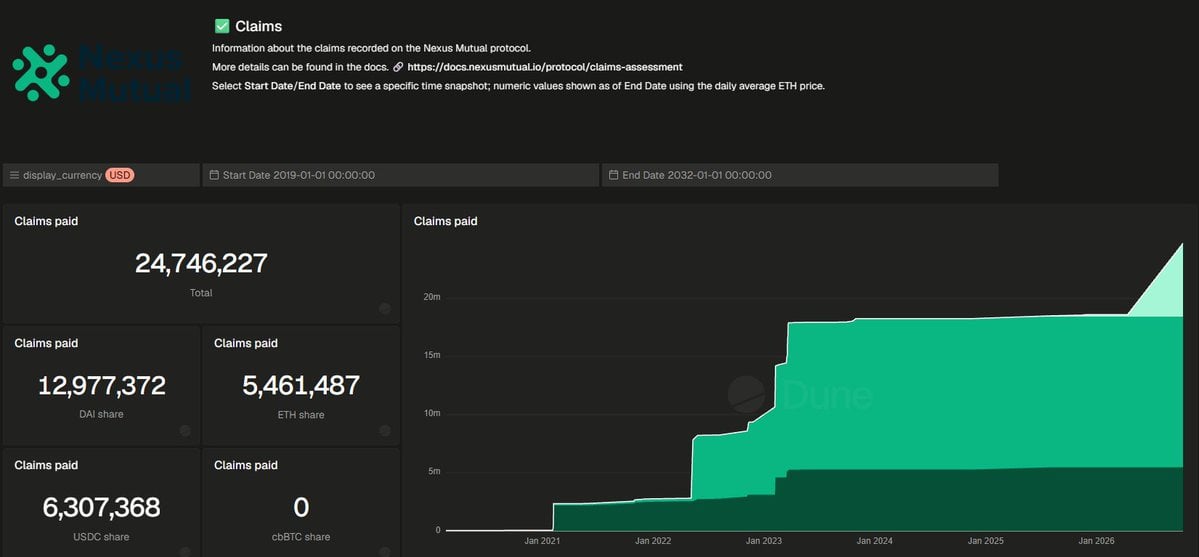
Chart: Cumulative claim payouts by Nexus Mutual since 2019
Official historical records show that since its founding in 2019, Nexus Mutual has already paid out over $24.7 million in actual cash to policyholders affected by security incidents.
Current Landscape of the DeFi Insurance Ecosystem
The TVL for the entire DeFi insurance segment is currently around $132 million, with just Nexus Mutual and the emerging protocol Firelight accounting for nearly 90% of the total share. The vast majority of other long-tail protocols have generated almost no sustainable premium income, highlighting the sector's extreme oligopoly and early-stage stagnation.
Currently active ecosystem projects mainly include:
Nexus Mutual (@NexusMutual): A member-governed decentralized mutual insurance protocol that insures DeFi smart contract risks and issues policies through capital contributions from members;
Firelight (@Firelightfi): Innovative use of staked FXRP as external collateral to provide secure backing for deeply integrated DeFi yield vaults;
EaseDeFi (@EaseDeFi): Formerly Armor, proposes an "Uninsurance" model aiming to allow users to gain coverage without upfront heavy premiums through reciprocal co-insurance;
Ensuro (@Ensuroproject): An on-chain insurance and reinsurance protocol connecting decentralized capital providers with real-world underwriting capacity;
Cozy Finance (@cozyfinance): Builds automated anti-hack protection markets for retail investors and protocol operators;
Ante Finance (@AnteOrg): Enables real-time on-chain verification of a protocol's technical promises and security guarantees by staking smart contract test suites (Ante Tests);
Sherlock (@sherlockdefi): Deeply integrates smart contract thorough security audits with anti-exploit coverage, where audit teams provide financial backing for the code they review;
USD8 (@usd8_fi): An asset-protection stablecoin backed by USDC reserves, allocating coverage limits and claim payouts through shared Cover Pools and dynamic "Insurance Scores" mechanisms, currently in open beta.
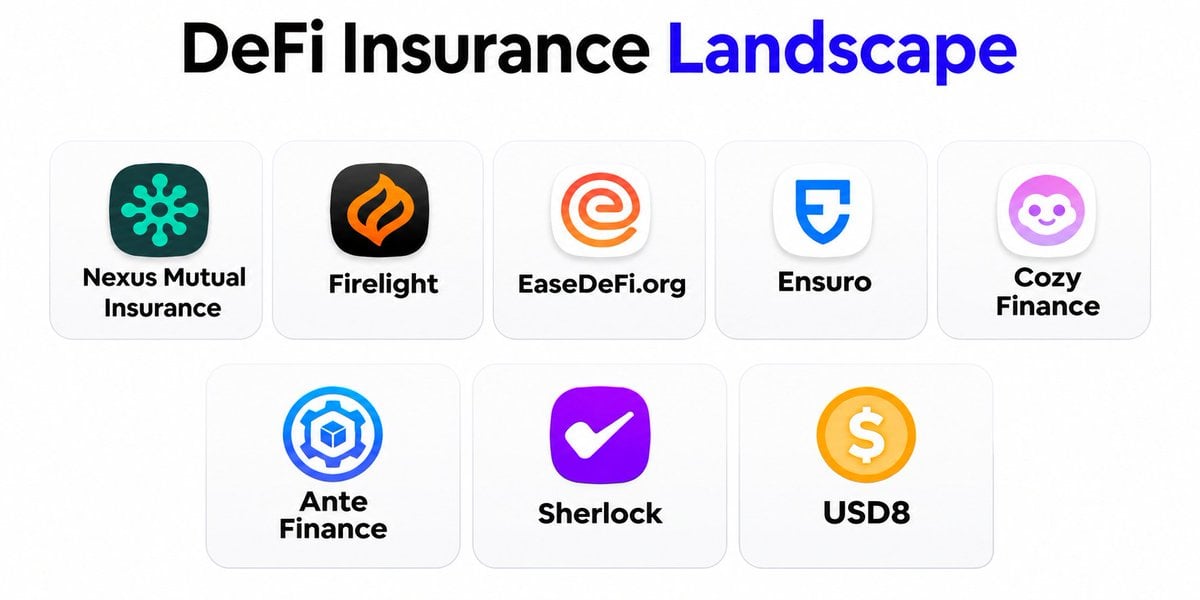
Chart: Overview of Mainstream DeFi Insurance Protocols and Security Providers
It should be noted that TVL alone absolutely cannot fully measure an insurance protocol's actual solvency. Active Cover, capital utilization efficiency, Minimum Capital Requirements (MCR), and historical actual payout performance are the true benchmarks for judging its real underwriting capacity and financial health.
Why Has DeFi Insurance Always Struggled to Scale?
Early DeFi insurance models possess a fatal underlying flaw: the collateral assets relied upon by underwriting pools are inherently exposed to the exact same crypto risks they attempt to protect against.
During sudden black swan crises across the market, claim applications often explode exponentially, while the price of underlying collateral assets (like ETH) plummets violently.
In other words: During critical moments when payout liabilities are most rigid and liquidity is desperately needed, collateral values suffer the most severe depreciation.
Furthermore, early underwriting pools had extremely shallow liquidity, completely unable to absorb tens of billions in asset risk for major top-tier protocols, let alone satisfy institutional players' multi-million dollar hedging allocation demands.
To address this, emerging protocol Firelight attempts to explore a completely different asset architecture: utilizing exogenous capital based on XRP to underwrite DeFi risks. Users deposit FXRP into dedicated vaults on the Flare network to earn interest-bearing receipts (stXRP). This massive accumulated pool will exclusively provide hedged payouts for partnered DeFi vaults.
Its capital flow logic operates as follows: $XRP holders → $FXRP → Firelight Reserve Vault → Protection for DeFi protocols.
This architecture attempts to break dependency on internally highly correlated DeFi collateral, but whether it can fully neutralize secondary market liquidity shocks and cross-asset correlation risks remains to be tested through real bull/bear cycles.
Regarding the core ailments of early traditional insurance models, Firelight founder Jesus Rodriguez (@jrdothoughts) bluntly pointed out in an interview with The Wolf of All Streets:
"The biggest pain point our predecessors encountered was: they kept trying to insure ETH with ETH."
"The true breakthrough lies in: why don't we try using externally non-strongly-correlated assets relative to the traditional DeFi ecosystem, such as XRP, XLM, and even Bitcoin to some extent, to build a secure defensive line for top yield-bearing assets within DeFi?"
"By doing so, your capital lock-up costs become extremely low, nearly zero. Because native on-chain XRP and XLM have never had any significant native yield pathways, and Bitcoin's on-chain yields are equally minimal."
"But if you take these idle assets to underwrite and backstop Sentora vaults, Morpho lending pools, or the Aave lending market, the entire business logic clicks perfectly. Users stake XRP in deposit vaults; it never directly interacts with the target protocol's base layer, yet steadily captures the risk-hedge premium yields paid by the target protocol."
The Path to Breakout: What Changes Must DeFi Insurance Undergo?
According to statistics from Diligence Security, DeFi suffered severe losses exceeding $137.7 million in Q1 2026 alone due to various hacking attacks, with only about $9 million ultimately recovered. Such a massive net security exposure undoubtedly underscores the extreme urgency for financial protection. However, building a healthy, self-sustaining insurance market requires overcoming the following five major hurdles:
1. Capital Efficiency Bottlenecks: Insurers must park enormous redundant liquidity in vaults to cover potential claims, but keeping these idle reserve funds highly productive remains a perpetual challenge in economic model design;
2. Lack of Dynamic Risk Pricing: Smart contract exploits and composable economic model attacks are highly sudden and sporadic, severely lacking the long-term historical data required by traditional actuarial science. This often leads to premiums being priced either too high to deter buyers or too low, causing insurers to bleed money;
3. Highly Contagious Correlation Risks: Market-wide liquidity runs frequently trigger domino effects, triggering cascading failures across multiple protocols at the same time. This creates a fatal resonance with the declining prices of underwritten assets;
4. Subjective Disputes in Claim Assessment: Not every on-chain incident can easily be classified as a hack meeting claim criteria. Gray-area events like compositional arbitrage, white-hat front-running, or team exits readily spark severe voting governance disagreements and trust crises between victims and underwriting pools;
5. Self-Imposed Security Backlash on the Insurance Layer: Ironically, the infrastructure built to protect others often becomes the hackers' prey. For instance, Cozy Finance, dedicated to building protection markets, was itself breached in September 2026, losing $170,000. The shield protecting others inherently contains exposed surfaces vulnerable to breaches.
These intricate challenges intertwine: insurance protocols need to accumulate massive capital to absorb catastrophic losses, require precise risk quantification systems to set rational premiums, and must possess impregnable code security mechanisms to guarantee full, undiminished payouts when users face storms.
The DeFi world has built extraordinarily sophisticated trading, lending, and composable yield markets over the past few years, yet stands completely motionless at the foundational stage of "risk transfer and digestion." To help on-chain insurance truly break through bottlenecks, it must introduce deeper and uncorrelated underlying capital pools, build more credible dynamic actuarial risk models, and forge more transparent and objective claim adjudication infrastructure.
Whether through Firelight's exploration of external uncorrelated asset collateral or USD8's experimentation with shared Cover Pools and quantified security scores, each attempt tries to find new problem-solving approaches for this industry. Only by achieving substantive breakthroughs in these core shortcomings will insurance truly become the rightful fourth pillar of DeFi, standing alongside AMMs, lending, and cross-chain bridges; otherwise, it will inevitably remain a marginalized bystander in the multi-billion dollar wave of decentralized finance.
Join TechFlow official community to stay tuned
Telegram:https://t.me/TechFlowDaily
X (Twitter):https://x.com/TechFlowPost
X (Twitter) EN:https://x.com/BlockFlow_News
 SachinHMx