Tonight, Three Major Tests for Global Markets: US CPI, Warsh Hearing, and Earnings Season
TechFlow Selected TechFlow Selected
Tonight, Three Major Tests for Global Markets: US CPI, Warsh Hearing, and Earnings Season
Three variables converge on the same day, with US stocks standing at a fateful crossroads. Goldman Sachs warns that if rate hikes resume, growth expectations, cost of capital, and historical valuation patterns will form a triple squeeze on US stocks.
 Navigating Web3 tides with focused insights
Author:Xu Chao
Expectations of a Federal Reserve rate hike suddenly intensified, the bank earnings season officially opened, and the new Chairman made his debut on Capitol Hill—three variables overlapping within the same time window made this Tuesday the most decisive single day for the market recently.
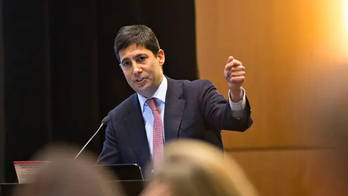
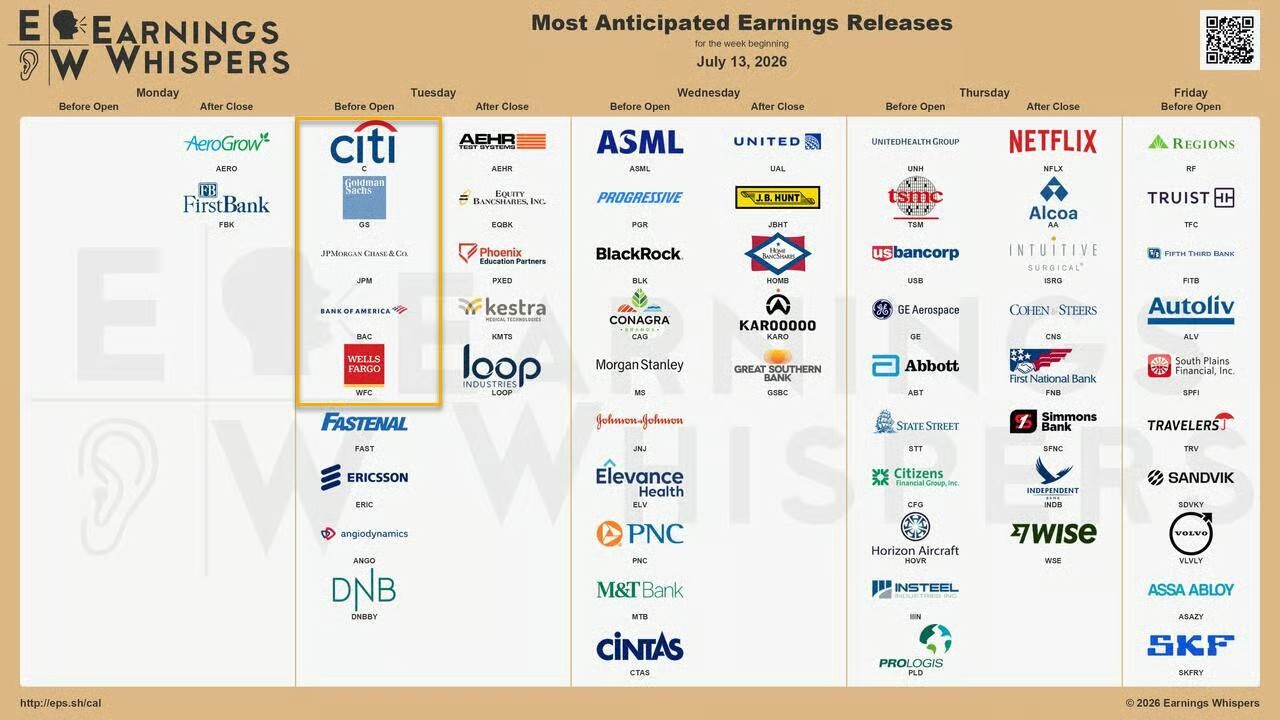
This Tuesday, the US June CPI data will be released first at 8:30 AM Washington time, followed by Federal Reserve Chairman Kevin Walsh making his first appearance at the House Financial Services Committee hearing as the new Chairman. On the same day, five major banks—JPMorgan Chase, Bank of America, Wells Fargo, Goldman Sachs, and Citigroup—will centrally disclose their Q2 results, kicking off this earnings season. Ian Lyngen, Head of US Rates Strategy at BMO Capital Markets, stated, "The combination of CPI data and Walsh's testimony will significantly change the probability of a rate hike in some direction."
Federal Reserve Governor Christopher Waller clearly defined the trigger conditions for a rate hike on Monday, stating that if this week's core inflation data "runs hot again," the FOMC will need to consider tightening monetary policy in the near term. This statement quickly reshaped market pricing: the implied probability of a July rate hike in the money market surged from less than 10% to about 50%, and the yield on the two-year US Treasury touched 4.28%, the highest level in over a year. At the same time, US-Iran geopolitical tensions escalated again, with Brent crude oil posting a single-day maximum gain of nearly 10%, delivering a double shock to inflation expectations.
In terms of earnings, Goldman Sachs expects the year-over-year earnings growth rate of the S&P 500 in the second quarter to reach 22%, with AI infrastructure-related stocks expected to contribute about 50% of the index's earnings growth. However, Goldman Sachs also warned that if the Federal Reserve initiates a rate hike cycle, pressured growth expectations, rising capital costs, and the historical fragility of high-valuation markets will constitute triple resistance for US stocks.
CPI Forecast: Energy Drags Down Overall, Core Inflation Remains the Core Contradiction
The market generally expects the overall June CPI month-over-month to record about -0.2%, and year-over-year to slow from 4.2% in May to 3.8%. This will be the first monthly negative growth since the outbreak of the epidemic in 2020, mainly driven by falling gasoline prices—regular gasoline prices cumulatively fell about 15% from mid-May to the end of June.
Goldman Sachs predicts the overall CPI month-over-month to be -0.11%, and core CPI month-over-month to be 0.17%, lower than the market consensus expectation of 0.2%. Goldman Sachs economists pointed out that room for inflation improvement in the coming months comes from the following aspects: airfares will decline as jet fuel prices fall; hotel prices—measured at booking prices—will fall back from highs during the World Cup; rent inflation continues to slow.
However, the improvement speed of core PCE inflation is expected to be slower than core CPI. Goldman Sachs expects the average monthly increase in core PCE over the next three months to be about 0.23%, partly due to the continued rise in implied prices for financial services driven by stock market gains, and rising prices for software and peripheral products—this category's weight in core PCE is 30 times that of core CPI.
Regarding PPI data, the situation is more complex. The energy shock triggered by the Iran war continues to transmit along the supply chain, and the core PPI 12-month year-over-year growth rate is expected to accelerate from 4.9% to 5.2%.
Walsh's Capitol Hill Debut: Reduced Forward Guidance Exacerbates Policy Opacity
Walsh will appear at House and Senate hearings on Tuesday and Wednesday respectively, marking his first public testimony on monetary policy since assuming the role of Federal Reserve Chairman in May.
Unlike the Powell era, Walsh has previously stated clearly that he will reduce forward guidance on the interest rate outlook, a stance that makes it difficult for the market to anchor policy expectations. Ed Al-Hussainy, Portfolio Manager at Columbia Threadneedle, stated plainly, "The probability of a rate hike in July is higher than no hike," while also pointing out that to bring the inflation rate back to 2%, "we will need some luck."
Lyngen stated that even if the CPI data is soft, the market may still maintain some degree of pricing for a July rate hike, and the possibility of the Federal Reserve hiking rates unexpectedly when the market does not fully expect it cannot be ruled out.
Bloomberg Chief US Economist Andrew Sacher's judgment is relatively moderate. He believes that to significantly increase the probability of a rate hike, both "better-than-expected hot CPI" and "clearly hawkish statements from Walsh" are needed simultaneously, and the probability of both occurring is not high—the current market-implied 24% probability of a rate hike itself reflects the mainstream expectation's reservation regarding a recent rate hike.
Five Major Banks Earnings Open: High Earnings Growth Competes with Policy Uncertainty
The lineup for the start of this earnings season is unprecedentedly dense. JPMorgan Chase, Bank of America, Wells Fargo, Goldman Sachs, and Citigroup will centrally disclose earnings before the market opens on Tuesday, followed by ASML and TSMC's earnings later this week which will directly test the global AI chip demand sentiment.
According to Goldman Sachs trading desk calculations, market consensus expects the S&P 500 earnings year-over-year growth rate in the second quarter to be about 22%, the highest level since 2021, but consensus expectations have been continuously exceeded in the past 11 quarters—among them, the actual growth rate in the first quarter was as high as 27%, exceeding expectations by about 15 percentage points, with the excess part mainly coming from AI-related sectors.
At the banking level, one of JPMorgan Chase's focus points is the potential impact of Marianne Lake's departure on management premium; Bank of America's expense expenditure and NII guidance visibility are seen as core variables influencing the day's stock price; Citigroup benefits from the positive pull of ECB rate hikes on Services NII, and capital market expectations are relatively low, so the upside space may be larger; Goldman Sachs is widely regarded as a core beneficiary of the AI capital market cycle, with the equity trading department receiving significant attention; whether Wells Fargo's 2026 NII target can be achieved still carries the risk of insufficient deposit growth in the second half of the year.
Goldman Sachs' market analysis warns that this earnings season may lack the additional catalytic effect brought by the significant upward revision of AI capital expenditure expectations in the previous quarter; the market's reliance on earnings to continue leading the index upward faces higher implementation difficulties against the background of a tightening macro policy environment.
Waller Defines Rate Hike Trigger Line, Policy Scale Tips Significantly
Waller's speech at the New York Association of Business Economists on Monday was interpreted by the market as the clearest rate hike warning to date.
He stated that the core Personal Consumption Expenditures (PCE) index year-over-year increase had reached 3.4% as of May, and has continued to rise since January, showing an upward trend before the outbreak of the US-Iran conflict. Factors driving inflation include tariffs, energy prices, and large-scale construction of AI infrastructure. "No matter how you measure it, inflation is rising this year," he said, "I am currently concerned about the high trend of core inflation."
Waller also cited the policy mistakes of runaway inflation from 2021 to 2022 as a precedent, warning that the FOMC was widely criticized for failing to hike rates promptly back then, and such mistakes cannot be repeated. He stated clearly that if he could see cooling data for consecutive months, he would support continuing to stand pat, but the prerequisite conditions are relatively strict.
The above statements are consistent with the direction of last month's FOMC meeting minutes—the minutes showed that half of the 18 officials already expect at least a 25 basis point rate hike at some point this year, and the rate hike option is moving from a marginal issue to the center of policy discussion. According to analysis by Goldman Sachs economist Jan Hatzius's team, Waller's latest statements and the June meeting minutes jointly confirm that the Committee's openness to restarting rate hikes is rising significantly.
Triple Pressure of Rate Hike Risks: Growth, Capital Costs, and Historical Precedents
Goldman Sachs clearly pointed out in its latest US Stock Weekly Strategy Report that if the Federal Reserve restarts rate hikes, US stocks will face triple pressure in the short term.
First, tightening policy will directly suppress growth expectations. Although economic growth is more important than interest rate levels for the stock market, all else being equal, monetary tightening will drag down the market's judgment on growth prospects.
Second, the capital intensity of this economic cycle has risen significantly. AI infrastructure-related stocks currently account for 42% of the total market capitalization of the S&P 500 and are expected to contribute about 50% of the index's earnings growth in 2026. Goldman Sachs data shows that hyperscale cloud computing enterprises' capital expenditures this year are expected to equal 100% of operating cash flow, and their net debt reached $239 billion in the first quarter of 2026, a surge of about 190% year-over-year. At the same time, total US equity financing in the second quarter reached $252 billion, setting a historical record, surpassing the previous high in the first quarter of 2021. Any rise in capital costs will have a direct impact on the most important growth engine of this cycle.
Third, historical data indicates that Federal Reserve rate hikes are an important precursor to high-valuation, high-concentration bull markets peaking. The rate hike cycles of 1929, 1972, 1987, and 1999 all appeared prior to bull market peaks, and the 2022 market peaked early along with interest rate expectations. Goldman Sachs interest rate strategists calculated that if interest rate volatility rises to the level of the 2022 to 2023 rate hike cycle, it will correspond to a contraction of the S&P 500 price-to-earnings ratio by about 6%, or about 1 times valuation.
Goldman Sachs' current year-end target for the S&P 500 is 8600 points, and the 12-month target is 8300 points, representing about 14% and 10% potential upside space respectively compared to the current 7544 points. However, strategists also emphasized that the premise for achieving the above targets is that the macro policy environment does not undergo substantial tightening—and this premise will undergo the most direct test within the two days this week.
Join TechFlow official community to stay tuned
Telegram:https://t.me/TechFlowDaily
X (Twitter):https://x.com/TechFlowPost
X (Twitter) EN:https://x.com/BlockFlow_News