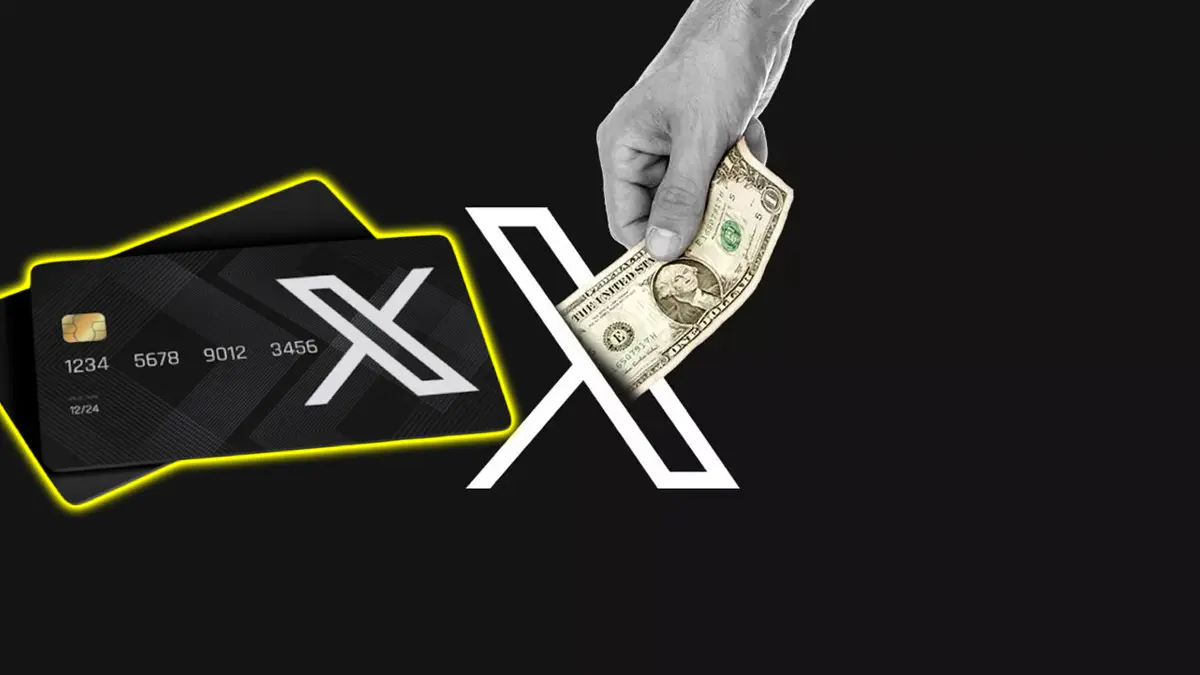
On the Eve of X Money’s Launch, Musk Disbands the Arbiters First
TechFlow Selected TechFlow Selected
On the Eve of X Money’s Launch, Musk Disbands the Arbiters First
From announcing its participation to dismantling the judging panel, it took only nine days.
 Navigating Web3 tides with focused insights
Author: Ada, TechFlow
On February 7, 2025, four young people entered a federal office building in Washington, D.C.
They belonged to DOGE—the Department of Government Efficiency, led by Elon Musk. Their destination was the headquarters of the Consumer Financial Protection Bureau (CFPB), the agency responsible for regulating all digital payment products in the United States—including Apple Pay, Venmo, Cash App, and the soon-to-launch X Money.
According to Bloomberg, the DOGE team initially received only “read-only” access. But late Friday night, Russell Vought, Director of the White House Office of Management and Budget, sent an email demanding broader data access for DOGE. Ninety minutes later, Vought was appointed Acting Director of the CFPB.
By Sunday, the CFPB had been hollowed out: funding frozen, operations suspended, and nearly 90% of its staff facing termination.
Nine days earlier, X had just announced its partnership with Visa.
Nine days—from announcing entry into the market to dismantling the regulator—just nine days.
A Compliance Marathon vs. a Nine-Day Lightning Strike
In 2013, Coinbase registered with the Financial Crimes Enforcement Network (FinCEN) as a money services business, becoming one of the first crypto firms to proactively embrace federal regulation. At the time, Bitcoin traded below $200, and the entire industry’s market capitalization wasn’t enough to buy a single Manhattan apartment.
The next decade was a compliance marathon. Coinbase secured money transmitter licenses in 49 states and territories; each state required surety bonds ranging from $1,000 to $500,000 and net worth thresholds between $5,000 and $2 million. Obtaining New York’s BitLicense proved especially grueling, mandating quarterly financial reporting and annual independent audits. Coinbase built its compliance architecture around three core pillars: regulatory registration, operational transparency, and proactive engagement with financial regulators—a framework spanning over 100 countries.
Yet litigation still came. In 2023, the SEC sued Coinbase for allegedly operating an unregistered securities exchange. The company was forced into a protracted legal battle. The Third Circuit Court of Appeals ruled that the SEC “failed to adequately explain why it declined to issue rules”—a partial victory. But what ultimately led to dismissal of the suit was the 2024 U.S. presidential election. Coinbase and the crypto industry’s super PAC spent over $130 million supporting candidates; Coinbase alone contributed $75 million. In February 2025, newly appointed SEC Acting Chair Mark Uyeda dropped the case against Coinbase—unconditionally, without penalty, and barring future action on the same grounds.
Ten years of compliance, one lawsuit, and a $75 million political donation: this was the price Coinbase paid for the four words “legally authorized to operate.”
PayPal took another path—but one equally costly. In August 2023, PayPal launched its stablecoin PYUSD, issued by Paxos Trust Company, a firm regulated by the New York State Department of Financial Services (NYDFS). PYUSD fully complied with the requirements of the GENIUS Act (U.S. Stablecoin Regulation Act)—including full reserve backing and monthly public attestations. And every time PYUSD expanded onto a new blockchain (from Ethereum to Solana to Stellar), NYDFS approval was required. By December 2025, PayPal declared PYUSD “the largest U.S. dollar stablecoin with federal approval.”
This is how the rules were set: to enter the U.S. financial market, you had to obtain licenses state-by-state and clear regulator-by-regulator. Coinbase spent ten years. PayPal invested hundreds of millions of dollars in compliance infrastructure.
X Payments LLC also obtained licenses. As of May 2025, it held money transmitter licenses in 40 states—formally compliant in every respect.
But the gap between formal compliance and substantive regulation is vast.
On November 21, 2024, the CFPB finalized a rule subjecting large digital payment apps processing more than 50 million transactions annually to federal oversight—applying the same regulatory standards used for traditional credit cards and bank accounts. This rule directly covered X Money. Six days later, Musk posted a single line on X: “Delete CFPB.”
Three months later, DOGE entered the CFPB. Another three months later, the Senate voted to repeal the CFPB’s digital payments regulation rule. On April 9, the House followed suit and passed the repeal.
Coinbase spent ten years, $75 million, and fought a Supreme Court–level lawsuit to prove its legality within the existing regulatory framework. Musk, by contrast, dismantled the framework itself—with one tweet and nine days.
The Referee’s Hidden Cards
Dismantling a regulator is outrageous enough. But the story gets even more astonishing.
The CFPB is not merely a “guardian”—it holds data.
In 2021, to assess consumer protection risks posed by payment technologies, the CFPB issued compulsory data demands to Amazon, Apple, Facebook, Google, PayPal, and Square (now Block). These companies submitted extensive confidential business information—including product strategies, internal operational data, and compliance records. In subsequent years, the CFPB launched investigations or enforcement actions against several of these firms, including PayPal and Cash App.
That data remains stored in the CFPB’s databases.
DOGE team members gained access to the CFPB’s “entire unclassified database,” including sensitive bank examination records and enforcement files. According to Bloomberg, DOGE staff began accessing systems on the very day they entered the CFPB headquarters—even though they had not completed the CFPB’s mandatory privacy, cybersecurity, and ethics training.
Seth Frotman, former CFPB Chief Legal Officer, testified before Congress: “He didn’t just gain access to consumer information—he gained access to information about competitors.”
Erie Meyer, former CFPB Chief Technology Officer, recalled five young DOGE team members wandering through secure administrative suites, attempting to enter locked offices. She resigned the next day.
Consider what this means: a new entrant preparing to launch in the payments market gained, before going live, the full “health reports” of all major competitors—product strategies, operational weaknesses, regulatory vulnerabilities, and undisclosed enforcement information.
Representative Maxine Waters put it bluntly during a hearing: “In addition to acquiring consumer data from millions of Americans, Musk can now illegally steal sensitive commercial information from other U.S. companies in the same industry.”
Legal scholar Tim Wu described this data access as “god-tier,” asserting it confers a “massive competitive advantage” over firms operating in the same sector.
What would happen if the founder of a crypto exchange did the same? The SEC would file charges, the FBI would show up at the door, and the CEO would go to prison. This isn’t hypothetical—FTX’s Sam Bankman-Fried was sentenced to 25 years for misappropriating customer funds.
The difference is this: SBF committed crimes under the rules; Musk operated above them.
The Backdoor in the GENIUS Act
If dismantling the CFPB was “breaking,” then the GENIUS Act was “building”—except this act built a backdoor.
The GENIUS Act is the U.S. stablecoin regulation law signed by Trump. It establishes the foundational framework for stablecoin issuance—including reserve requirements, disclosure obligations, and jurisdictional delineation among regulators.
But the problem lies in one clause.
In a public letter to Musk dated April 14, 2026, Senator Elizabeth Warren pointed out that the GENIUS Act contains a “suspicious exemption clause” permitting private commercial entities like X to issue stablecoins without undergoing certain approval procedures and safeguards required of publicly listed companies.
Warren asked a sharp question: Did Musk—or his representatives—lobby for or influence the inclusion of this exemption clause? After all, during the drafting and debate of the GENIUS Act, Musk served as Senior Advisor to the President while simultaneously leading DOGE.
In other words: a person poised to launch a stablecoin sat at the table where the stablecoin law was written—and helped draft a clause favoring himself.
Compare this with PayPal’s PYUSD. Issued by Paxos and fully regulated by NYDFS, PYUSD requires 100% reserve backing, monthly third-party attestation, and separate regulatory approval for each new blockchain expansion. Meanwhile, the draft CLARITY Act proposes banning interest-bearing “payment-type stablecoins”—a direct strike at PYUSD’s 4% reward program.
And X Money? It promises 6% APY on deposits and partners with Cross River Bank—a bank previously sanctioned by the FDIC. In her letter, Warren asked: “In a federal funds rate environment of 3.5%–3.75%, what exactly enables X Money and Cross River Bank to deliver a 6% yield? High-risk investments? Intrusive data monetization? Or pure marketing hype?”
FDIC Chair Travis Hill made his position clear in March: under the GENIUS Act framework, stablecoin users’ deposits are not protected by FDIC insurance.
PayPal spent two years achieving GENIUS Act compliance—issuing monthly attestations, awaiting approvals for each new blockchain. X Money hadn’t even launched yet—and already enjoyed a dedicated fast-track lane. This is unfair competition.
The Weight of Rules
In April 2026, X Money entered early public access: 600 million monthly active users, a Visa partnership, 6% APY—and no federal regulation from the CFPB.
In that same month, Coinbase had just received conditional approval from the Office of the Comptroller of the Currency (OCC) to establish Coinbase National Trust Company. From its 2013 FinCEN registration to its 2026 national trust charter, it took exactly thirteen years.
Also in April, the Senate’s odds of passing the CLARITY Act stood at 50-50.
The crypto industry’s regulatory narrative over the past decade can be summed up in one sentence: “Give us rules, and we’ll follow them.” That sentence rests on one critical assumption—that the rules apply equally to everyone.
But when someone can simultaneously carve out a special exemption for their own company, dismantle the enforcement agency, and use competitors’ confidential data to prepare for launch—how much weight does the word “rules” retain?
Warren’s deadline for Musk’s response was April 21. As of publication, Musk has not issued a public reply.
Meanwhile, X Money has already gone live.
Join TechFlow official community to stay tuned
Telegram:https://t.me/TechFlowDaily
X (Twitter):https://x.com/TechFlowPost
X (Twitter) EN:https://x.com/BlockFlow_News
 深潮TechFlow