Interview with Arthur Hayes: Global Macro Landscape, the AI Deflation Trap, and the Future of Crypto Assets
TechFlow Selected TechFlow Selected
Interview with Arthur Hayes: Global Macro Landscape, the AI Deflation Trap, and the Future of Crypto Assets
AI deflation and energy inflation coexist, and the Fed will print money to respond.
 Navigating Web3 tides with focused insights
By Anthony Pompliano
Translated by Baihua Blockchain
What truly makes Bitcoin valuable? Arthur Hayes delivers an answer that cuts straight to the core: “Bitcoin is worthless without retail users.”
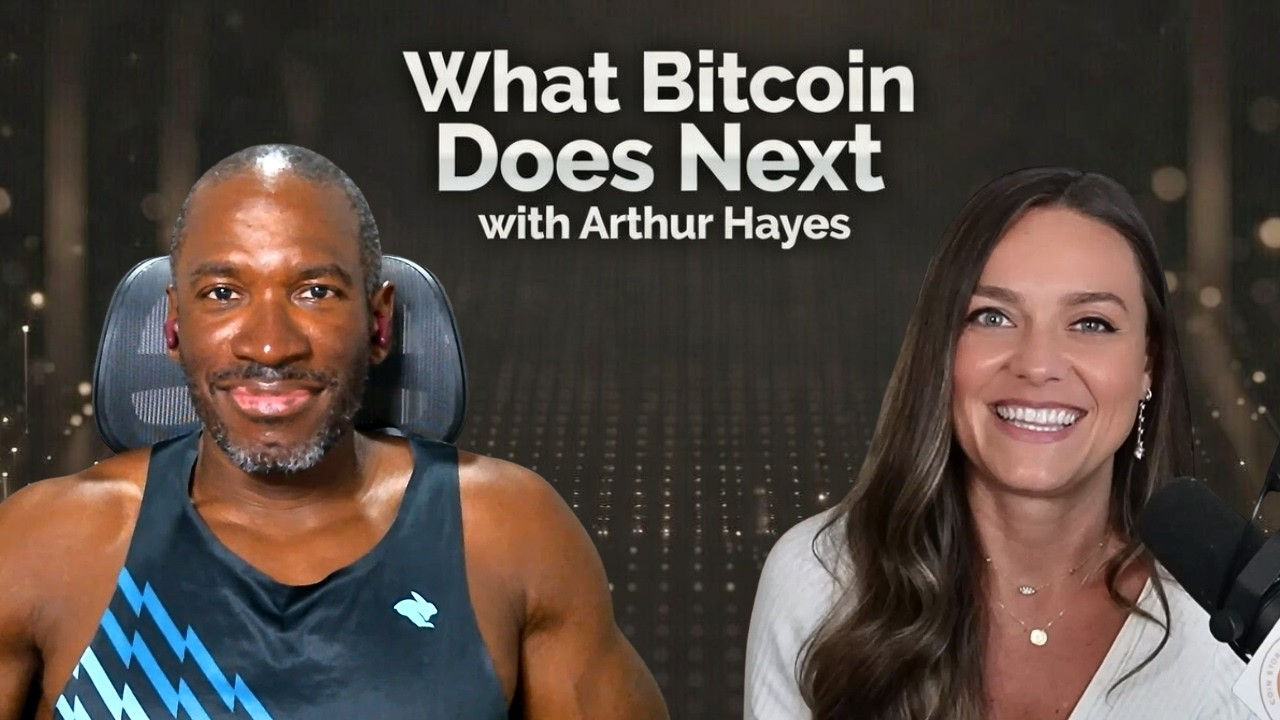
In this rare, in-depth conversation, Arthur Hayes—Chief Investment Officer of Maelstrom and former founder of BitMEX—offers his characteristically incisive and profound analysis of today’s most complex macroeconomic landscape. From the real truth behind oil prices amid the Iran conflict, to the fierce tug-of-war between AI-driven deflation and energy-driven inflation; from gold quietly reshaping global trade systems, to Bitcoin’s unique role as a “liquidity smoke detector,” Hayes offers clear, decisive judgments on each.
Even more surprisingly, Hayes boldly argues that insider trading should be legalized—because markets need truthful information above all else. Over 90% of his personal net worth remains in Bitcoin, yet he places strong confidence in Hyperliquid and Zcash. He candidly criticizes regulatory bills across the board, insisting that Bitcoin’s value has never depended on Wall Street—but rather on the authentic needs of ordinary people worldwide.
This is not merely a collision between macroeconomics and crypto—it is a deep reflection on free markets, information transparency, and the future financial order.
Want to know which assets are truly worth holding in the turbulent year of 2026? Curious how a seasoned trader views war, AI, privacy, and power? Read on—this may be the most politically incorrect—and most thought-provoking—conversation you hear all year.
1. The Iran Conflict and Oil Prices: The Only Metric That Matters
Host: “If Bitcoin lacks retail utility, it’s worthless.” That’s precisely what many people fail to grasp—so I say: reject all these bills outright. I hope Trump vetoes every single one. We don’t need them. We didn’t need them in 2009, nor in 2018—and certainly not in 2026.
Hello everyone, and welcome to an exceptional dialogue with Arthur Hayes, Chief Investment Officer of Maelstrom. In this conversation, he’ll break down the current macro environment, explain how the Iran conflict could impact inflation, deflation, gold, Bitcoin, and other traditional market assets—and then dive into some of the crypto projects he’s currently most excited about: Hyperliquid, Zcash, and prediction markets. Finally, Arthur will tell us why he believes insider trading should be legalized—and his reasoning will challenge your assumptions and sharpen your critical thinking.
Below is my latest conversation with Arthur Hayes.
Host: Alright, Arthur—let’s begin with the Iran conflict. Clearly, the situation has been volatile: war looming, then receding; ceasefire talks beginning, then stalling. Oil prices have surged, and panic has spread. What’s really happening—and should investors be concerned?
Arthur Hayes: I built a chart on Bloomberg showing the spread between the front-month and sixth-month WTI crude oil futures contracts. I wanted to see how far apart those two contracts were trading. As you’d expect, they moved almost in lockstep right up until February 28—the day before the conflict escalated. Then the front-month contract spiked sharply upward, reflecting supply disruptions and port closures, plus many carriers unable to transit the Strait—causing spot oil prices to surge dramatically. Meanwhile, the sixth-month contract rose only modestly, because the market assumed some kind of short- to medium-term compromise would emerge, allowing oil to continue flowing through the Strait. So forward oil prices remained far lower than the front-month price—that spread is what I’ve been tracking closely.
The only thing that matters is whether oil flows through the Strait. Tragically, many people are dying across the Middle East—but for most of the world, they don’t live there or have family there. As long as gasoline prices stay manageable, most people simply don’t care what’s happening in the Middle East. For the vast majority globally, the only questions are: Can I still fly normally? Is food affordable? Can I live the same way I did before the conflict began?
If oil continues flowing—even while suffering persists across the region—the broader system remains intact. But if oil stops flowing, we face serious trouble. So the sole chart I watch to assess the Iran conflict is that spread between the front-month and sixth-month oil contracts. If forward oil prices begin rising persistently, we’ll know oil isn’t moving through the Strait—no matter the cost required to restore flow. If you *can* restore flow and keep forward prices contained, then we’re fine. If not, then we’re facing a much bigger problem.
That’s how I view the Iran conflict. This ceasefire may or may not hold—but if the involved parties believe the current situation allows oil to keep flowing, and the Trump administration doesn’t need to resort to extreme measures, then the conflict may continue without materially affecting most people globally. So that’s my take: watch the oil price chart—and specifically, that spread.
Host: Do you pay attention to what people say—like “the Strait is closed,” but then AIS transponders appear turned off and prices fluctuate? Are you just watching price alone? Is price the only true signal—while narratives, claims about closures or openings, on-the-ground photos, and all that noise are just entertainment?
Host: Ultimately, is price the ultimate truth-teller about whether the Strait is open?
Arthur Hayes: Yes—it’s price, because everything else is propaganda, anecdote, or unverifiable. I read a great article on this recently—one full of nuance. There’s no absolute black or white, no fully “open” or “closed”—it all depends on context. And “depends” is extremely hard for investors to handle. So we always seek an objective metric that can price this uncertainty: the spread between front-month and far-month oil futures.
If oil is flowing, news and narratives can push prices up and down. But the real question is: Is oil actually moving? Can I sign a contract to receive oil, jet fuel, or fertilizer months from now? If yes—if the system keeps functioning, even at a slightly higher cost—then the world keeps turning. Inflation rises modestly, but remains manageable.
2. The Inflation–Deflation Tug-of-War: AI vs. Energy
Host: Before all this erupted, my view was that deflationary forces were dominant: mass deportations, tariffs, AI, and robotics eating away at the U.S. economy. You could already see certain prices declining on key indicators—and many people began worrying that deflation risk outweighed inflation risk. Suddenly oil prices spiked, and everyone flipped overnight to fearing runaway inflation. How do you see this battle between inflation and deflation playing out? Do you care about the “correct” answer—or just where the balance tips?
Arthur Hayes: Inflation is the rising cost of things you *need*; deflation is the falling cost of things you *want*, right? Take AI: the displacement of knowledge workers is accelerating. It’s happening now. Companies are laying people off left and right because deploying AI agents for specific knowledge tasks is easier—and cheaper—than hiring humans. And this trend will only intensify. That creates deflation in things we *want*: new products on social media, handbags, cars, mansions—not necessities, just desires. Now you might be unemployed, having lost a high-paying tech job, and struggle to regain that consumption level anytime soon. So the “needs” being pushed by affected groups are actually deflationary—and the underlying credit exposure poses a growing problem for the banking system.
But what confuses central banks is that things we *do* need are inflating. The entire global economy is essentially an energy derivative. If energy flow through the Strait is disrupted—whether for fertilizer production or raw oil extraction—everything inflates, rippling across the economy. As a central banker, you face a dilemma: cut rates or hike them? Thus, inflation and deflation coexist across different parts of the economy.
Host: What about Kevin Warsh joining the Fed? Do you think he’ll adopt a predetermined stance—or just follow the data rationally? Many analysts dissect Fed officials’ speeches line by line.
Arthur Hayes: I don’t think it matters. At the end of the day, the Fed is an arm of the U.S. government—and it will do whatever the government needs it to do to meet its fiscal obligations. If there’s an AI-driven deflationary time bomb threatening the banking system, the Fed will print money to bail it out—and economists will later craft the justification. If Trump decides to take aggressive action requiring massive budgetary support, the Fed will likewise accommodate with rate cuts and liquidity provision. Who sits in that chair isn’t the point. They’ll do what’s necessary to ensure the government can fund itself. As a leveraged investor, your ideal timing may not arrive immediately—but over the long term, the Fed will always deliver support in the manner the government requires.
3. Gold, Bitcoin, and Non-Sovereign Assets
Host: Let’s talk about gold. Gold has performed strongly lately, with many central banks buying aggressively. Yet reports claim Iran now intends to charge fees for Strait passage—not in gold, but in Bitcoin. So non-sovereign, neutral assets appear to serve multiple use cases. Depending on whether the purpose is defense or payment, gold and Bitcoin seem increasingly interchangeable. Over the past 18 months, these diverse use cases for non-sovereign assets have become especially prominent. Do you agree?
Arthur Hayes: Absolutely. In recent months, non-monetary gold has become the United States’ top export. All the rhetoric about reindustrialization and export growth remains unsupported by data. Instead, data shows the U.S. exporting gold to Switzerland—where it’s refined and shipped to China. This signals the quiet emergence of a new gold standard. You need to buy goods from China but lack a trade surplus—so how do you obtain RMB? The counterparty accepts gold. Thus, gold lubricates trade at the sovereign layer—not a formal gold standard, but a slow, subterranean shift. As for whether Iran is *actually* demanding Bitcoin or just signaling intent—we’ll need verified transaction records to confirm.
Host: How do you interpret the fact that since the war began, equities, gold, and bonds have all fallen—while Bitcoin has held steady or even edged higher?
Arthur Hayes: Bitcoin is down roughly 50% from its all-time high. Relative to other assets since the war began, it’s outperformed—but that offers little comfort to most holders. With oil prices surging sharply, Bitcoin would ideally track hydrocarbon prices—but at least it’s held up better than most major asset classes relative to oil.
Host: Why do you think Bitcoin hasn’t outperformed gold or equities over the past few years?
Arthur Hayes: I believe AI-driven deflation is real—and Bitcoin acts like a “liquidity smoke detector,” alerting us to the problem. Central banks and banks aren’t printing enough money; AI and data centers are consuming enormous capital, and global monetary authorities haven’t created sufficient credit. As the asset most sensitive to credit conditions, Bitcoin has declined. Elon Musk once noted AI is so deflationary that people may demand governments print more money. Bitcoin’s sharp drop beginning last Q3 may well reflect its early detection of deflation—not the inflation many expected. So Bitcoin likely won’t rally meaningfully until deflationary pressure eases.
Even if the Iran conflict ended today, Bitcoin wouldn’t automatically rebound to $100,000 just because peace returned. I believe AI’s impact on human labor value is a massive issue—especially in flexible economies like the U.S., where companies are cutting staff because AI teams vastly outperform average employees. That boosts corporate efficiency—but severely impacts consumer spending, which drives the economy.
Host: What’s your current Bitcoin allocation—and how do you manage it?
Arthur Hayes: Over 90% of my net worth is in Bitcoin. My management strategy? Do nothing. Price swings don’t matter—I bought in very low. The real question is whether to deploy additional fiat or sell some Bitcoin to buy faster-rising assets. Among altcoins, I’m most bullish on Zcash and Hyperliquid. But if you ask me whether I’d buy Bitcoin with fresh fiat today—I’d say no. We’re still waiting for the next large-scale monetary expansion. Central banks must recognize AI could stress the banking system. Right now, they see AI as purely productivity-enhancing—so no action is needed. Until that worldview shifts, Bitcoin’s price reflects insufficient credit creation.
Host: Have you sold Bitcoin to buy other assets—or just withheld new fiat investment?
Arthur Hayes: I’ve sold Bitcoin to buy Zcash and Hyperliquid—but not to convert back to fiat. Any new fiat entering my portfolio goes into Treasury-bill yield vehicles.
Host: Outside crypto—what other assets do you hold?
Arthur Hayes: Not crypto—gold. I hold physical gold and gold mining equities. That’s essentially my entire portfolio: crypto and gold, period. For Maelstrom, it’s that simple.
4. Hyperliquid, Prediction Markets, and Insider Trading
Host: When you evaluate different crypto technologies and companies, many are already public, while new challengers emerge—from prediction markets to Hyperliquid. How do you see them competing against giants like Coinbase and Binance?
Arthur Hayes: The biggest existential threat to Coinbase and Binance comes from Hyperliquid and its DEX model. Ever since perpetual contracts were invented, we’ve tried to achieve permissionless listings—and Hyperliquid has finally executed it flawlessly. I love it because it offers 24/7 leveraged trading to global users, achieving genuine product-market fit. It’s capturing price discovery for certain assets—especially for people who can’t access them through traditional channels. Now anyone with stablecoins or Bitcoin can express leveraged views. That’s the game-changer. Centralized exchanges struggle to match the agility of such a small, innovative team. Hyperliquid is also launching prediction markets soon—with dramatically lower fees—creating an intriguing competitive dynamic.
I believe insider trading should be legalized across *all* asset classes. We want markets to reflect real-time, truthful information—not wait for press releases. Government officials betting in prediction markets would let markets know their intentions faster. That’s far more valuable than propaganda.
Host: If someone shares information for personal gain, do we accept that trade-off? Are they providing a public service to markets?
Arthur Hayes: Yes—I believe they are. Markets should aggregate *all* available information. If some information can be shared sometimes but not others, what’s the point of markets? Yes, ethical concerns exist—but as a trader, I want complete information. We can address government officials’ conduct separately—but similar practices already exist in many countries. Making information public yields better pricing and continuous information flow, because putting real money on the line is the strongest expression of genuine belief.
Host: What about fragile markets—like assassination markets?
Arthur Hayes: I’m a free-market believer. Let it happen. These events occur regardless. By pricing them, we learn whether risks are rising—and perhaps even alert authorities. Beyond negative uses, such markets generate valuable information. Markets deliver the wisdom of crowds, distilled into price.
5. Bitcoin’s Retail Utility, Privacy Coins, and the Future Outlook
Host: Let’s discuss Trump’s promises on Bitcoin and crypto. Many anticipate a Strategic Bitcoin Reserve and clearer regulation—but Bitcoin’s price remains near where it stood when he was elected. What’s your take?
Arthur Hayes: People constantly say we need institutional investors—so we need these bills. I say: who cares? This is a retail-driven movement. Its value lies precisely in offering choice to people previously excluded from financial services. We’ve already built an alternative financial system outside traditional banking. Loading it up with rules just to attract big funds dilutes its value. Banks are interested *because* billions of ordinary people trade it. If Bitcoin loses its retail utility, it becomes worthless. So I hope all these bills get vetoed. We’ve never needed them.
Host: What about stablecoin yields?
Arthur Hayes: I hope stablecoins offer yields competitive with banks—but politics will likely block it. Stablecoins pose a major threat to banks by potentially draining deposits. People are learning how politics works: stakeholders ensure unfavorable legislation gets blocked.
Host: Has your perspective shifted after your prior legal disputes?
Arthur Hayes: Not at all. My view before and after remains identical—except now I feel more acutely the banking system’s hostility toward what we’ve built. This isn’t a cute little game. It’s a costly competition.
Host: What’s your view on Zcash?
Arthur Hayes: Bitcoin is transparent—which has pros and cons—but it’s not fully private cash. In the age of AI and Big Tech, de-anonymization is easy. If you want true privacy, zero-knowledge proof protocols like Zcash become highly valuable. Privacy demand will grow over time—and Zcash’s price should reflect that. It won’t be fully embraced by mainstream finance—just as cash is no longer economically viable for modern banks—but it remains vital for individuals and specific use cases.
Host: What are you most bearish on in crypto?
Arthur Hayes: I’m bearish on many Layer 2 projects lacking real users and product-market fit. Too many rely on unhealthy VC funding. We need to return to crowdfunding fundamentals—giving communities economic stakes—so incentives align better and projects thrive sustainably.
Host: What’s the outlook for perpetuals on Wall Street?
Arthur Hayes: I believe traditional finance’s attempts to replicate them will fail due to flawed liquidation mechanisms. Crypto’s limited-loss and socialized loss models enable high leverage and 24/7 trading—exactly what retail wants. Hyperliquid has potential to become a massive exchange, serving billions globally—not just a few developed-nation populations. Buying HYPE tokens is like owning a piece of the future’s largest exchange, with a fee-buyback mechanism giving it deflationary properties.
Host: Tell us about your recently launched equity fund for crypto companies.
Arthur Hayes: As prices corrected, many non-exchange crypto companies—with solid cash flows and strong teams—became undervalued. Founders want exits, so we provide liquidity via buyouts, bring in operators to optimize performance, and wait for market recovery before exiting. It’s an exceptionally attractive entry point.
Host: Where can people find you?
Arthur Hayes: I’m @CryptoHayes on X, and publish articles on Substack under “Crypto Hazes.”
Host: To summarize your current market view: long-term, money printing continues. You’re bullish on Bitcoin, gold, Hyperliquid, Zcash, and undervalued crypto companies in your fund.
Arthur Hayes: Yes—that’s it. I’m not an AI stock investor. I prefer doing what I know—and I don’t need to stare at screens all day.
Host: Thank you for this interview—and we’ll speak again soon.
Join TechFlow official community to stay tuned
Telegram:https://t.me/TechFlowDaily
X (Twitter):https://x.com/TechFlowPost
X (Twitter) EN:https://x.com/BlockFlow_News
 @APompliano