Crypto and AI: The Hidden Digital Black Market on Xianyu
TechFlow Selected TechFlow Selected
Crypto and AI: The Hidden Digital Black Market on Xianyu
Crypto and AI, find everything on Xianyu.
 Navigating Web3 tides with focused insights
By San\Laoda, TechFlow
Searching for "USDT" on Xianyu yields a blank page. But switch the keyword to "selling USD coins," and a hidden digital black market instantly unfolds.
Sellers use homophones, coded language, and images to bypass platform monitoring. "Those who know, know" is the universal passphrase here. Some hide contact information in image corners; others directly display exchange logos as proof of being "insiders."
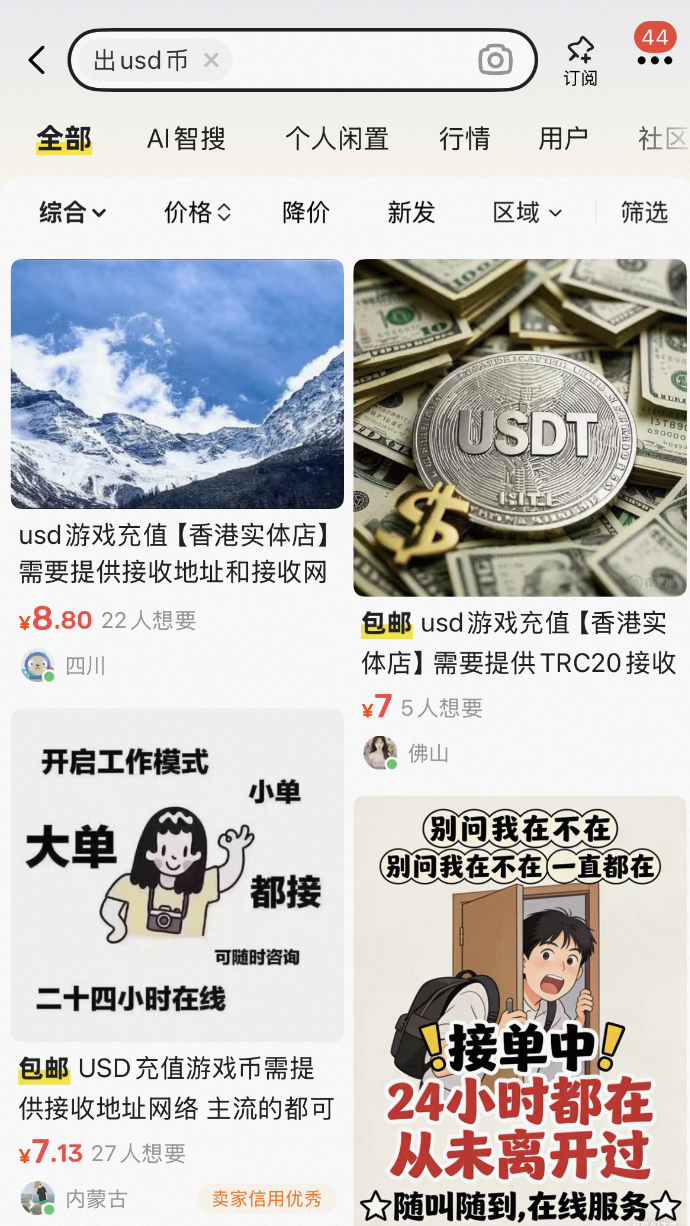
Despite being highly sensitive and strictly restricted in public discourse, cryptocurrency assets have not truly disappeared—they've been disguised and folded into a more下沉 platform.
"Buying and selling USDT," "step-by-step guidance on downloading exchange apps," "overseas ID for exchange KYC verification," "Binance alpha tutorial"... Here, you can almost purchase full-service crypto trading guidance.
The digital black market extends far beyond crypto: discounted air tickets, hotel bookings, reservations at popular restaurants, front-row concert seats, military AI authentication...
On social media, there's a saying:
"You can buy almost anything on Xianyu."
This isn't an exaggeration.
The Hidden Crypto Trade
In October 2025, Palau’s official digital identity account on X (formerly Twitter) issued a rare announcement in Chinese.
"We have recently discovered individuals publicly displaying forged Palauan identification documents on social media to circumvent KYC verification processes across platforms. This constitutes serious identity fraud." RNS.ID announced it would conduct secondary reviews on all Palau IDs using Chinese pinyin. Users failing verification would be flagged as fraudulent and added to global fraud databases.
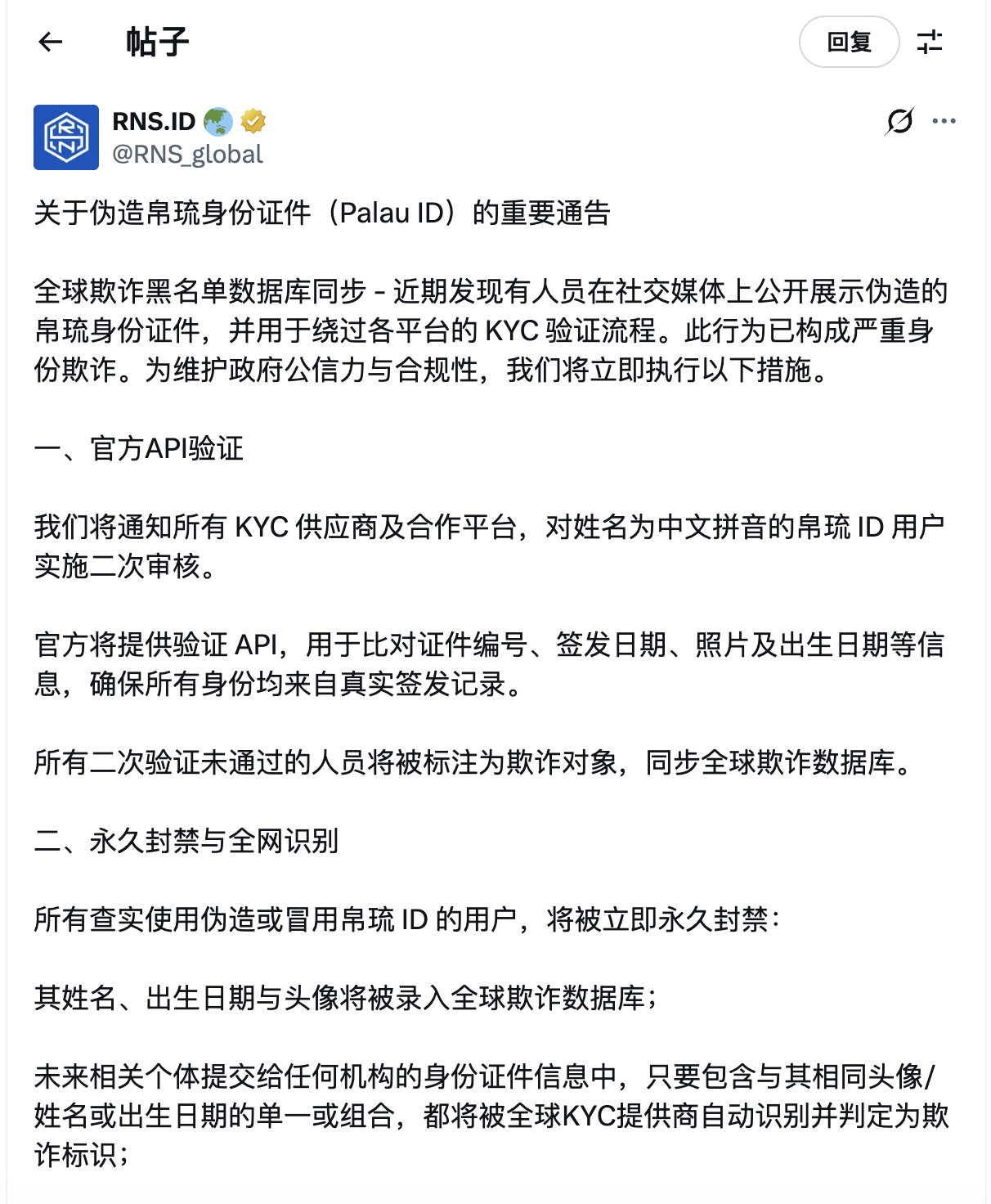
Why would this Pacific island nation issue a special notice in Chinese? The answer lies within Xianyu's search results.
Search terms like "overseas ID" or "Palau ID," and you'll uncover an underground network trading fake documents. Priced from dozens to hundreds of yuan, these listings promise "100% success rate on major exchange verifications."
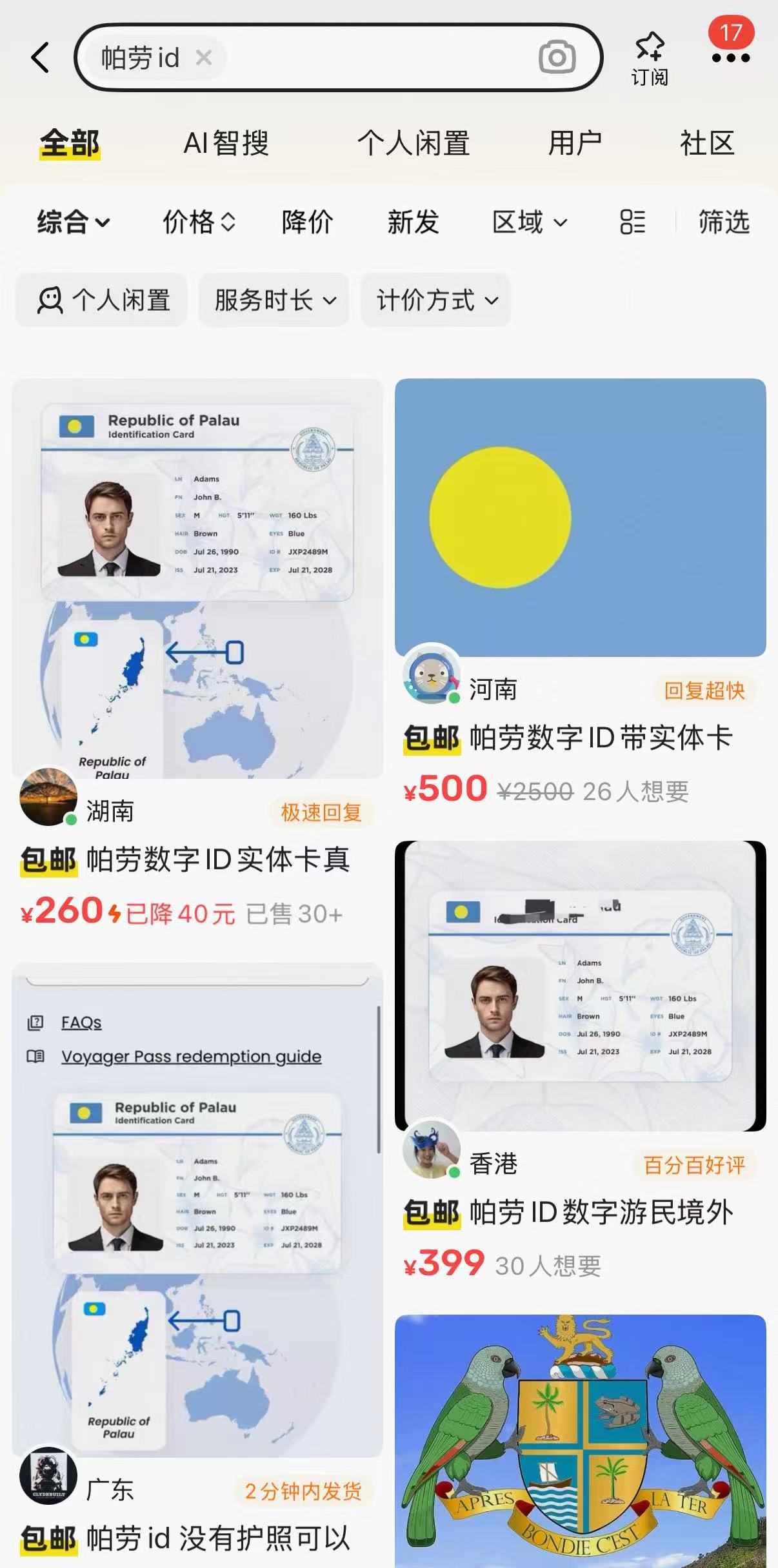
Besides Palau, fake IDs from Dominica, Nigeria, and the Philippines are also popular. These counterfeit documents are increasingly sophisticated—sellers offer customization services using buyers’ real photos to pass facial recognition checks.
Beyond selling fake KYC IDs, most offerings in Xianyu’s crypto black market are zero-cost virtual services.
On Xianyu, an account named “Shenzhen Xiaoxia” once offered a 30-minute “Binance/OKX download and installation” tutorial for just 10 yuan. (Note: now delisted)
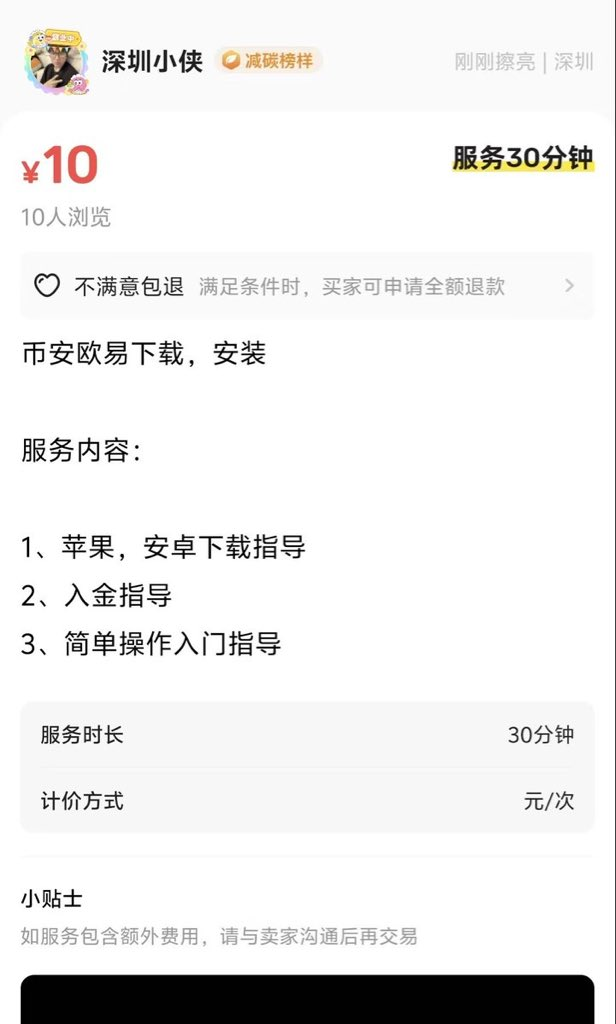
Xiaoxia is no obscure figure—in the crypto world, he's a household name, a top-tier KOL.
Not long ago, news that he bought a luxury penthouse at Zhongxin Xinyue Bay in Shenzhen with a 60 million RMB debt circulated widely in the industry.

Why would a billionaire crypto tycoon personally run a 10-yuan-per-order customer service gig on Xianyu?
The 10-yuan fee is merely bait. Real profits come from referral commissions. Every user registered through his link generates transaction fee rebates for him indefinitely—each active user potentially bringing hundreds or even thousands of yuan monthly.
This 10-yuan business is an extremely low-cost fishing rod. On the other end lies a vast, sustainable traffic pool ripe for monetization.
If Xiaoxia’s operation is an open game, many other sellers engage in purer forms of "tunneling through walls" built by information asymmetry.
A product priced at 88 yuan titled "Beginner Tutorial for Bin某an Alpha" offers one-on-one online coaching, promising "hands-on training, hassle-free and effortless." The so-called "Alpha" typically refers to activities launched by Binance and similar platforms where users complete tasks to earn potential airdrop rewards.
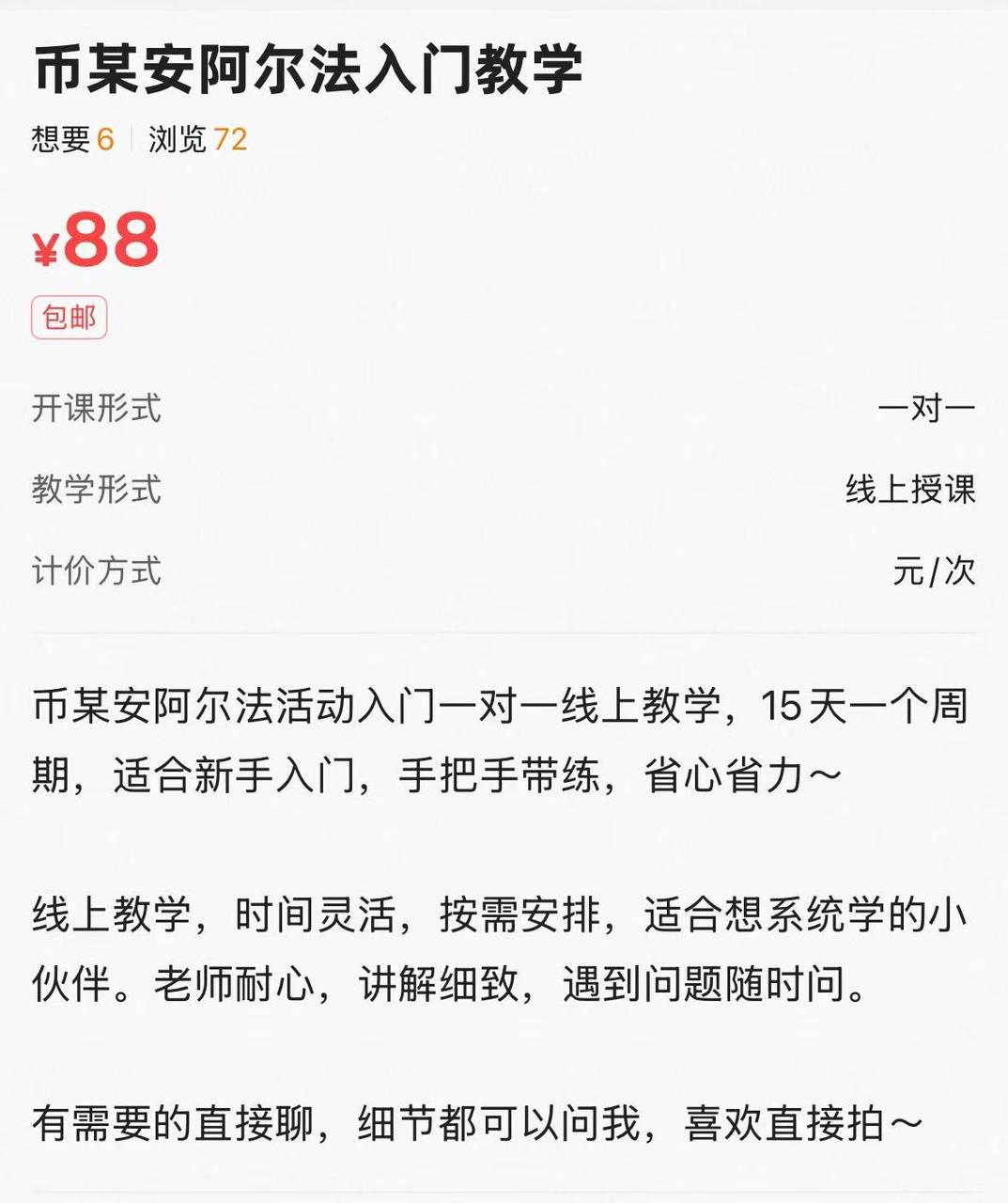
These participation methods are already open secrets on platforms like X and YouTube, with countless bloggers freely sharing detailed guides. Yet for most domestic users, a wall formed by language barriers, internet restrictions, and limited access to information remains very real.
One buyer commented, "The seller was very helpful—much easier than figuring it out myself."
The AI 'Arsenal'
If cryptocurrency transactions represent just a small "darkroom" carved out in Xianyu’s folded space, then AI-related trades constitute a truly massive, mass-participation "digital arsenal."
When names like ChatGPT and Claude ignited global interest, an invisible wall simultaneously rose. Complex registration procedures, network limitations, and credit card payment barriers kept the majority of curious Chinese users locked out. They could see the dazzling fireworks of a new world—but couldn’t find the entrance.
Xianyu unexpectedly became the unofficial backdoor around this high wall.
Here, the "arms dealers" offer comprehensive services—from beginner to expert level.
The most basic commodity is the "account"—a pre-registered GPT or Claude account, priced from dozens to over a hundred yuan, often including monthly renewal services.
To find out which overseas AI applications and large models are hottest in the market? Just check Xianyu.
In 2025, when Manus—an AI app later acquired by Meta for $2 billion—launched, beta access codes were nearly impossible to get. On Xianyu, prices for these codes skyrocketed overnight from hundreds to thousands or even tens of thousands of yuan. At its peak, someone listed a code for "100,000 yuan," contributing significantly to Manus' breakout popularity.
Today, the most sought-after AI products on Xianyu are Gemini and ChatGPT.
The premium version’s $20 monthly subscription fee alone is enough to deter many average users.
Yet Google offers a one-year free benefit for enrolled students, and OpenAI provides a similar program for U.S. veterans and active-duty military personnel to receive one year of ChatGPT Plus for free. This small policy goodwill has been seized upon by a group of sharp-sensed sellers on Xianyu and turned into a scalable business.
Search "dabing" ("soldier") on Xianyu, and a peculiar cyber landscape emerges. Product covers feature cartoon soldiers or tough-guy avatars. Titles brim with insider jargon: "Dabing help passed!", "Dabing one-year Plus ready account," priced anywhere from a few yuan to dozens.
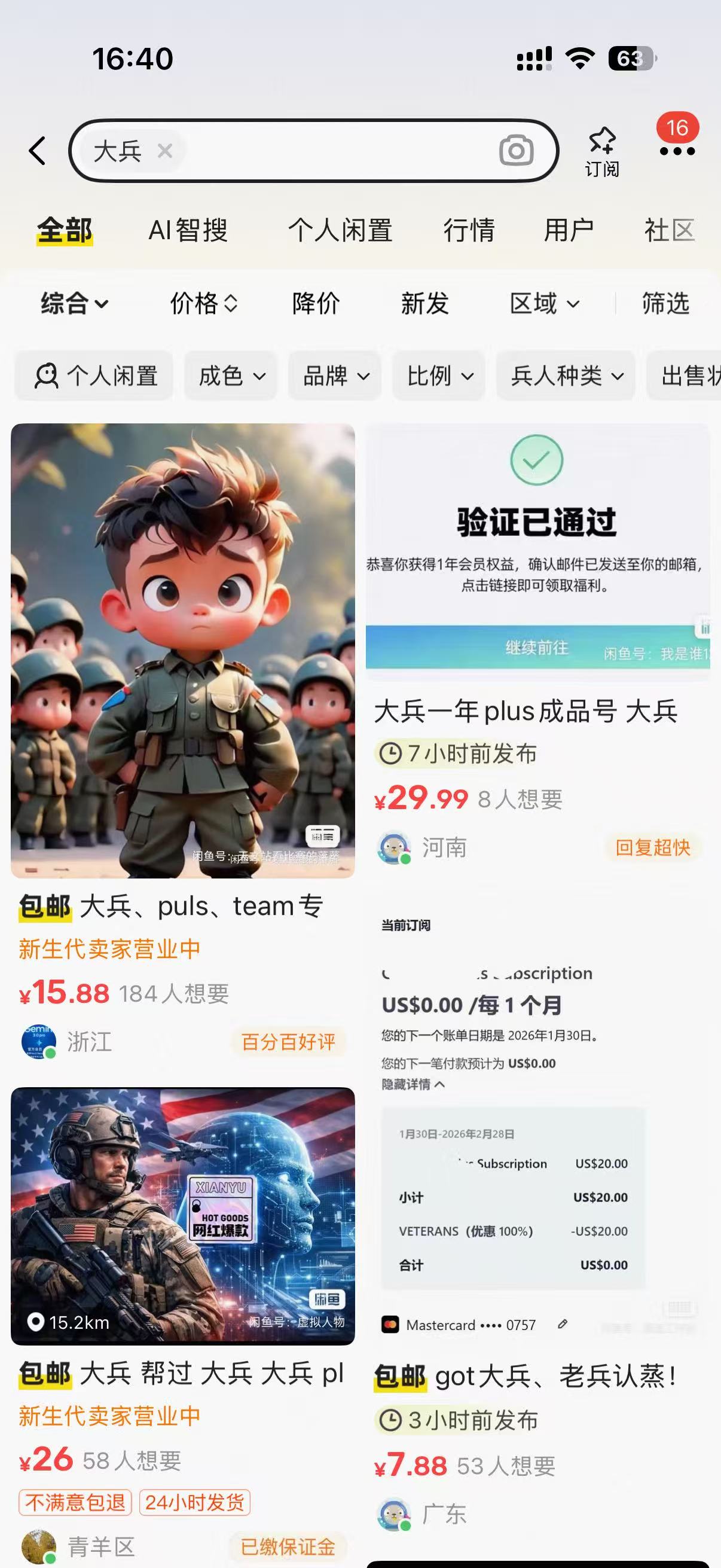
A Xianyu user once posted on social media: "Xianyu is currently the largest AI training base in the Chinese-speaking world. Without Xianyu, most Chinese people simply wouldn’t have access to first-tier international AI models."
This statement is full of contradiction—yet undeniably true.
Xianyu, originally designed for secondhand goods trading, has inadvertently become the "enlightener" and "popularizer" of top-tier international AI models in China.
Buy Anything
Whether crypto trading or AI services, this still represents only the tip of the iceberg of Xianyu’s digital black market.
"Humanity has utilized less than one percent of Xianyu’s potential," some say. Xianyu is China’s version of the dark web.
The "dark" in Xianyu doesn’t solely imply illegality—it leans more toward absurdity. A wide range of fringe, rarely seen "underground industries" have taken root on the platform.
Some products are so abstract they border on the surreal, becoming sources of amusement on social media.
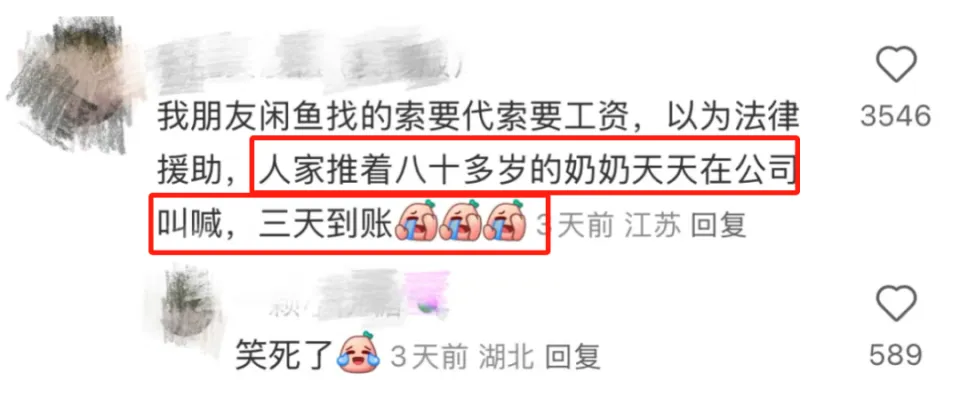
What if employees face malicious wage withholding?
One worker found low-cost legal aid on Xianyu—only to have the vendor send an 80-year-old grandmother who showed up crying, causing a scene, threatening suicide—and got the wages paid within three days.
Someone wanted to refund an airline ticket and sought help on Xianyu—ended up receiving a "death certificate."

On Xianyu, we don’t just witness demand and transactions—we’re seeing perhaps the most authentic field study of the Chinese internet.
On this field grows the most vigorous form of "wild intelligence."
It doesn’t follow the elegant rules of commercial society, but obeys only one supreme principle: "solve the problem." When official channels fail to meet needs—or do so at excessive cost—grassroots creativity erupts in fierce, sometimes darkly humorous ways.
The Xianyu digital black market presents a real snapshot of contemporary Chinese society. There are no glossy brand packages here—only raw slices of human nature: speculation, shortcuts, laziness, desperation, and the instinct to survive in the cracks of the system.
Yet when solutions slide deeper into gray zones, the traded commodity eventually reaches its ultimate point: the human being themselves.
If hiring an elderly woman is renting "someone else’s performance," then the most dangerous trade on Xianyu is renting out "your own identity."
"Selling new accounts for exchanges," "stable buyback of KYC-passed exchange accounts, long-term cooperation," "long-term purchase of new user QR code registrations"... These listings blatantly package and sell a person’s digital KYC identity. Sellers use highly persuasive rhetoric, framing the act as being a "digital landlord," leading users to believe they’re merely盘活 "idle assets" and easily achieving "passive income."
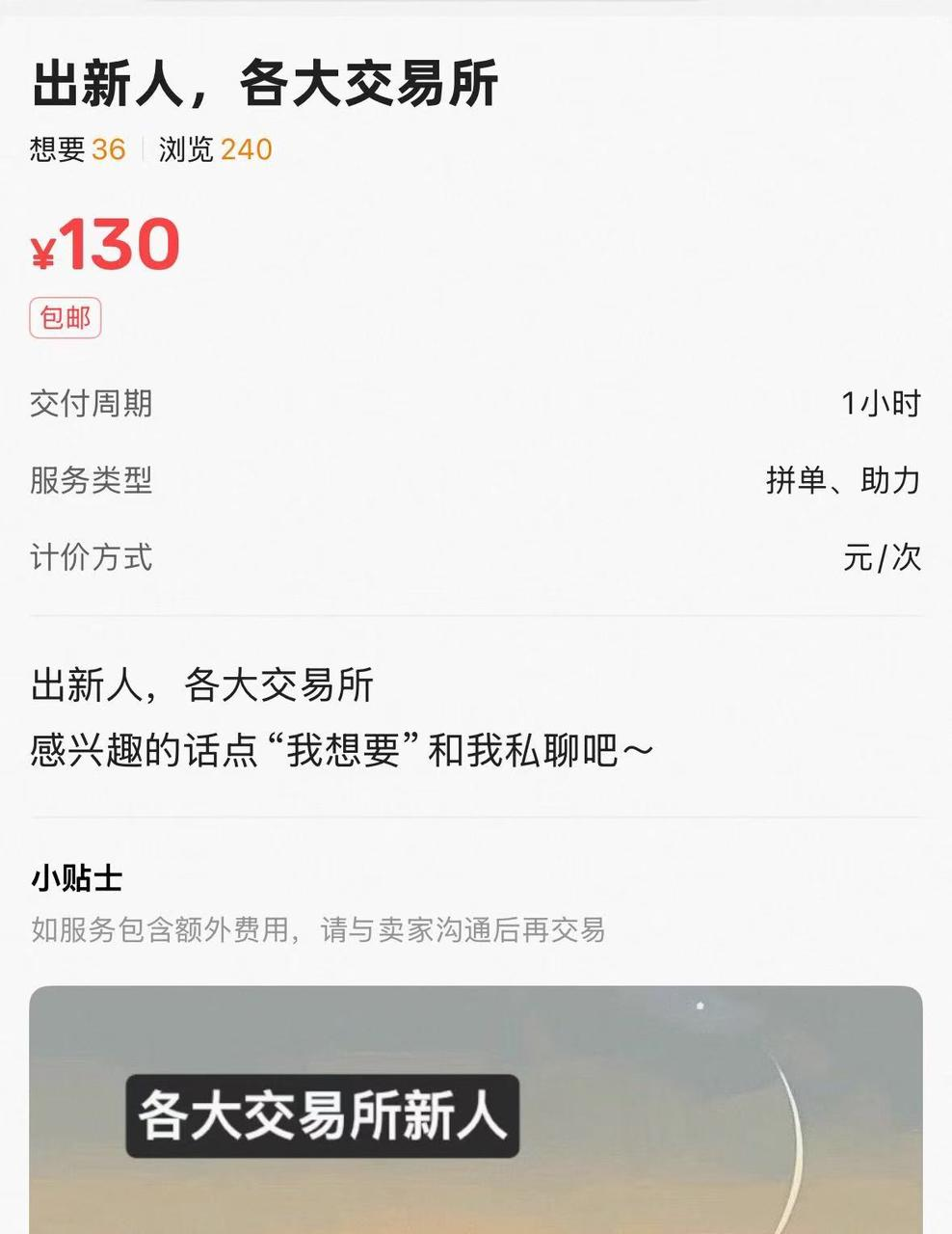
However, a novice’s sold account may become a tool for telecom fraud or money laundering gangs.
From buying a tutorial, to buying an account; from hiring someone to solve your problems, to renting yourself out to the problem itself. This bizarre transaction chain ultimately forms a terrifying closed loop.
We begin by using money to buy convenience—and end up trading ourselves for money.
This surreal digital soil serves both as "folk infrastructure" enabling ordinary people to bypass barriers and access resources, and as a dark forest teeming with traps. It proves in the most extreme way that no suppressed demand ever vanishes—it merely breaks through, in more primitive and dangerous forms, in corners beyond regulation.
Here, convenience and cost carry the same price tag. You think you're just taking a shortcut—only to realize the shortcut might lead straight to a cliff.
Join TechFlow official community to stay tuned
Telegram:https://t.me/TechFlowDaily
X (Twitter):https://x.com/TechFlowPost
X (Twitter) EN:https://x.com/BlockFlow_News
 深潮TechFlow