Interview with RaveDAO's Operations Lead: Breaking Boundaries with Music, Enabling Real Users to Seamlessly Enter the Chain
TechFlow Selected TechFlow Selected
Interview with RaveDAO's Operations Lead: Breaking Boundaries with Music, Enabling Real Users to Seamlessly Enter the Chain
RaveDAO is not just about organizing events, but about creating a Web3-native cultural layer by combining entertainment, technology, and community.
 Navigating Web3 tides with focused insights
Author: TechFlow
Remember the RaveDAO ENL1GHT Festival during this year's Token2049 in Singapore—an audiovisual extravaganza headlined by the world’s top three DJs, drawing over 5,000 attendees and dominating social media feeds globally?
Recently, RaveDAO, the organizer behind the event, announced it is approaching its TGE, with the Genesis Membership NFT minting launching on November 11.
From Dubai and Singapore to Tokyo and Seoul, RaveDAO aims to deliver immersive experiences through music, fostering deeper human connections and enabling seamless onboarding into Web3. The consistent delivery of high-quality events has made “RaveDAO Presents” an acclaimed brand among Web3 event-goers worldwide. The Wall Street Journal even hailed it as a "benchmark for entertainment-driven Web3."
As the TGE countdown begins, TechFlow sat down with Ron, RaveDAO’s Operations Lead, for an in-depth conversation.
Due to repeated breakthroughs via electronic music events, many initially perceive RaveDAO as merely an event company. Ron clarifies this misconception and offers a precise definition:
RaveDAO is not an event company, but a new cultural infrastructure—or what we call the Web3 Cultural Layer. Entertainment is humanity’s oldest consensus mechanism. RaveDAO aims to build an open ecosystem driven by entertainment, comprising a decentralized global entertainment brand, a community-powered cultural network, and an open sandbox for participatory economics—the creation of a true "cultural flywheel" that fuses real-world entertainment with Web3 technology. Every offline experience becomes a starting point for human-chain consensus, seamlessly bringing the real world on-chain.
On this vision, Ron highlighted RaveDAO’s collaboration with WLFI during Korea Blockchain Week as a prime example of entertainment-driven Web3 mass adoption:
Through partnerships with WLFI, PLVR, and Umy, RaveDAO successfully connected the entire journey—from travel and ticketing to event participation and offline payments—using USD1, marking a significant step toward real-world crypto payment adoption.
Regarding the upcoming TGE, Ron also shared insights into the value loop of $RAVE’s tokenomics under the “participatory economy”:
The core mission of the $RAVE token is to make “participation” itself valuable. Every action within the ecosystem—buying tickets, creating content, collaborating, sharing, voting—can earn users real identity, rights, and rewards via $RAVE. This is one of the key drivers behind RaveDAO’s long-term sustainability.
In this feature, join us as Ron walks through the behind-the-scenes story of RaveDAO’s rise from zero to prominence in electronic music, and the ecosystem flywheel powered by the trinity of “real-world use cases + culture-driven engagement + token circulation” under the vision of the “Web3 Cultural Layer.”
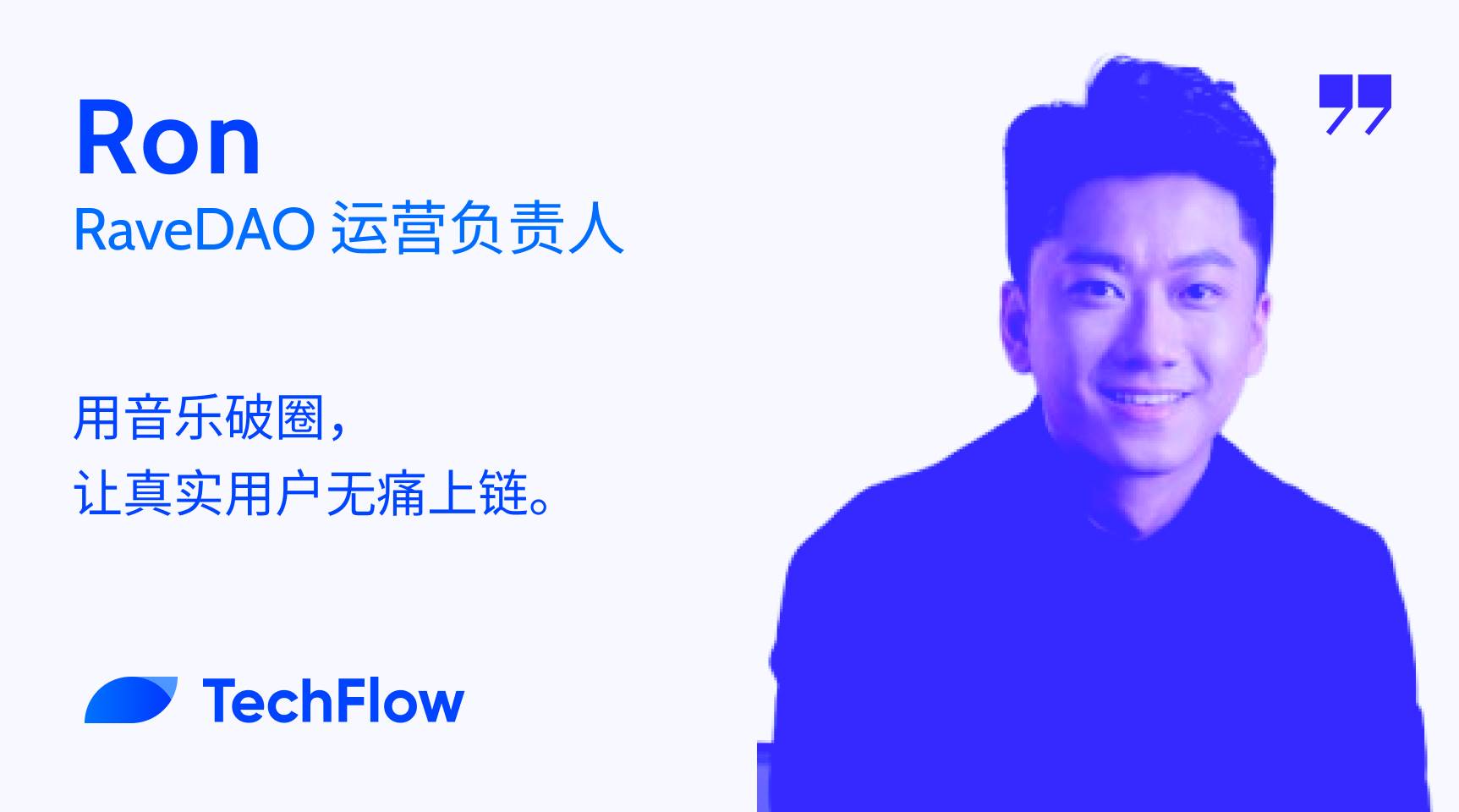
Not an Event Company, But a True “Cultural Flywheel” Merging Entertainment and Web3 Technology
TechFlow: Welcome! Could you start by introducing yourself? How did you enter the Web3 space, and what inspired you to merge Web3 with live entertainment to launch RaveDAO?
Ron:
Hello everyone, I’m Ron, currently serving as RaveDAO’s Operations Lead.
My academic background has always been in psychology. I previously studied organizational psychology at Harvard, focusing on human motivation and group resonance. Later, I spent years working at investment firms, incubators, and venture capital funds, handling strategy and organizational management, witnessing numerous projects grow from inception to IPO.
I first encountered the Web3 industry back in 2016. Having worked in traditional enterprises, I deeply recognized the transformative potential of Web3 and chose to fully commit myself to it.
The founding of RaveDAO was quite serendipitous. In 2023, at DevCon Istanbul, we hosted an after-party for about 200 people. That night had no banners, no sales pitches, no whitepapers—just lights, rhythm, and fully immersed participants. The next day, many attendees approached us asking:
“Will you host another event like this? It was the first time I felt a deeper human connection within the crypto community.”
In that moment, we realized Web3 isn’t lacking in capital, technology, or ideas—what it lacks are real-world use cases and engaging experiences that draw people in. Many projects raise tens of millions but don’t truly have real users. So we asked ourselves:
If a small event can gather 200 people, could larger, music- and entertainment-driven events bring more people on-chain?
That became the genesis of RaveDAO: We decided to use entertainment as a bridge to enable painless onboarding of real users into Web3. We didn’t want to create just another event brand, but rather a gateway to culture and experience—one that uses real-world entertainment to bring Web3 back to the human dimension, allowing people to truly feel its evolution.
TechFlow: If you had to define RaveDAO in one sentence, what would it be?
Ron:
Many people’s first impression of RaveDAO might be that we frequently host music events, but we are not an event company. Here’s how I clearly define RaveDAO:
RaveDAO is an open ecosystem driven by entertainment, dedicated to bringing the real world on-chain, making every offline experience a starting point for human-chain consensus.
It’s not just a music festival or event company; it’s a new form of cultural infrastructure (Cultural Infrastructure)—a stage where art, community, technology, brands, and even philanthropy can coexist.
At RaveDAO, “entertainment” is no longer mere sensory stimulation—it’s the entry point for experiencing Web3. We provide real-world experiences including offline entertainment, payments, tickets, data, and identity systems, using these to connect people, evoke emotions, and rebuild consensus.
In short: We make entertainment the gateway to Web3, giving the on-chain world a cultural vessel and human connection (Cultural Layer).
TechFlow: RaveDAO’s whitepaper proposes a business model combining ‘Decentralized Tomorrowland + TEDx + Kickstarter.’ Can you elaborate on that?
Ron:
You’re probably familiar with these three brands, but RaveDAO aims to integrate them into a unique flywheel model, turning entertainment into a truly open ecosystem where everyone can participate.
Let me break down each component.
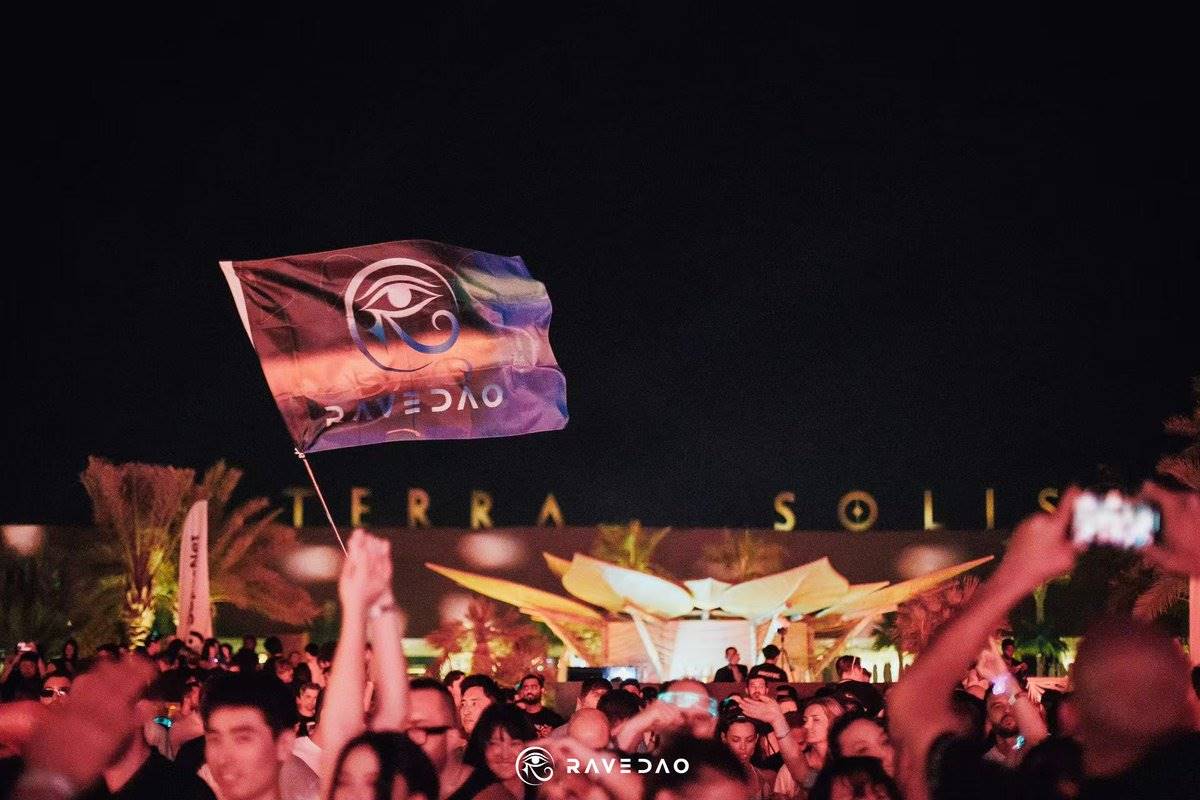
First, the Decentralized Tomorrowland aspect: RaveDAO aims to create a globally mobile entertainment IP.
In an era of declining consumer spending, AI-induced emotional detachment, and hollowed-out emotional experiences, people crave authentic resonance.
Yet traditional festival models, represented by Decentralized Tomorrowland, despite their scale and production quality, face limitations due to geography, cost, and centralized operations. Attending large festivals is expensive for most people.
What people really desire is smaller, more authentic, and deeply communal events where they can forge deeper connections.
RaveDAO is fluid and borderless, aiming to build a global entertainment brand unrestricted by location. Using decentralization, each event becomes a node in a distributed global entertainment network. Think of it as a borderless Tomorrowland—driven by community, secured by blockchain, and united by culture. We call this RAVE 3.0: The Return of Meaning.
Second is the TEDx module: RaveDAO enables decentralized brand co-creation.
RaveDAO’s structure mirrors that of TED and TEDx: flagship events are curated by the core team to ensure content and production quality, setting a benchmark standard; while RaveDAOx events are initiated by local communities around the world. We’ve already held events in Hong Kong, Singapore, and Seoul, with more coming to Tokyo, Los Angeles, and beyond.
Any community can apply to use the RaveDAO IP, independently selecting venues, lineups, and styles. We provide brand guidelines, promotional resources, and technical support. Each event includes a charitable component, allowing communities to choose local causes and decide how a portion of proceeds supports local nonprofits.
This system transforms RaveDAO into a truly decentralized brand network: each event simultaneously builds community consensus and extends brand culture.
The third module is Kickstarter: RaveDAO builds an entertainment-driven participatory economy.
While developing Music IPs, RaveDAO is equally focused on building an open entertainment sandbox. “Crowdfunding + Co-creation” is the core logic. Within this sandbox, DJs, production teams, public chains, wallet projects, and payment systems can all test products, refine user experiences, and validate markets on the RaveDAO stage.
Meanwhile, every participant—audiences, artists, brands, or communities—can become early supporters, earning governance rights and rewards via $RAVE, collectively driving event execution and brand expansion.
In other words, RaveDAO turns “audiences” into “participants,” and “events” into “economies,” allowing entertainment energy to circulate throughout the ecosystem.
In summary, by combining a decentralized global entertainment brand (Decentralized Tomorrowland), a community-driven cultural network (TEDx), and an open sandbox for participatory economy (Kickstarter), RaveDAO is a true “cultural flywheel” merging real-world entertainment with Web3 technology.
TechFlow: Why start with electronic music? And what’s the logic behind expanding into K-pop and Pop?
Ron:
Over the past few years, the world has undergone profound shifts. Amid economic slowdowns, reduced spending, and rising costs of large-scale entertainment, the desire for “authentic experiences” hasn’t diminished—in fact, it’s stronger than ever. Grand stages are fading, while community-based, immersive, emotion-driven entertainment is on the rise. This is the backdrop for our concept of “Rave 3.0.”
Electronic music, having evolved through three generations, is one of the most unifying forms of global entertainment. It transcends language, borders, and cultures. Psychologically, EDM is one of the best mediums for “emotional resonance between people”—as long as there’s rhythm and energy, people synchronize. From an industry standpoint, it’s also the most open, international, and experimental music genre.
Building on this foundation, we’re now expanding into mainstream cultural domains like K-pop and Pop. The logic is clear: different regions have distinct cultural languages—East Asian idol culture, Western electronic culture, Middle Eastern festival culture—all of which can serve as fertile ground for RaveDAO.
We aim to make RaveDAOx (community-led RaveDAO) a “cultural translation engine,” sparking cultural resonance across countries, regions, and communities: In Korea, it might be K-pop meets Web3; in Southeast Asia, DJ sets fused with local art; in the West, Pop music paired with brand collaborations.
Electronic music is our key to unlocking the world, while K-pop and Pop expansions are bridges to more cultures. But it’s important to emphasize: RaveDAO is not the ambassador of any single music genre. It’s an open ecosystem where diverse cultures can thrive on Web3. Beyond EDM, K-pop, and Pop, we’ll continue expanding into more entertainment and cultural fields.
Behind the USD1 Experiment: Building the Web3 Cultural Layer, Making Onboarding as Natural as Breathing
TechFlow: Currently, one of the biggest criticisms of Web3 is the lack of positive externalities—that is, the need for genuine mass adoption. How does RaveDAO use music, parties, and IP to naturally and imperceptibly onboard users into Web3?
Ron:
Mass adoption is a dimension RaveDAO places great importance on.
Many talk about mass adoption, but if a product fails to offer users a tangible, meaningful capability during rollout, true mass adoption remains out of reach. Often, when projects discuss mass adoption, their target audience is still limited to existing Web3 users.
Crypto has Layer 1, Layer 2, Layer 3—but it lacks a layer that people can actually “feel.”
We firmly believe technology needs cultural carriers. Without culture, technology remains cold and mechanical. But when culture is embedded, it gains warmth and becomes truly acceptable to people.
RaveDAO doesn’t just host events—we combine entertainment, art, technology, and community to create a Web3 “Cultural Layer (Cultural Layer)” that helps people better understand and embrace Web3.
And entertainment is our core strategy for building this cultural layer.
Entertainment and music are humanity’s oldest consensus mechanisms, capable of transcending borders, languages, and identities. No technical background is required—when the beat drops, people connect. It’s the most primal form of social language.
We chose entertainment as the entry point because it has enough “stickiness” to make people willing to participate, to feel, and to explore the stories behind it. People aren’t drawn by airdrops—they’re drawn by the experience itself.
Additionally, we believe the key to Web3 mass adoption lies not only in whether there’s demand for real-world use cases, but also in user experience—how easy it is to use. RaveDAO is committed to making onboarding as natural as breathing.
For example, through our partnership with ticketing and data platform PLVR, users only need to register with an email to automatically generate their first wallet, then pay via Alipay, WeChat, credit card, or Apple Pay. After purchasing a ticket, it’s instantly minted as an NFT, permanently recorded on-chain. The entire process is seamless and invisible, yet completes a full onboarding journey. Users may not even realize they’ve “used blockchain,” and the experience is smoother than traditional ticketing.
This is the right path to mass adoption, in our view: Technology shouldn’t be a barrier—it should be hidden behind the experience. This is what we mean by an entertainment-driven, closed-loop crypto ecosystem.
TechFlow: According to previous news, RaveDAO’s collaboration with WLFI marked WLFI’s first offline event and the world’s first real-world application of USD1. How did this partnership come about, and how was the user experience with USD1 payments at the event?
Ron:
Since 2024, RaveDAO has hosted over 20 global events. One major takeaway is that while crypto has plenty of technological innovation, it lacks truly practical, desirable real-world use cases. In this regard, RaveDAO serves as the perfect testing ground.
RaveDAO has real users, ticketing, and consumption payments—its entire service chain is strongly grounded in physical reality. This enabled us to become the world’s first real-world application of USD1.
In this collaboration, we didn’t just enable ticketing—we partnered with WLFI and multiple USD1 ecosystem players to build rich application scenarios for USD1.
For ticketing, through our partner PLVR, attendees could directly use USD1 to purchase event tickets. On-site, they could continue using USD1 to buy drinks, reserve VIP tables, and more. The entire transaction chain—from online ticketing to offline spending and settlement—was fully supported by USD1.
Beyond that, RaveDAO collaborated with Web3 travel platform Umy, allowing users to book hotels and flights with cryptocurrency and enjoy extra discounts. During this Korea event, many international guests, DJs, and sponsors directly paid for flights, accommodation, and on-site expenses using USD1.
Through partnerships with WLFI, PLVR, and Umy, RaveDAO truly connected the entire journey: from travel and ticketing to event participation and offline payments—all achievable with USD1. This was a real-world test of crypto payments in action, proving once again that RaveDAO isn’t just telling stories—we’re making them happen.
TechFlow: Crypto entertainment seems to go beyond entertainment alone, extending into payments—recently, the x402 protocol has also gained popularity. How do you integrate offline entertainment with crypto payments?
Ron:
We actually just published a research article on x402. Even before x402 went viral, we’d already integrated it. RaveDAO is arguably the first real-world case to successfully merge x402 protocol ticketing with offline events.
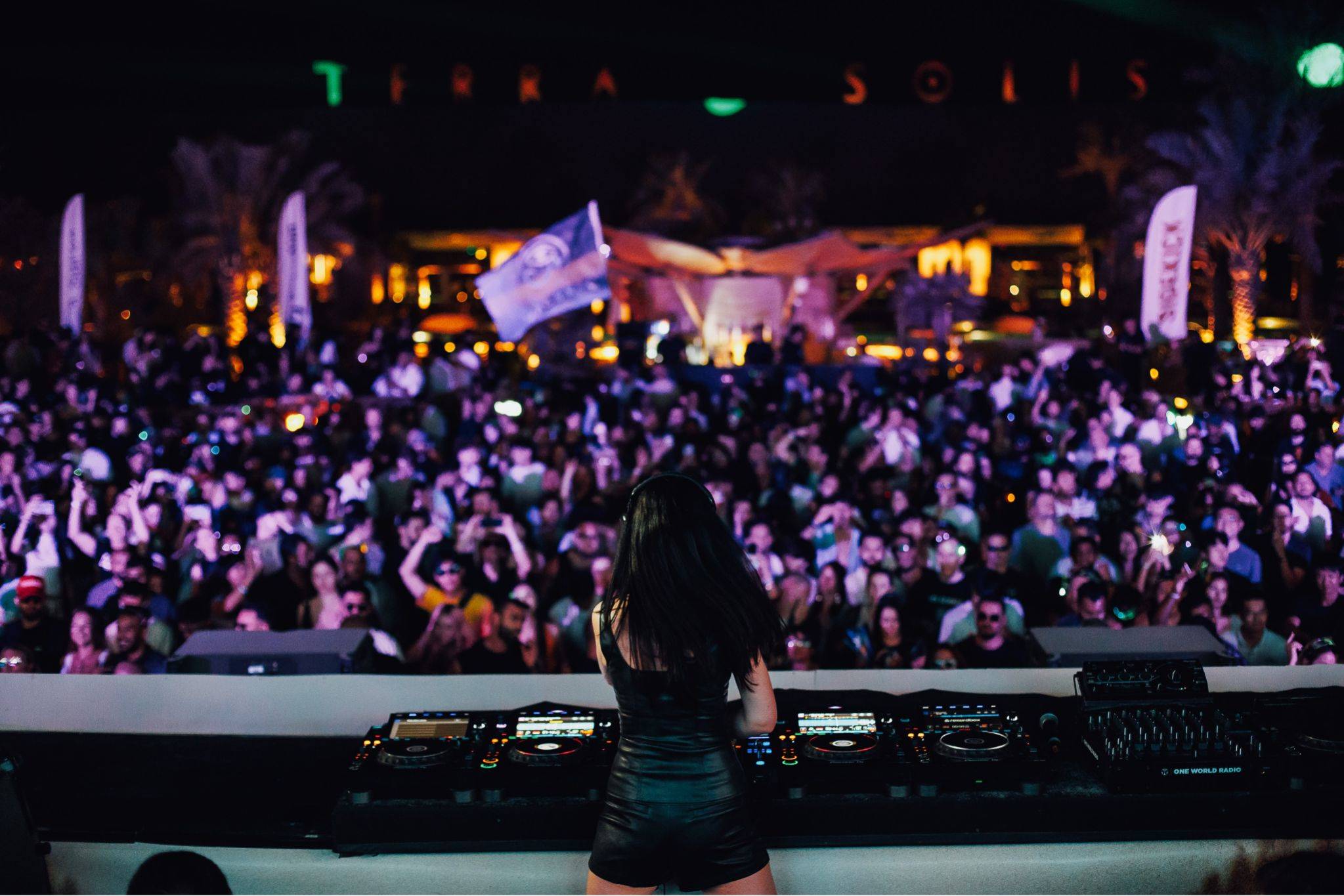
During Dubai Token2049 this year, when we co-hosted an event with Tomorrowland Terra Solis, some participants already used the x402 protocol to purchase RaveDAO tickets. They completed blockchain-based payments and identity verification, then seamlessly entered the physical event. This was a landmark trial—x402 moved beyond being a technical showcase at the protocol layer to becoming part of real-world entertainment.
We don’t want users to feel like they’re “deliberately using Web3 technology.” In RaveDAO’s environment, whether it’s x402 payments, USD1 stablecoin transactions, or NFT tickets, the entire process is frictionless and invisible: users register with email to generate a wallet, the system automatically mints an NFT ticket upon payment, and wallet addresses are verified for entry—all tech happens in the background, while the front-end feels just like regular ticketing.
We want crypto payments to be as simple as using Apple Pay—users won’t think “this is blockchain,” they’ll think “this is so smooth.”
Every event becomes a “real-world testing ground” for payment systems, wallets, and stablecoins. RaveDAO’s goal has never been just to throw parties, but to drive real crypto usage through entertainment. This is what we call “Entertainment-Driven Crypto Adoption.” When payments and entertainment blend seamlessly, crypto economies truly enter daily life.
TechFlow: Based on your experience, what advantages does an NFT ticketing system offer over traditional ticketing?
Ron:
Traditional tickets are one-time access passes—once used, they’re discarded. We can’t see attendee profiles or track their continued engagement within the ecosystem.
NFT tickets, however, are more than just tickets—we envision them as a “digital passport,” an identity system that records a user’s entire entertainment journey:
When someone attends a RaveDAO event, their passport gets a new stamp—recording which city, which event, and in what capacity they participated. These records don’t vanish after the event—they’re permanently stored on-chain. The more “visa stamps” accumulate on the passport, the richer and more valuable the user’s on-chain identity becomes.
In the future, this data can unlock exclusive benefits: priority ticketing, limited merchandise, RAVE token rewards, partner brand airdrops, artist collab collectibles, and more.
Compared to traditional entertainment, the biggest difference with NFT ticketing is that it extends experiences and enables data interoperability. Specifically, within RaveDAO’s system, every offline experience is recorded, recognized, and carried forward into future events with rewards.
Traditional ticketing sells entry rights; RaveDAO’s NFT ticketing sells identity and connection. This is the greater advantage we see in NFT ticketing.
$6 Million Revenue Fuels Global Philanthropy, $RAVE Closes the Value Loop of the “Participatory Economy”
TechFlow: According to official data, RaveDAO achieves around 20% profit margin per event. Can you share details about your current revenue situation and main income sources?
Ron:
Over the past year, RaveDAO’s events have achieved leapfrog growth in both scale and brand recognition, while strong profitability demonstrates the sustainability of our business model.
To be specific, RaveDAO generated approximately $3 million in total revenue in 2025, with projections reaching $6 million in 2026 and exceeding $12 million in 2027.
This revenue comes primarily from three areas:
-
Event and ticketing revenue: ticket and beverage sales from global flagship events and local RaveDAOx events;
-
Brand and ecosystem partnerships: strategic sponsorships from partners such as BNB Chain, Polygon, Bitget, OKX, Base, Aptos, and DeCard;
-
Merchandise and IP licensing: brand collaborations, partnerships with top artists, and the upcoming Genesis Membership Pass (NFT membership pass).
While our profitability is strong, what I’m more eager to share is where RaveDAO’s profits go. Our philosophy has always been:
Culture doesn’t just create resonance—it extends kindness.
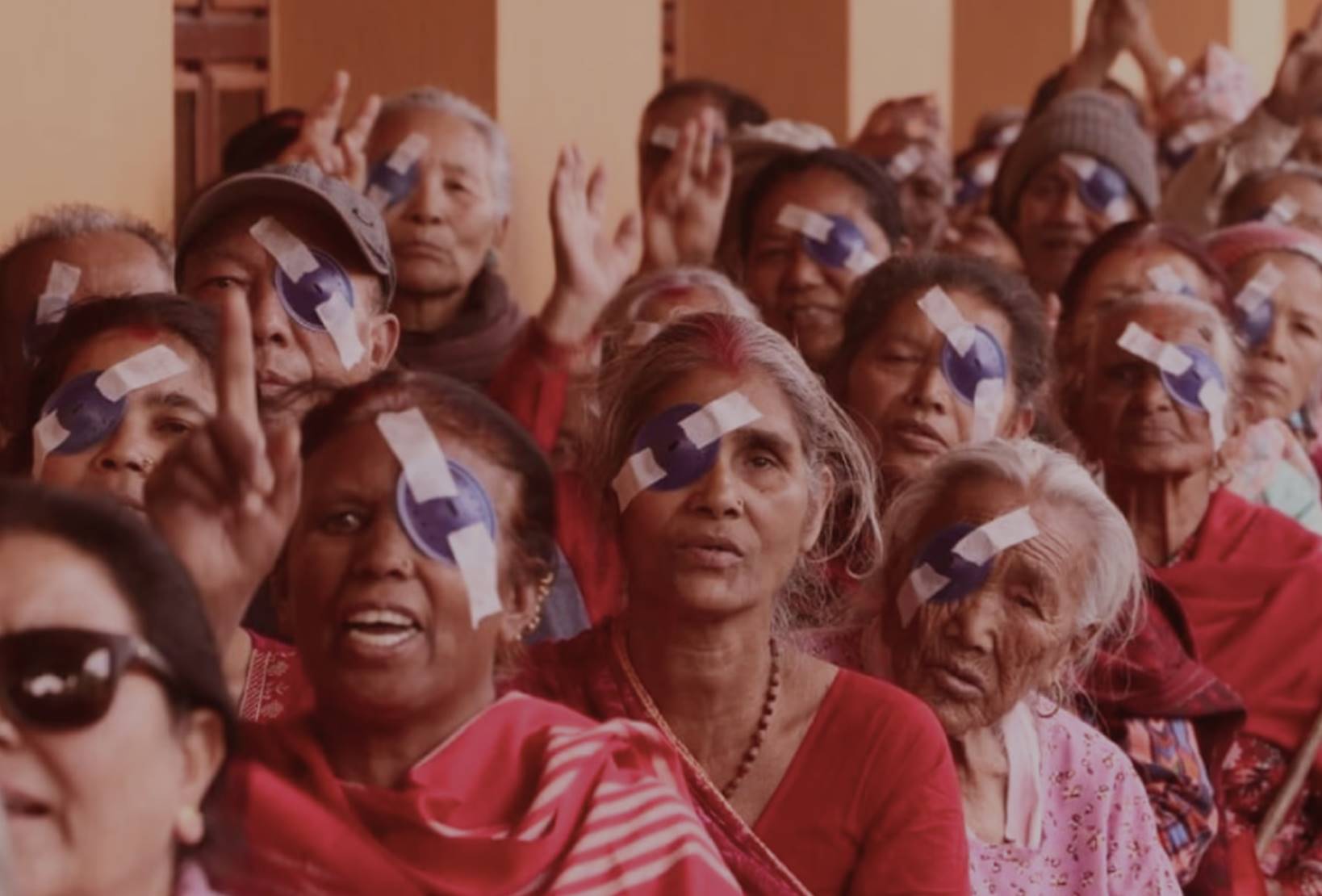
Last year, our event proceeds funded sight-restoring cataract surgeries for over 400 patients in Nepal and supported 150 meditation and mental wellness programs in Seattle, USA.
Through these philanthropic initiatives, users feel they’re not just having fun—they’re part of something meaningful. Meanwhile, RaveDAO is becoming the first native entertainment IP born in Web3 to gain recognition from the mainstream entertainment industry. We want the world to see that Web3 isn’t just about on-chain narratives—it can be the light that creates real, tangible connections in the real world. This is something I’m deeply proud of.
TechFlow: In such a virtuous cycle, why does RaveDAO need to issue a token?
Ron:
We believe entertainment and music are humanity’s most primal, unifying, and enduring mediums—the starting point for emotion, social interaction, culture, and value cycles.
In the context of Web3, a token is not just a financial instrument, but a participation credential (Participation Token).
Our $RAVE token isn’t designed for speculation, but to make “participation” inherently valuable. Every action within the ecosystem—buying tickets, creating content, collaborating, sharing, voting—can earn users real identity, rights, and rewards through $RAVE.
Looking ahead, $RAVE will permeate the entire RaveDAO ecosystem, serving as a universal language connecting online and offline worlds, including:
-
Spending: tickets, drinks, merchandise, on-site payments;
-
Governance: DAO proposals and community voting;
-
Incentives: content creation, promotion, community contribution rewards;
-
Ecosystem collaboration: brand licensing and local incentives for RaveDAOx communities.
For users, holding $RAVE offers long-term value across three dimensions:
-
Growth from brand expansion: As events land in Dubai, Singapore, Seoul, Amsterdam, Hong Kong, and beyond, RaveDAO’s brand awareness, partners, and attendance grow rapidly, increasing $RAVE’s real-world utility and cultural influence, thereby driving token value appreciation.
-
Rewards for early supporters and active participants: Early holders gain DAO governance and proposal rights, priority access to global events, community incentives, opportunities to support emerging DJs, earn returns through staking-to-support mechanisms, and access to producers and project opportunities.
-
Long-term cultural value and identity: As the ecosystem matures, $RAVE will become a cultural identity symbol—not just representing on-chain assets, but signifying membership in a global community that believes entertainment, connection, and goodwill can change the world.
We’re not just building an entertainment token, but an entirely new entertainment economic system centered on the “Participation Economy,” where participants, creators, brands, sponsors, and volunteers alike receive fair value for their real contributions. This is the core mission of the $RAVE token.
TechFlow: RaveDAO’s events are always highly visible. Could you share how, as a community-driven, unfunded project, RaveDAO grew from zero to one? And how do you plan to sustain long-term growth?
Ron:
This has been a question we’ve pondered since day one. What makes RaveDAO special is that we didn’t start with funding, but grew organically through real-world use cases, cash flow, and cultural consensus.
First, RaveDAO’s business model and revenue streams are very clear. As mentioned earlier, our income comes from event and ticket sales, brand and public chain sponsorships, IP licensing and revenue sharing, and NFT and membership systems. These aren’t short-term gains from token prices or fundraising, but real operational revenue—enabling RaveDAO to achieve positive cash flow within its first year.
Second, while traditional projects rely on capital, RaveDAO runs on culture. The impact of each event, artist collaborations, and media coverage continuously enhance RaveDAO’s brand equity and cultural premium. In essence, our brand strength itself is a sustainable economic engine.
Third, the value loop powered by the $RAVE token further empowers the ecosystem. Events, artists, community members, and partner brands form a closed loop around $RAVE: consumption generates revenue → revenue flows back to the community → community creates new content → content drives further consumption. This is our Participation Economy—a system where value circulates rather than stagnates, and the ecosystem grows rather than burns out.
Finally, RaveDAO benefits from a DAO-style distributed organization and efficient execution. Our core team remains lean—under ten members covering planning, production, branding, operations, and partnerships. Global events expand through RaveDAOx community nodes, minimizing labor and cost burdens. This allows us to maintain high execution quality while achieving efficient global scaling.
In summary, RaveDAO’s sustainability stems from the trinity of “real-world use cases + culture-driven growth + token-powered circulation.”
2026: A Year of “Global × Community × Mainstream”
TechFlow: What major collaborations or announcements does RaveDAO have coming up? What are the key plans for next year?
Ron:
First, we recently co-hosted the Top 101 Producer Awards with 1001Tracklists—the world’s largest music producer community (over 1M followers on Instagram)—during Amsterdam Dance Event (ADE), drawing over 2,000 attendees. This awards ceremony, based on real data, offers a more objective and fair ranking for global producers, earning RaveDAO industry recognition from the traditional music world for the first time.
Next, we’ll officially announce a series of partnerships with top Asian music festivals, including Thailand’s largest electronic music festival, 808 Festival (ranked among DJ Mag’s top 100 festivals globally), and Asia’s largest New Year’s Eve festival, NEON Countdown (40,000+ attendees). These collaborations mark RaveDAO’s formal entry into the core of the mainstream entertainment industry.
Additionally, this December, we’ll collaborate with INS Land in Hong Kong to bring Tomorrowland China’s immersive experience to the local scene. We’ll also partner with Asia’s leading touring company Collective Minds to bring the world’s #1 Techno female DJ, Charlotte de Witte, to Singapore.
Lastly, we have an upcoming collaboration with a global top-tier entertainment group to announce—details remain under wraps for now, but it will represent another major breakthrough for RaveDAO entering the mainstream entertainment industry.
For 2026, we’ll accelerate RaveDAO’s global expansion and ecosystem deployment, focusing on three key directions:
-
Continuous expansion of global flagship events: Hosting flagship RaveDAO events in cities like Hong Kong, Dubai, Singapore, and Seoul—our core hubs in Asia’s entertainment and Web3 ecosystems. Each event will upgrade in scale, experience, and content, serving not just as music or performances, but as cross-disciplinary cultural experiments. We aim to lead diverse global cultures onto the blockchain through RaveDAO.
-
Accelerating community-driven RaveDAOx rollout: Pushing forward the RaveDAOx (community-led version) model. We want more communities, labels, DJs, and creators to become co-builders of RaveDAO, bringing Web3 entertainment culture to every city.
-
Deepening partnerships with mainstream entertainment: Continuing and upgrading collaborations with traditional entertainment giants. RaveDAO will soon announce partnerships with several top global music festival brands, officially moving from the Web3 fringe into the heart of mainstream entertainment.
In short, 2026 will be RaveDAO’s year of “Global × Community × Mainstream,” and we couldn’t be more excited.
TechFlow: Final question—along the way, you’ve faced setbacks and witnessed the team’s strong cohesion, and now major milestones are unfolding. For you personally, what has been your most memorable experience at RaveDAO?
Ron:
From a small community to a global entertainment IP, we’ve experienced several “miraculous moments” along the way.
Our team is extremely small. The most unforgettable moment for me was our debut event at Dubai Token2049 in 2024. We faced Dubai’s worst storm in 75 years—venue power outages, artists stranded in Milan, attendees flooded on highways. We nearly lost hope, but ultimately the event concluded successfully, with over 4,000 attendees showing up. That night’s energy taught us for the first time: belief and resonance are the greatest productive forces.
This experience quickly led to our second milestone: during Dubai Token2049 2025, RaveDAO partnered with Web2’s premier music festival brand, Tomorrowland Terra Solis, to create an immersive gathering of over 4,000 people in the desert. The event even earned coverage from The Wall Street Journal, transforming RaveDAO from a Web3 side-event into a cultural phenomenon and officially placing us on the global stage.
The next milestone was our collaboration with WLFI during Korea Blockchain Week (KBW)—our third major achievement—where we achieved the first full offline payment loop using stablecoin USD1: from ticketing and drink orders to hotel bookings, all via crypto payments. For the first time, crypto payments were truly used in reality—a crucial exploration into Web3 technology entering mainstream entertainment.
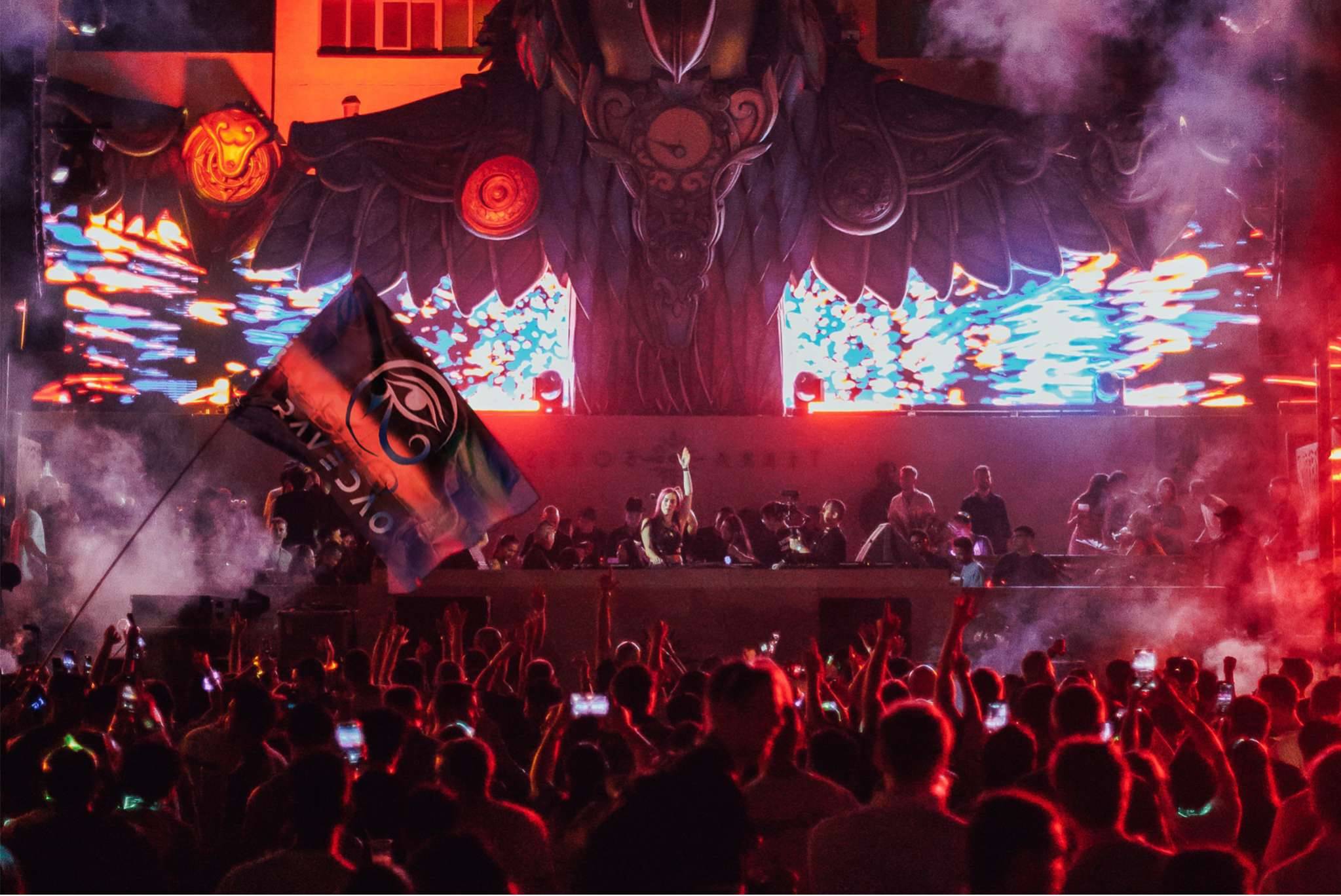
The most recent milestone was the RaveDAO ENL1GHT Festival during Singapore Token2049 2025. Supported by DeCard by DCS, the event drew over 5,000 attendees, filled the venue to capacity, and dominated social media across Singapore. The very next day, major traditional entertainment companies and global record labels reached out to us for collaboration talks.
Starting from a 200-person afterparty in Istanbul, RaveDAO became the driving force behind a 5,000-person celebration in Singapore within just one year—proving that a Web3-born brand can break into the mainstream entertainment world.
RaveDAO doesn’t just host events—we combine entertainment, technology, and community to build a native Web3 Cultural Layer (Cultural Layer).
Join TechFlow official community to stay tuned
Telegram:https://t.me/TechFlowDaily
X (Twitter):https://x.com/TechFlowPost
X (Twitter) EN:https://x.com/BlockFlow_News
 深潮TechFlow