Will YieldBasis become the next breakout DeFi app as the Curve team's new venture?
TechFlow Selected TechFlow Selected
Will YieldBasis become the next breakout DeFi app as the Curve team's new venture?
If this model can scale safely, it could open up an entirely new frontier of yield for DeFi liquidity providers.
 Navigating Web3 tides with focused insights
Author: Saint
Translation: AididiaoJP, Foresight News
The crypto market sees a new DeFi breakout product every so often.
Pumpfun made token issuance easy, while Kaito transformed content distribution.
Now, YieldBasis will redefine how liquidity providers earn—by turning volatility into yield and eliminating impermanent loss entirely.
In this article, we’ll explore the fundamentals, break down how YieldBasis works, and highlight key investment opportunities.
Overview
If you’ve ever provided liquidity to a dual-asset pool, you’ve likely experienced impermanent loss firsthand.
But for those unfamiliar with the concept, here’s a quick recap:
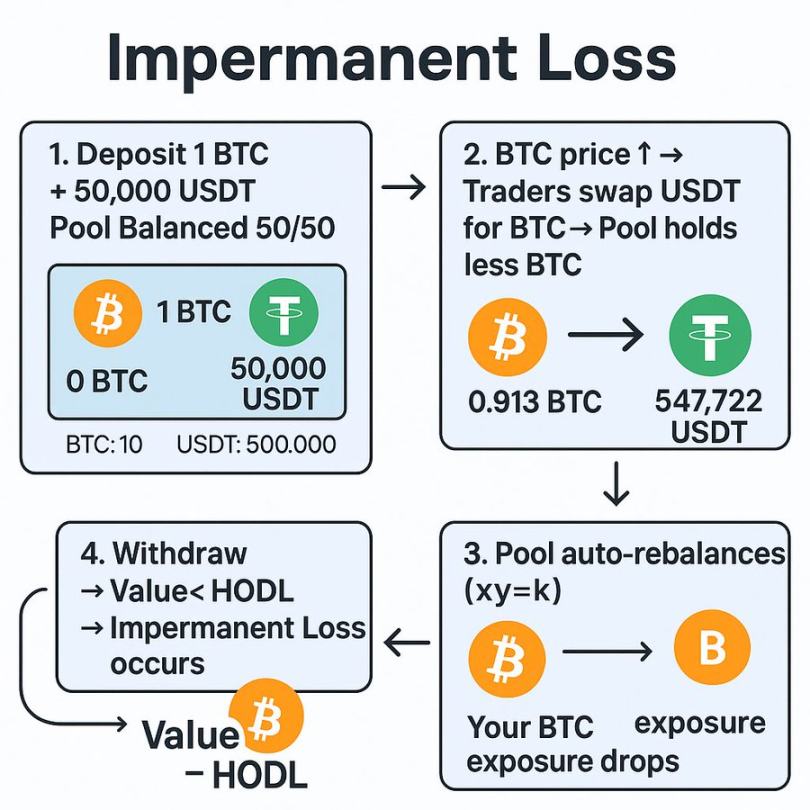
Impermanent loss is a temporary value loss that occurs when providing liquidity to a pool containing two assets.
As users trade between these assets, the pool automatically rebalances, often leaving liquidity providers holding more of the asset being sold.
For example, in a BTC/USDT pool, if the BTC price rises, traders sell BTC into the pool for profit, leaving liquidity providers with more USDT and less BTC.
When withdrawing, the total position value is usually lower than simply holding BTC.
Back in 2021, high annual percentage yields and liquidity incentives were enough to offset this.
But as DeFi matures, impermanent loss has become a real drawback.
Various protocols introduced fixes like concentrated liquidity, delta-neutral LPs, and single-sided pools, but each comes with its own trade-offs.
YieldBasis takes a novel approach—aiming to make liquidity provision profitable again by capturing returns from volatility while completely eliminating impermanent loss.
What is YieldBasis?
In simple terms, YieldBasis is a platform built on top of Curve that uses Curve pools to generate yield from price volatility while protecting liquidity provider positions from impermanent loss.
At launch, Bitcoin is the primary asset. Users deposit BTC into YieldBasis, which allocates it into Curve’s BTC pools and applies leverage via a unique on-chain structure to neutralize impermanent loss.
Founded by the same team behind Curve, including @newmichwill.
YieldBasis has already achieved major milestones:
• Raised over $50 million from top founders and investors
• Recorded over $150 million in commitments during the Legion sale
• Filled its BTC pool within minutes of launch
So, how does the mechanism actually work?
Understanding the YieldBasis Workflow
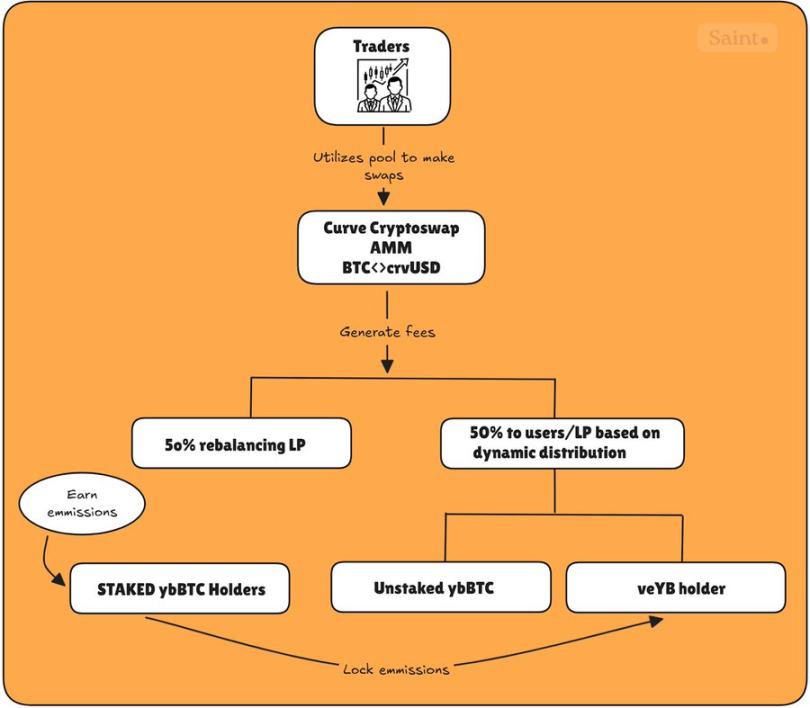
YieldBasis operates through a three-step process designed to maintain a 2x leveraged position while shielding liquidity providers from downside risk.
Deposit
The first step is for users to deposit BTC into YieldBasis to mint ybBTC, a receipt token representing their share in the pool. Currently supported assets include cbBTC, tBTC, and WBTC.
Flash Loan and Leverage Setup
The protocol flash loans an amount of crvUSD equal in USD value to the deposited BTC.
The BTC and borrowed crvUSD are paired and supplied as liquidity to the BTC/crvUSD Curve pool.
The resulting LP tokens are deposited as collateral into a Curve CDP (Collateralized Debt Position) to draw another crvUSD loan, used to repay the flash loan—fully leveraging the position.
This creates a 2x leveraged position with a constant 50% debt ratio.
Leverage Rebalancing
As BTC prices move, the system automatically rebalances to maintain a 50% debt-to-equity ratio:
-
If BTC rises: LP value increases → Protocol borrows more crvUSD → Exposure reset to 2x
-
If BTC falls: LP value decreases → Partial LP redeemed → Debt repaid → Ratio restored to 50%
This keeps BTC exposure constant—you don’t lose BTC even amid price fluctuations.
Rebalancing is handled by two key components: the Rebalancing AMM and the Virtual Pool.
The Rebalancing AMM tracks LP tokens and crvUSD debt, adjusting prices to incentivize arbitrageurs to restore balance.
Meanwhile, the Virtual Pool wraps all steps—flash loan, LP minting/burning, and CDP repayment—into a single atomic transaction.
This mechanism prevents liquidation events by maintaining stable leverage, while offering small profit incentives to arbitrageurs to sustain equilibrium.
The result is a self-balancing system that continuously hedges against impermanent loss.
Fees and Token Distribution
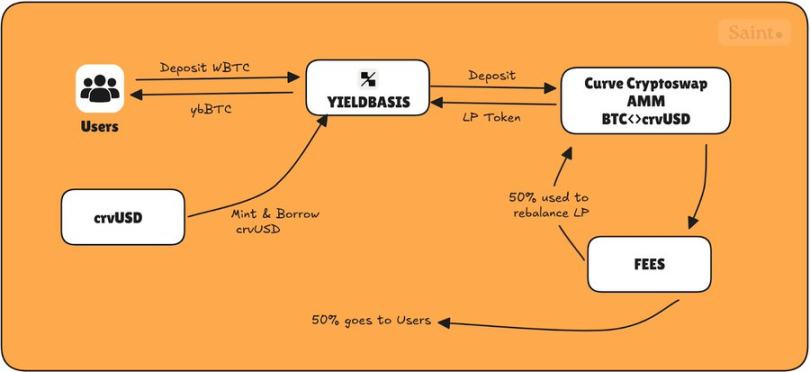
YieldBasis features four main tokens that define its incentive system:
-
ybBTC: Claim on 2x leveraged BTC/crvUSD LP position
-
Staked ybBTC: Staked version that earns token emissions
-
YB: Native protocol token
-
veYB: Vote-escrowed YB, granting governance rights and boosted rewards
All trading fees generated from the BTC/crvUSD pool are split evenly:
-
50% to users (shared between unstaked ybBTC and veYB holders)
-
50% back to the protocol to fund the rebalancing mechanism
The 50% returned to the rebalancing pool ensures no liquidation calls occur due to lack of arbitrage activity—so the protocol itself performs the balancing using 50% of its fees.
The remaining 50% allocated to users is shared between unstaked ybBTC and veYB governance via a dynamic distribution.
In short, the protocol tracks the amount of staked ybBTC and adjusts the fee earnings for each holder (unstaked ybBTC vs. veYB) using the following formula:
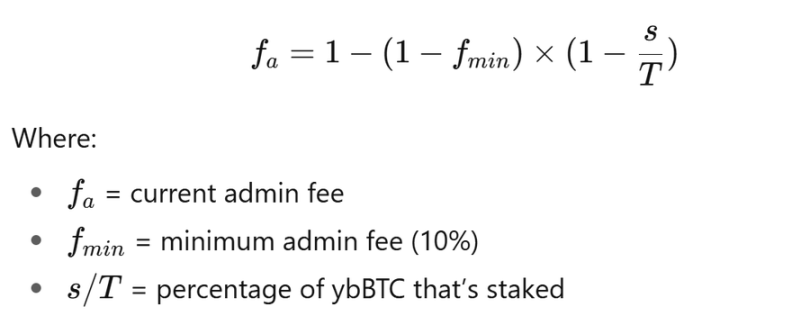
When no one stakes (s = 0):
Thus, 𝑓ₐ = 𝑓𝑚𝑖𝑛 = 10%, veYB holders receive only a small portion (10%), while unstaked ybBTC holders get the rest (90%).
When everyone stakes (s = T):
Thus, 𝑓ₐ = 100%, veYB holders receive all user-side fees since no one remains to earn trading fees.
When half the supply is staked (s = 0.5T), management fee rises (~36.4%), veYB receives 36.4%, unstaked holders share 63.6%.
For staked ybBTC holders, they receive YB emissions, which can be locked as veYB for a minimum of 1 week up to 4 years.
Staked ybBTC holders can lock their received emissions to simultaneously enjoy both fee and emission benefits as veYB holders, creating a flywheel effect enabling them to earn maximum fees from the protocol, as shown below.
Since launch, YieldBasis has seen some interesting stats:
-
Total volume reached $28.9 million
-
Over $6 million used in rebalancing
-
Generated over $200,000 in fees.
Personal Thoughts
YieldBasis represents one of the most innovative designs in liquidity provision since Curve’s original stableswap model.
It combines proven mechanisms—vote-escrowed tokenomics, automated rebalancing, and leveraged liquidity provision—into a new framework that could set the next standard for capital-efficient yield strategies.
Given it's built by the same team behind Curve, market optimism isn't surprising. With over $50 million raised and pools instantly filled, investors are clearly betting on its future token launch.
That said, the product is still in early stages. BTC’s relatively stable nature makes it an ideal test asset, but introducing highly volatile pairs too soon could strain the rebalancing mechanism.
Still, the foundation appears solid—and if this model can scale safely, it may open an entirely new frontier of yield for DeFi liquidity providers.
Join TechFlow official community to stay tuned
Telegram:https://t.me/TechFlowDaily
X (Twitter):https://x.com/TechFlowPost
X (Twitter) EN:https://x.com/BlockFlow_News
 @TheDeFISaint