








LBank Labs Seoul "Global Blockchain Forum": A Comprehensive Exploration of Web3 from Policy Frameworks to Technological Frontiers
TechFlow Selected TechFlow Selected
LBank Labs Seoul "Global Blockchain Forum": A Comprehensive Exploration of Web3 from Policy Frameworks to Technological Frontiers
Accelerating the development of an open innovation ecosystem, focusing on compliant infrastructure, AI and blockchain convergence, and RWA applications.
 Navigating Web3 tides with focused insights
On September 22, the "Global Blockchain Forum," co-hosted by LBank Labs, South Korean lawmaker Min Byung-Duk, and the Korea Blockchain Industry Promotion Association (KBIPA), was successfully held at the National Assembly Library in Seoul, South Korea. The forum focused on cutting-edge topics including the construction of an open Web3 ecosystem in Korea, AI integration with blockchain, the philosophical development of stablecoins, and metaverse infrastructure. Prominent guests such as South Korean lawmaker Min Byung-Duk, CodeVASP CEO Lee Sung-Mi, and Seoul National University Professor Han Jung-Suk engaged in in-depth discussions on blockchain policy, technological innovation, and Web3 ecosystem collaboration, injecting strong momentum into the sustainable development of the global blockchain industry.
The forum brought together policymakers, corporate executives, Web3 innovation pioneers, and academic experts from the global crypto industry. Representatives from leading institutions including KBIPA, LBank Labs, Animoca Brands, CodeVASP, Ethereum Foundation, Kaia DLT Foundation, and Solana Foundation gathered to share insights. Additionally, core figures from renowned Web3 projects such as Kaia, Berachain, Abstract, Manta Network, Aethir, and LayerZero attended the event to jointly explore frontier industry trends and paths for ecosystem synergy.
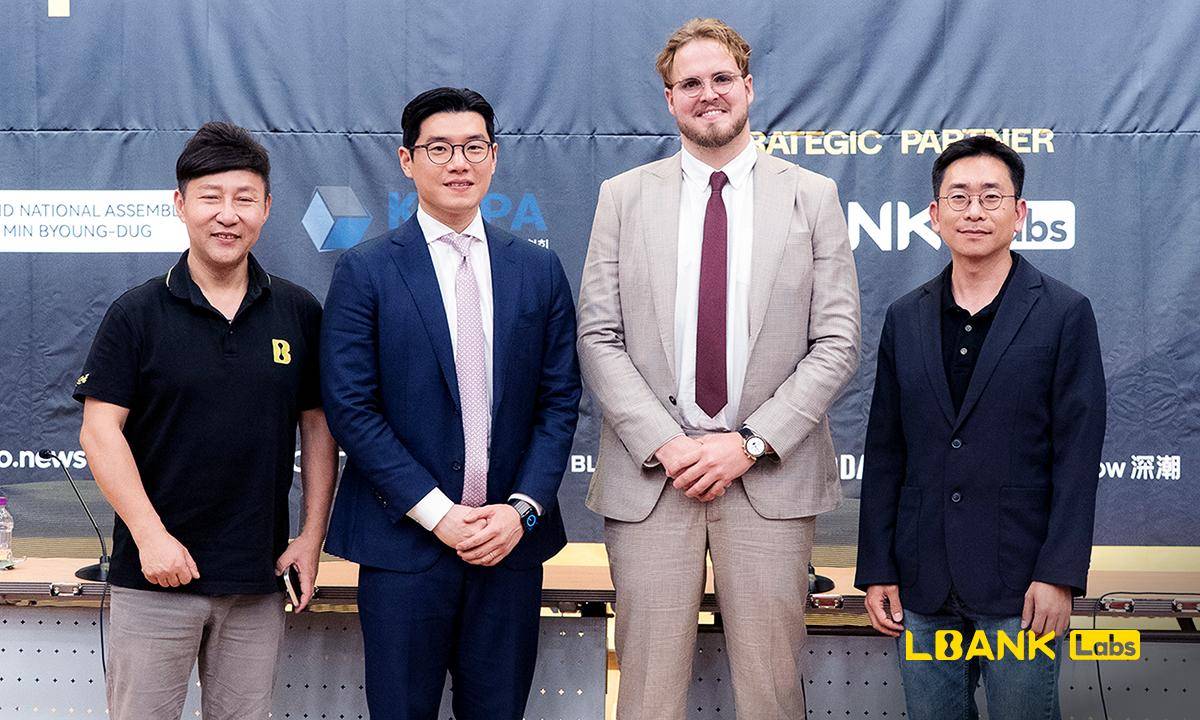
As a global Web3 venture capital firm, LBank Labs is accelerating the development of an open innovation ecosystem, focusing on compliant infrastructure, AI-blockchain convergence, and RWA applications, providing funding, technical support, and market access for developers and projects worldwide. This forum served not only as a platform converging policy, technology, and industry but also highlighted LBank Labs' vision of advancing the global adoption of Web3.
Forum Opening: Policy Empowering Korea's Open Web3 Ecosystem
The forum opened with keynote remarks by Min Byung-Duk, a member of South Korea’s Democratic Party. As a key driver behind digital finance legislation in Korea, Rep. Min led the development of the “Digital Asset Basic Act,” which laid the institutional foundation for Korea’s digital asset market. In his speech, he emphasized: “Compliant innovation is fundamental to the sustainable growth of the blockchain industry. Korea is committed to building a secure and vibrant Web3 ecosystem.” He noted that while artificial intelligence reshapes our understanding of “intelligence,” blockchain is fundamentally “rewriting the way trust is established,” defining the future financial landscape through the formula “RWA (real-world assets) + STO (security tokens) × stablecoins.”
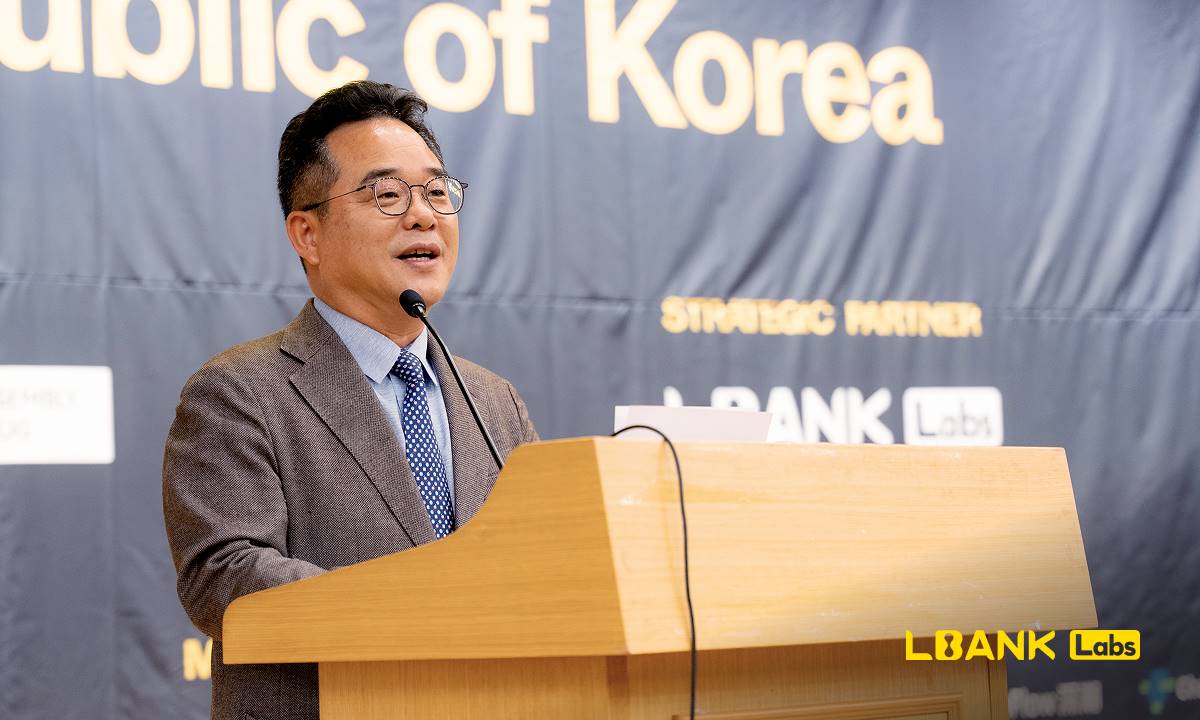
Rep. Min further introduced the “Three Digital Asset Laws”—the Digital Asset Basic Act, the Spot ETF Act, and the Token Securities STO Act—aimed at balancing investor protection with industrial innovation. He specifically highlighted that the Korean won-denominated stablecoin is not merely a transaction tool but a critical instrument for safeguarding Korea’s financial sovereignty and reducing payment costs for small and medium enterprises. In the future, it will integrate with K-content and K-apparel to generate global economic opportunities. Currently, Korea has 6 million digital asset investors and a daily trading volume of 11 trillion KRW, yet policy must accelerate to keep pace with market evolution.
KHIPA Chairman Kim Hyung-kyu stated: “Blockchain is a borderless, global business domain. Korea must accelerate application deployment through international cooperation and technological innovation.” He emphasized that the forum would bridge the gap between Korean stakeholders and global experts, offering strategic guidance for Korea to emerge as a digital finance hub. Lawmakers Kim Hee-jung from the People Power Party and independent lawmaker Kim Jong-min also attended. Kim Hee-jung called for enhanced blockchain literacy among legislators to drive policymaking, while Kim Jong-min noted: “AI and Web3 are the two pillars of future society. Web3 addresses digital fragmentation through decentralized connectivity, ushering in an era of cross-industry interconnection.”
In the global cryptocurrency landscape, South Korea is rising at an astonishing pace. In 2025, the total trading value of cryptocurrencies denominated in Korean won reached $663 billion, making Korea the world’s second-largest cryptocurrency market after the U.S. dollar. Korea has long maintained global leadership in altcoin trading, boasting the highest altcoin trading volume globally, with 25.4% of its population actively participating in crypto trading—a level of engagement extremely rare worldwide. This enthusiasm has also given rise to the unique “Kimchi premium” phenomenon. Meanwhile, the Korean government is actively reshaping its cryptocurrency regulatory framework, shifting from previous restrictive policies toward a new phase encouraging innovation and market growth. Recent initiatives such as the cryptocurrency ETF roadmap and stablecoin development plan have not only injected new institutional incentives into the market but also further solidified Korea’s strategic position as a major Asian and global crypto market.
Industry Dialogue: Deep Reflections from Tokenization to Regulatory Frameworks
The first half of the forum featured in-depth discussions on policymaking and industrial development strategies, centering on key pathways for shaping Korea’s Web3 market environment.
Tokenization Wave and Digital Property Rights: Yat Siu, co-founder of Animoca Brands, discussed the potential of tokenization, noting it extends beyond real-world assets moving on-chain to transforming data and attention into “natively generated digital property rights,” breaking the monopolies of Web2 giants. Stablecoins enable financial inclusion for 150–200 million unbanked users, while NFTs reshape gaming assets and cultural capital. Yat Siu emphasized that tokenization can revolutionize education finance, and Korea, leveraging its strengths in intellectual property, is poised to lead the digital economy.
Academic and Legal Perspectives: Seoul National University Professor Han Jung-Suk analyzed “Blockchain Overview and the Future of Digital Asset Exchanges.” He pointed out that the digital asset market is fragmented across centralized exchanges (CEX), decentralized exchanges (DEX), cross-chain bridges, and Layer-2 solutions, leading to scattered liquidity and disjointed price discovery. Current markets face friction from slippage, fees, latency, and MEV (miner extractable value), but aggregators and cross-chain bridges are gradually consolidating liquidity. ETFs and tokenized assets will deepen the integration between on-chain and off-chain markets. He predicted: “The transparency and programmability of blockchain will accelerate market evolution, with liquidity consolidation and improved price discovery efficiency becoming key future directions.”
Cha Sang-Jin from BECOME Law Firm explained the “Regulatory Framework for Stablecoins, Security Tokens, and Spot ETFs,” exploring the balance between innovation and risk. Soongsil University Professor Yoon Min-Seop systematically analyzed “Crafting a Digital Asset Act: Shaping the Future of Korea’s Industrial Ecosystem,” focusing on legislative timing, regulatory boundaries, and innovation safeguards. Panelists engaged in vigorous debate on core issues, ultimately converging on a three-pillar strategic framework: “policy-first, industry-follow-up, and international cooperation.”
The subsequent roundtable discussion on “Policies and Industrial Strategies for Korea to Become a Global Digital Asset Hub” brought together policymakers and industry experts for a brainstorming session, generating practical action plans from a global perspective. This intellectual feast revealed how Korea could leverage Web3 to seize international leadership through policy leadership, industrial alignment, and global collaboration.
Technology Innovation Drives the Future: Four Special Sessions Decode Web3 Evolution
The second half shifted focus to technological practice, presenting four specialized sessions that illustrated the evolutionary path of Web3—from compliance and market entry to infrastructure, AI integration, and the metaverse, progressing step by step.
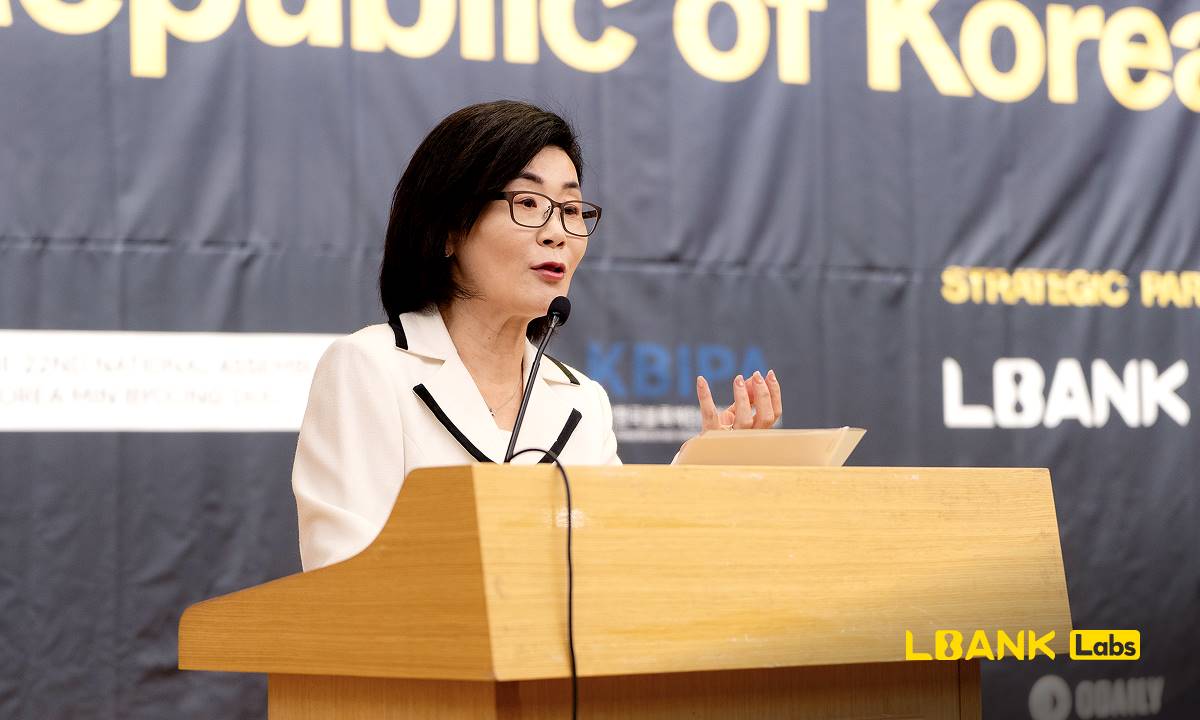
Compliance and Market Entry Strategy: In her keynote speech, “Entering the Korean Market: Understanding and Complying with Travel Rules,” CodeVASP CEO Lee Sung-Mi provided a detailed breakdown of Korea’s strict compliance requirements, particularly focusing on the implementation of the “Travel Rule.” She offered practical guidance for Web3 companies entering Korea, emphasizing that compliance is not just a legal obligation but the cornerstone of market trust. She shared how CodeVASP uses technical solutions to help businesses achieve compliant operations across jurisdictions, providing a viable pathway for global projects to enter Korea.
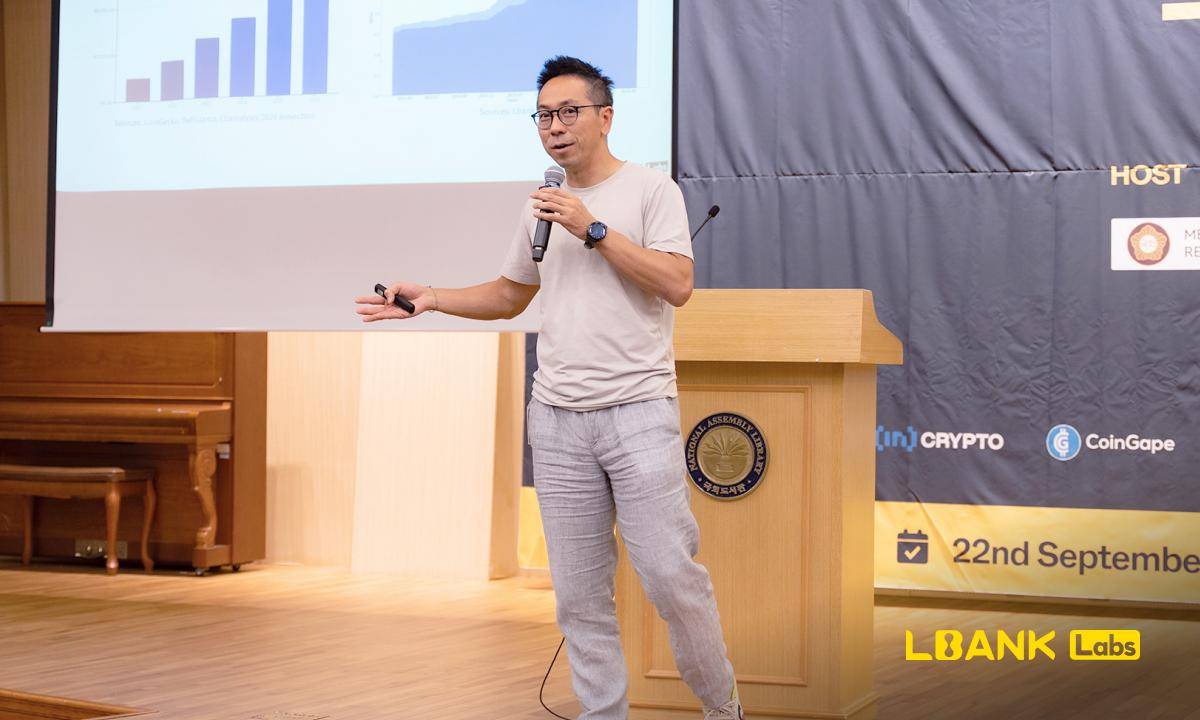
Czhang Lin, head of LBank Labs, spoke on “Bridging the Gap: Opportunities in Web3 and Traditional Finance Convergence,” identifying three key opportunities in the integration of Web3 and traditional finance. First, institutional capital is accelerating inflows, with crypto ETFs serving as a core financial instrument linking to traditional markets. Second, the Digital Asset Treasury (DATs) model is emerging, enabling companies to optimize capital structures through crypto allocations, significantly boosting stock performance in traditional markets. Third, SPACs offer a low-cost, transparent route for high-growth Web3 projects to go public. Czhang Lin stressed that the combination of ETFs, DATs, and SPACs builds a bridge between Web3 projects and traditional finance, and that top-tier projects must leverage dual liquidity from exchanges and capital markets to gain global competitive advantage. This insight offers a clear direction for Web3 project capitalization strategies.
Infrastructure Discussion: During the roundtable “Building the Next Wave: Next-Gen Primitives for Layer 1 and Layer 2,” Ramzy, Solana DeFi Growth Lead; Jonathan Covey, Chief Marketing Officer of ZetaChain; Kenny Li, co-founder of Manta Network; and Jason, co-founder of Abstract, explored the evolutionary logic of public chain ecosystems. The discussion concluded that the success of crypto applications does not hinge on single-chain versus multi-chain architectures, but rather on abstracting underlying complexity via chain or infrastructure abstraction to deliver seamless, frictionless user experiences. While multi-chain coexistence is a trend, the market may eventually consolidate around a few core chains. Developers should seek breakthroughs in vertical niches or specific user segments, while users ultimately care most about usability and experience.
Stablecoin Philosophy Dialogue: The session “Stablecoins Are Inevitable: Rebuilding the Future of Digital Currency” brought together Alex Lim, LayerZero APAC Head; SangMin (Sam) Seo, Chair of Kaia DLT Foundation; and Ash Morgan, Ethereum Foundation’s Stablecoin and RWA Lead. They examined the strategic role of stablecoins. Alex Lim emphasized that LayerZero’s cross-chain interoperability protocol significantly enhances stablecoin liquidity and usability in DeFi and RWA use cases. Sam Seo highlighted from an economic standpoint that stablecoins reduce cross-border payment costs and provide financial services to the unbanked, projecting over 30% growth in emerging market transaction volumes post-2025. Ash Morgan focused on decentralization, stating that censorship-resistant mechanisms in stablecoins lay the foundation for global financial autonomy. On whether central bank digital currencies (CBDCs) will replace stablecoins, panelists agreed they will form a complementary relationship across payment, investment, and reserve functions, with stablecoins maintaining a central role in DeFi’s automated markets and RWA tokenization, driving the transformation of digital finance.
Metaverse Full-Stack Construction: In the session “Driving the Metaverse: A Full-Stack Approach to Scalable, Secure, and Sovereign Digital Worlds,” Matthew Katz, CEO of Caldera; Zhao Qingyuan, Chief Architect at Alibaba Cloud; Ella Qiang, APAC Head of Berachain; and Blue, CTO of SlowMist discussed engineering approaches to metaverse infrastructure. Matthew Katz explained how Caldera’s rollup technology achieves virtual economies processing thousands of transactions per second through modular design, reducing transaction costs by 99%. Zhao Qingyuan shared Alibaba Cloud’s decentralized storage solution, enhancing asset management efficiency in the metaverse via on-chain data indexing. Ella Qiang emphasized how Berachain’s decentralized identity (DID) protocol enables cross-platform user sovereignty and asset interoperability. Blue focused on SlowMist’s security framework, protecting metaverse platforms from attacks using real-time threat detection and zero-trust architecture. Experts unanimously agreed that standardized technical protocols and ecosystem collaboration are foundational, requiring engineering solutions to address challenges like inflation spirals.
AI Session Ignites Web3 Innovation: In the “Intelligent Nexus: AI Meets On-Chain Reality” session, Raullen Chai, CEO of IoTeX; Jeremy Millar, Chair of Theoriq Foundation; Daniel Wang, co-founder and CEO of Aethir; and Han Jin, co-founder of BluWhale explored the fusion potential of AI and blockchain. Raullen Chai emphasized AI’s role in enhancing data privacy and optimizing smart contracts, predicting it will become the core engine for Web3 adoption. Jeremy Millar noted that AI-powered smart contracts will redefine efficiency frontiers. Daniel Wang shared how Aethir’s decentralized GPU network empowers AI model training. Han Jin focused on BluWhale’s on-chain data applications, outlining the prospects for decentralized AI agents. The discussion suggested that the convergence of AI and Web3 will drive paradigm shifts in data economics and smart contracts within the next 3–5 years, becoming the primary catalyst for large-scale Web3 adoption.
LBank Labs: Bridge and Catalyst for the Global Web3 Ecosystem
As a Web3 venture capital firm managing over $100 million in assets, LBank Labs has long focused on compliant infrastructure, regulation-friendly DeFi, AI integration, and institutional-grade solutions, investing globally in numerous forward-looking projects and continuously supporting digital economic development. The successful hosting of this forum not only demonstrates LBank Labs’ strength in industry organization and ecosystem mobilization but also underscores its pivotal role in global blockchain discourse.
Looking ahead, LBank Labs will continue leveraging its unique ecosystem-connecting advantages, collaborating with global partners to deepen efforts at the intersection of technological innovation, regulatory compliance, and commercial applications, injecting sustained momentum into the blockchain industry and accelerating the global rollout and large-scale adoption of Web3 innovations.
Join TechFlow official community to stay tuned
Telegram:https://t.me/TechFlowDaily
X (Twitter):https://x.com/TechFlowPost
X (Twitter) EN:https://x.com/BlockFlow_News






