








How many middle-class families have been drained by their 60-year-old parents "trading crypto"?
TechFlow Selected TechFlow Selected
How many middle-class families have been drained by their 60-year-old parents "trading crypto"?
As a child, the scariest thing you can hear from your elders is: "I have a once-in-a-lifetime chance to get rich."
 Navigating Web3 tides with focused insights
As a child, the most terrifying news you can hear from your elders is:
"I've got a once-in-a-lifetime chance to get rich."
Especially when they ask you "Have you heard of Pi coin?"—that's when you know everything is about to spiral out of control.

For most young people, their first exposure to Pi coin comes from fragmented keywords relayed by elderly family members:
Cryptocurrency, mining on smartphones, potential for massive wealth.
To most children, the financial frenzy described by parents sounds like trouble. When concerned offspring search online, they discover that Pi coin has been questioned by regulators in multiple countries for resembling pyramid schemes and scams. As early as 2023, Wuxi Cyber Police published an article stating:
Pi coin scams specifically target the elderly.
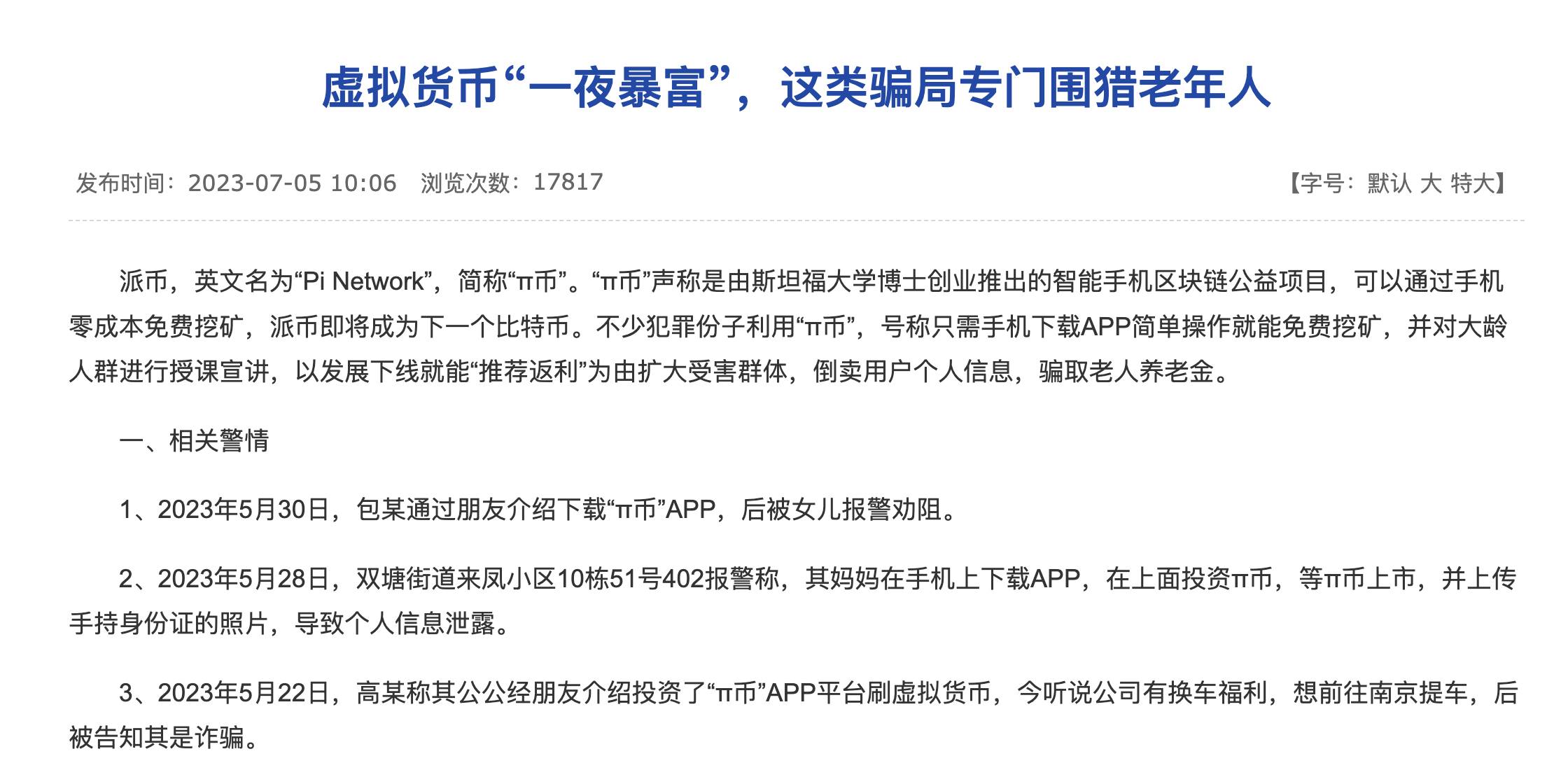
Is Pi Coin Specifically Targeting the Elderly?
Before understanding what Pi coin is, people often start by understanding their parents.
Watching them travel far to stand at a village entrance, performing money-attracting dances in front of a rock like a ritual;

Or dressed in matching outfits, gathering with similarly attired peers in the lobby of a five-star hotel on the outskirts of a tier-one city, resembling corporate year-end events;

Or following the principle of convenience, moving activities outdoors to parks, sitting in circle-game formations, each person expected to perform a talent...

Judging solely by form and content, these appear to be ordinary senior citizen activities.
But once you learn a few details, something feels off.

When you ask what they’ve been up to lately, they mysteriously reply:
"Mining Pi coins recently."
Before figuring out why middle-aged and elderly people are obsessed with Pi coin, we must first answer:
What exactly is Pi coin?
In simple terms, it’s a cryptocurrency. Pi coin, officially known as Pi Network, also goes by nicknames like “π coin” or “Pai coin.”
In many ways, you could think of it as a repackaged “senior-friendly version of Bitcoin.”
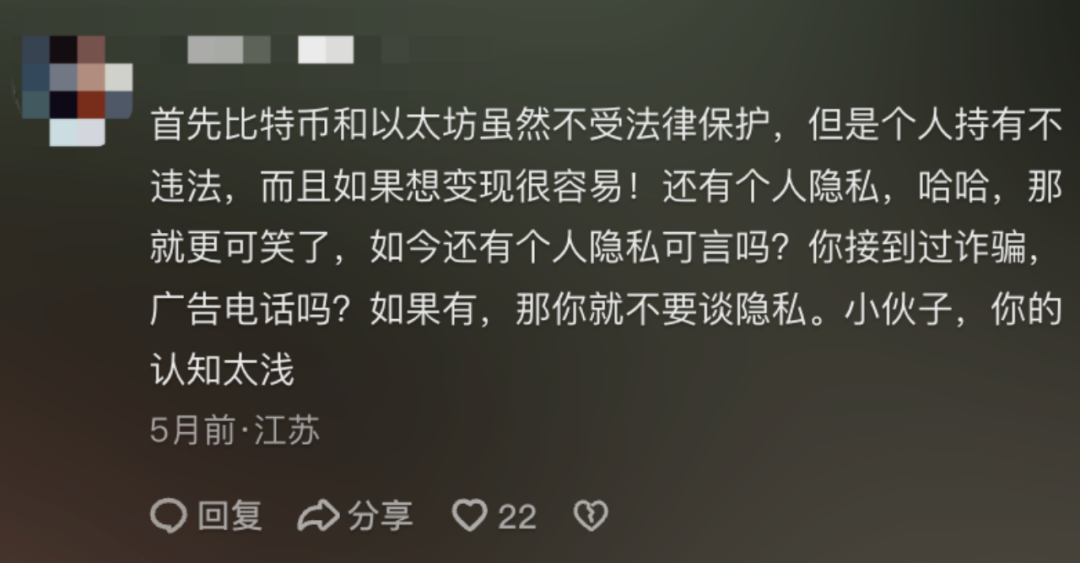
The key difference is that Pi coin hasn’t been listed on most major exchanges, making its price extremely volatile. Its future value depends heavily on market sentiment, supply, and demand. Currently, Pi can only be used within Pi Network’s closed ecosystem and cannot be cashed out into any real-world economic value.
In other words: it cannot be traded like Bitcoin, nor exchanged for RMB or USD.
Searching for Pi coin on social media brings up common warnings:
“The Pi coin you bought is just ‘air coin futures’—once the exchange shuts down, your account balance drops to zero.”
To understand Pi coin’s potential risks more directly:
In a 2023 CCTV report, Pi coin was questioned by police as having scam characteristics.

Yet, from the perspective of middle-aged and elderly users, the same thing tells a completely different story.
To them:
Pi coin represents the last chance for prosperity in old age—a treasure manual for getting rich in modern times.
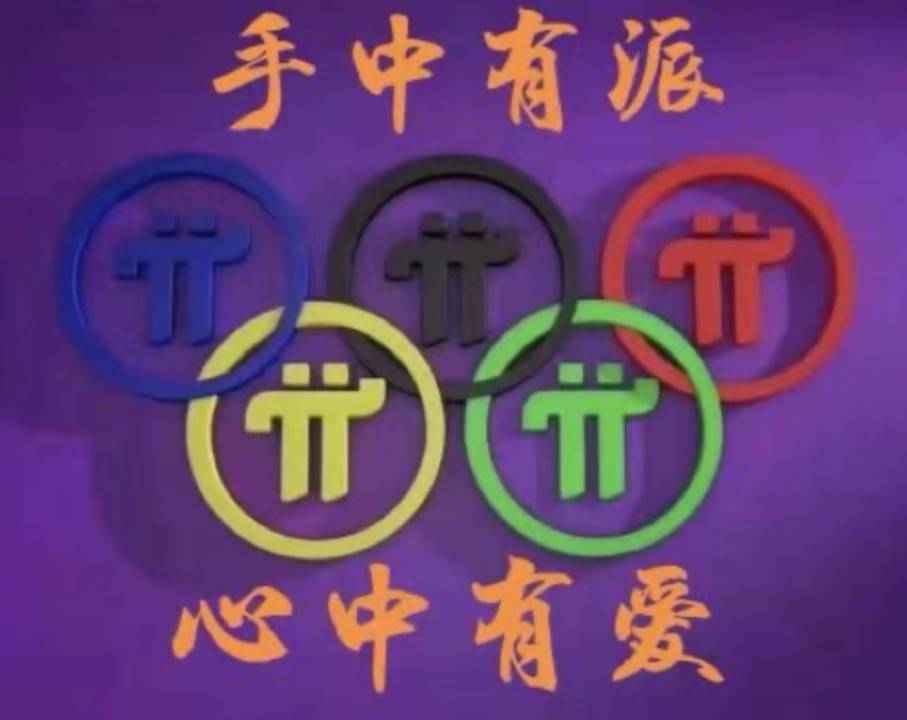
Most middle-aged and elderly people who fall into the Pi coin trap share one common trait:
They have endless free time and nothing meaningful to do.
Over time, this idle time becomes torment.
Eventually, a familiar person approaches them with an offer. The pitch usually goes like this:
"You're idle anyway—want to try something easy? No investment needed. Just play around on your phone and make big money."
Initially, they may be invited into a "Pi coin discussion group" by old friends, colleagues, or relatives. Within the group, one or more so-called "experienced mentors" gradually shape opinions by spreading messages such as:
"Pi coin is very valuable now,"
"You can spend Pi coin directly in many places abroad,"
Messages like "1 Pi = $2,000" circulate frequently...
At first, everyone is skeptical of Pi coin.
One person claiming Pi is valuable might not convince anyone; two people saying it can buy a Mercedes creates doubt;
When a third member claims they’re traveling to Macau to purchase a car with Pi coin, curiosity begins to build.

The group constantly shares success stories mixed with hard-to-verify news reports. With 100 people all shouting that Pi coin is valuable and will keep rising, belief grows.
Some claim overseas friends casually share life updates proving:
Pi coin holds real purchasing power abroad—even Trump uses Pi coin to buy private jets.
Once domestic redemption opens, every group member will become fabulously wealthy.
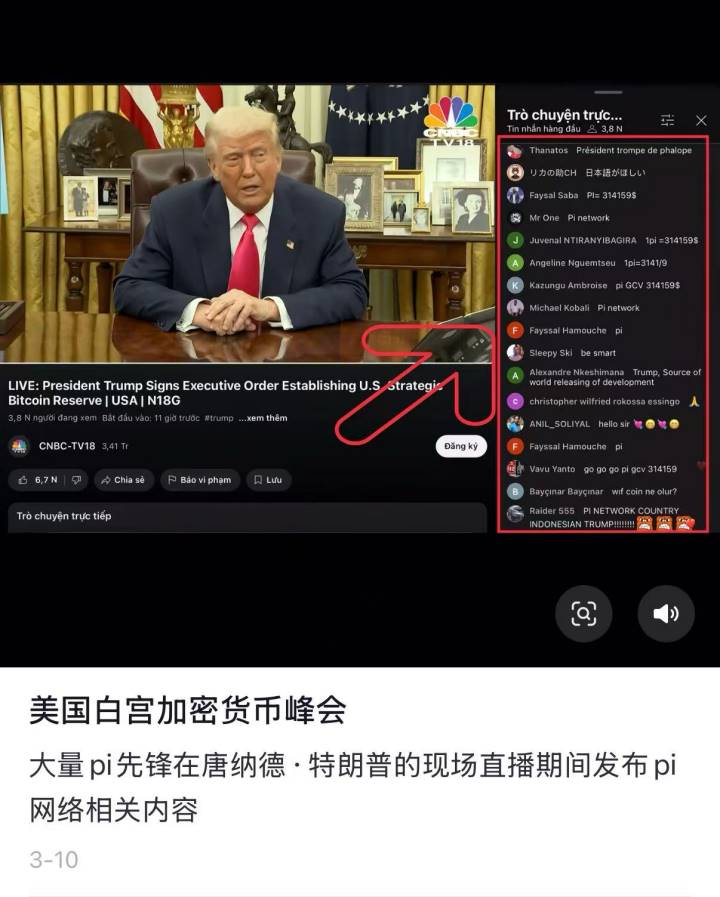
While this sounds absurd to us, the elderly are notoriously prone to believing outrageous claims—and uniquely distrustful of their own children.
They believe iPhones delay message delivery because Americans read them first;
They trust so-called "experts" who claim bottled water causes infertility.
Given this context, it’s no surprise that the same group, bombarded with information inside Pi communities, firmly believes smartphone mining leads to riches.
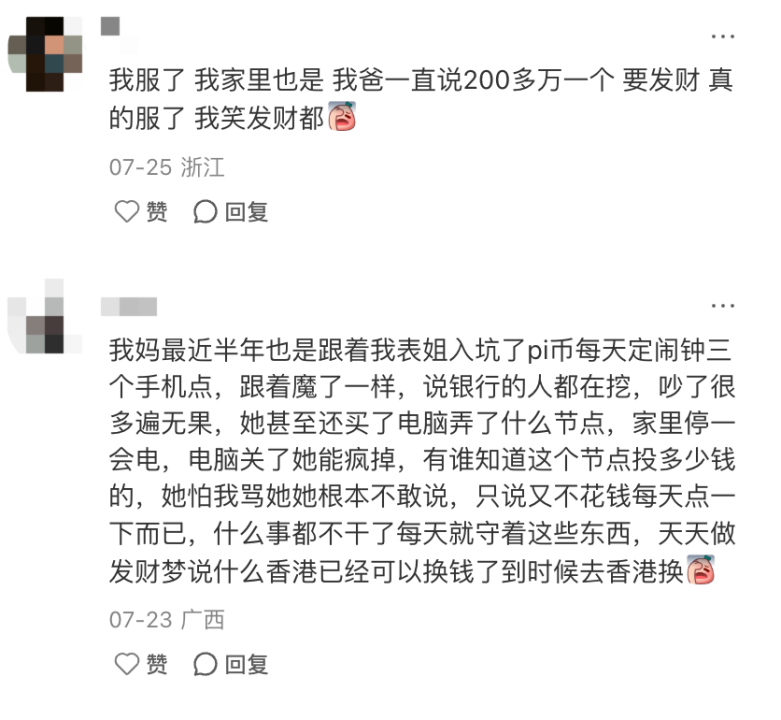
Thus, the idea that "Pi coin can make you rich" takes root. Since initial mining requires no cost, all it demands daily is tapping a phone screen—the so-called "money-making hand."
All that remains is doing one’s part and leaving the rest to fate, patiently waiting for the day Pi coin can be converted into cash.
The longer it lasts, the closer Pi coin feels to a risk-free high-potential investment. Many even prepare multiple phones to mine around the clock.
It doesn’t take long in this environment to convert a new elderly recruit and complete the first round of brainwashing.
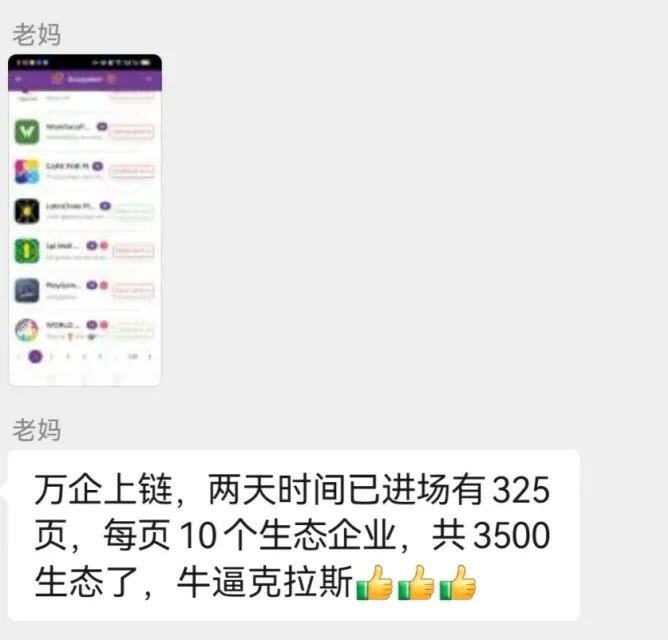
Due to the large number of loosely organized local groups and clubs, there's never been consensus on Pi coin’s actual value.
According to unreliable sources, some claim one Pi is worth millions or even billions of dollars with no upper limit, while others say one Pi can buy a seaside villa.
This extreme information chaos gradually pushes seniors to study Pi-related knowledge and attempt self-validation.

Moderately addicted Pi users begin attending lectures daily with reading glasses, taking notes, studying finance, and learning terms like "blockchain," "ecosystem," "trading," and "empowerment."
The process of learning how to mine faster, upgrade computing power, and earn more Pi coins amounts to a second intellectual explosion in their lives.
Through years of self-study, they undergo a second phase of self-brainwashing.
How Does Pi Coin Drain the Elderly?
The next step after learning about Pi coin is spending money on it.
Before identifying where the money goes, we must first understand the mining process—
which is also the main basis for accusations of pyramid schemes and fraud.
Mining via smartphone isn’t difficult. If it’s accessible to countless seniors, it can’t be too complex.
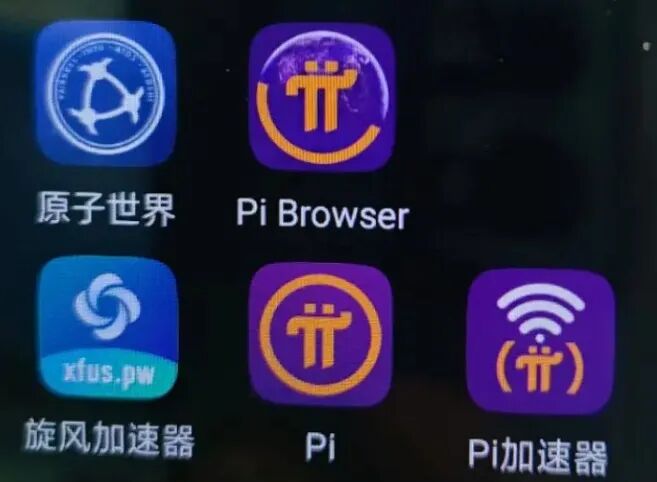
You simply open a fixed app daily, tap the screen to gain so-called "computing power." More power means faster mining and higher visible Pi balances accumulating in the app.
Check-ins, watching ads, and inviting others are the primary ways to boost computing power.
Inviting someone doubles your own computing power, explaining why Pi coin spreads so rapidly among older adults.
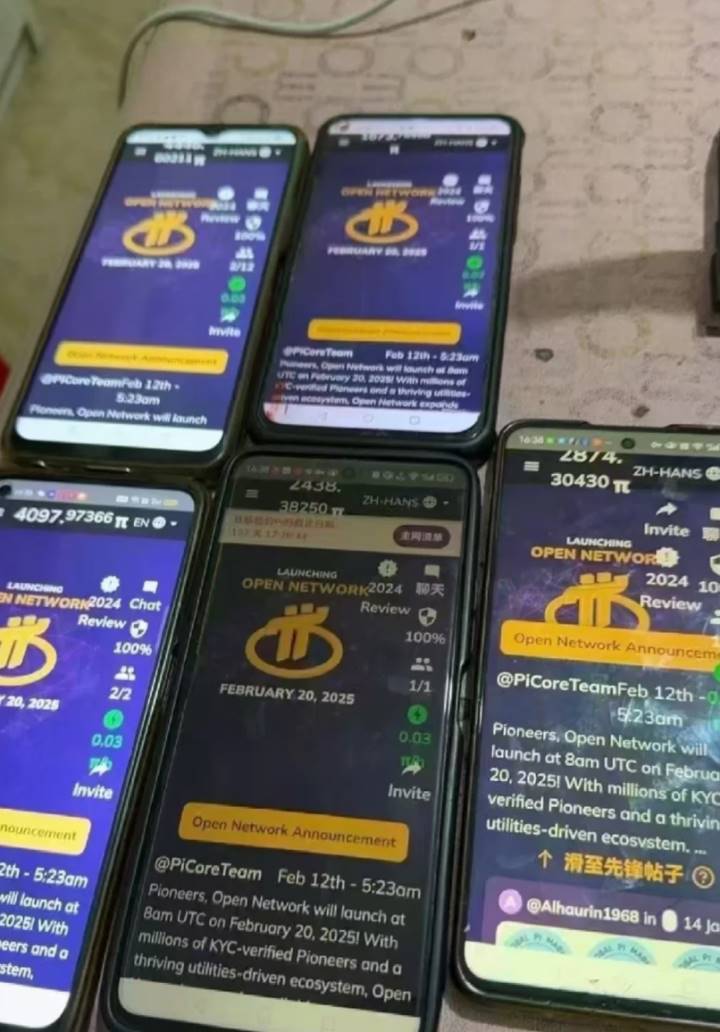
Mining itself doesn’t require spending, but that doesn’t mean Pi’s ecosystem stays free.
Anyone who has played casual mobile games understands:
Computing power resembles in-game energy, diamonds, or coins.
You can play for free, but prolonged play eventually leads to paid upgrades.
To earn more Pi, some elderly users buy nodes as accelerators from "insiders," quickly burning through household savings and retirement funds.
And computing power isn't the only way retirement money gets drained.
In corners of small, lower-tier cities where seniors gather, mysterious "Pi friend" clubs operate in bulk. By organizing gatherings, they control most local Pi users as "potential customers."
Whenever software updates occur, loading circles persist endlessly, or other issues arise that confuse seniors, club members charge anywhere from tens to thousands of yuan to resolve basic technical problems.
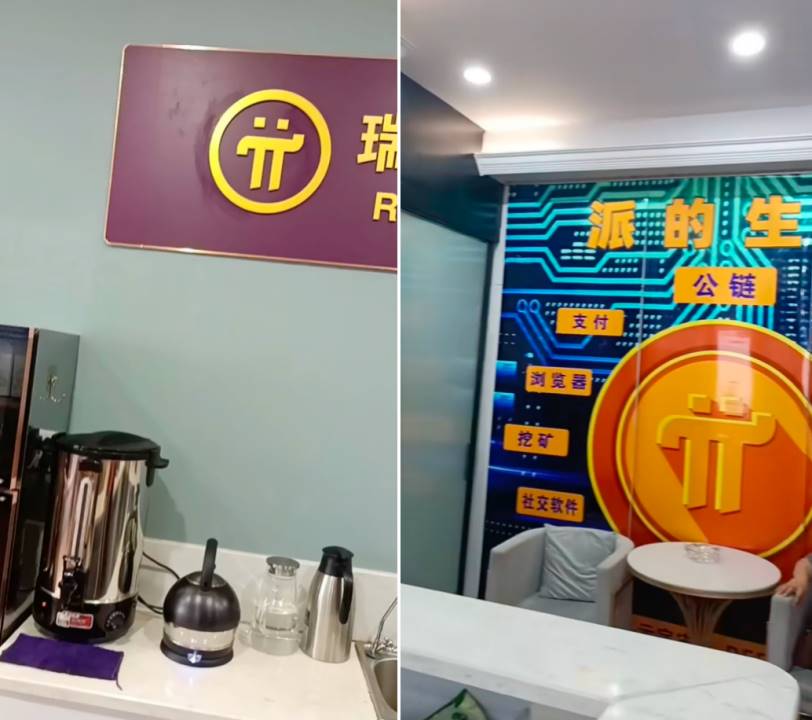
Many deeply involved seniors, driven by urgent desires to get rich, dive into a world they barely understand. Their daily interactions involve group members claiming they’ve already achieved financial freedom, making them feel ignorant.
Self-learning no longer suffices—they turn to successful "teachers" within the Pi community, enrolling in paid courses.
Their first post-retirement investment: seeking the key to wealth.
Ten online lessons cost tens of thousands of yuan, and the teachers themselves are often seniors—but this somehow makes the courses seem more credible.
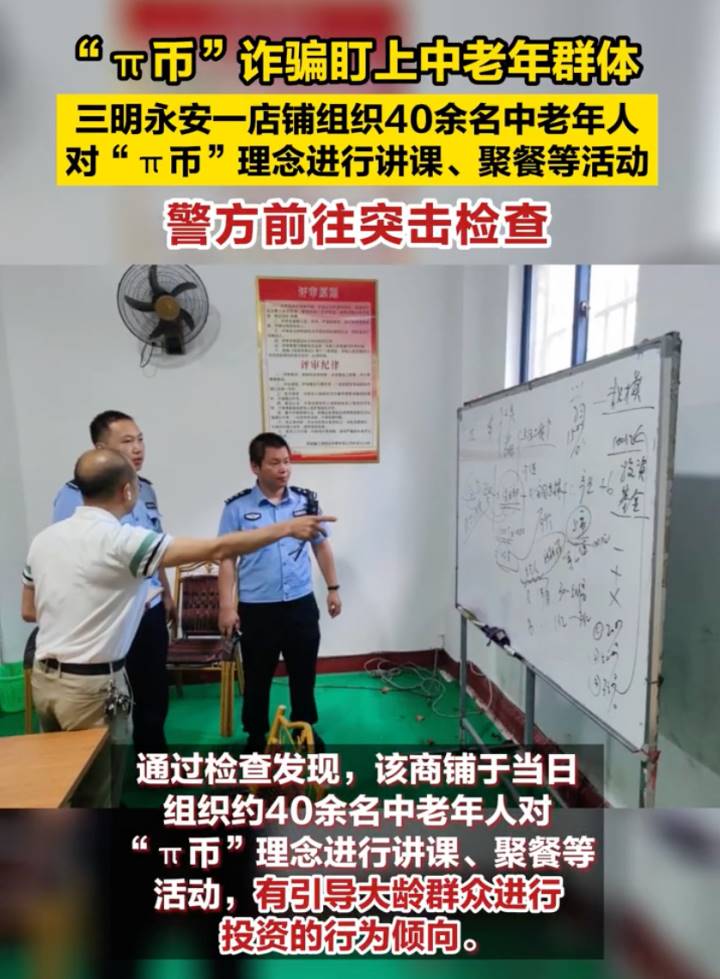
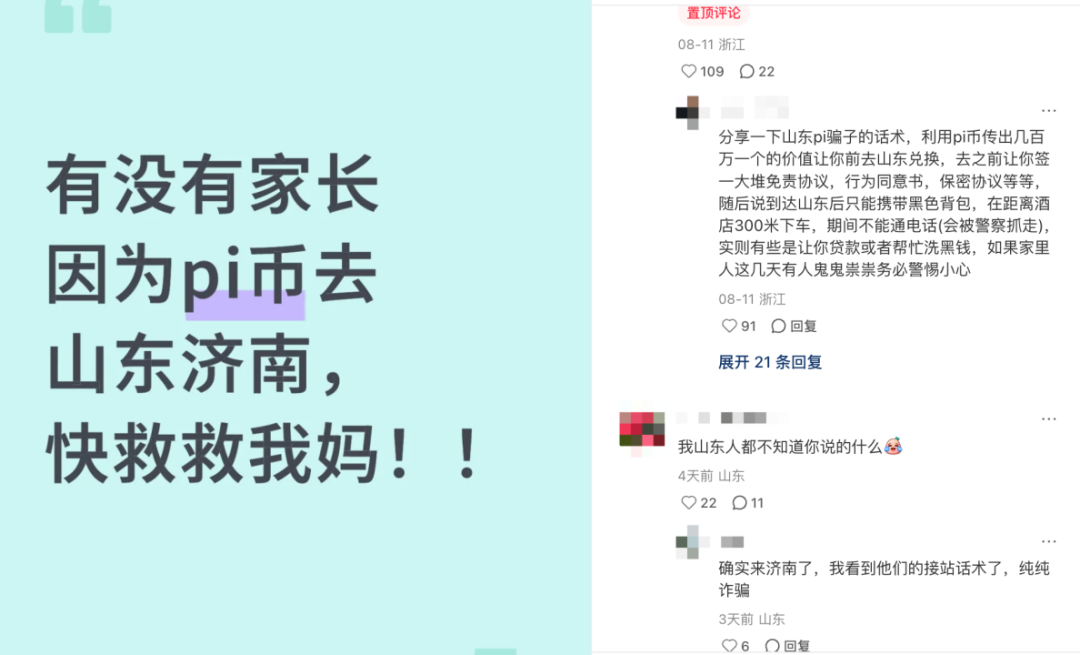
Pi coin remained relatively niche until widespread reports emerged of large numbers of elderly Pi users traveling to Shandong to redeem their coins.
After all, Pi coin’s true value has long been the "elephant in the room" within senior Pi communities.
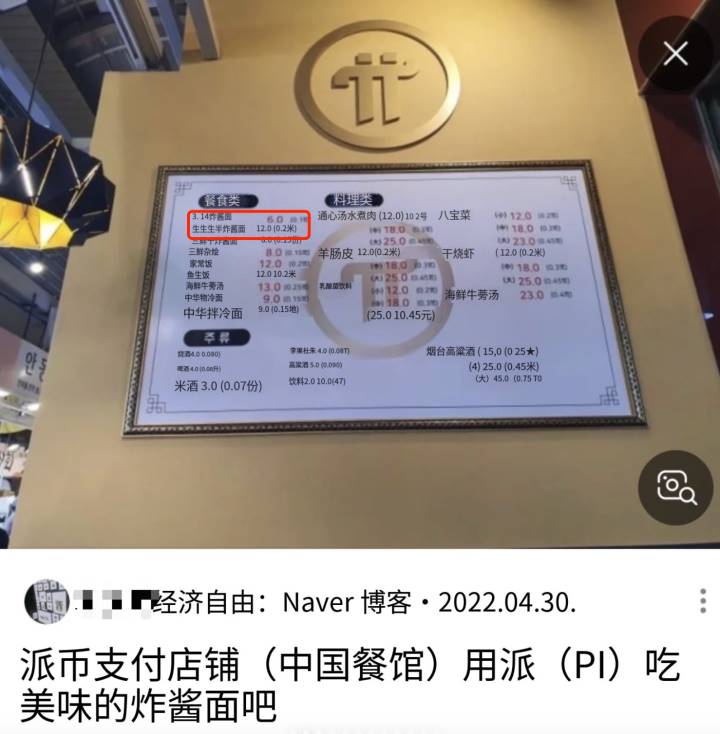
Even those repeatedly told "0.2 Pi = one Passat" may see news that Pi is worth only five bowls of noodles in Korea, causing inner turmoil.
So when rumors surface that Pi can be redeemed domestically, no one can stop users from rushing there.
Upon arrival, local contacts reportedly require signing confidentiality agreements before meeting, with strict bans on phone use during the process—because someone might steal access to this world-controlling wealth.
After completing these steps, deceived seniors unknowingly fall deeper into the trap:
Accumulating heavy loans or borrowing from online lenders.
They then return home as actual participants in crime, continuing to mine under delusional dreams of wealth.
Whether stealing money or people, large or small scale, the plot and outcome remain familiar to us.
Despite repeated official warnings about risks of Pi mining, frequent appearances in social news, and inclusion in anti-fraud priority lists,
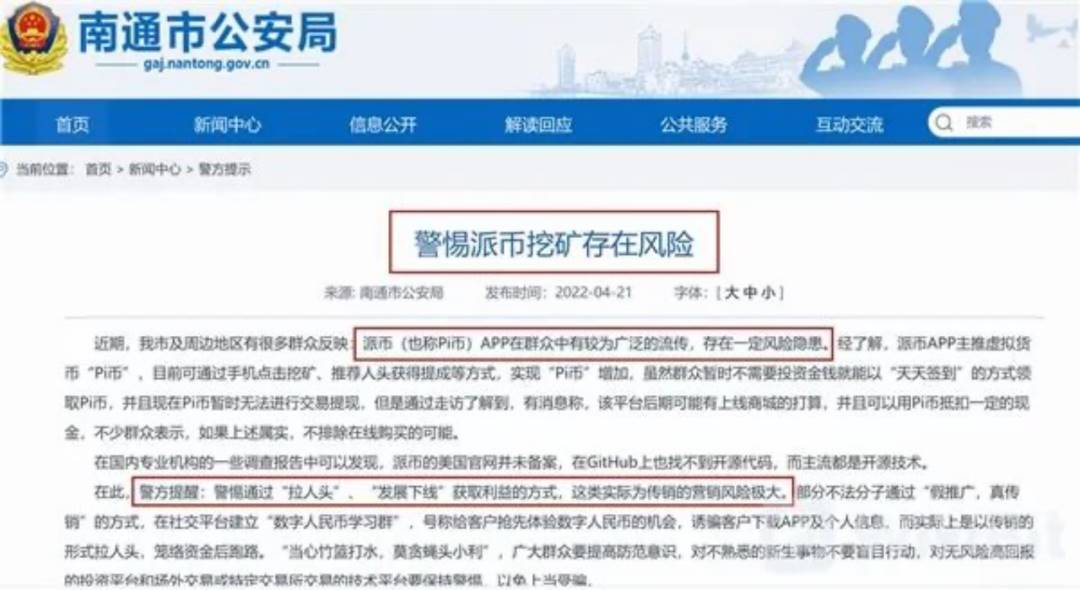
nothing stops middle-aged and elderly Pi users from believing only what they want to believe.
Why Does Pi Coin Target the Elderly?
When elderly family members begin promoting Pi coin to their children, they’ve typically been poisoned by a five-step process and are already at step four.
Children learn about their parents' involvement with "playing Pi coin" alongside a request:
"Start playing Pi coin too—I’ll guide you."
Countless personal experiences shared online prove Pi coin won’t bring overnight wealth—it only drives people insane.
If previously hiding Pi mining from children and avoiding discussions about spending showed a shred of rationality,
then recruiting children into the Pi network signifies complete detachment from reality.
They fully believe the narrative, having undergone 100% brainwashing, now aiming to "benefit their children."

When persuading others to mine Pi, users employ nearly identical rhetoric:
"Don’t look down on slaving away for a year to earn meager wages";
"You’re ignorant if you don’t believe in Pi coin";
"How could such a brilliant, visionary father raise such a low-IQ, financially illiterate fool?"...
Years of parent-child relationships, reshaped by Pi coin, reduce to mere upline-downline recruitment.
By this stage, it’s clear Pi coin carries strong pyramid scheme characteristics.
This is also precisely why Pi coin can become one of the most hidden and deceptive scams.

Pi coin’s exclusivity, circular reasoning, profit promises, repetition, and symbolic elements together form a textbook case of brainwashing.
Its invitation-based viral sharing aligns perfectly with pyramid schemes’ upline-downline structures.
The difference is: traditional pyramid schemes begin with brainwashing, recruiting, and crucially—collecting money.
Pi coin starts with zero upfront investment, pure ideological indoctrination. Only after users invest significant time and effort are they subtly guided toward seemingly "voluntary" monetary investments.
The insidious nature of this invisible scam means even when children discover their elders mining Pi, they often think, “Since it doesn’t cost money, let them be.”
But in principle, Pi coin is slow-boiling deception targeting the elderly.
By the time it’s noticed, it’s usually too late.
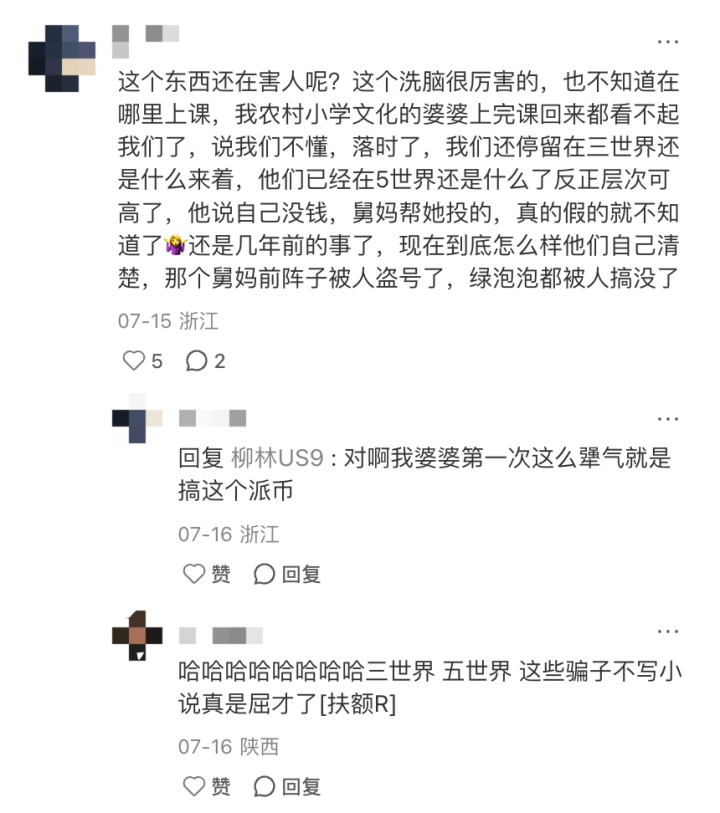
The hardest part of anti-Pi fraud education lies exactly in this mechanism.
As an unlisted "air coin," Pi itself isn’t inherently fraudulent. Frankly, its main revenue source is advertising—drawing users to view ads and generate ad income.
Exactly because of this, Pi coin has become a dream factory hosting numerous parasitic scams.
Using montage-style half-truths and lies, it gradually drains users’ wallets after systematic brainwashing.
That’s why even today, defrauded seniors still insist: “Some people misuse Pi’s name for evil, but that has nothing to do with Pi coin—I can still get rich.”

From the beginning, various scams have established a logically self-consistent chain regarding the question: “Pi coin is real, but its value is fake.”
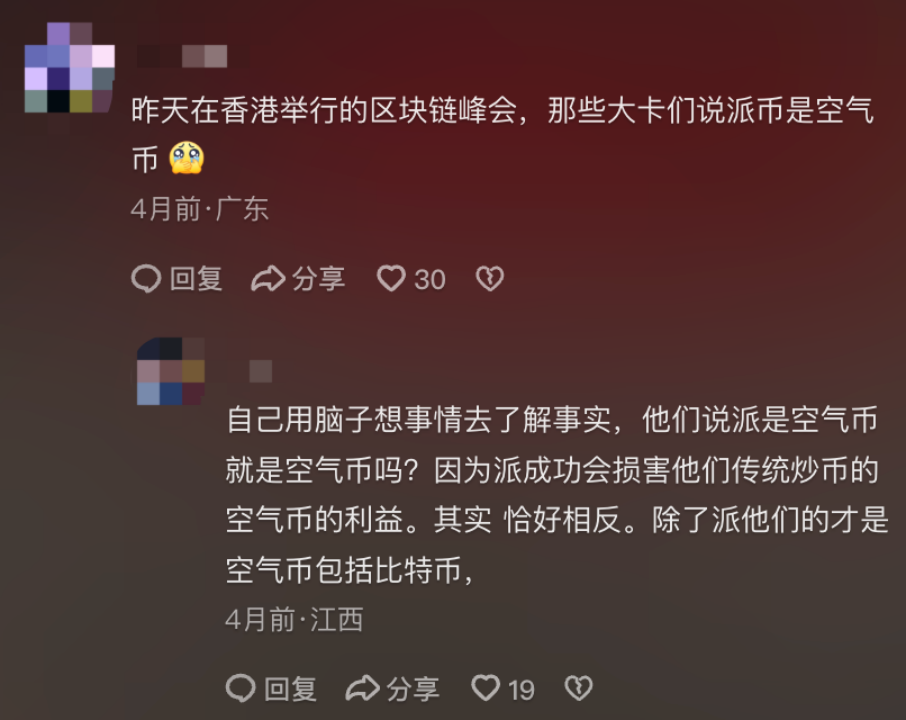
Anyone calling Pi worthless is dismissed as cognitively deficient. Authorities dismissing Pi are accused of fearing ordinary users from sharing capital’s wealth pie.
Those brave enough to pursue offline redemption don’t care about privacy leak risks.
A classic cruel truth about scams is that people always believe they’re inherently much smarter than others.
Every time we examine a scam, certain familiar scenes reappear.
In fact, all scams follow a few common templates.
From early "pre-IPO stock" scams to miracle health supplements, promises of instant wealth or longevity remain powerful tools for exploiting the elderly.
Each scam targeting seniors precisely exploits their unfamiliarity with new technologies and their anxiety about financial security in later life.
Internet-era scams are refined upgrades of the same framework.
Going back a few years, entrepreneurial pitches were far more obvious.
Back then, the focus was on "effortlessly getting rich" or "small initial investment, huge future returns." Today’s version is "mine daily on your phone—it’s a bit tough, but you’ll get rich."
The former seemed too good to be true; the latter feels more realistic, offering a tangible sense of possibility.
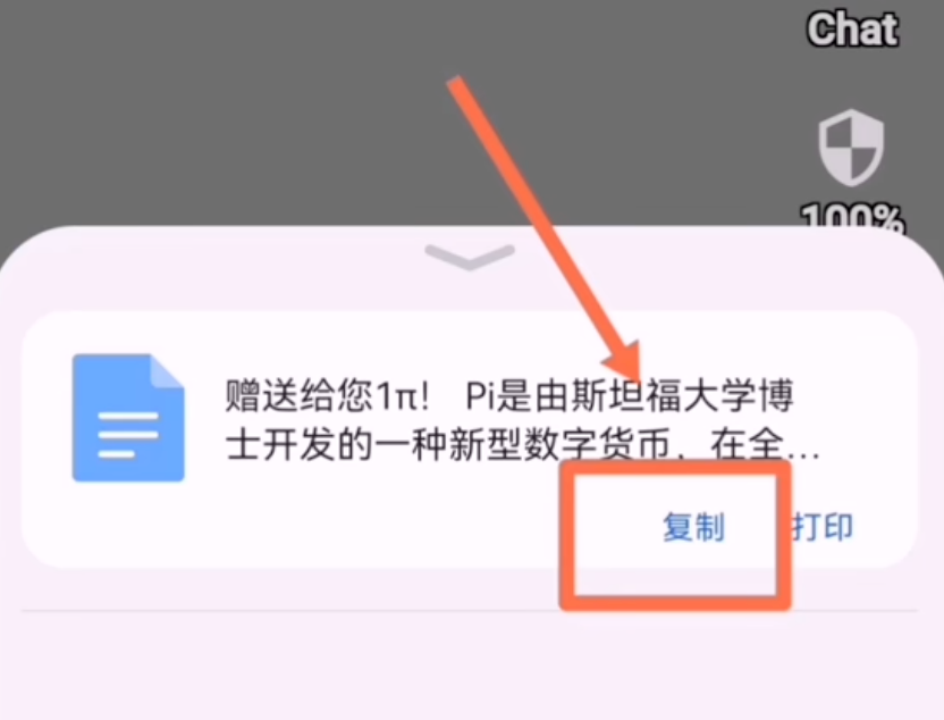
Besides, the widely circulated claim that "Pi coin was created by a Stanford team" serves as authoritative validation for middle-aged and elderly users who strongly believe in meritocracy.
Plus, Pi coin emphasizes diligent learning, active communication of industry knowledge, and participation in community "hard work"—ensuring it appeals perfectly to a generation that reveres diligence as the path to wealth.
Pi coin traps don’t rely solely on greed. Instead, they present themselves as potential opportunities, leveraging seniors’ anxieties, their belief in labor value, and fear of missing out on the final chance for financial gain—gradually increasing sunk costs in time, energy, and money.
Rescuing the elderly from Pi networks remains an enduring challenge.
Raised awareness, children’s supervision, and attempts at effective communication aren’t enough to build an infallible anti-scam firewall. After all, to seniors dreaming of sudden wealth, anyone trying to stop them becomes the biggest obstacle on their path to riches.
For children, the first lesson in preventing family bankruptcy starts with understanding what Pi coin is and raising vigilance.
Today, go home and check whether your elders have the Pi coin app on their phones.
Join TechFlow official community to stay tuned
Telegram:https://t.me/TechFlowDaily
X (Twitter):https://x.com/TechFlowPost
X (Twitter) EN:https://x.com/BlockFlow_News










