When Roblox Meets Web3, How Do Portals Redefine On-Chain Entertainment?
TechFlow Selected TechFlow Selected
When Roblox Meets Web3, How Do Portals Redefine On-Chain Entertainment?
With AI-powered no-code tools, Portals enables everyone to create persistent game worlds and tradable assets.
 Navigating Web3 tides with focused insights
Written by: TechFlow
On September 16, the Solana ecosystem welcomed a project worth watching.
Portals, previously interpreted by many as the "Web3 version of Roblox," completed the TGE of its native token $PORTALS and officially launched on major exchanges including Bybit, Gate, and KuCoin.
As early as August 8, the project's popularity during its presale was remarkable—sold out in just 11 seconds, raising 3700 SOL instantly.
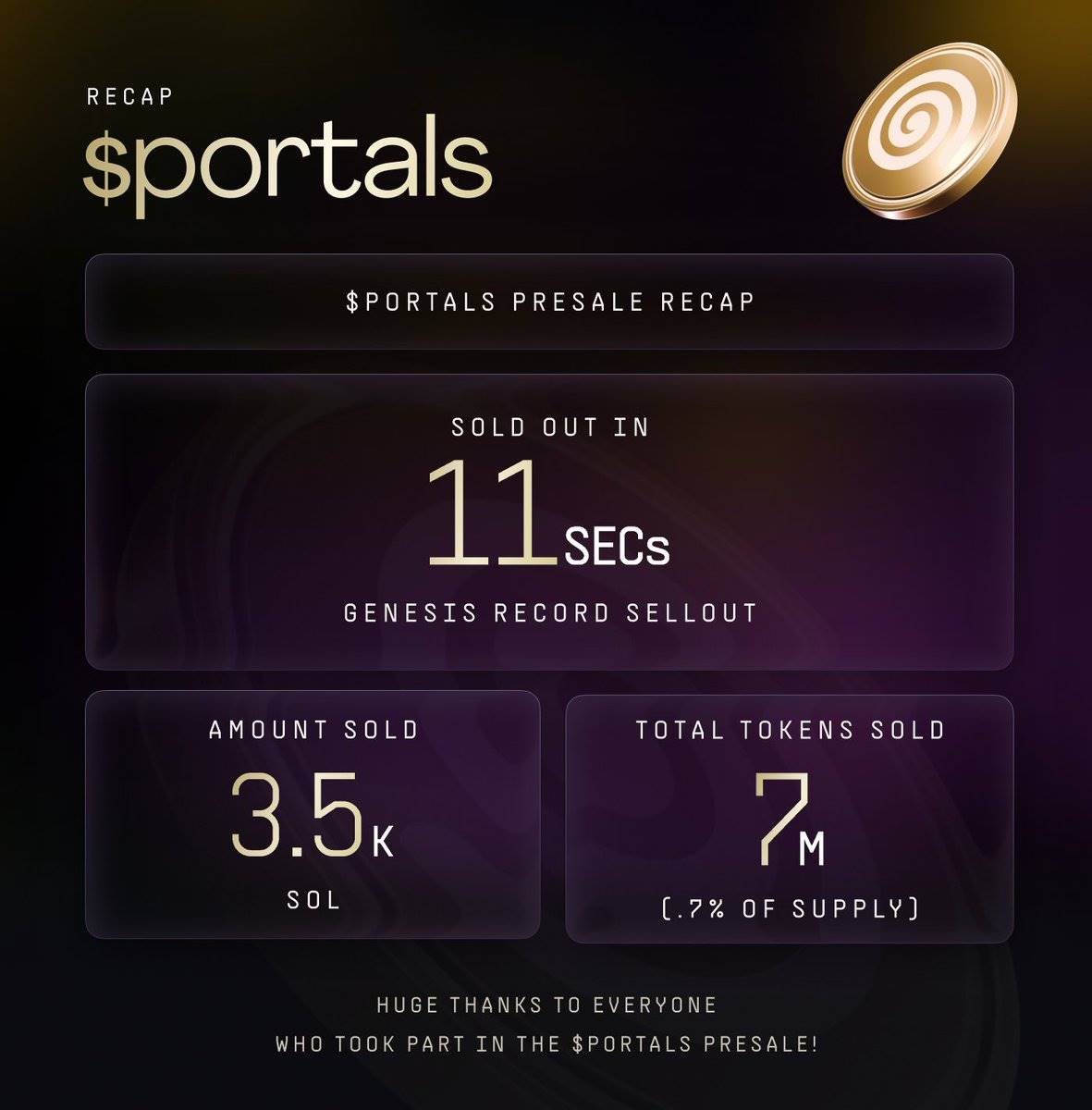
According to market data, $PORTALS currently has an FDV of approximately $150 million, representing about a 1.5x increase from its $100 million valuation during the presale. This means that despite common post-TGE selling pressure and market volatility, early participants are still profitable.
This inevitably brings to mind another previous phenomenon, Virtuals Protocol. As an AI agent issuance platform on Base chain, Virtuals achieved a market cap exceeding $2 billion within months, thanks to its innovative token model, generating notable wealth effects for AI agent tokens within its ecosystem.
Yet Portals appears even more ambitious.
It doesn't just aim to issue AI agents and tokens—it seeks to build a complete game creation and distribution ecosystem, deeply integrating Virtuals’ token issuance model with Roblox’s UGC approach.
If you're wondering, consider what narratives in today’s crypto market still have momentum?
Among the answers, two stand out: the enduring AI, and the recently emerging CCM (Creator Capital Market).
If Pump.fun’s live-streamed tokens proved demand for zero-barrier creation tools but exposed the fatal flaw of “value dropping to zero once the stream ends,” then Portals takes a completely different path:
Using AI-powered no-code tools, enabling everyone to create persistent game worlds and tradable assets.

The Solana ecosystem is at a unique juncture. According to DeFiLlama data, Solana’s TVL has surpassed $8 billion, with over 5 million daily active addresses. Yet compared to the flourishing DeFi sector, its entertainment and creator economy remain relatively underdeveloped.
Although there are over 40 gaming projects on-chain, there’s still a lack of infrastructure allowing ordinary users to easily create and launch game assets.
More importantly, the paradigm of creator economies is undergoing a fundamental shift.
From short videos to live streaming, from NFTs to AI agents, each technological breakthrough in crypto lowers the barrier to creation while expanding monetization opportunities. Games, as the most immersive and economically promising content form, have always had prohibitively high entry barriers—until now, with the maturity of AI and no-code tools.
Portals emerges precisely at this pivotal moment:
Mature AI technology, robust Solana performance, booming creator economy, and Virtuals validating the model’s feasibility. With all elements aligned, could a new giant in the creator economy be emerging?
Project Background and Market Recognition
To understand Portals, it’s essential to examine its team and investors.
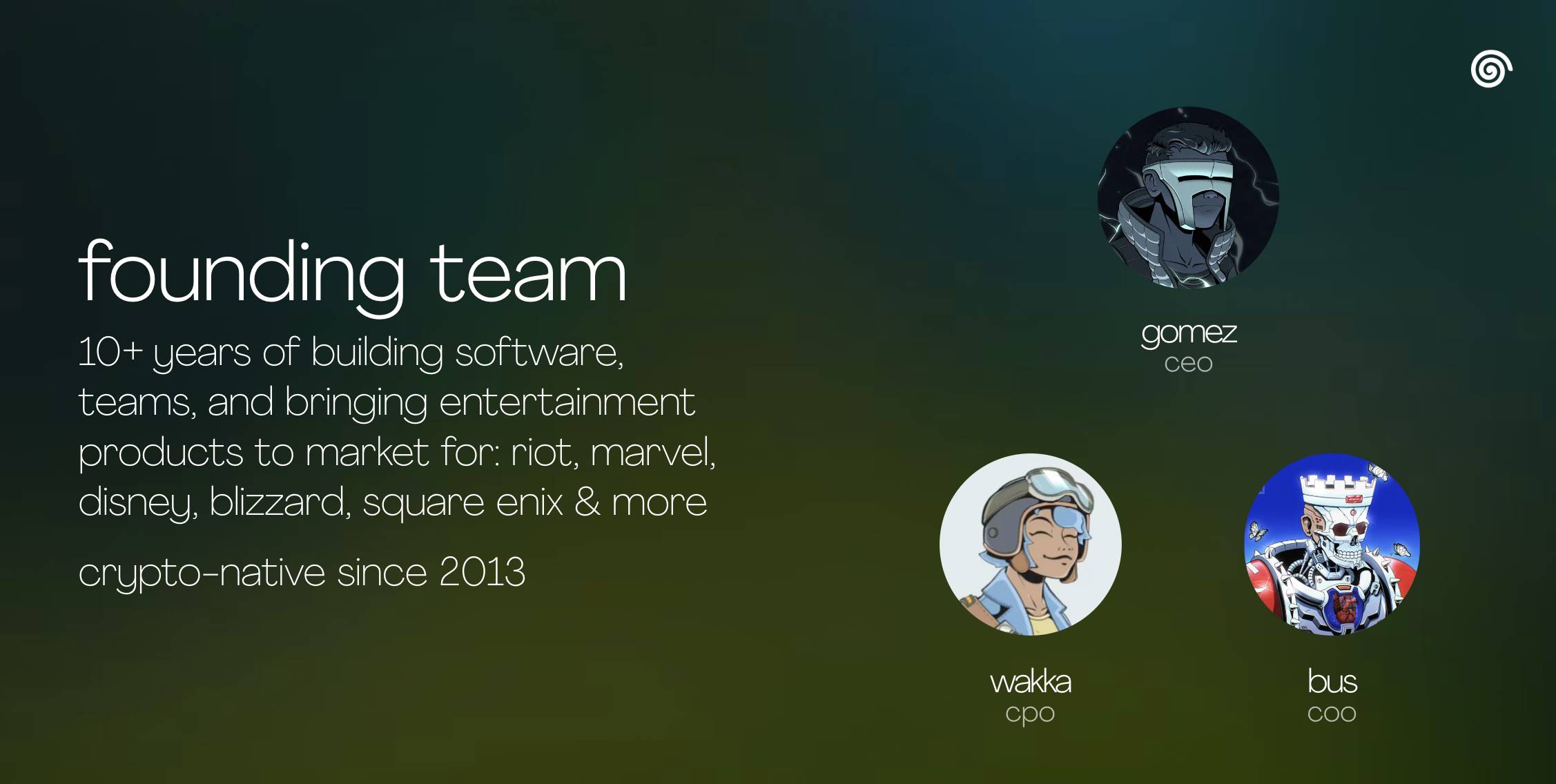
On the team side, according to official information, Portals' core founding members are serial entrepreneurs who previously built three projects, each achieving over $1 million in revenue within their first year.
Team members have extensive experience in the gaming industry, having worked on well-known titles such as *League of Legends*, *Batman: Arkham Asylum*, and *Saints Row*, and served companies like Riot Games, Blizzard, and Disney. Additionally, they gained experience managing 40,000 Twitch streamers from a prior project.
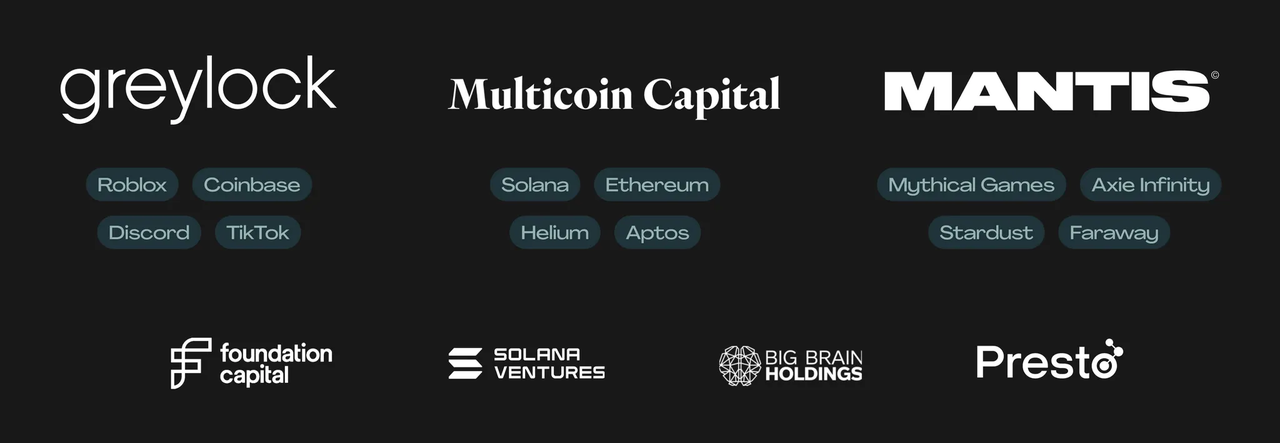
On funding, Portals raised a $5 million seed round in February 2022. The lead investor, Greylock, has backed platform products including Roblox, Coinbase, and Discord. Other investors include Multicoin Capital, Solana Ventures, Foundation Capital, Mantis VC, and Justin Kan, co-founder of Twitch.
This investment lineup stands out for spanning three critical domains: gaming (Greylock invested in Roblox), Web3 infrastructure (Multicoin’s deep involvement in Solana), and creator economy (Justin Kan founded Twitch).
Early ecosystem development achievements are also noteworthy. Unlike many Web3 projects that follow a “launch token first, build later” model, Portals chose to build the ecosystem before conducting its TGE.
As early as November 2021, Portals launched its genesis NFT series—not just another PFP project, but the “founding membership card” for the entire Portals ecosystem. Holders received early access to the platform, game testing privileges, and eligibility for future token airdrops.
The NFT series consists of four rarity tiers—Explorers, Collectors, Striders, and Operators—with varying benefits and scarcity levels.
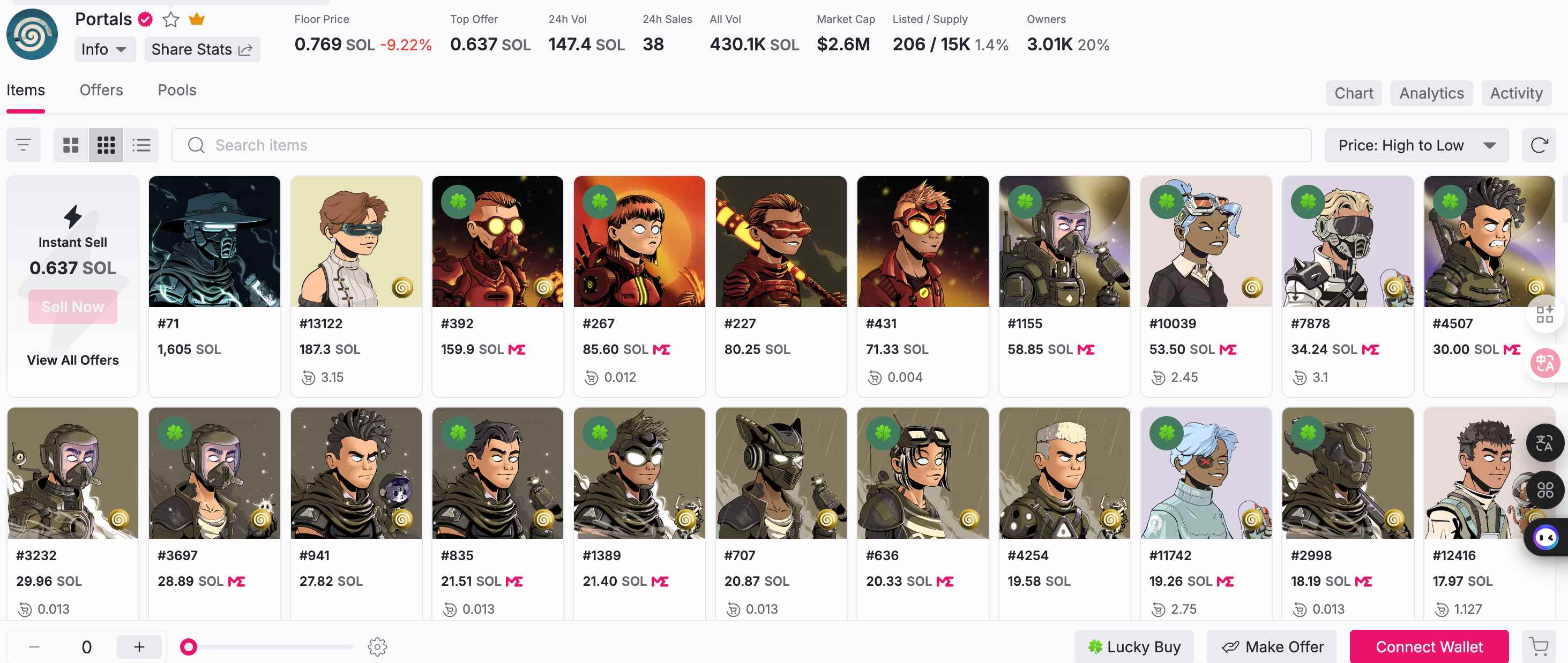
After nearly three years of development, this NFT series has become the second-largest gaming NFT project by market cap in the Solana ecosystem. More notably, shortly before the TGE, a single buyer spent over $1 million acquiring rare NFTs—a strong signal of market confidence in Portals’ long-term value.
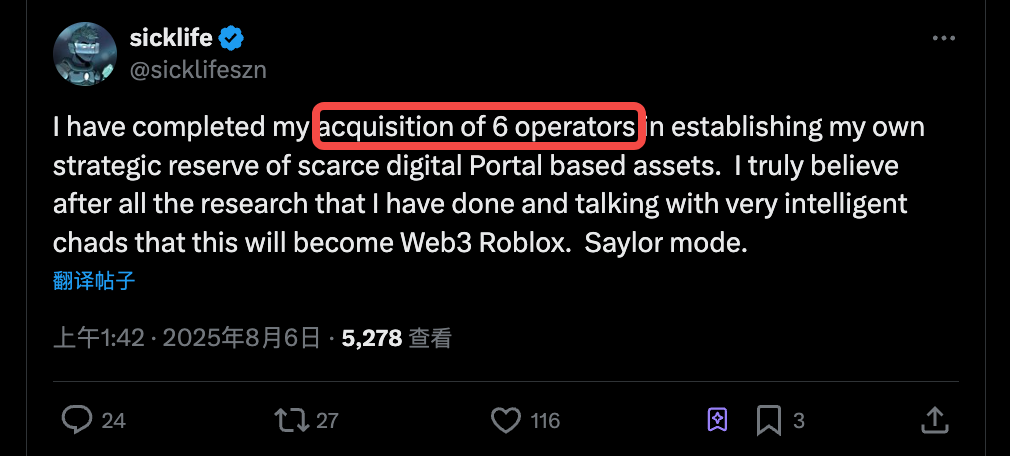
But perhaps the clearest indicator of market enthusiasm was the August 8 presale: 7 million tokens (only 0.7% of total supply) sold out in 11 seconds, fully diluted at a $90 million valuation. Such speed is rare even in bull markets.
From Creation to Launch: A Game Universe Inside Your Browser
If one sentence could summarize Portals’ product essence, it would be: “Making game creation as easy as posting a video, and game asset issuance as free as launching a token.”
The Portals team understands how crucial intuitive, low-barrier tools are for creators. To this end, Portals’ technical architecture enables truly accessible game creation.
-
No download required—open and use instantly
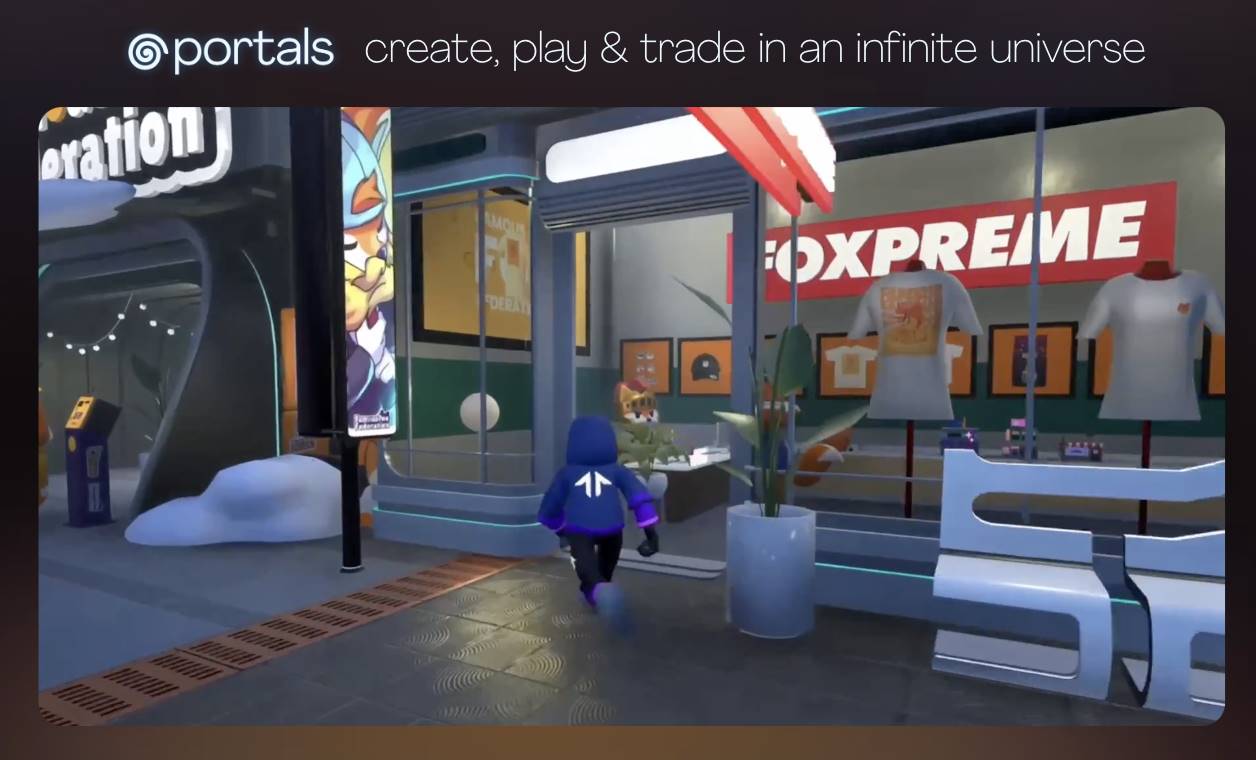
Visiting Portals’ official website, unlike traditional game engines requiring multi-gigabyte downloads, reveals that Portals runs entirely in-browser. Creators don’t need to install any client—just open the webpage and start building. Even more importantly, players don’t need to download anything either—they can click and play instantly.
Platform data shows this “zero-friction” experience increases game conversion rates several times over traditional downloadable games.
Imagine this scenario: a streamer showcases a self-made game during a live broadcast, and viewers can join the game immediately by clicking a link—without leaving the stream. This immediacy is key to Portals’ rapid spread.
-
Drag-and-drop creation—everyone can be a game designer
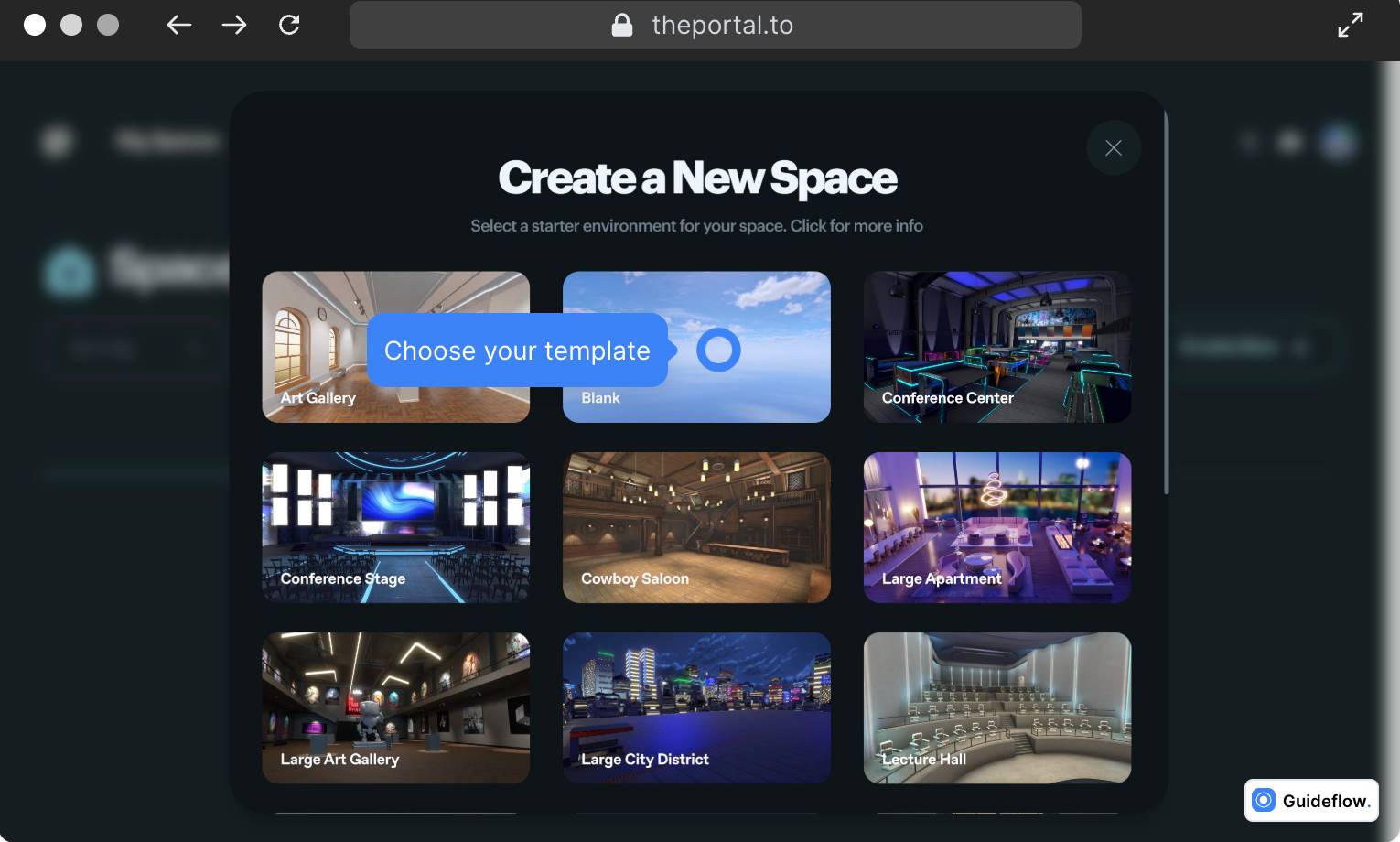
Portals Studio offers over 20 pre-built components covering core aspects of game development:
Character systems (NPCs, player characters, enemies), interaction mechanisms (triggers, portals, puzzles), game logic (quest systems, leaderboards, reward mechanics), and environmental elements (terrain, buildings, decorations). All components can be used via simple drag-and-drop and parameter adjustments.
Creators can also import their own 3D models and assets for personalized creations. More interestingly, Portals supports real-time multiplayer collaboration—inviting friends to co-create games just like editing documents together in Google Docs.
-
Hands-on experience: from idea to launch in just hours
Take the popular game *The Doll Maker* on the platform as an example. In practice, it feels like a highly atmospheric puzzle-adventure game. Lighting, sound effects, and in-game interactions are all impressively executed, and anyone can try it directly on the official site.
According to the game’s background, the creator used Portals Studio to complete the entire process—from concept to launch—in just one weekend. The game features carefully designed puzzles, ambient audio, and multiple scene transitions, resembling something from an independent studio.
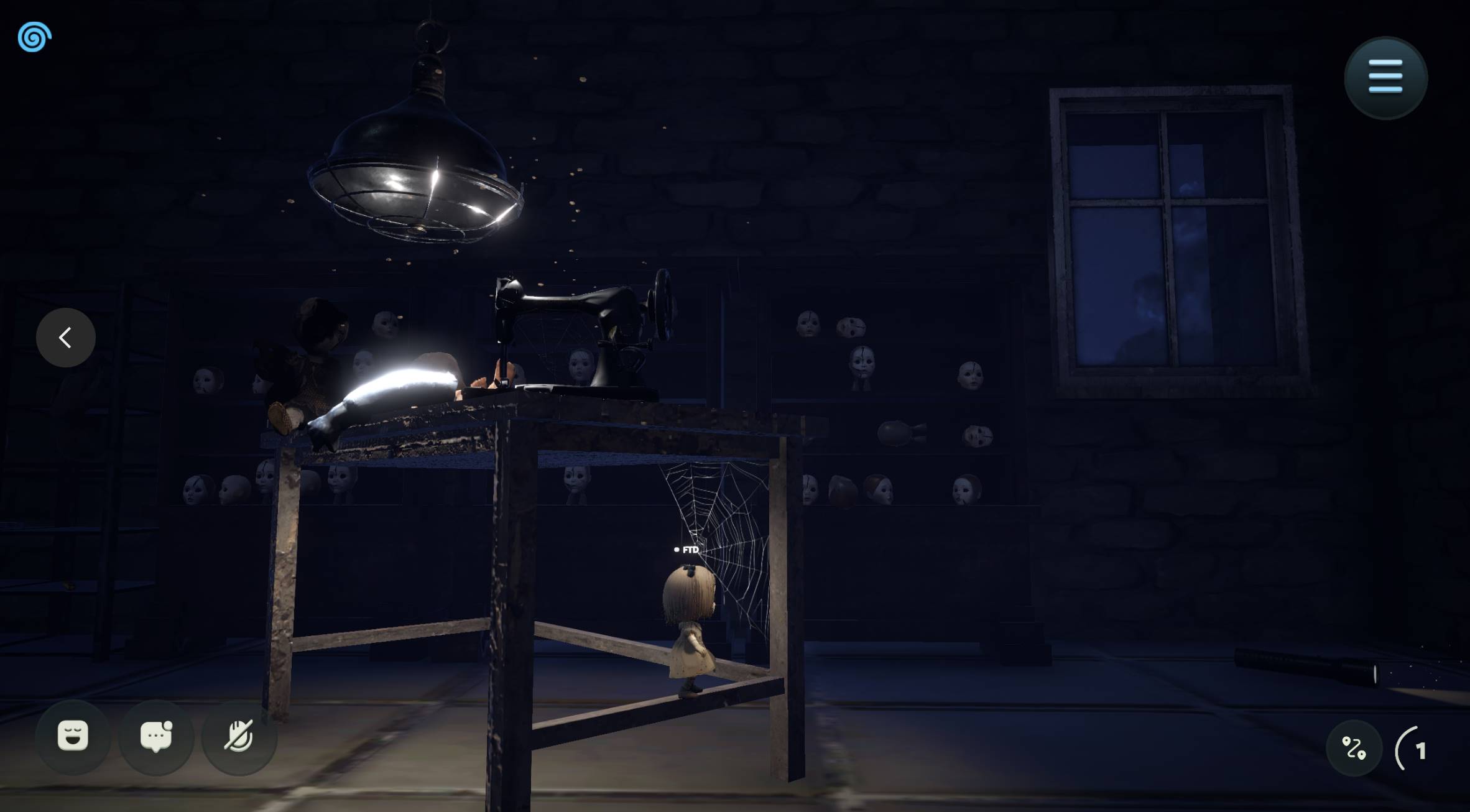
Besides Dollmaker, Game Jam events have produced a variety of other games, including parkour, shooting, and role-playing genres, demonstrating the practicality of Portals’ tools. All these games are playable directly on the Portals platform without any downloads.
Beyond user-friendly game creation and asset issuance infrastructure, Portals has also designed content distribution mechanisms, enabling creators to use AI tools to automatically promote games across social platforms for viral reach.
-
Asset issuance: from game to economic system
In the world of Portals, every game could become an independent economy. This may sound grandiose, but Portals makes it surprisingly simple through streamlined tools.
Creators can issue tokens for their games as easily as launching a token on Pump.fun, but with a key difference: these tokens are backed by actual gameplay scenarios and real utility.
To understand Portals’ economic model, look at the case of CHRONO.
As the first in-game token on the platform, CHRONO had an interesting origin: instead of following a traditional presale, it was directly airdropped to active members of the Solana community.
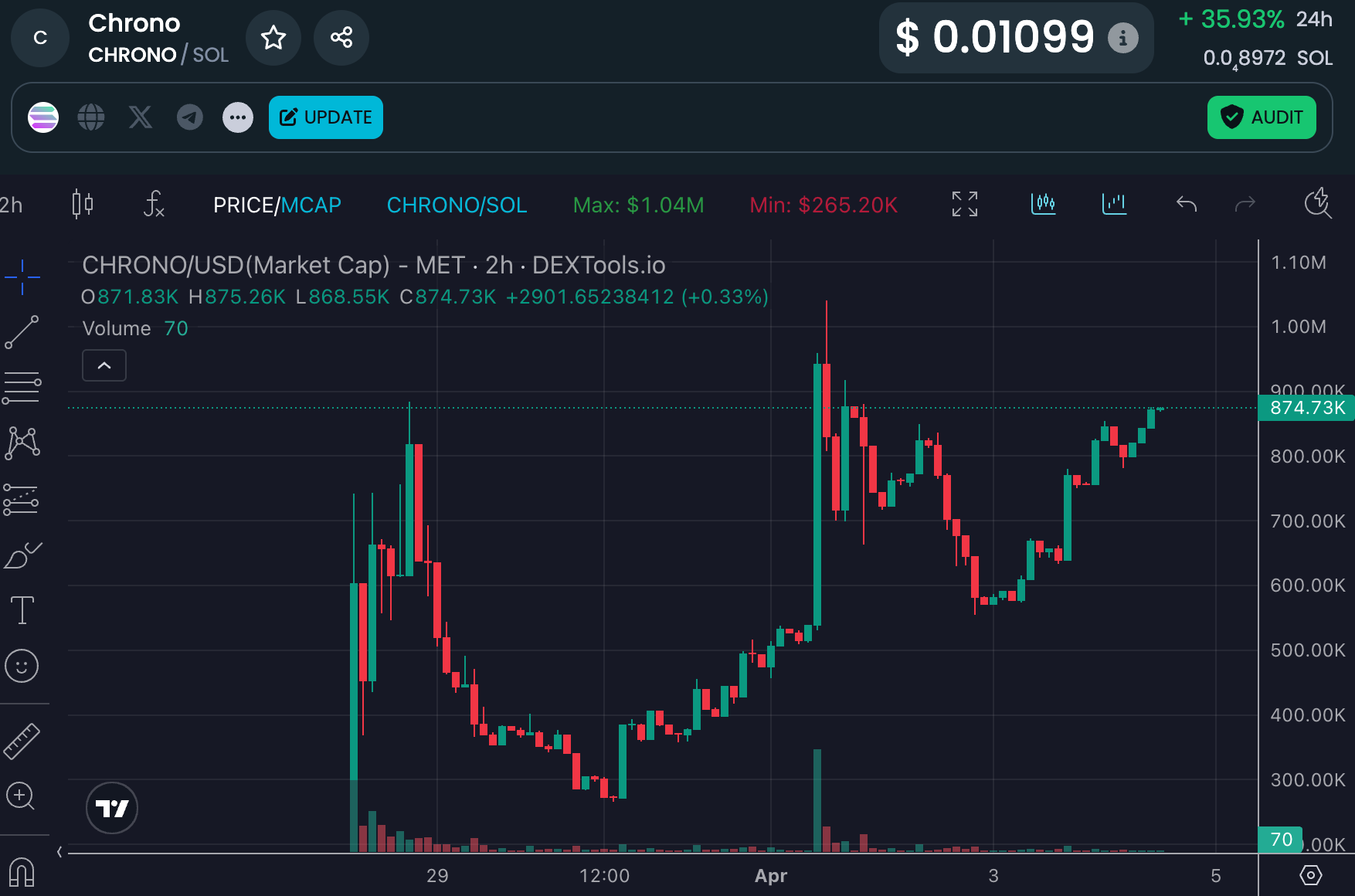
Even more interesting is the in-game economic loop design. In the first game supporting $CHRONO, players earn tokens by completing tasks, but must spend them to unlock new levels or purchase items.
Data shows that 36 million tokens were distributed, yet 39.6 million were burned back through various game mechanics—achieving natural deflation. This “earn-and-spend” model turns tokens into an integral part of gameplay, not just speculative instruments.
Now, CHRONO is expanding beyond a single game. Community developers are building 5–10 new games that will adopt CHRONO as a universal currency. Imagine earning tokens in Game A, using them to buy gear in Game B, and staking them in Game C for yield—that’s the cross-game economic network Portals aims to build.
Of course, we must acknowledge that tokenizing games isn’t without controversy.
Price volatility could disrupt game balance, and speculators might harm the gaming ecosystem. But Portals’ current approach seems to let the market decide. Creators choose whether to issue tokens; players choose whether to participate.
The platform provides tools but doesn’t enforce paths.
This openness is precisely what distinguishes Portals from traditional gaming platforms. Here, creators aren’t just content producers—they can also be architects of economic systems, aligning perfectly with the rising Creator Capital Market narrative, where creators monetize attention at scale.
And all of this can be done through simple drag-and-drop and clicks—no code required.
-
AI-powered: full-chain support from creation to distribution
If no-code tools lower the technical barrier to game creation, then AI integration gives creators wings in terms of creativity. Portals’ integrated AI functions span the entire journey from creation to promotion.
According to the platform, Portals offers powerful generative AI tools that can automatically convert game content into short videos for promoting games, AI agents, or token projects on social media.
This feature solves a core pain point for creators: many can make fun games but struggle with marketing. By automatically generating TikTok- or YouTube Shorts-compatible clips, AI handles content distribution so creators can focus purely on building games.
Combined with Portals’ instant-play browser functionality, this creates an efficient conversion funnel: users see a game video on social media, click a link, and start playing immediately—no download needed.
$PORTALS: More Than Just a Governance Token
With the TGE completed on September 16, PORTALS has officially entered circulation.
Core token functions revolve around various aspects of the platform ecosystem. First is the pairing mechanism: each game token issued on Portals automatically forms a liquidity pool with PORTALS, making $PORTALS the “base currency” of the entire ecosystem.
As more game tokens are launched, demand for $PORTALS liquidity will continue to grow.
Next is entitlements. $PORTALS holders receive airdrop rights for new game tokens—similar to how holding VIRTUAL in the Virtuals ecosystem grants access to new AI agent tokens.
Given that multiple AI agent projects on Virtuals have already reached multi-million dollar valuations, the value of such airdrops should not be underestimated.
Staking provides another layer of value support. 10% of platform transaction fees are used to repurchase $PORTALS and distribute them to stakers. This isn’t mere “mining”—it allows token holders to share in the platform’s growth. As trading volume increases, staking rewards rise accordingly.
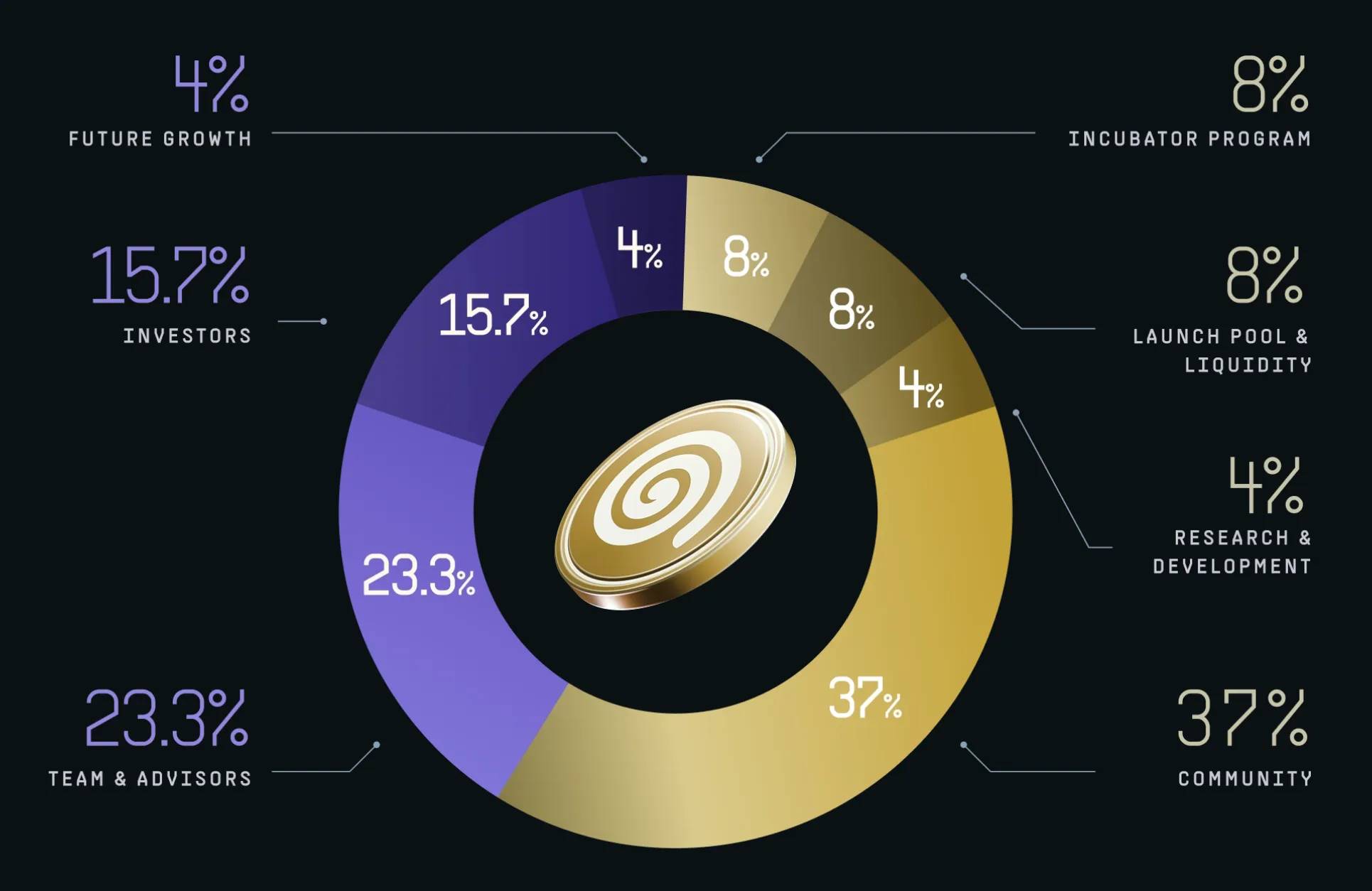
But the most intriguing aspect is the creator incentive program. Out of the total 1 billion supply, 370 million (37%) are allocated to community and ecosystem development. These tokens won’t be released all at once, but gradually distributed over 3–5 years through “creation rewards,” “game ranking prizes,” and “premium content incentives.” This means top creators can earn substantial token rewards through sustained output.
-
Comparing Portals and Virtuals Models
Many compare Portals with Virtuals—and for good reason. Let’s break down their similarities and differences:
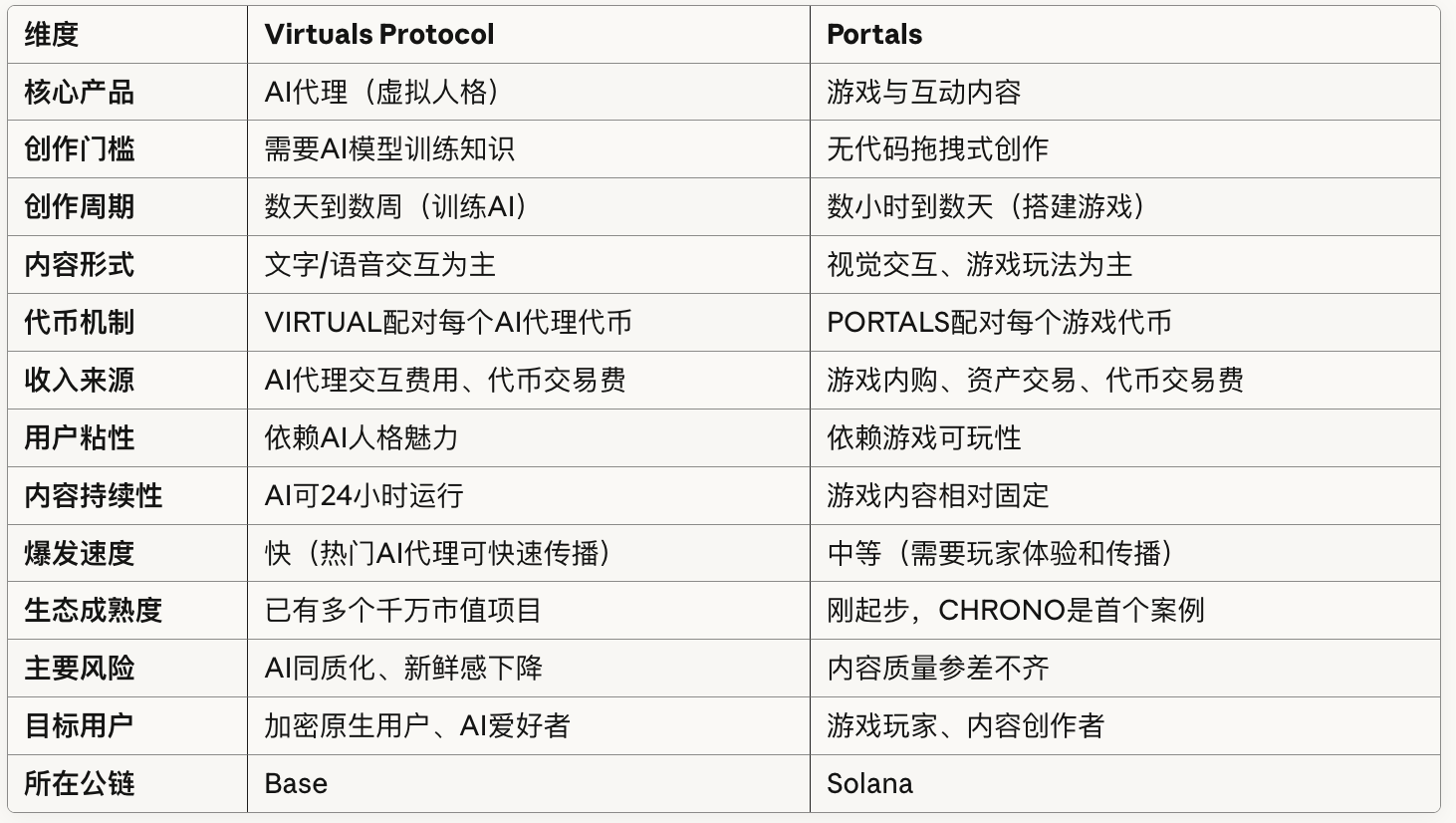
This comparison shows that while both projects adopt a “platform token + ecosystem tokens” model, their implementation paths differ significantly:
Virtuals’ strengths lie in lighter content formats and faster virality. An engaging AI persona can quickly gain traction on Twitter, and AI can interact with users 24/7, continuously generating content and buzz.
Portals’ strengths are richer content formats and more diverse monetization options. Games naturally offer more economic scenarios—equipment, skins, land, items—all of which can be tokenized, giving tokens real utility. Moreover, the immersion and replayability of games may lead to higher user retention.
However, both face the same core challenge: maintaining content quality and user engagement. Virtuals must keep upgrading AI capabilities, while Portals needs to consistently deliver high-quality games. Both are exploring the potential of UGC (user-generated content) in Web3, just through different mediums.
From an investment perspective, Virtuals has already proven its model and market demand; Portals is just getting started, but may offer greater upside potential.
A Experiment Worth Watching
Portals represents a possible future for Web3 gaming:
Not simply porting traditional games onto the blockchain, but leveraging blockchain’s properties to create new models for game creation and economics.
Whether it can become the “Web3 Roblox” remains to be seen, but the direction itself is worth pursuing. Between the short-term speculation of Pump.fun-style launches and the closed ecosystems of traditional games, perhaps there exists a sustainable middle ground.
For creators, Portals offers a low-barrier, high-freedom platform; for players, a constant stream of fresh content; for investors, a Web3 project with real products and revenue.
Of course, all promising visions require execution to validate. Portals’ TGE is just the beginning. The real test lies in whether it can continuously attract top creators, produce quality content, and create a virtuous cycle. Let’s give this experiment some time—to see how far it can go.
Join TechFlow official community to stay tuned
Telegram:https://t.me/TechFlowDaily
X (Twitter):https://x.com/TechFlowPost
X (Twitter) EN:https://x.com/BlockFlow_News
 深潮TechFlow